

Read the flare, then the fit
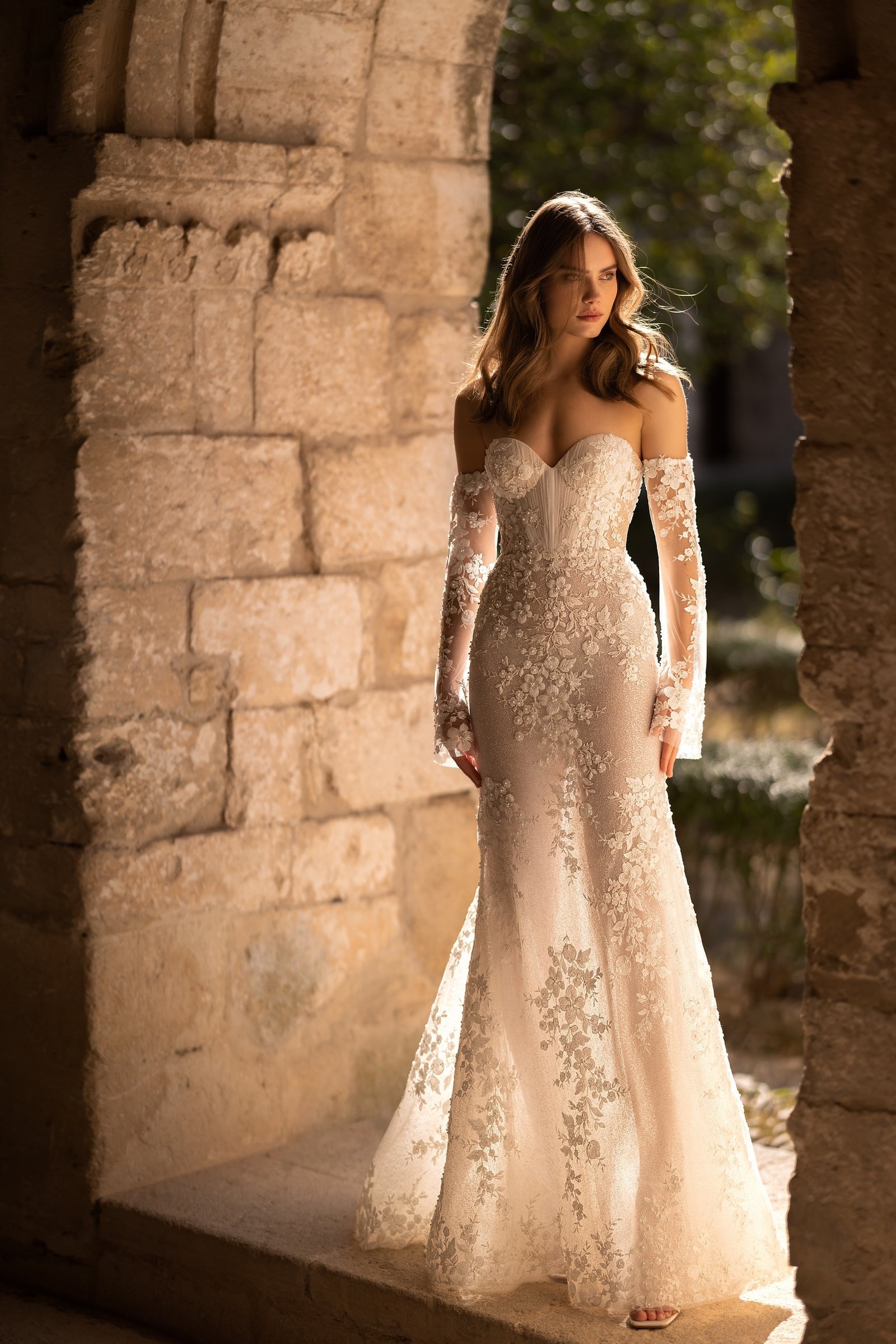
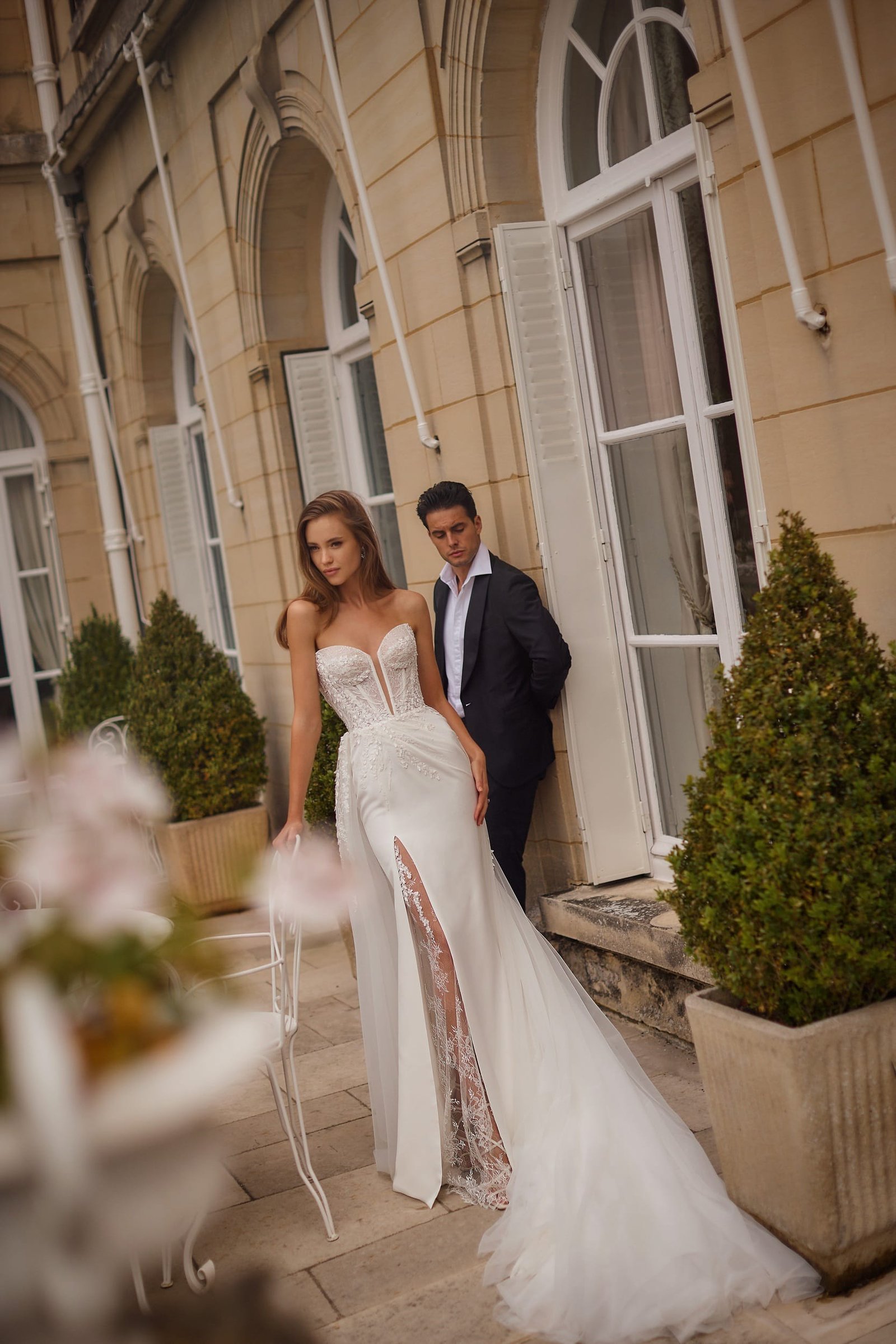
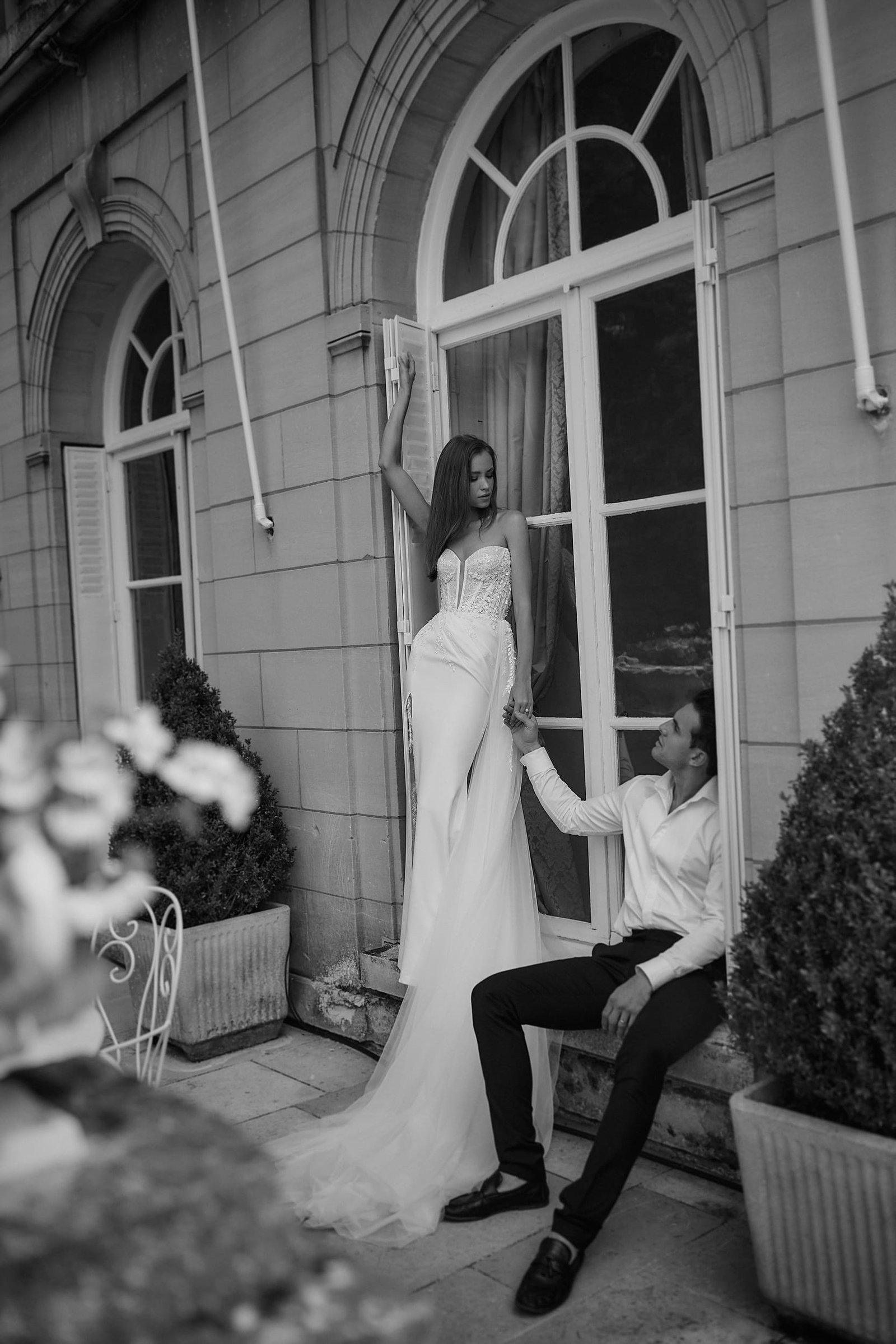
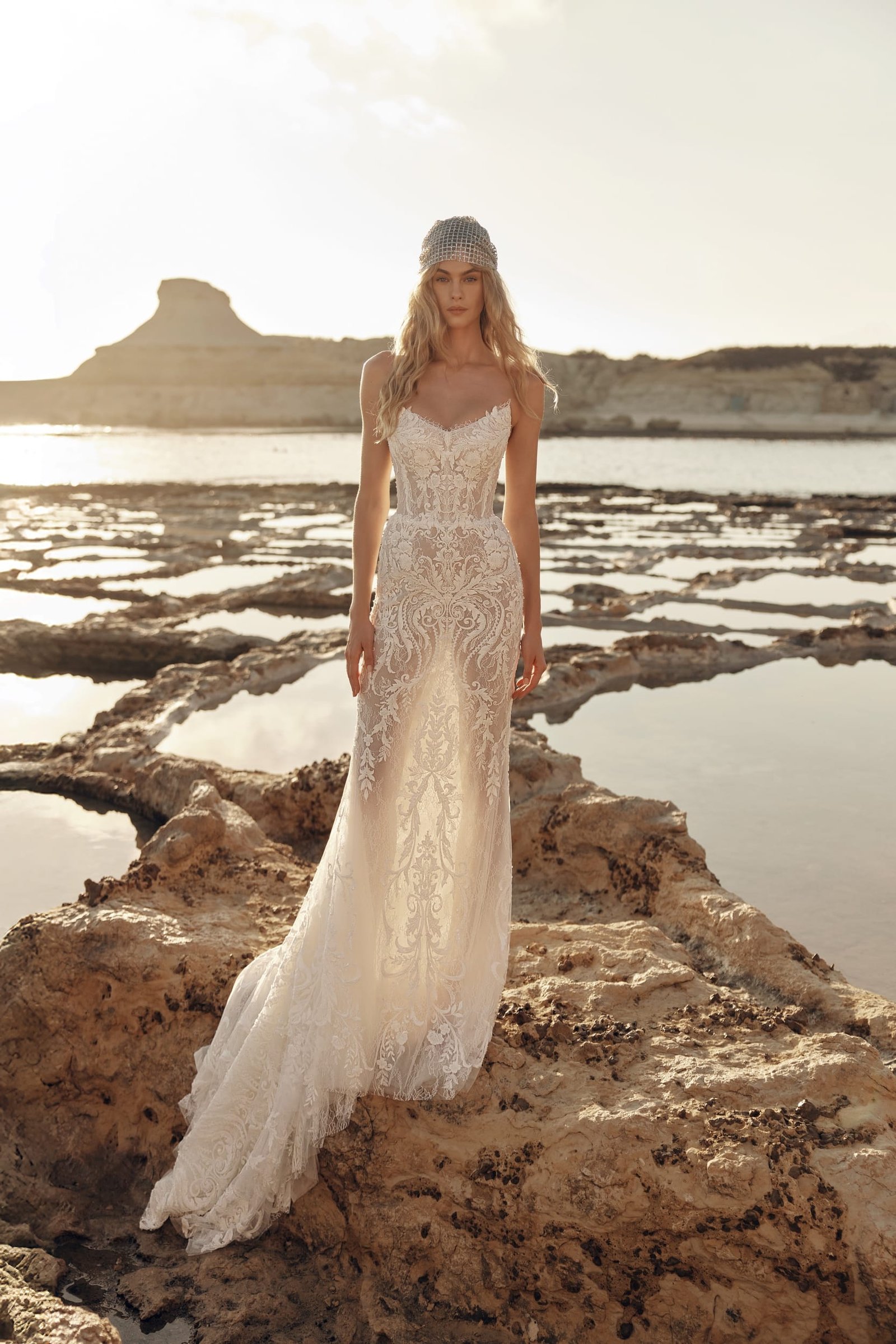
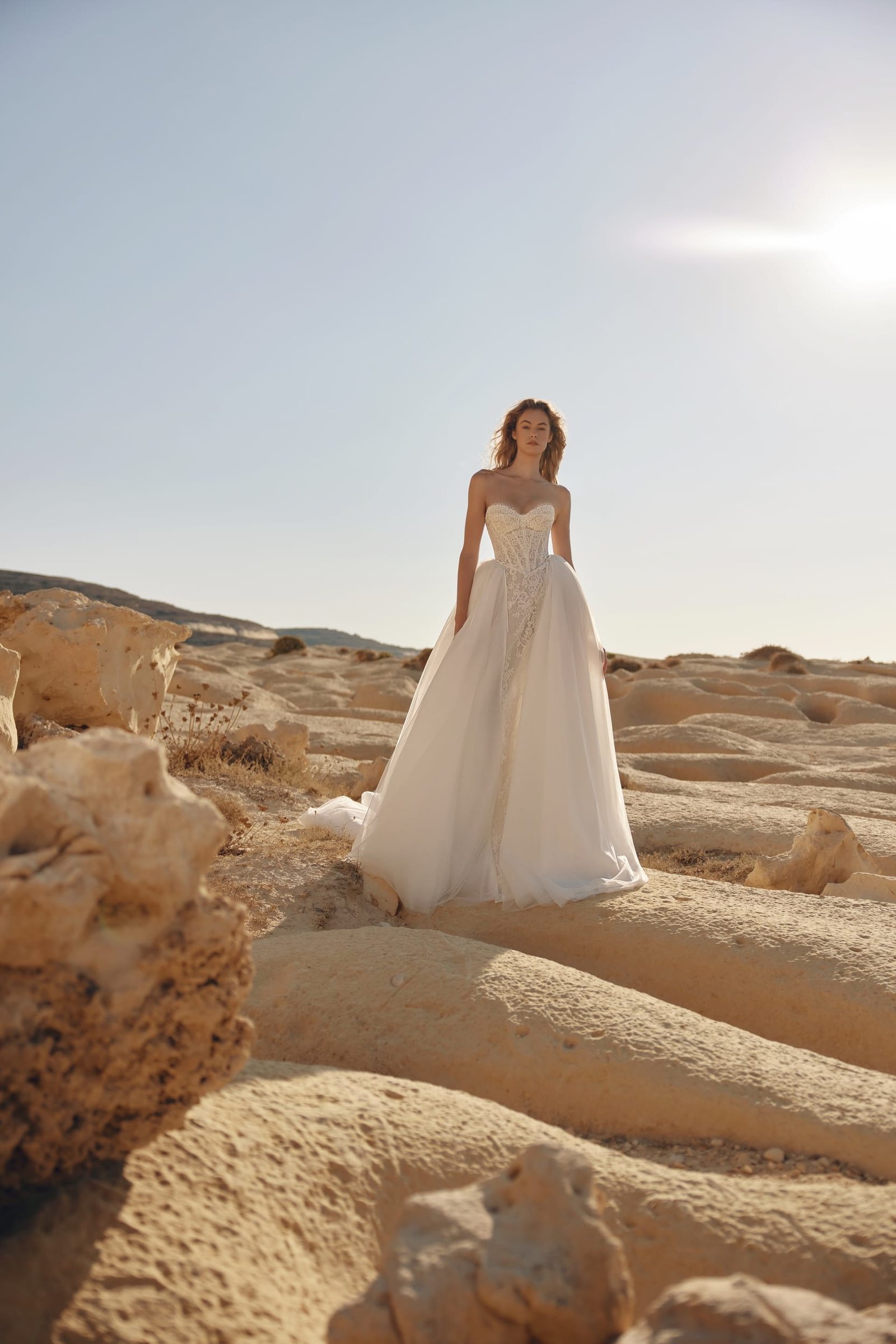
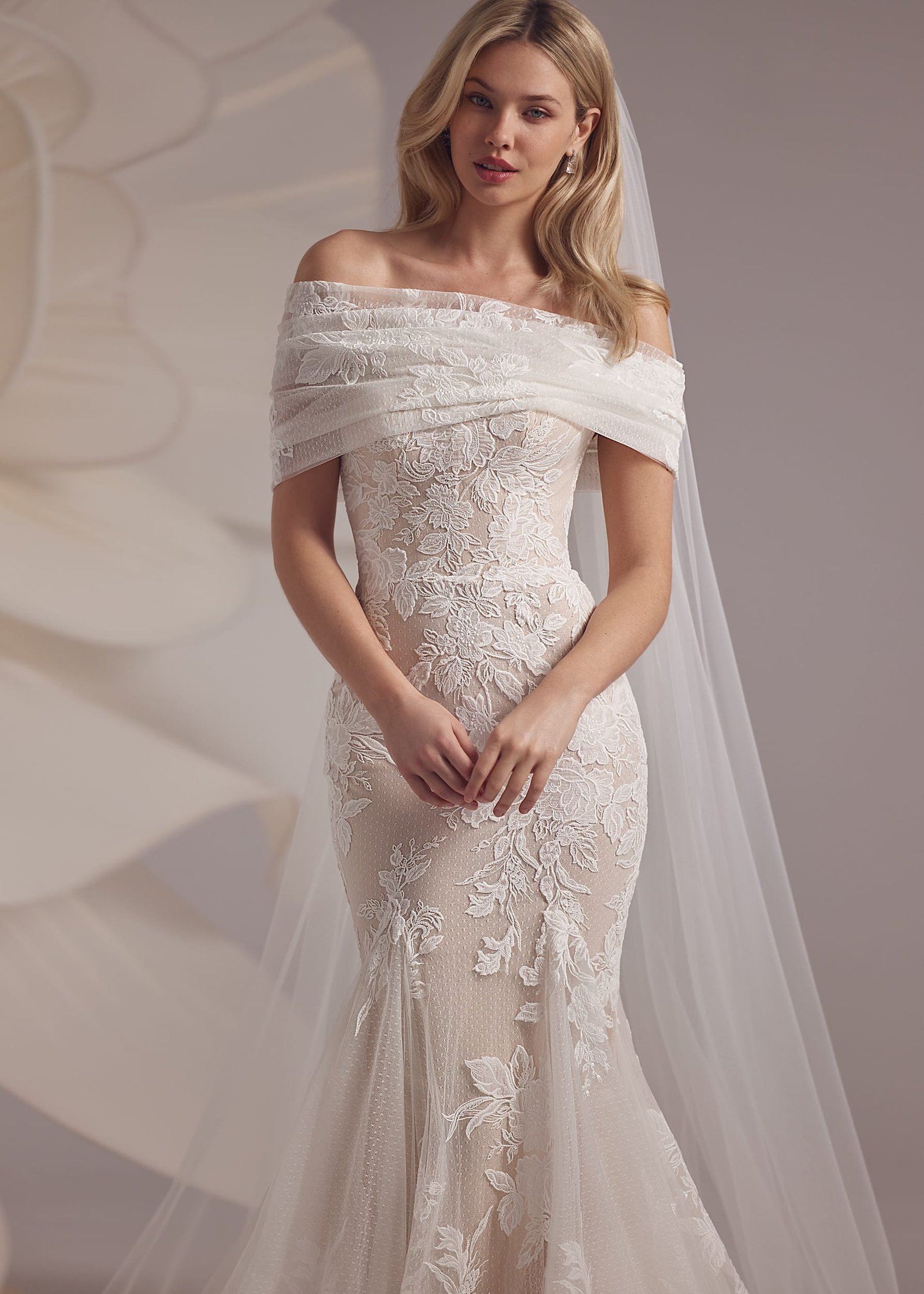
A fit-and-flare wedding dress follows the bodice and hips before it opens into a wider lower skirt. The side seam shows where the skirt moves away from the body. A gradual release can give the skirt a continuous line; a sharper change makes the hem more emphatic. The exact point varies, and bridal catalogues can attach more than one silhouette label to the same design.
Two ways to use the same shape
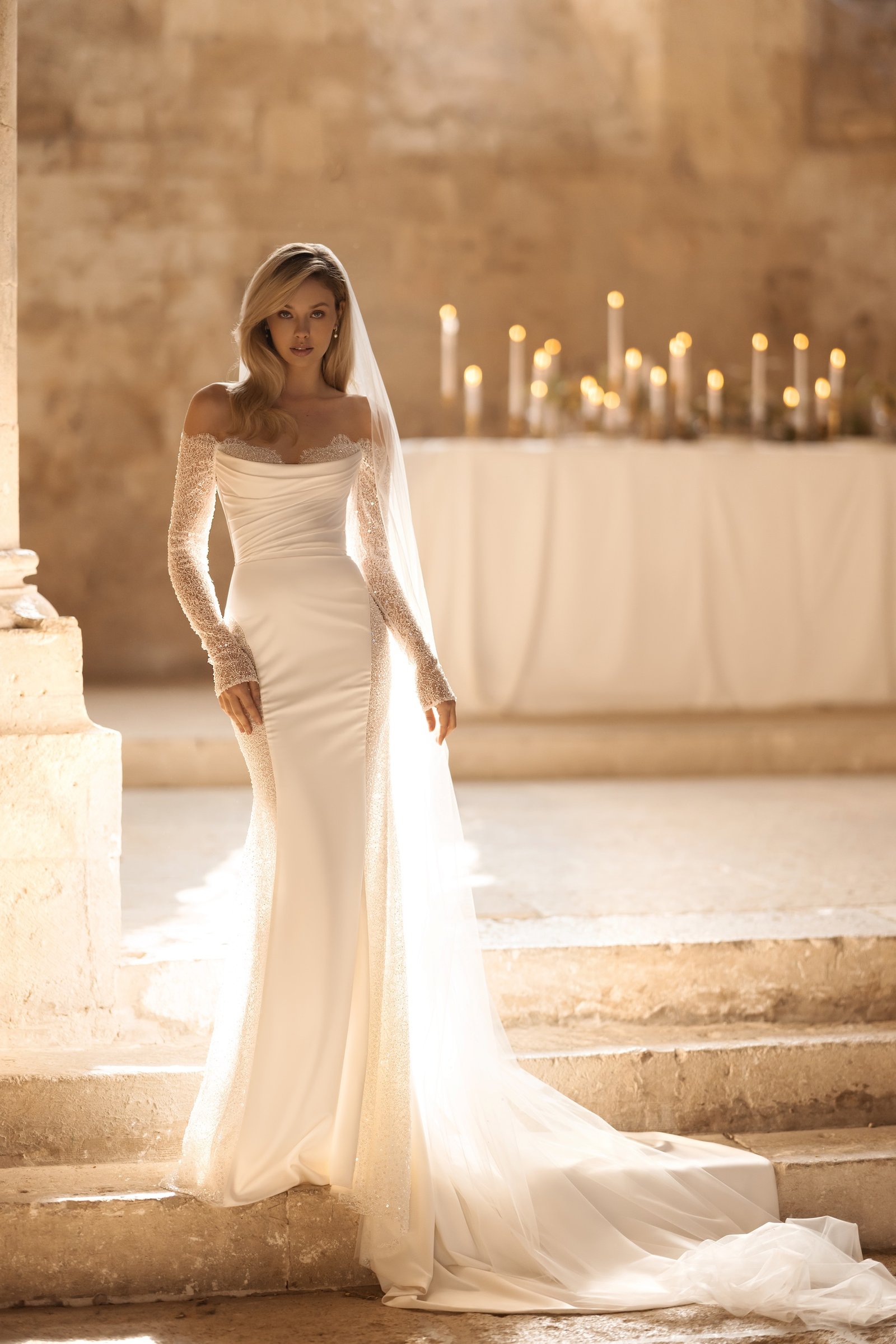
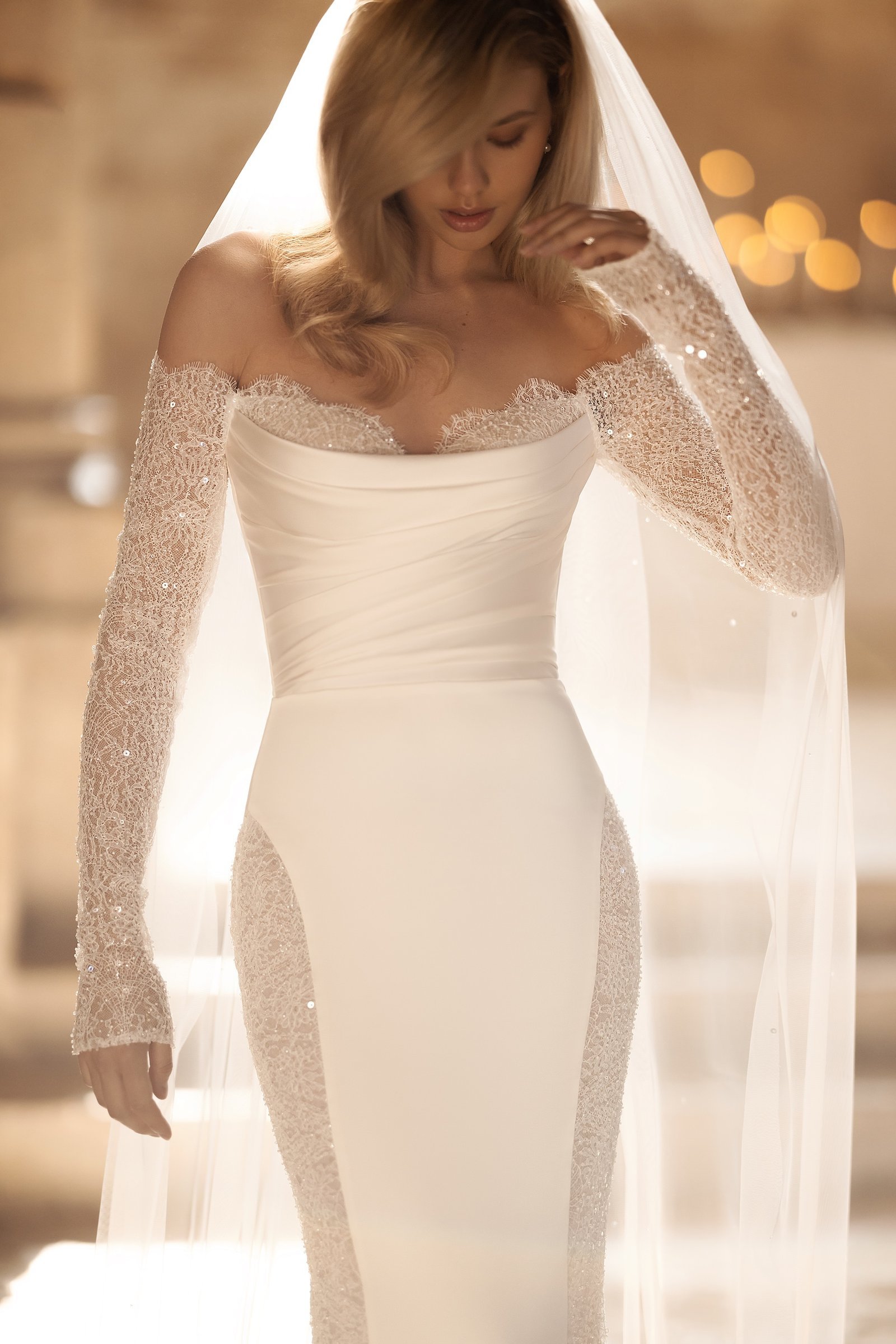
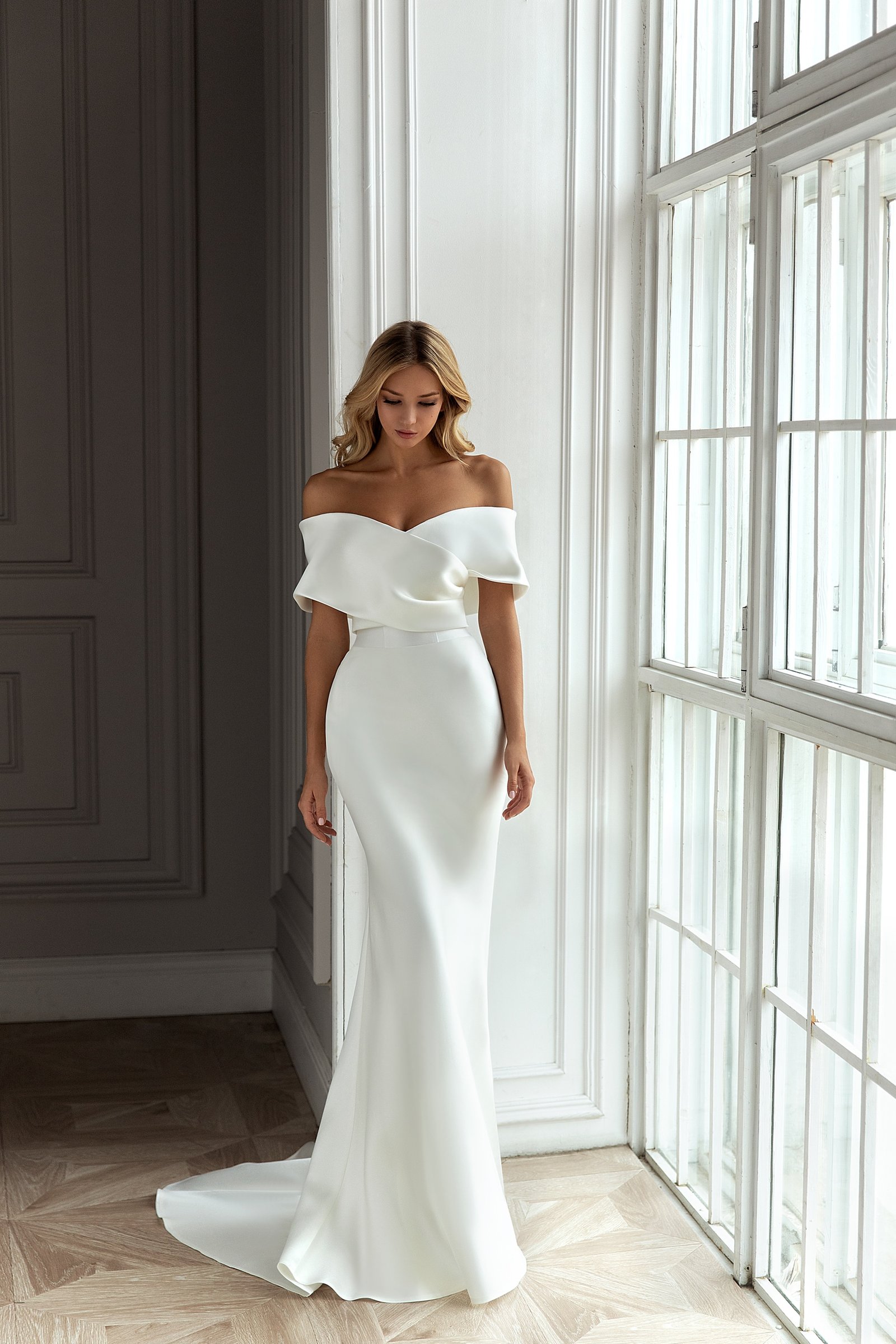
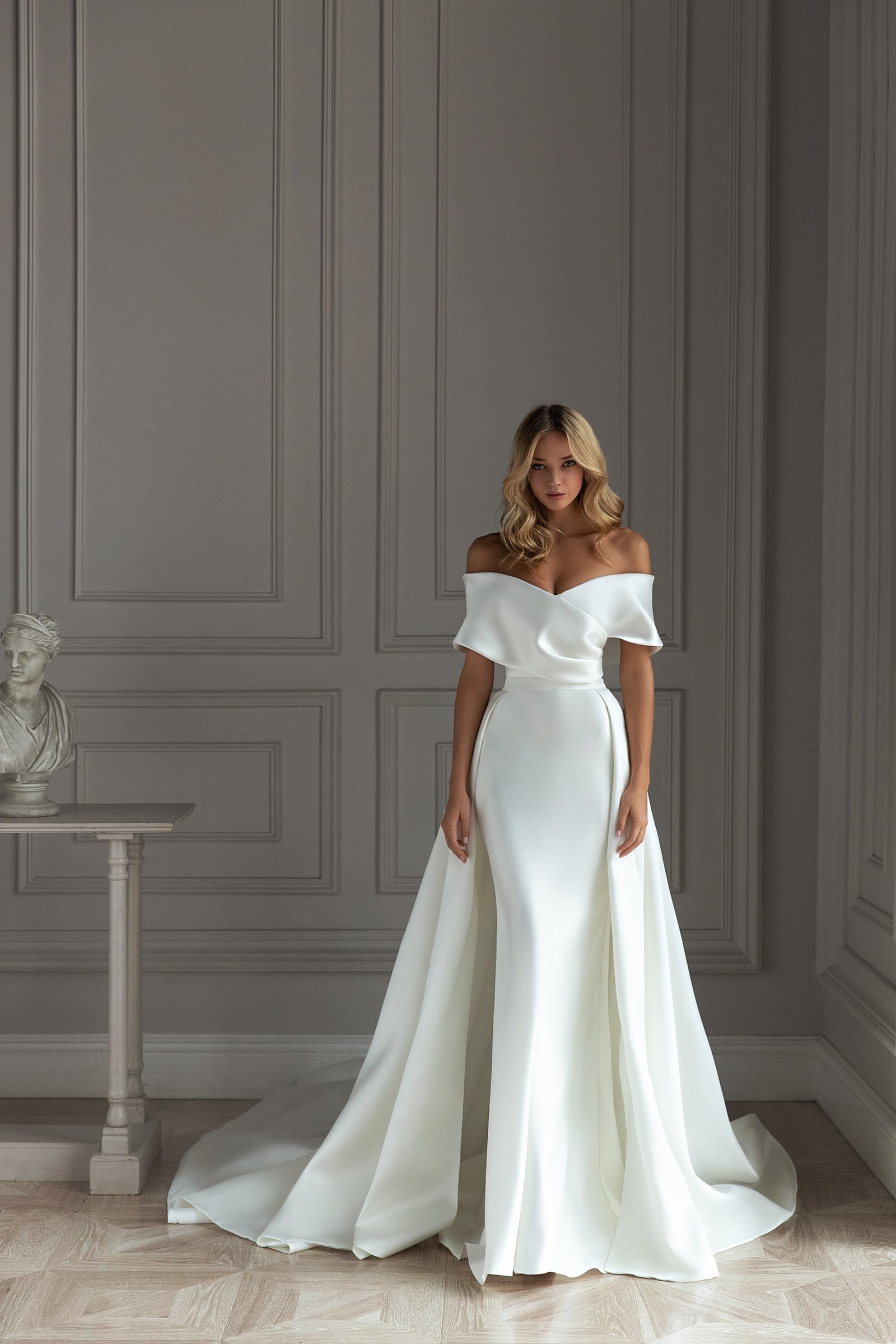
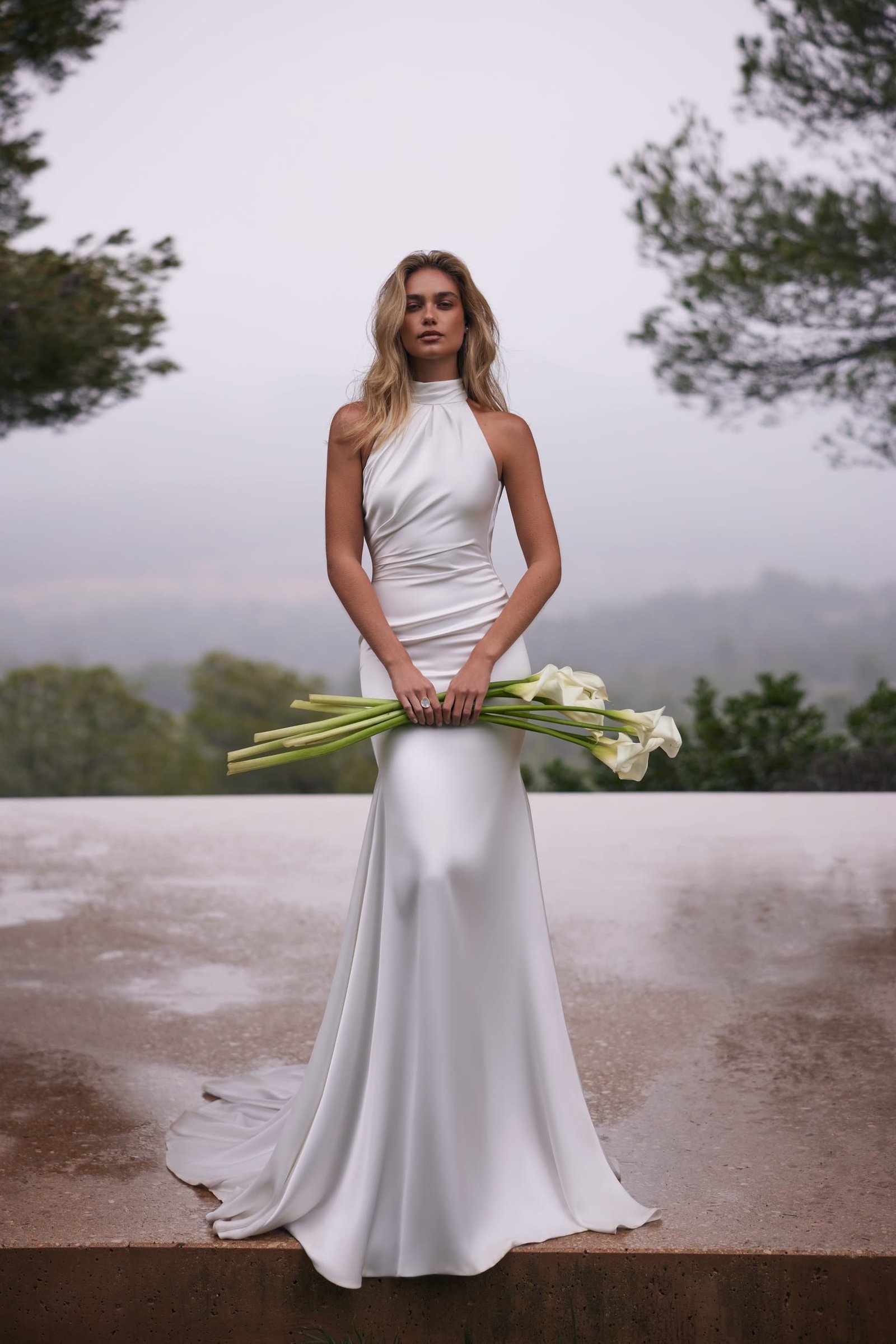
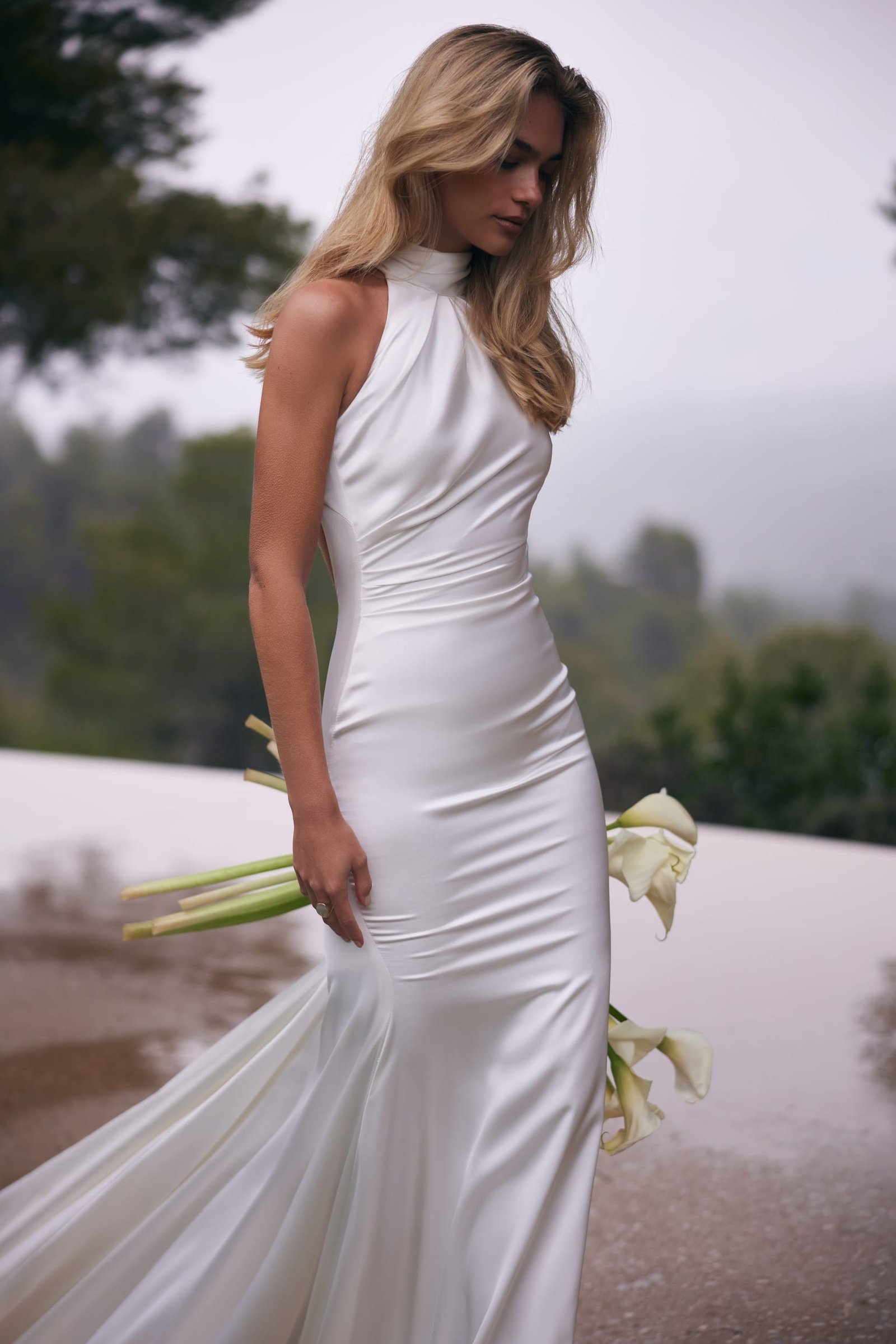
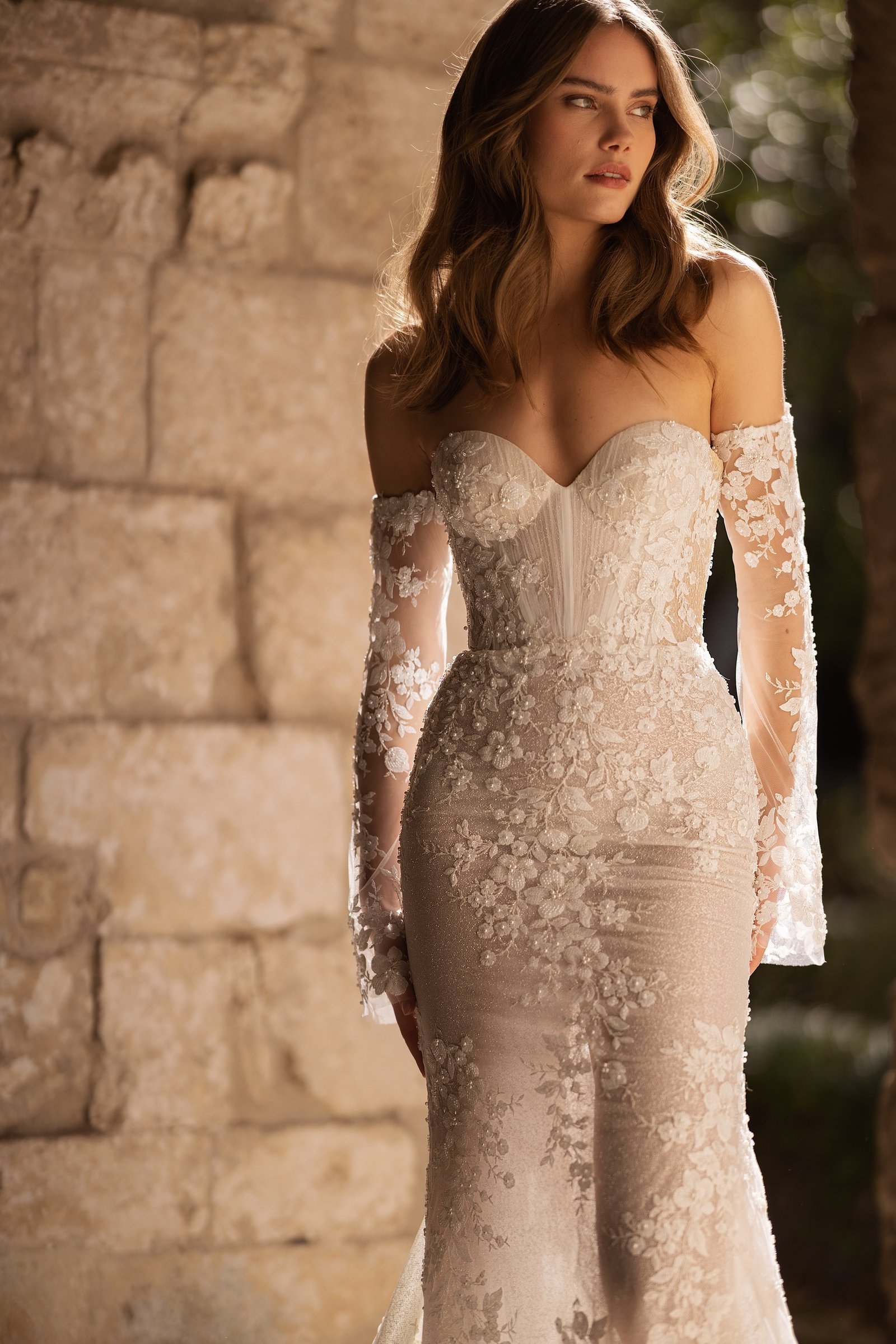
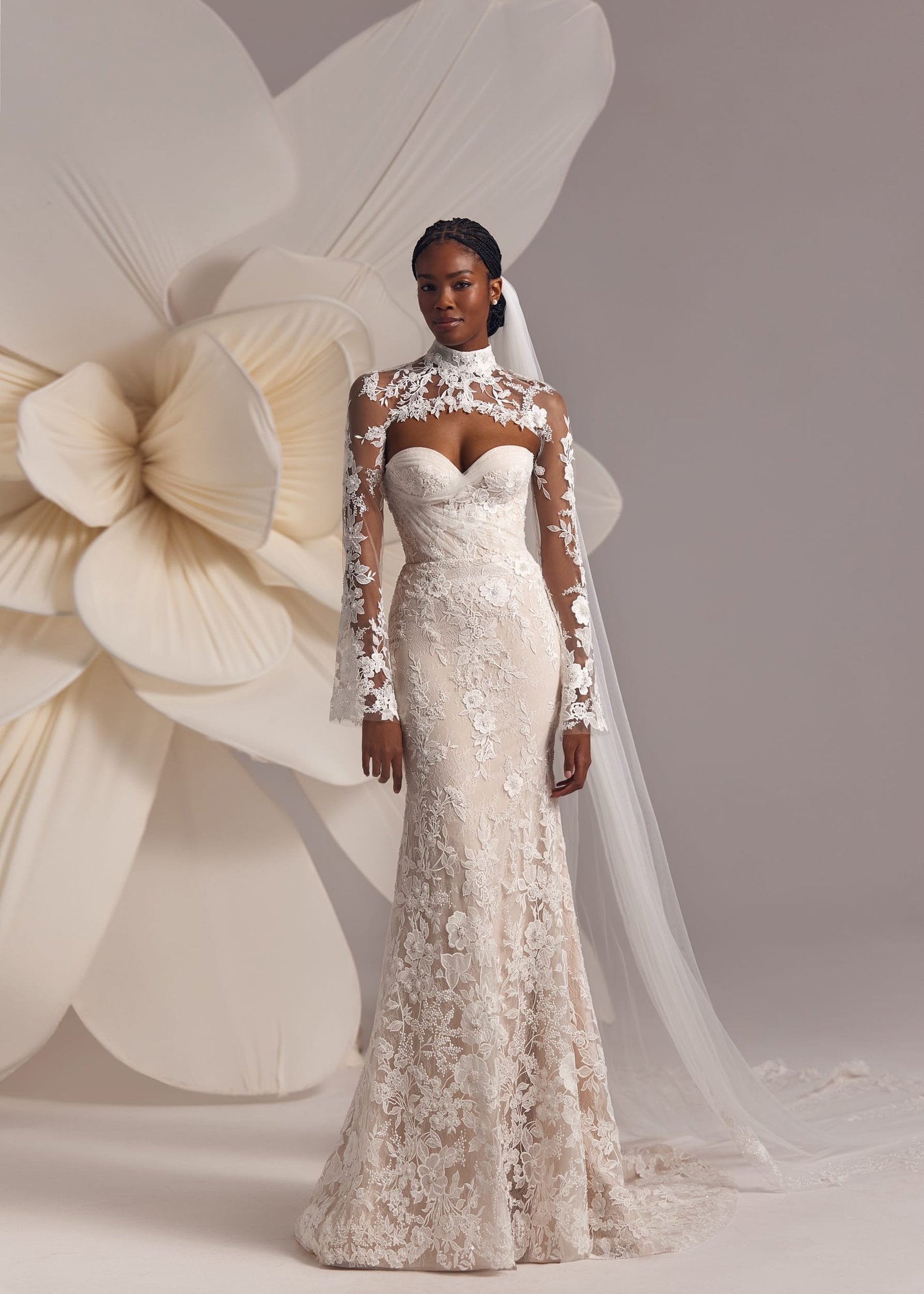
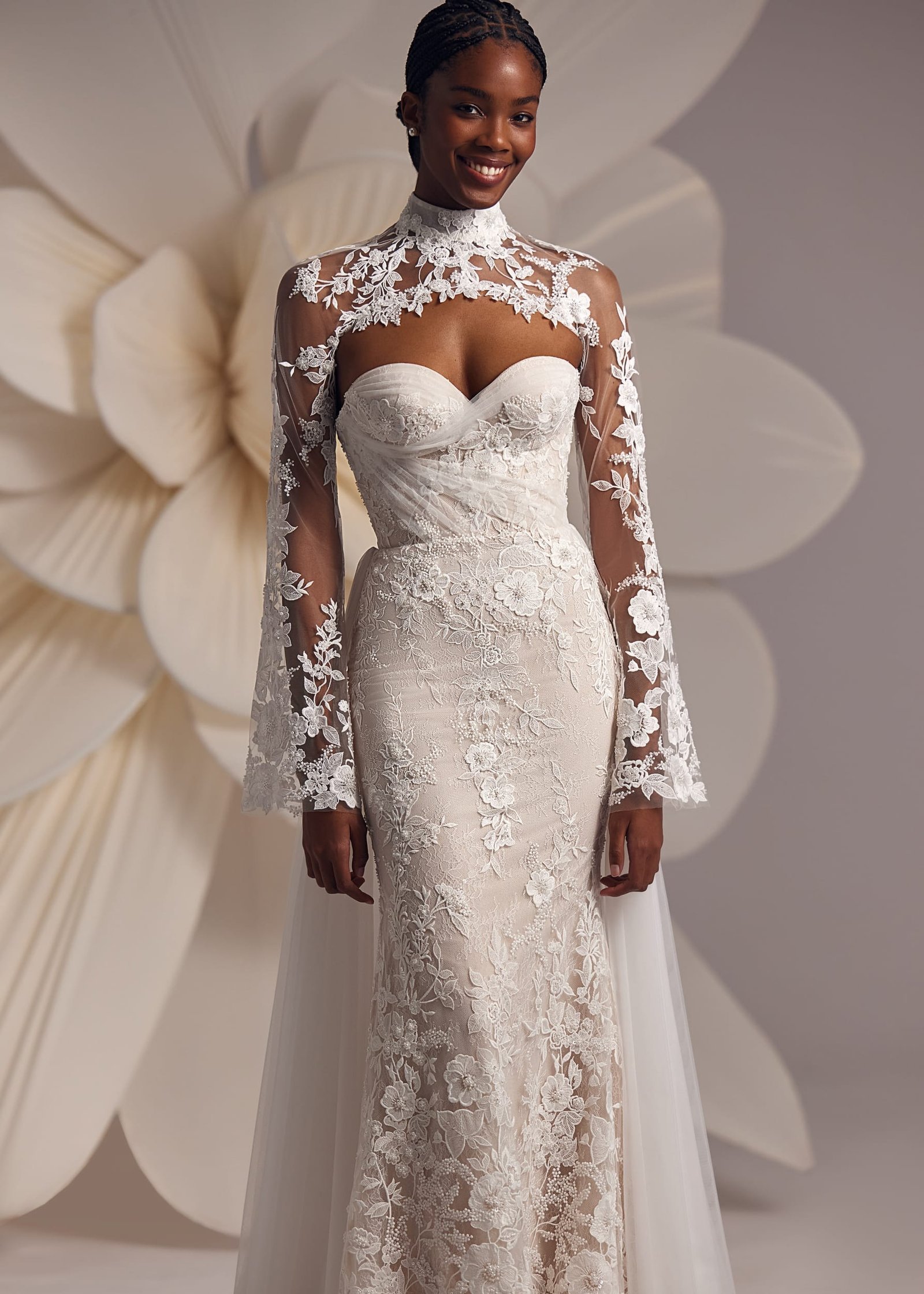
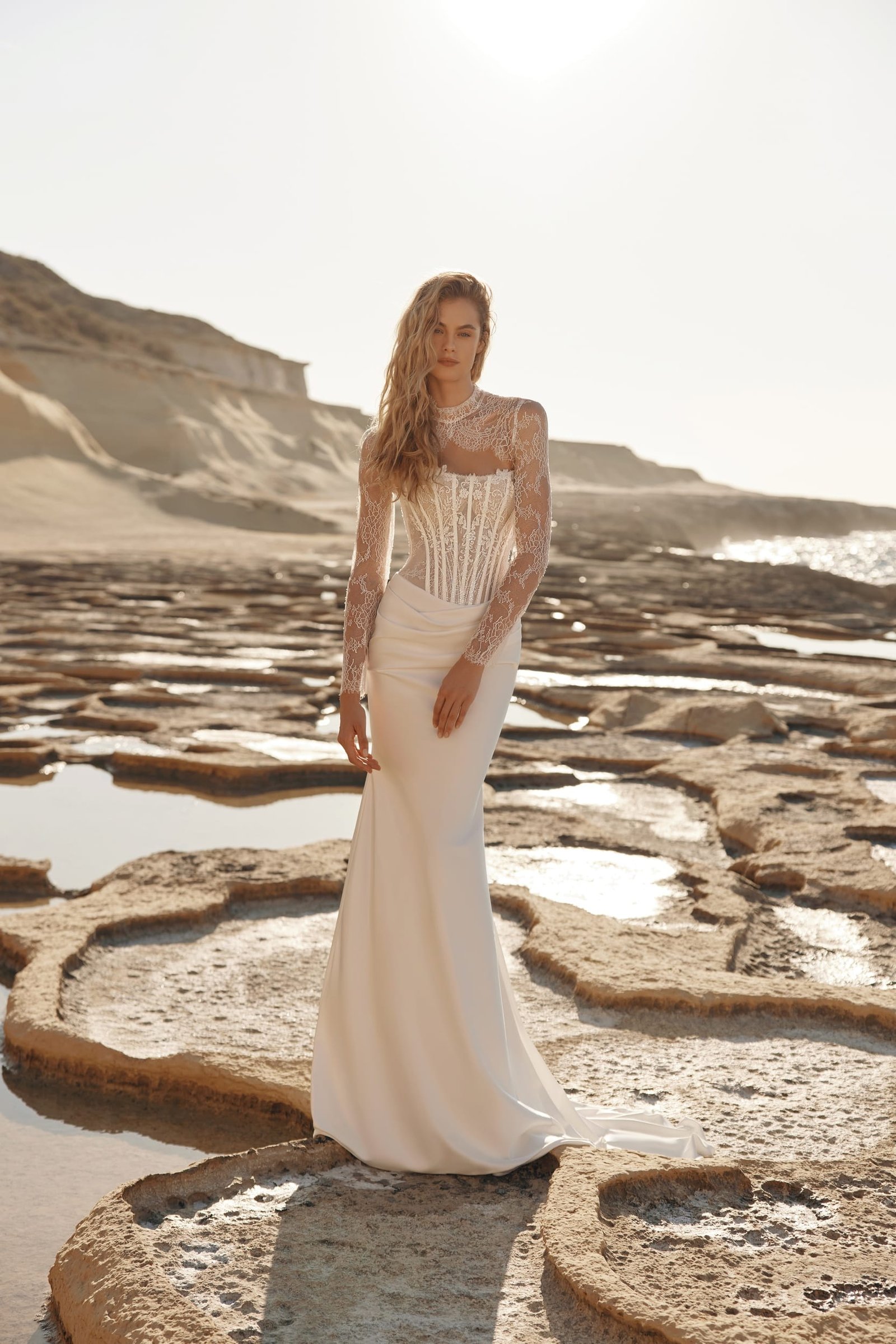
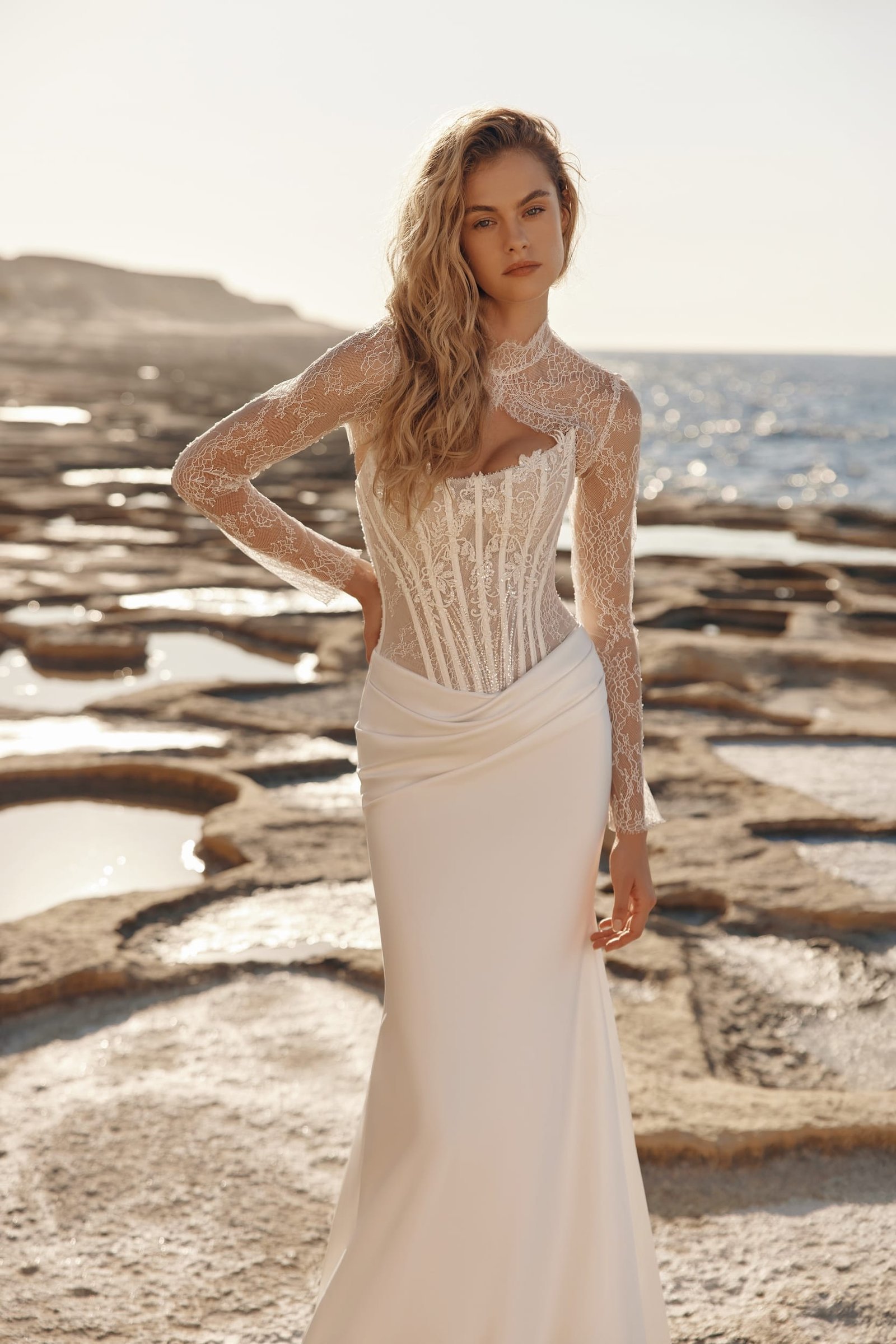
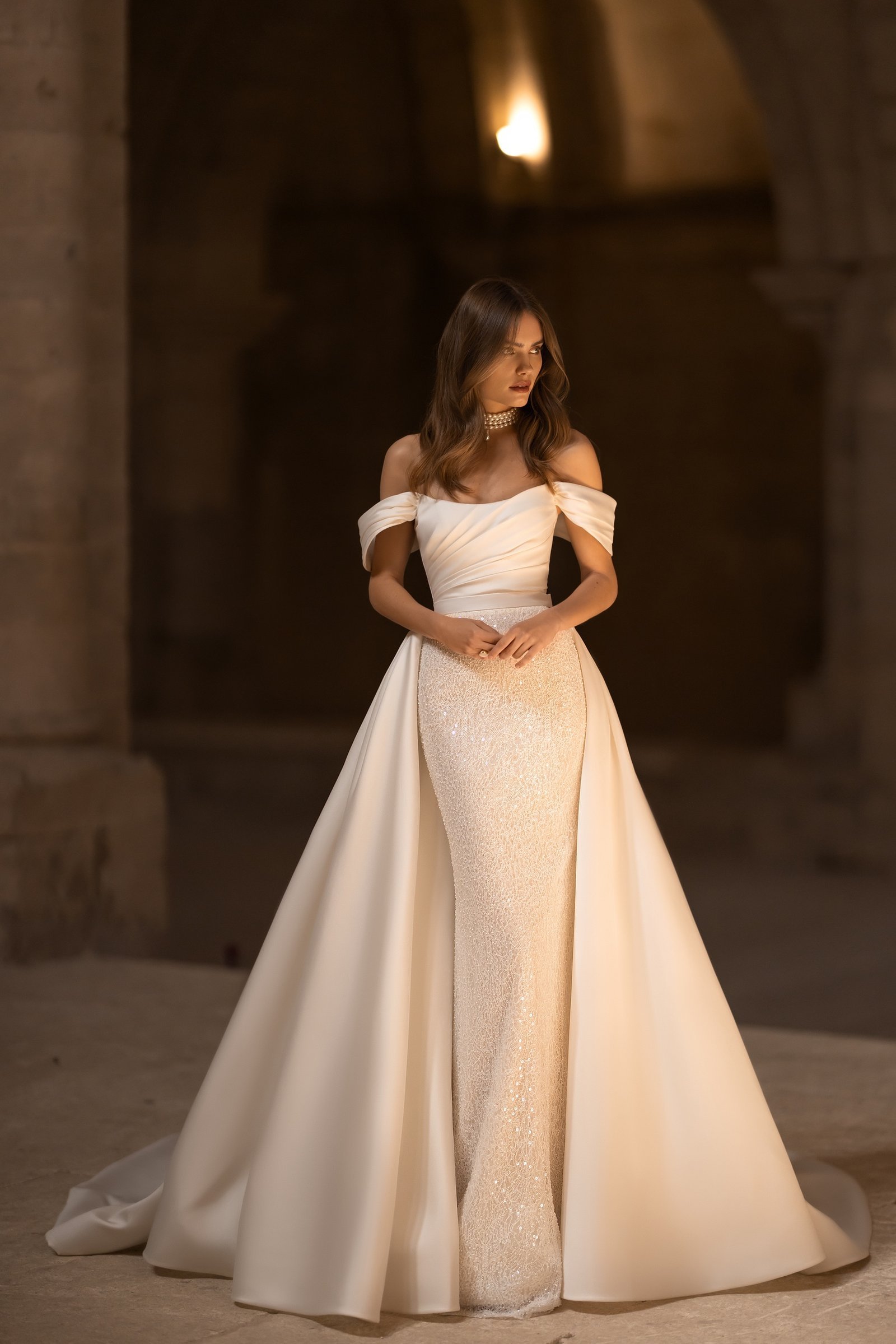
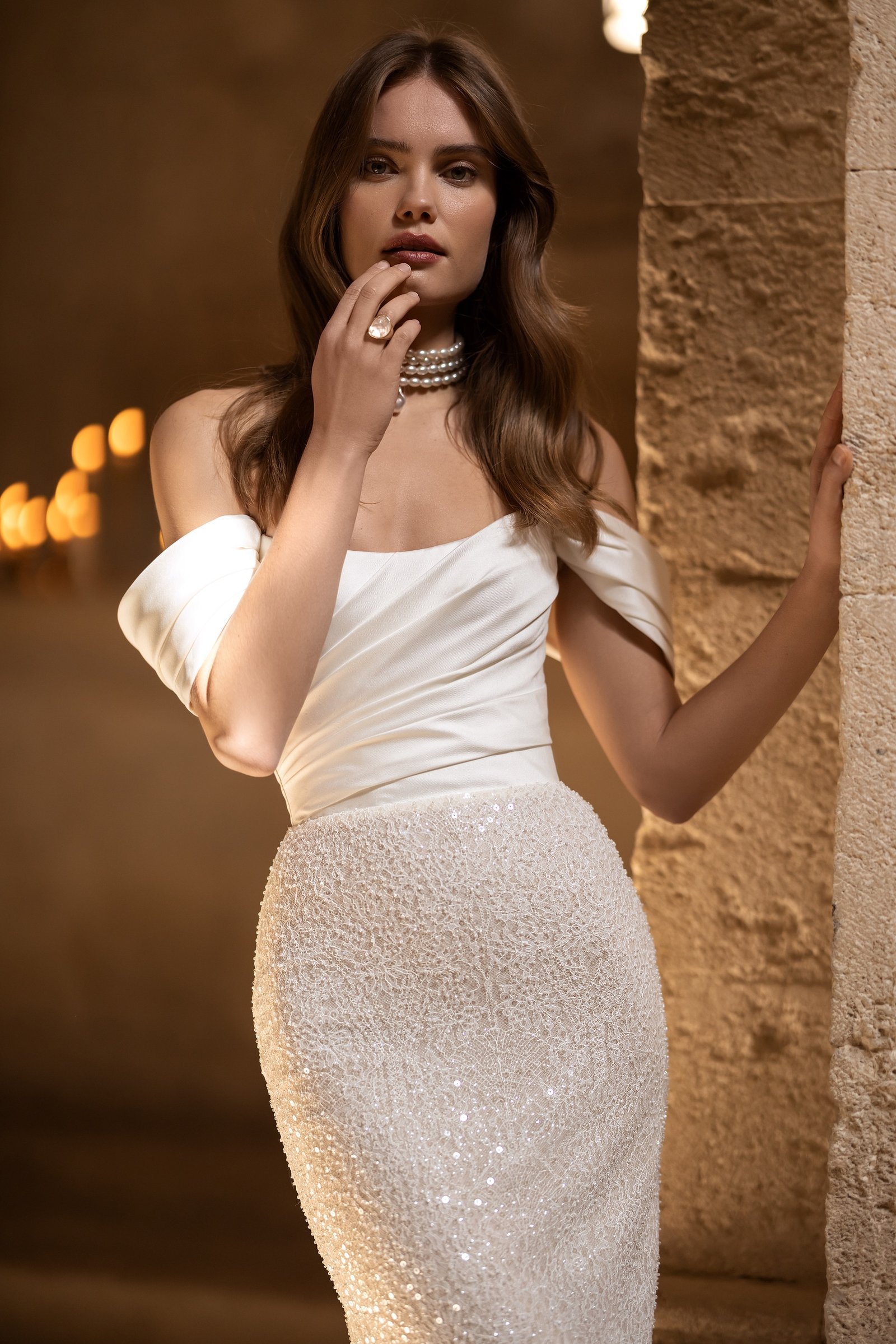
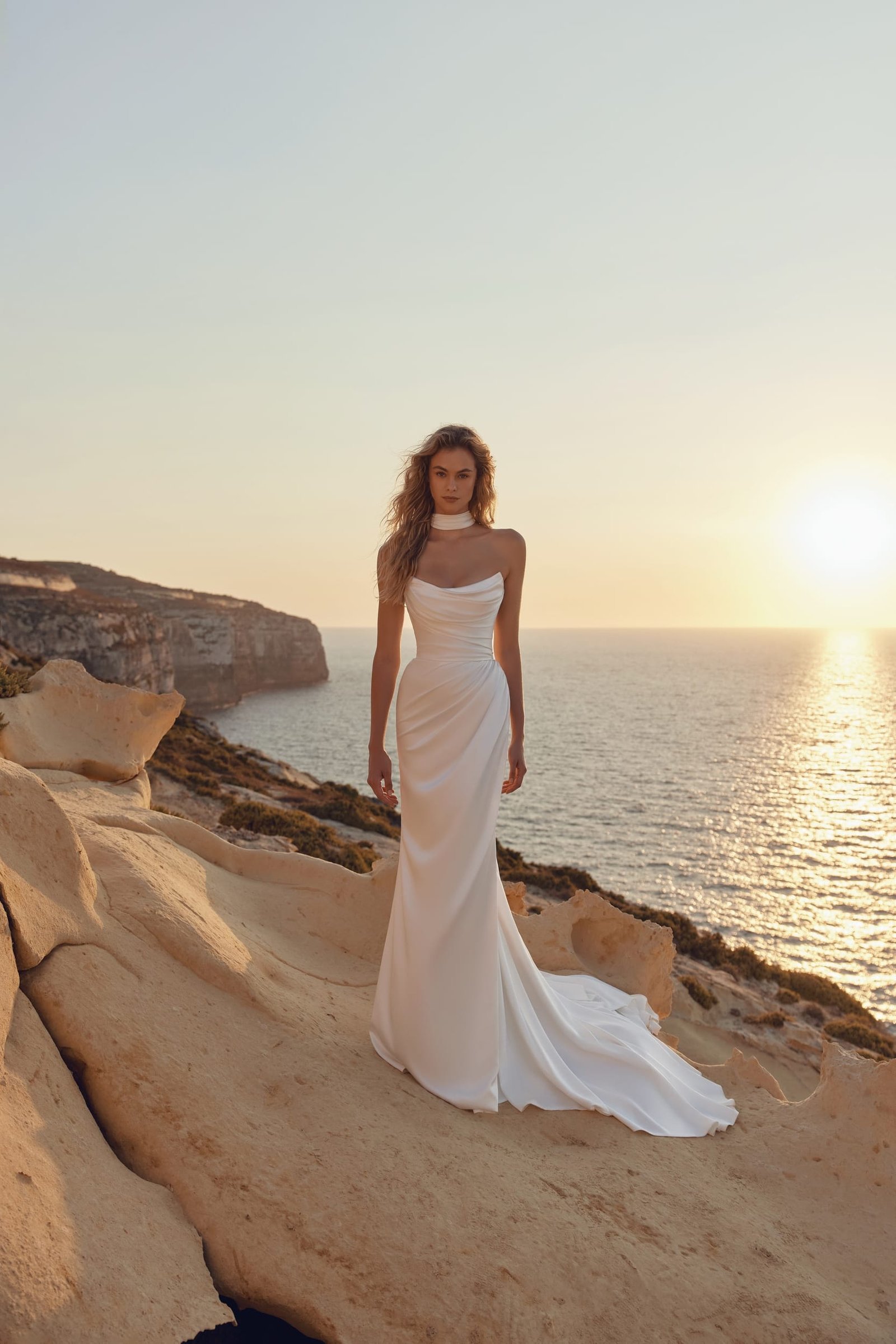
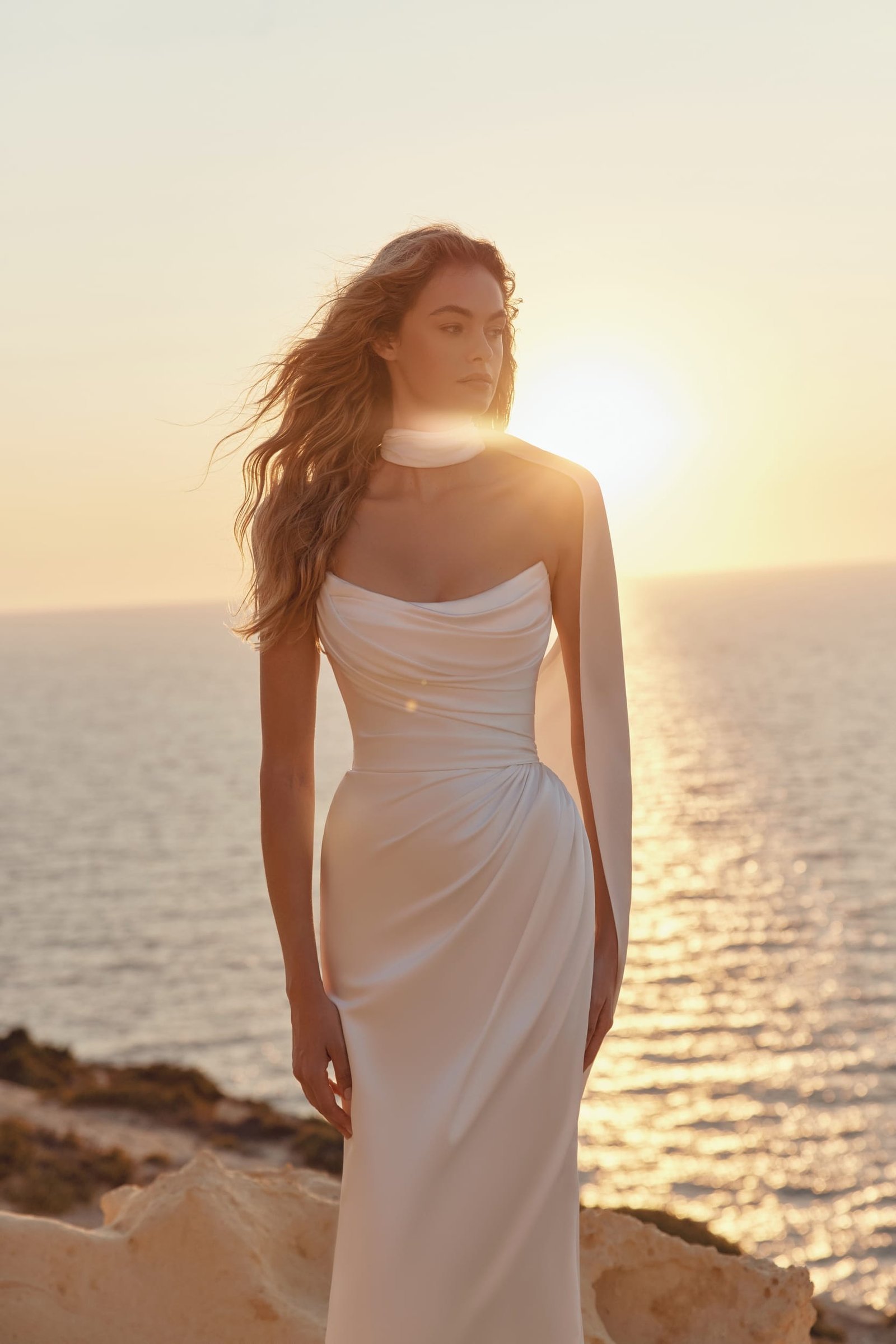
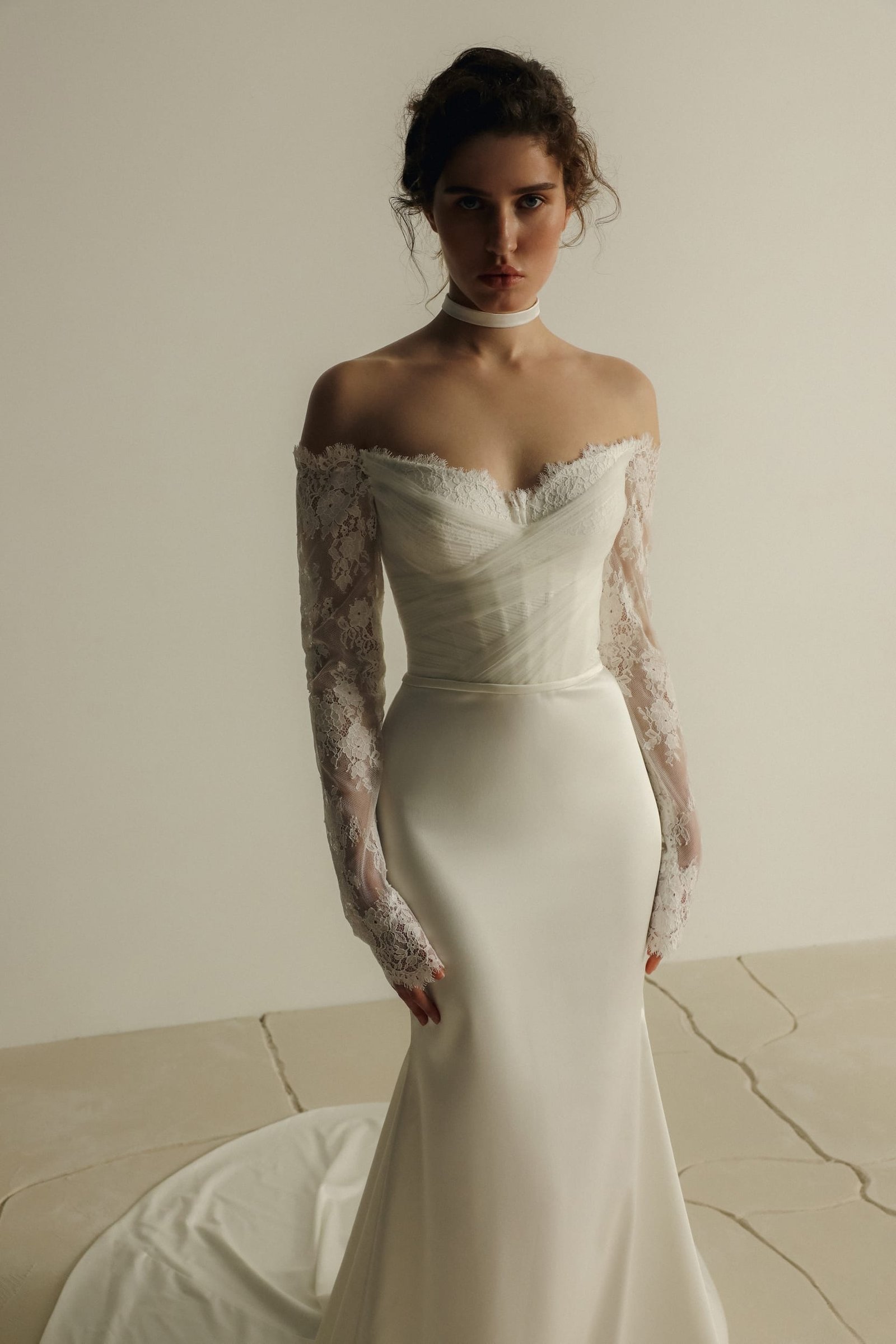
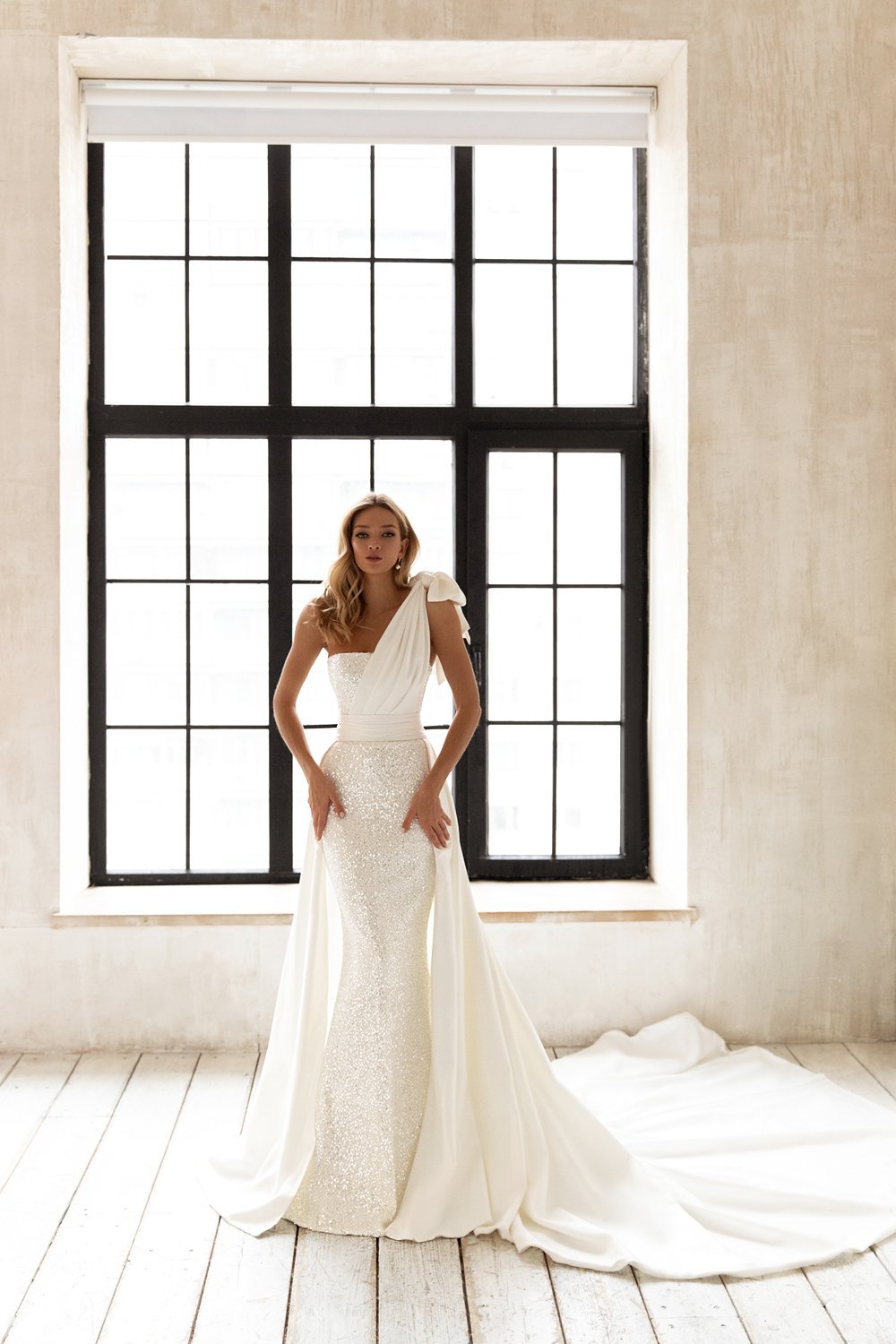
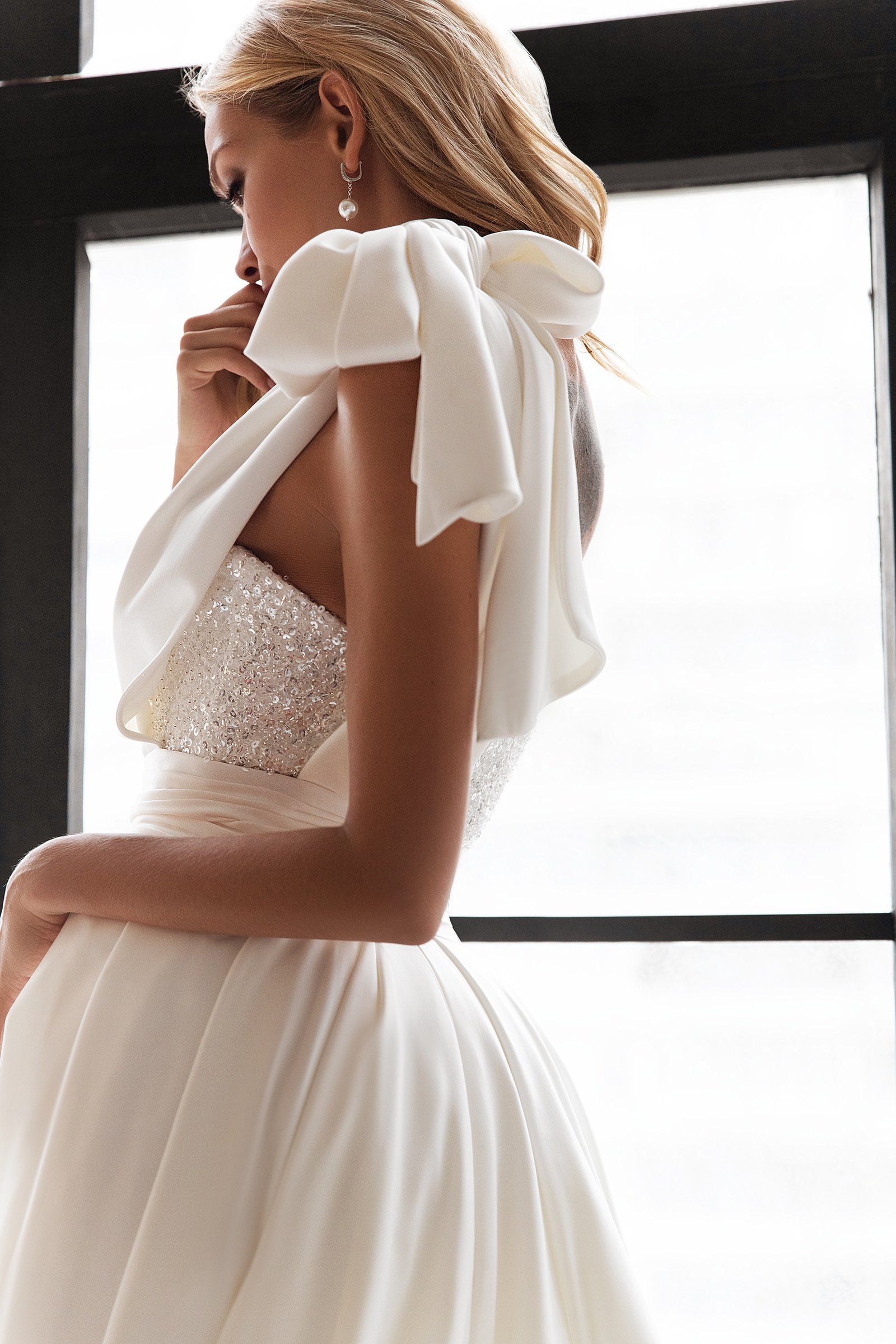
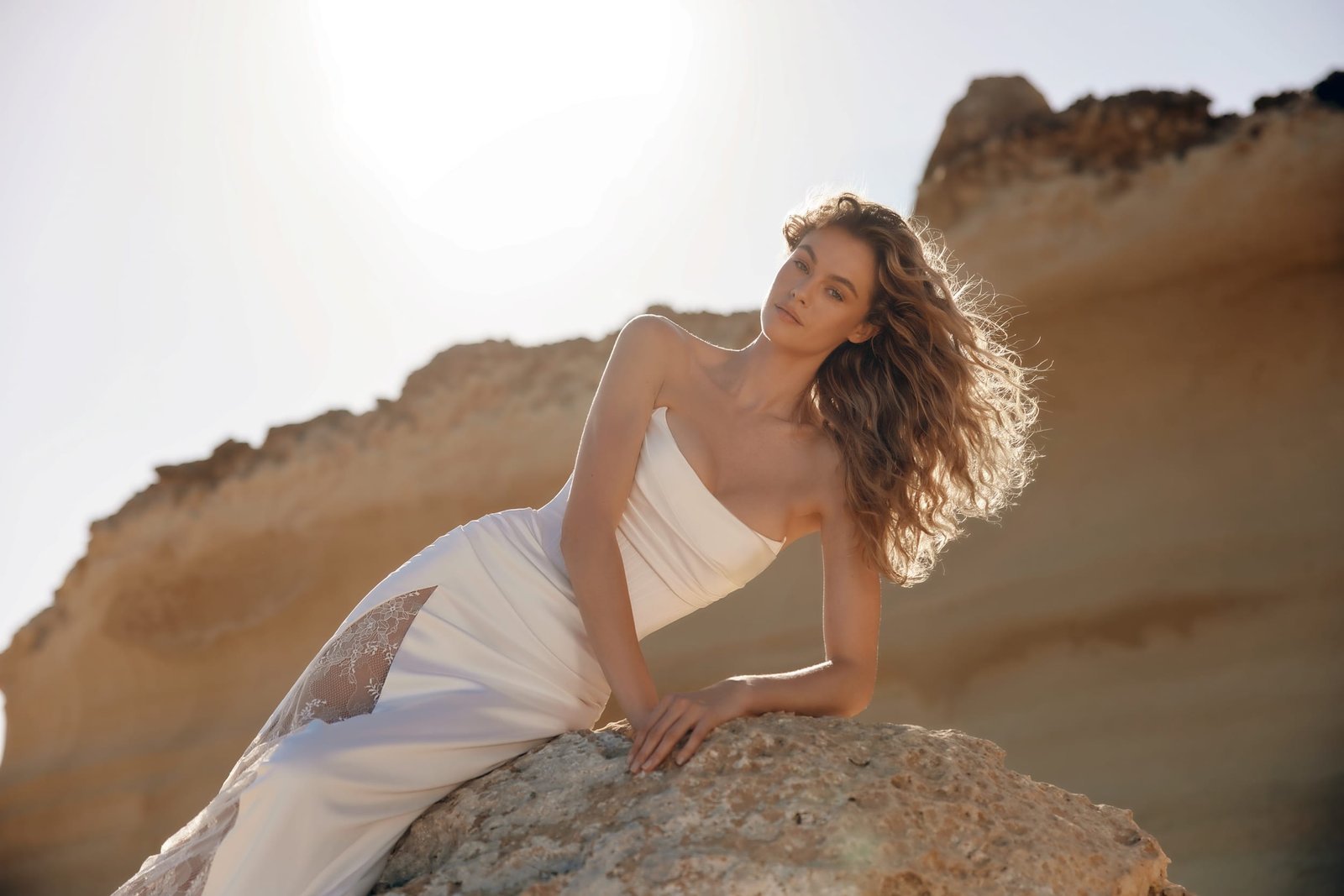
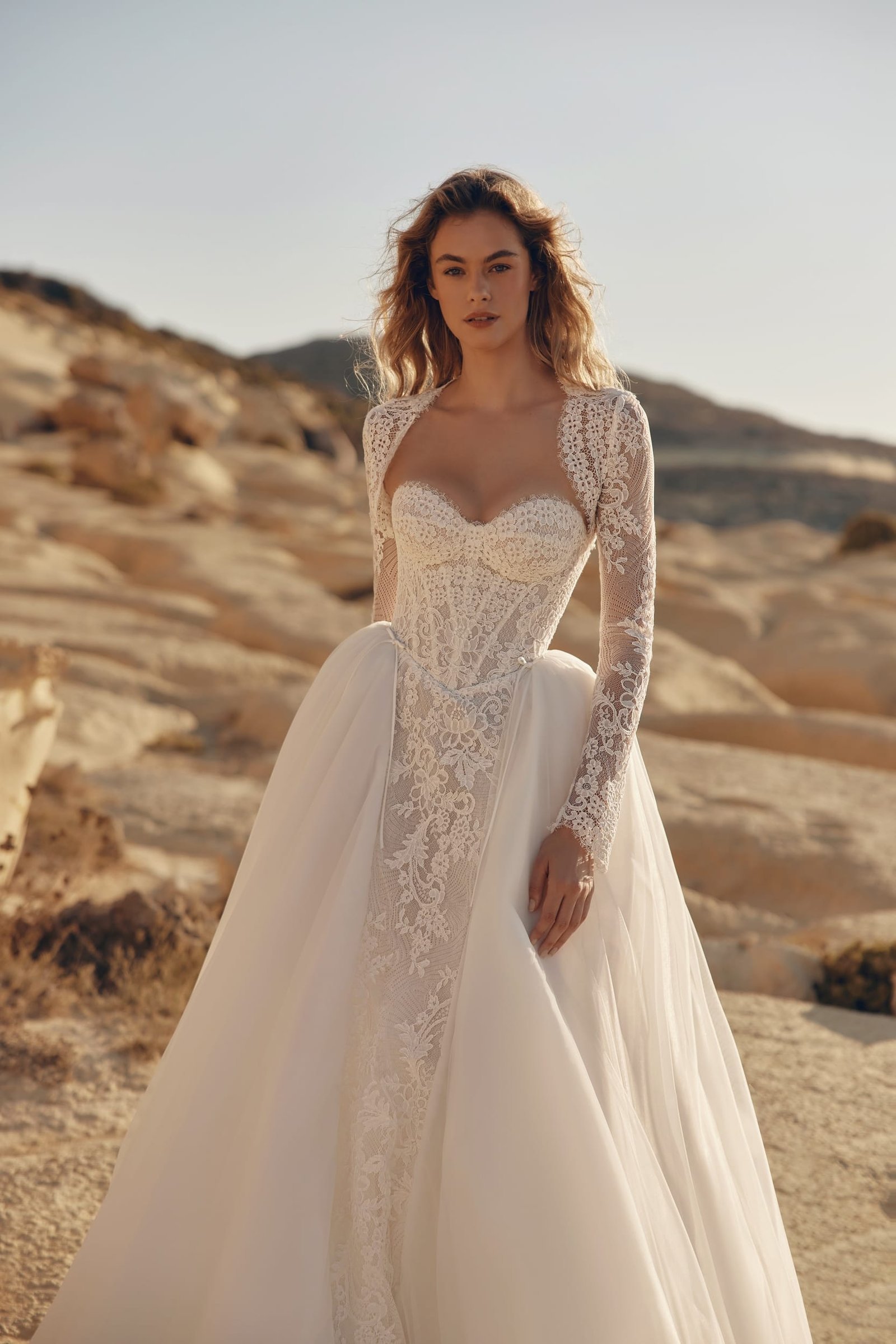
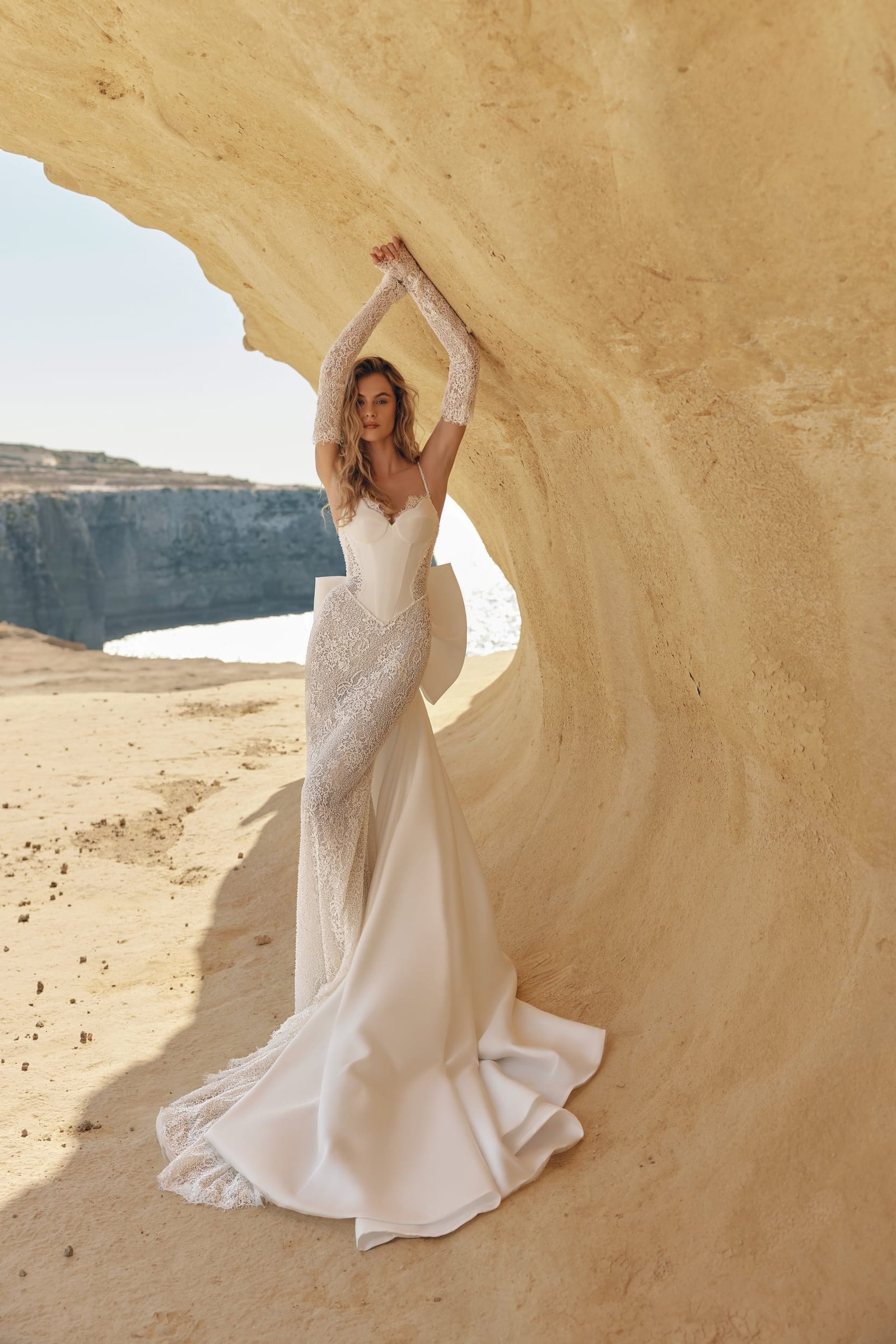
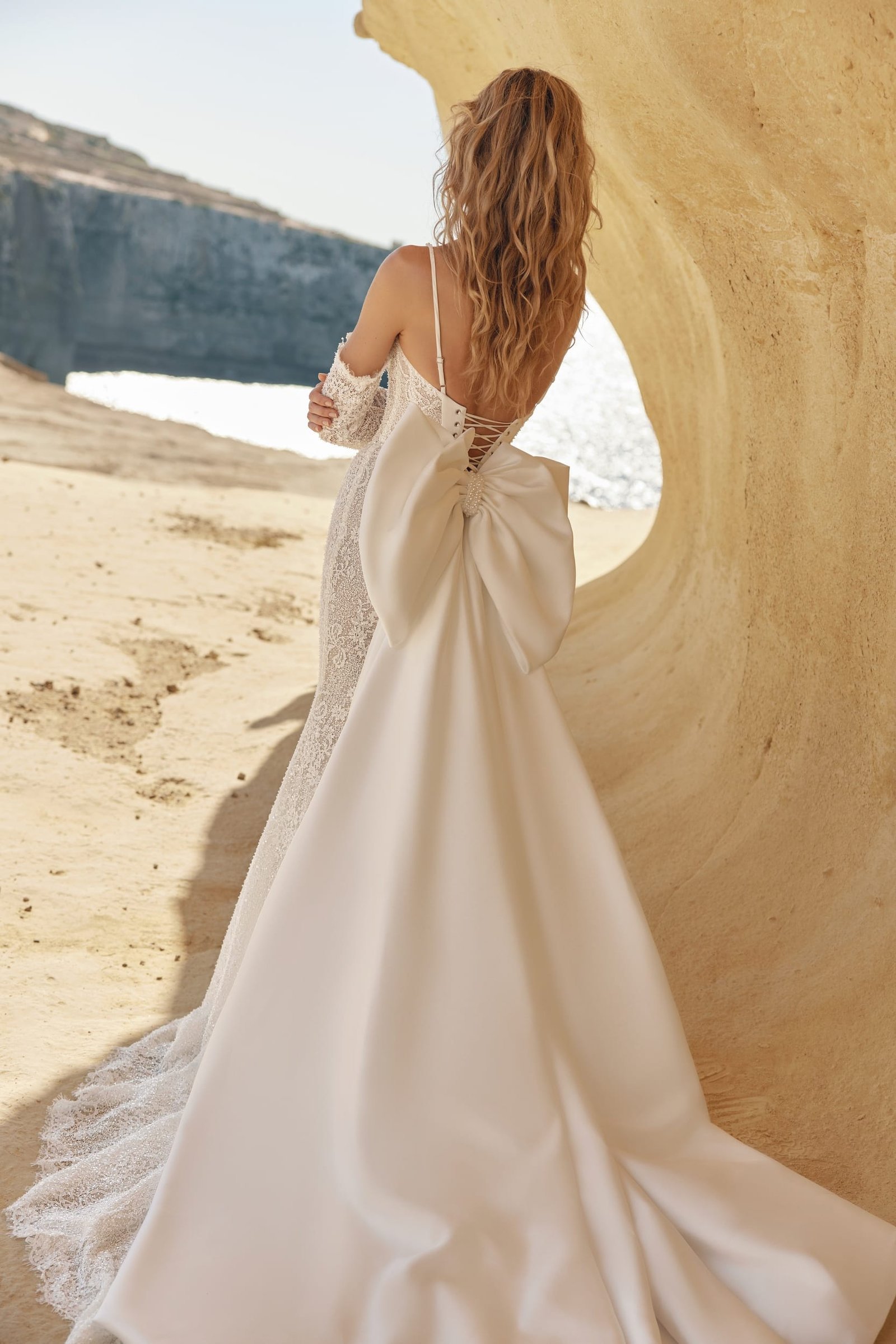
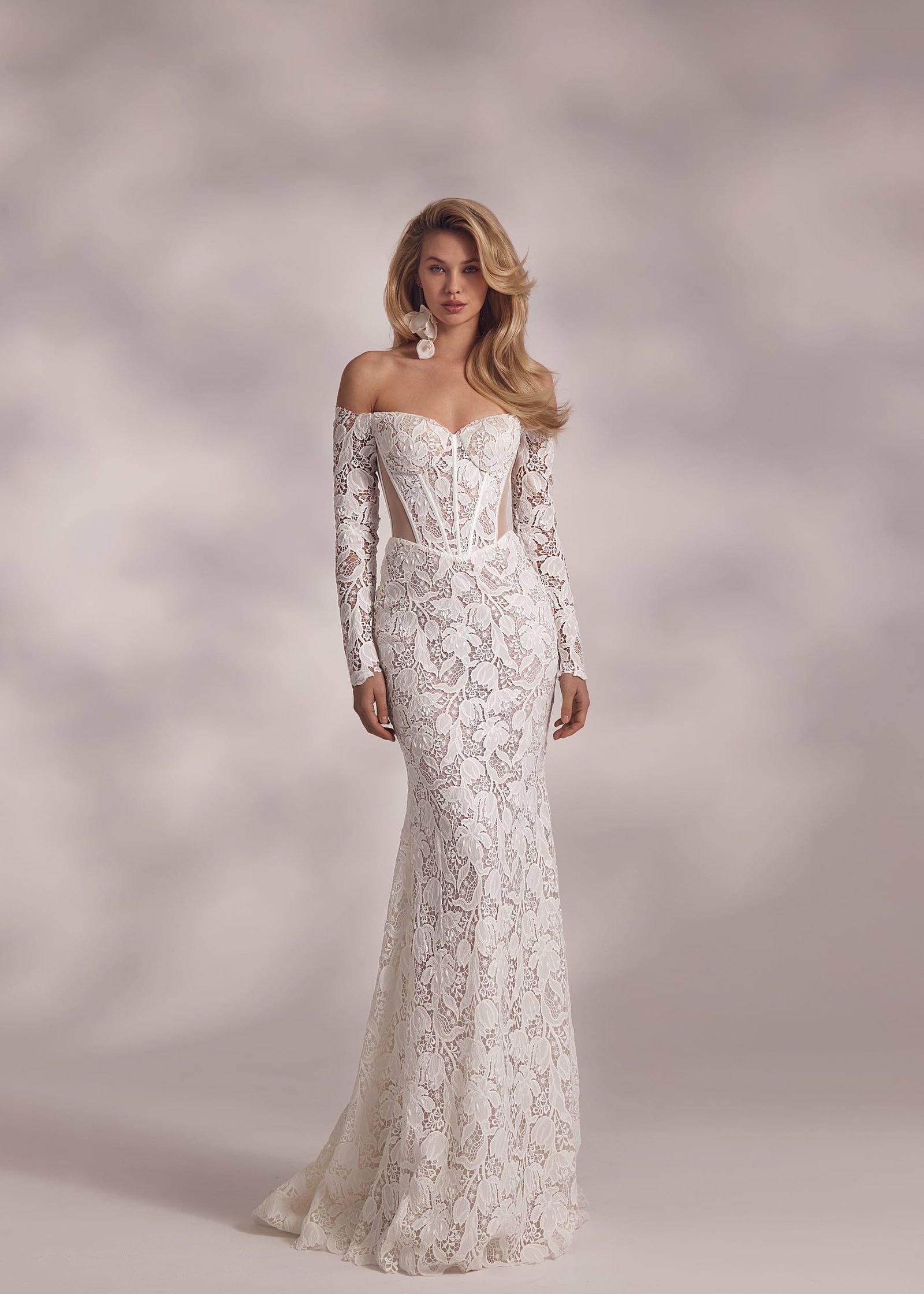
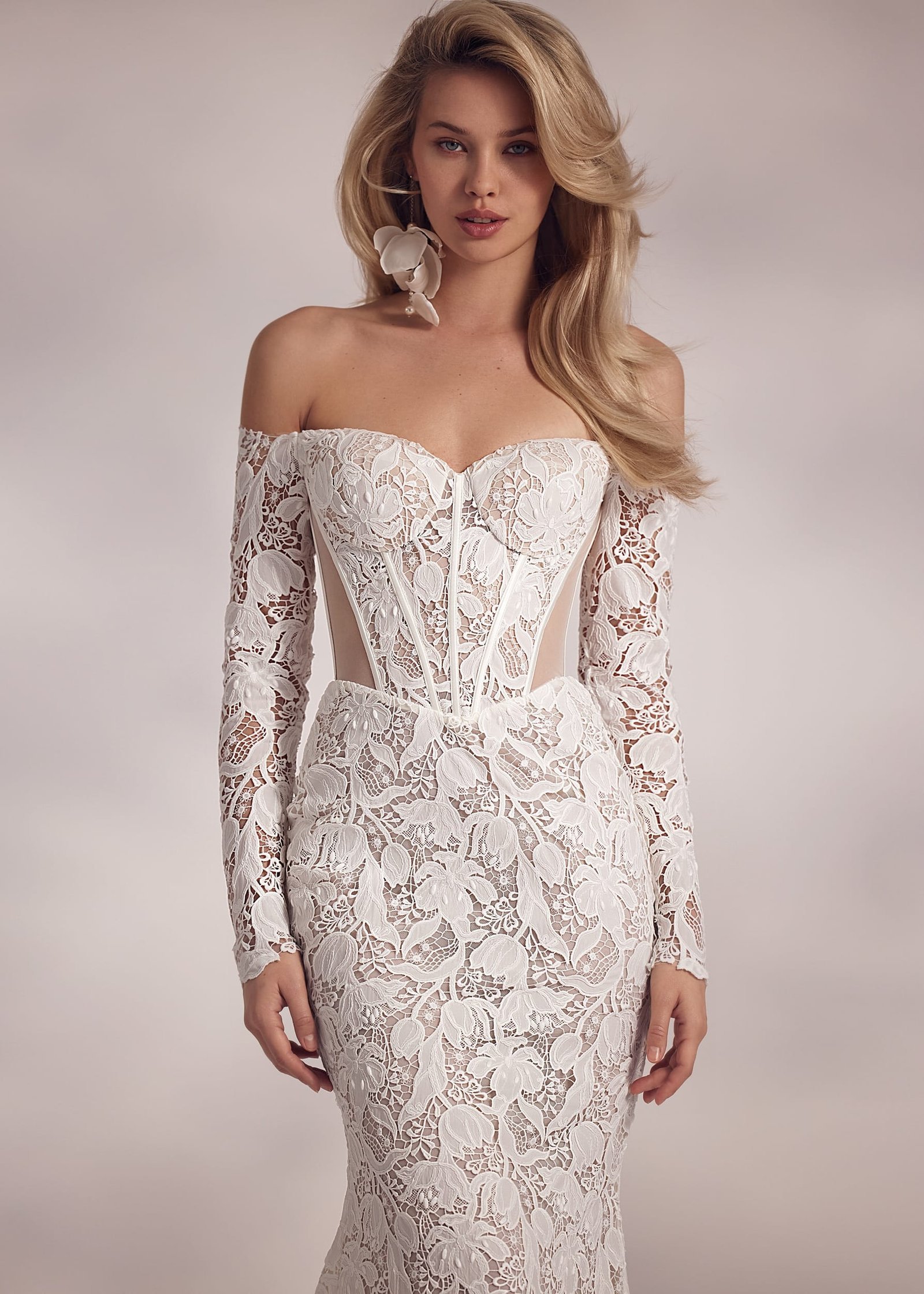
Eva Lendel’s Ricci keeps surface detail restrained: ivory satin, a halter neckline and soft draping above a skirt that opens below the knee. Envy uses satin panels against long lace sleeves and lace at the sides, so the fitted upper line carries more texture before the hem widens. Both appear in the brand’s fit-and-flare selection. The fabric, seams and surface treatment change what the eye notices first.
Where does it sit among related cuts?
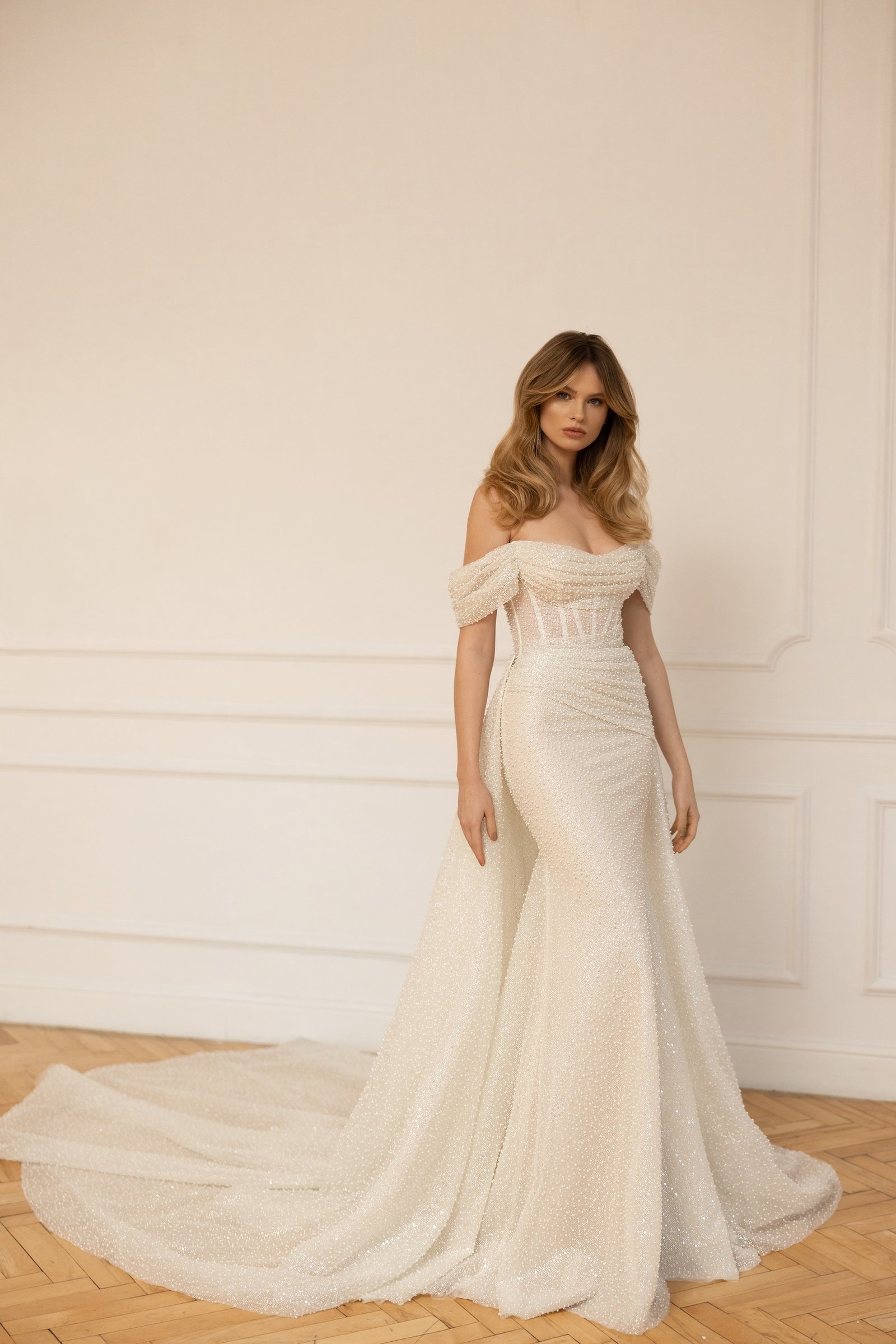
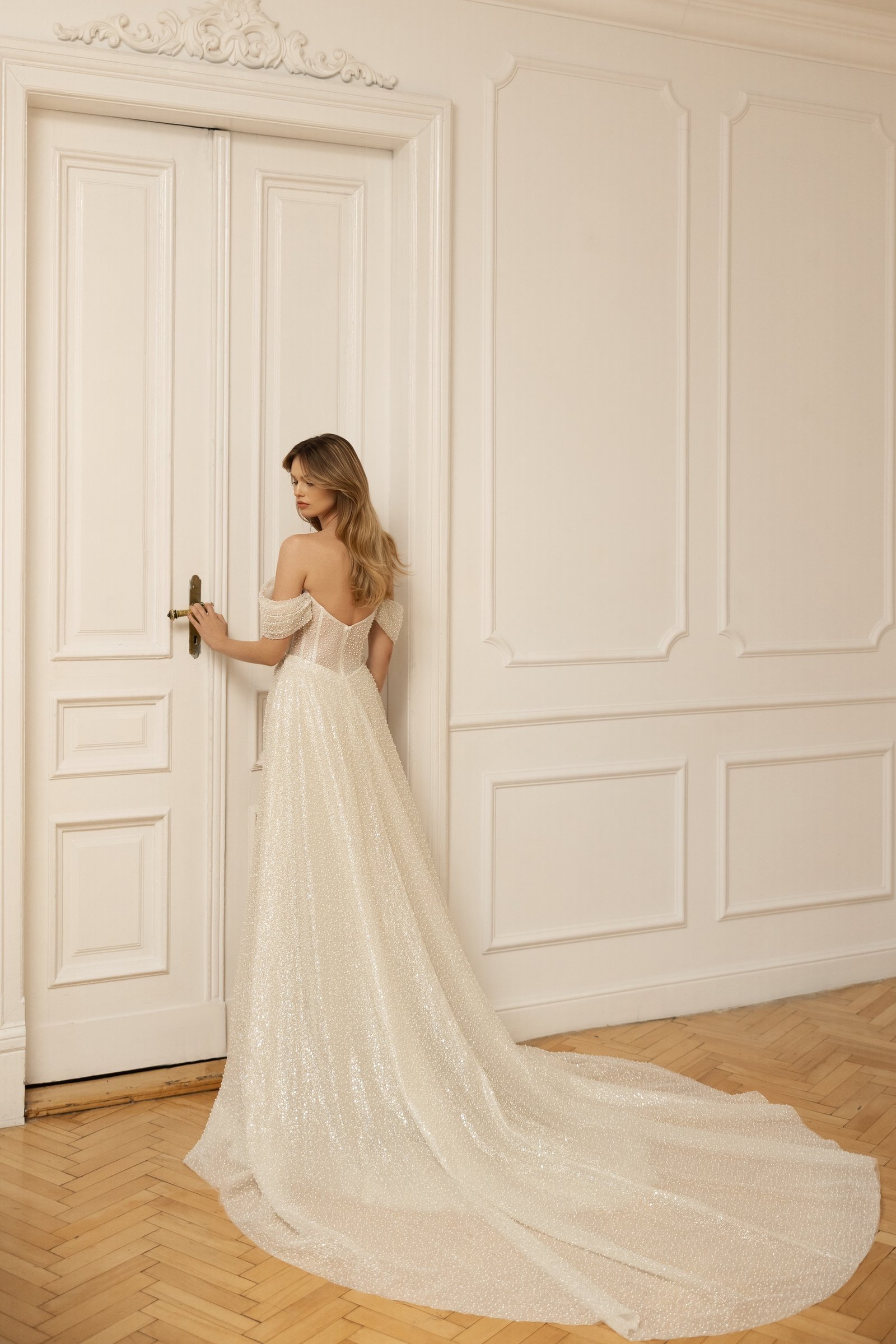
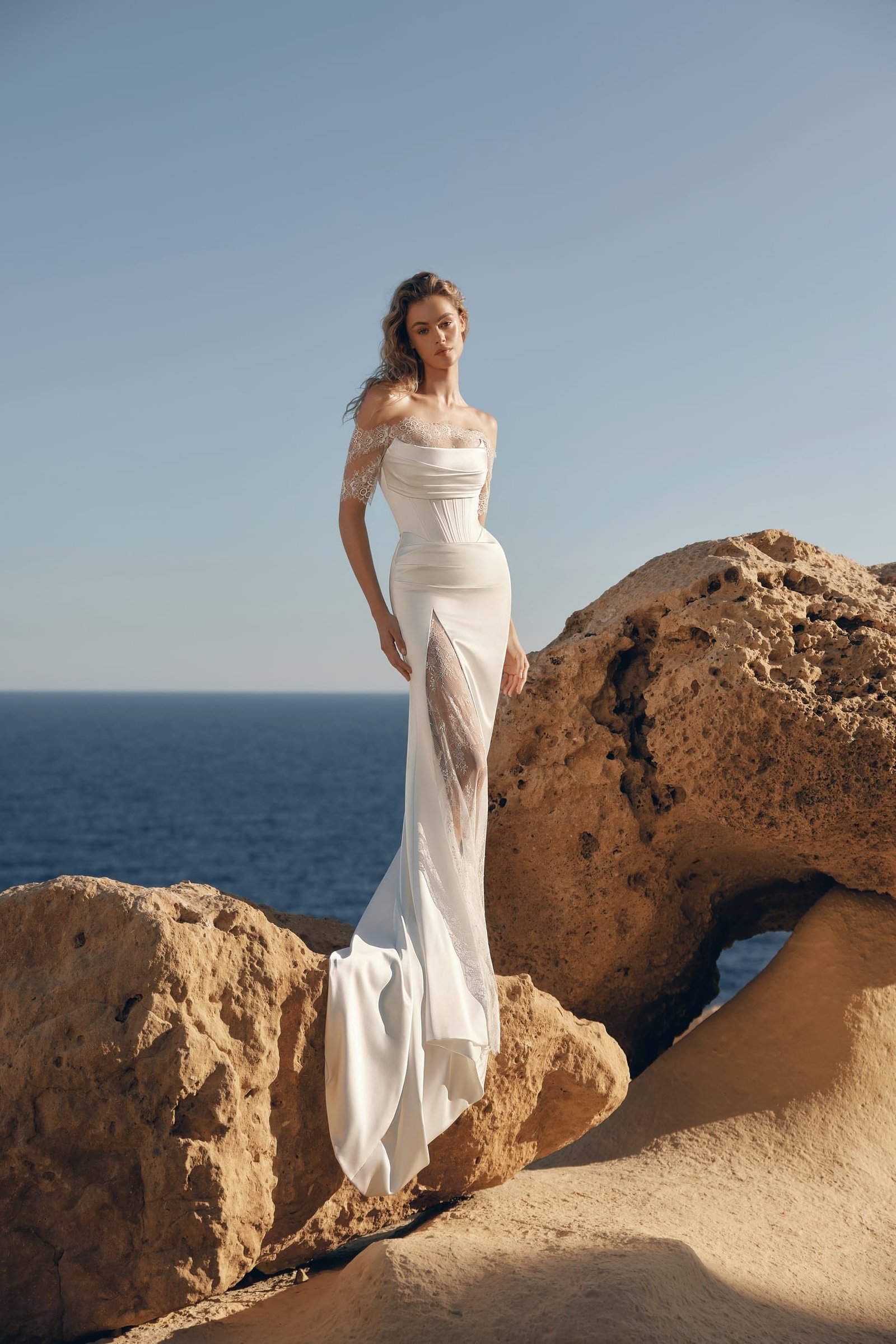
Eva Lendel generally describes trumpet dresses as widening around the mid-thigh. Its mermaid dresses tend to keep the close line lower before a stronger release. These are useful comparisons, although the brand itself lists some models in more than one category. View the actual dress from the front, side and back, then take a full stride and sit. Lining, stretch, a slit and a train can alter movement as much as the nominal flare point.
Can a fit-and-flare look soft rather than sleek?
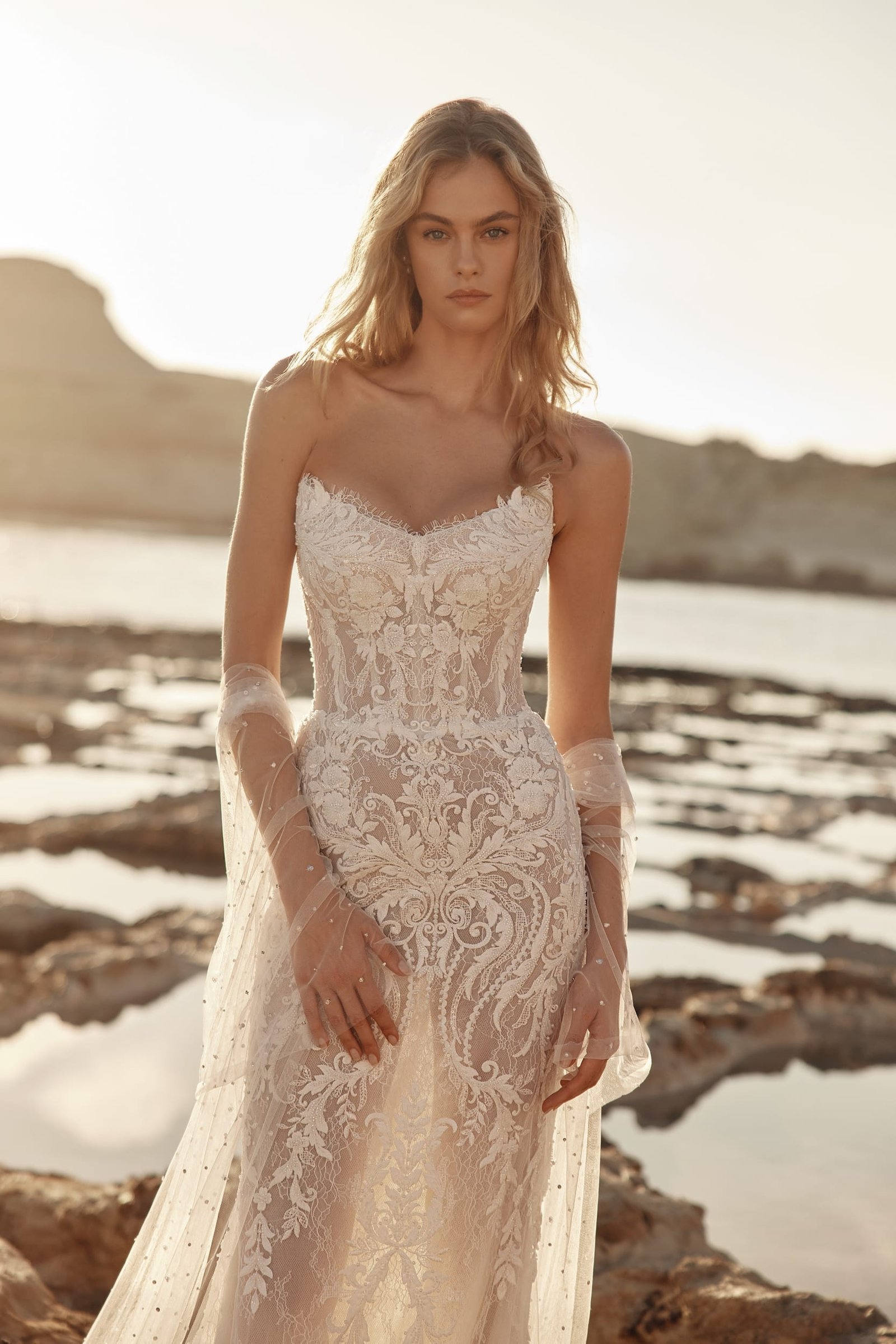
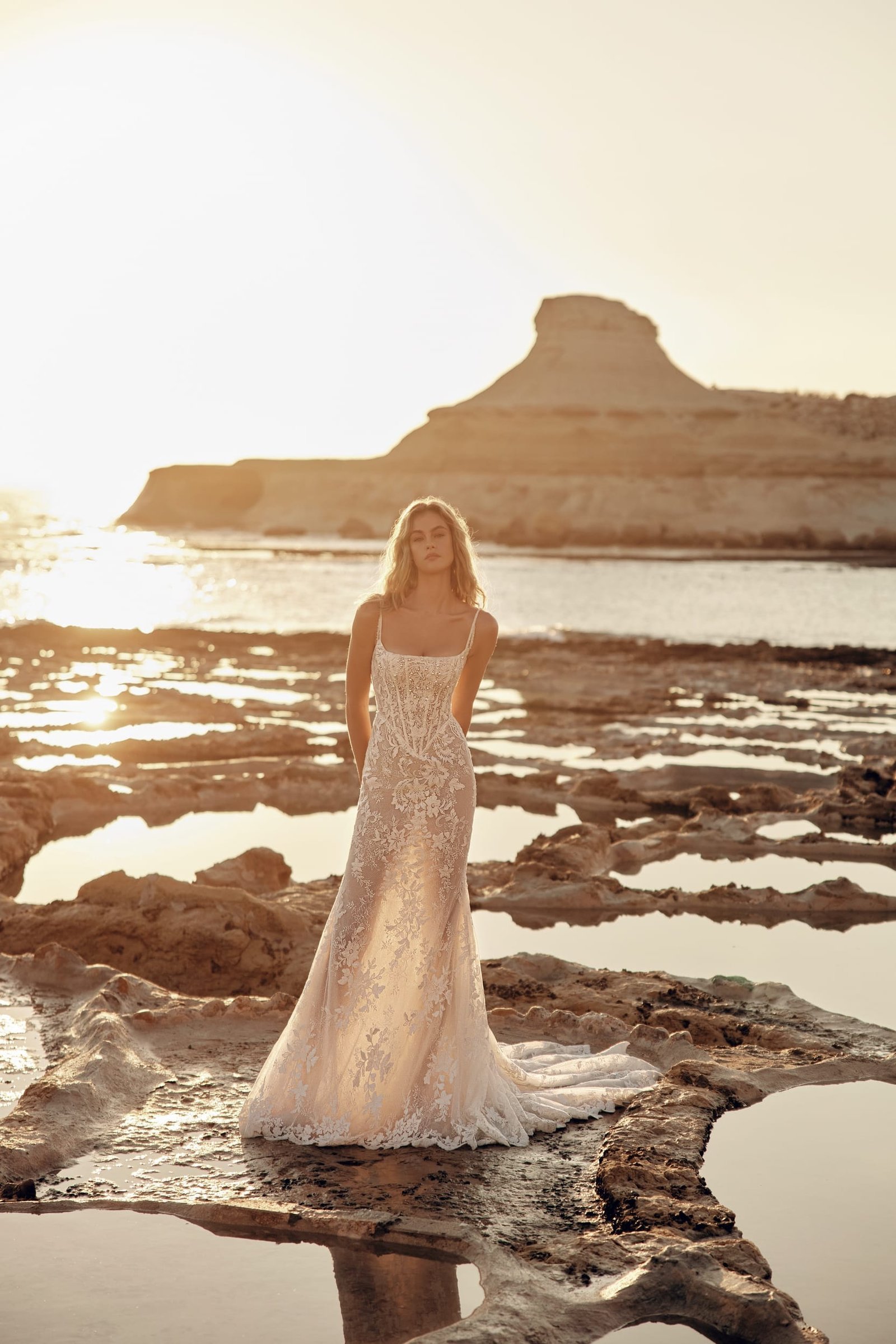
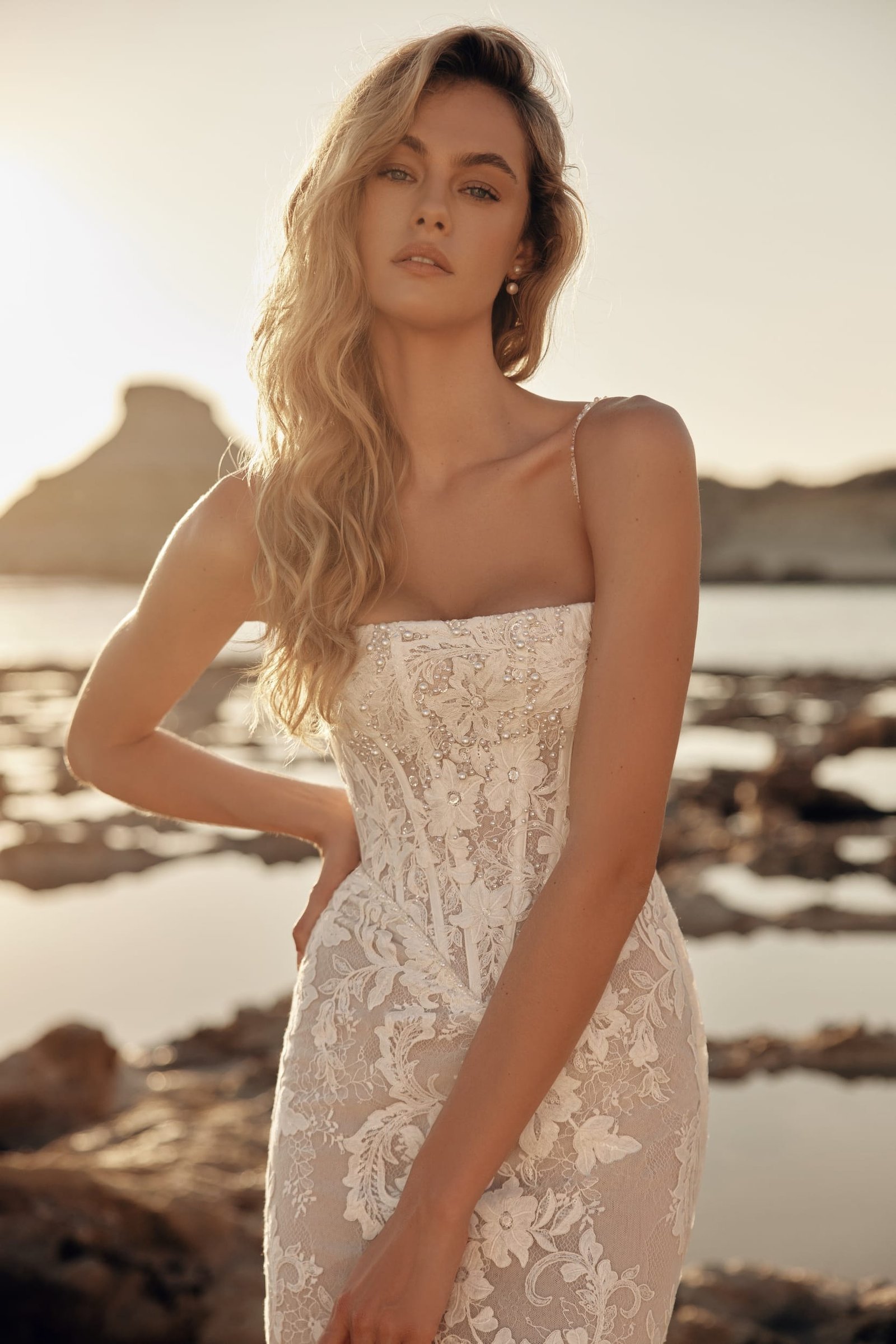
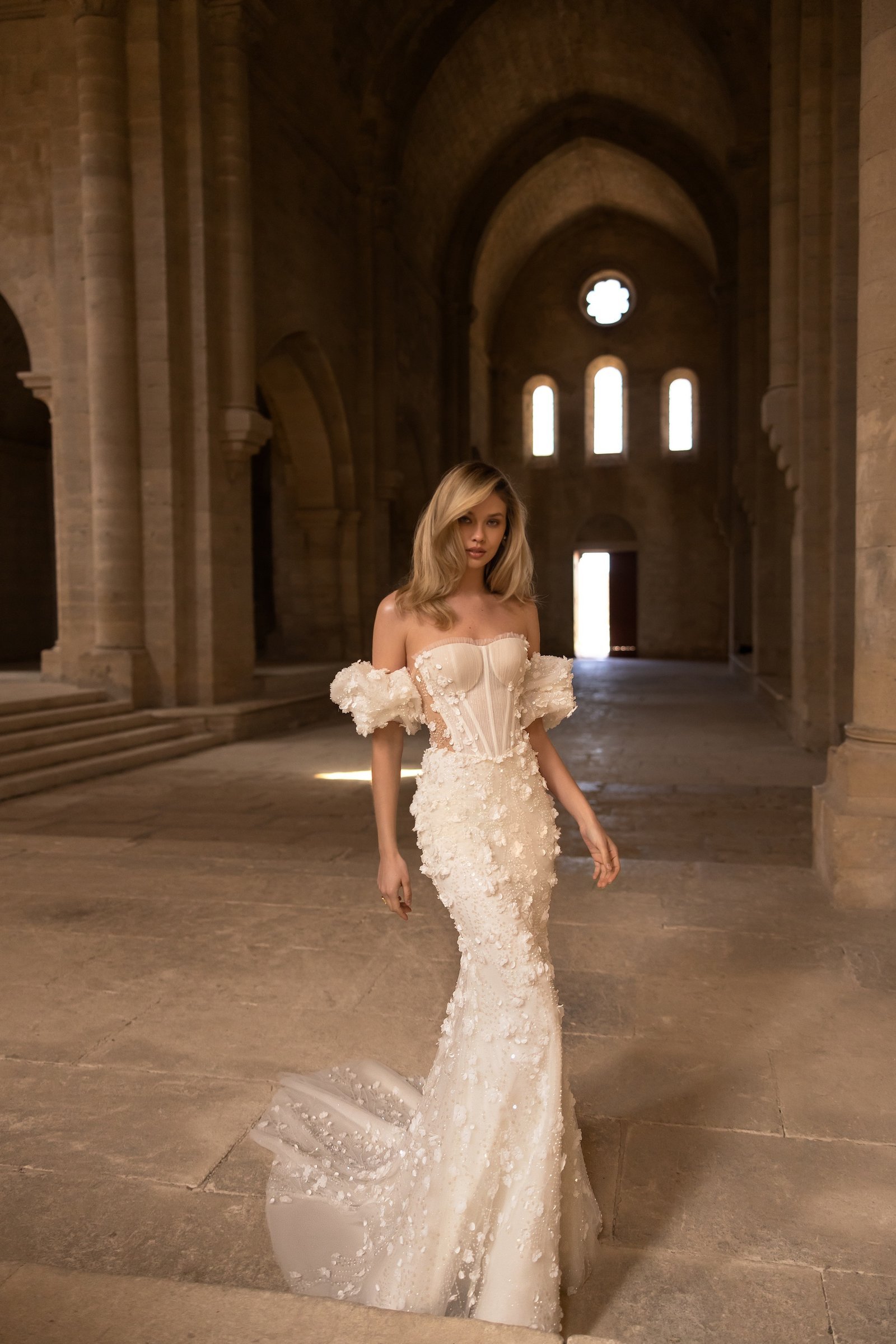
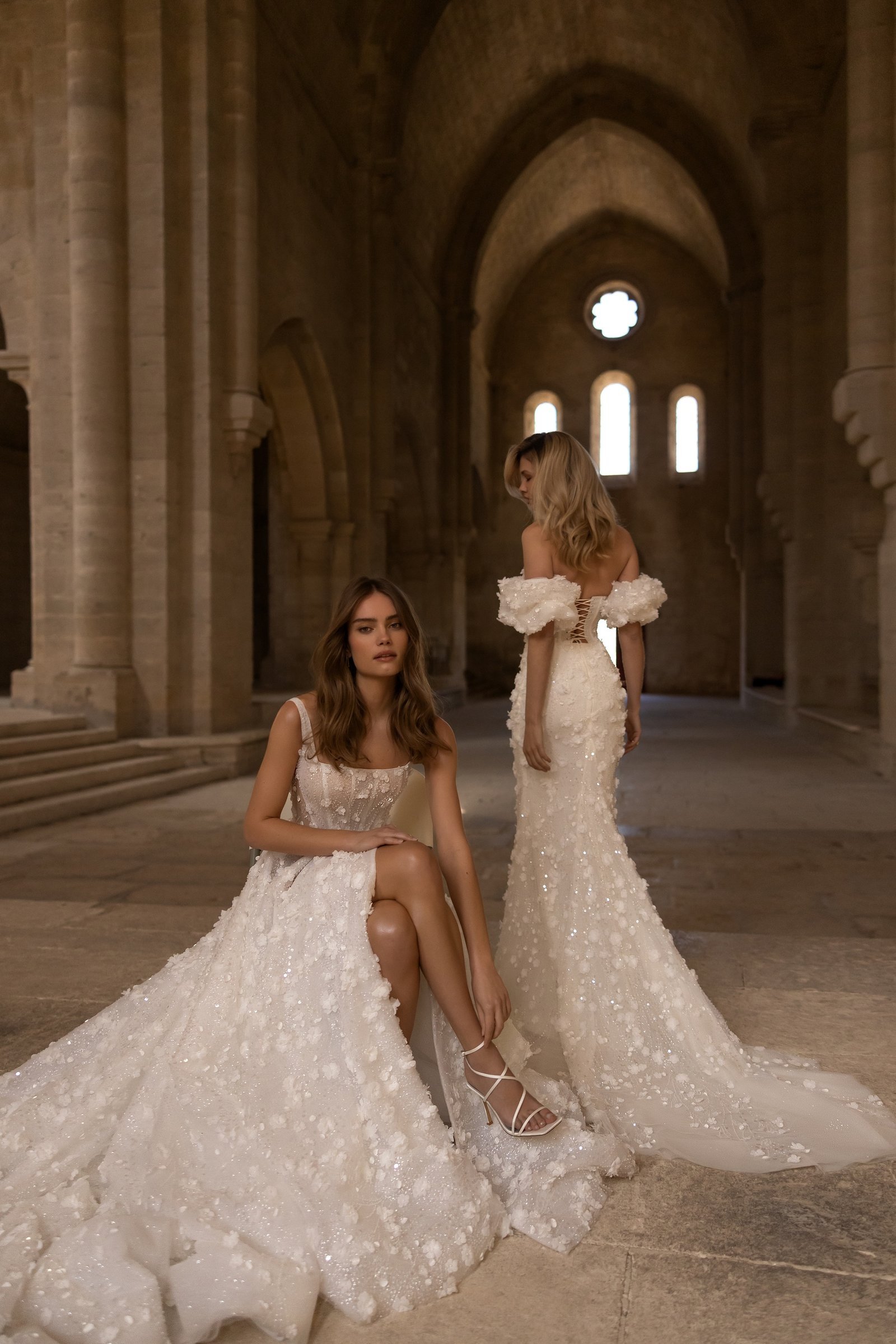
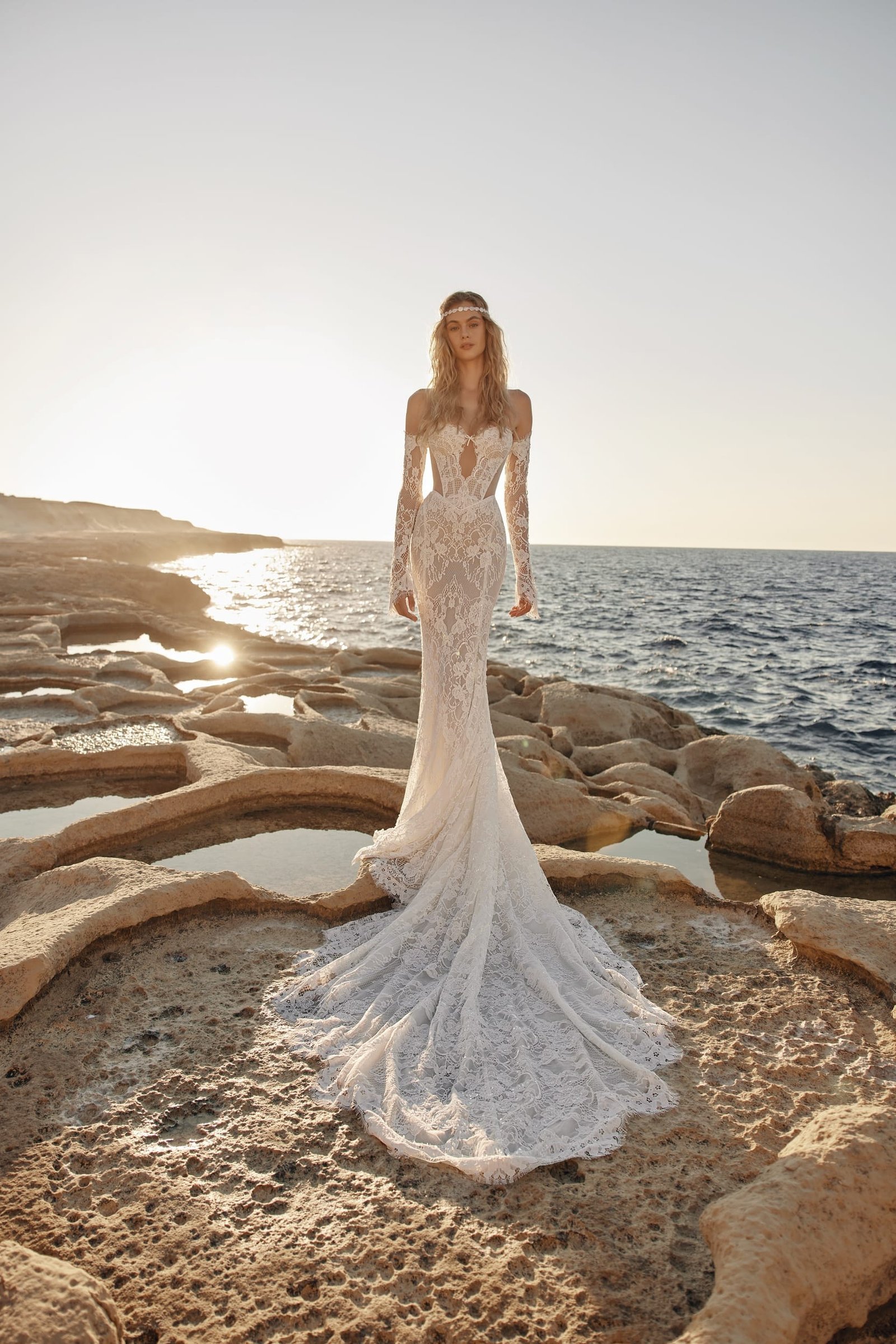
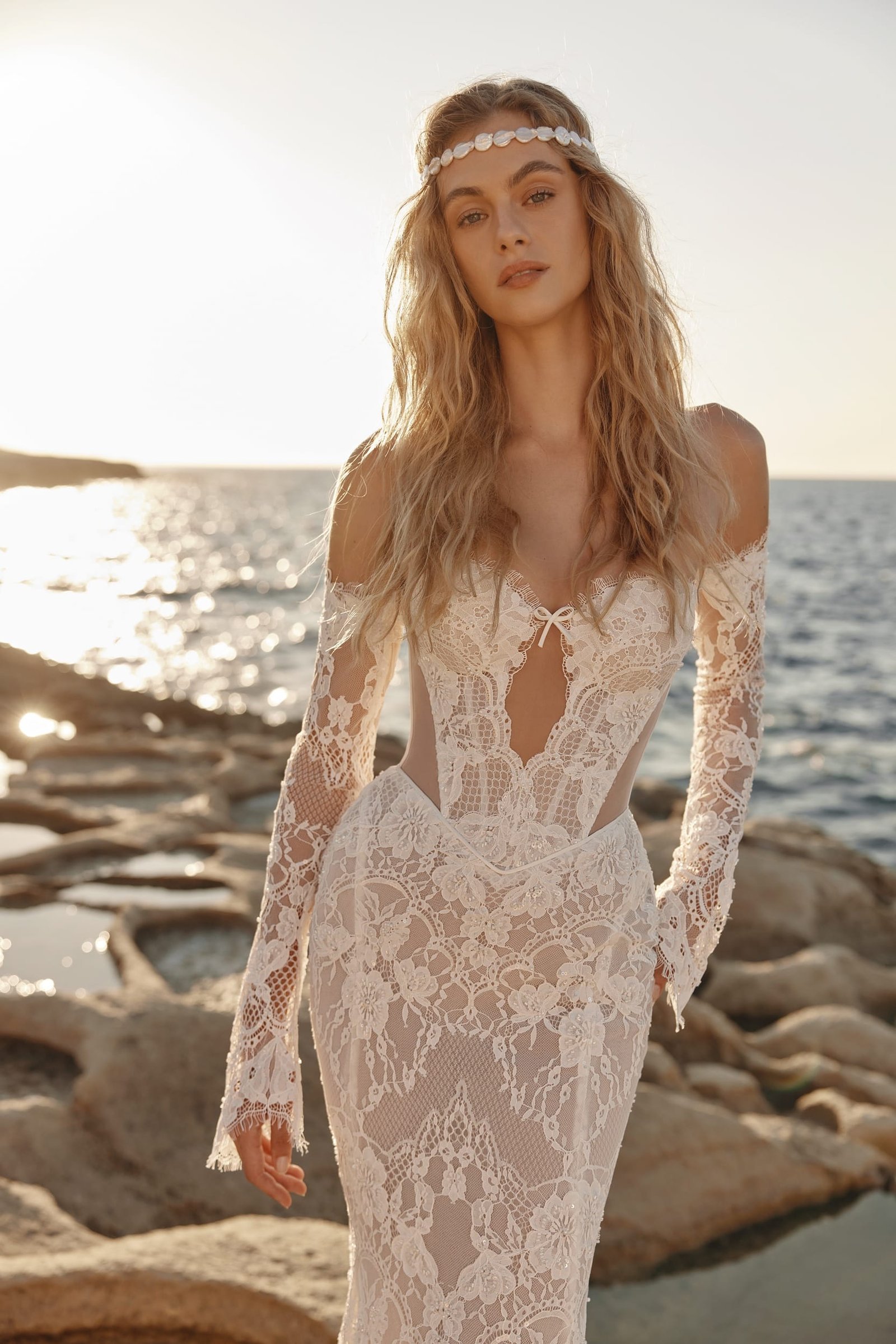
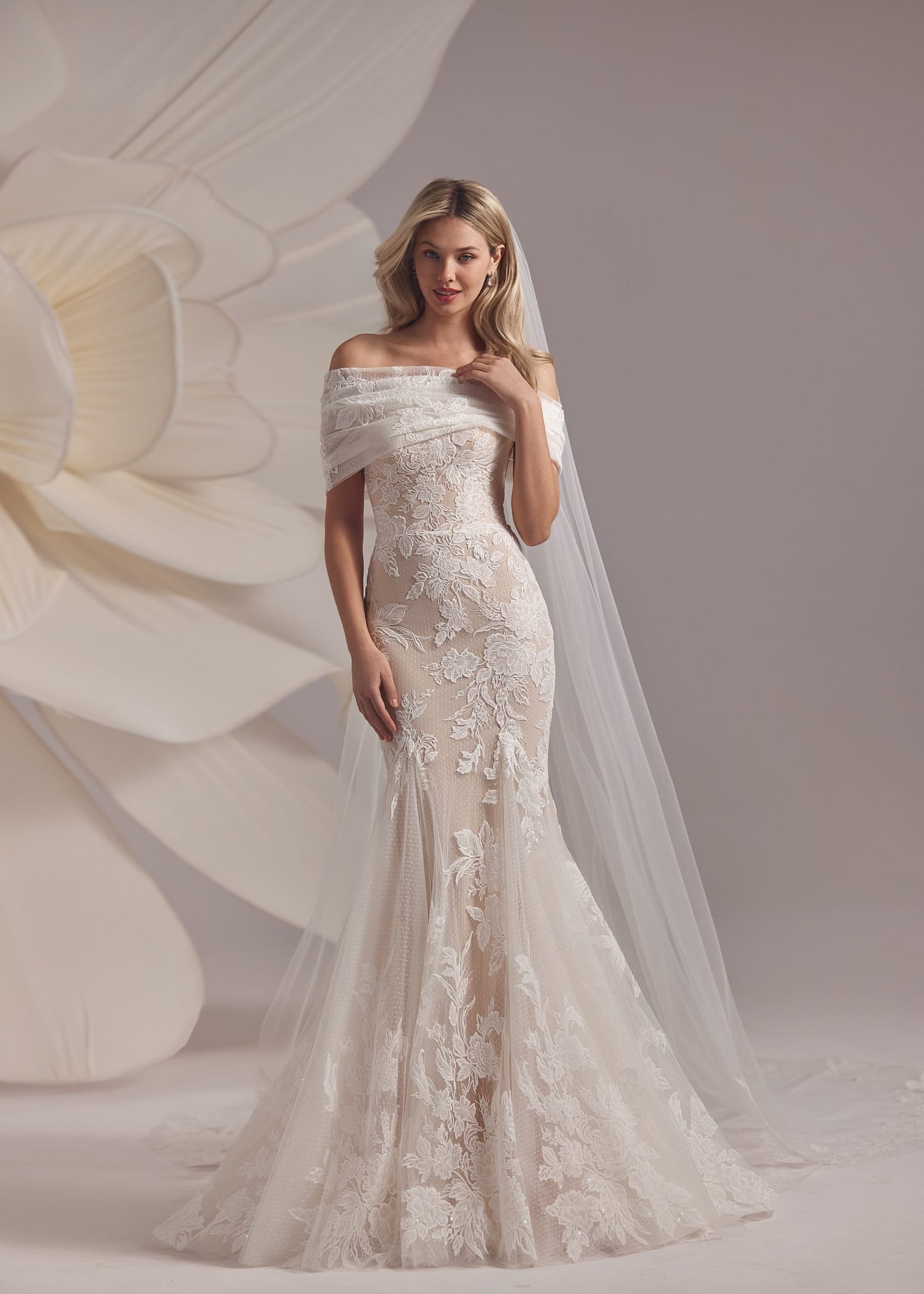
Yes. Floral lace and a scalloped train give Cher a textured finish. It is also listed as a mermaid-style gown, so the material and cut matter more than a single label.