






What gives a sheath dress its shape?
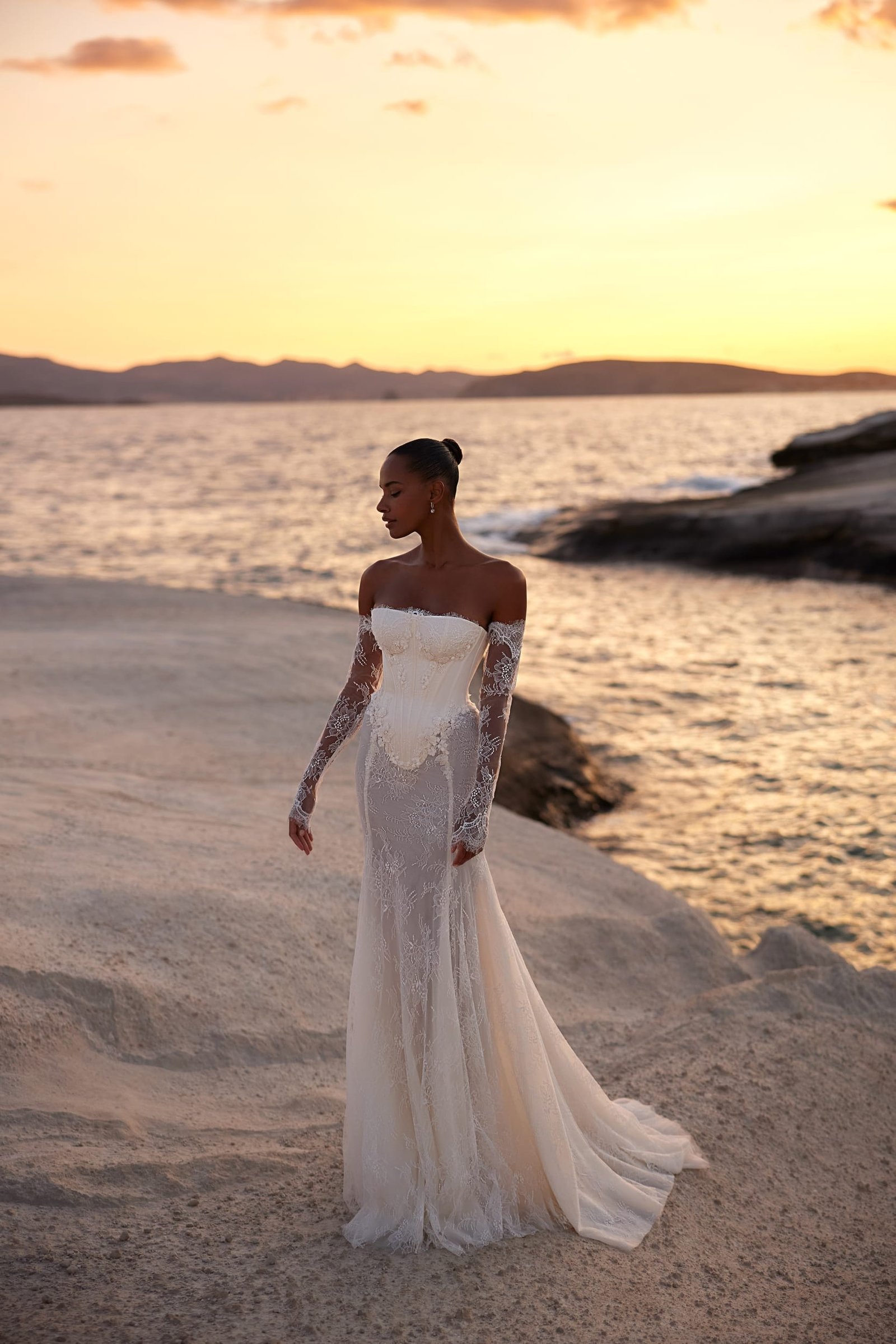
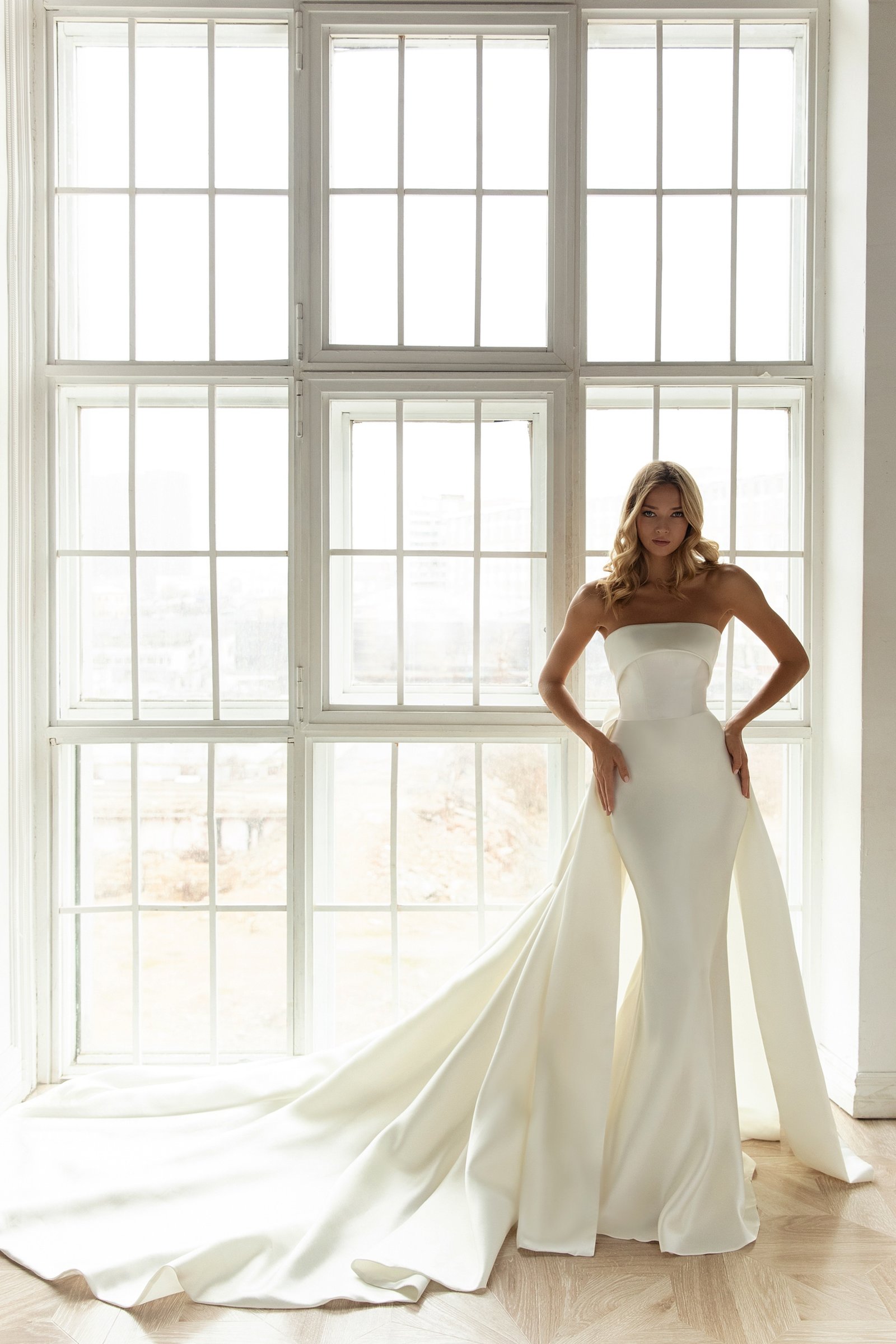
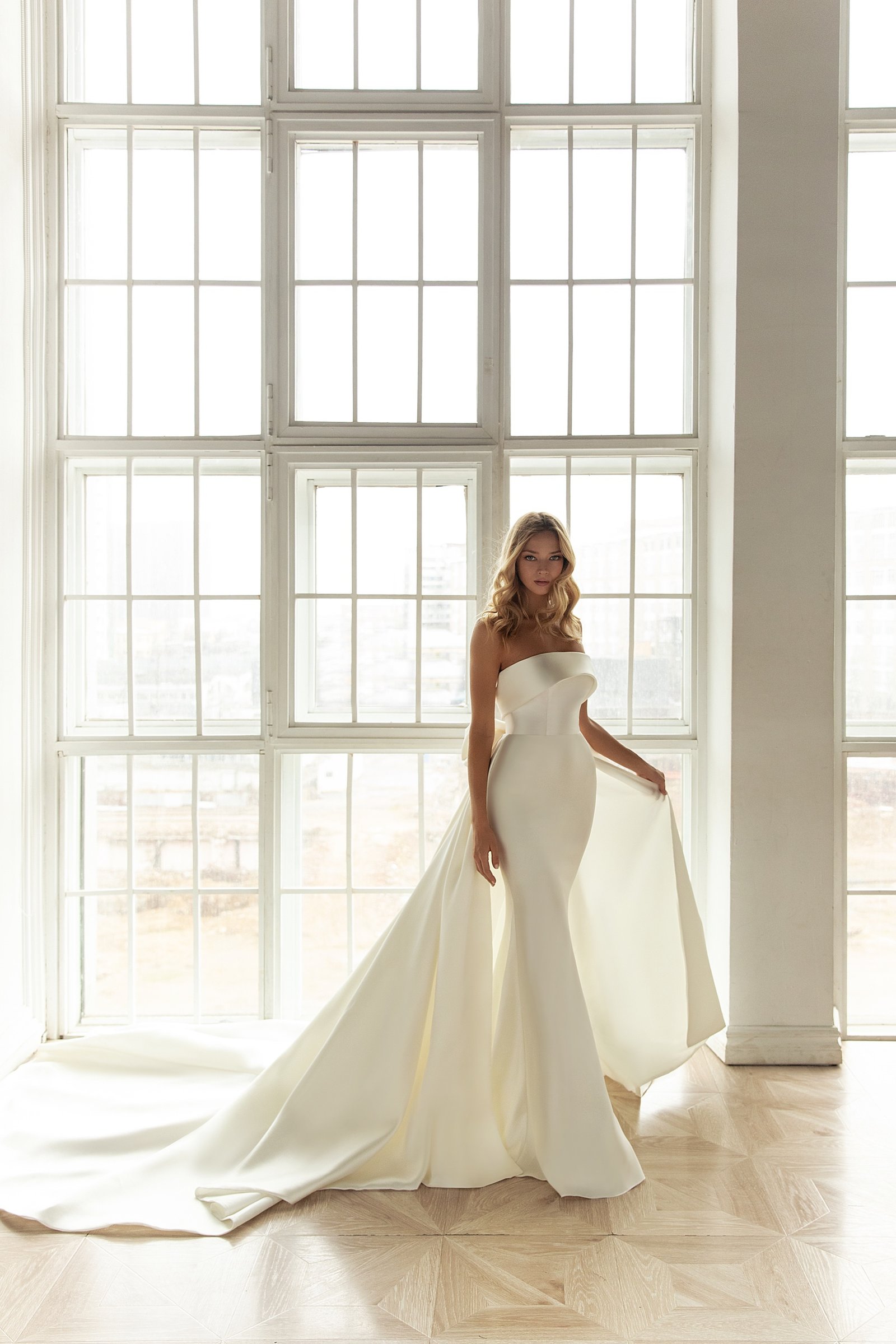
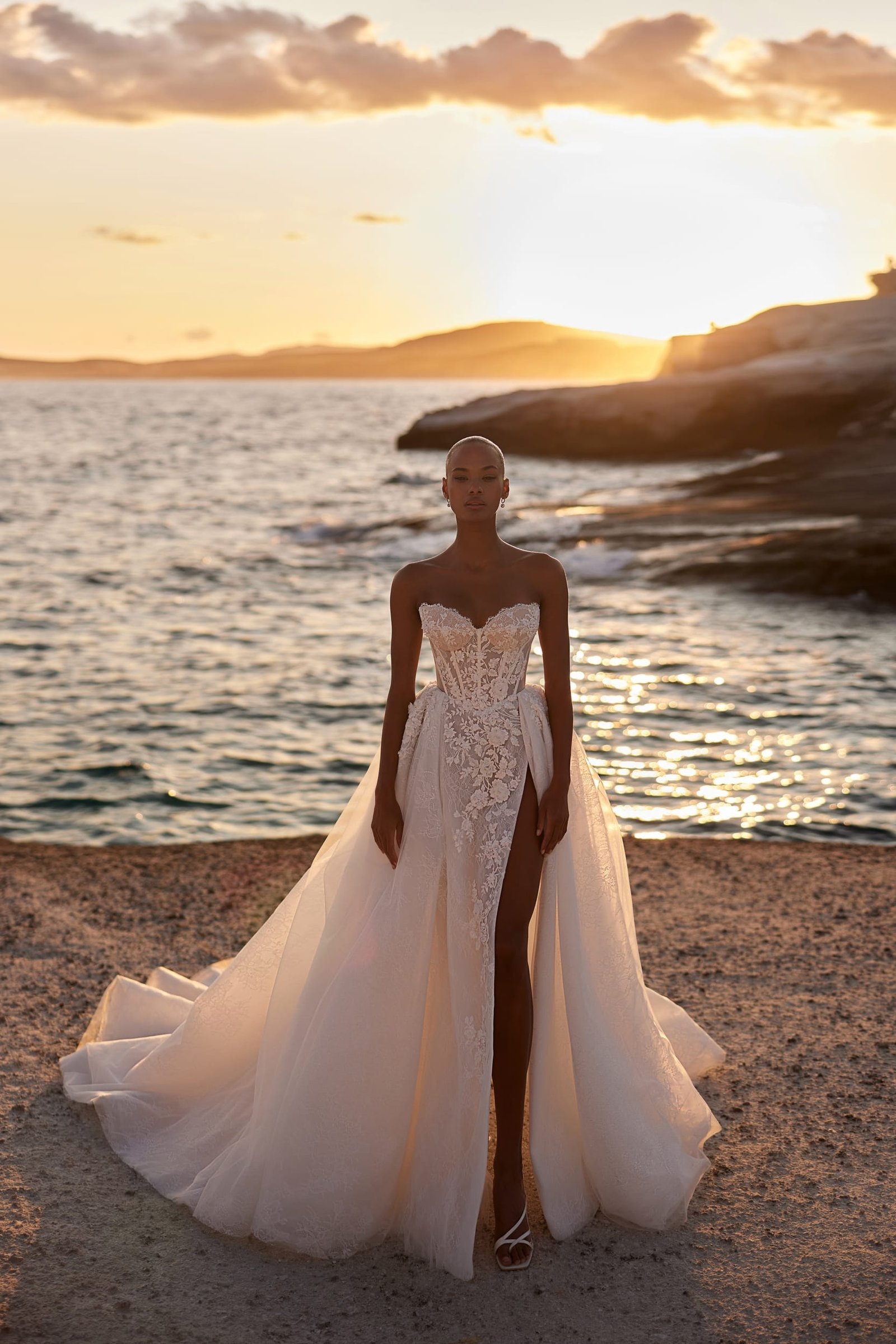
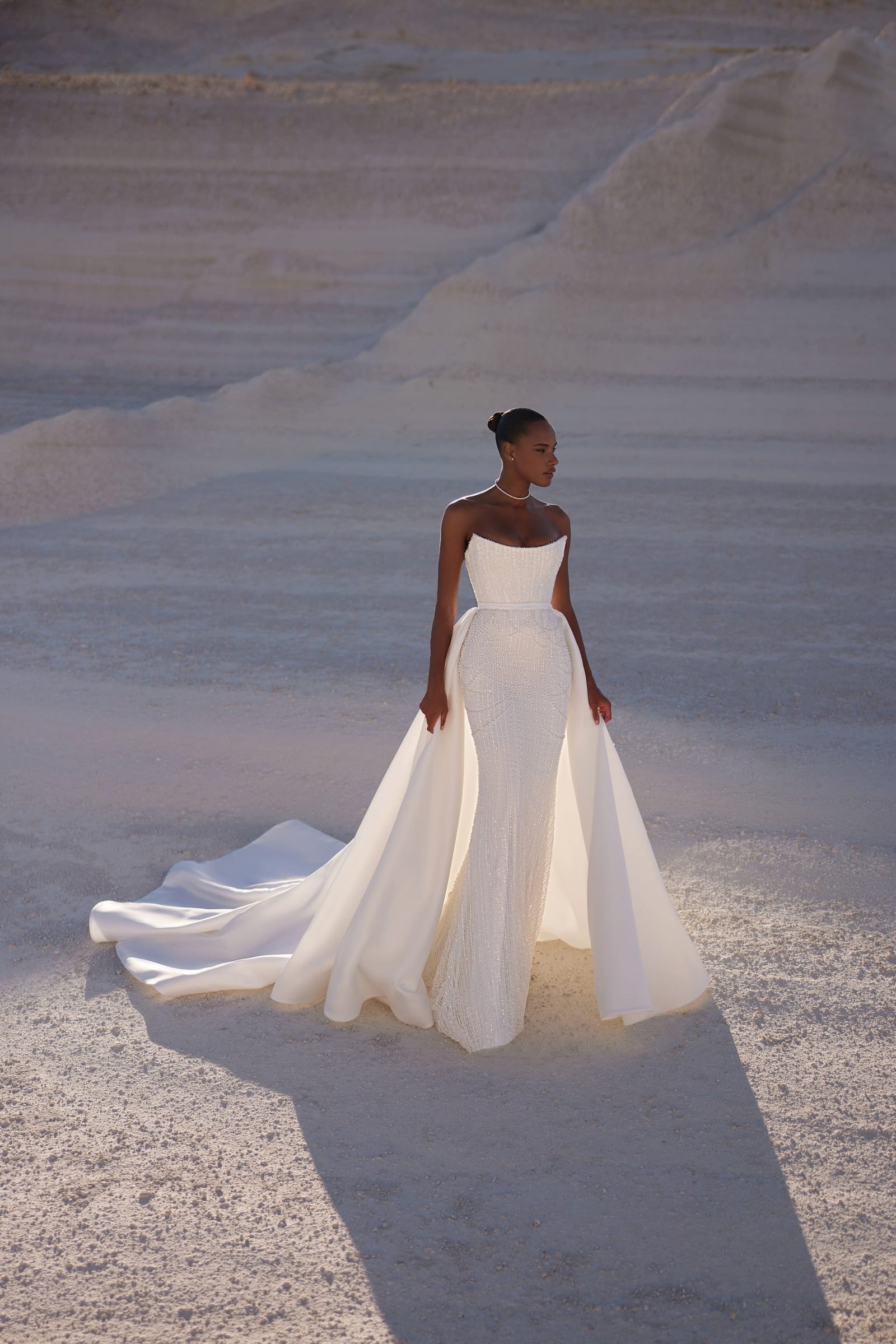
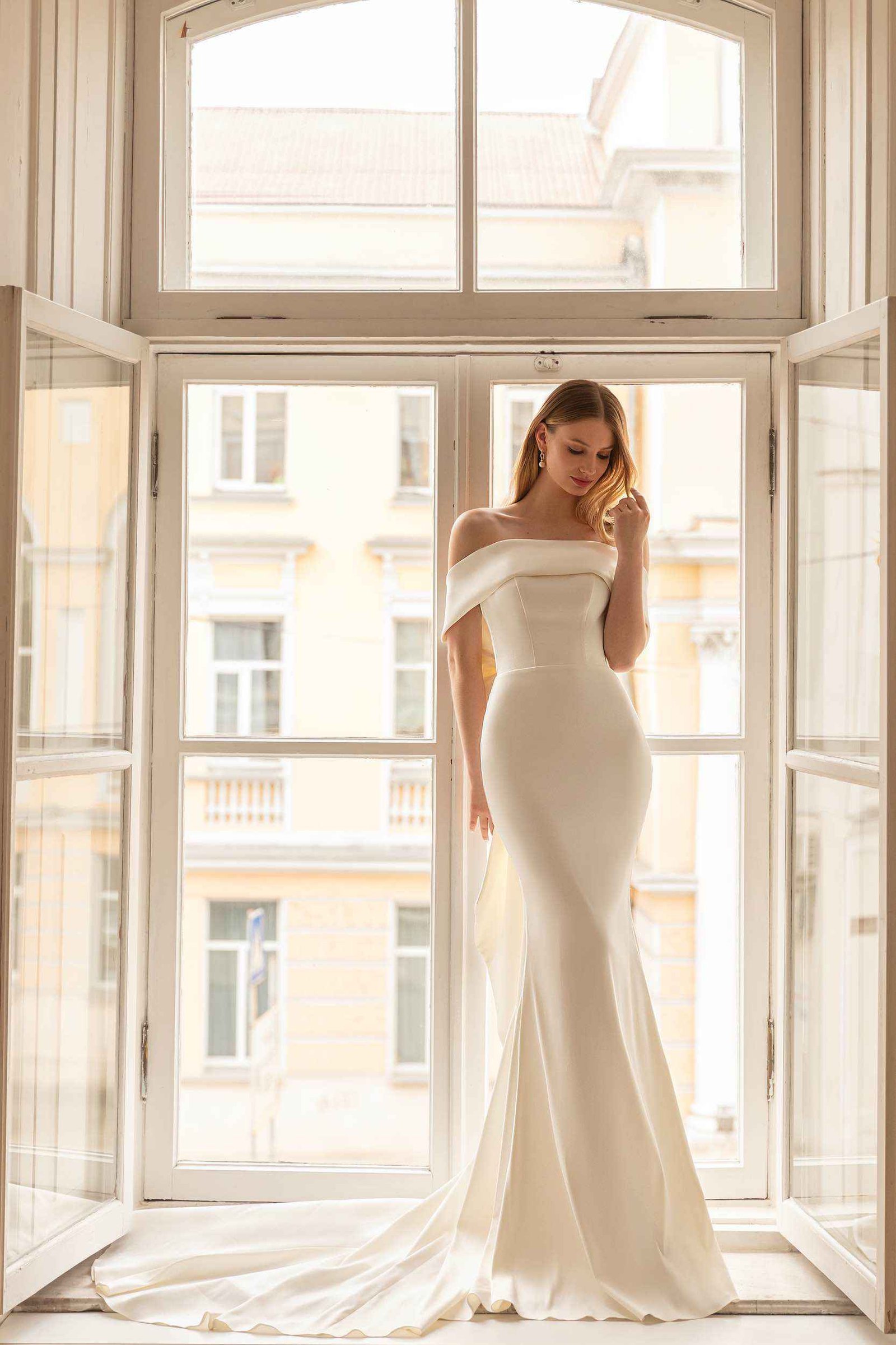
A sheath has little added skirt volume, so its fabric and fit carry much of the design. The cloth may skim the body rather than hold it tightly; seams and lining determine the actual ease. Its narrow line can support a detailed neckline or a dramatic separate piece without relying on a full skirt.
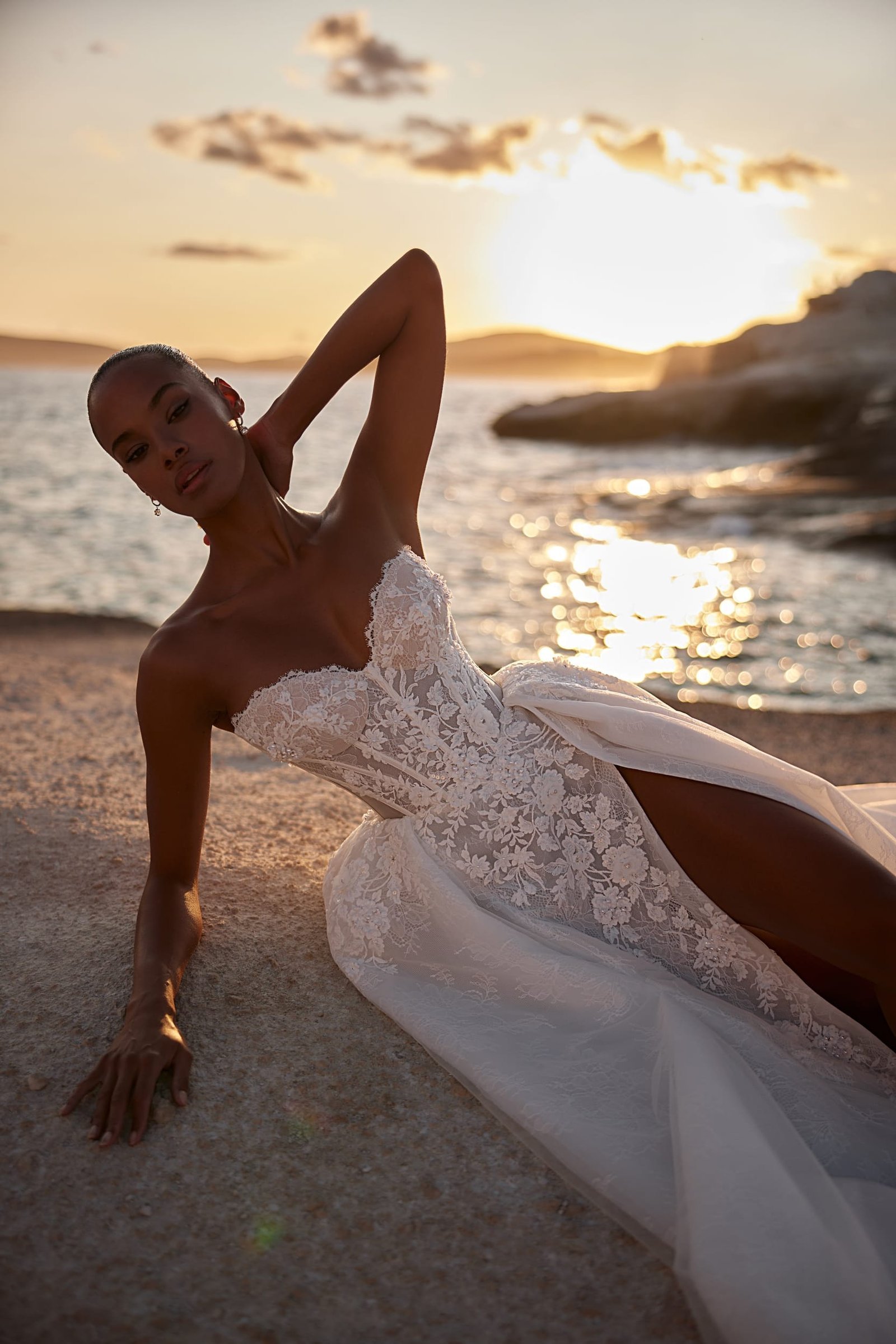
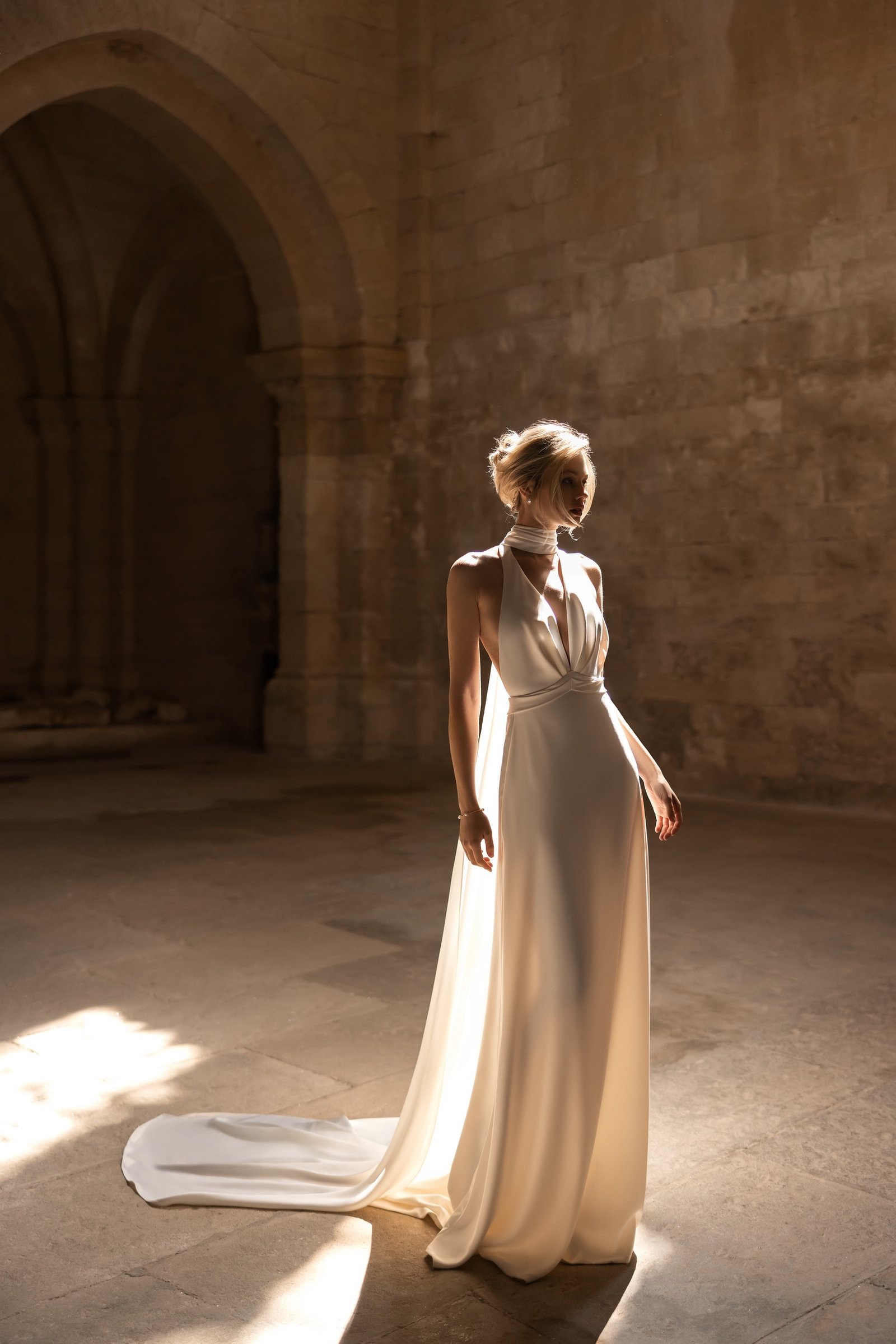
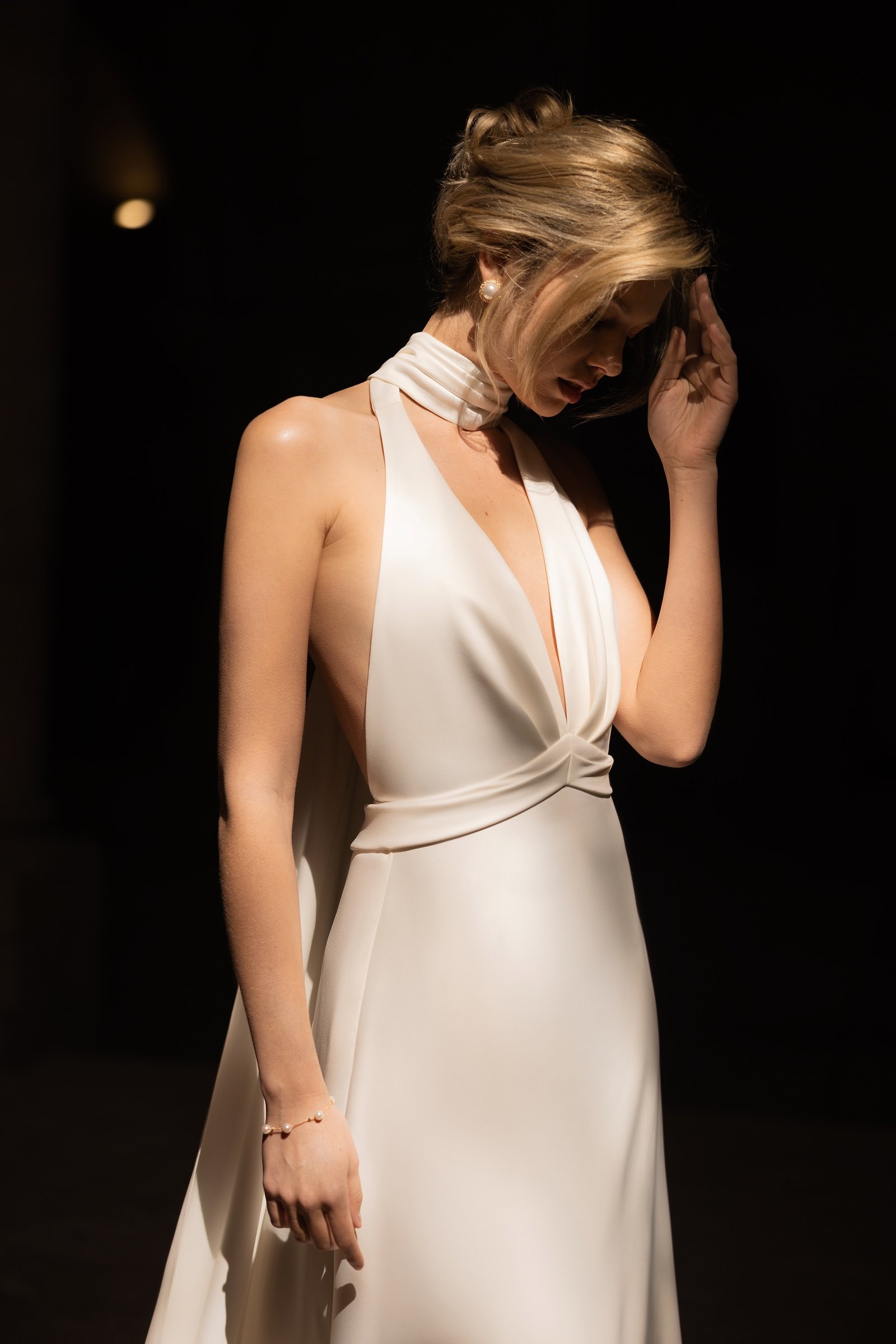
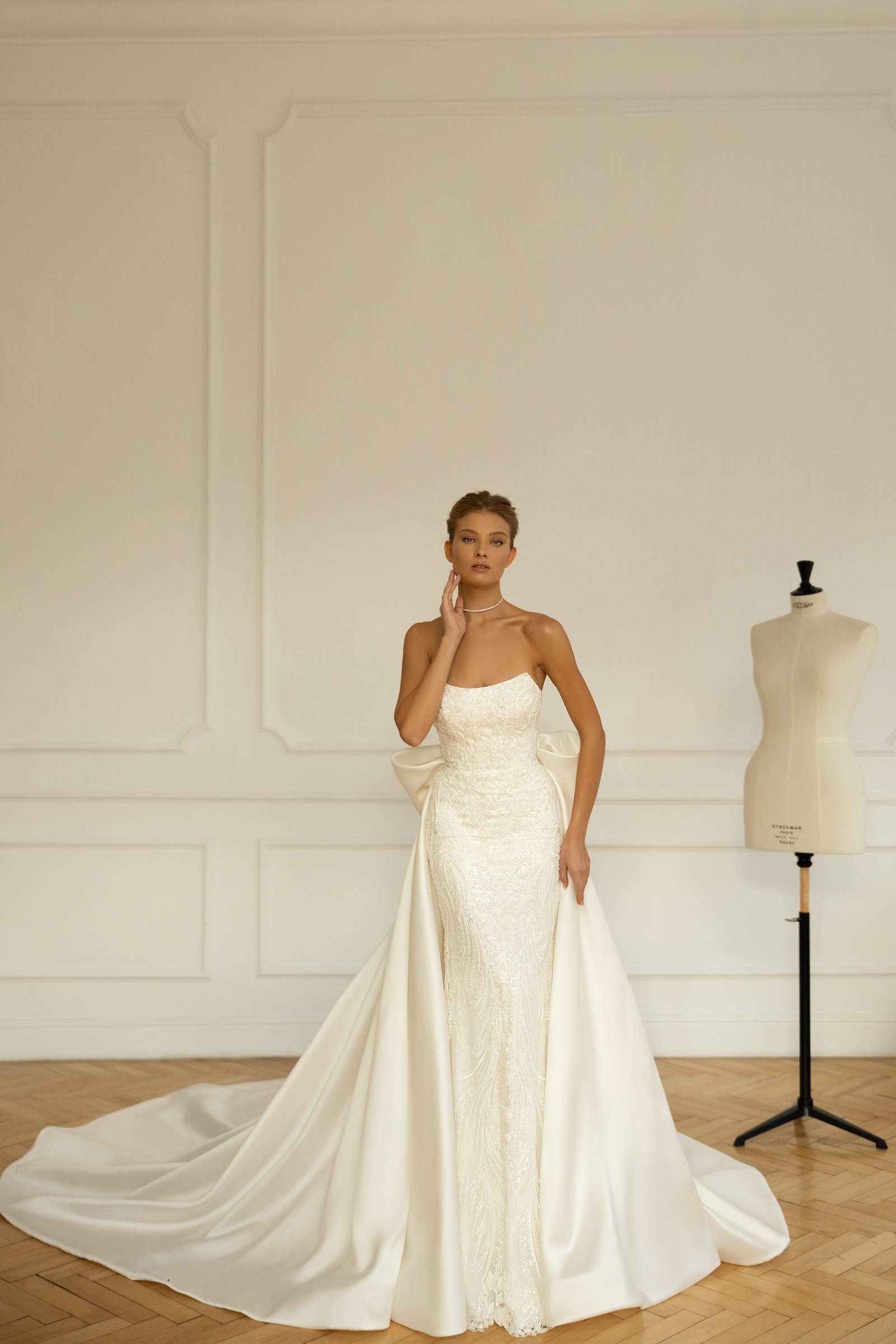
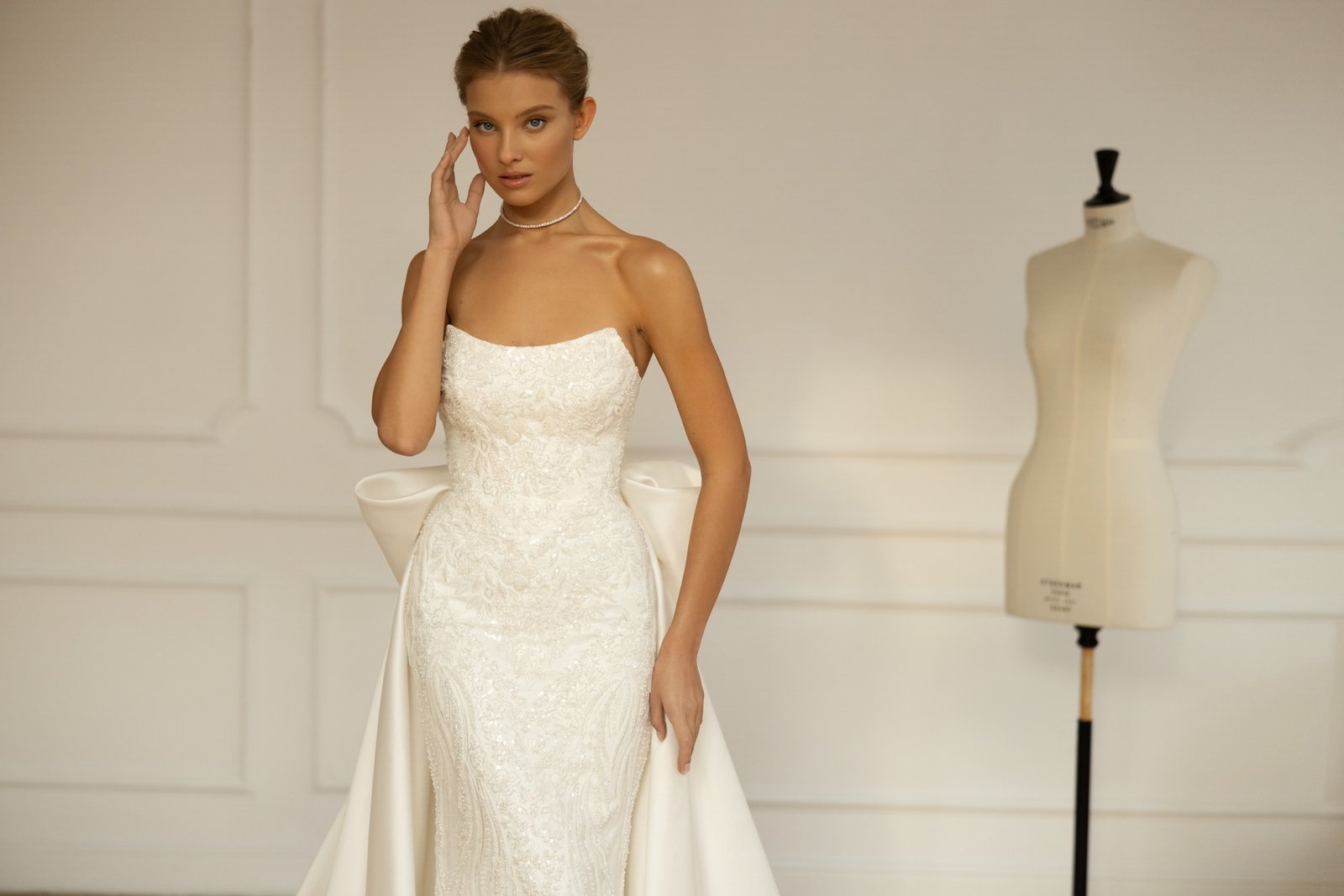
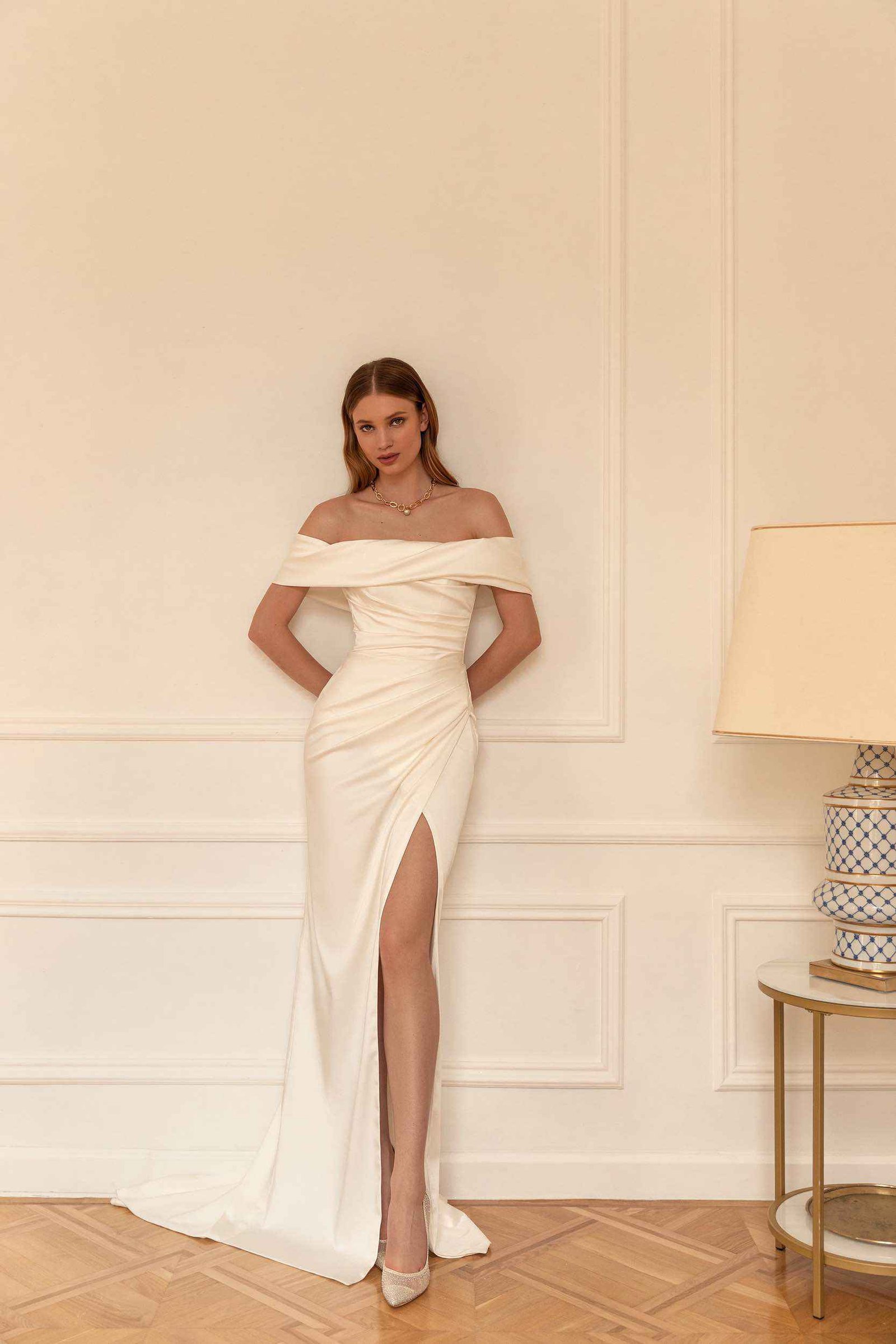
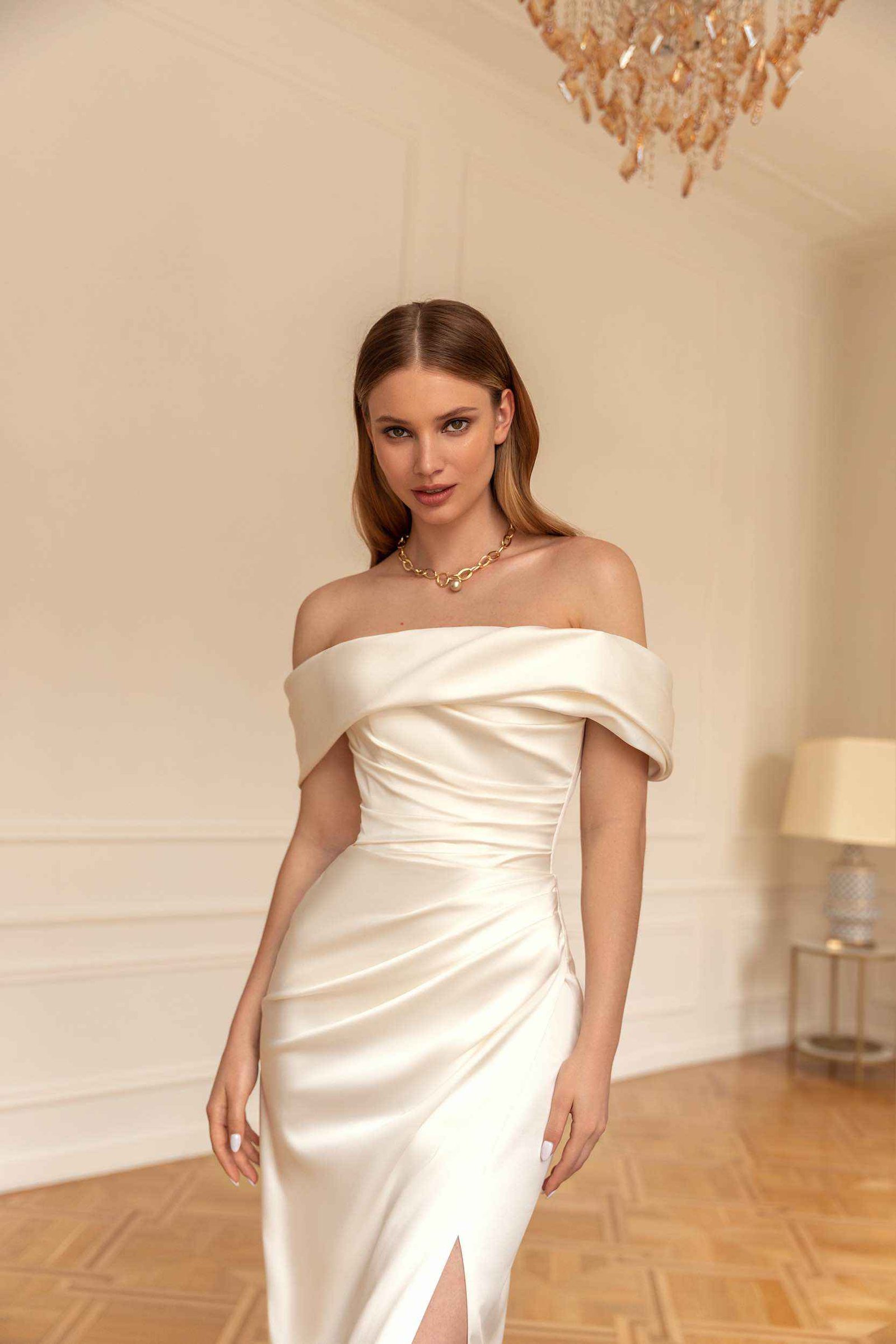
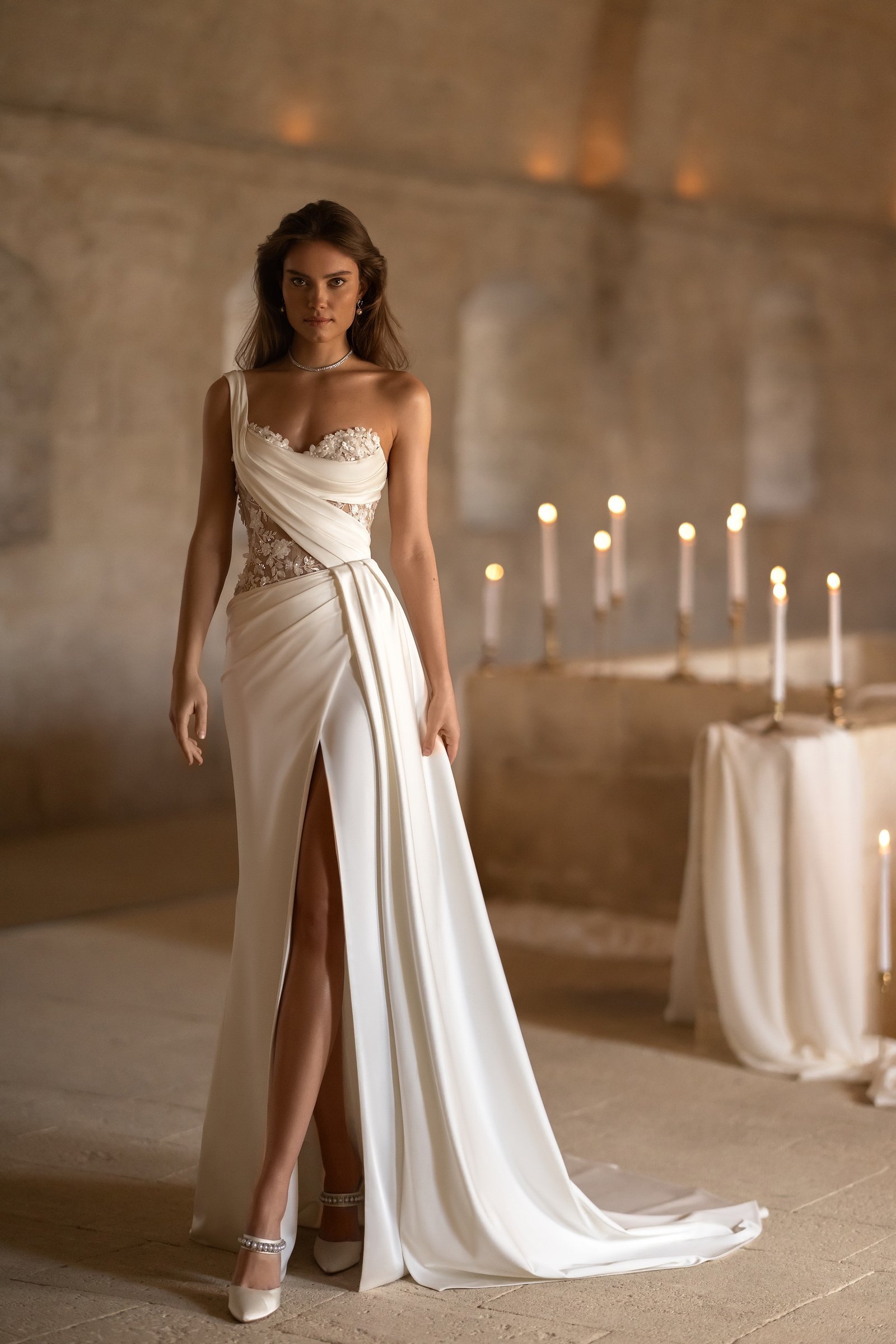
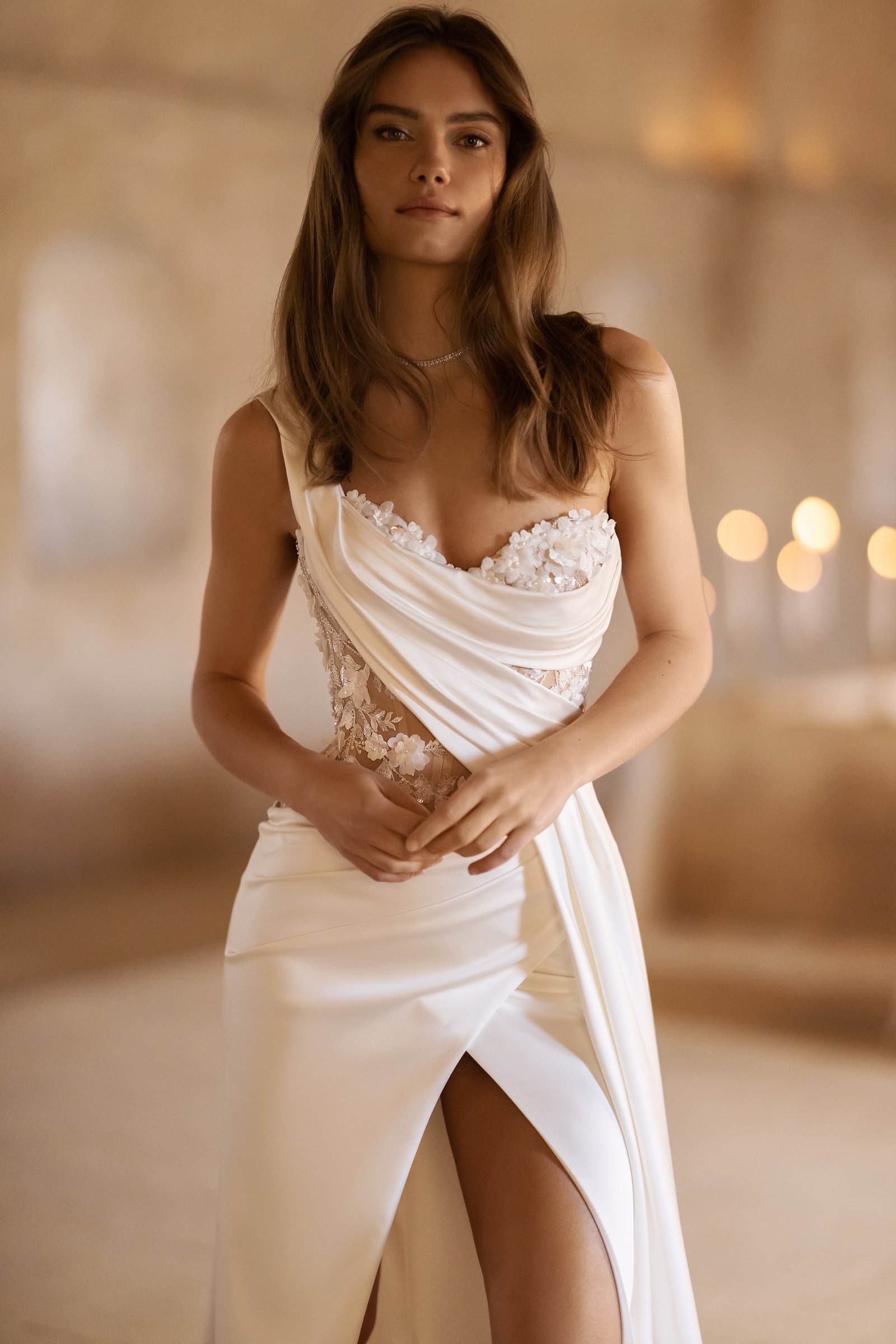
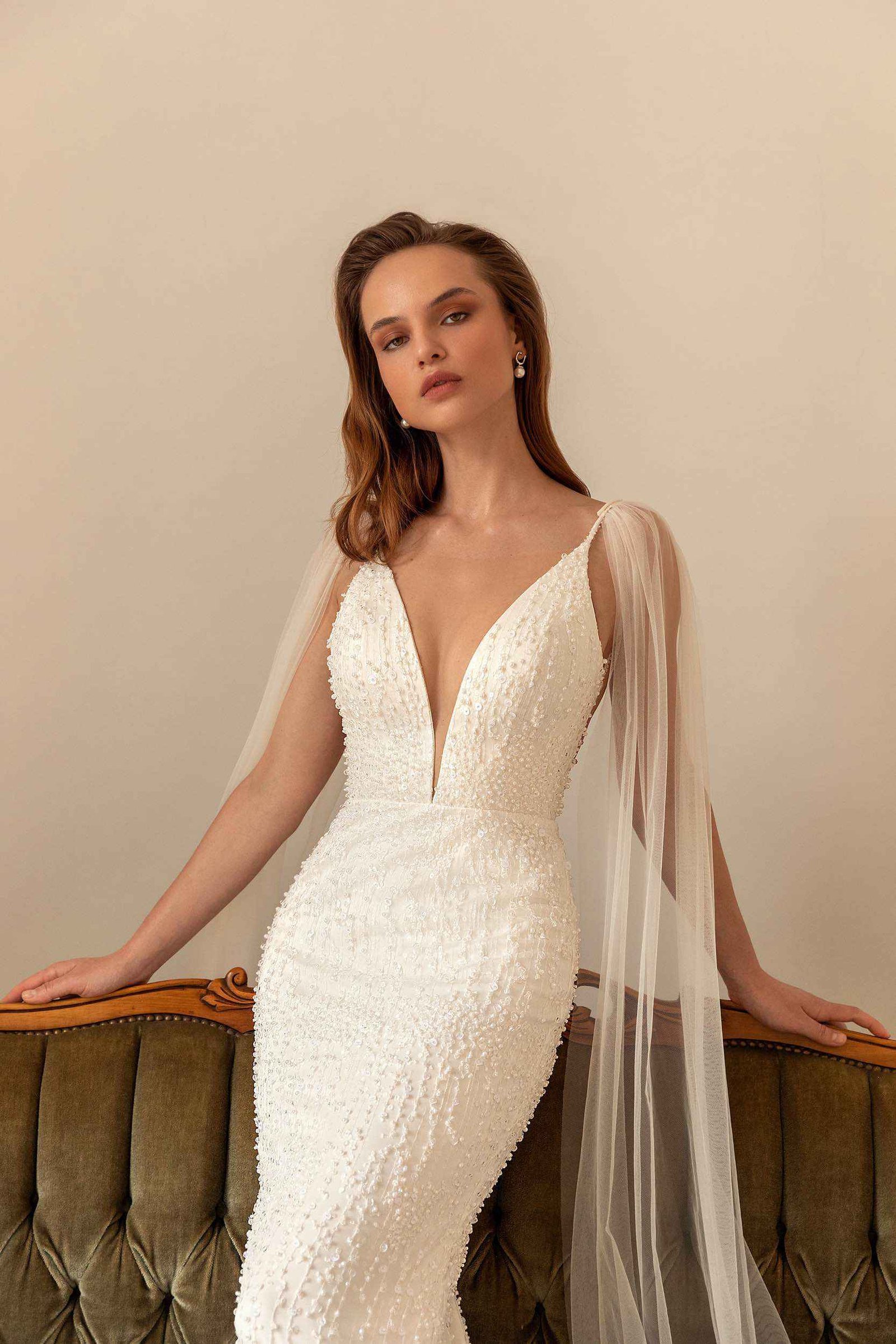
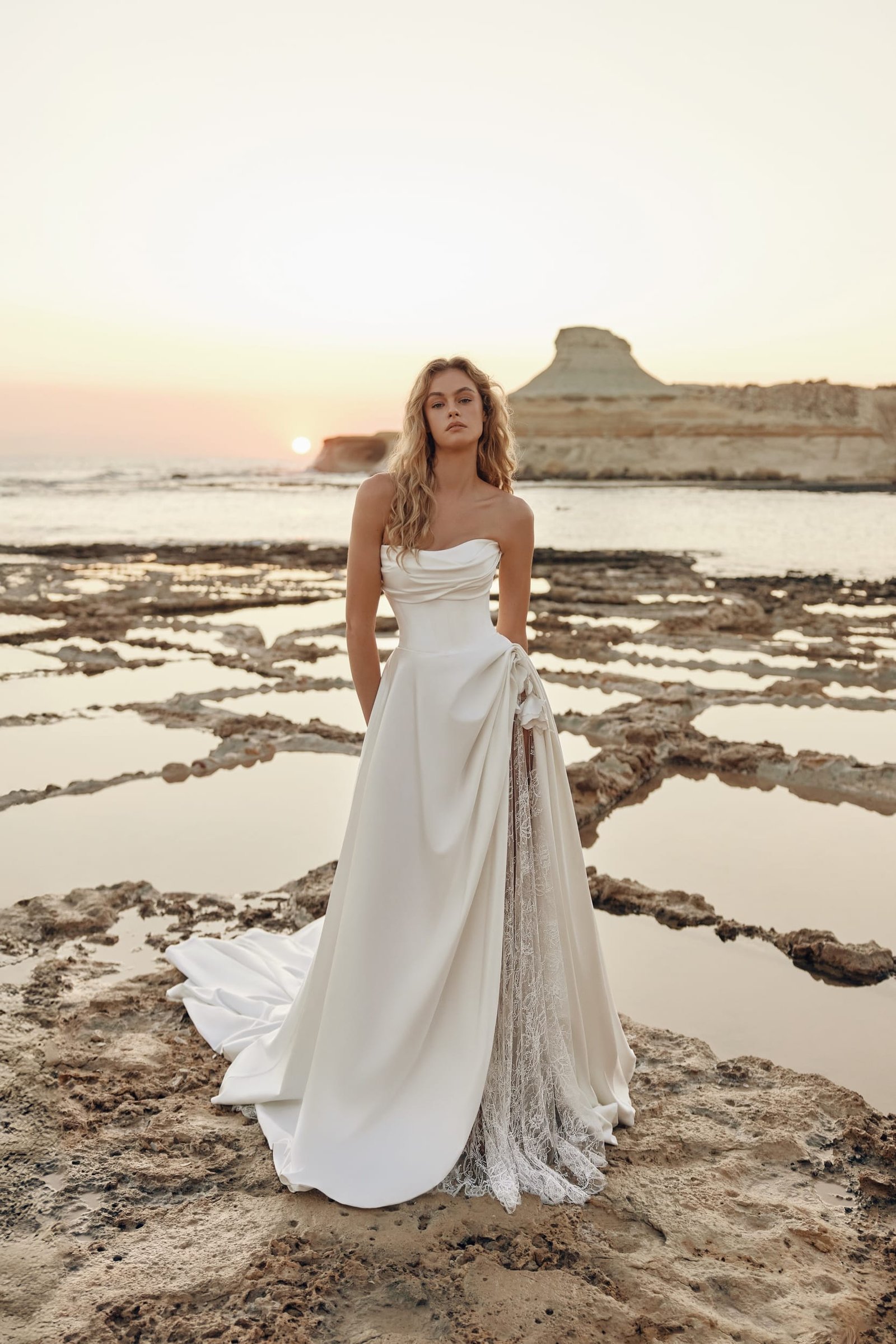
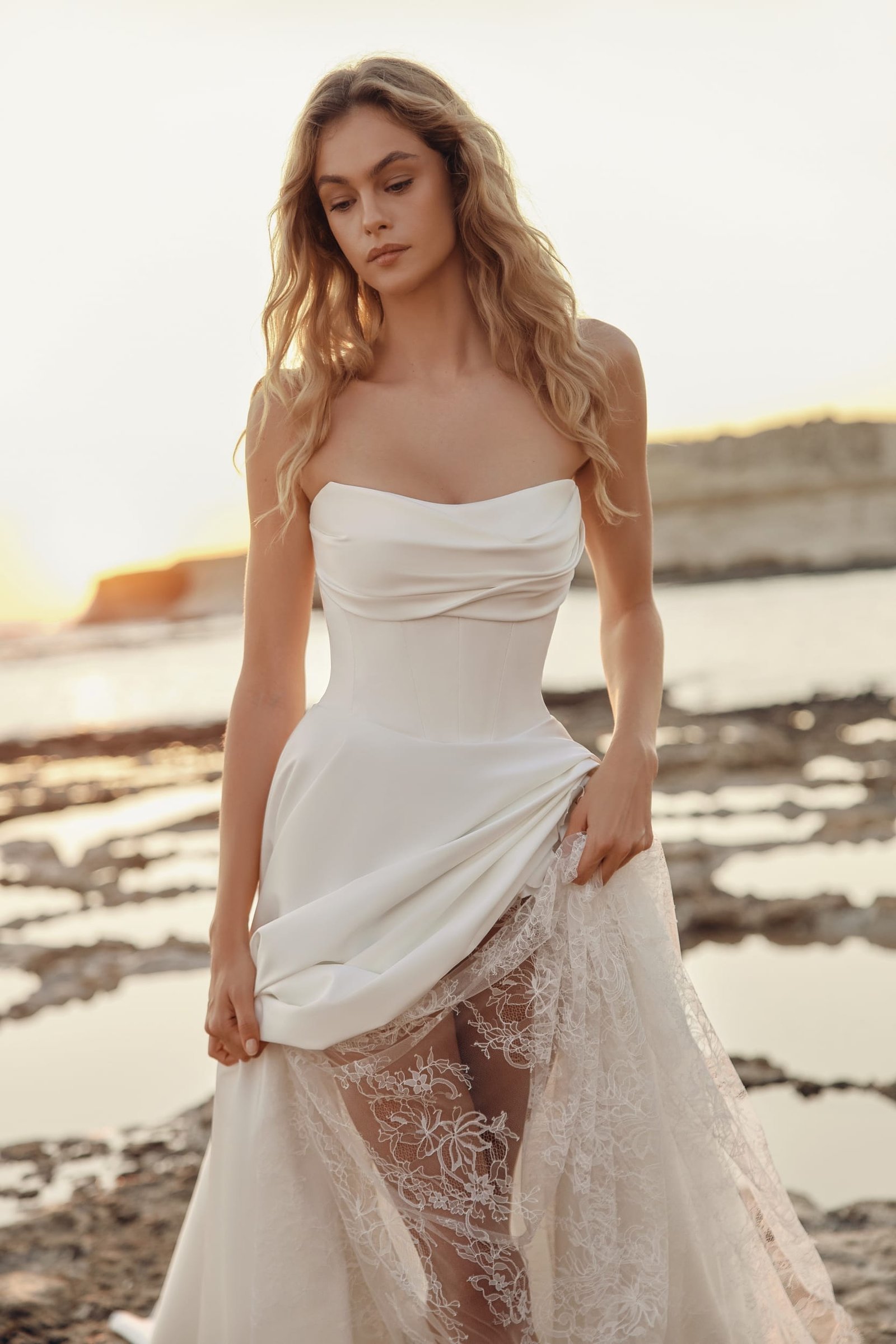
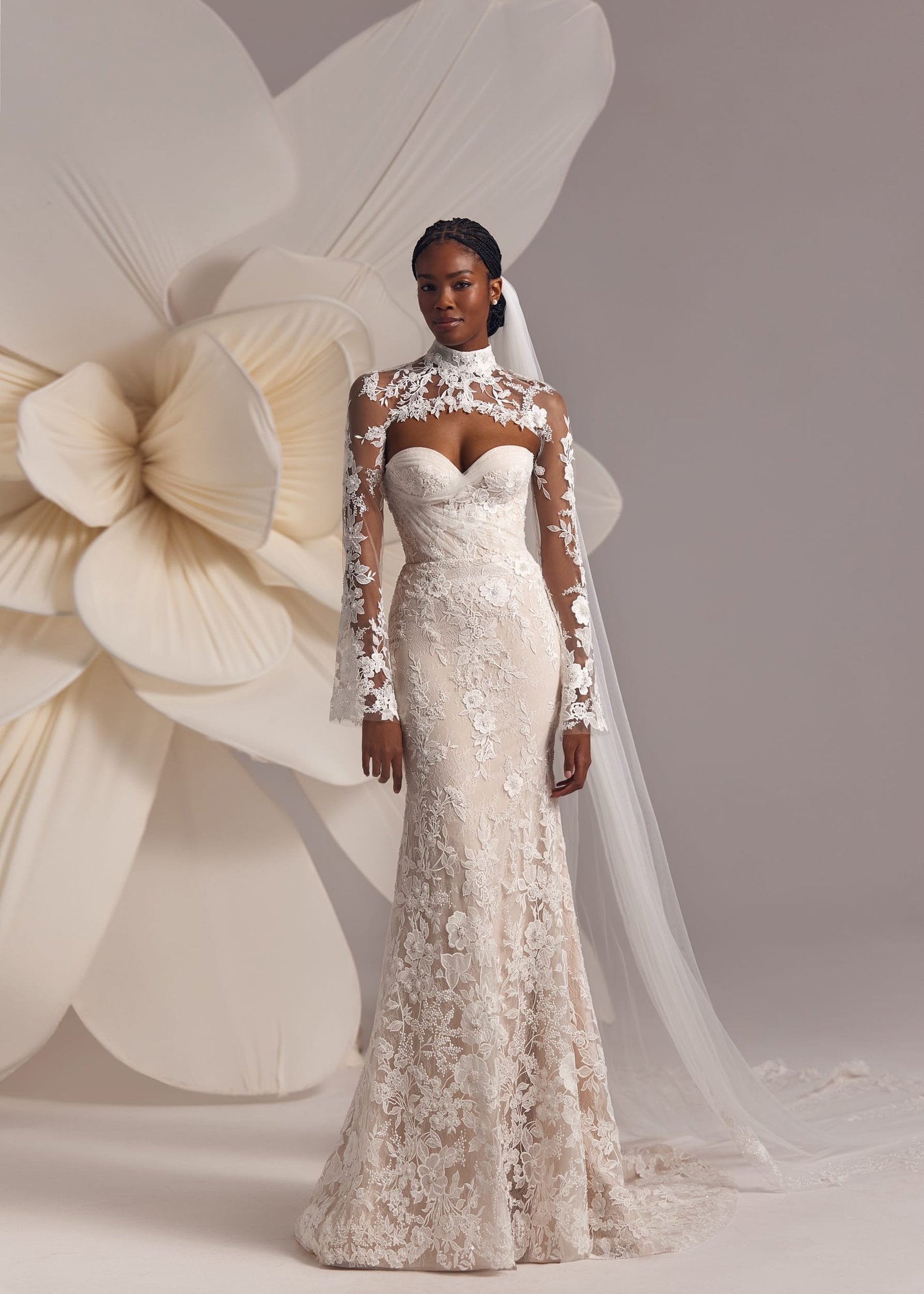
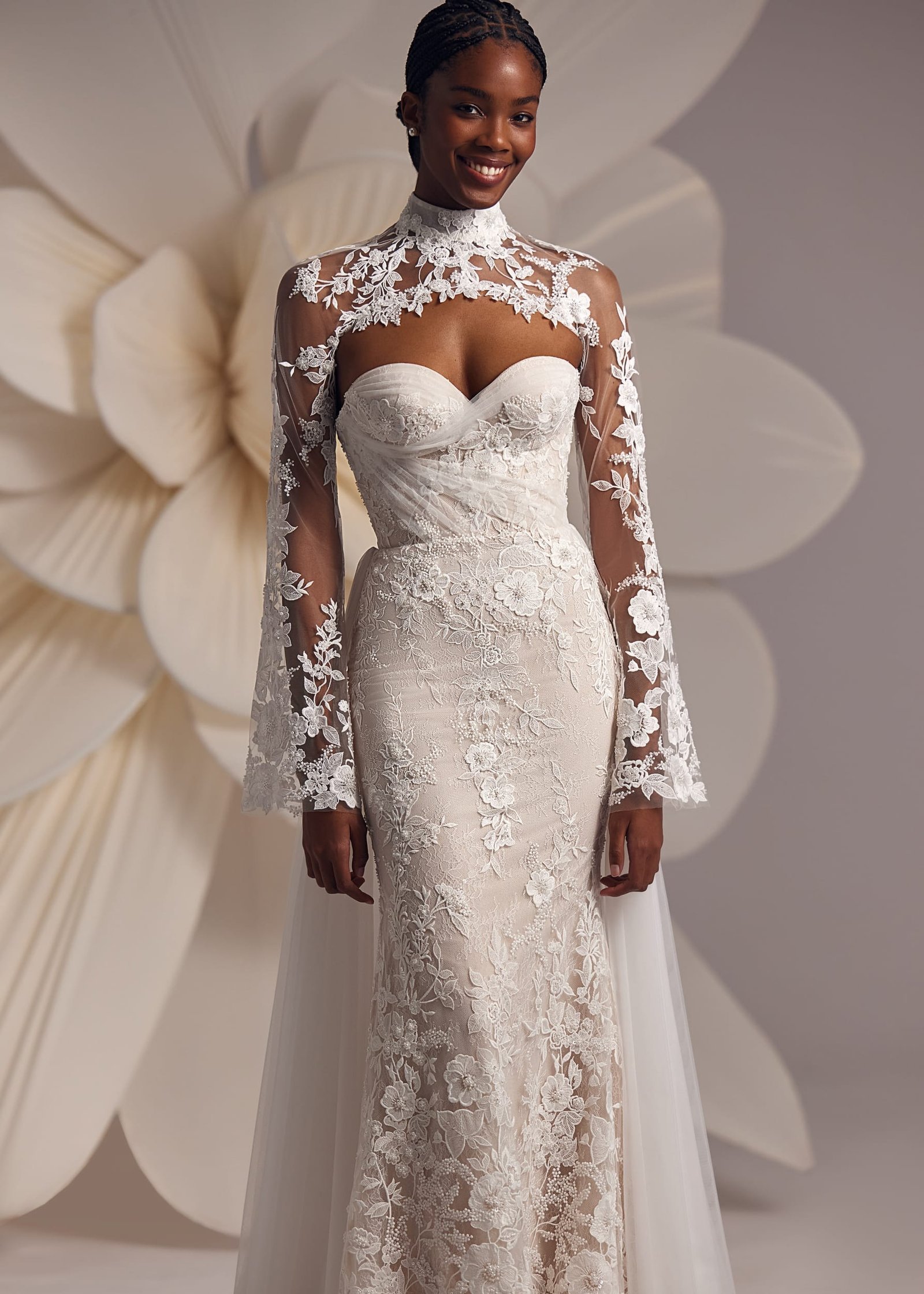
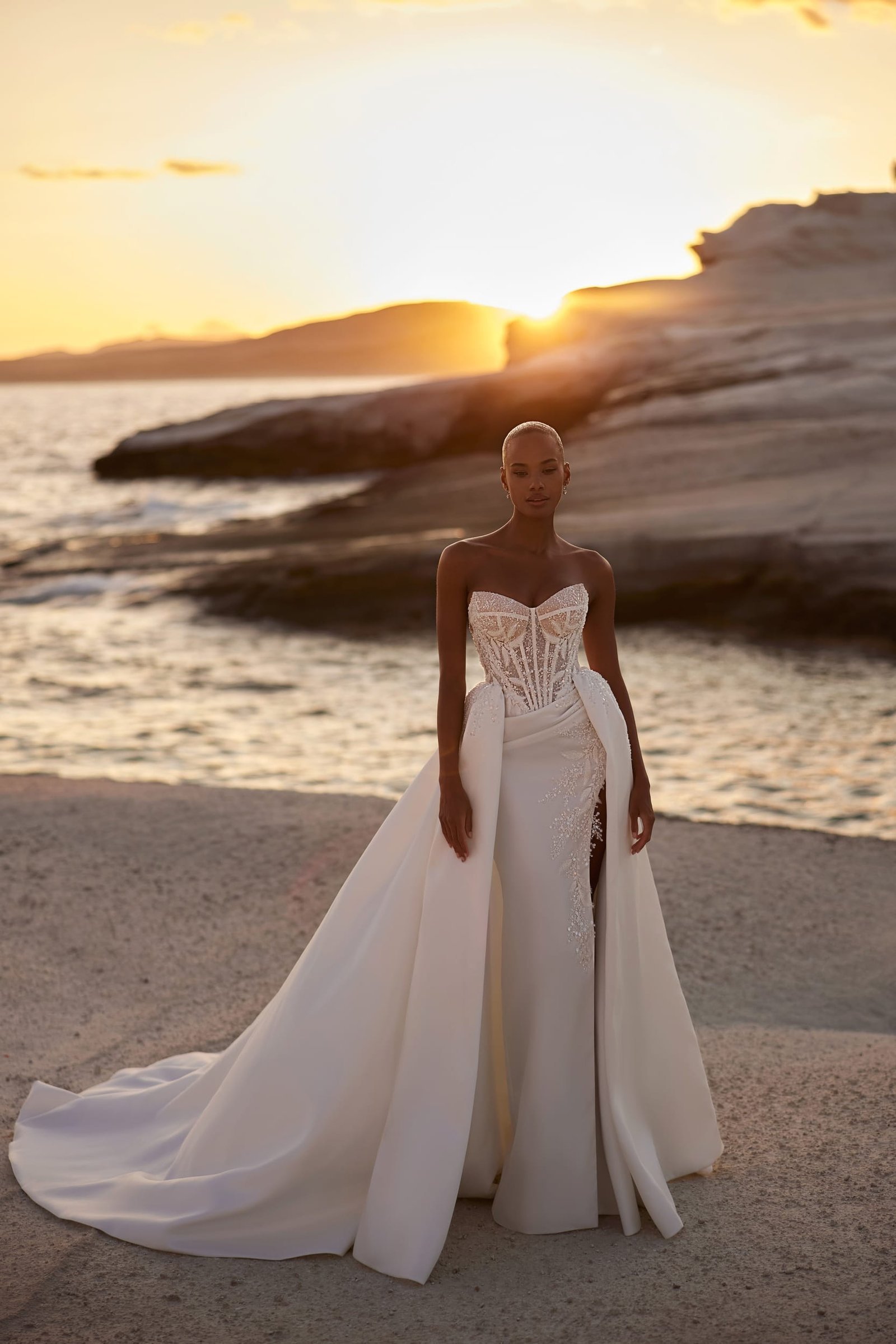
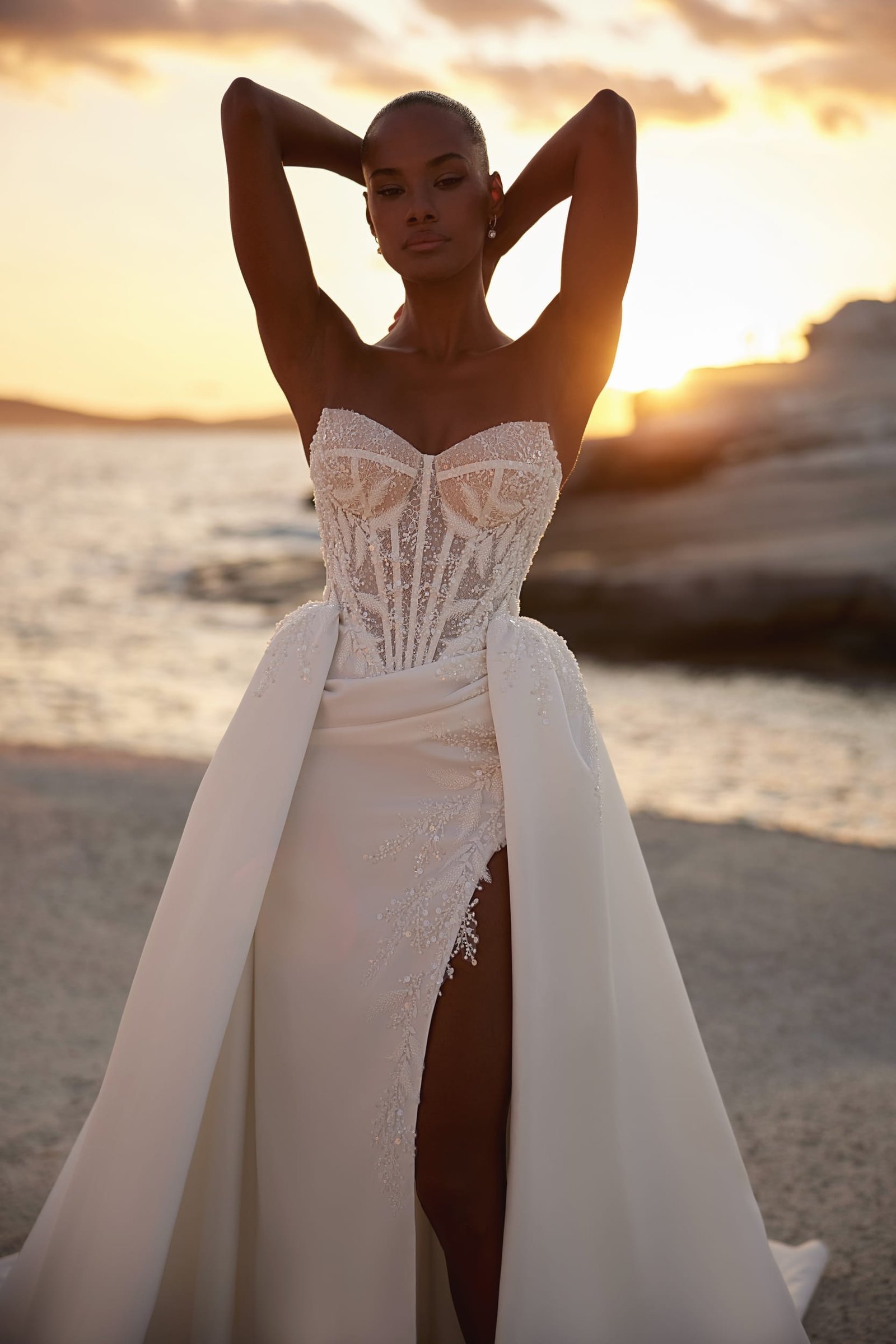
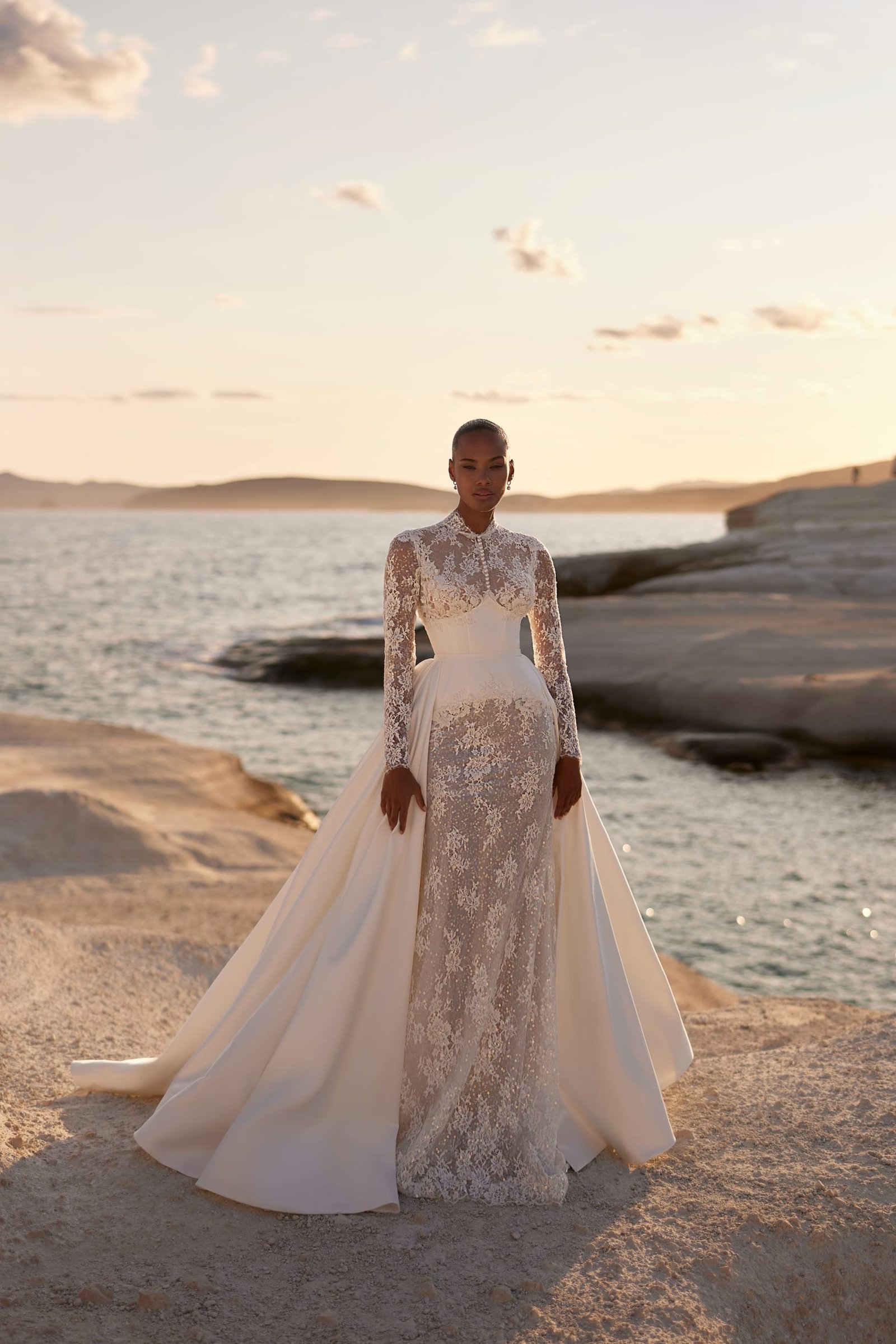
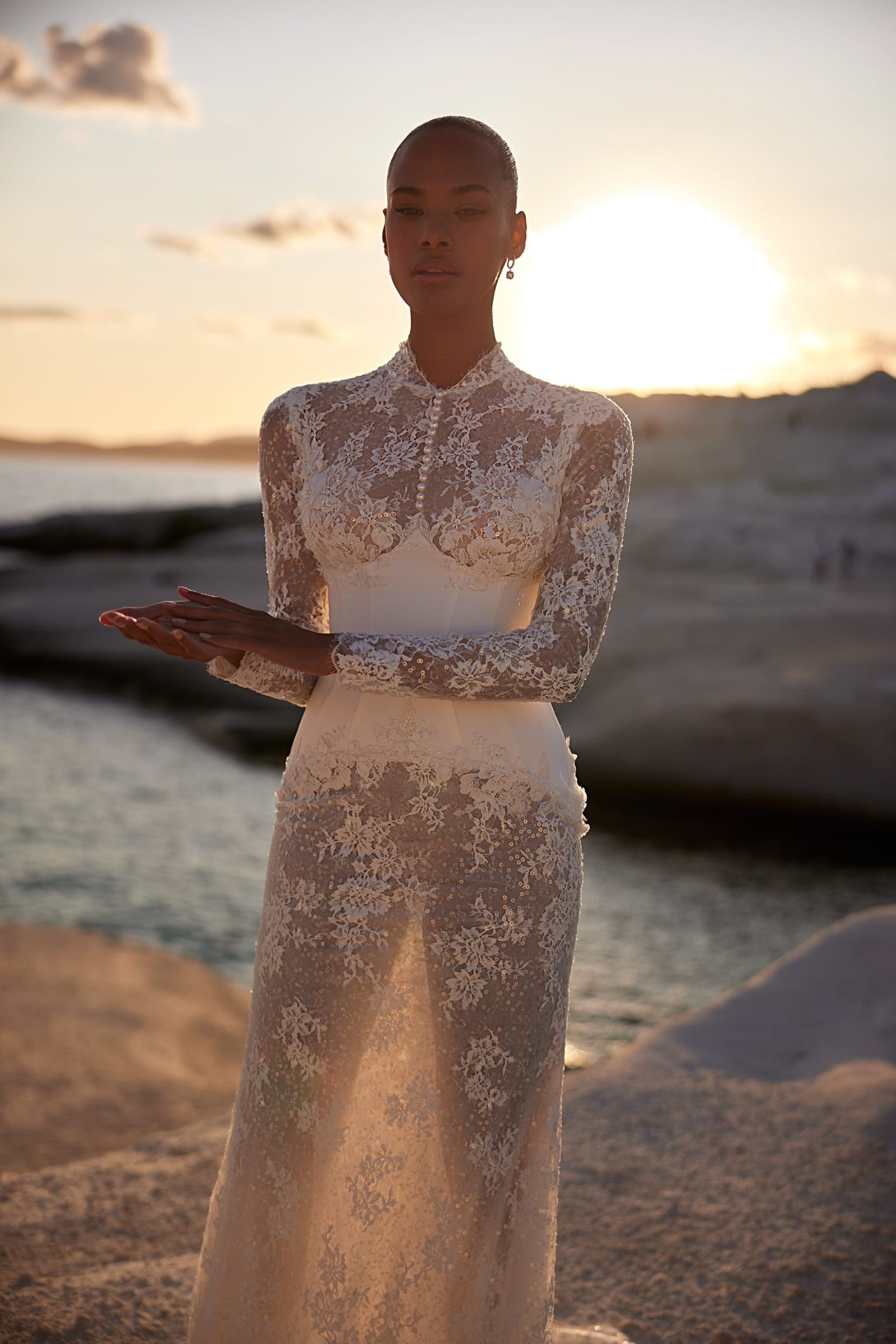
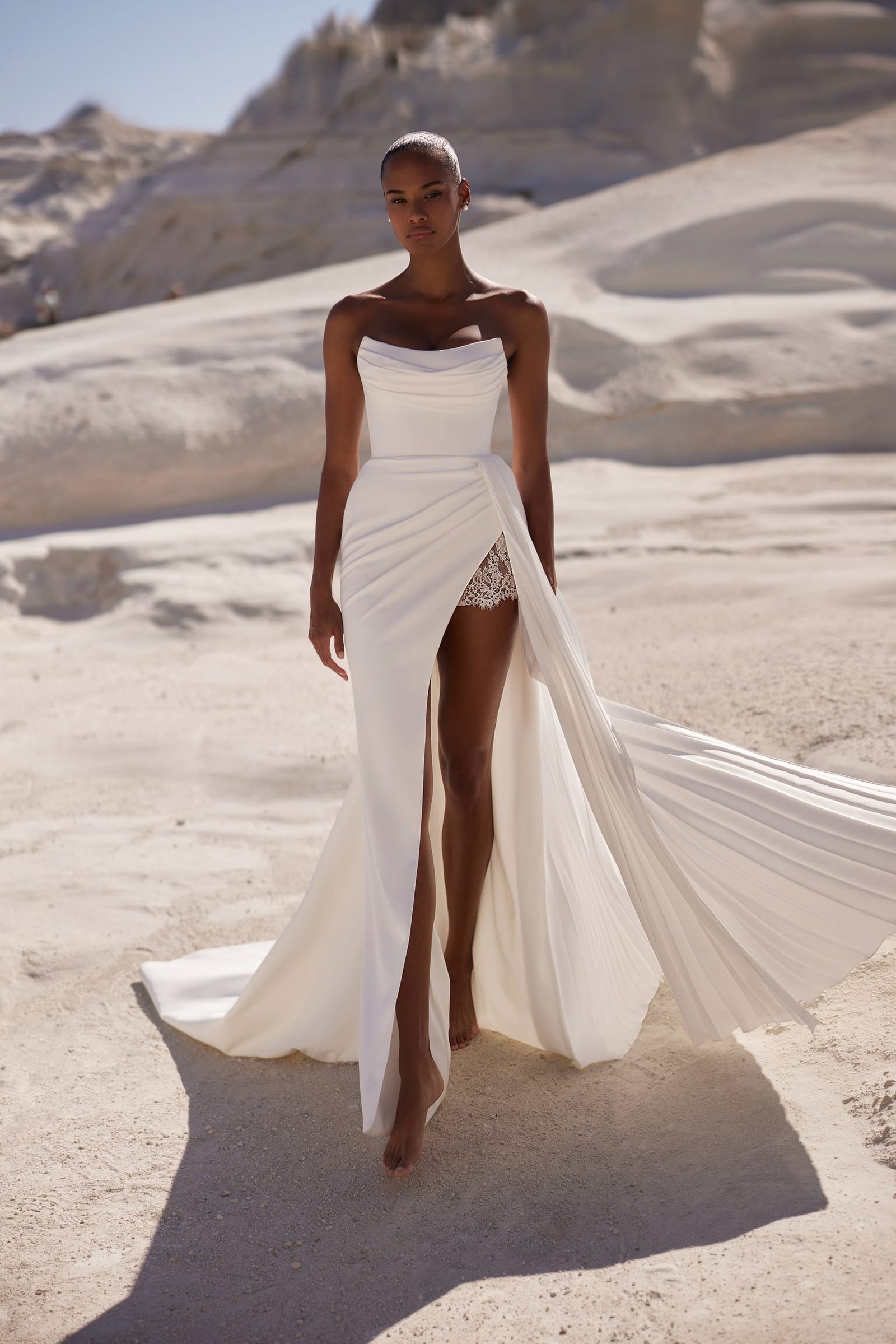
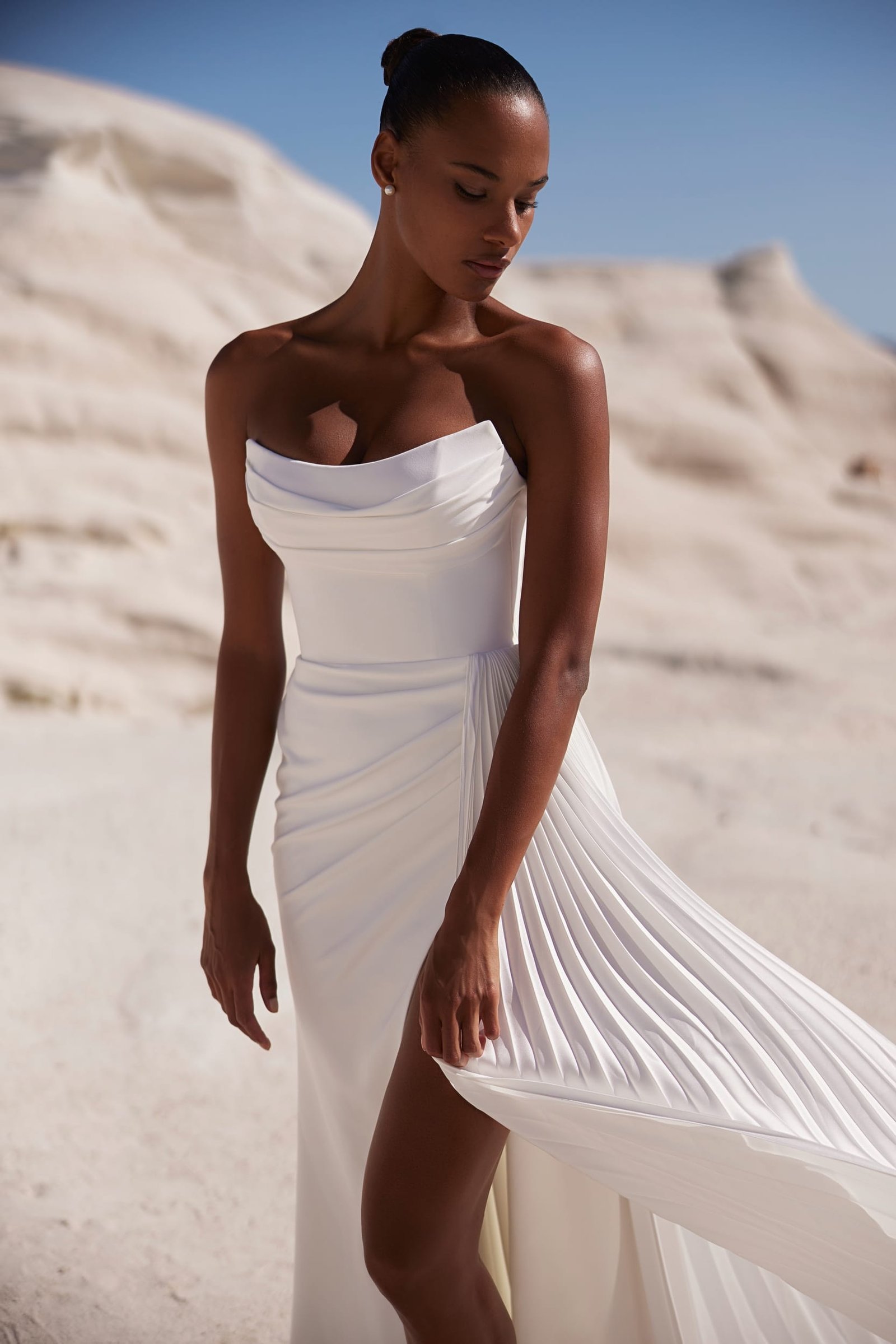
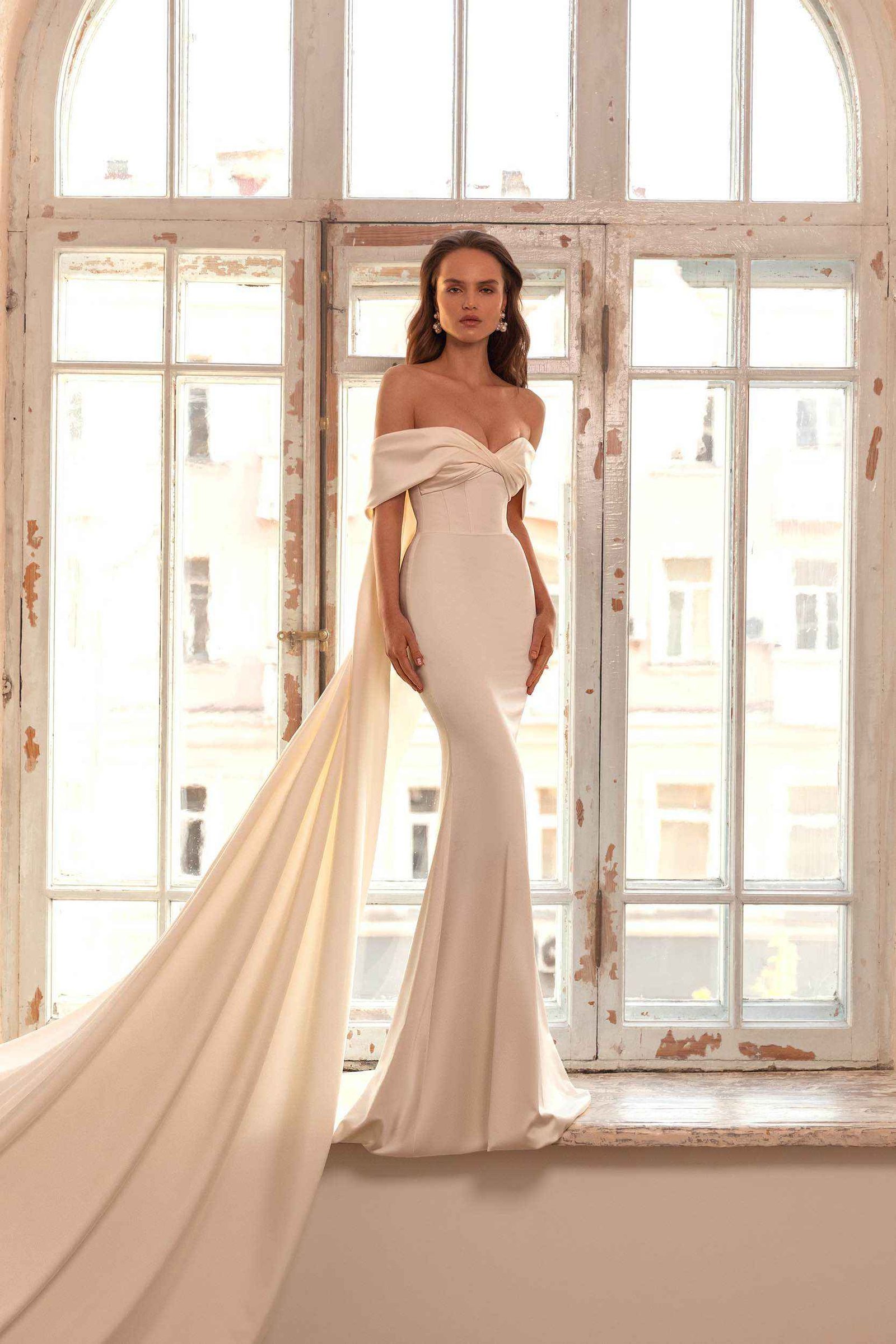
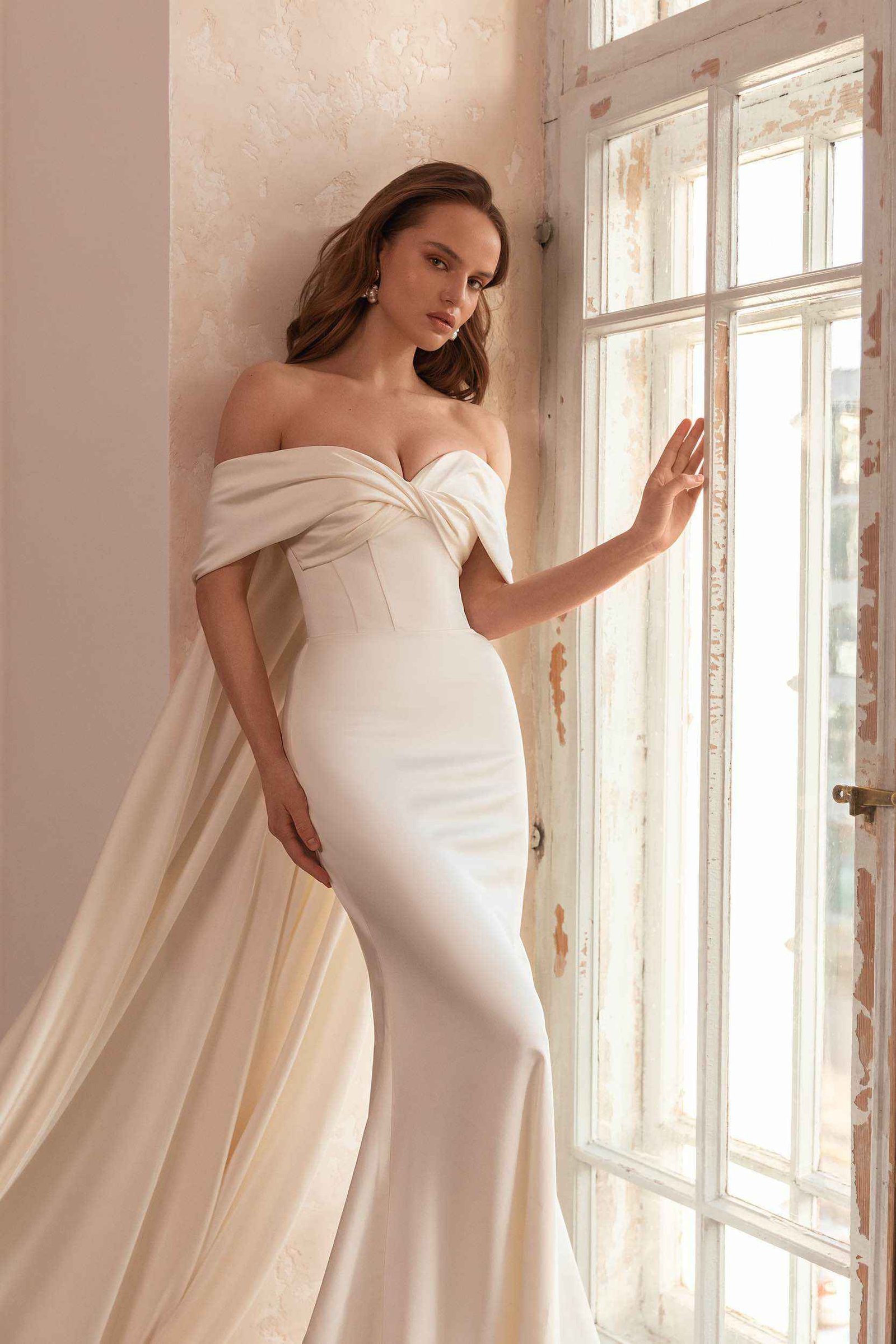
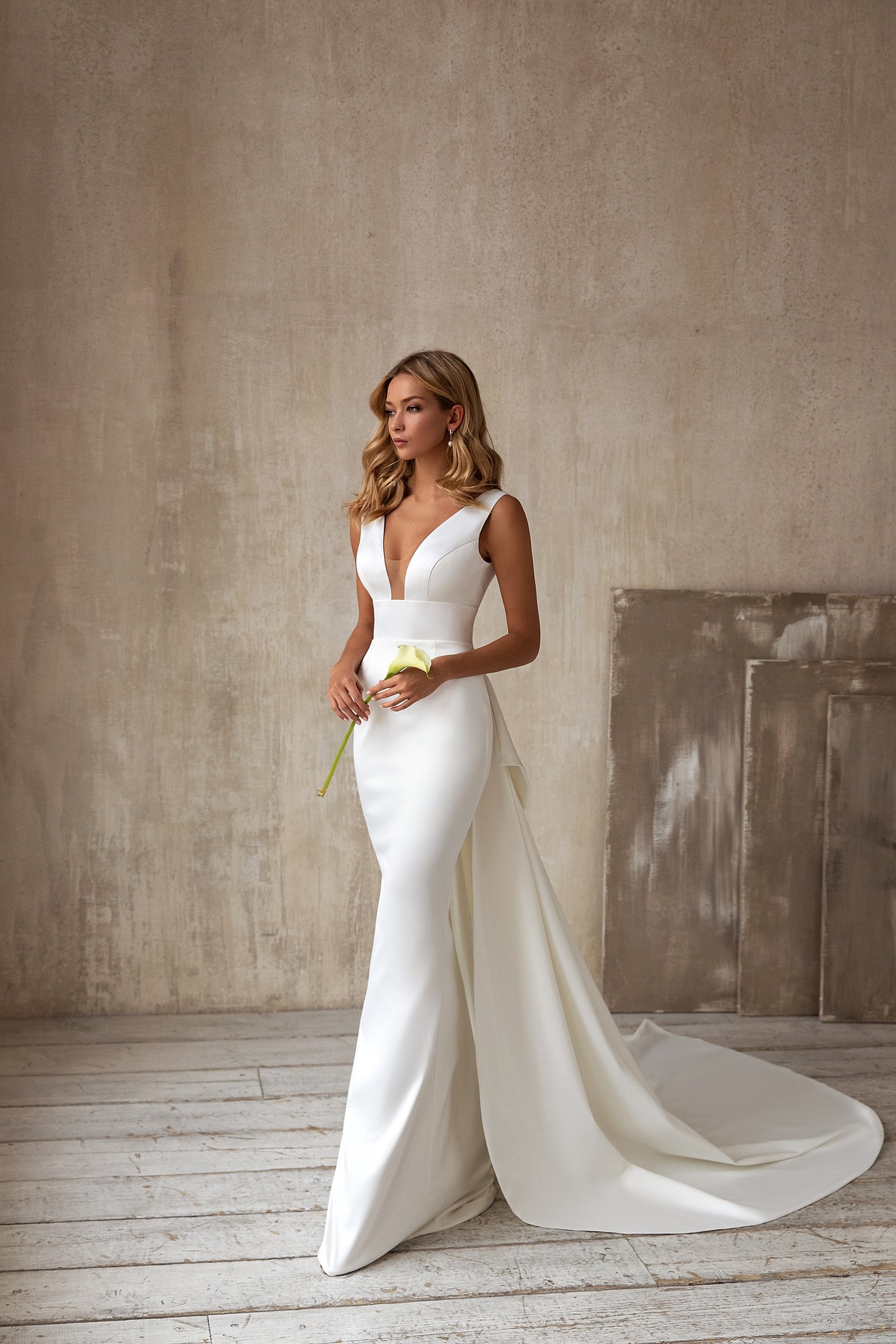
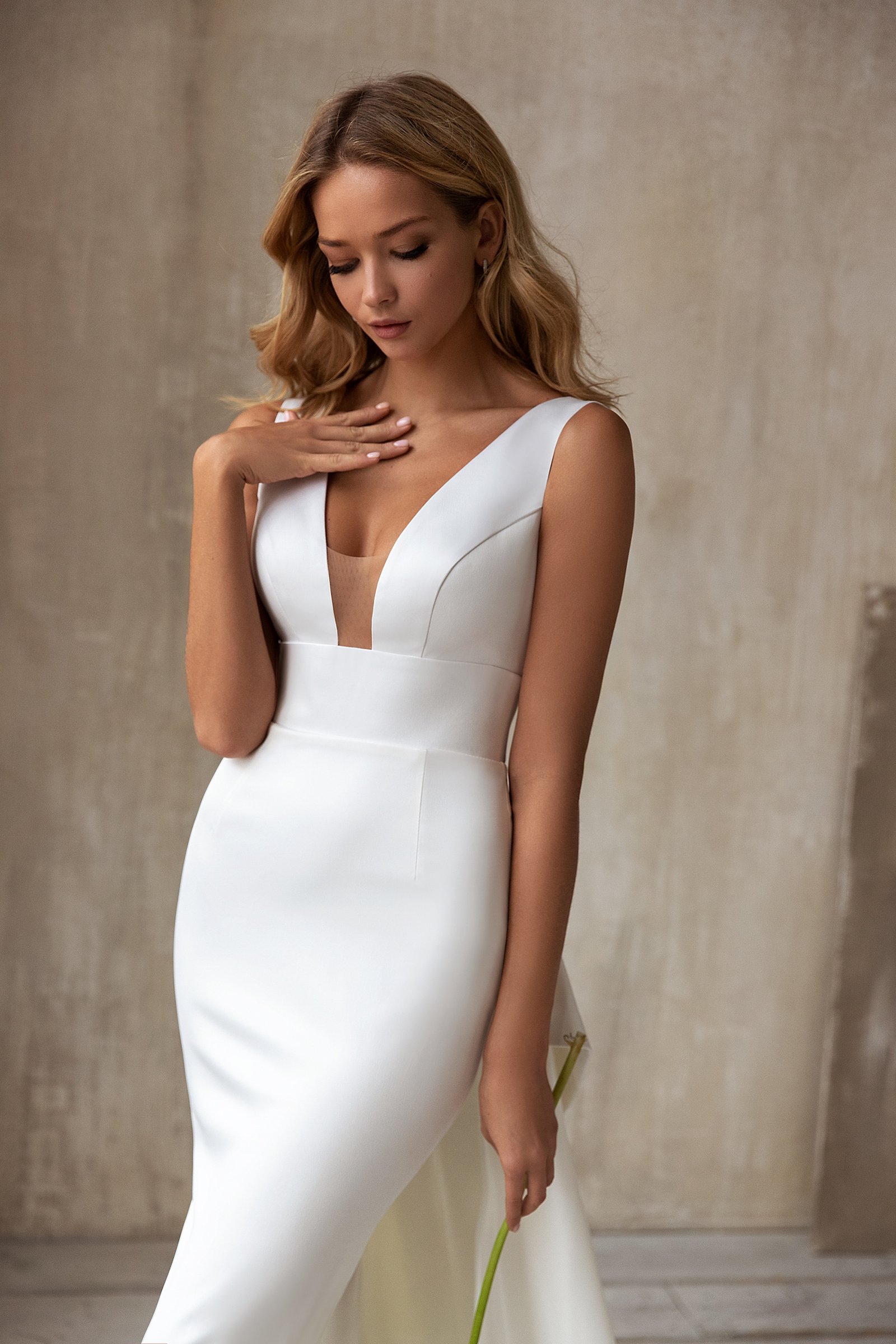
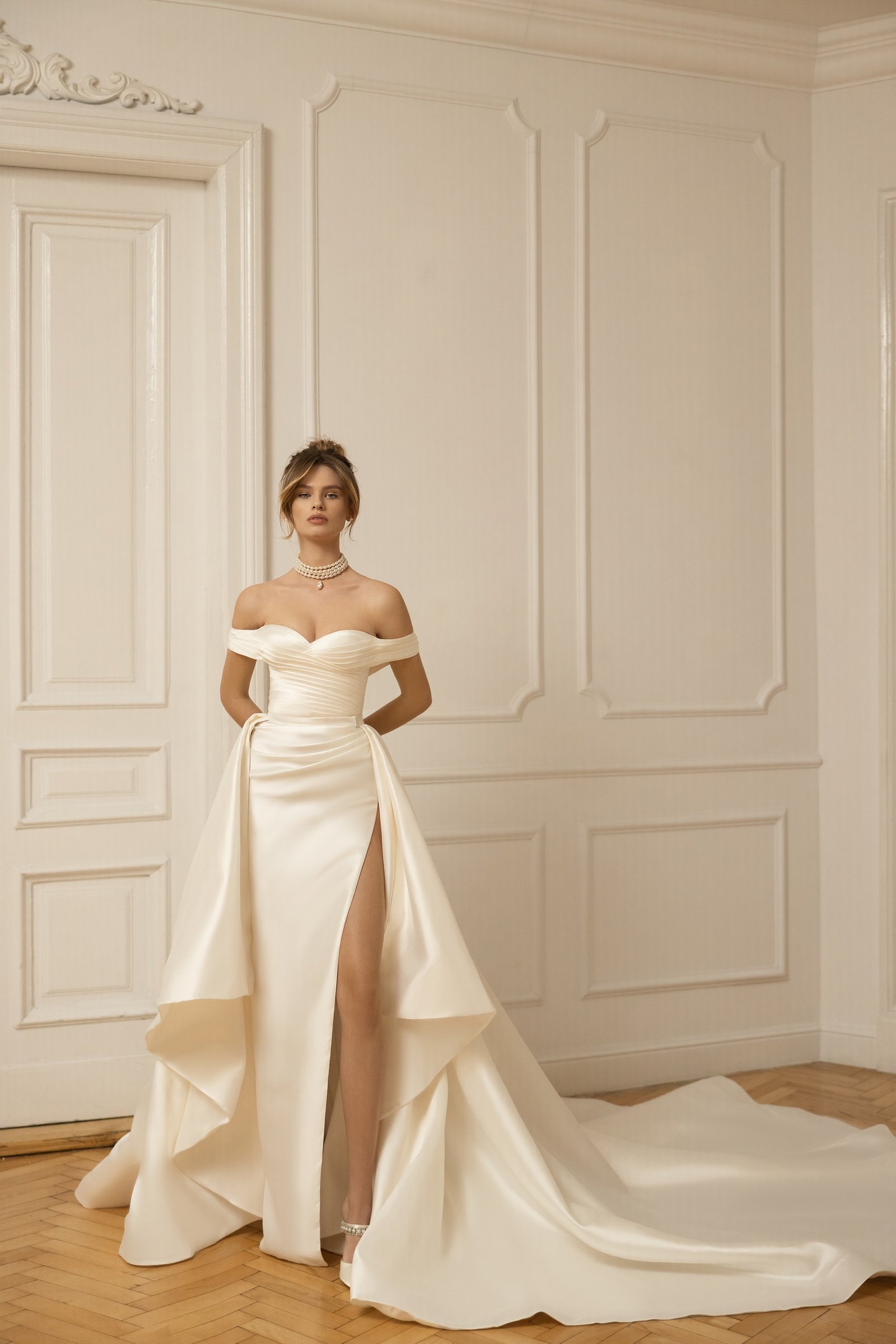
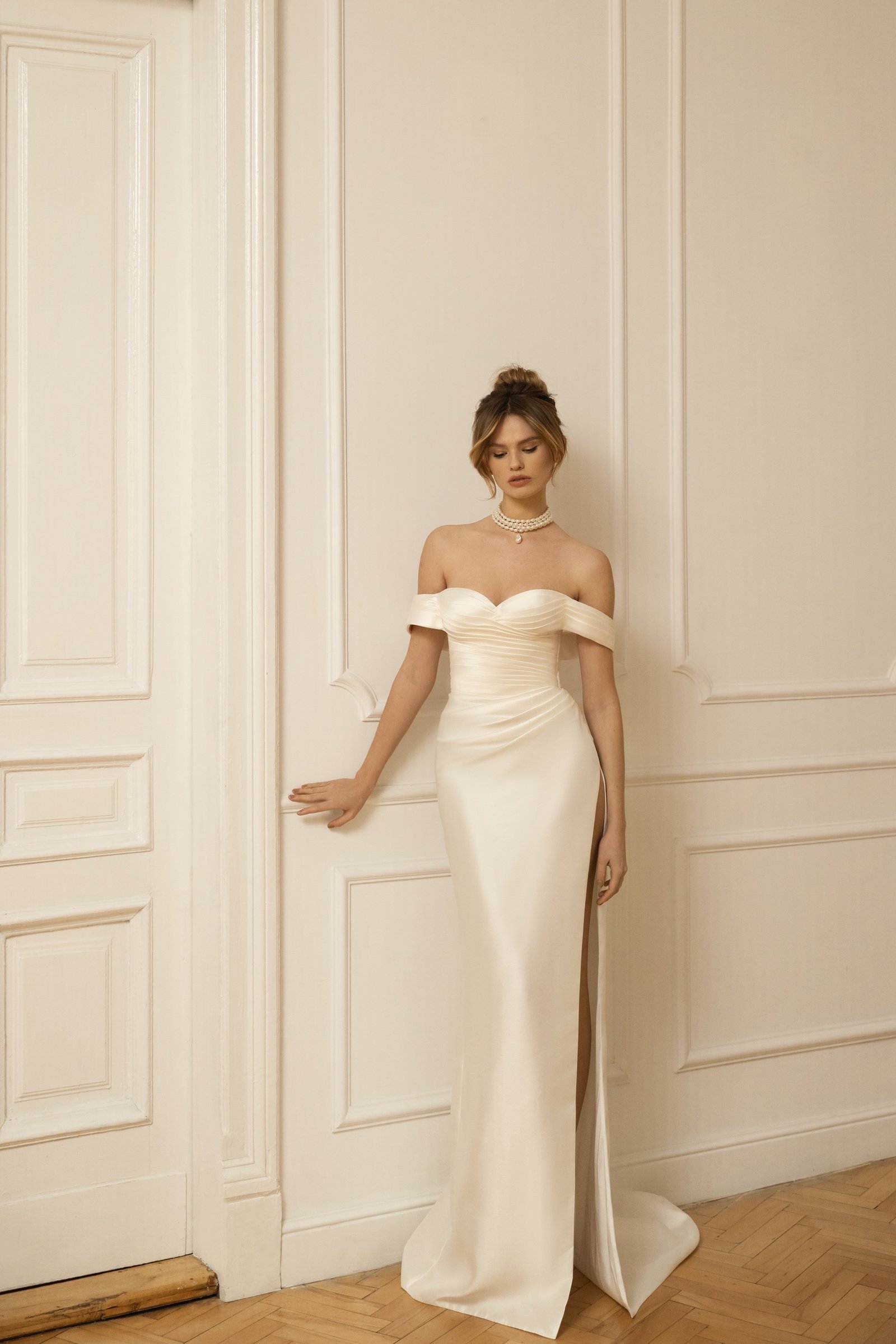
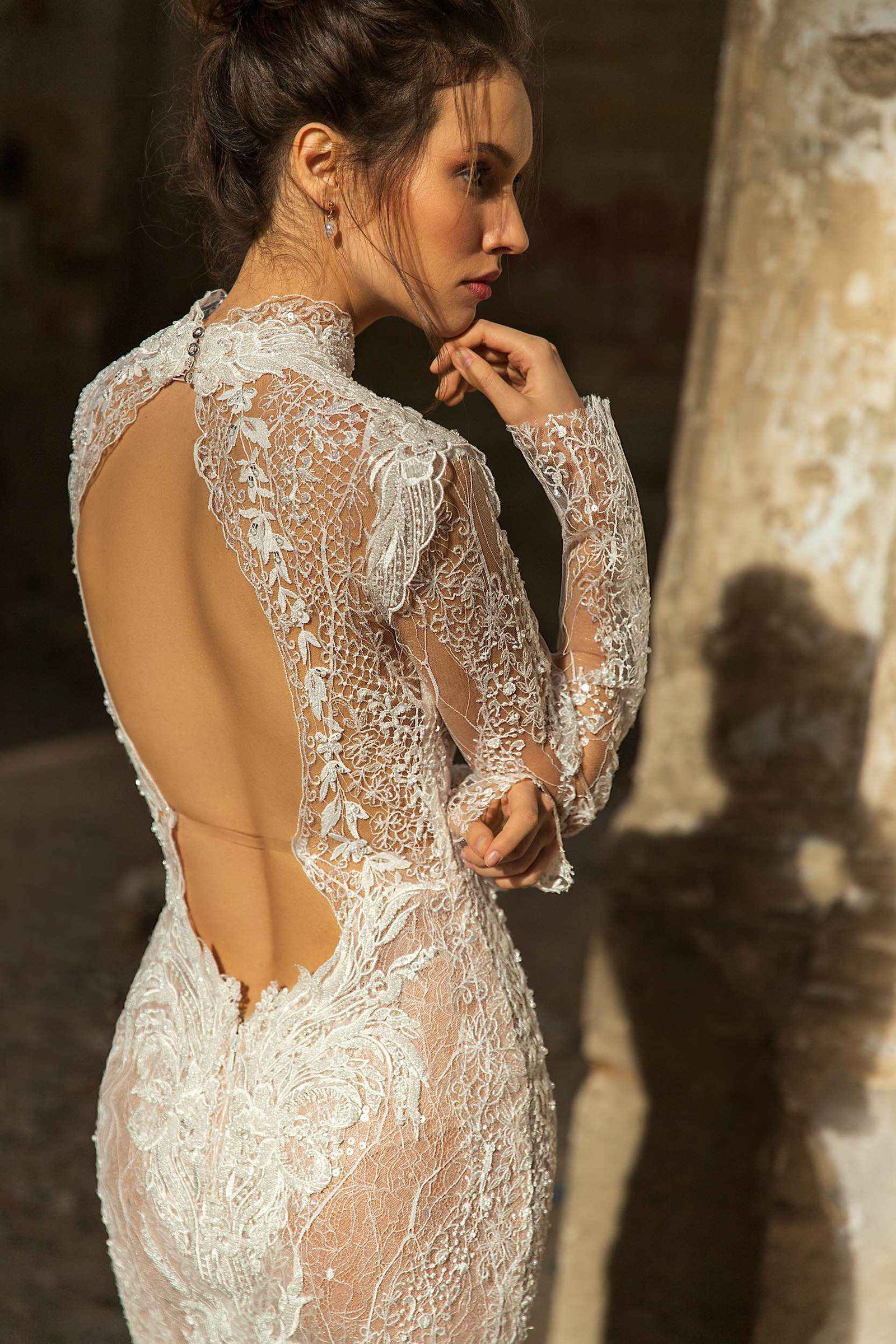
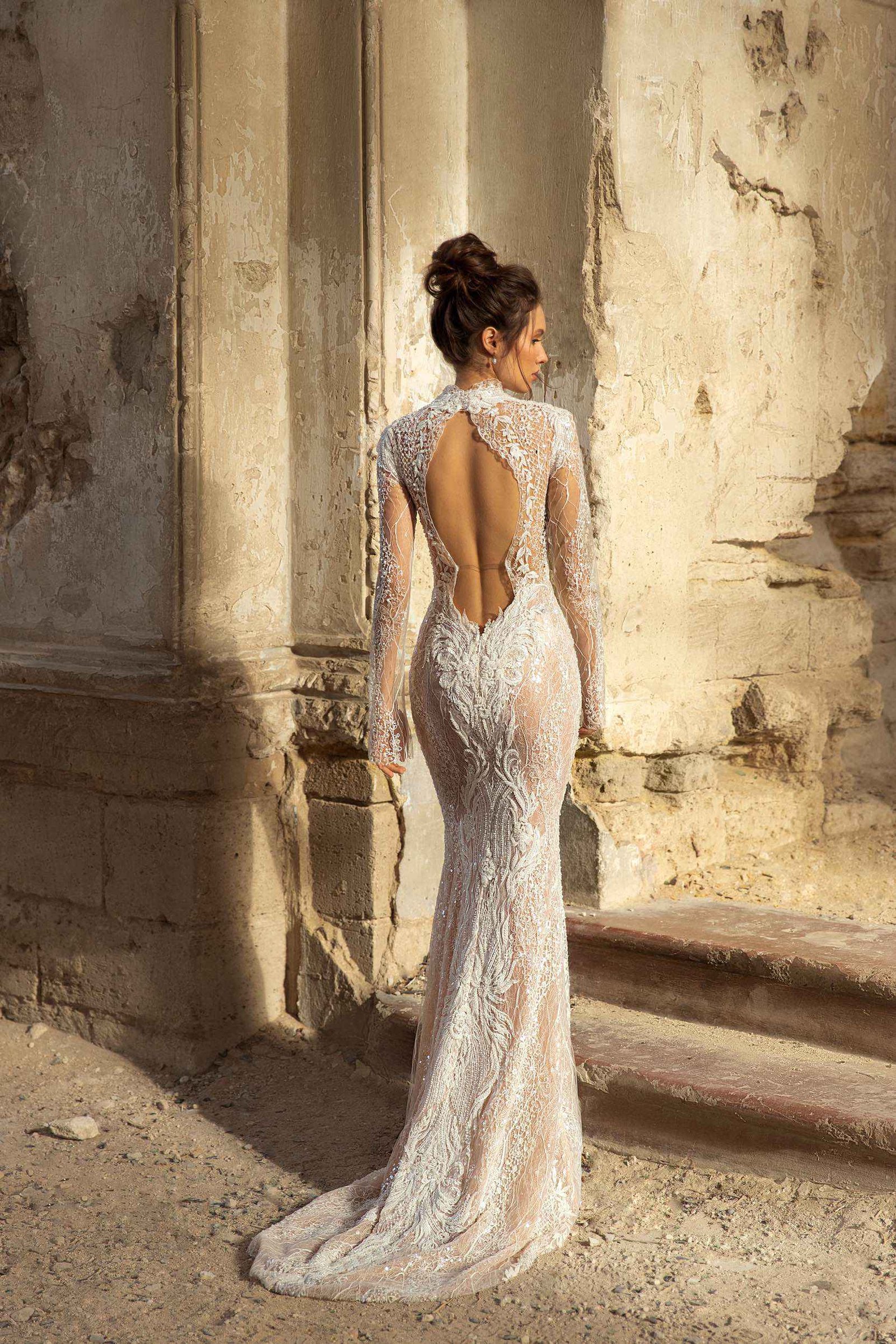
Rouge uses ivory satin in a fluid, floor-length body-skimming silhouette. A halter neckline plunges into a V and the bodice gathers under the bust. A separate cape panel ties at the neck and trails behind, adding movement without widening the base skirt. Pacific takes a lighter approach with Chantilly lace, a softly draped neckline, pearl-edged straps and a short sweep train. One dress emphasizes satin drape; the other lets lace and fine details lead.
Sheath and column in the catalogue
Eva Lendel also uses column for a narrow dress with little flare. Column tends to read straighter, while sheath suggests more contour, but the terms overlap; Pacific appears in both selections. Look at the side seam and the room around the hips instead of deciding by a label alone. On Rouge, the separate cape makes a long trailing line from the neck while the satin gown beneath stays narrow; Pacific keeps its short sweep train close to the lace base.