
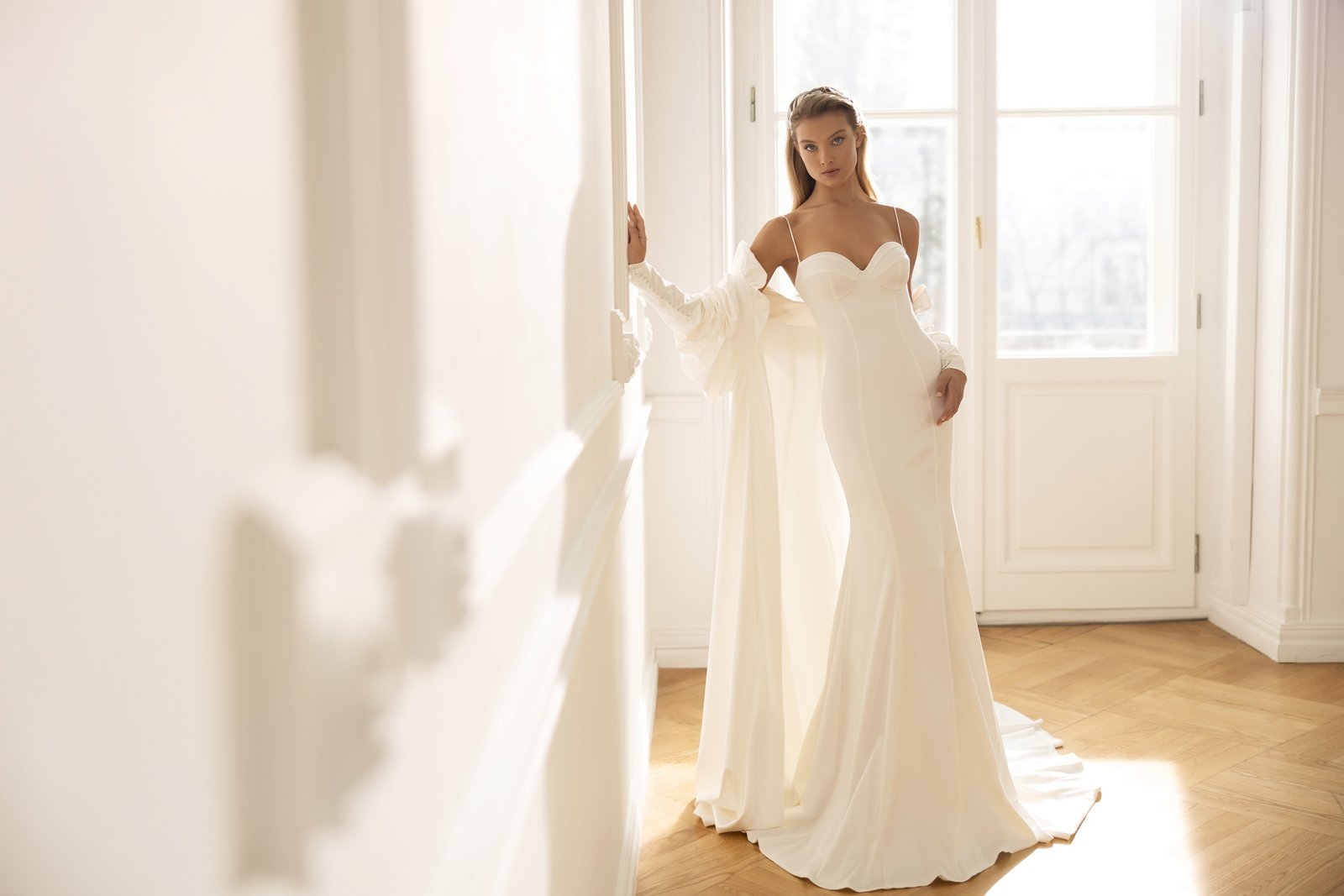
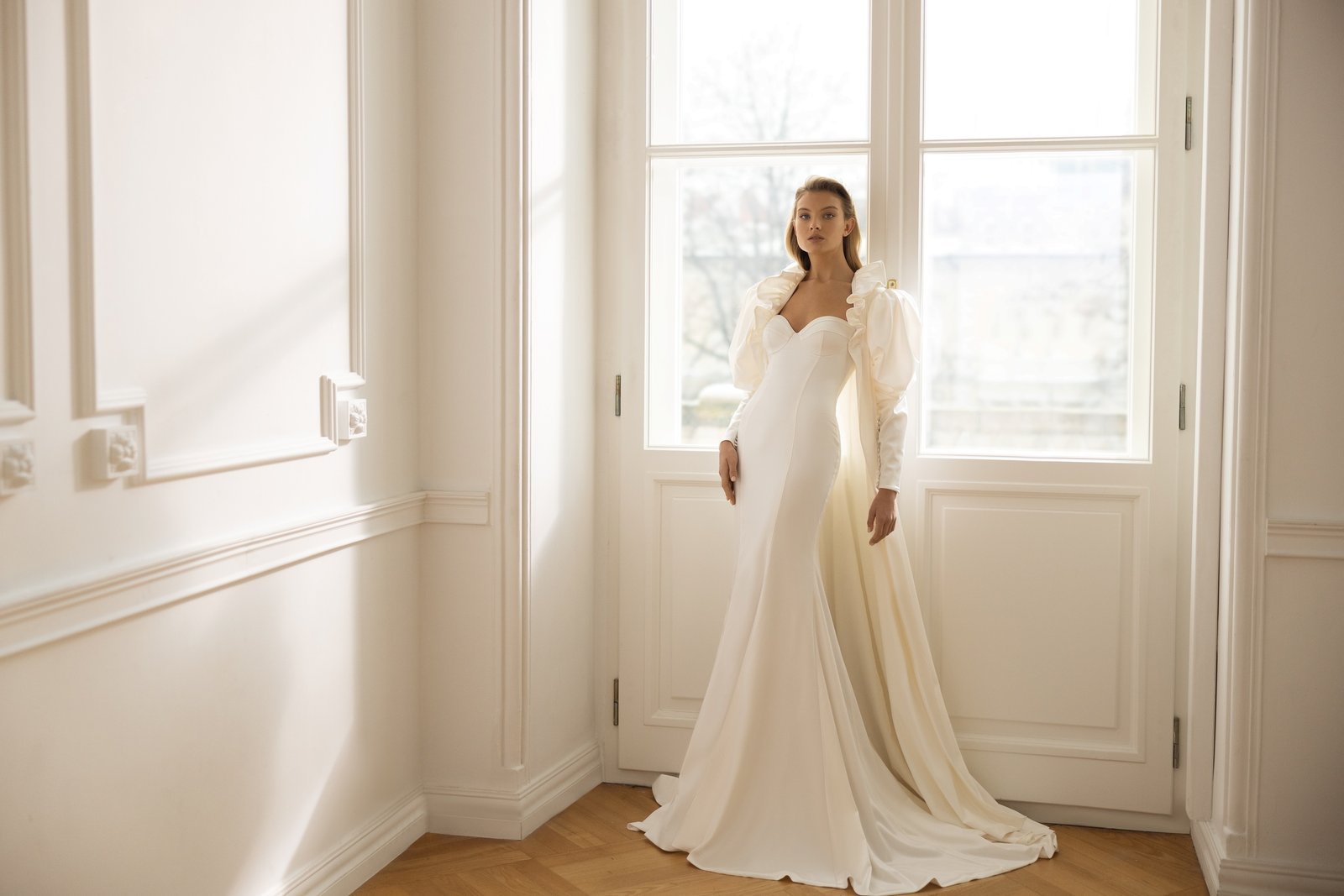
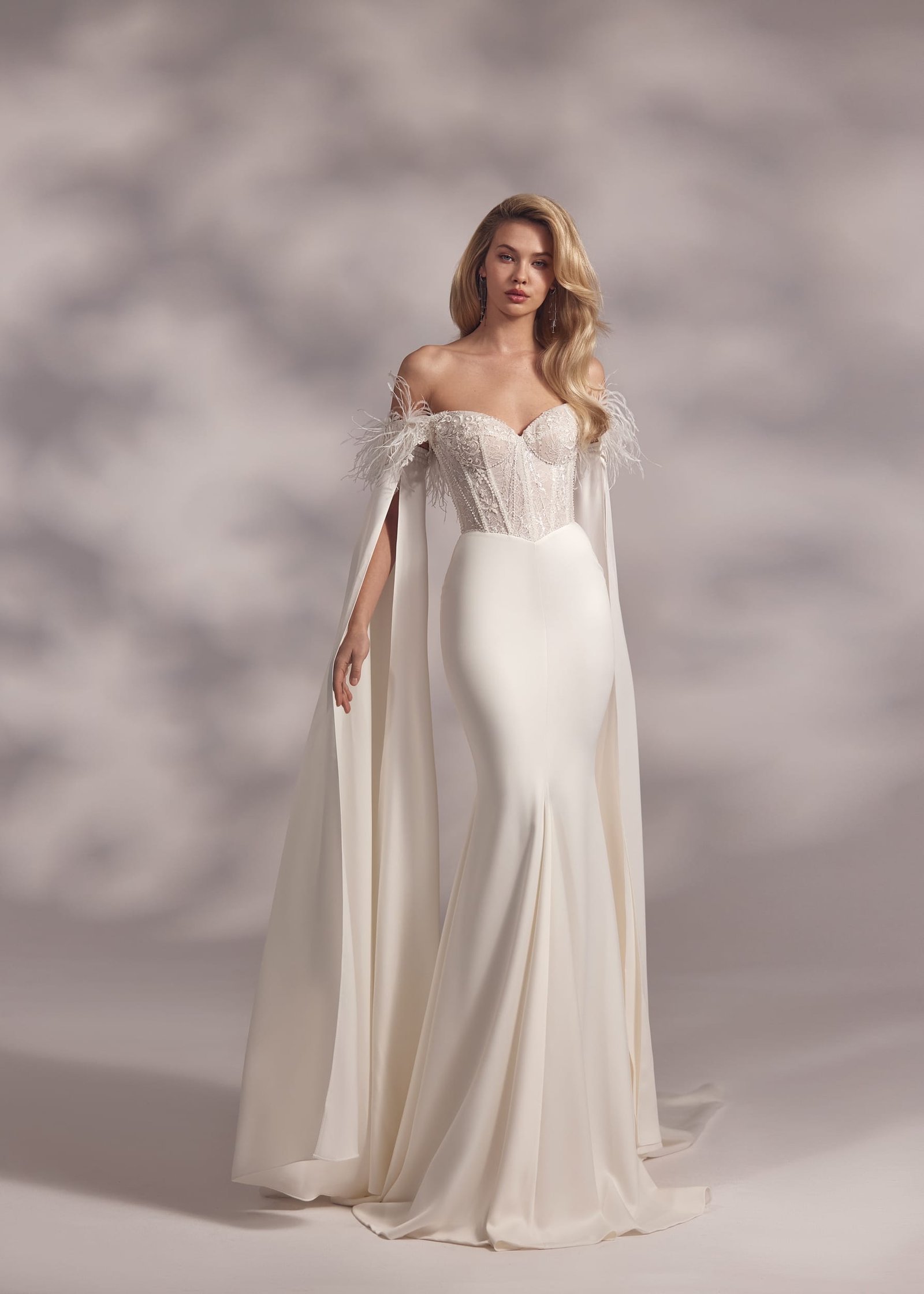
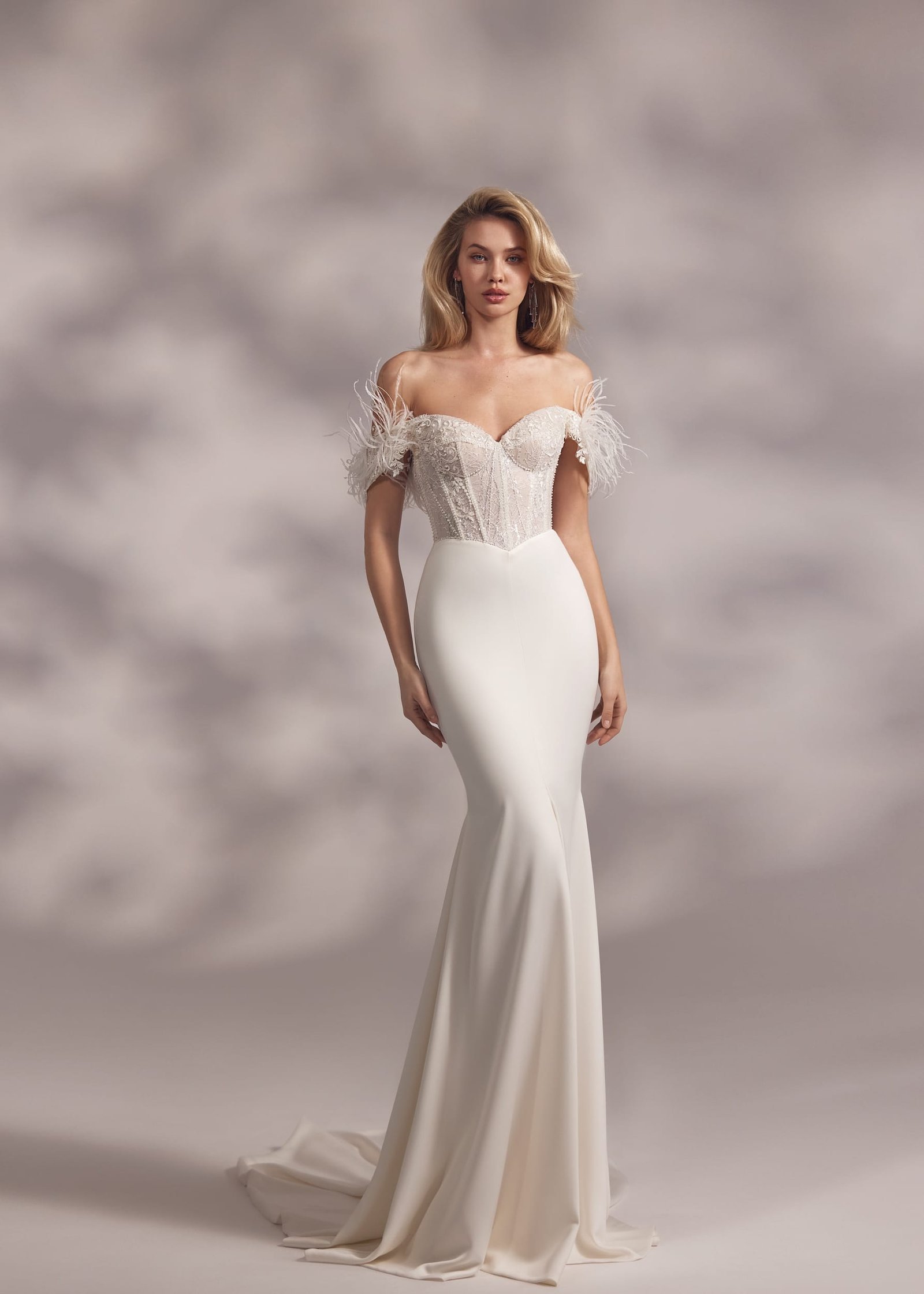
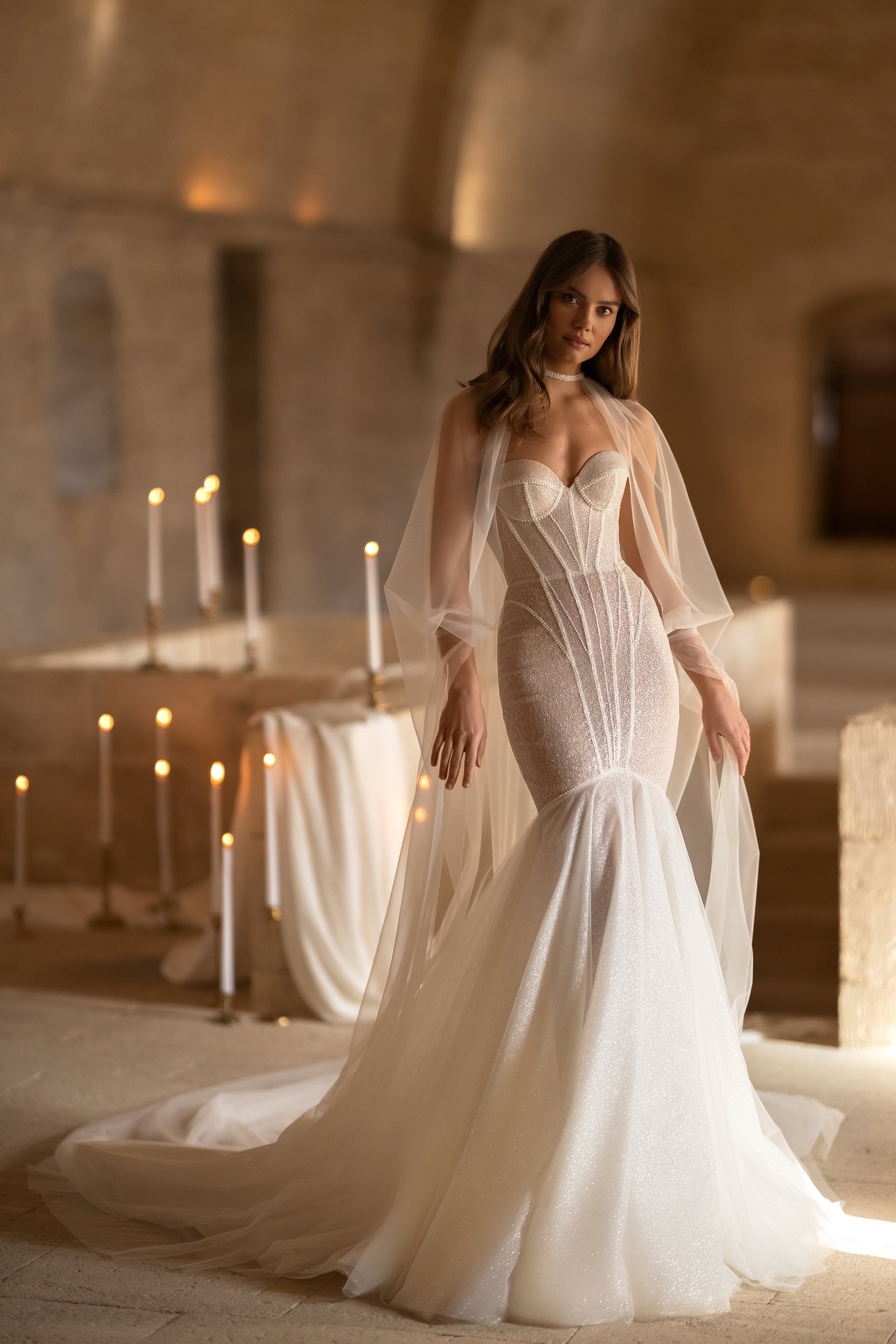
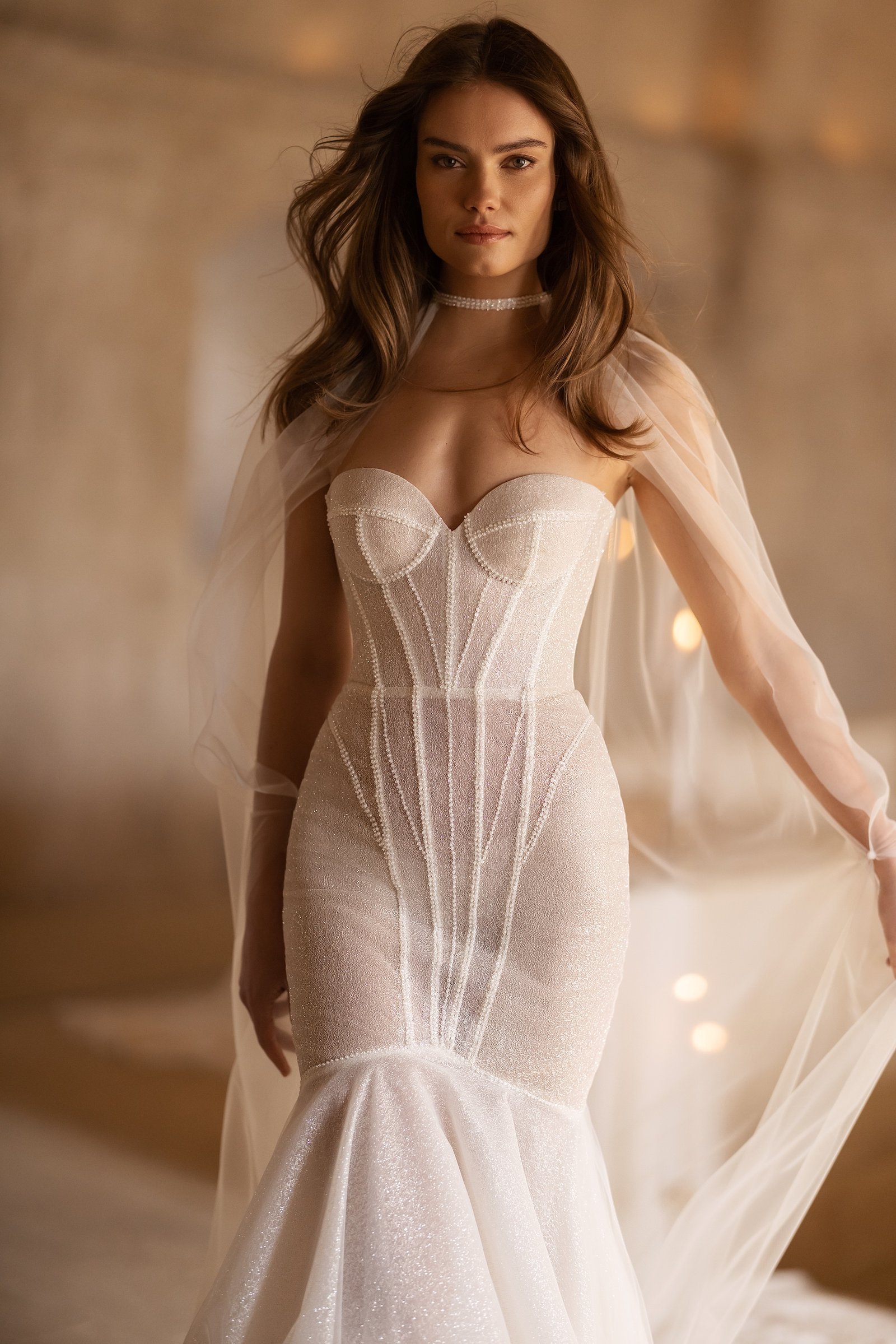
Trumpet wedding dresses: a softer flare for a defined shape
How the trumpet shape balances proportion
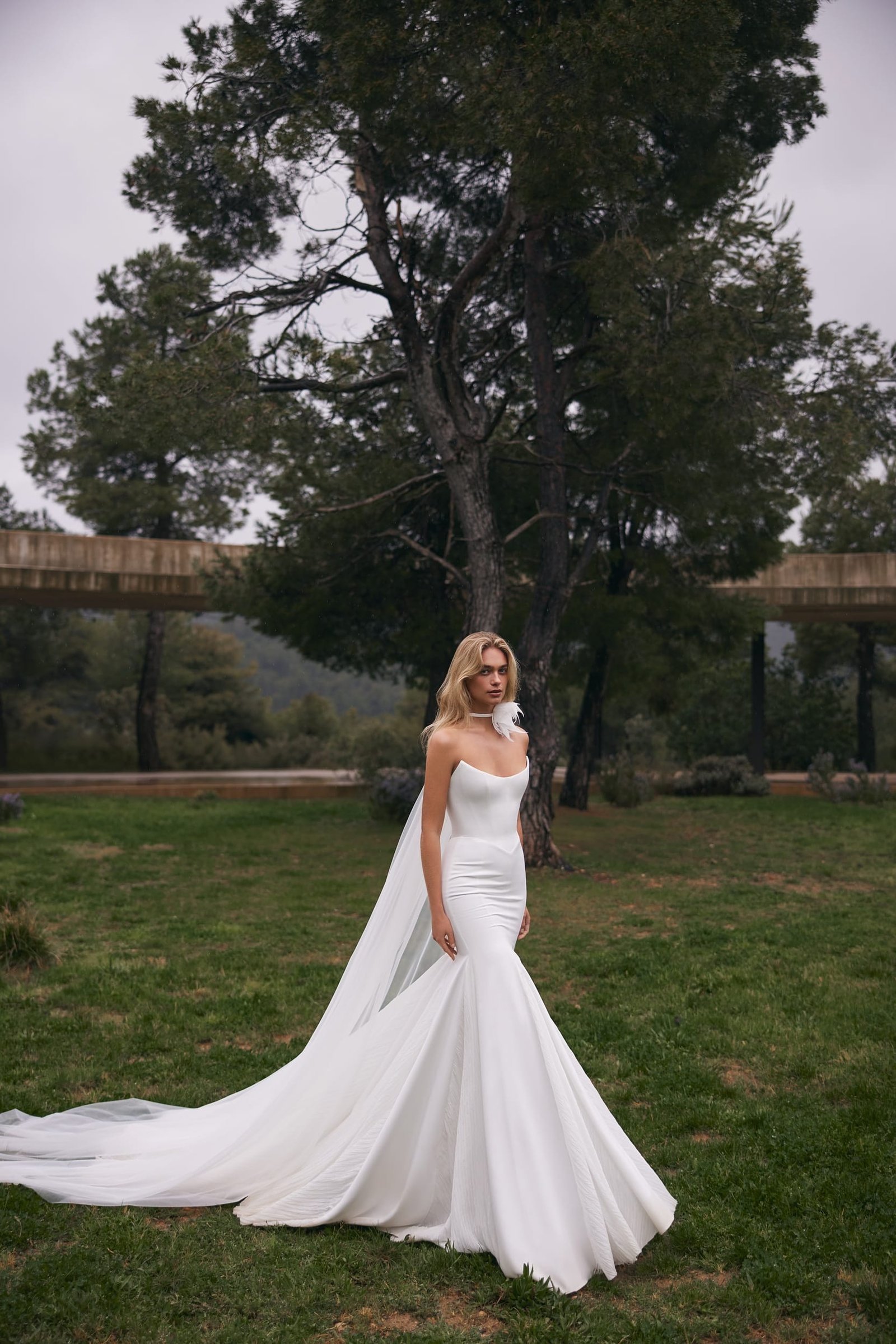
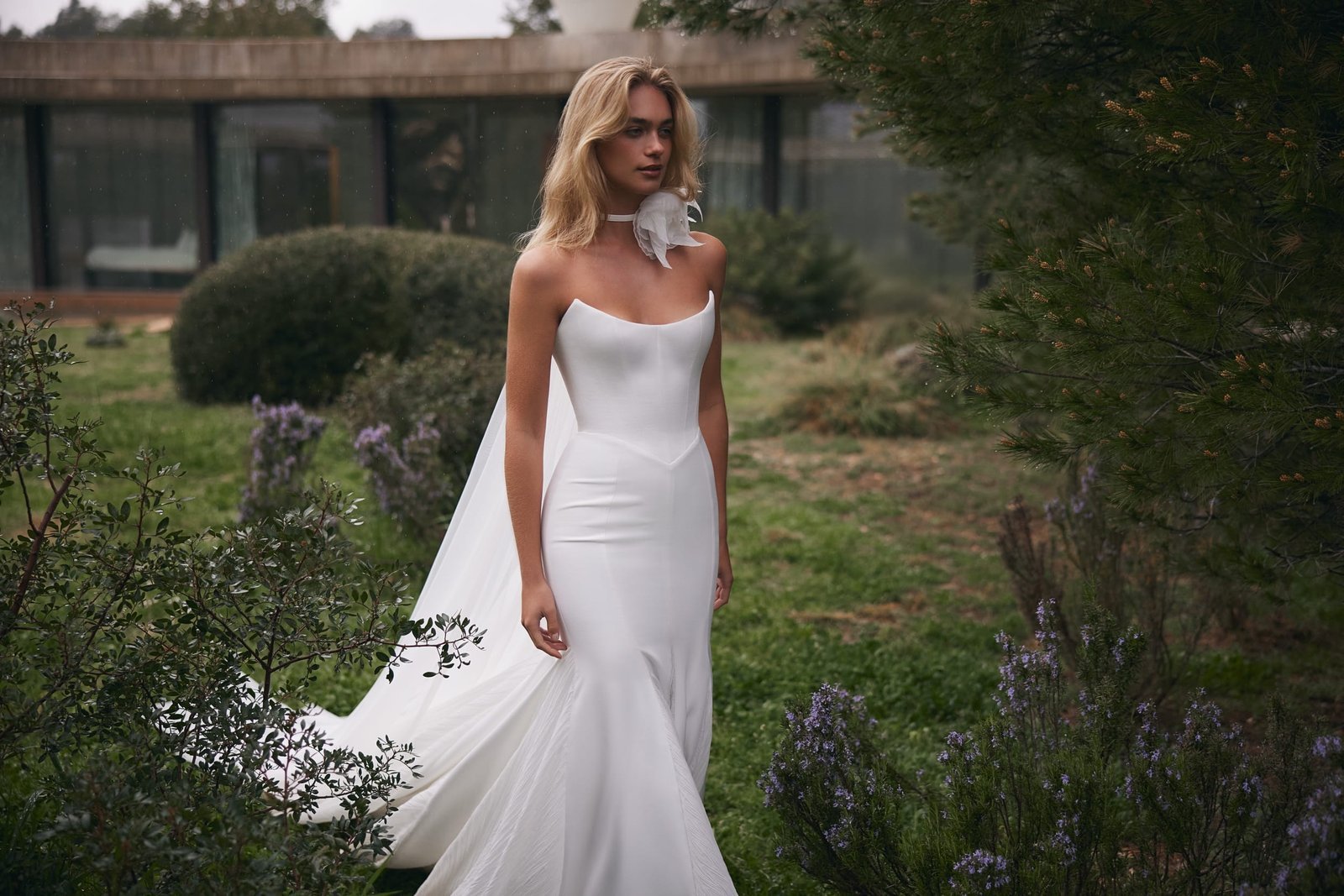
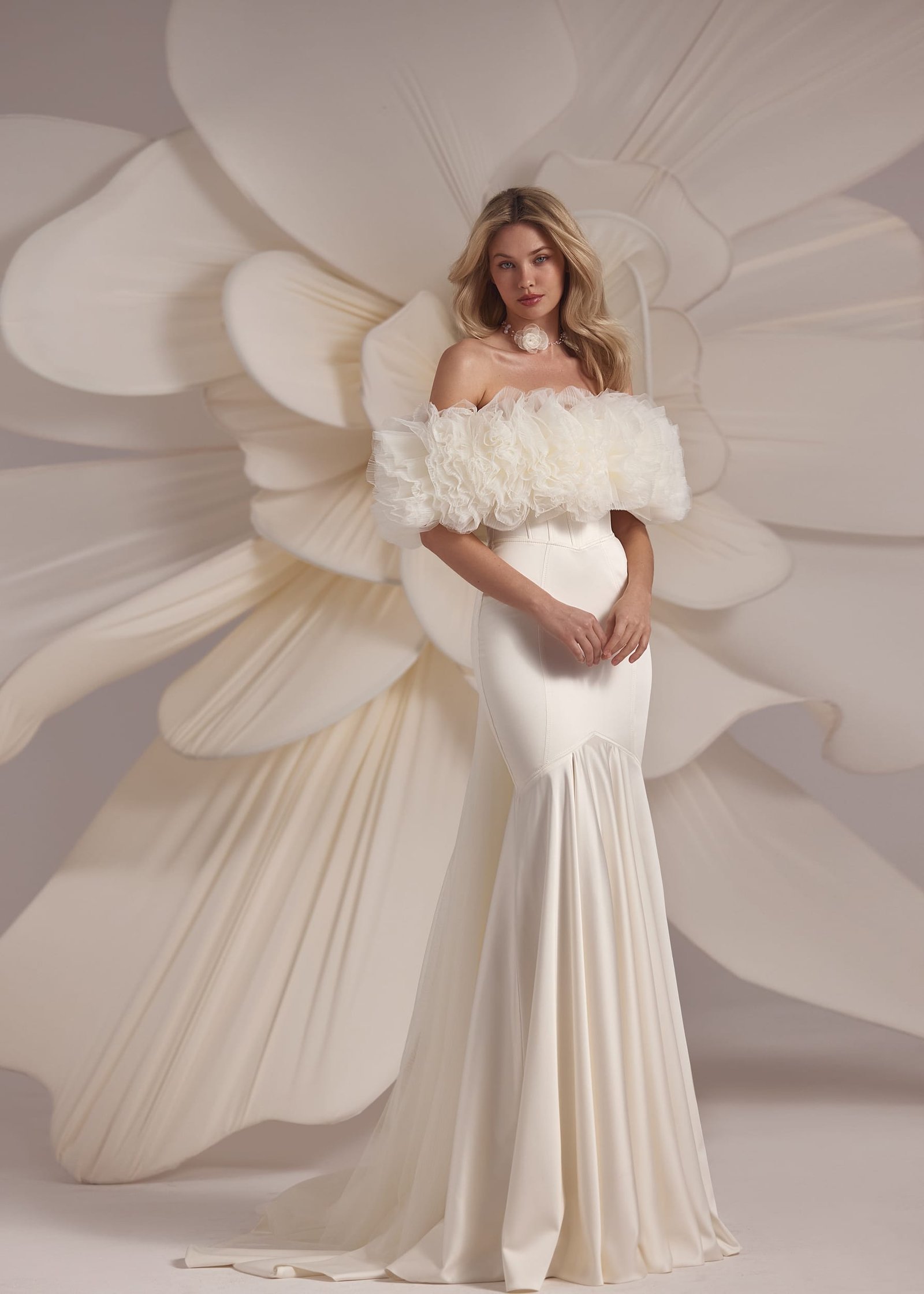
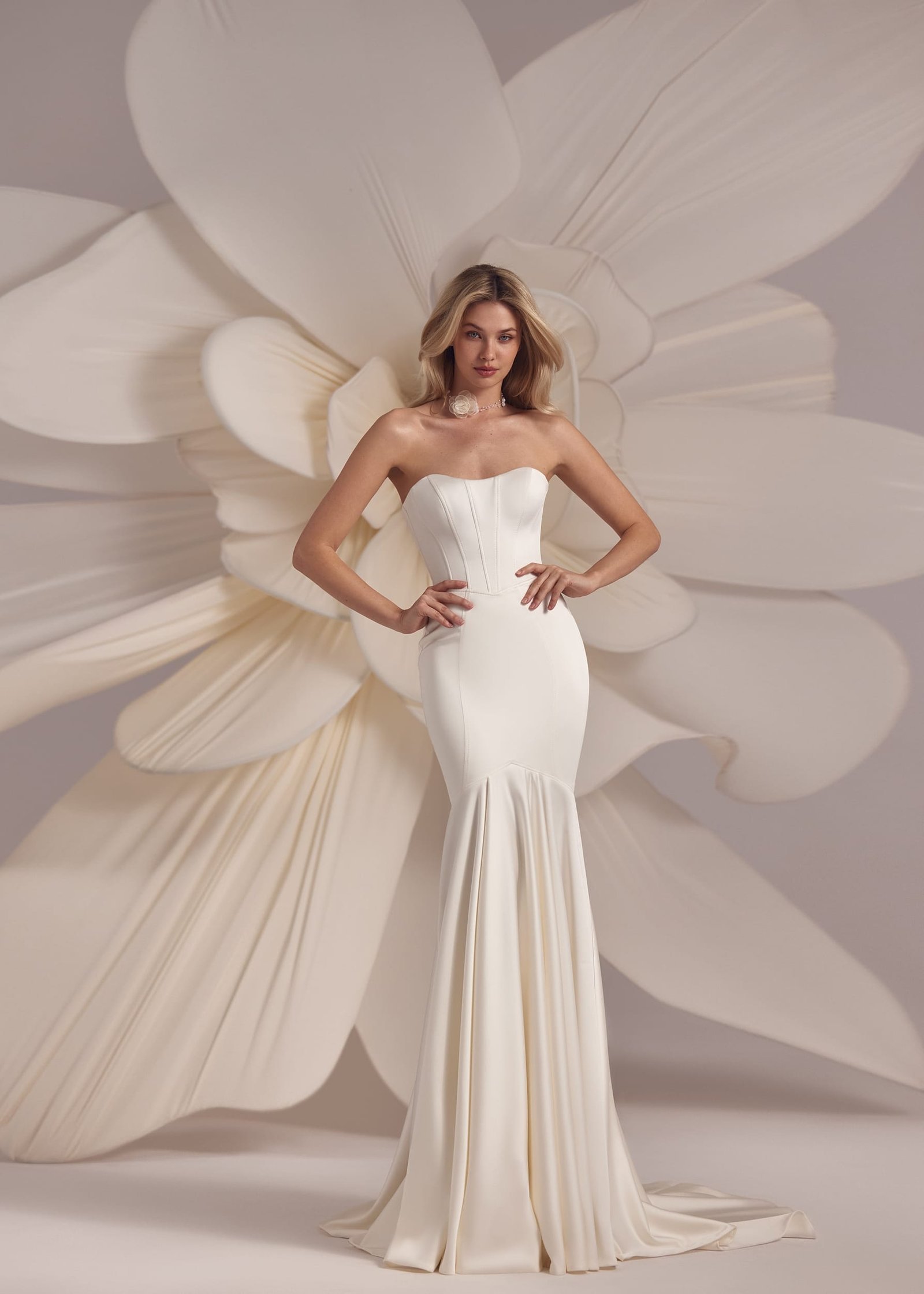
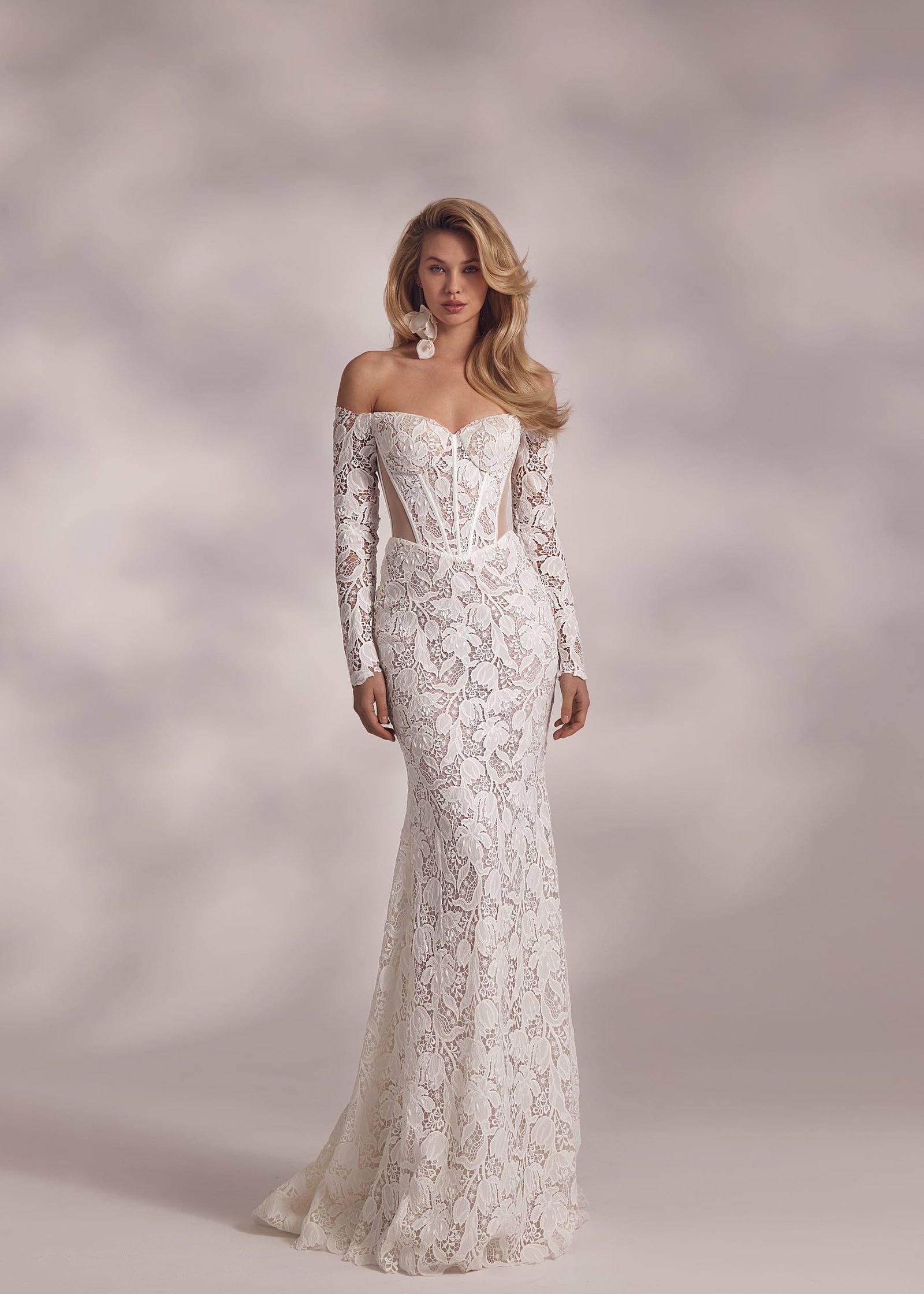
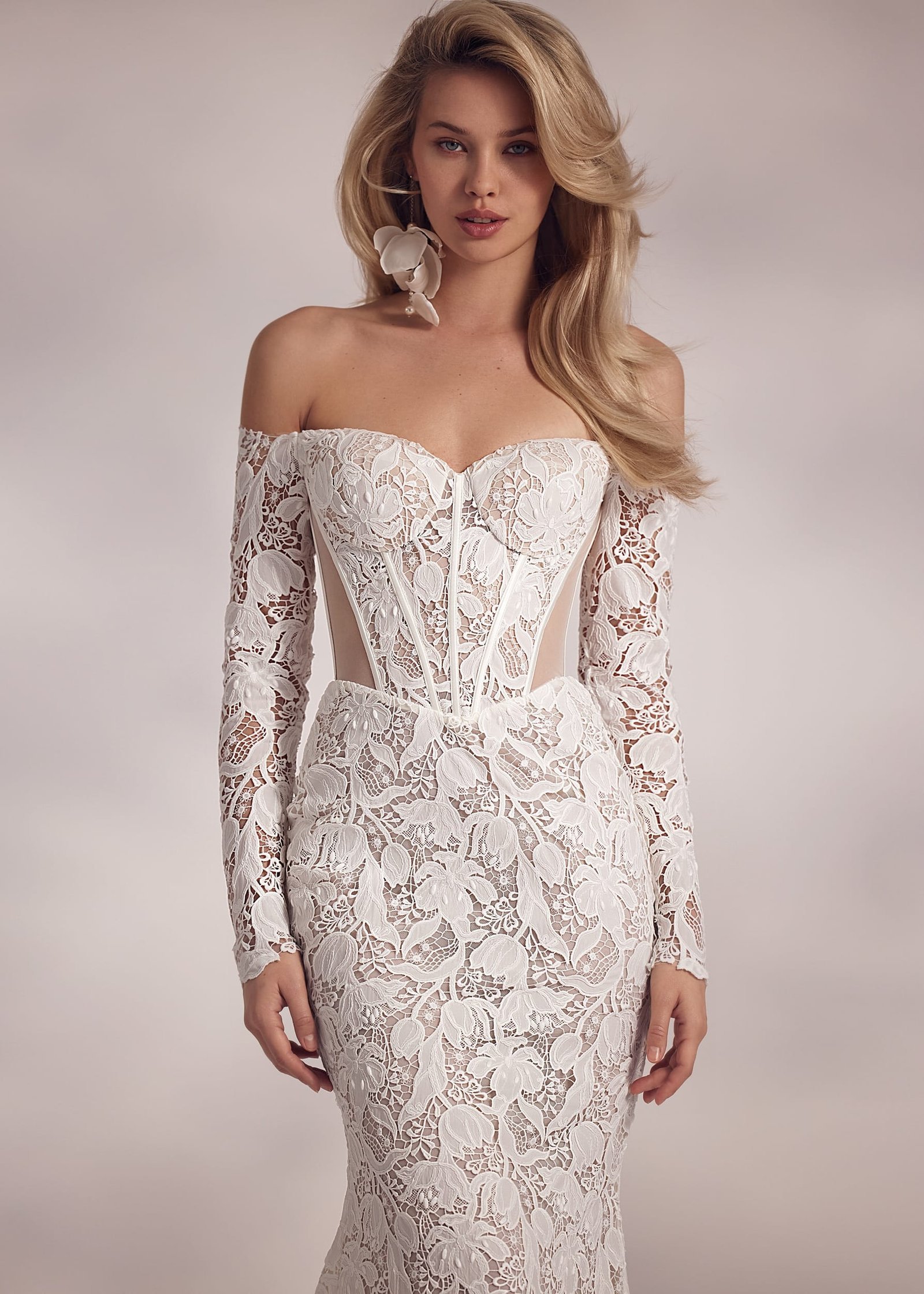
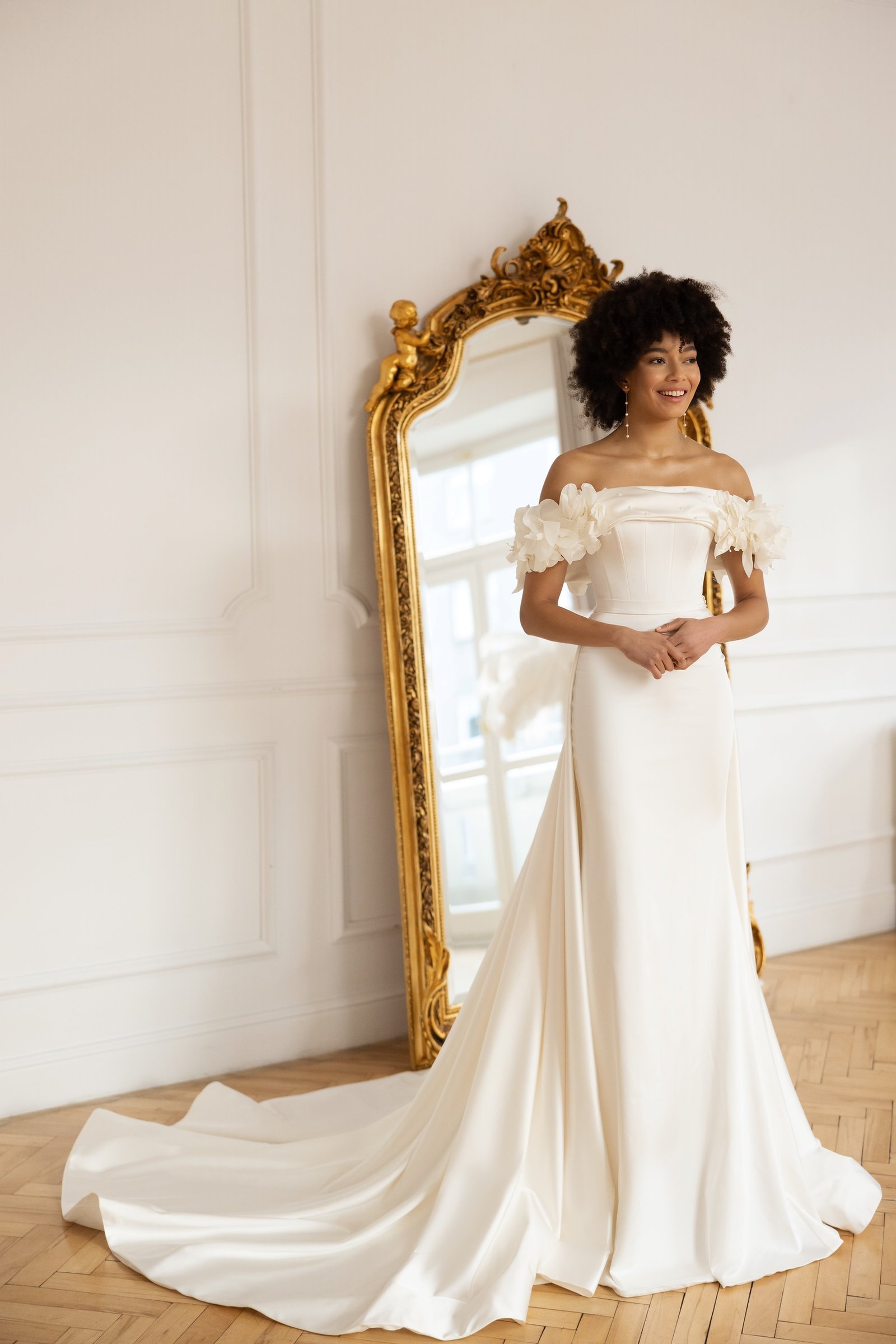
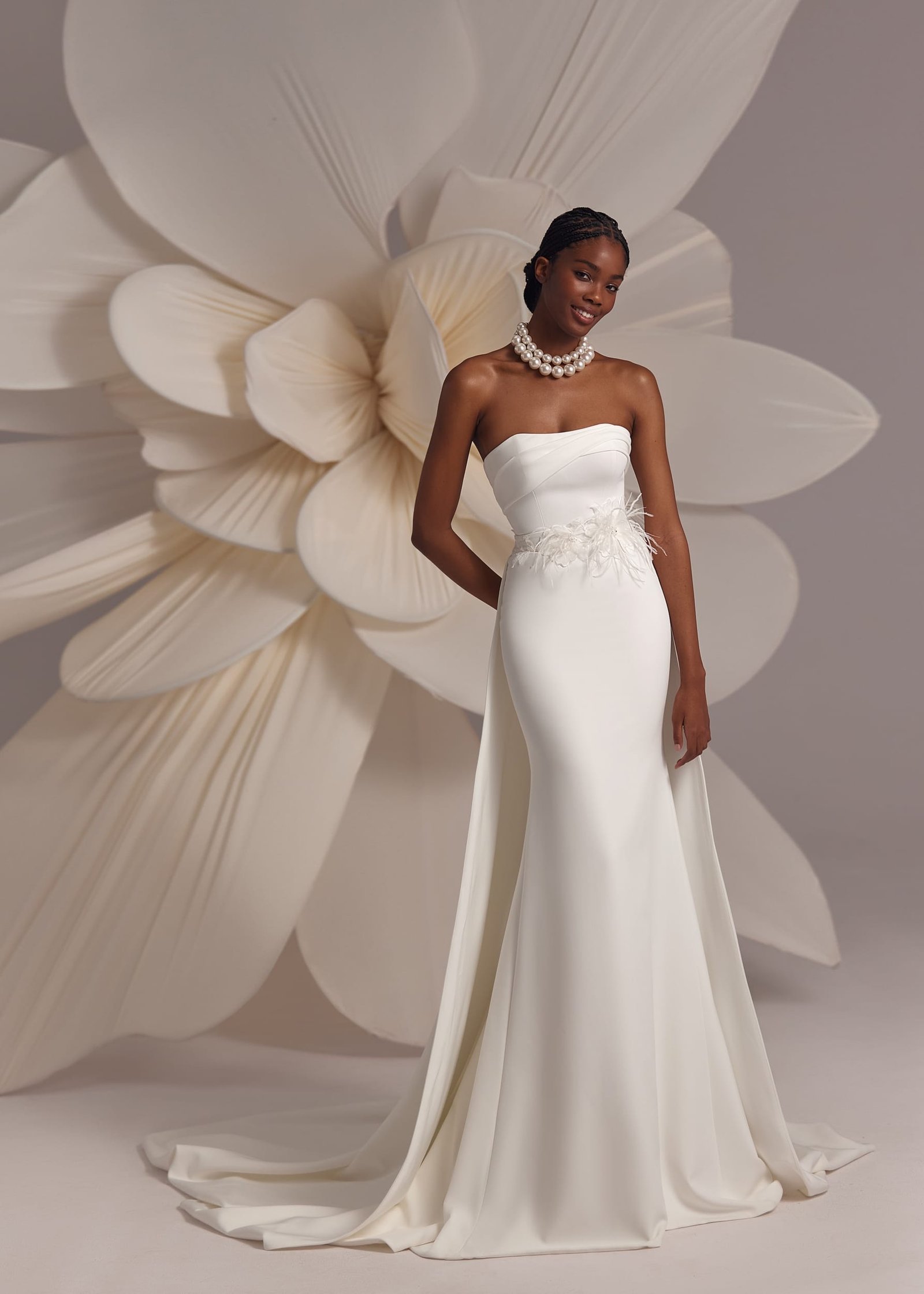
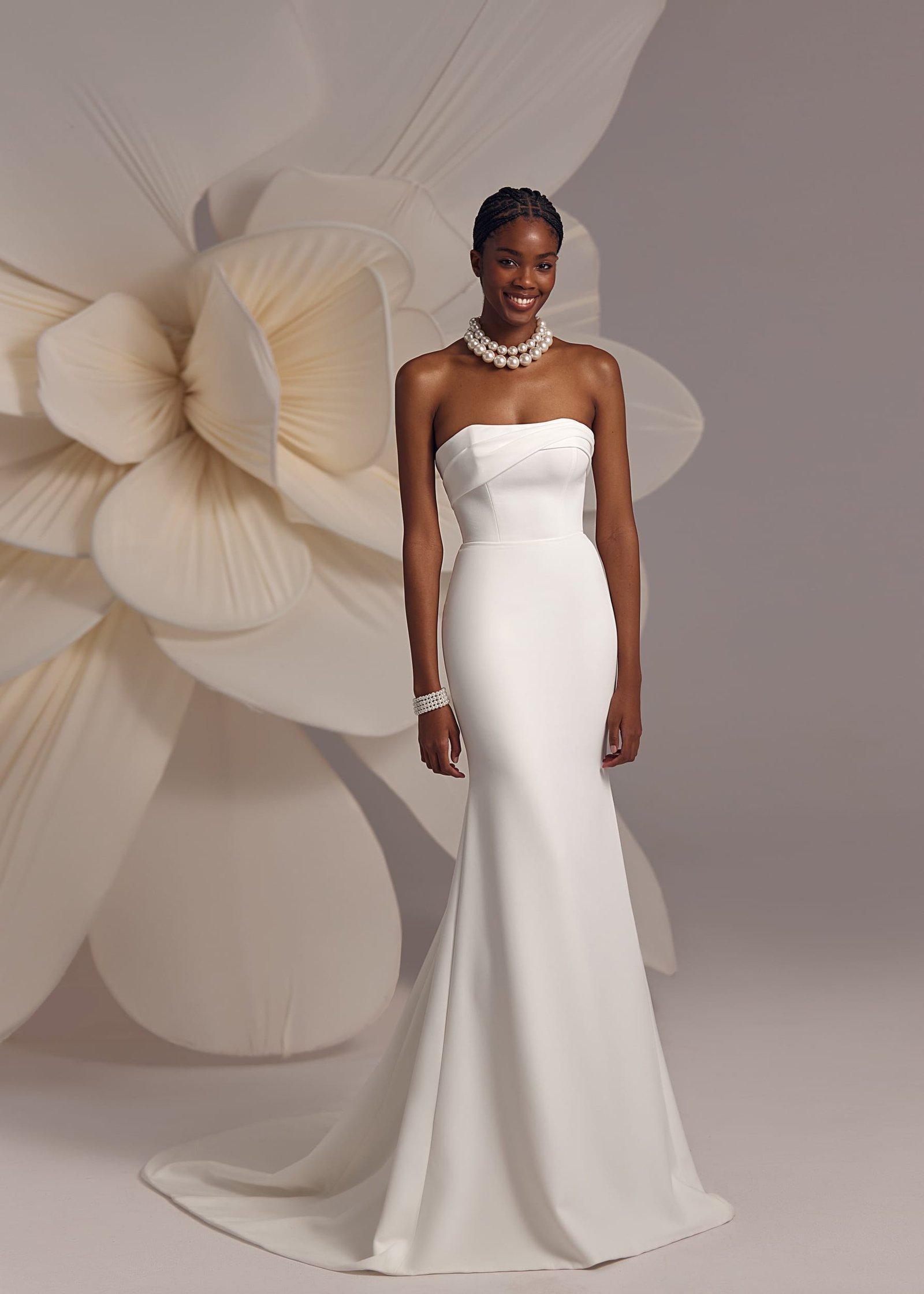
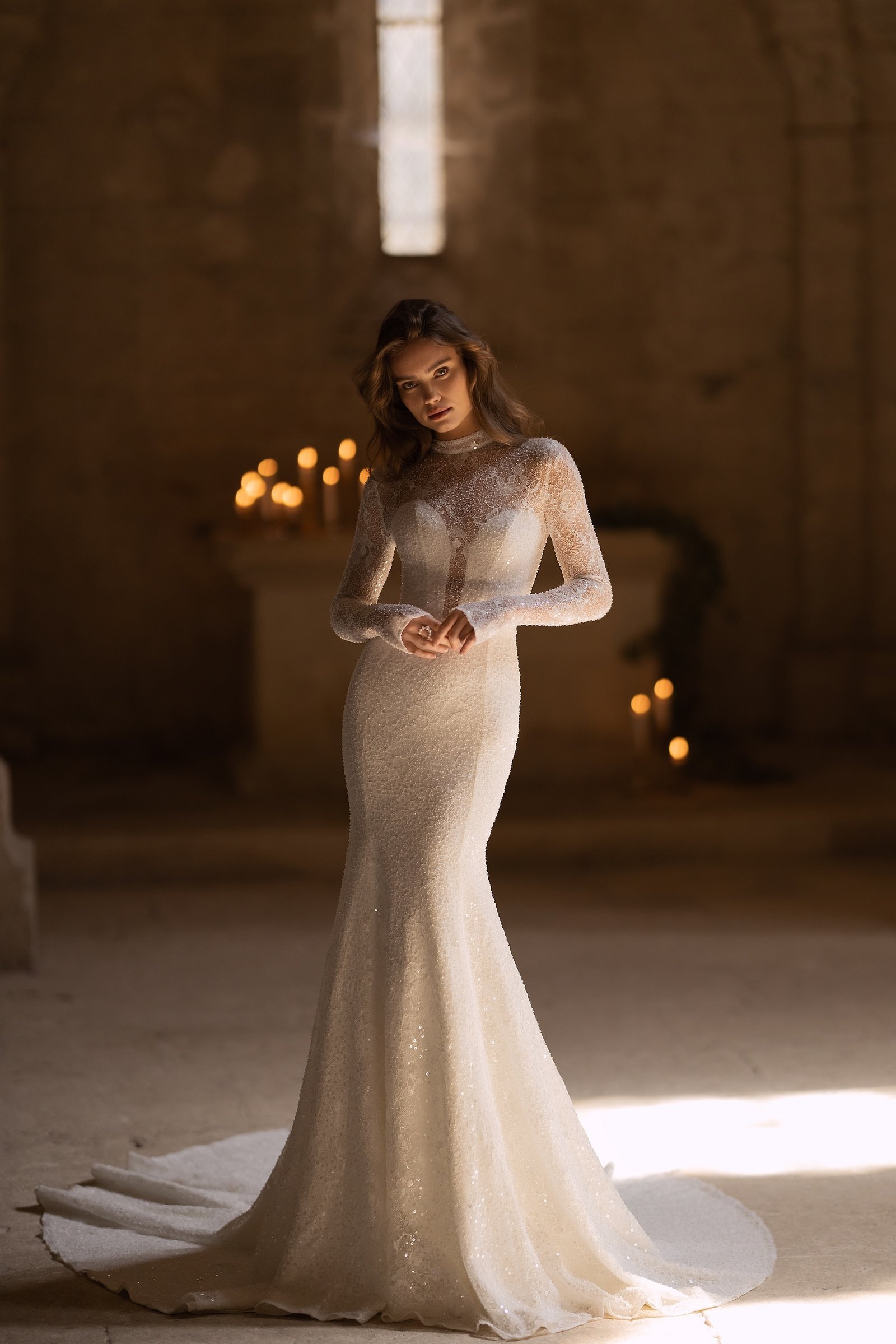
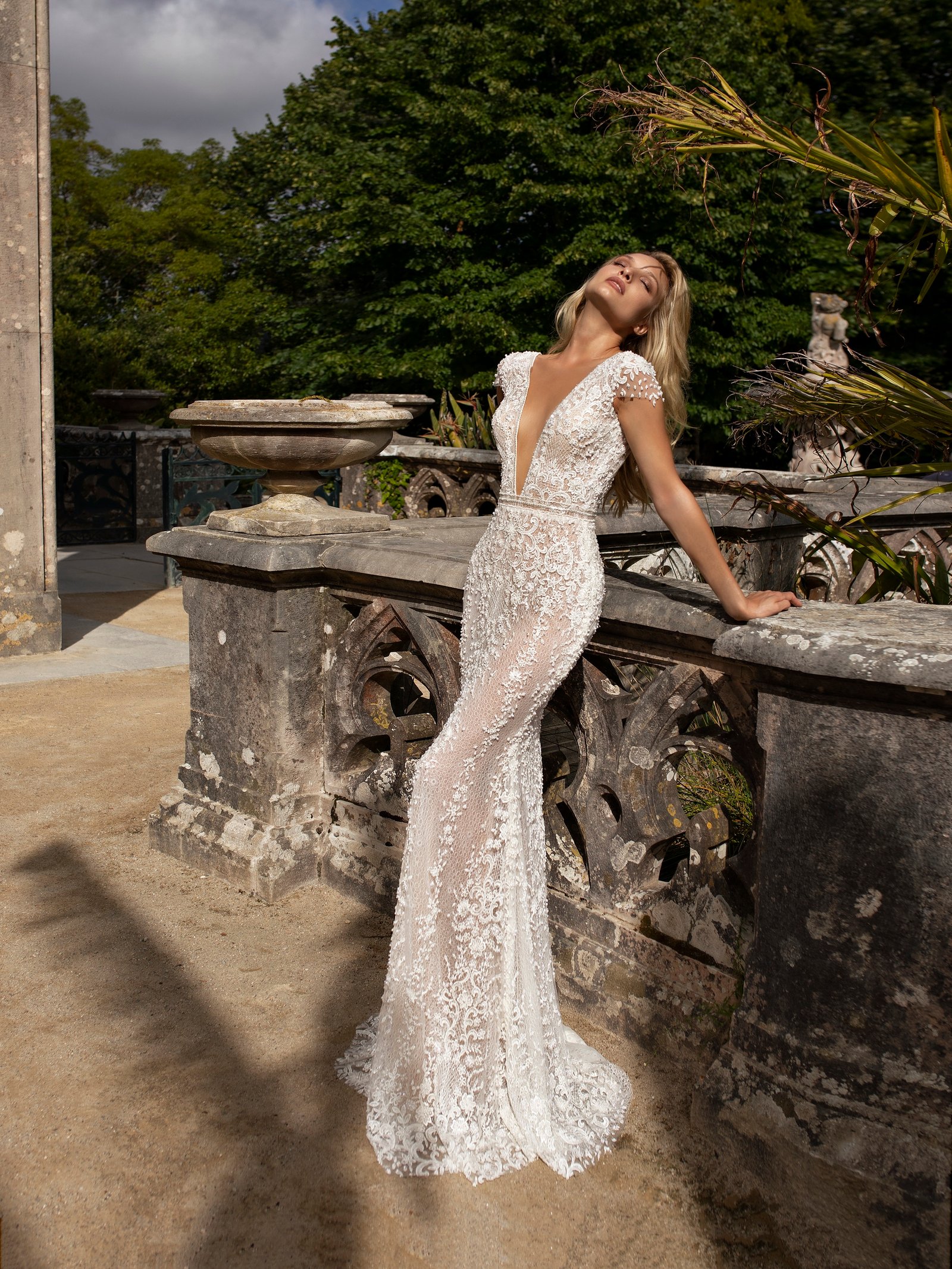
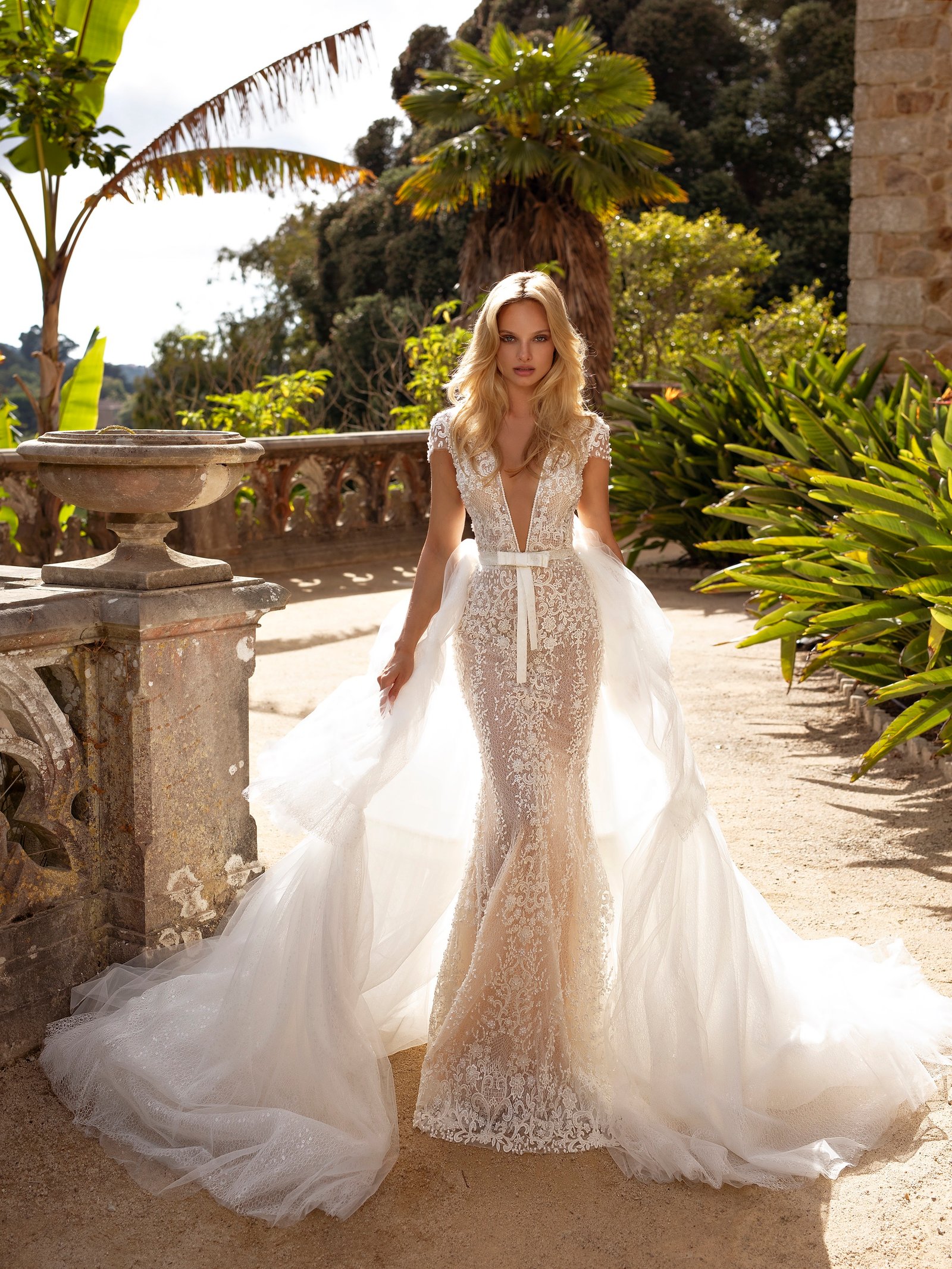
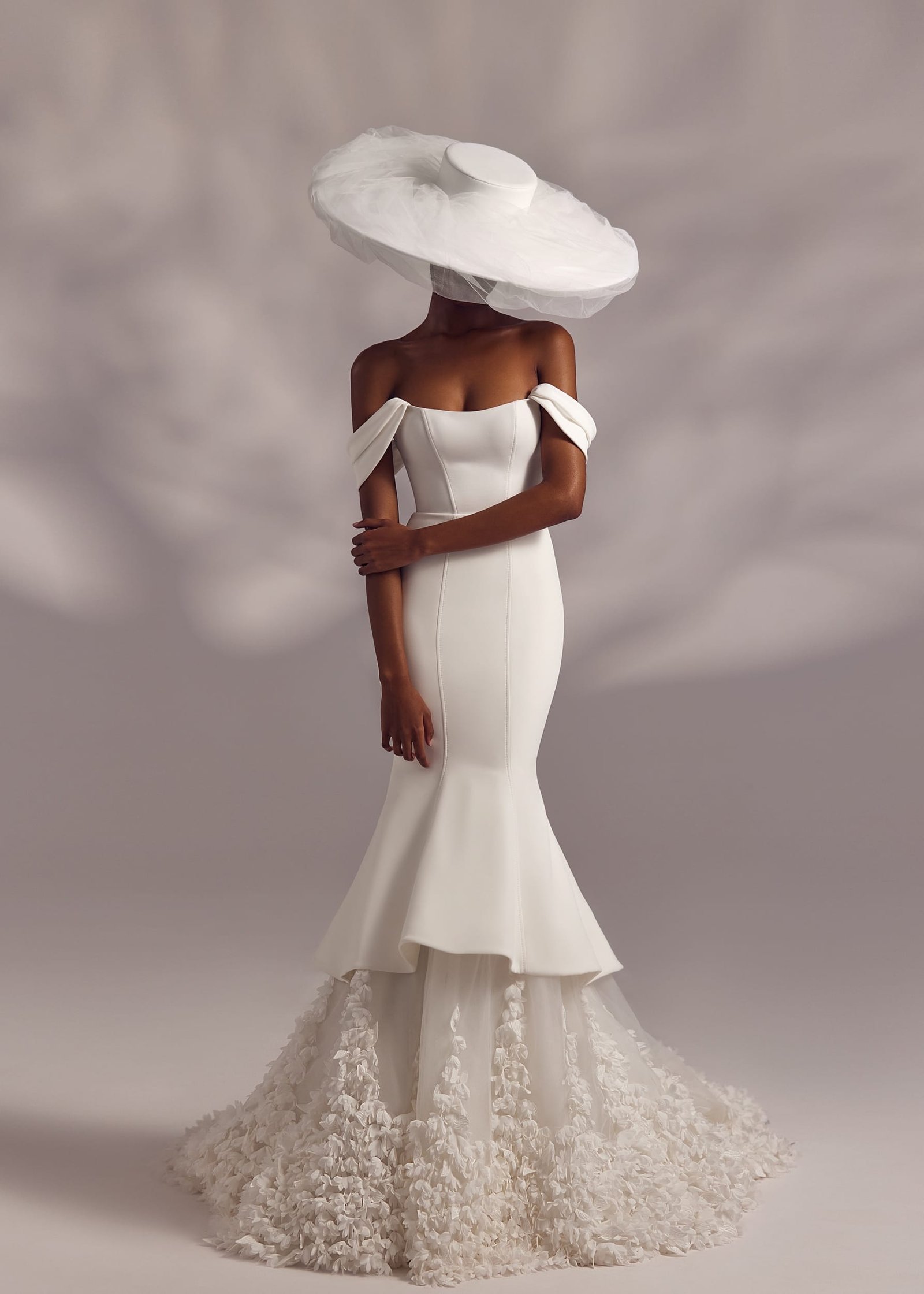
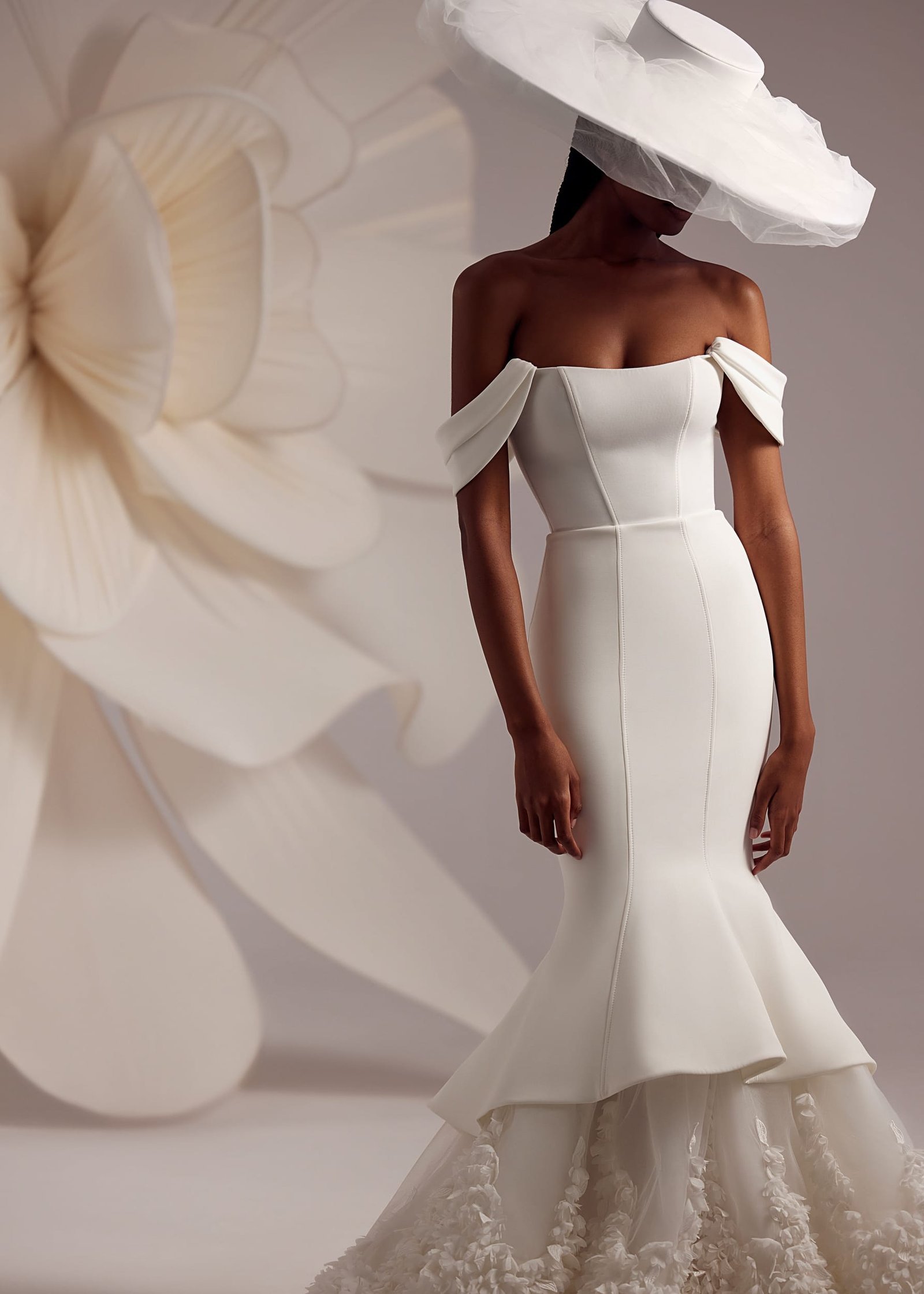
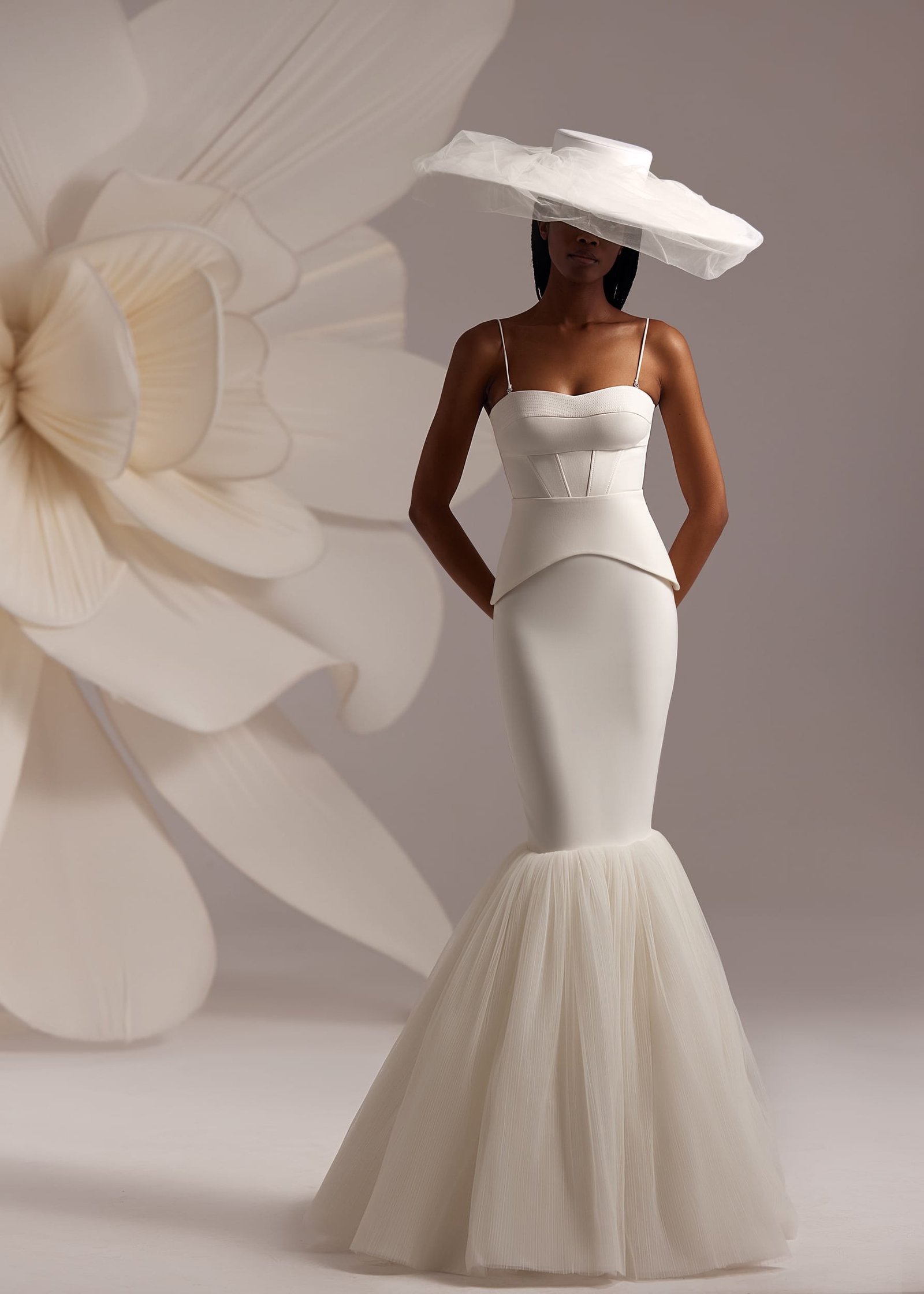
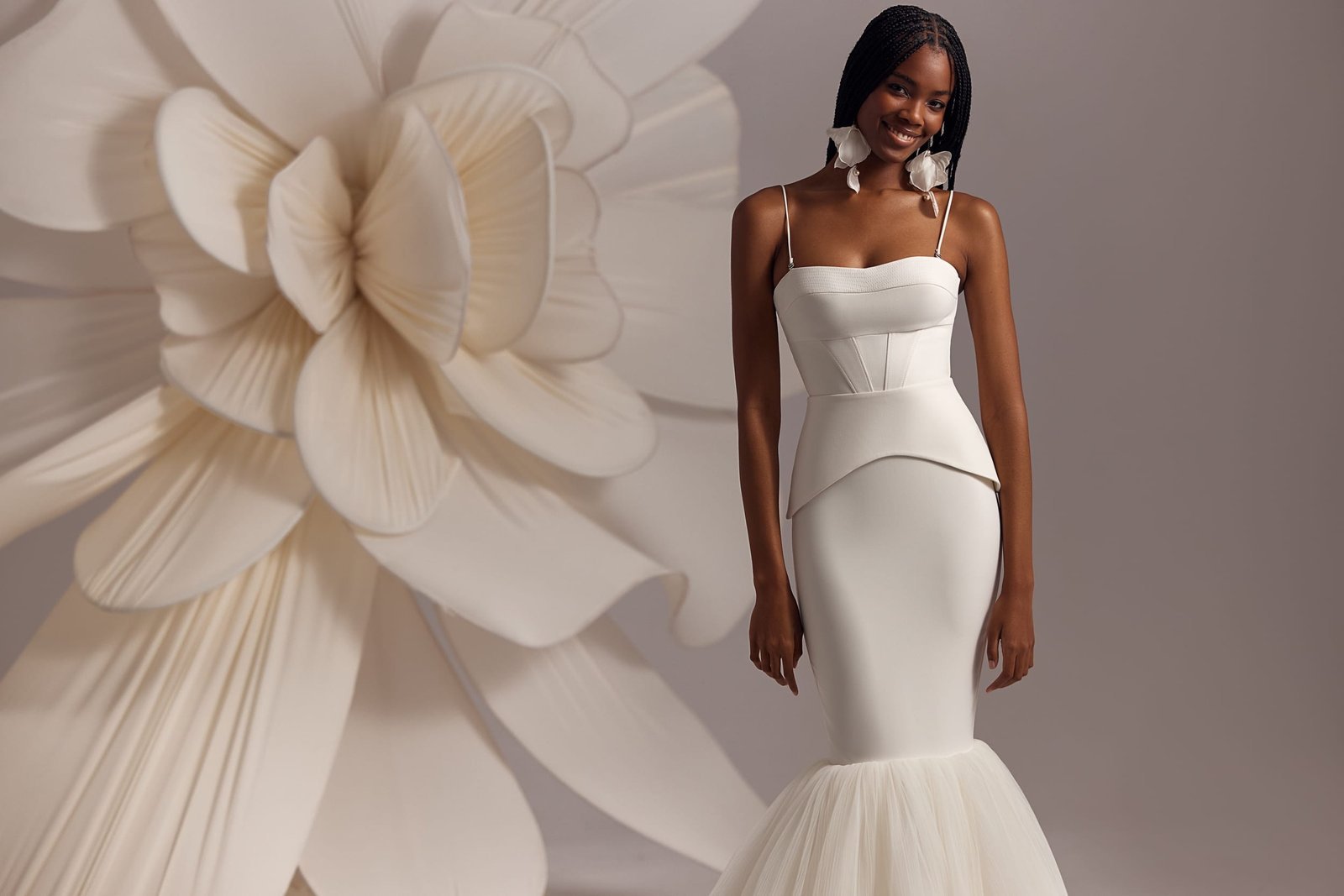
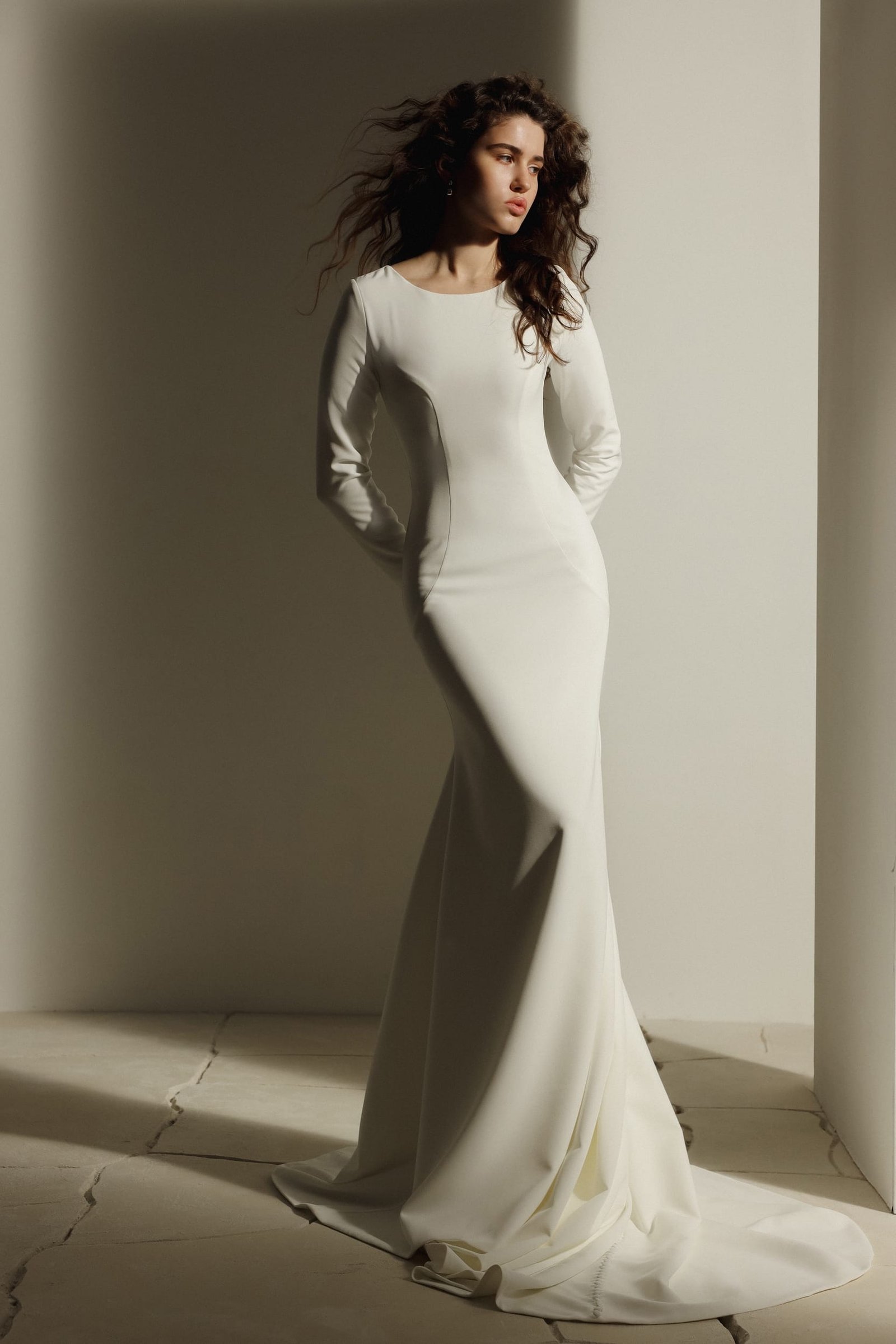
The fitted upper line emphasizes the waist and hip relationship, while the flare adds volume below the hip. On an hourglass figure, it can follow the natural curve without making the lower skirt feel too severe. On a pear-shaped figure, the flare can create a continuous line from the hip into the hem; the balance will depend on the bodice, neckline, and fabric. On a straighter figure, seams, boning, ruching, or a structured fabric can give the waist more definition. None of these are rules: the useful question is what you want the gown to emphasize.
Trumpet versus mermaid
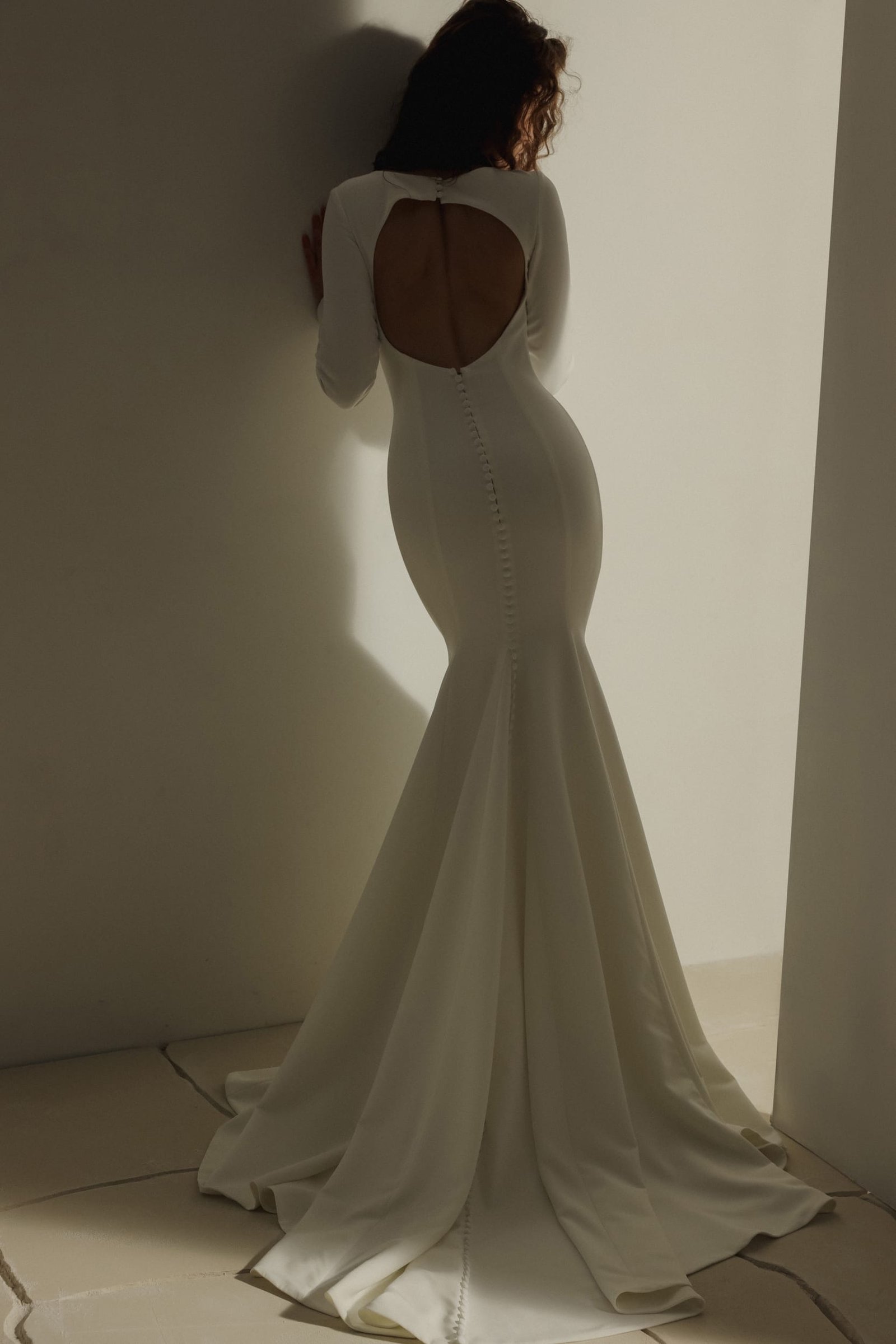
Try both silhouettes side by side and watch where the skirt begins to open. A trumpet generally gives the legs more room earlier, while a mermaid creates a sharper contrast lower on the body. Slits, godets, stretch, and a carefully placed train can also change the experience. Walk, sit, and practise a turn before deciding which flare feels like yours.
Choose a trumpet when you want a defined, glamorous outline with a little more flow through the lower skirt. It is a shape-led silhouette, but it does not have to feel restrictive.