
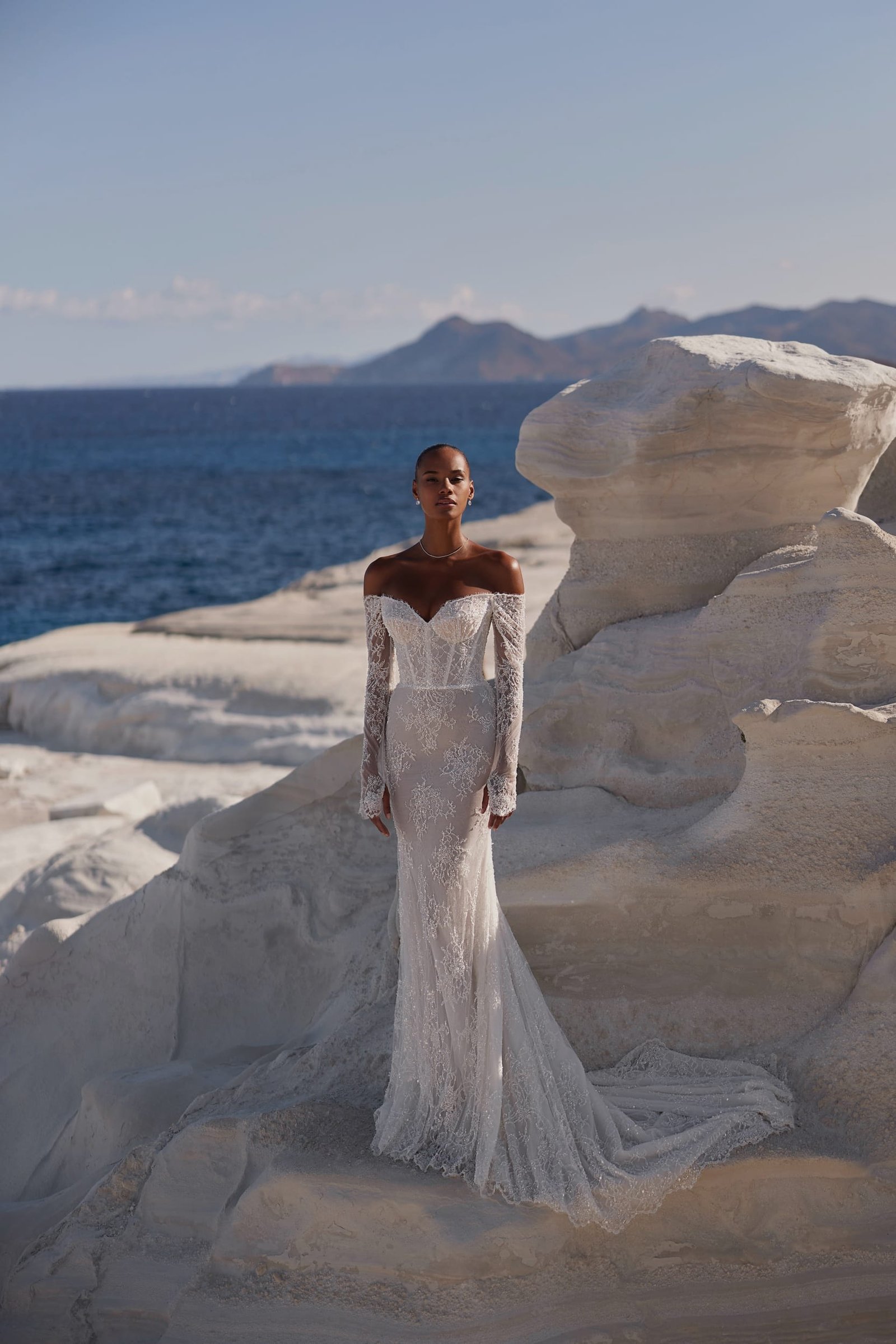
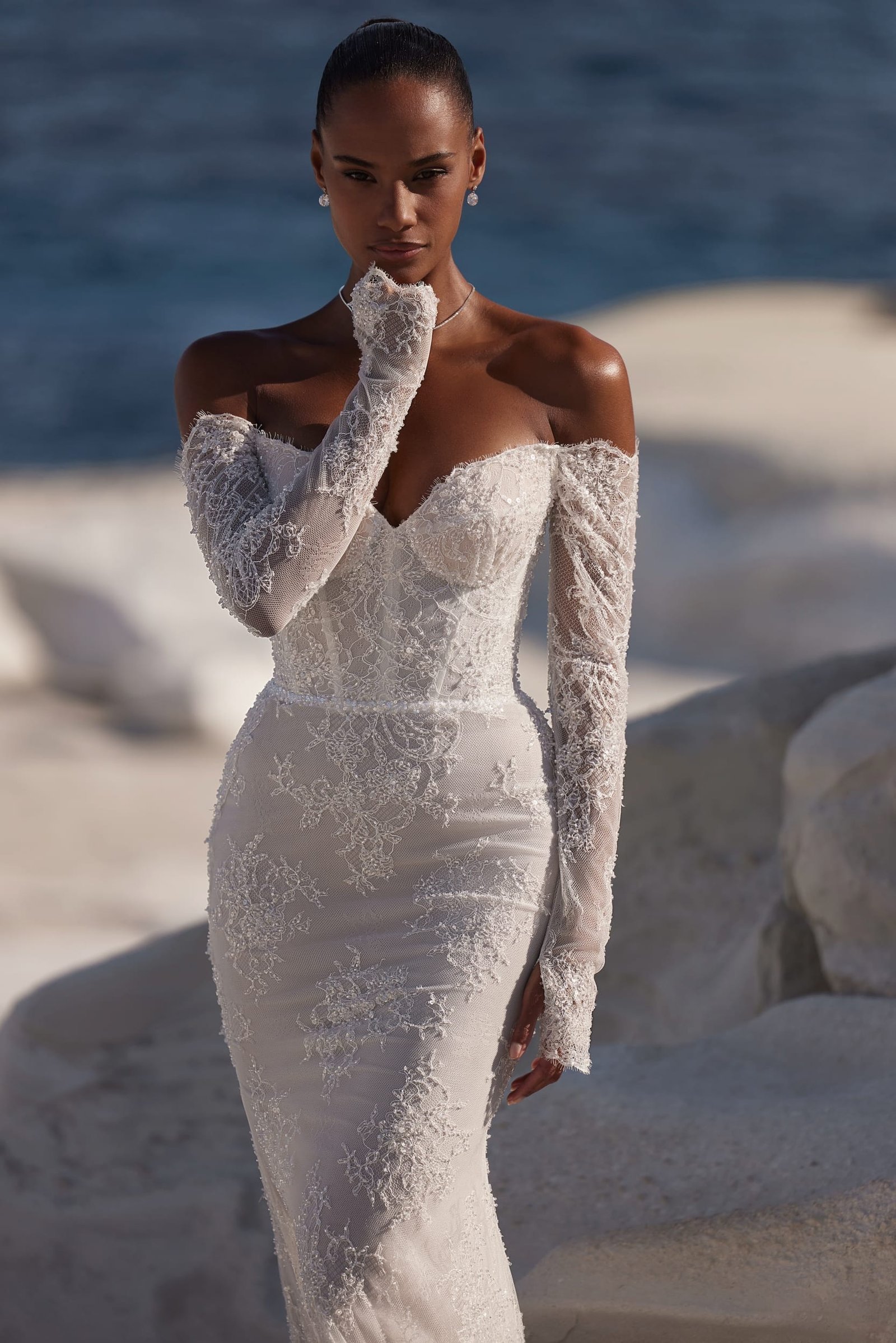
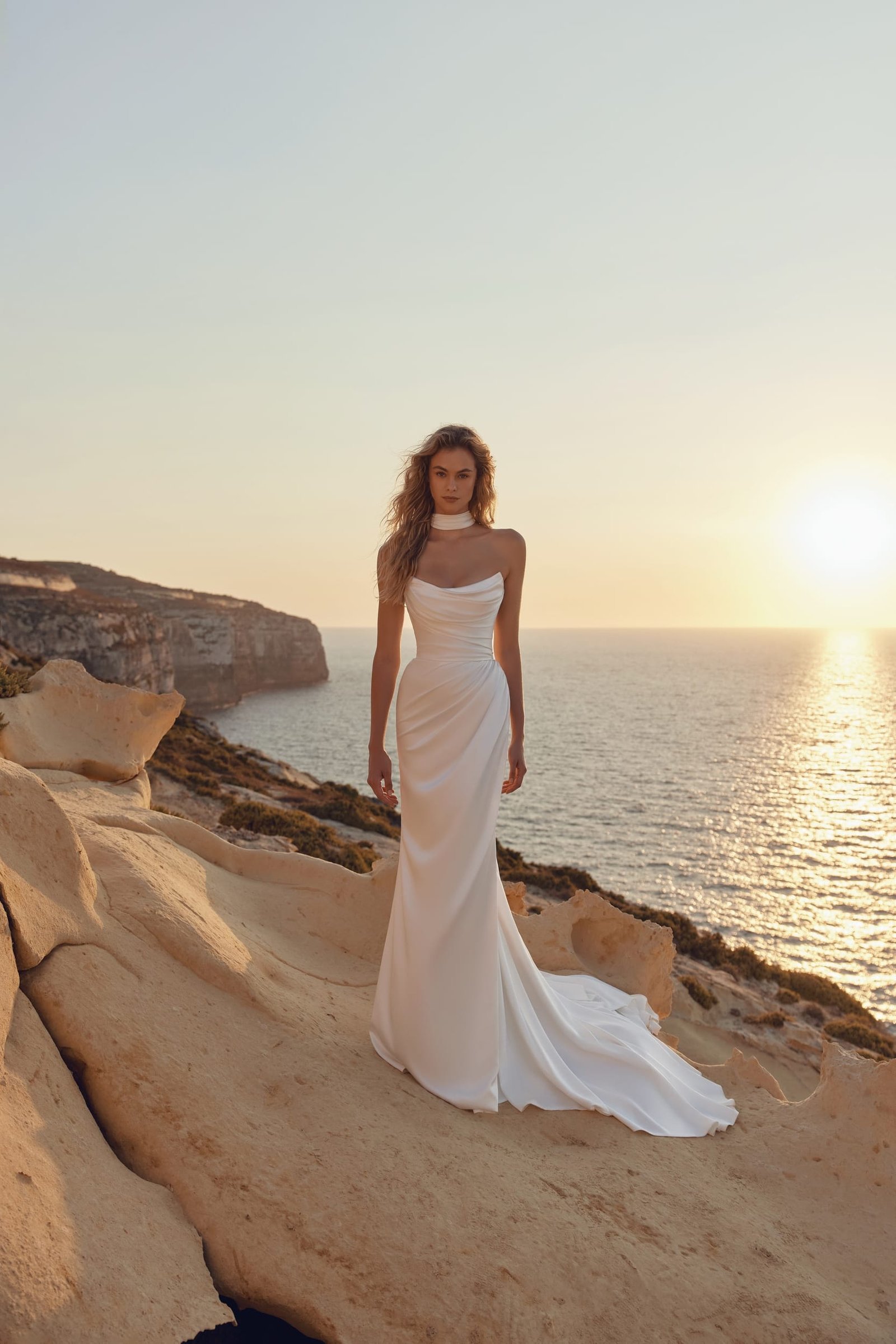
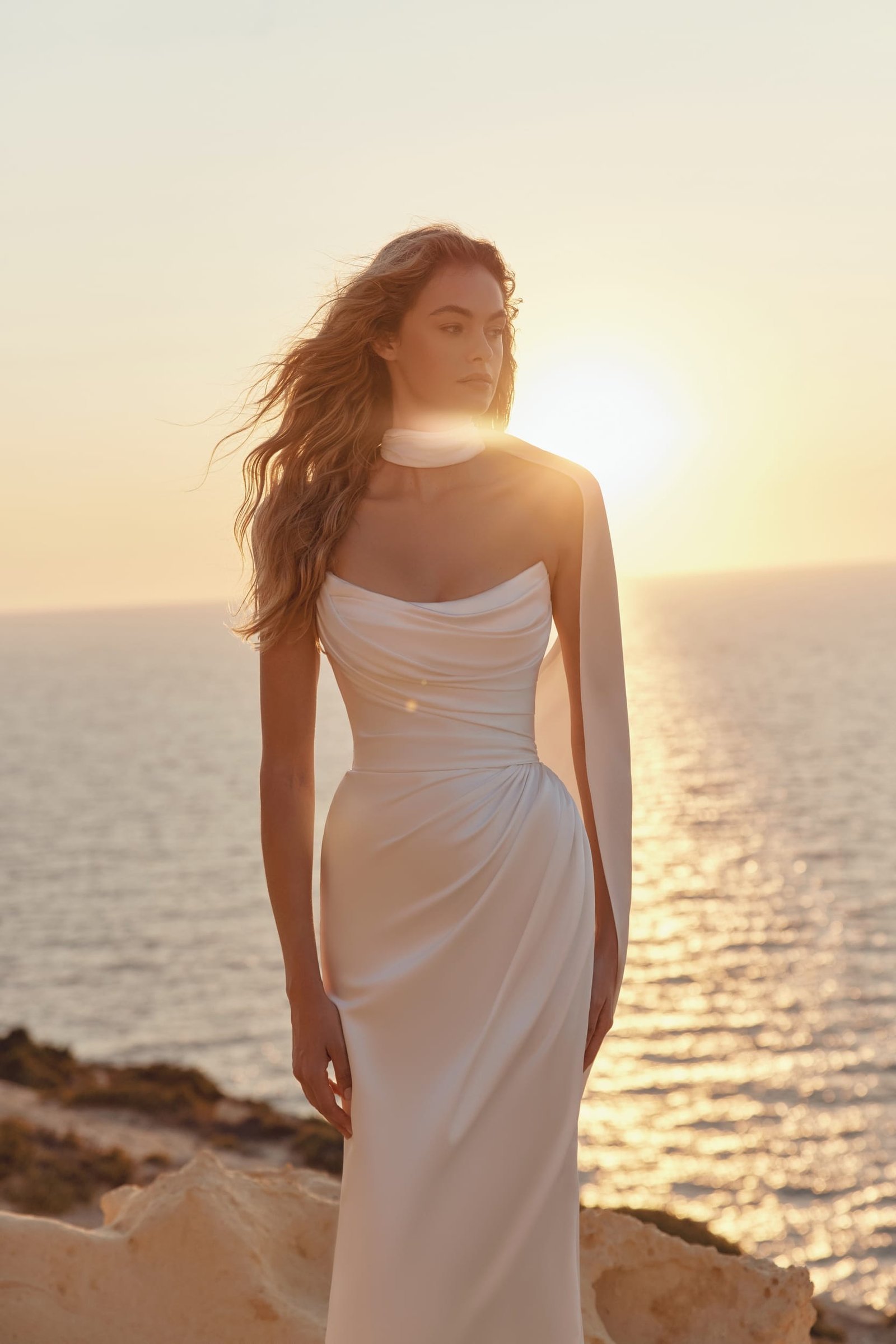
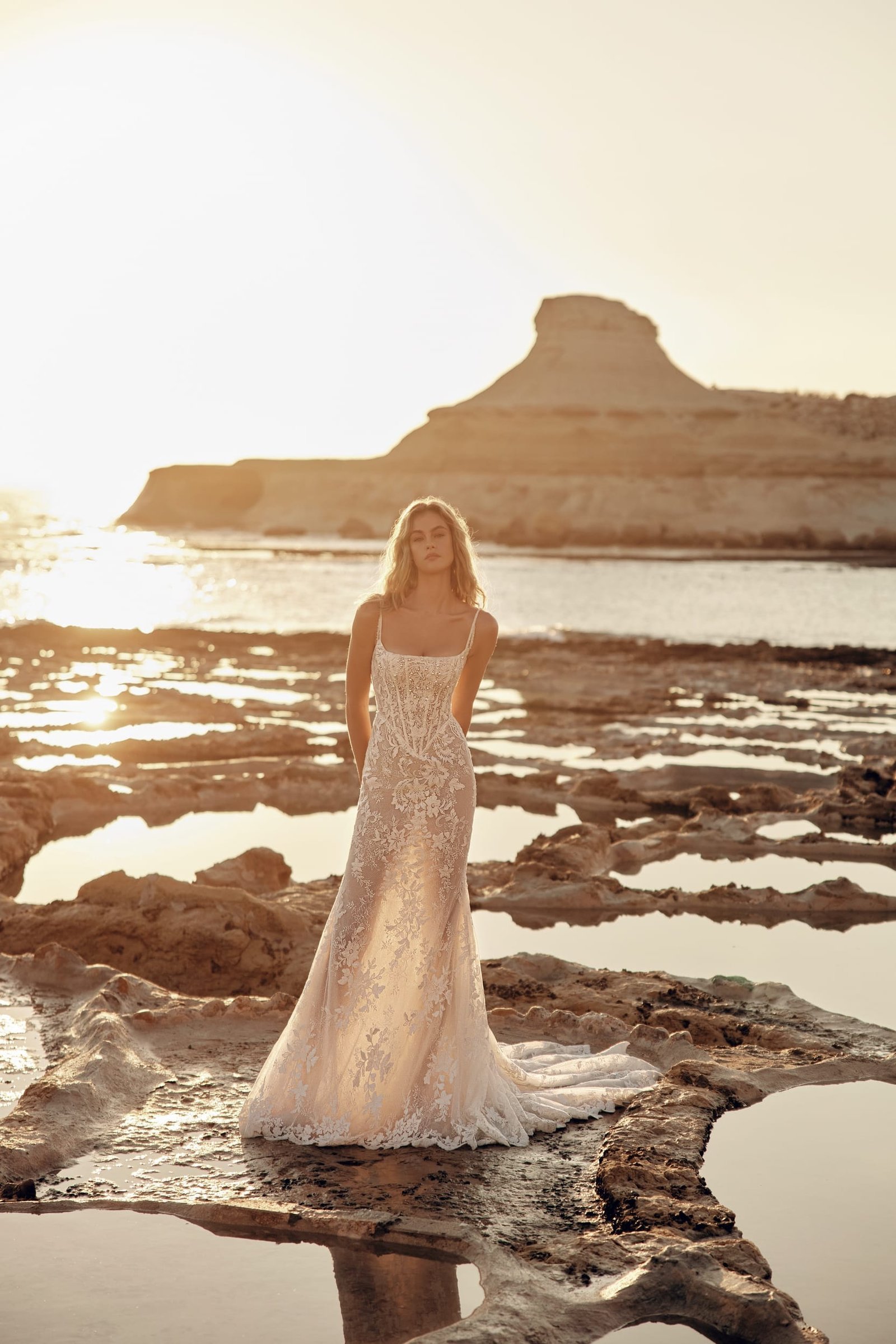
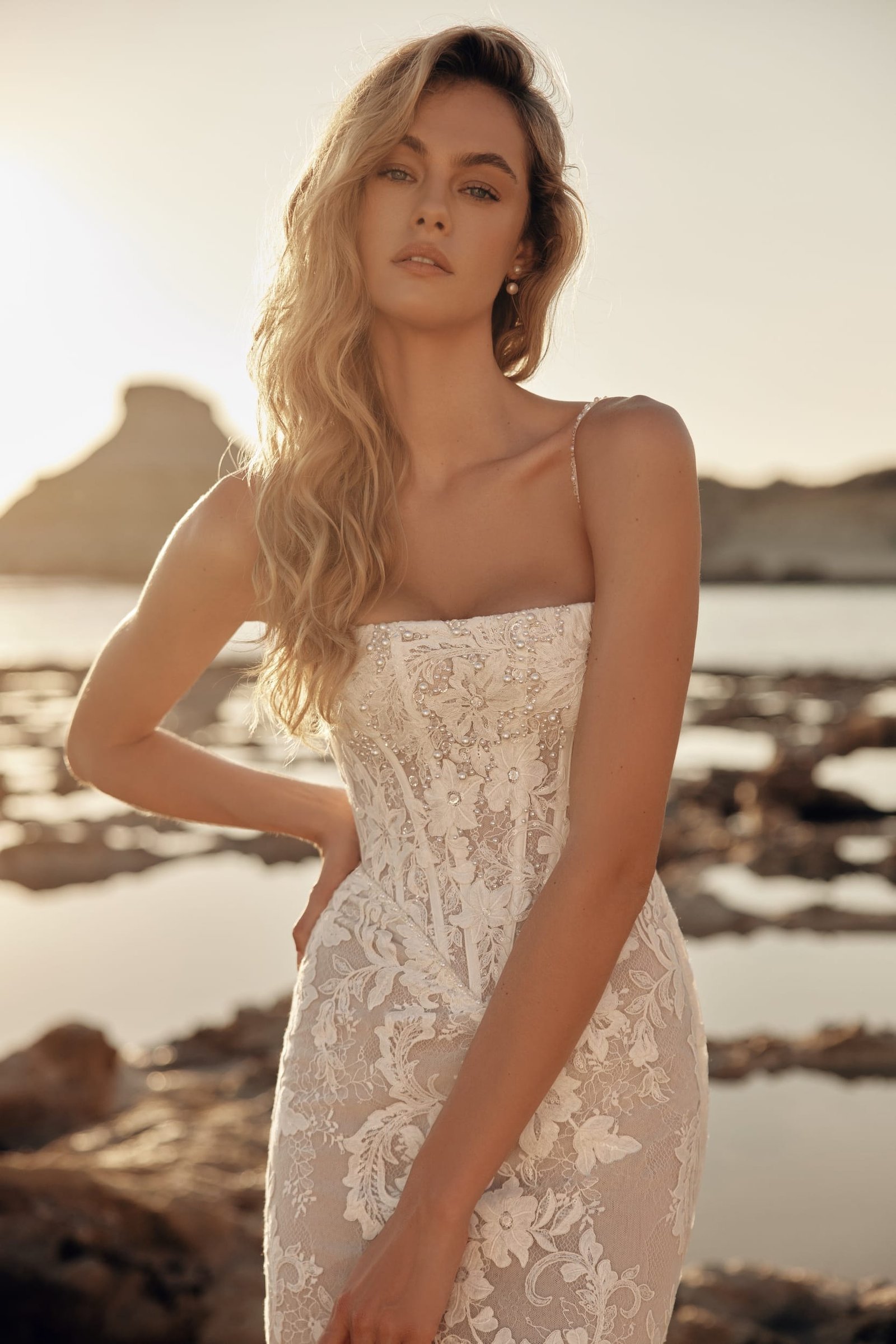
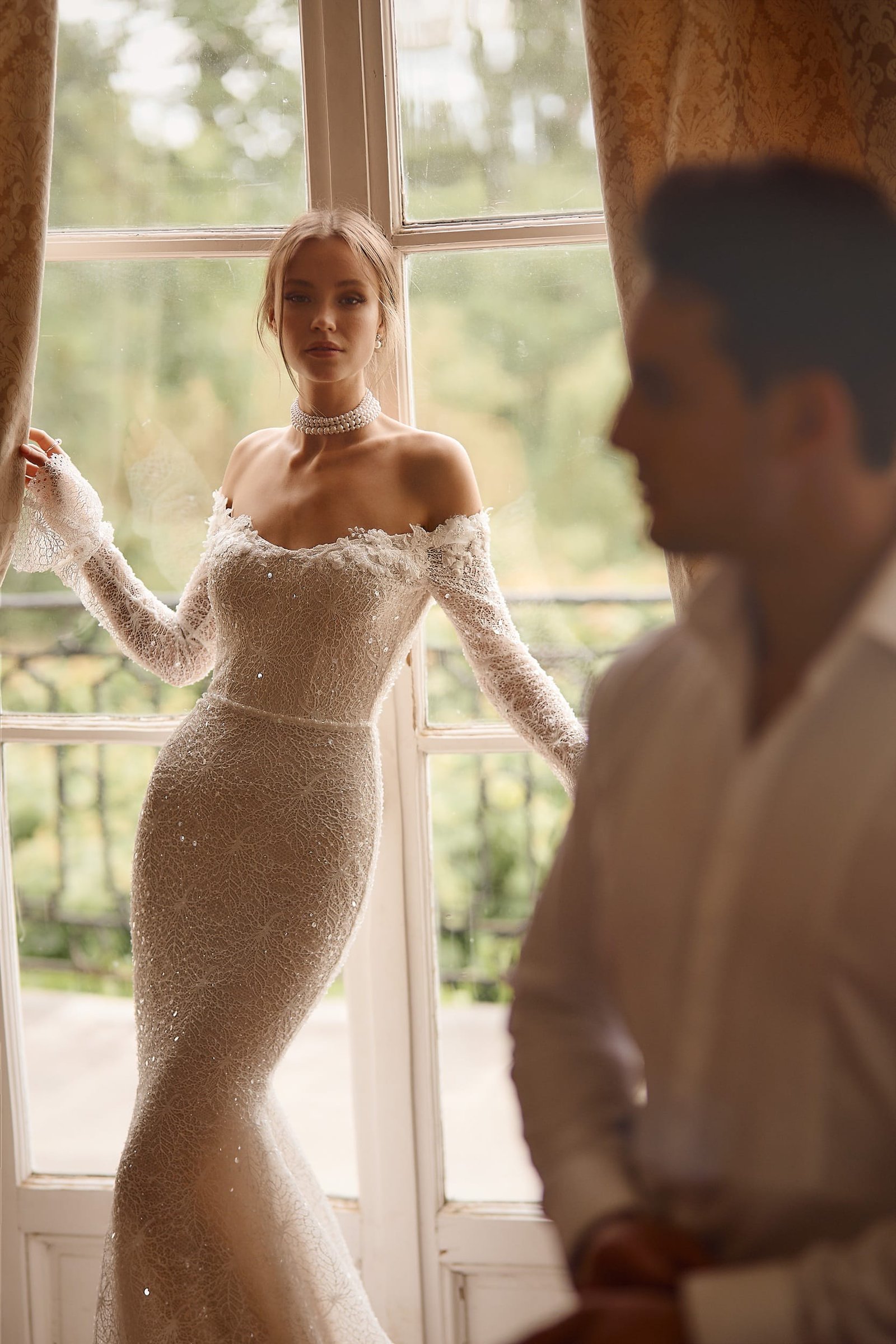
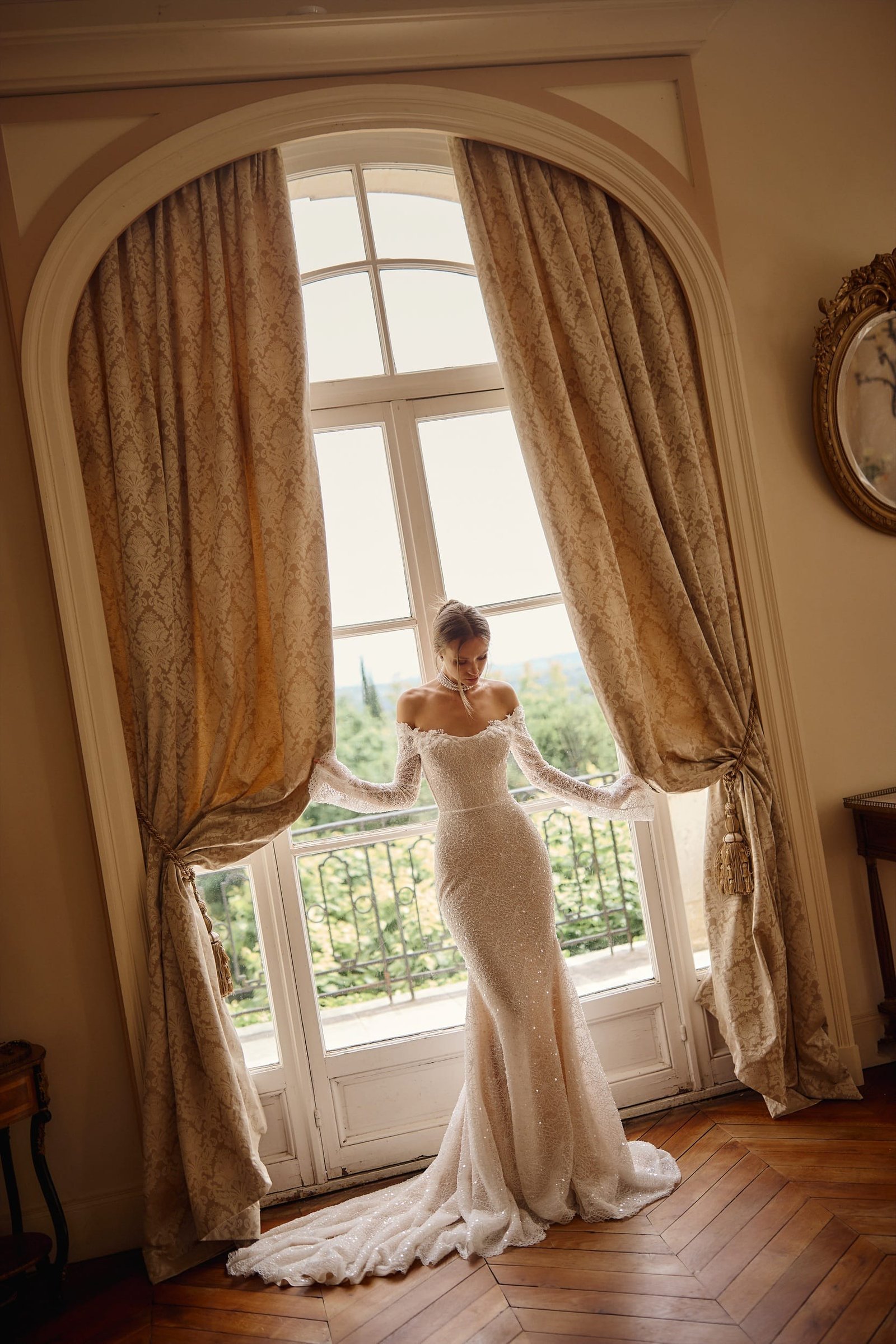
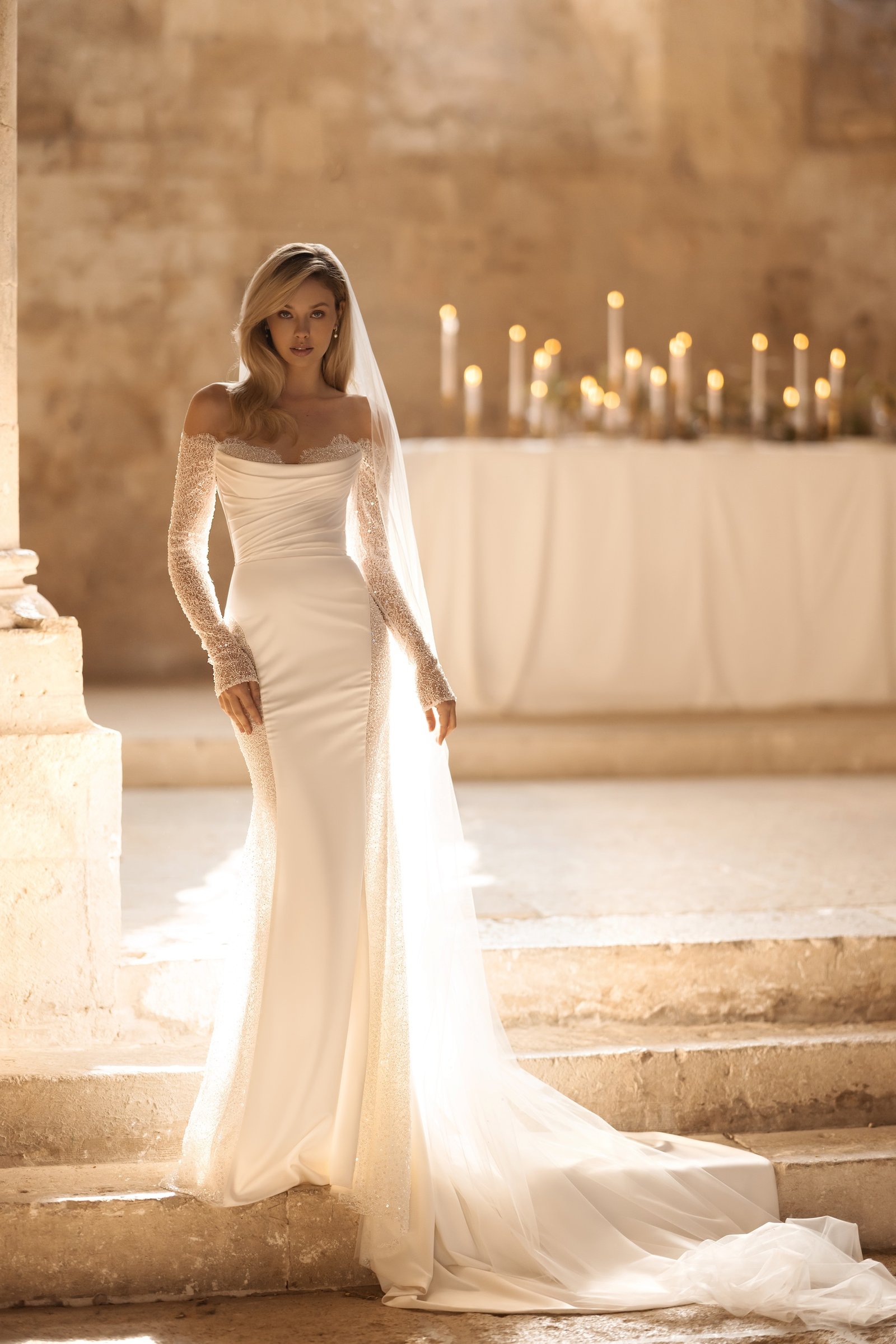
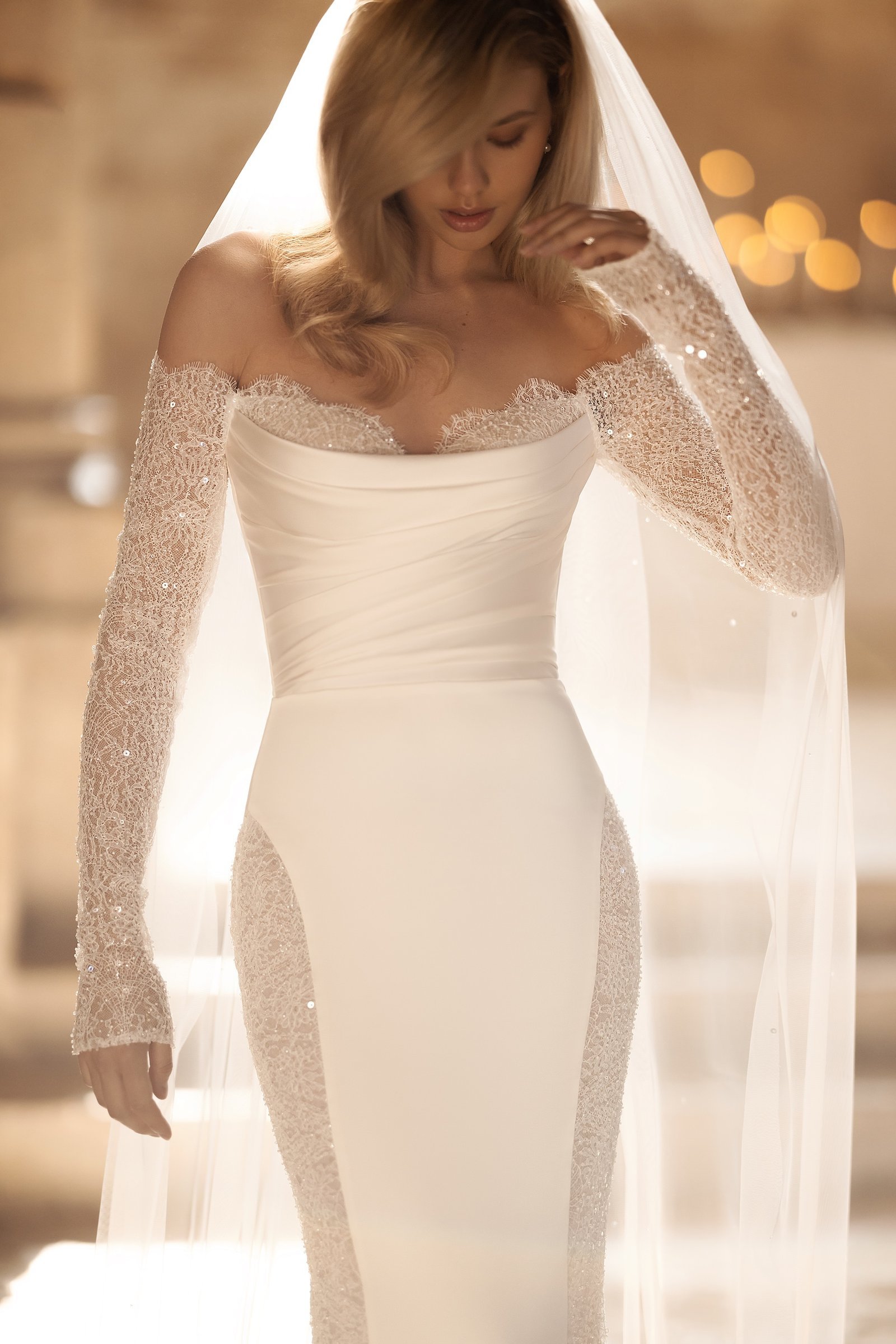
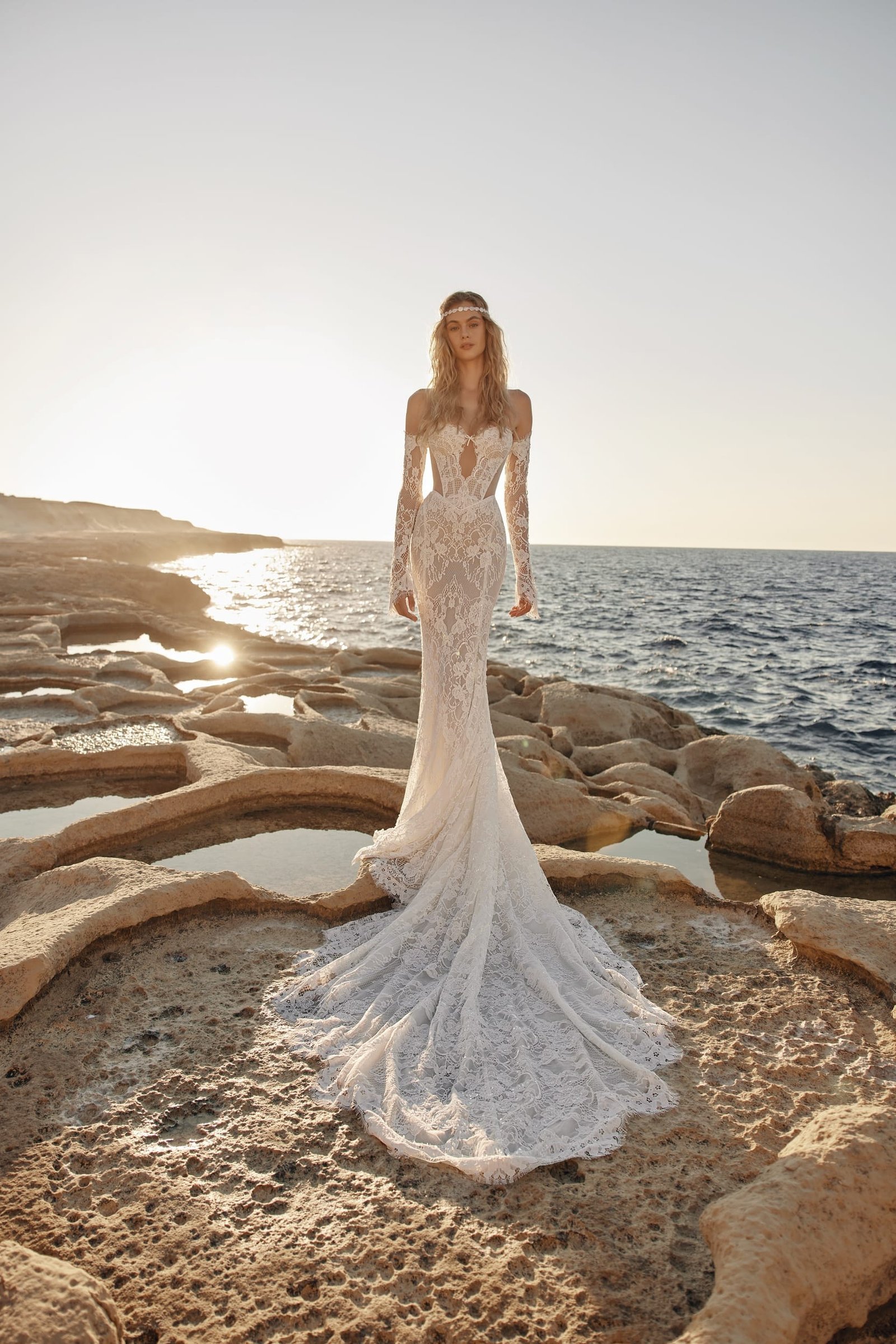
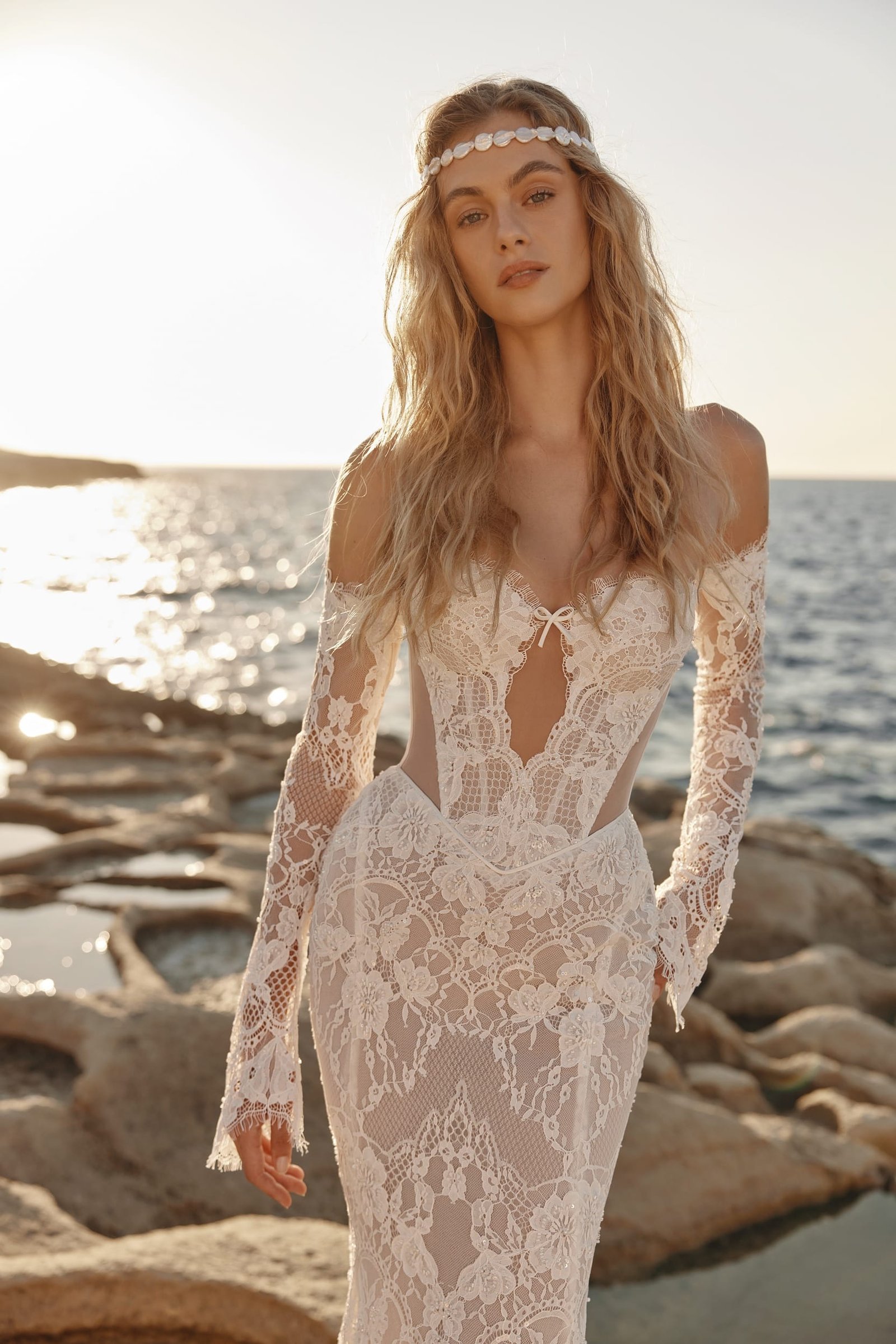
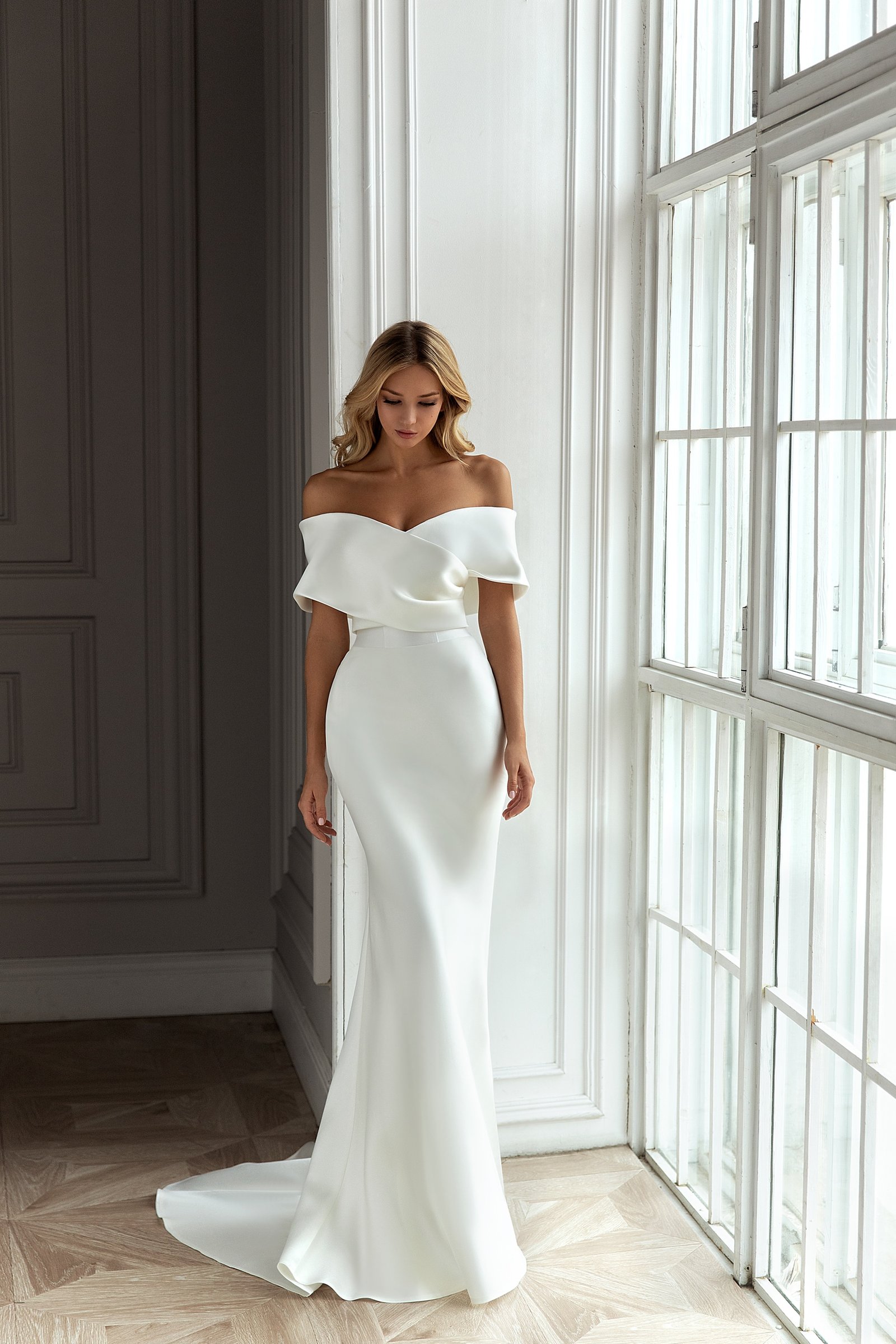
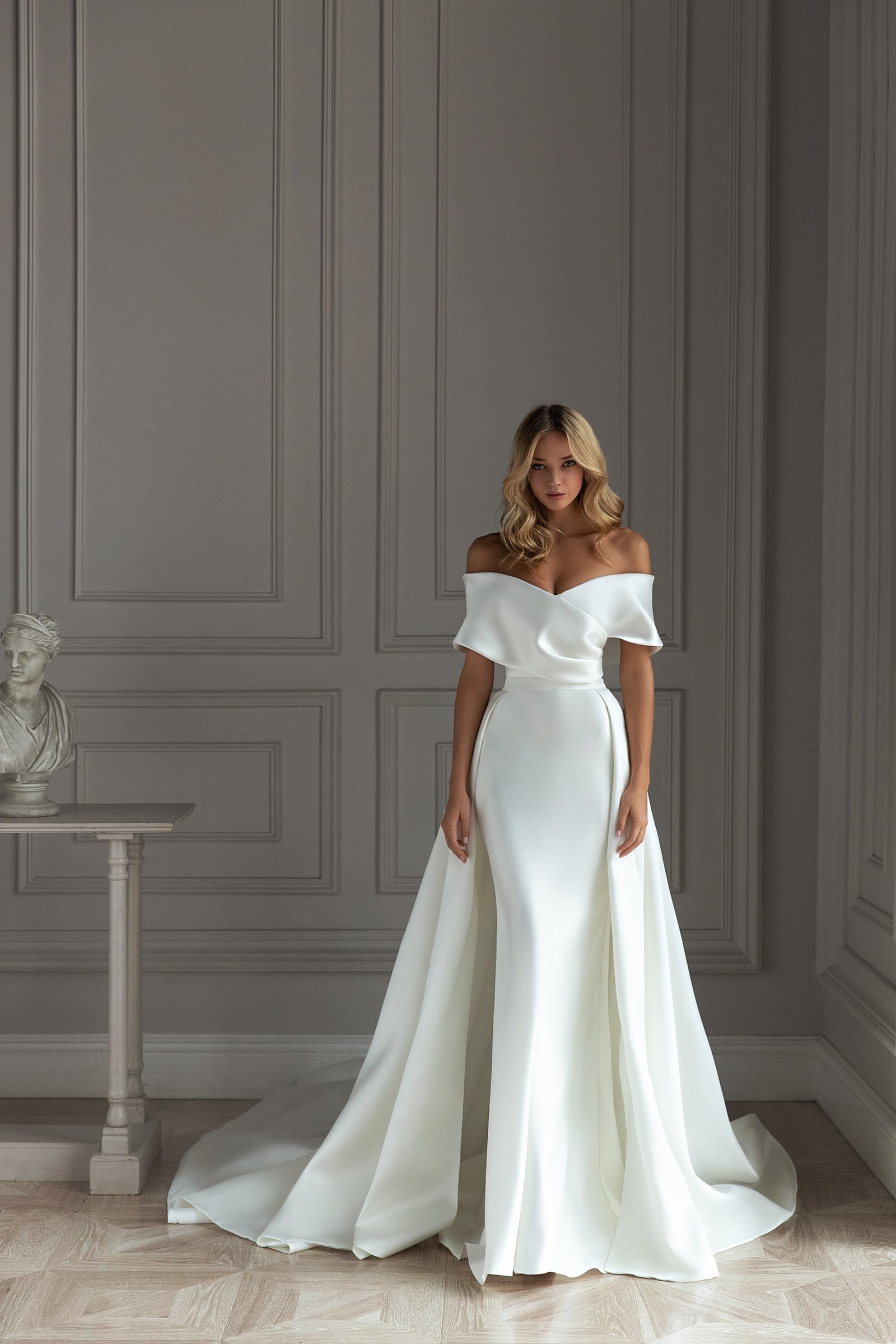
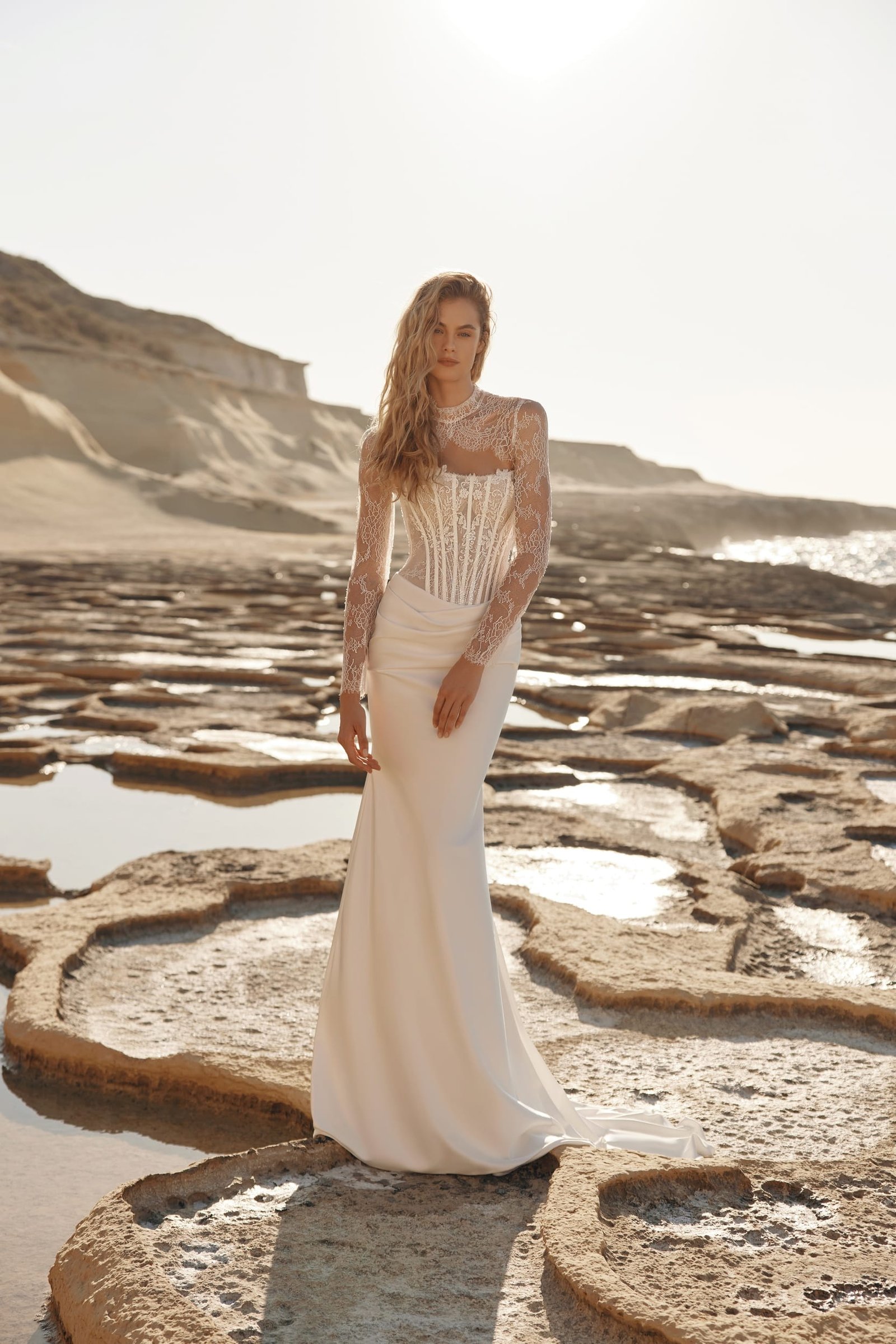
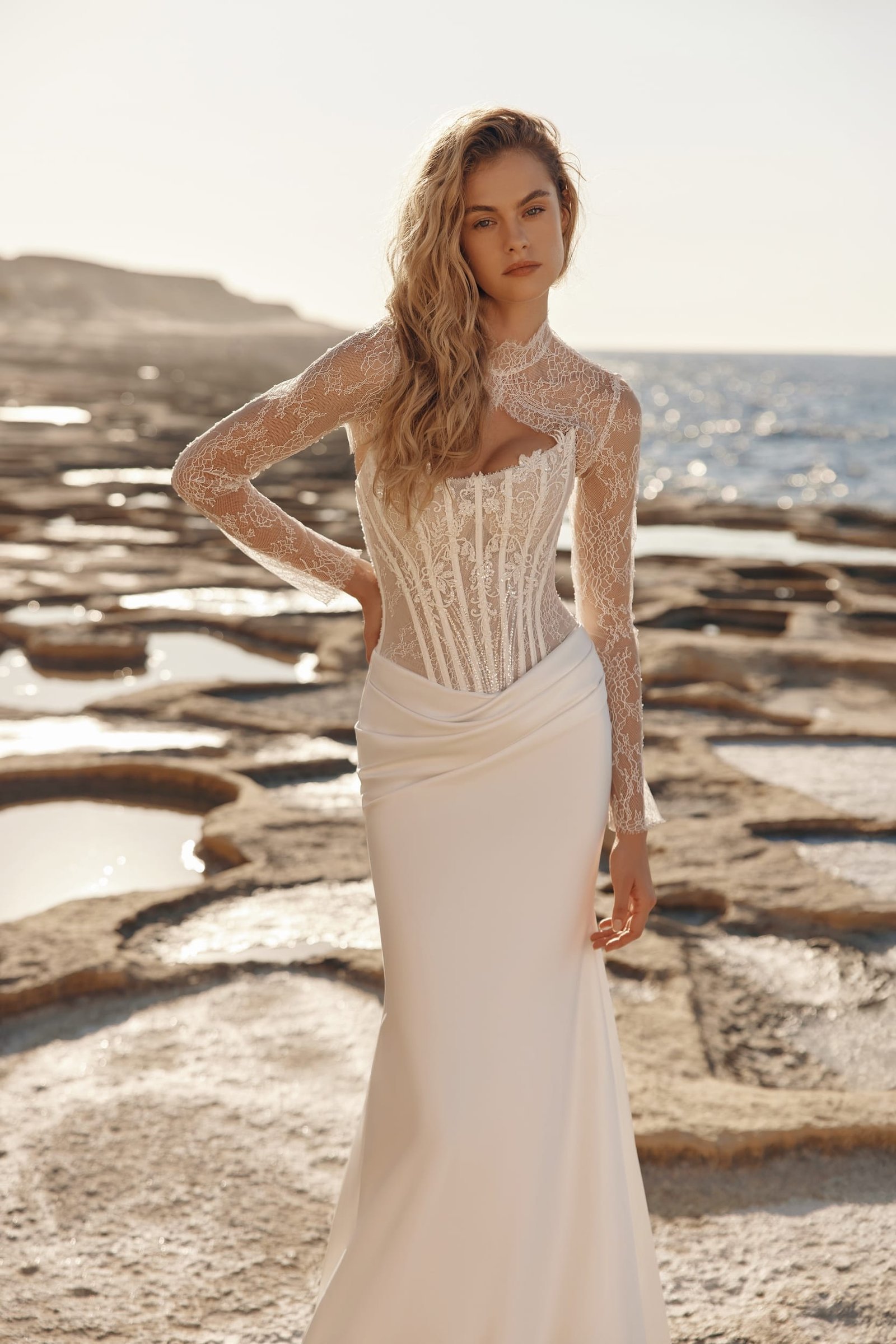

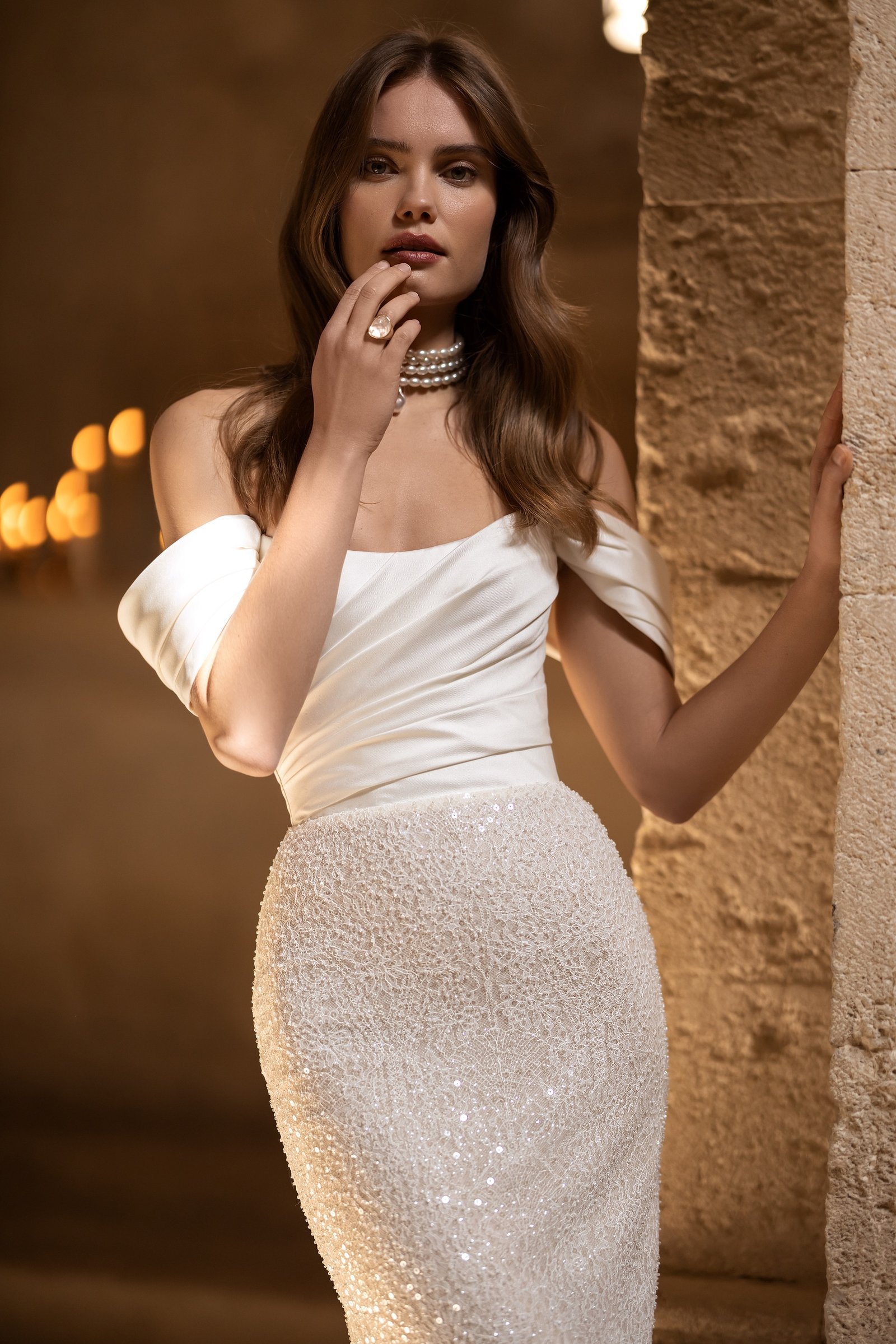
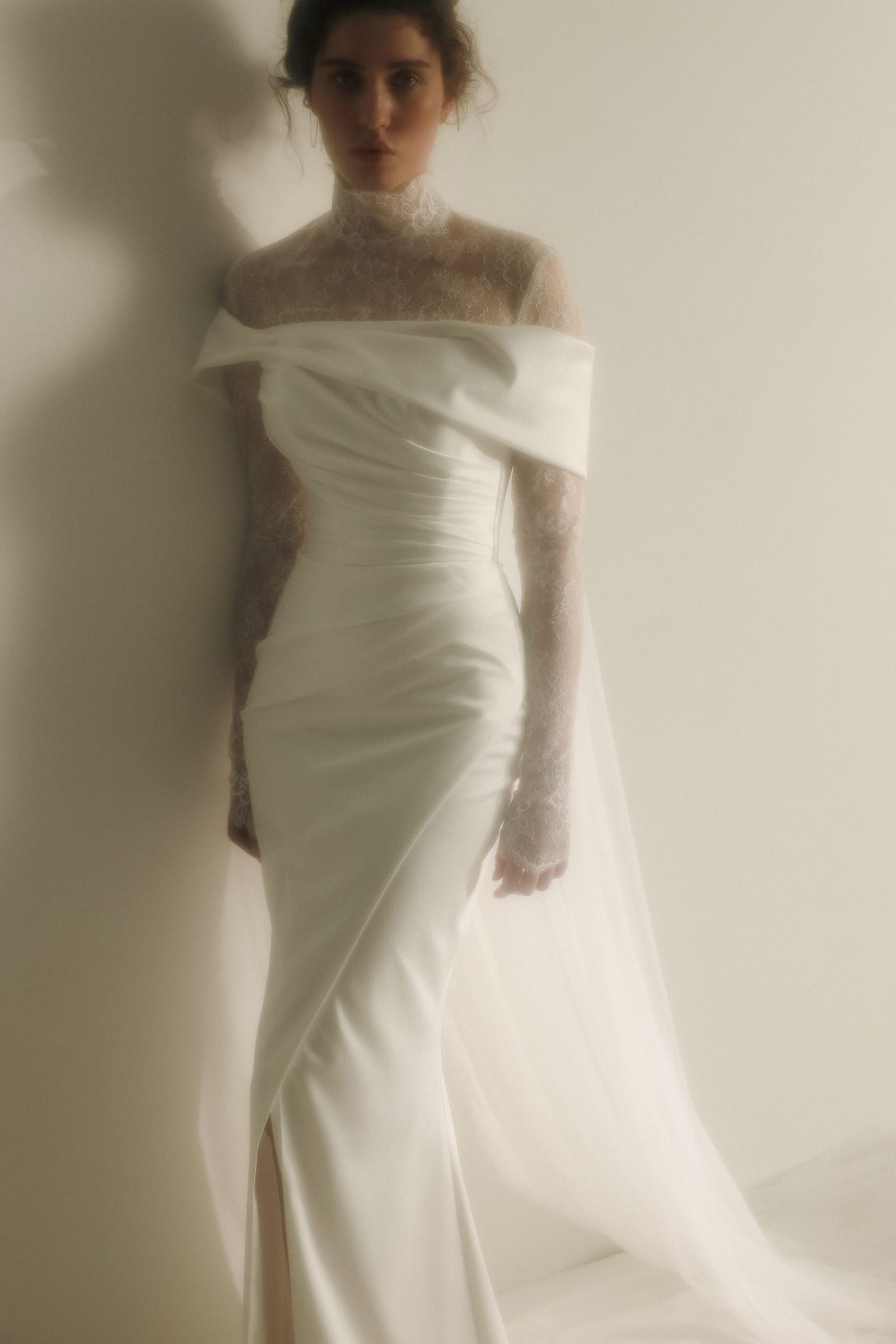
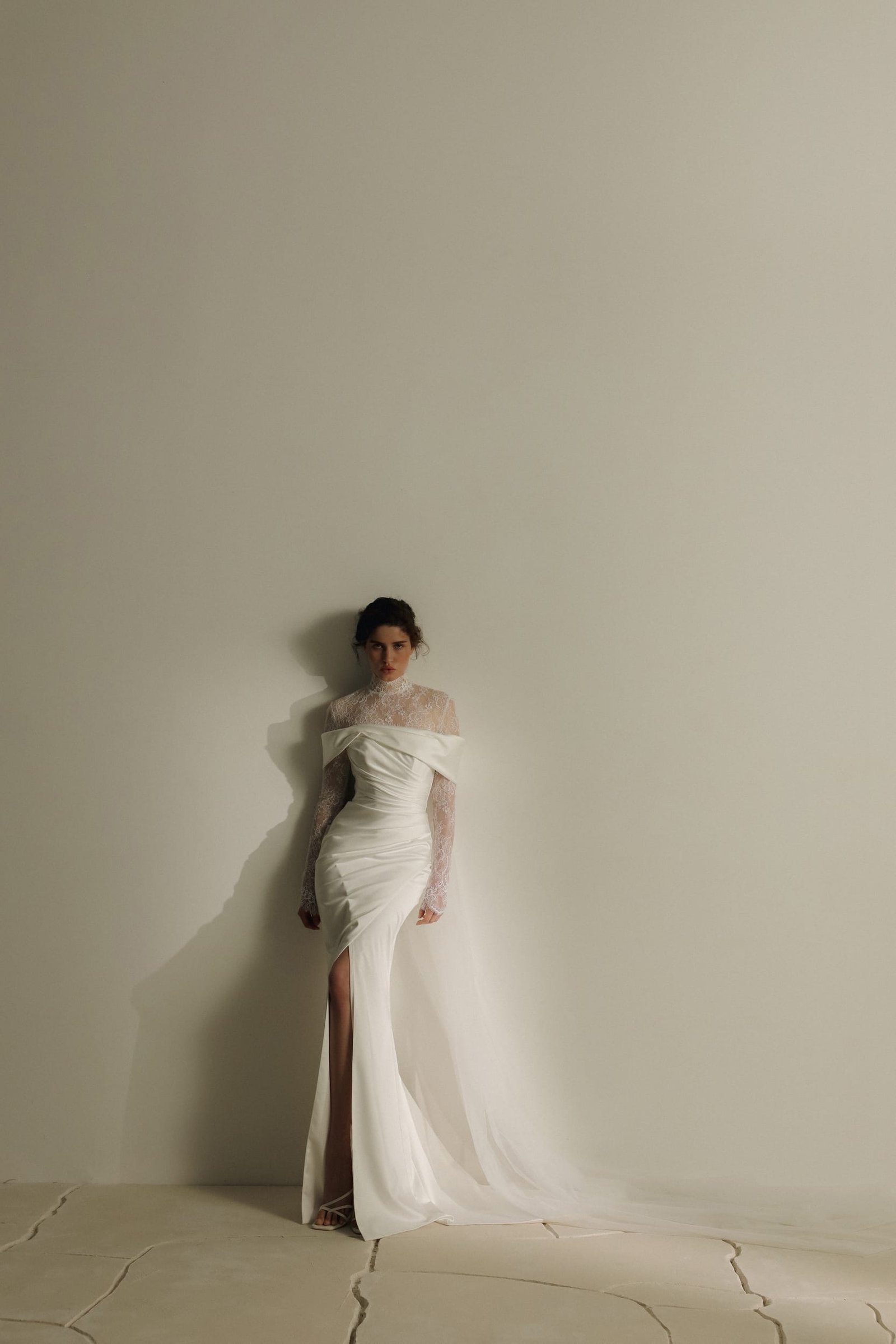
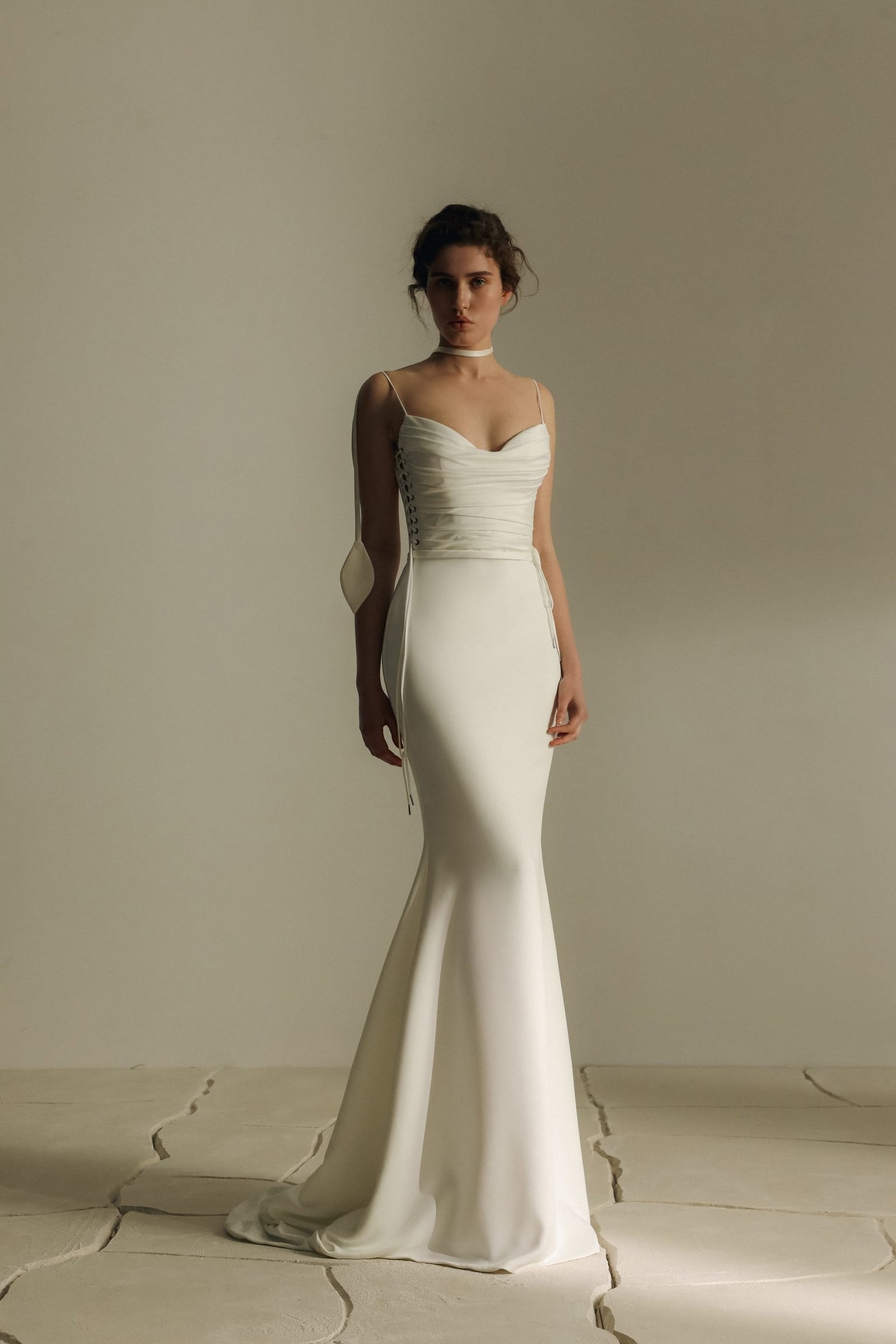
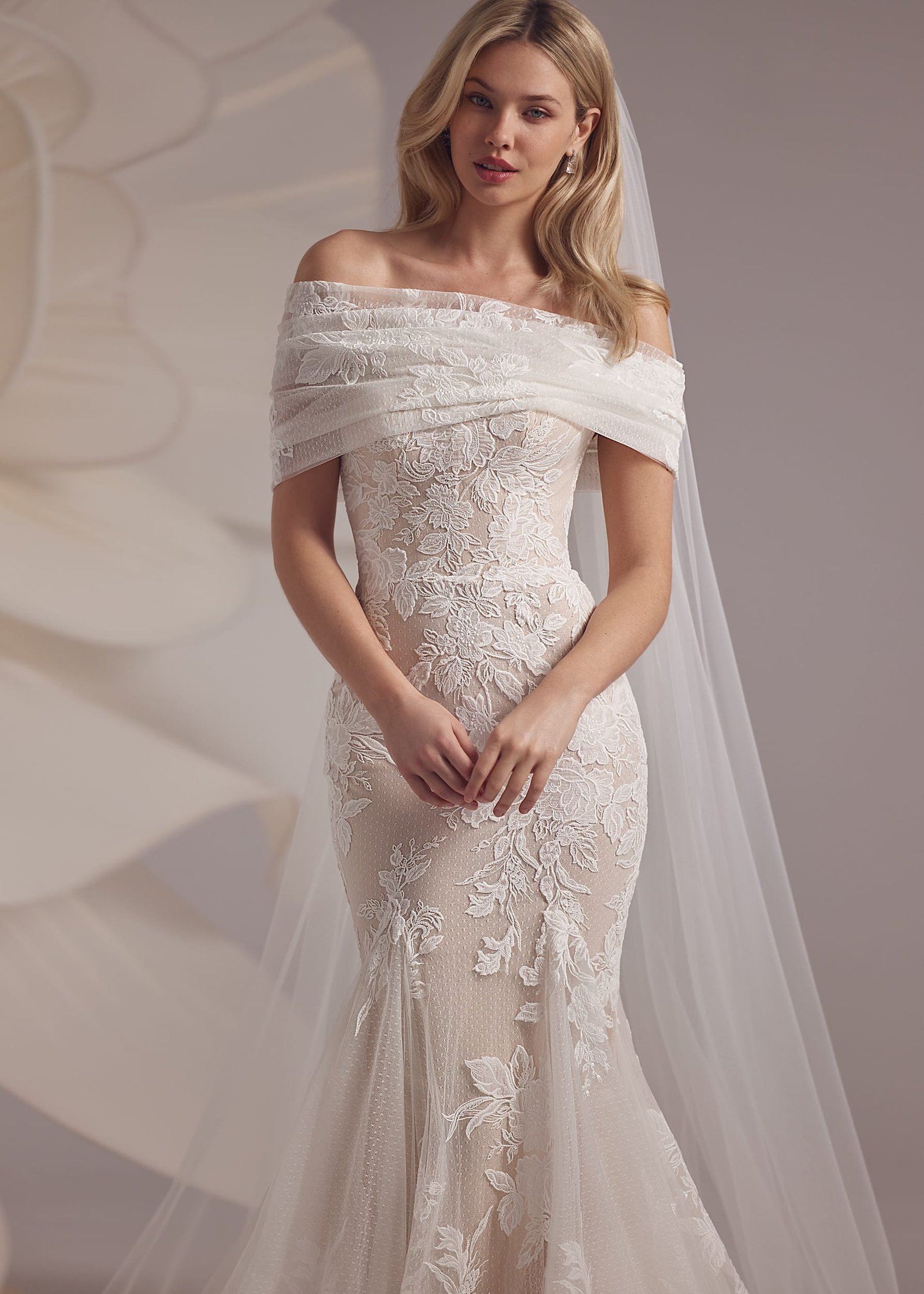
Fit-and-flare wedding dresses: definition with a gradual release
Who may prefer this silhouette
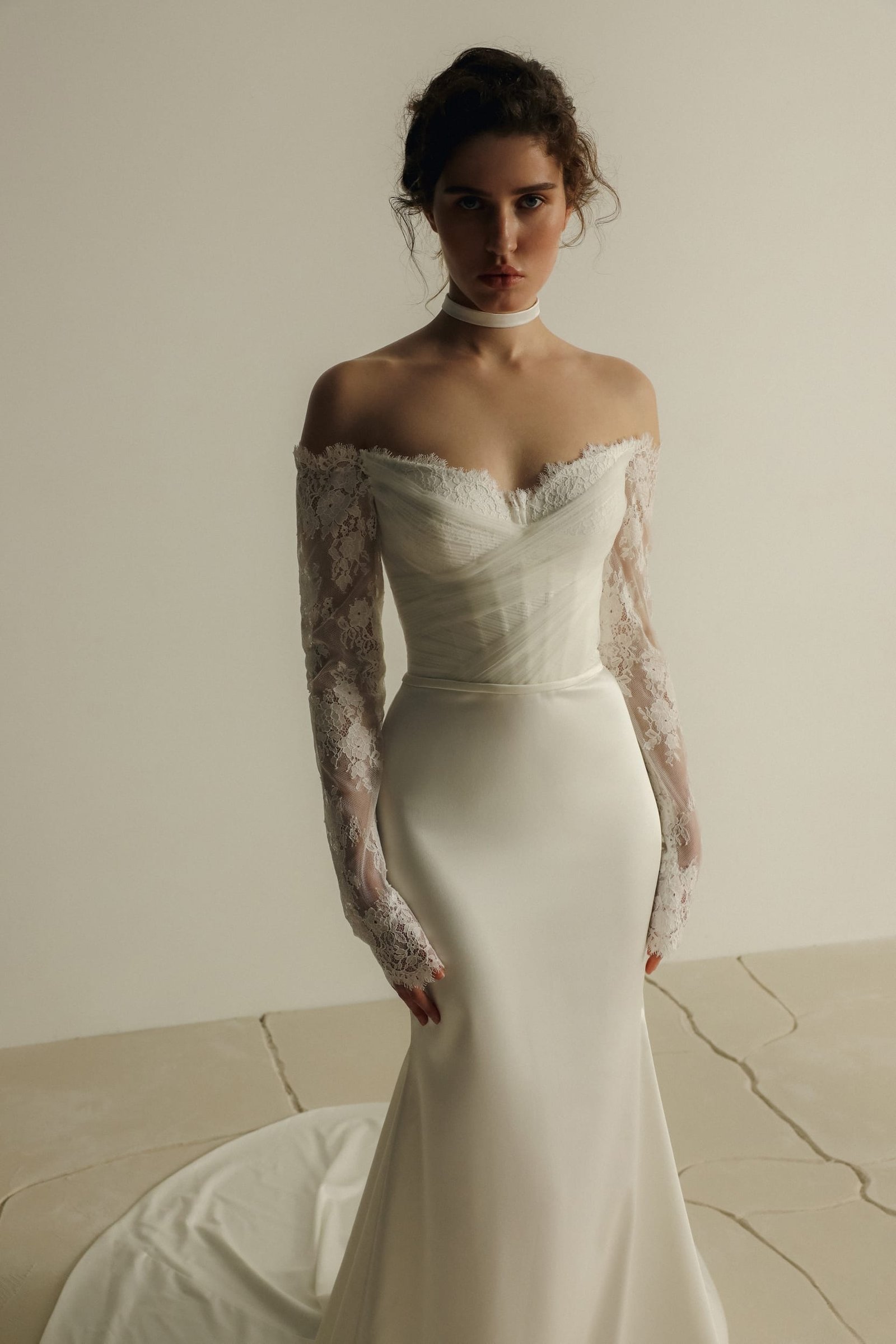
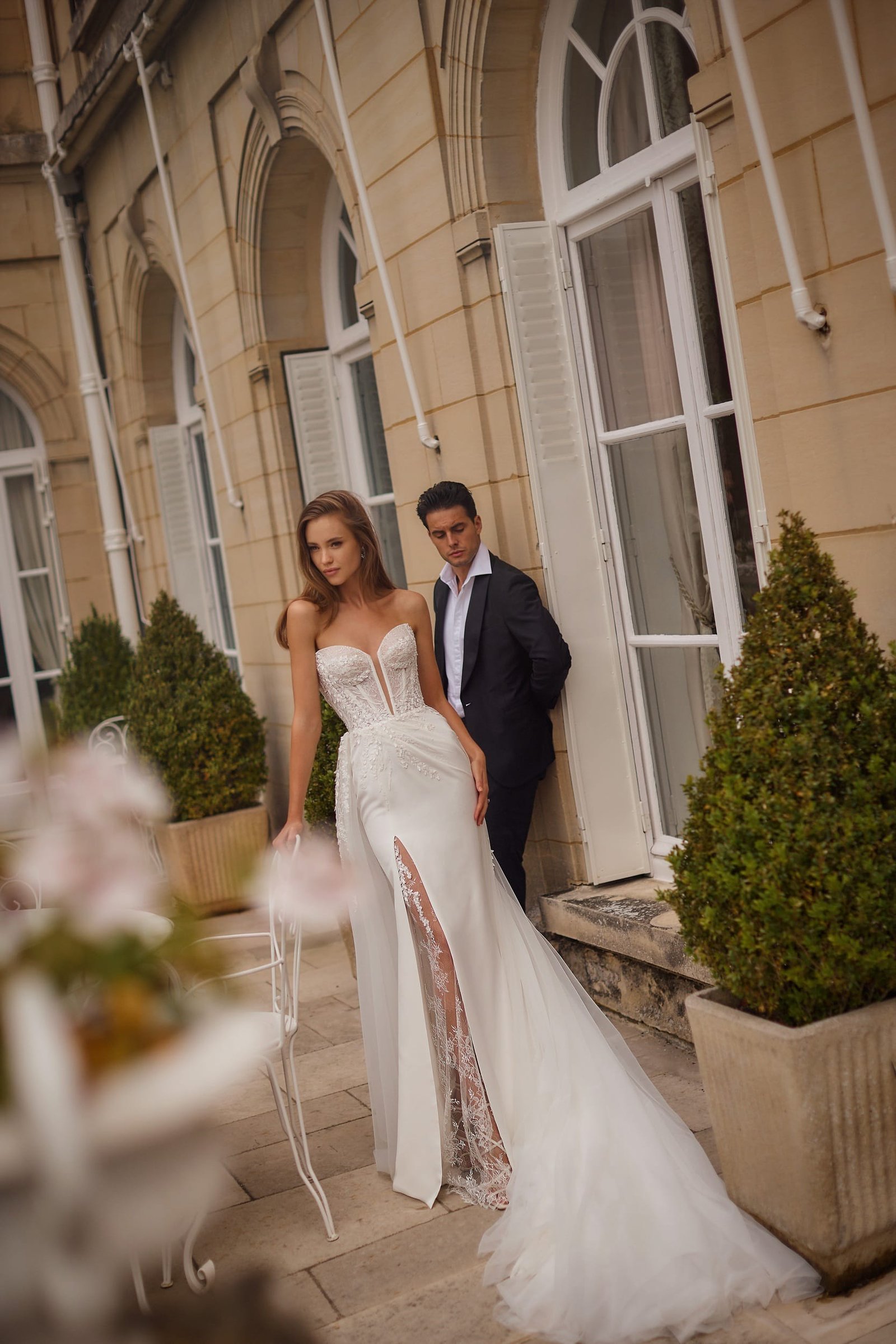
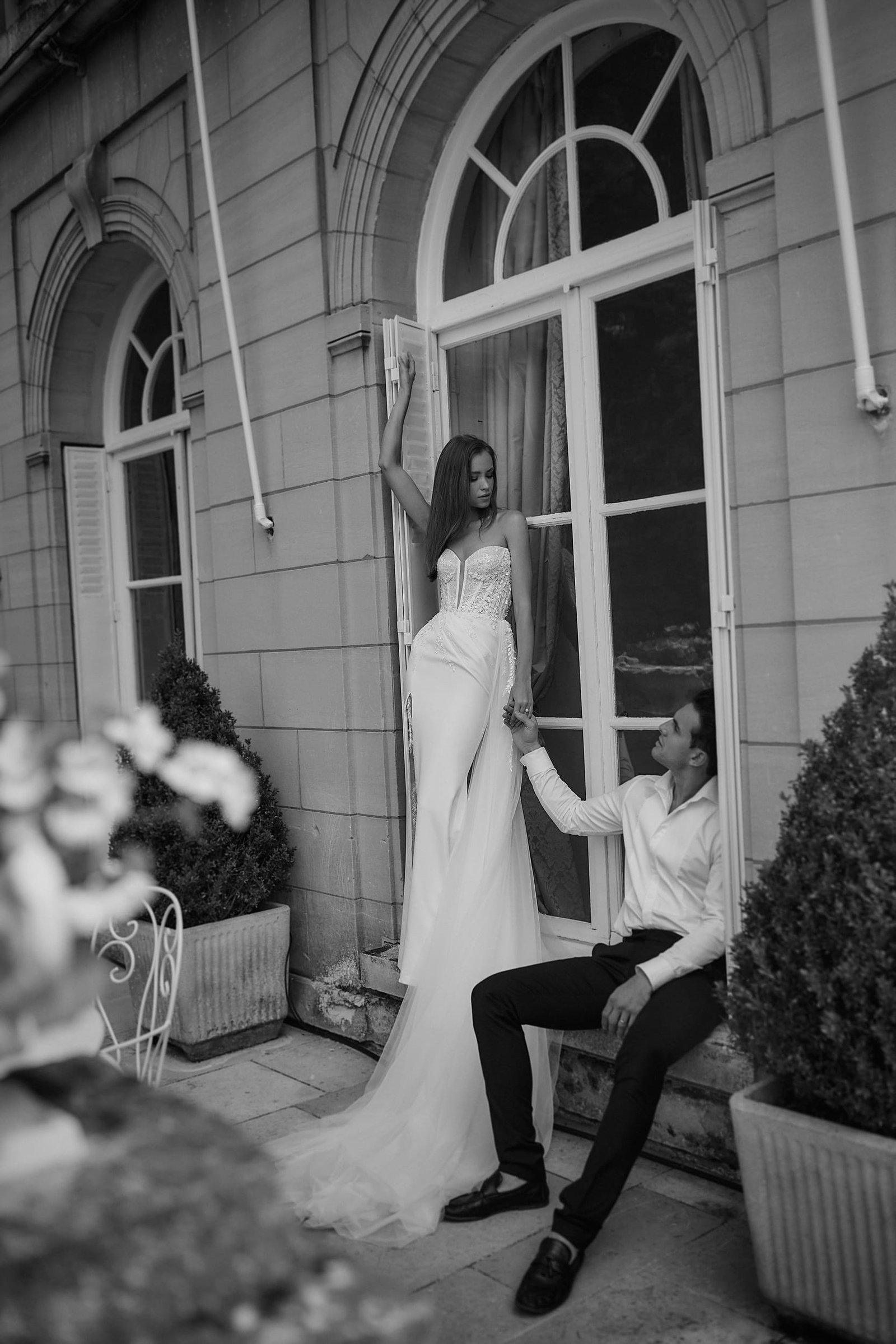
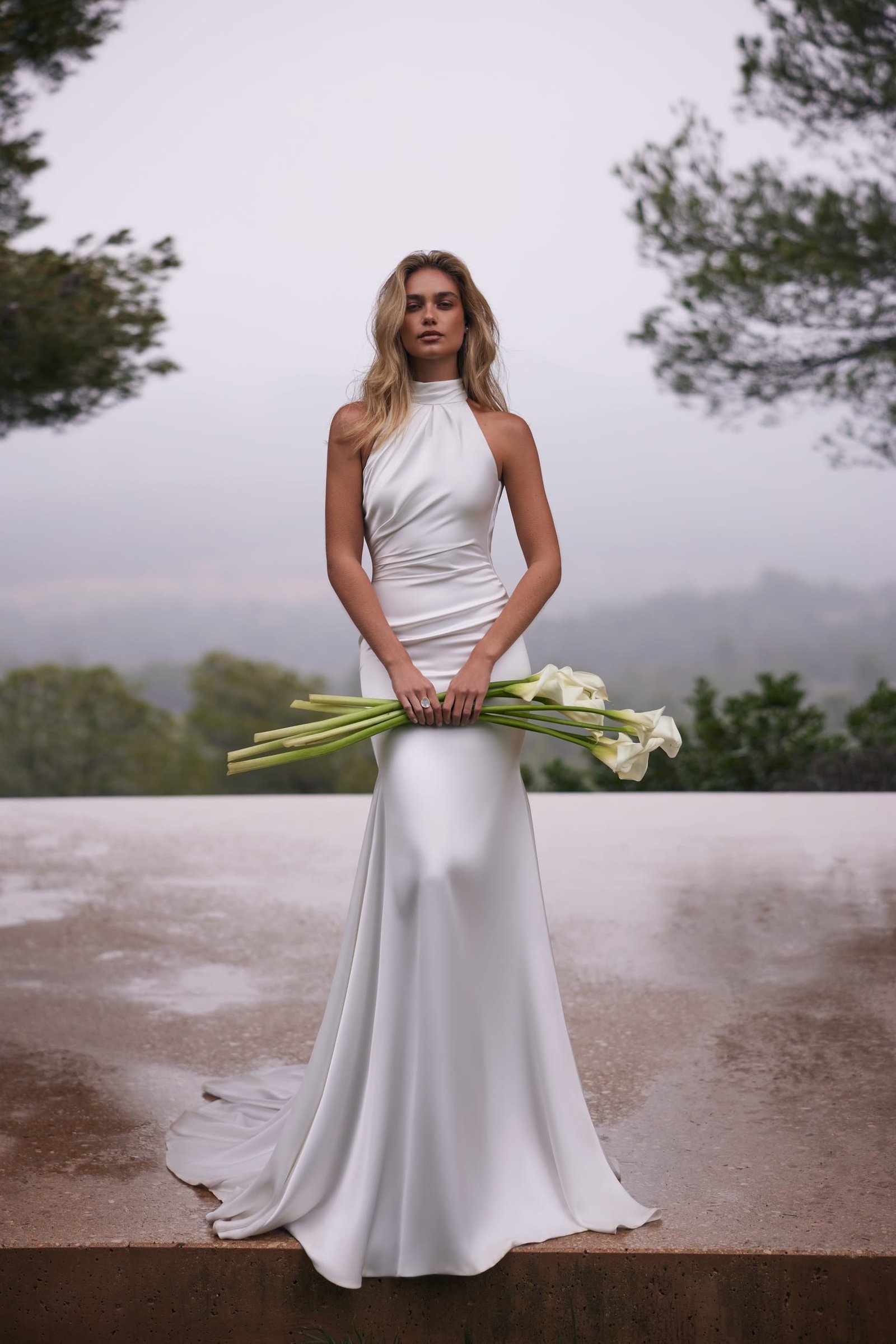
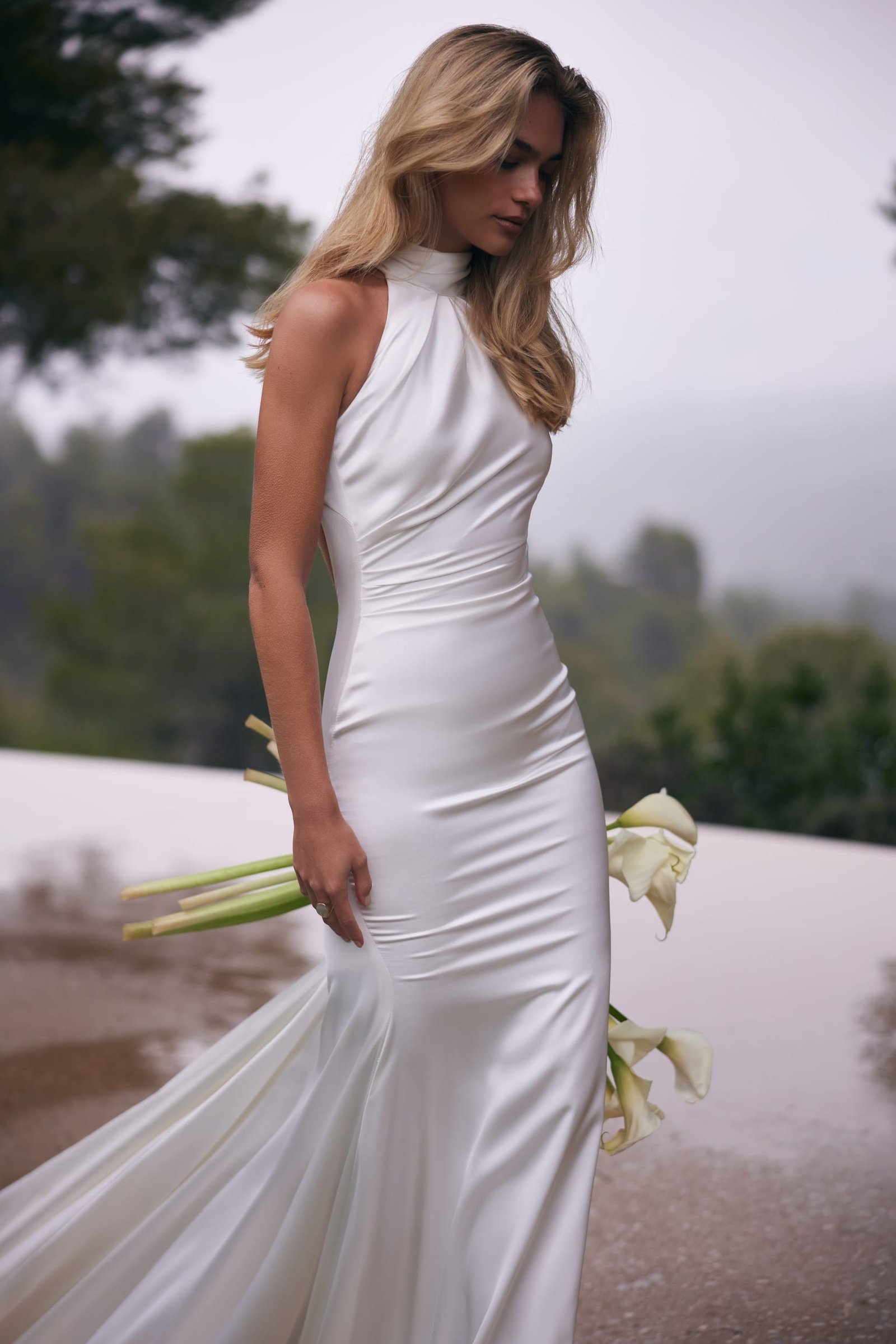
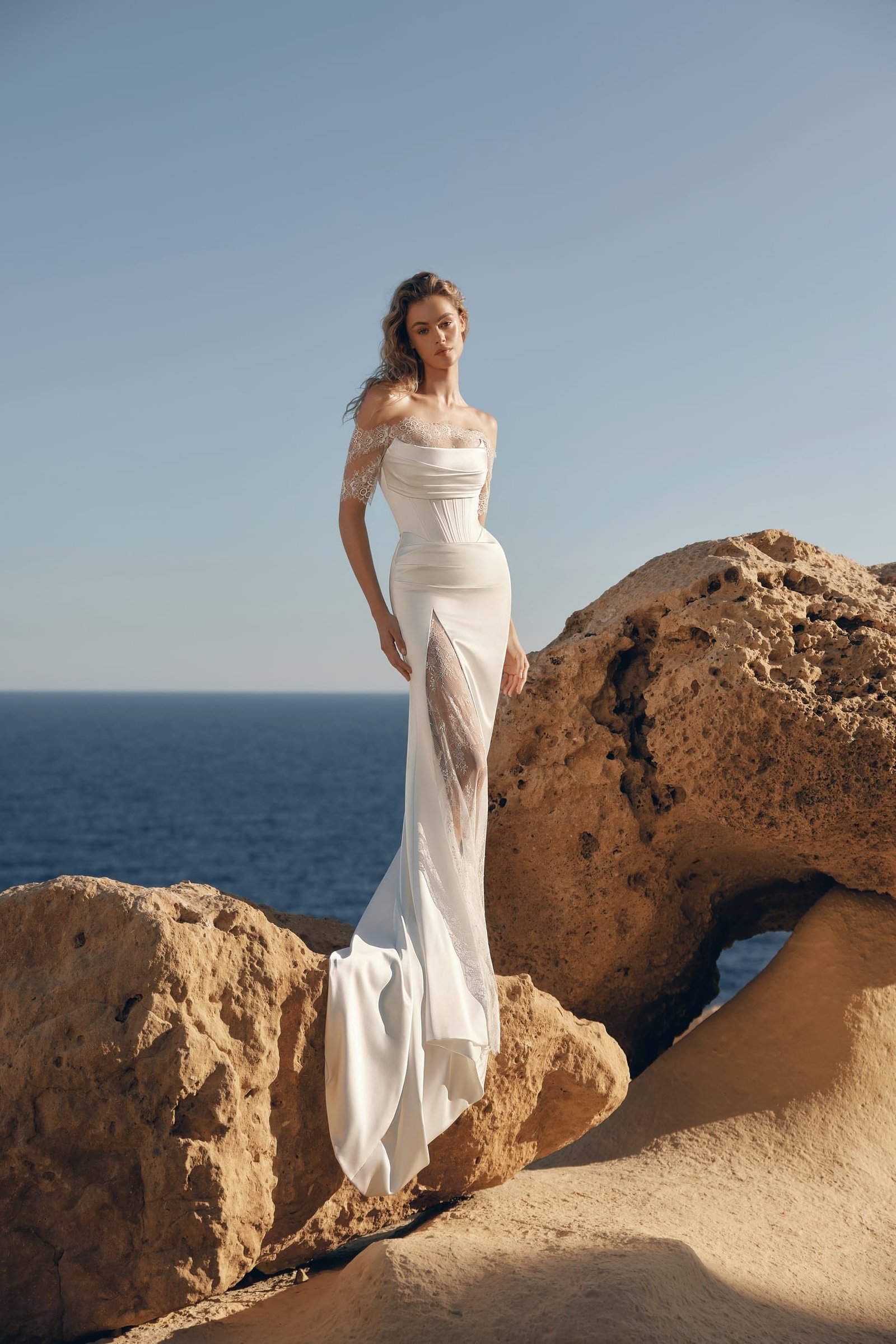
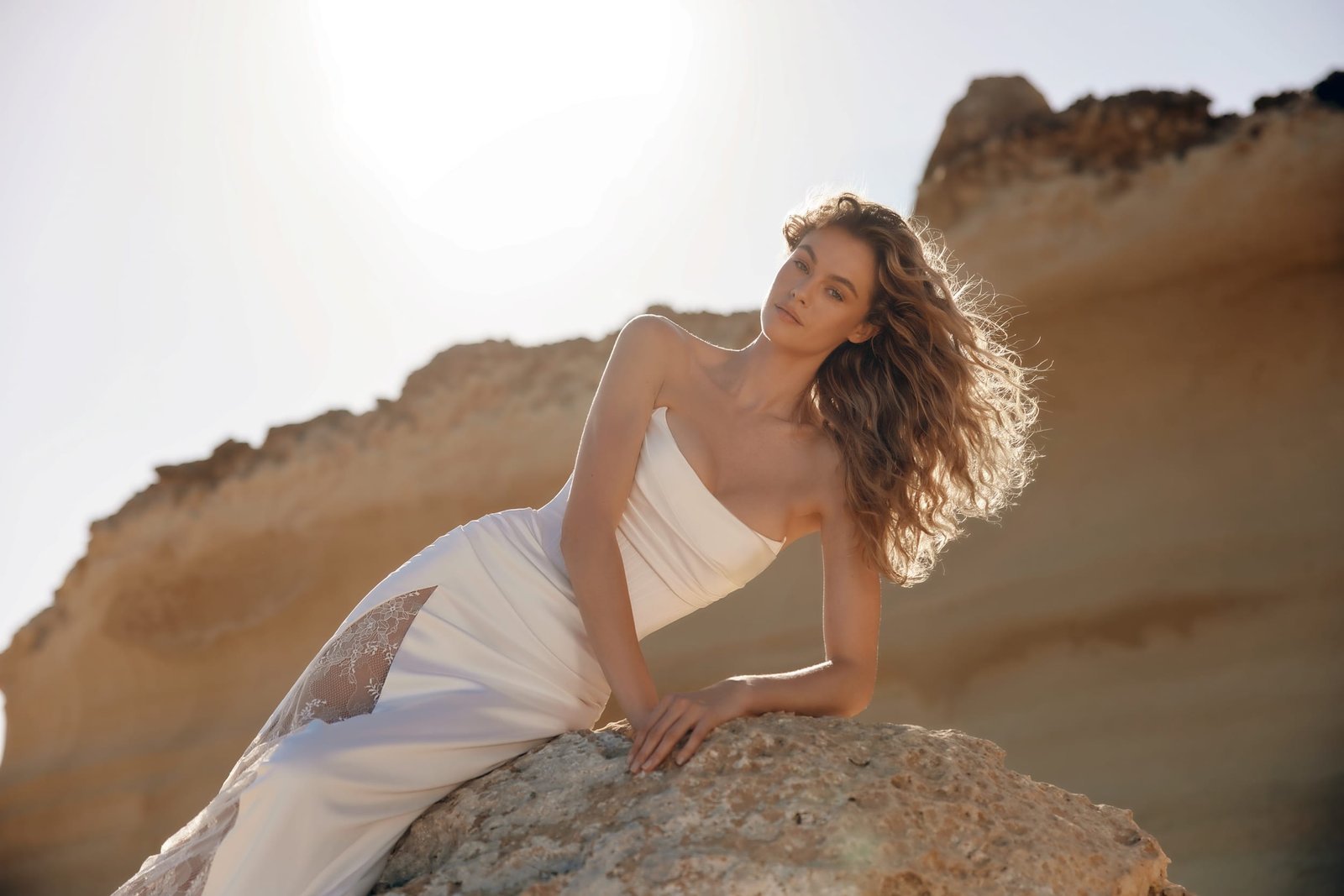
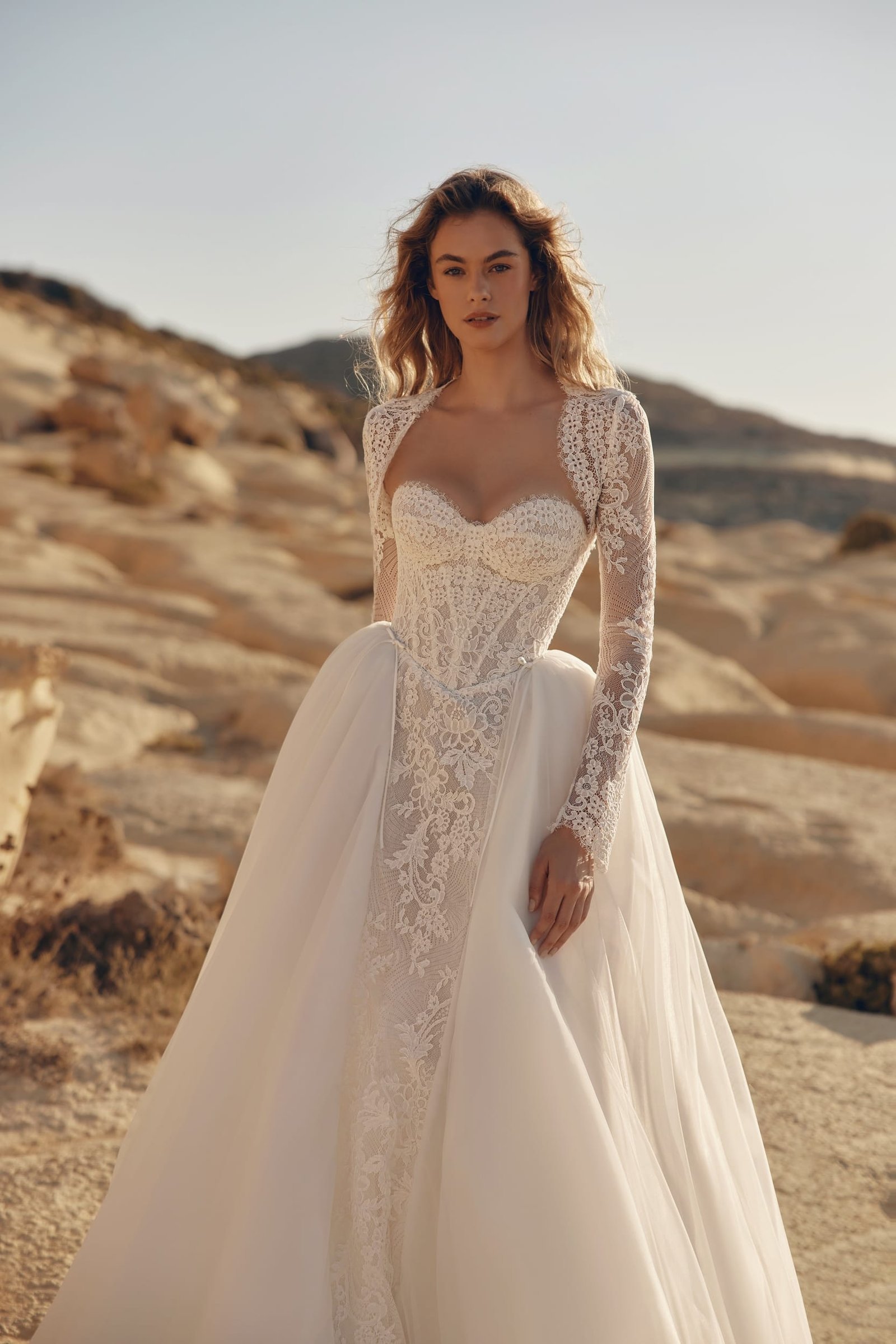
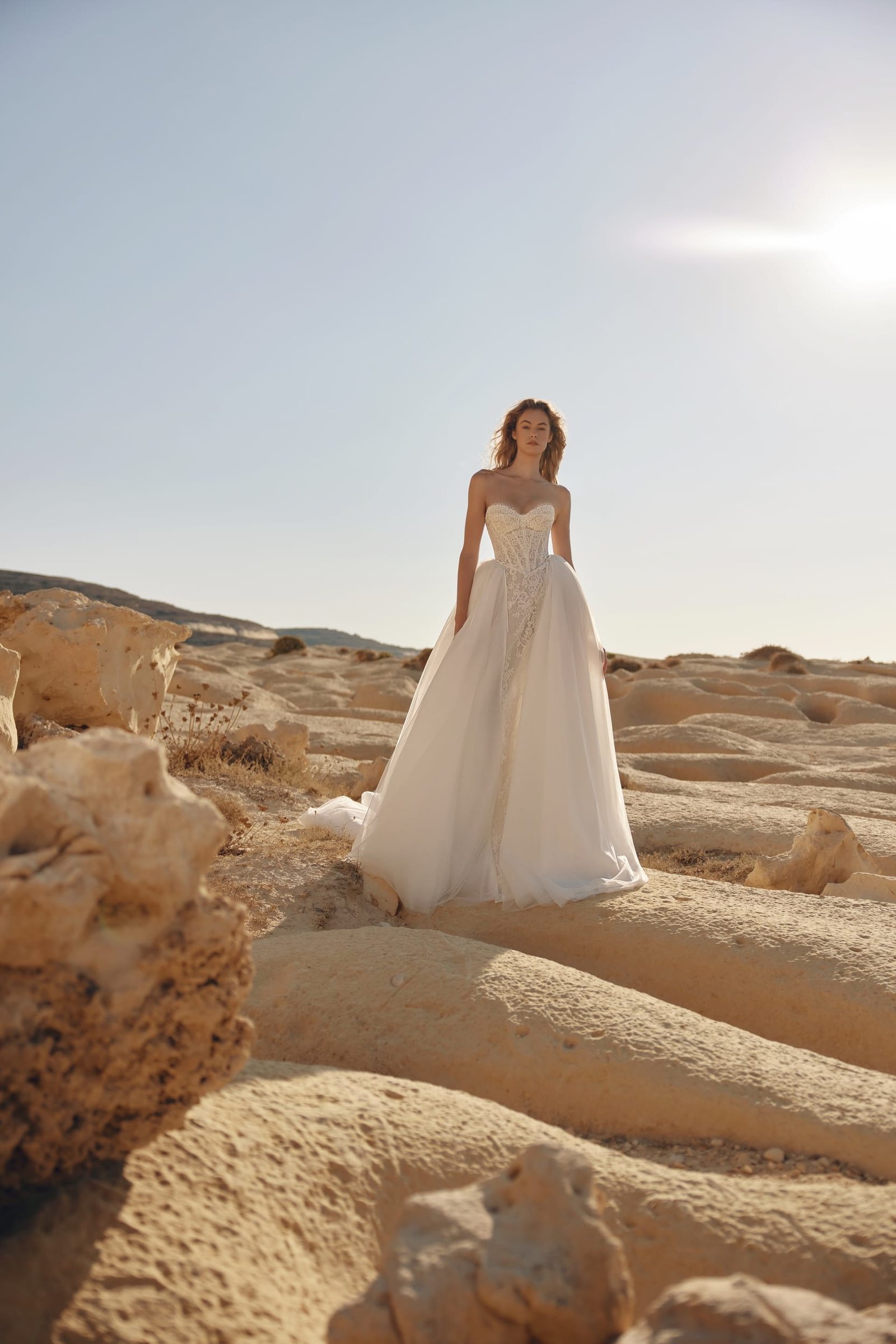
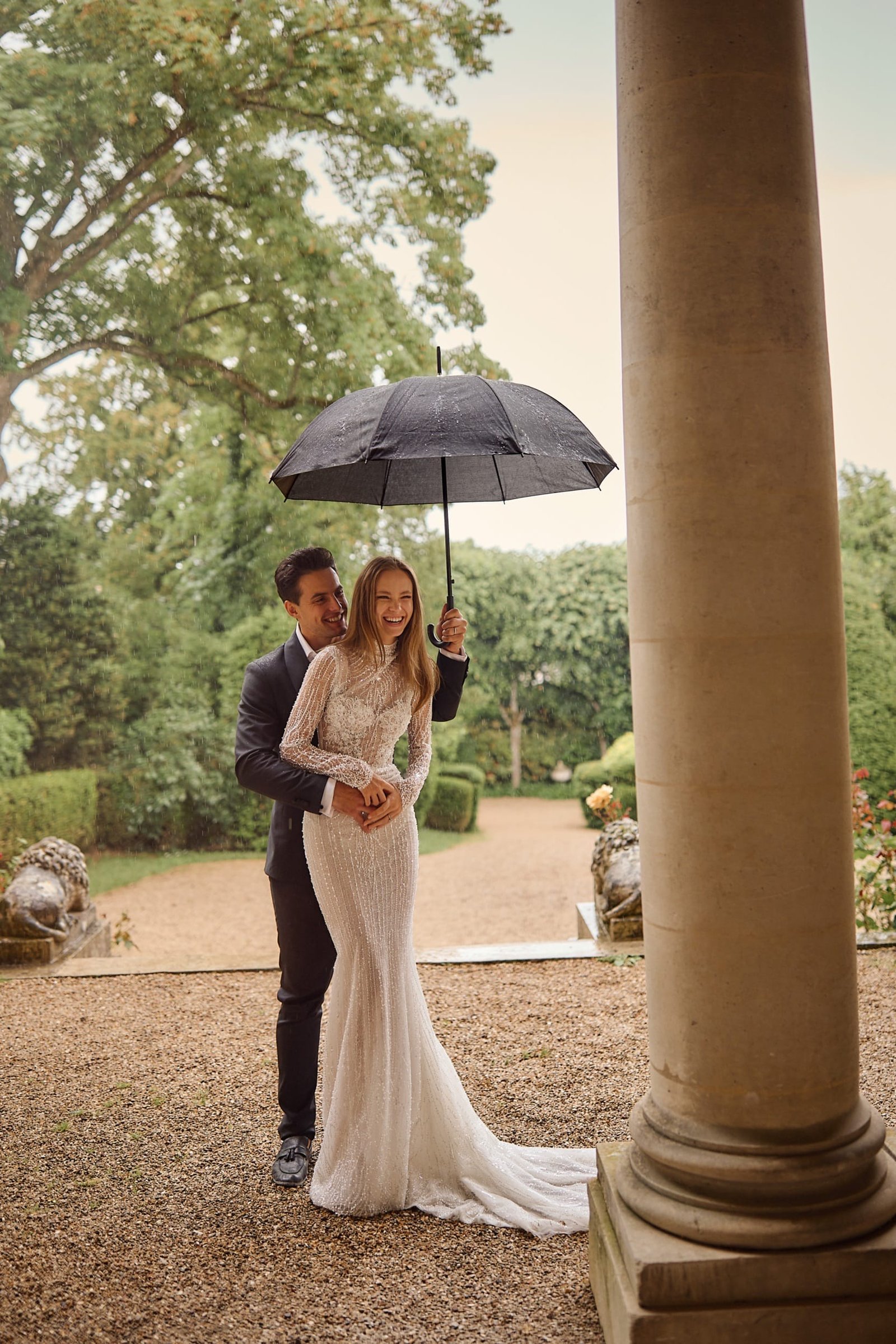
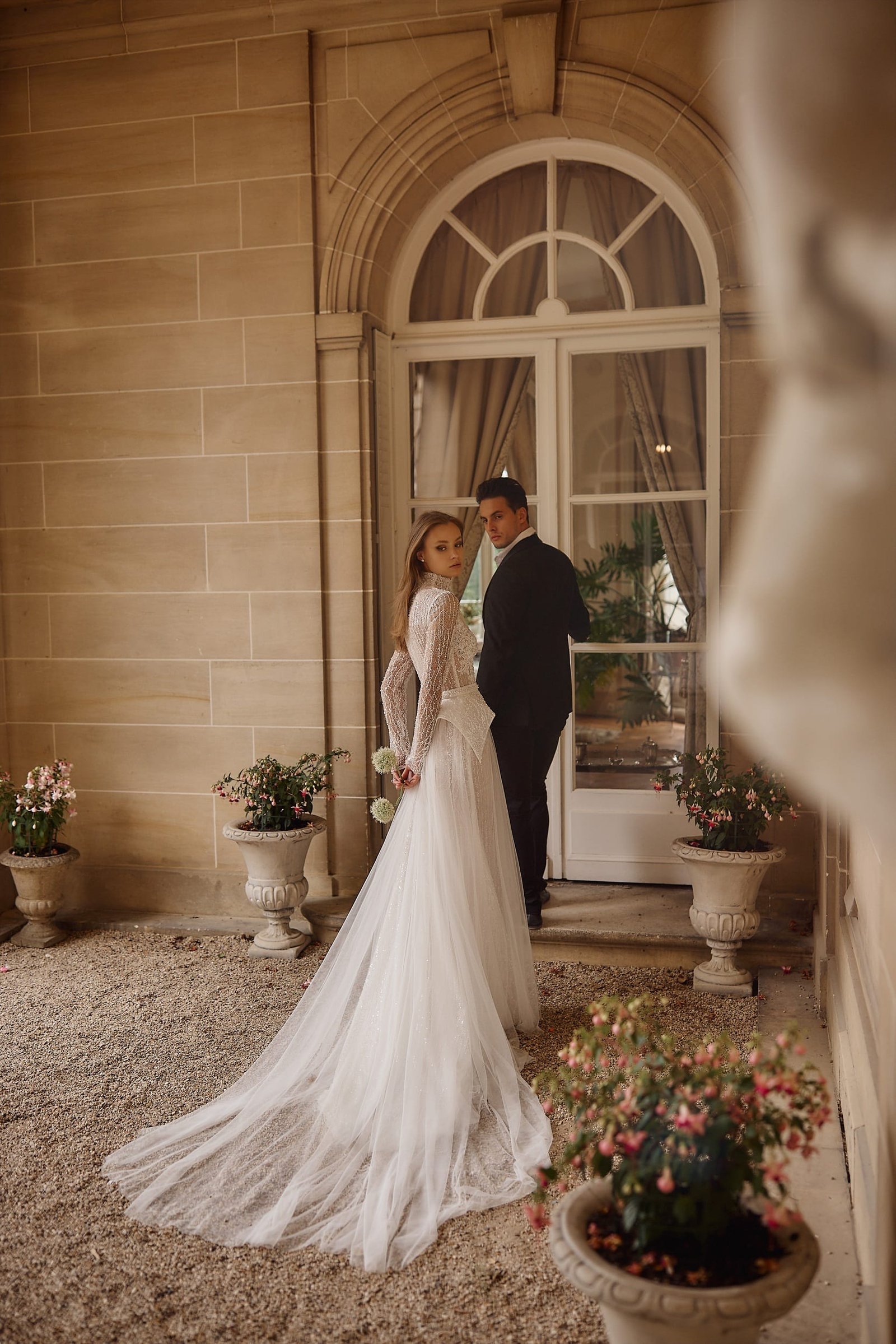
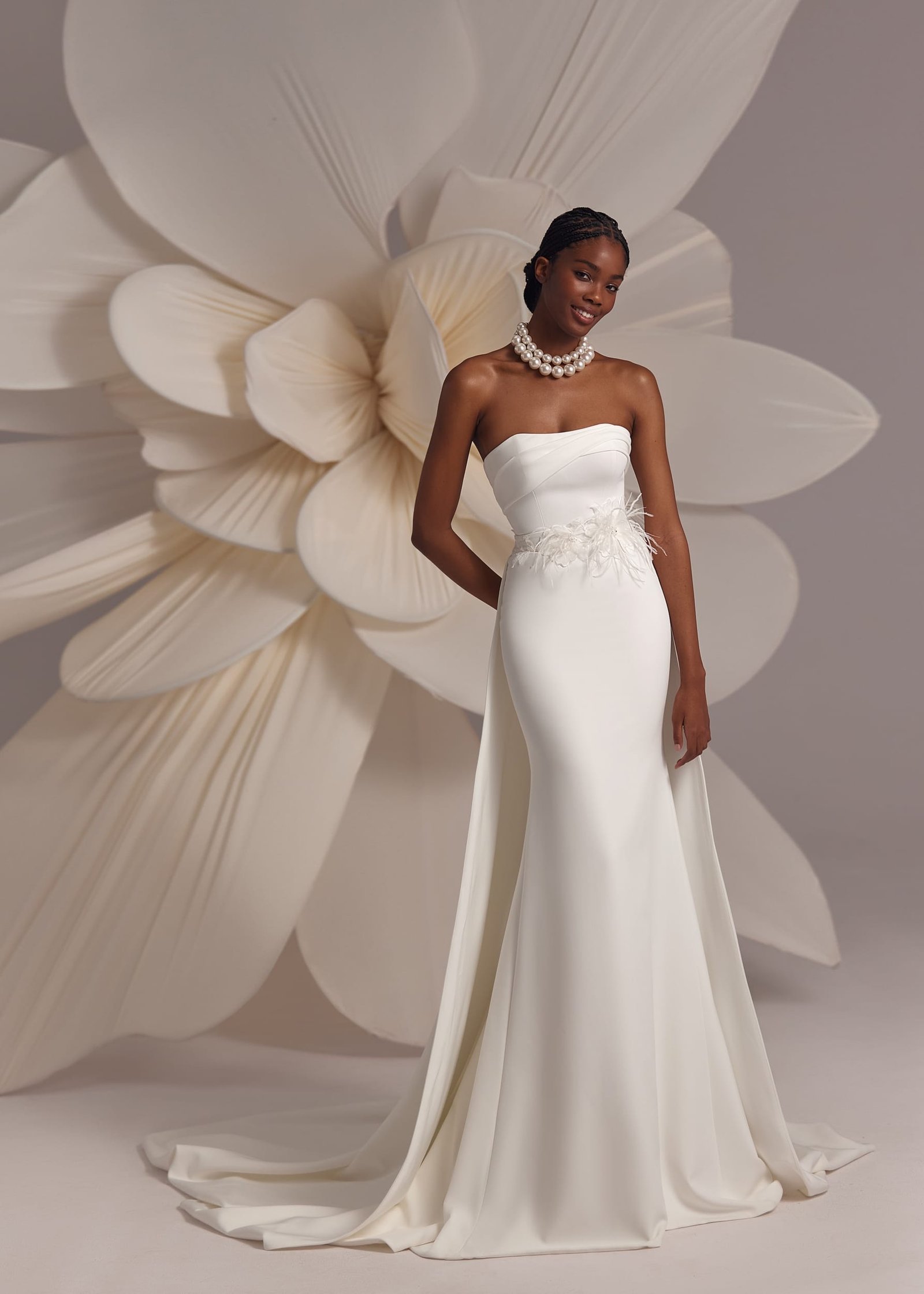
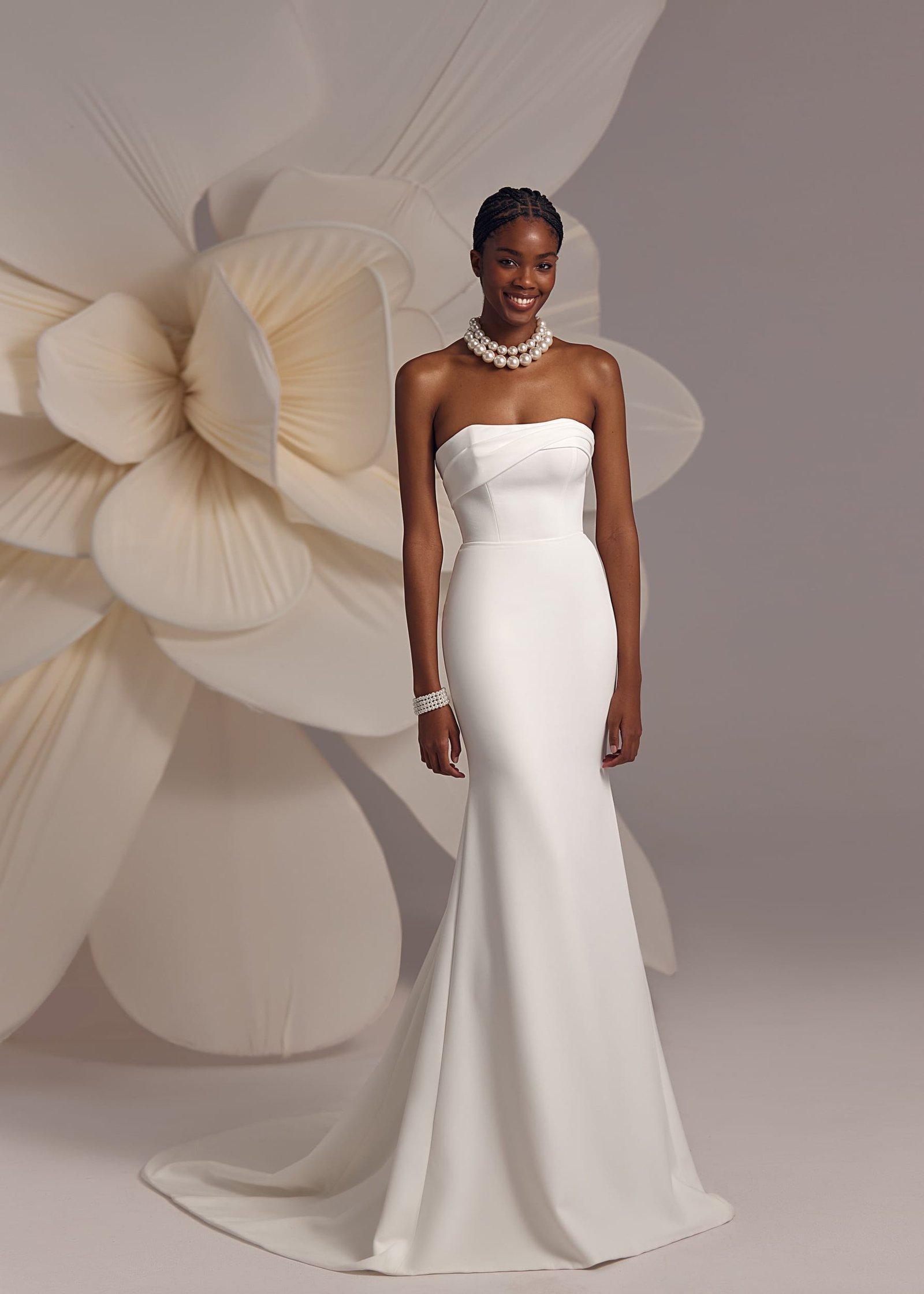
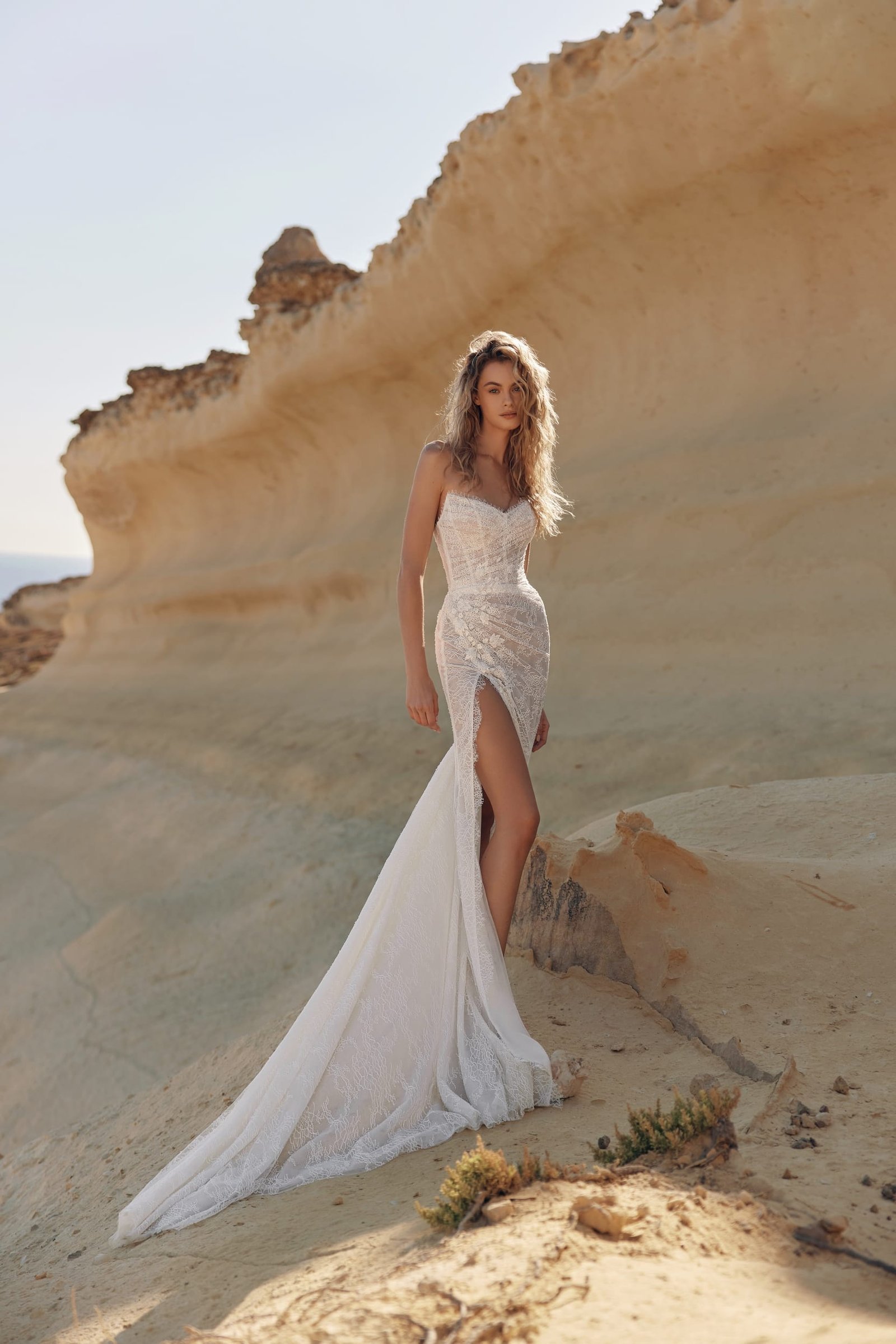
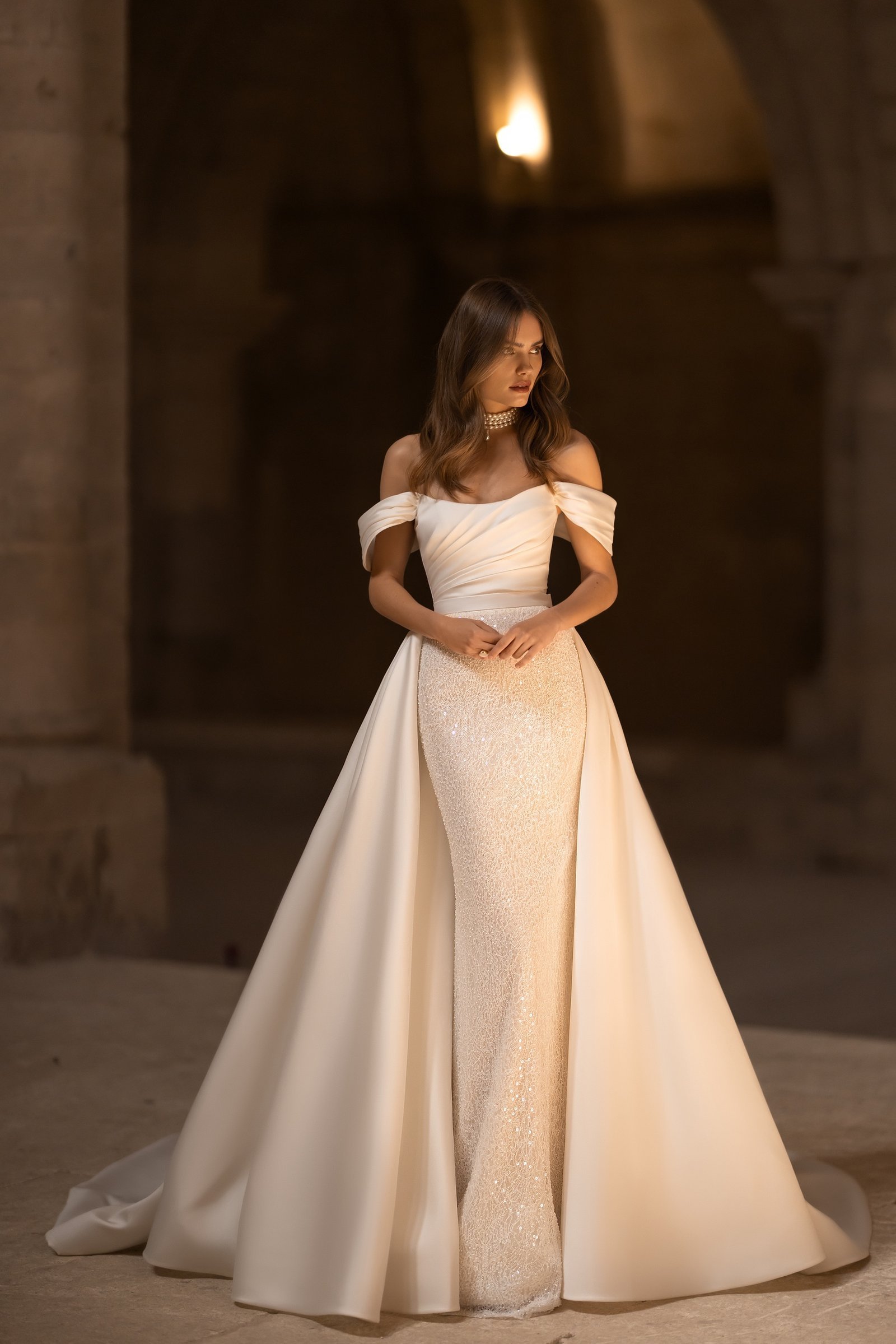
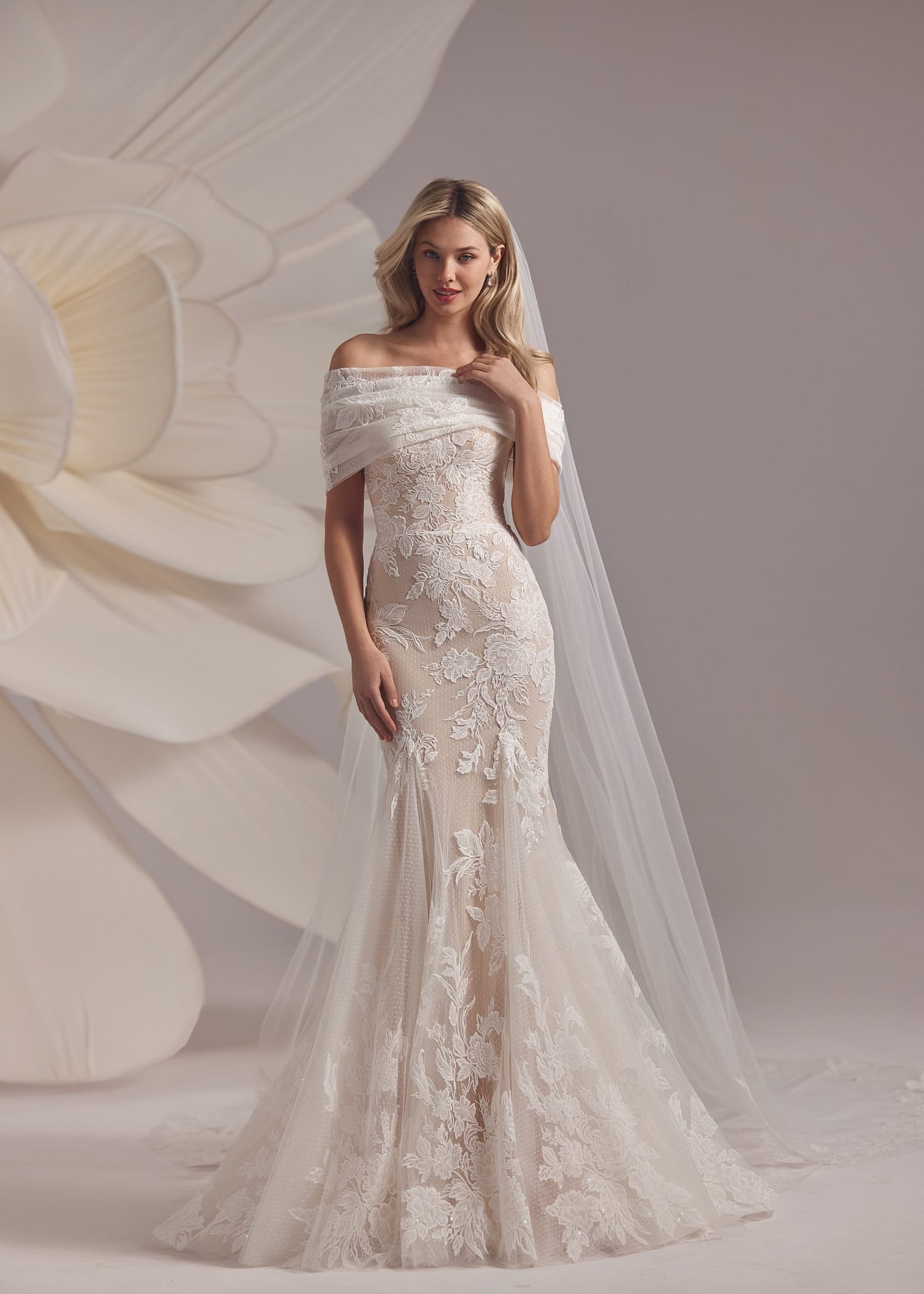
Fit-and-flare can celebrate an hourglass waist-to-hip relationship without creating the concentrated drama of a mermaid. On a pear-shaped figure, the defined waist and controlled flare can work beautifully when the bodice also brings enough visual interest upward. On a straighter figure, seaming, boning, ruching, or a textured fabric can help build shape. If you would rather not draw attention to the hips, an A-line or softer sheath may feel more natural; fit-and-flare is intentionally a shape-led choice.
Fit-and-flare, mermaid, or trumpet?
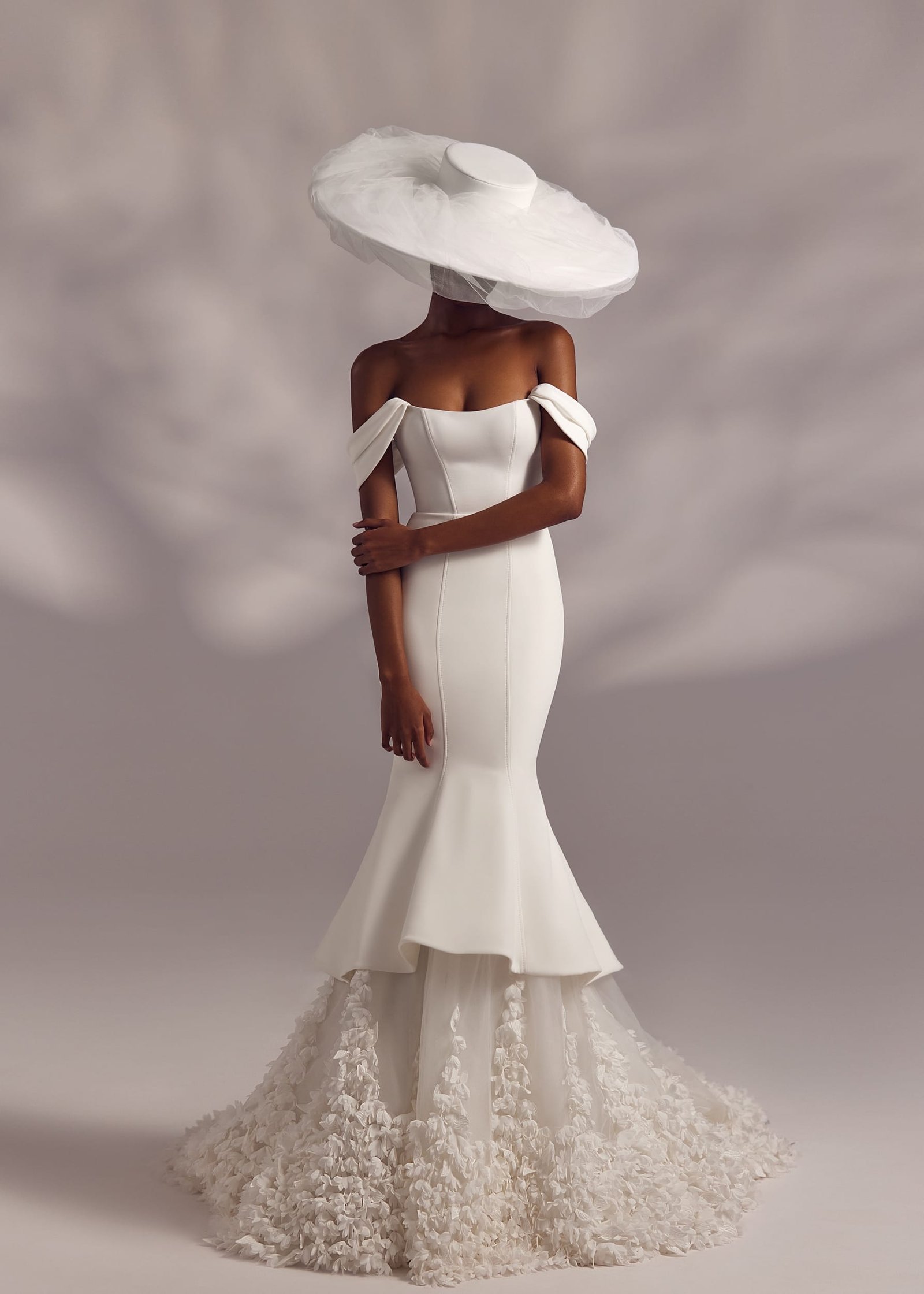
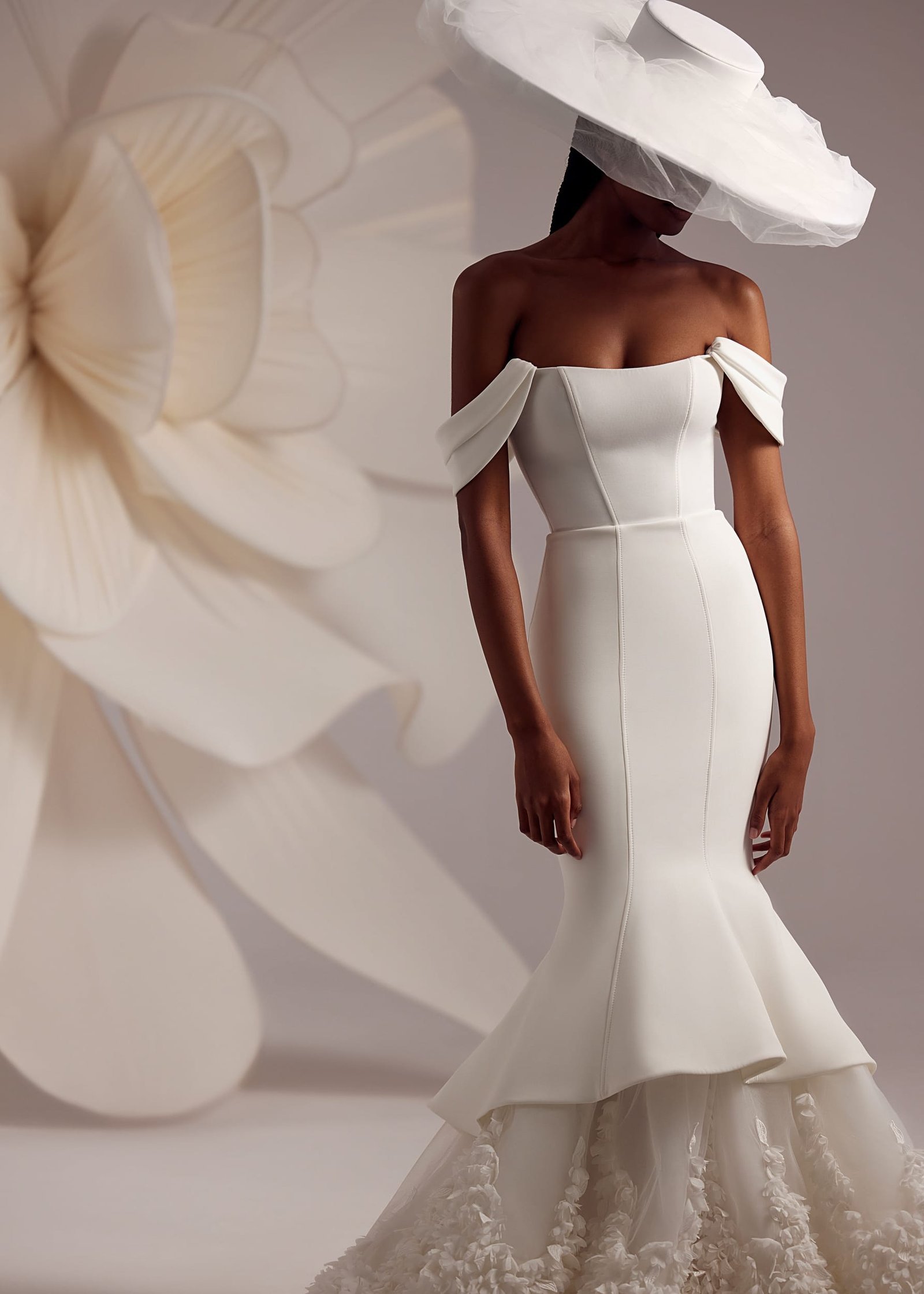
Look at the point where the skirt starts to release. A fit-and-flare normally opens with a longer, smoother transition. A trumpet creates a more noticeable flare around the mid-thigh, while a mermaid tends to stay fitted lower down before opening with stronger contrast. These distinctions are practical: they change stride, sitting comfort, and how much movement the hem has.
“I want the dress to show shape, but I still want the skirt to answer when I move.”
Take that feeling into the fitting room. Walk, sit, and turn in each option, then compare the silhouette in motion rather than only in a still photograph.