
How to choose an A-line wedding dress
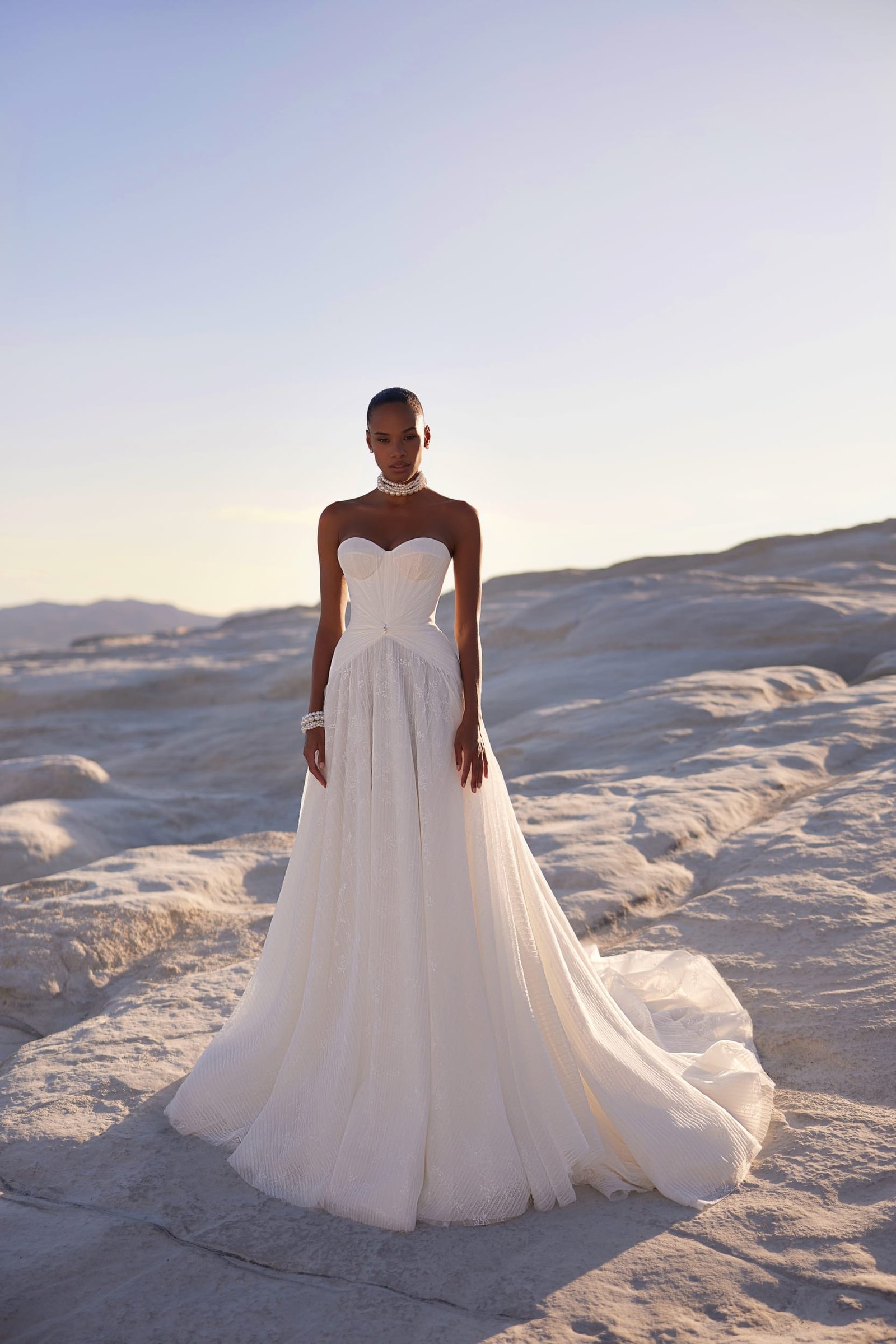
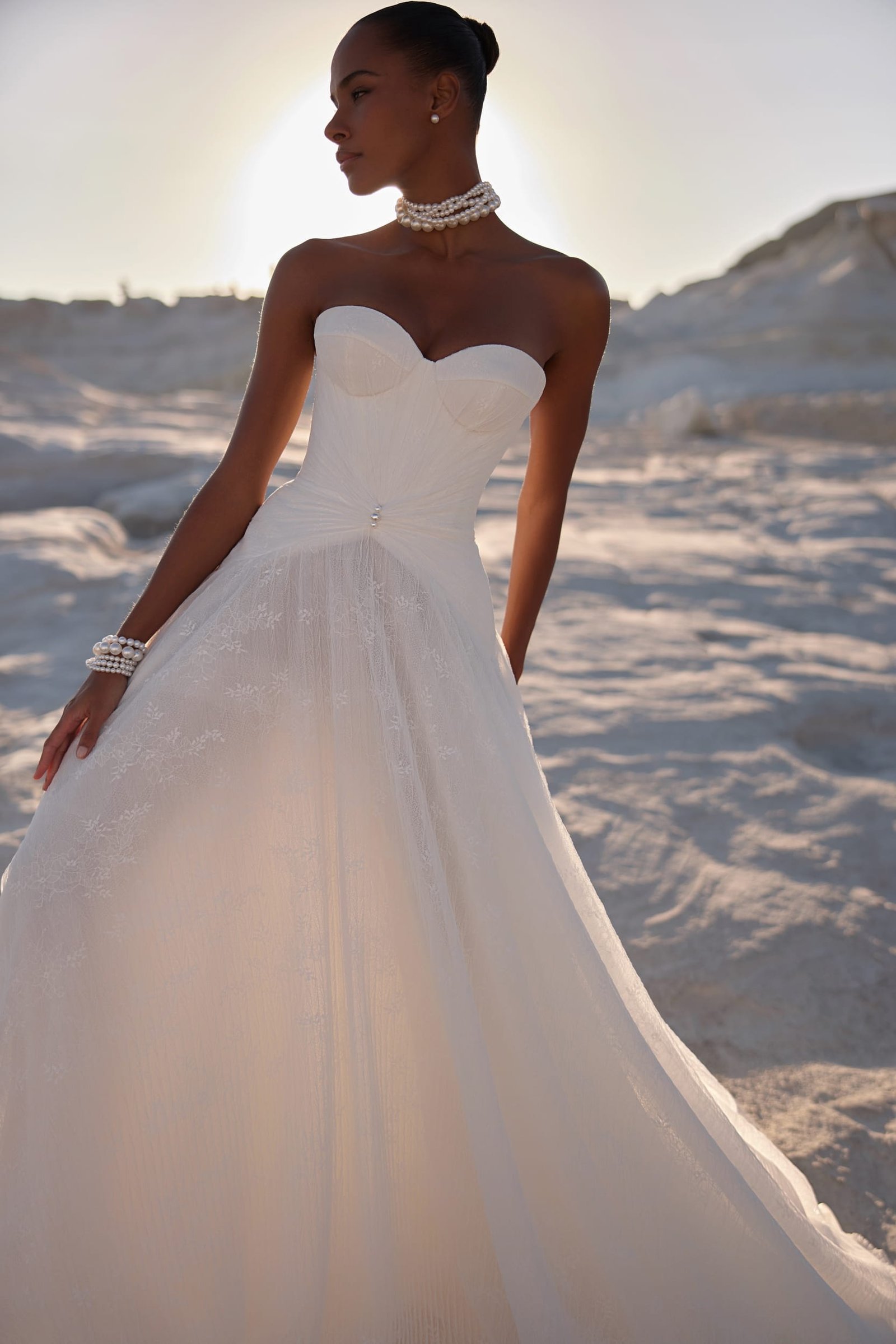
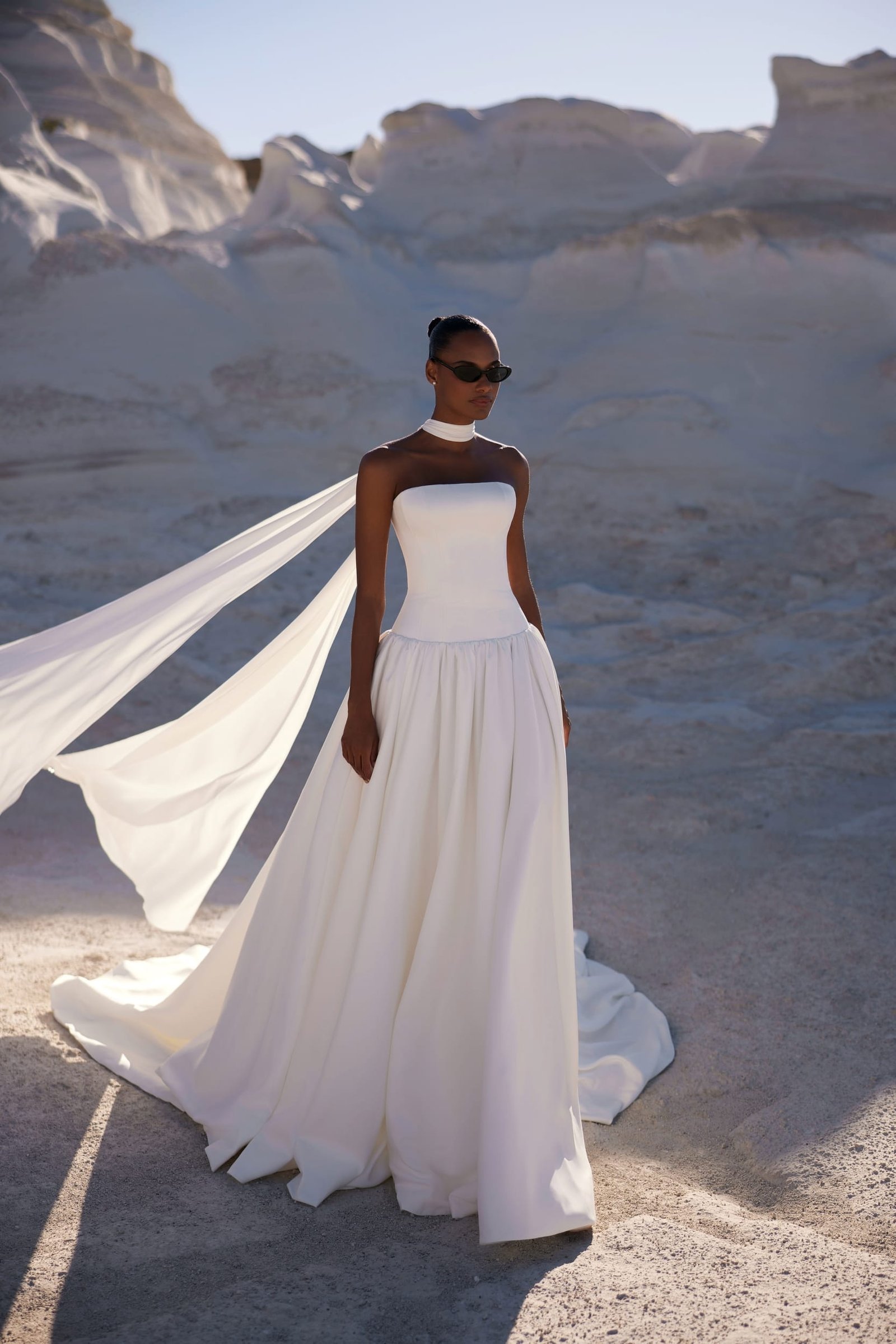
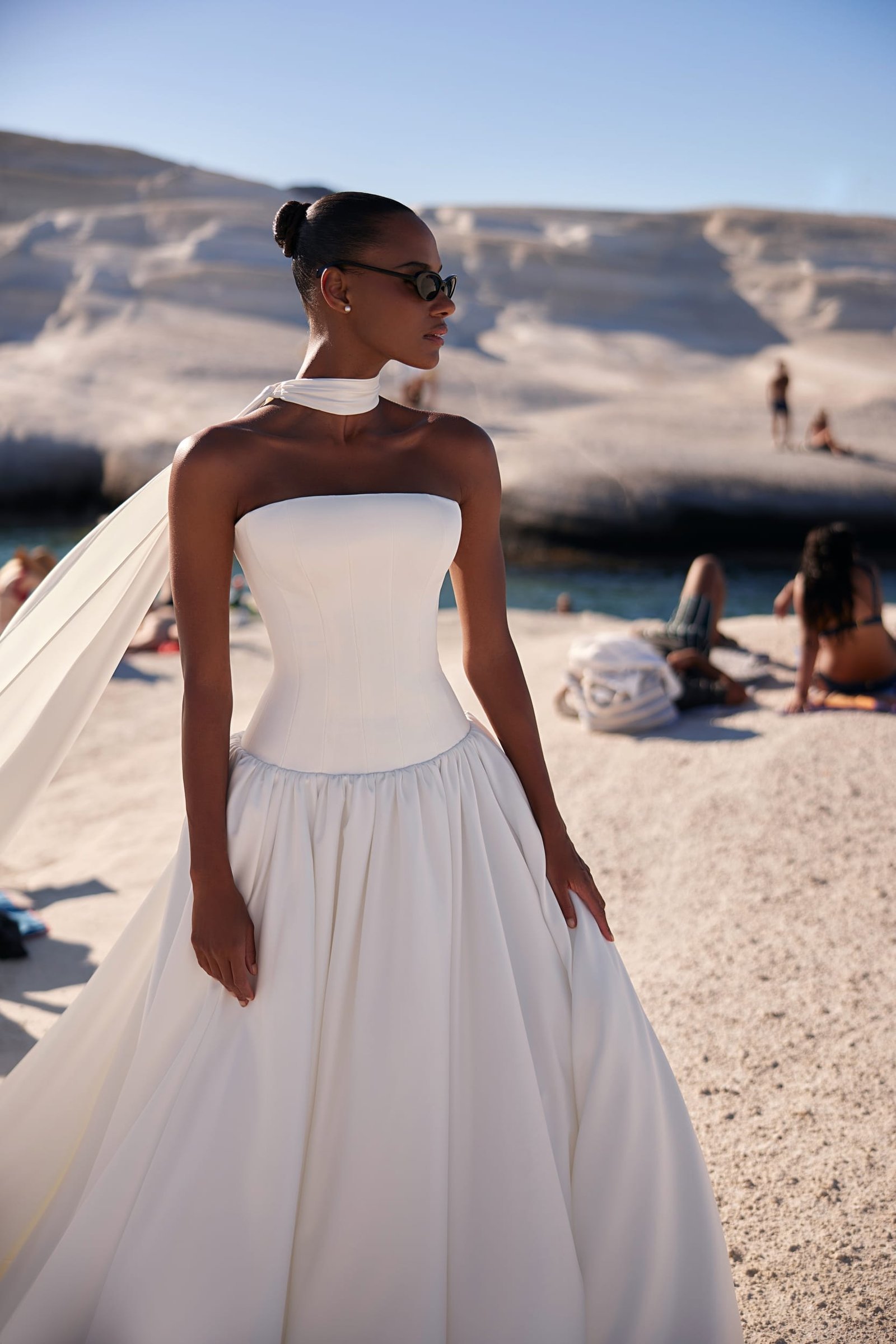
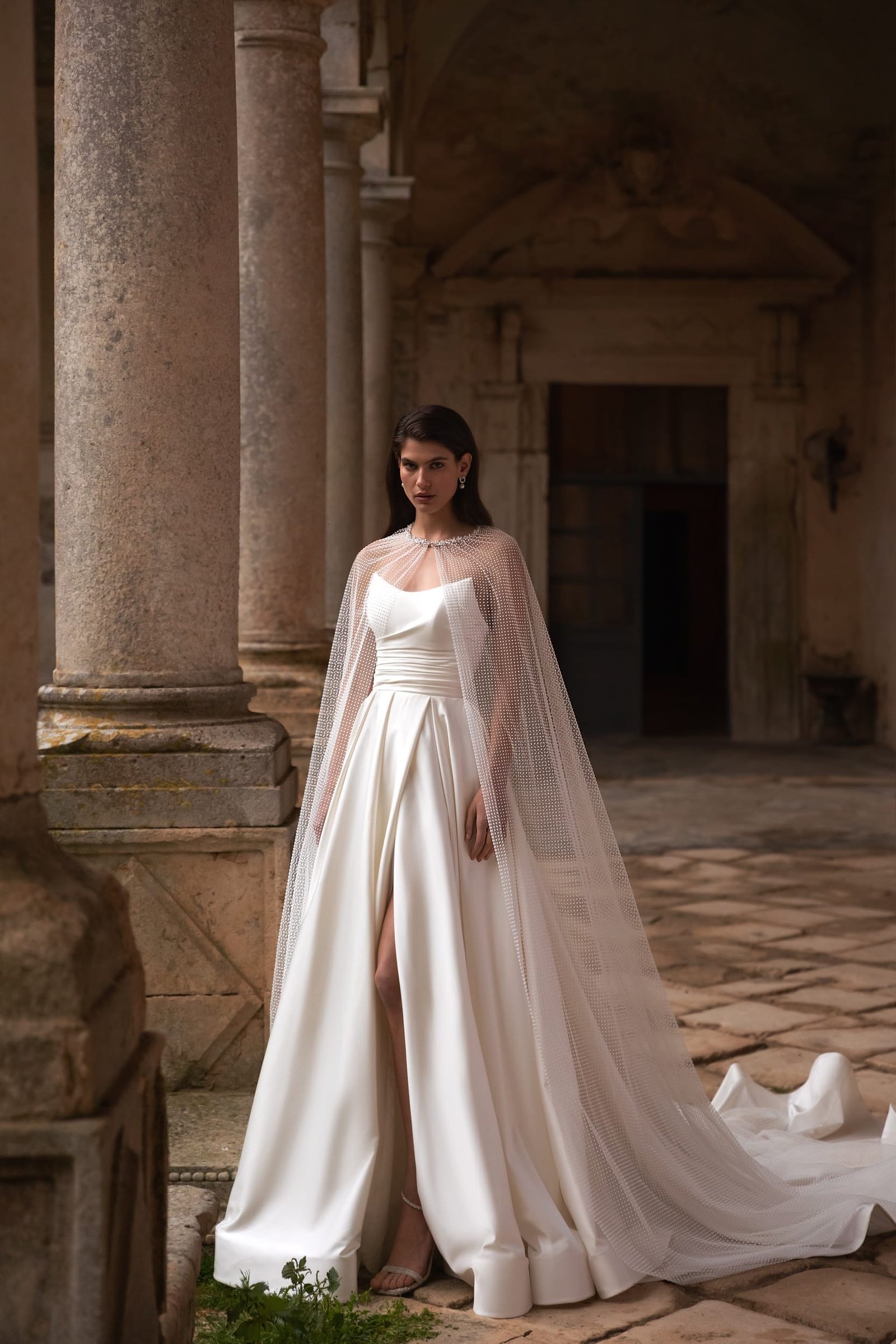
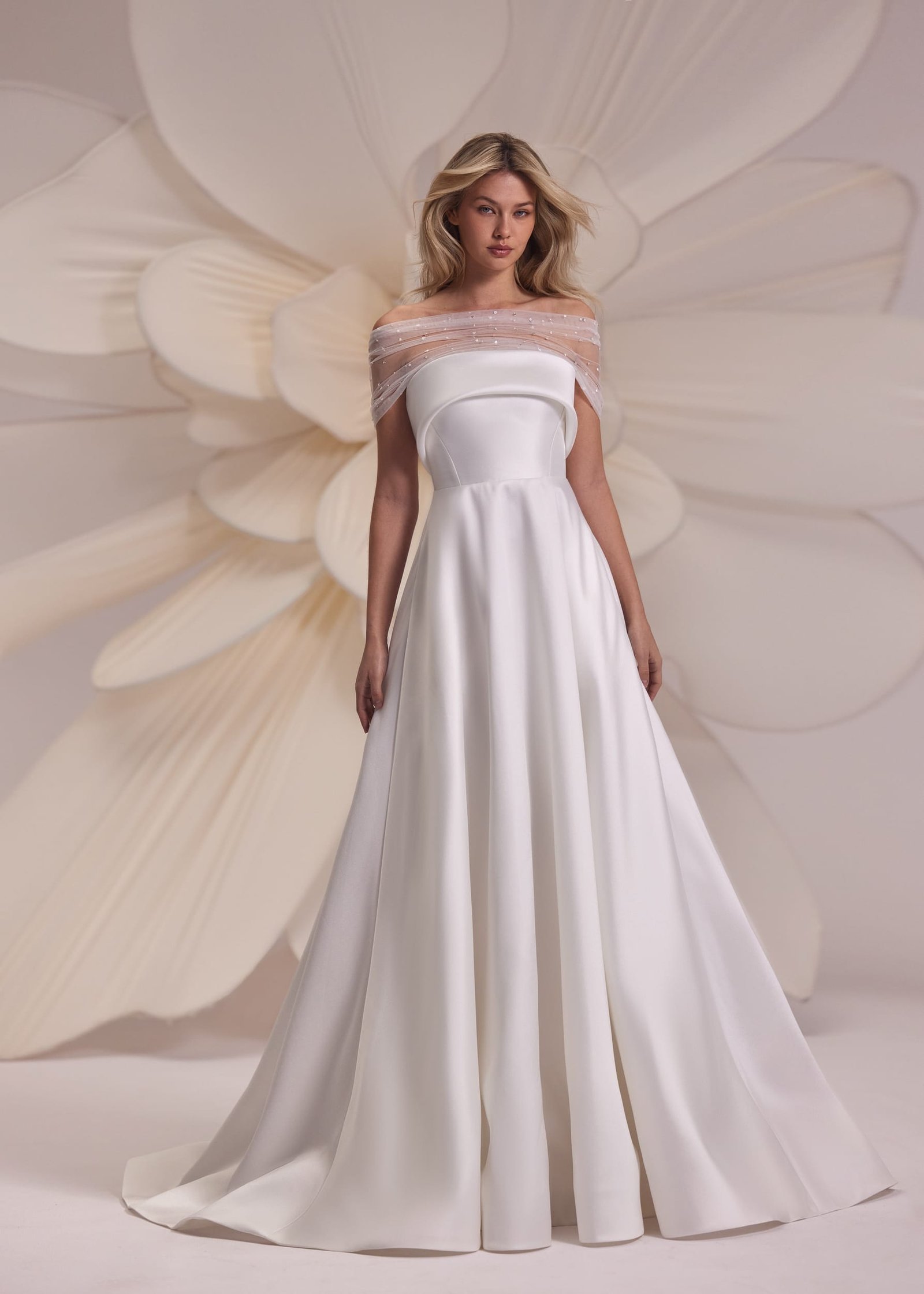
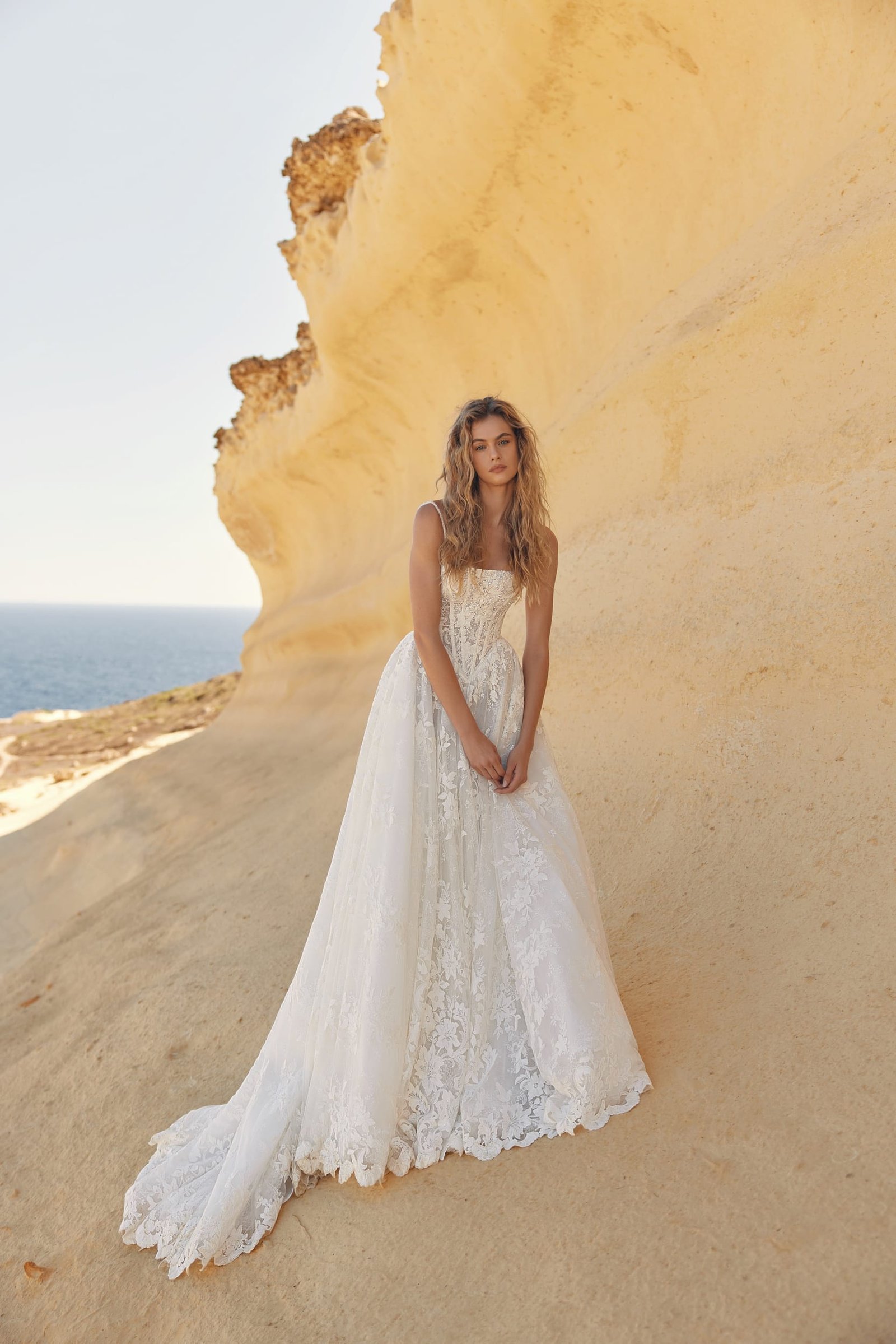
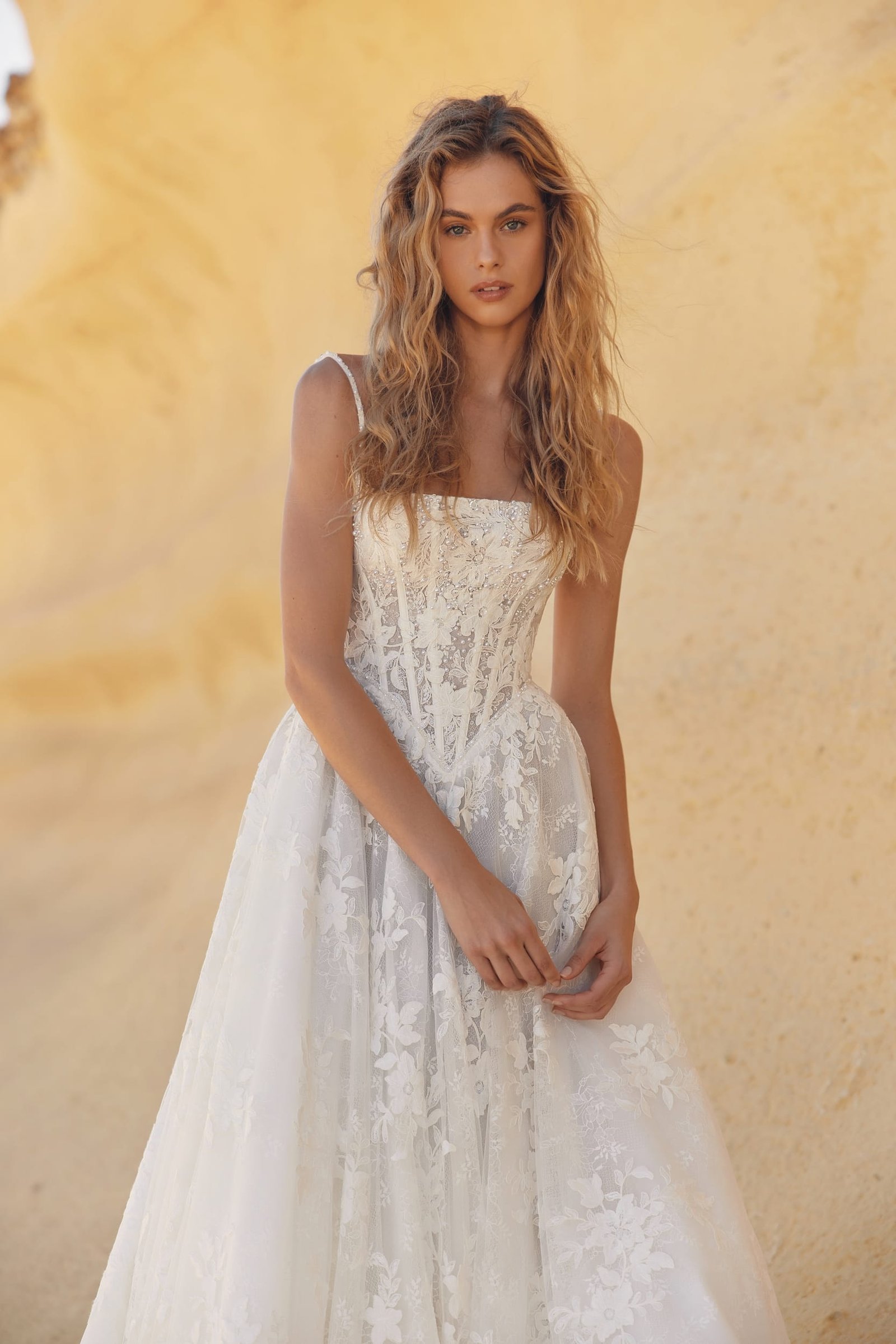
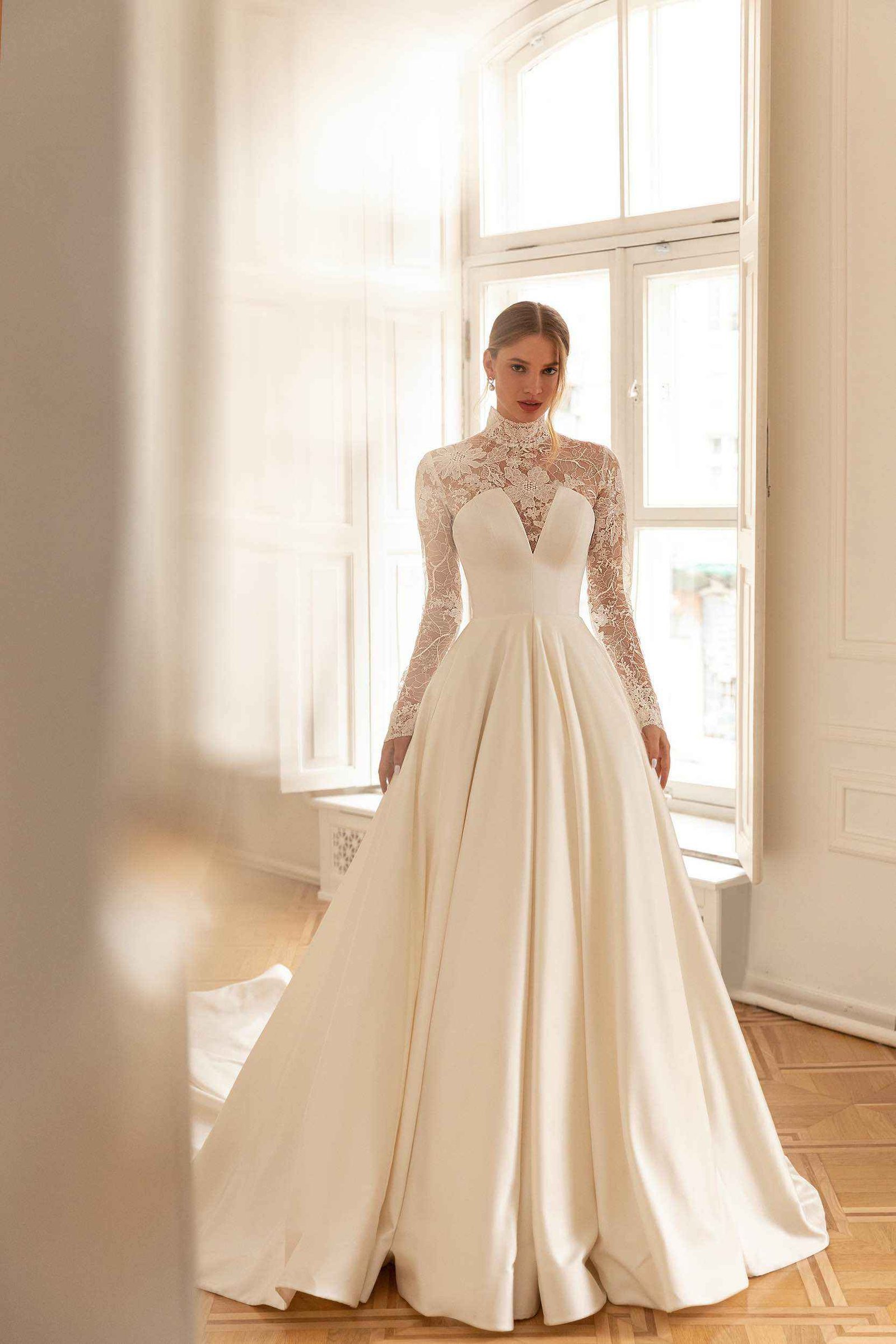
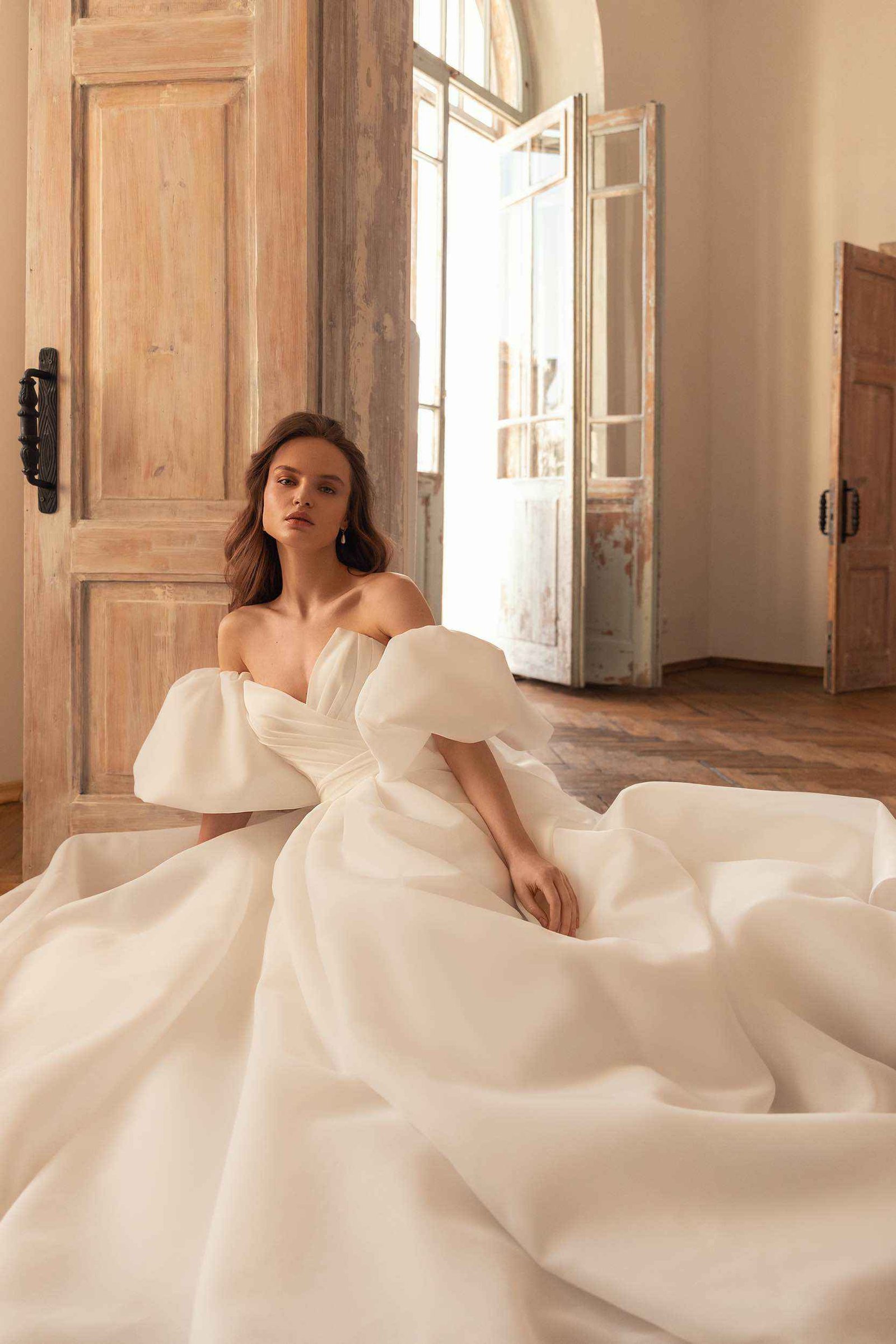
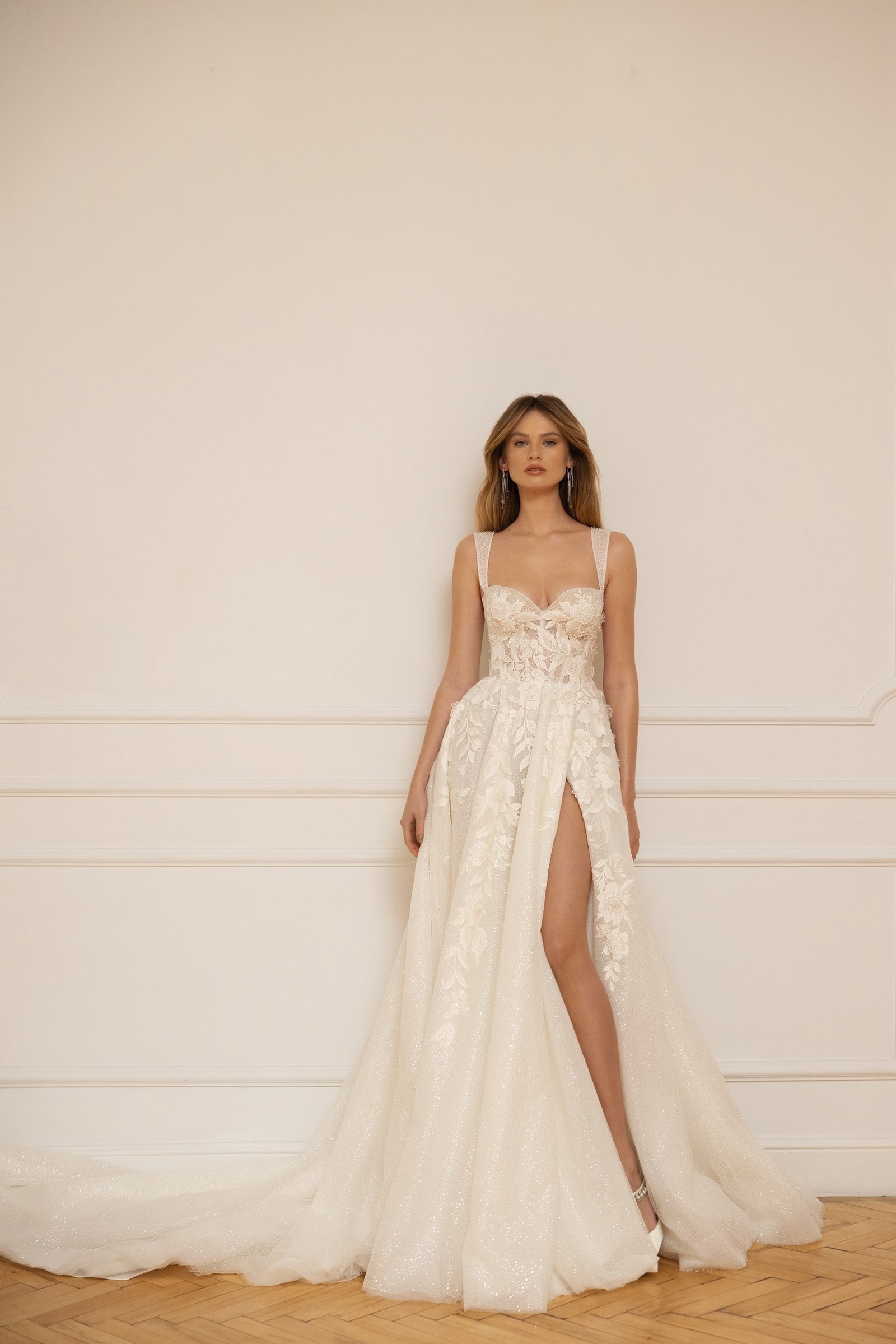
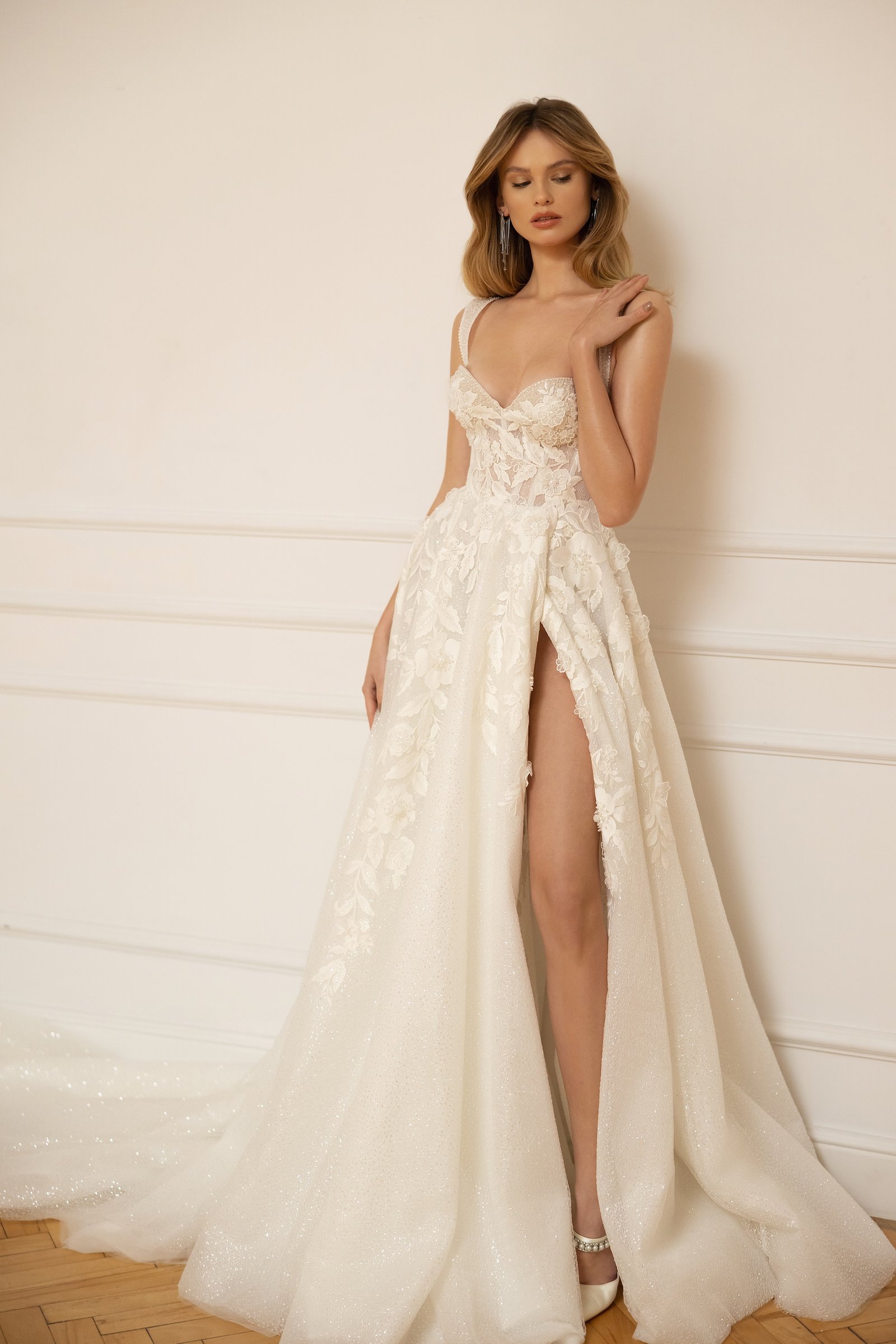
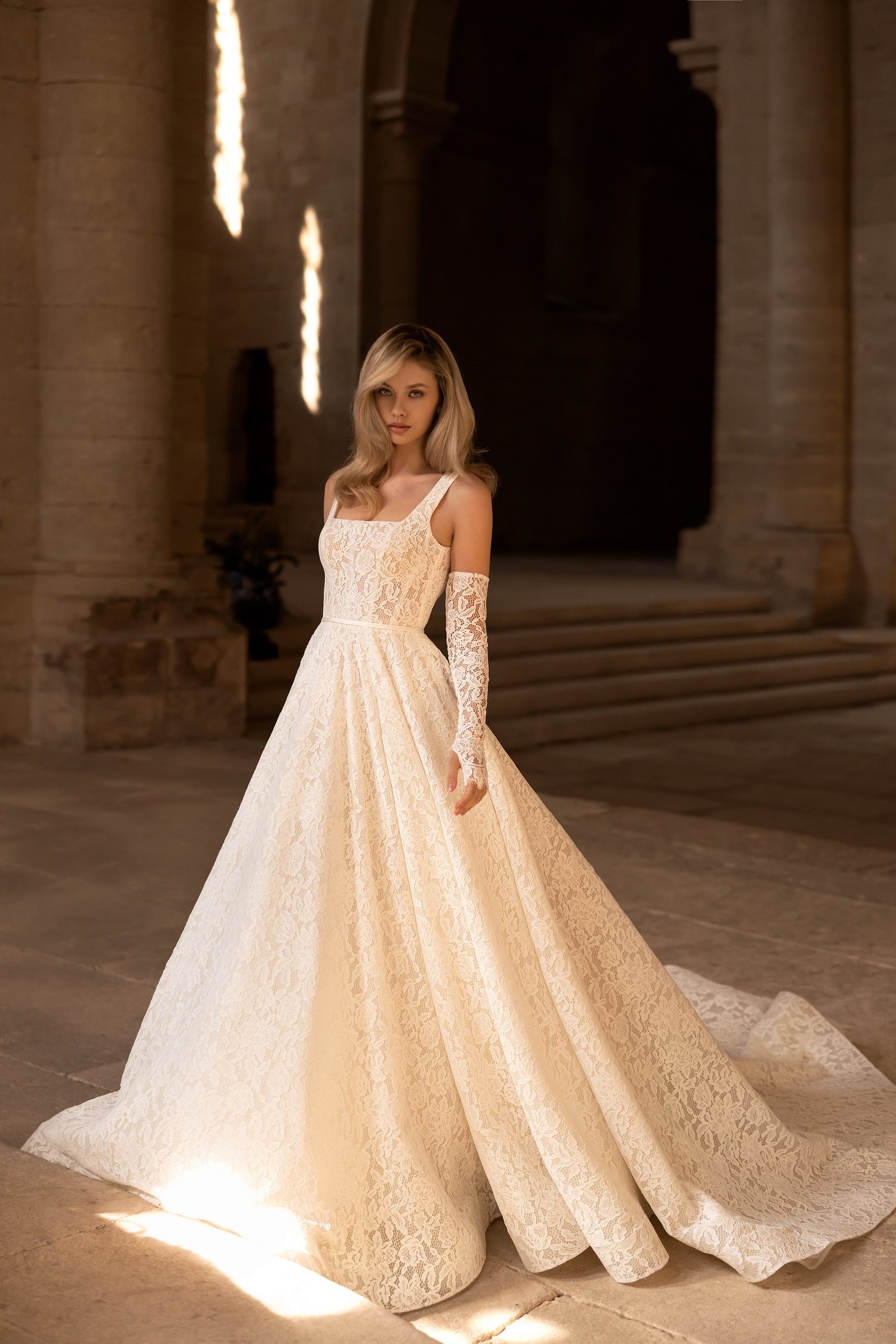
The defining feature is a gradual skirt flare from a shaped bodice and waist. The angle of the side seam and the starting point of the folds reveal the difference: a narrower A-line keeps the outline calm, while a more generous one brings greater presence. A ball gown expands more decisively from the waist and holds noticeably more volume around the body. If the two look similar in photographs, a side view and a walk in each will make the difference clearer.
Fabric changes the same outline
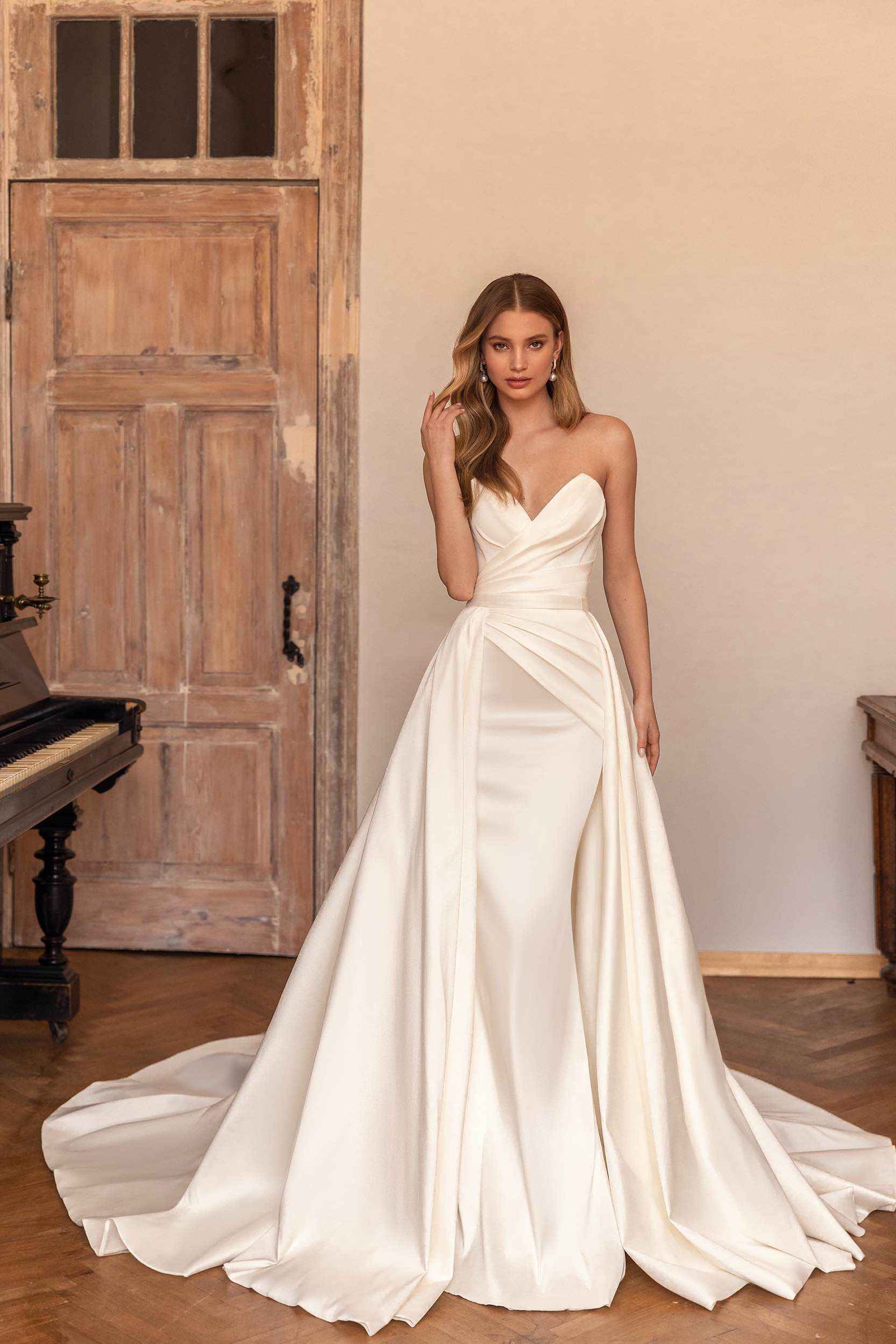
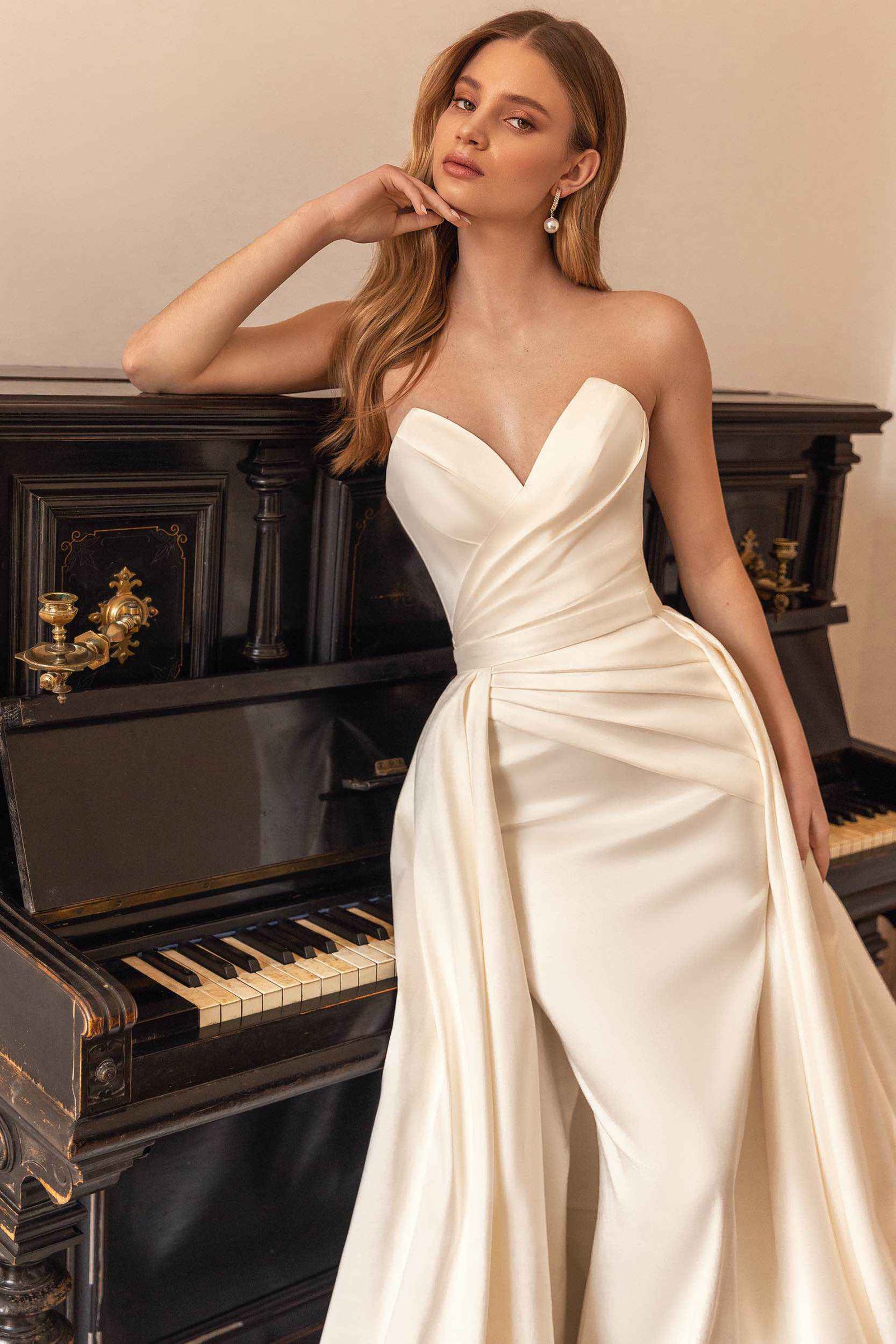
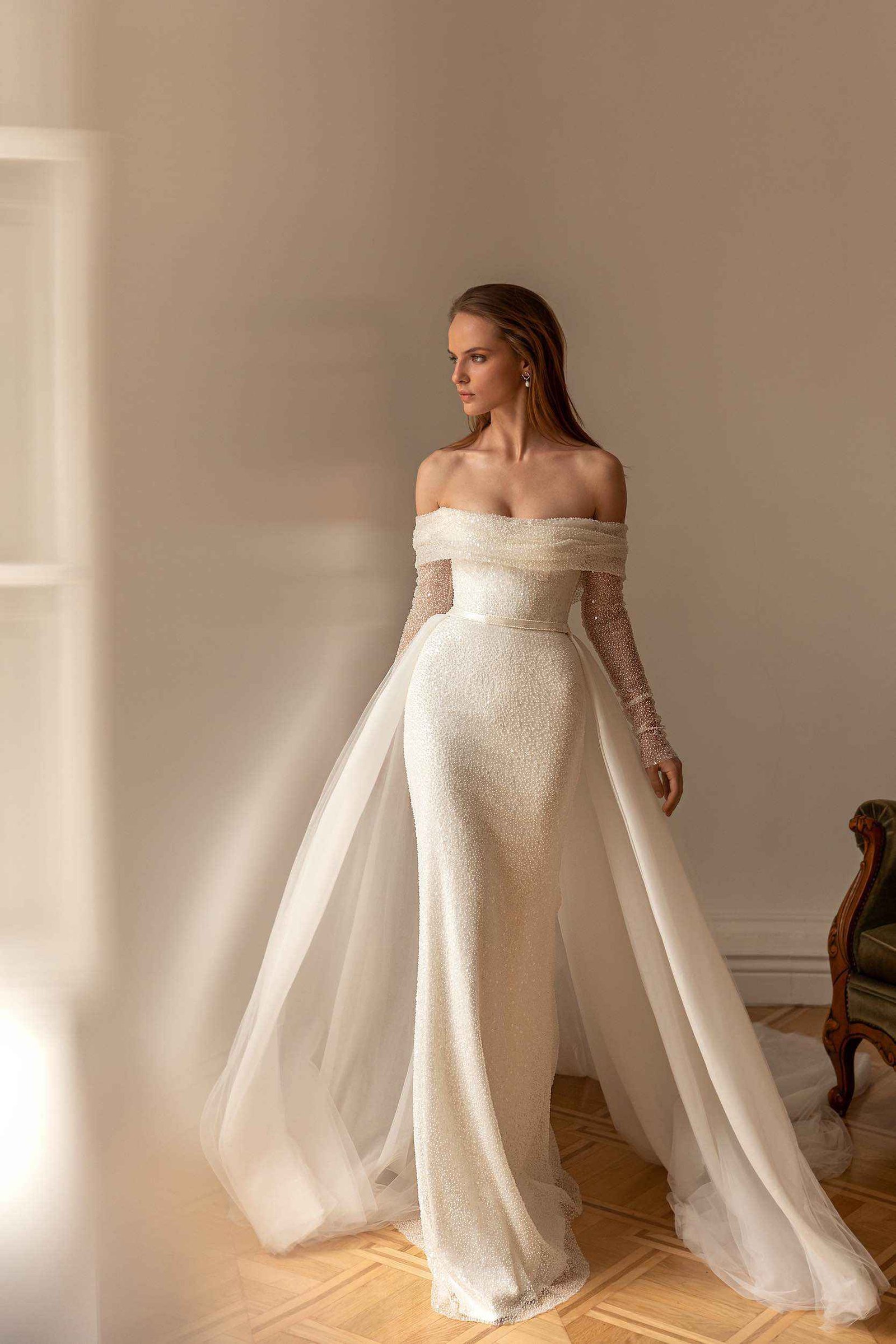
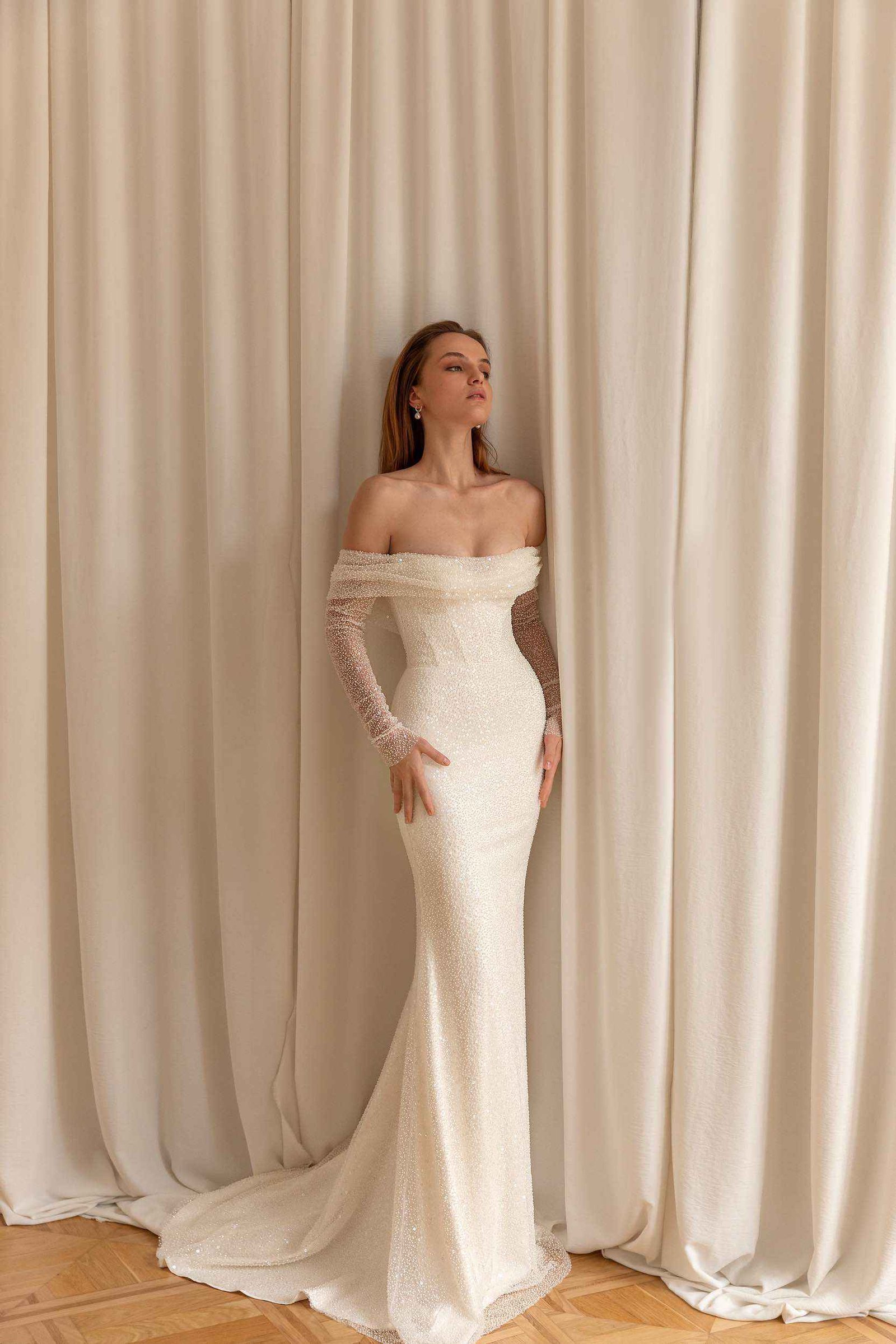
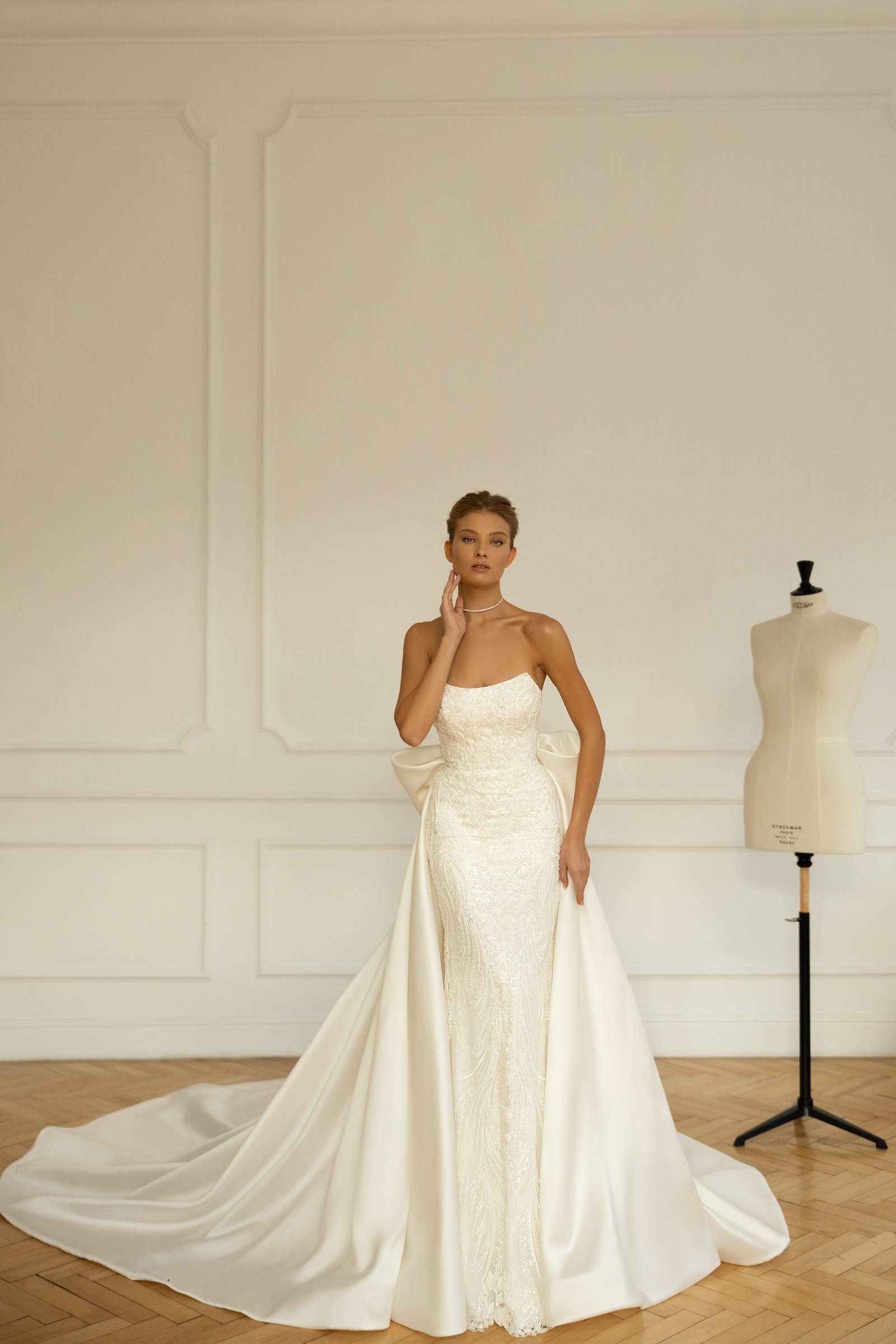
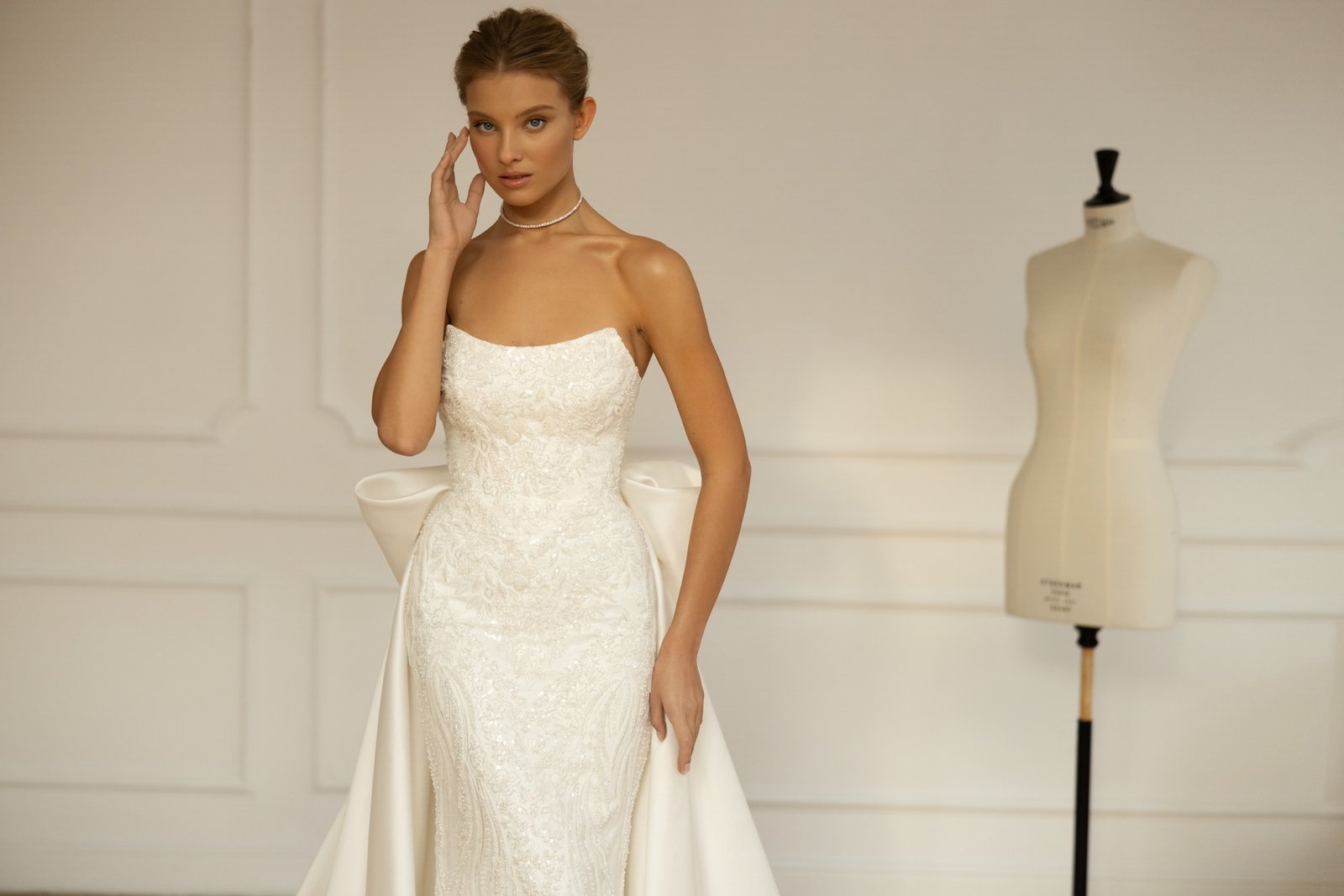
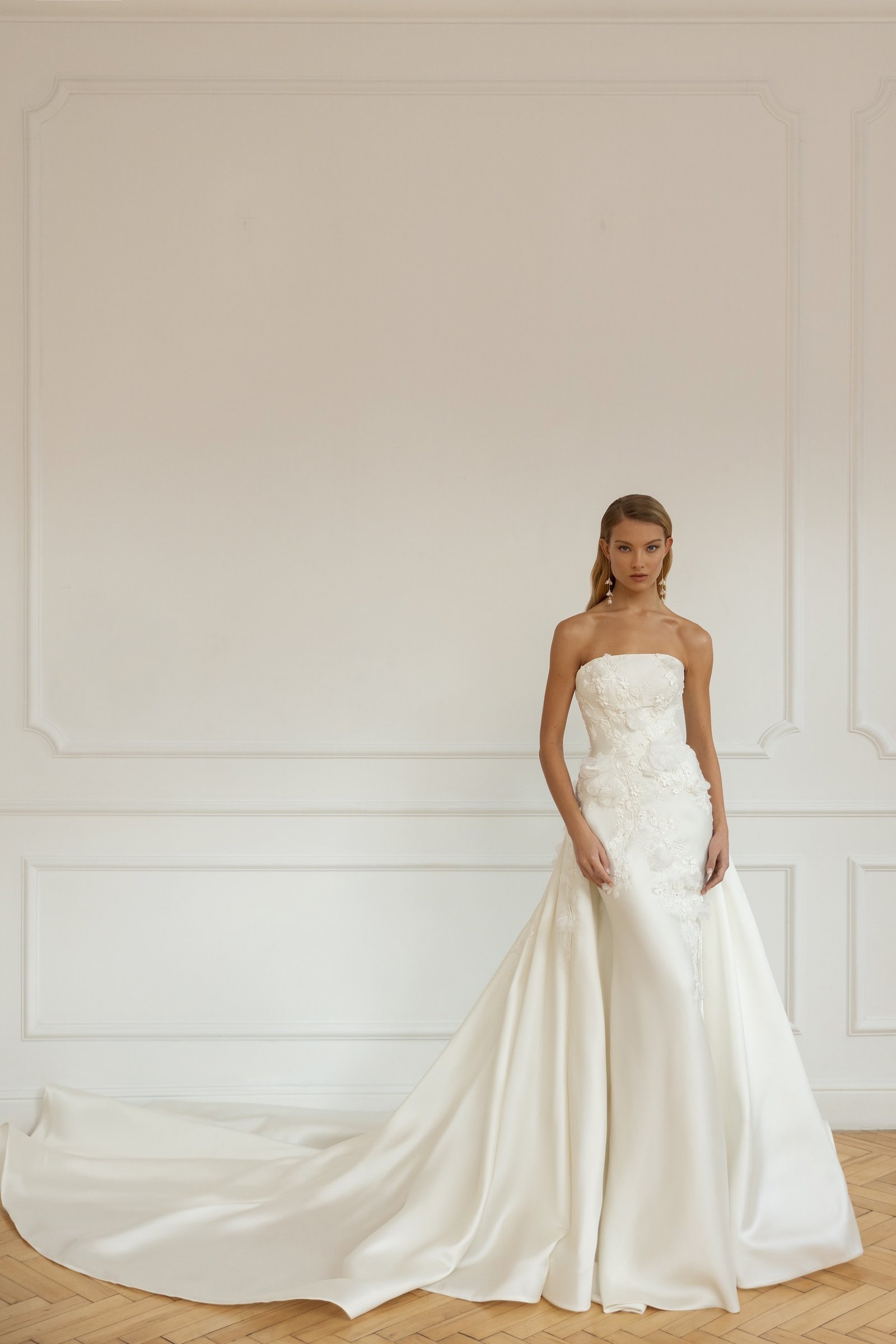
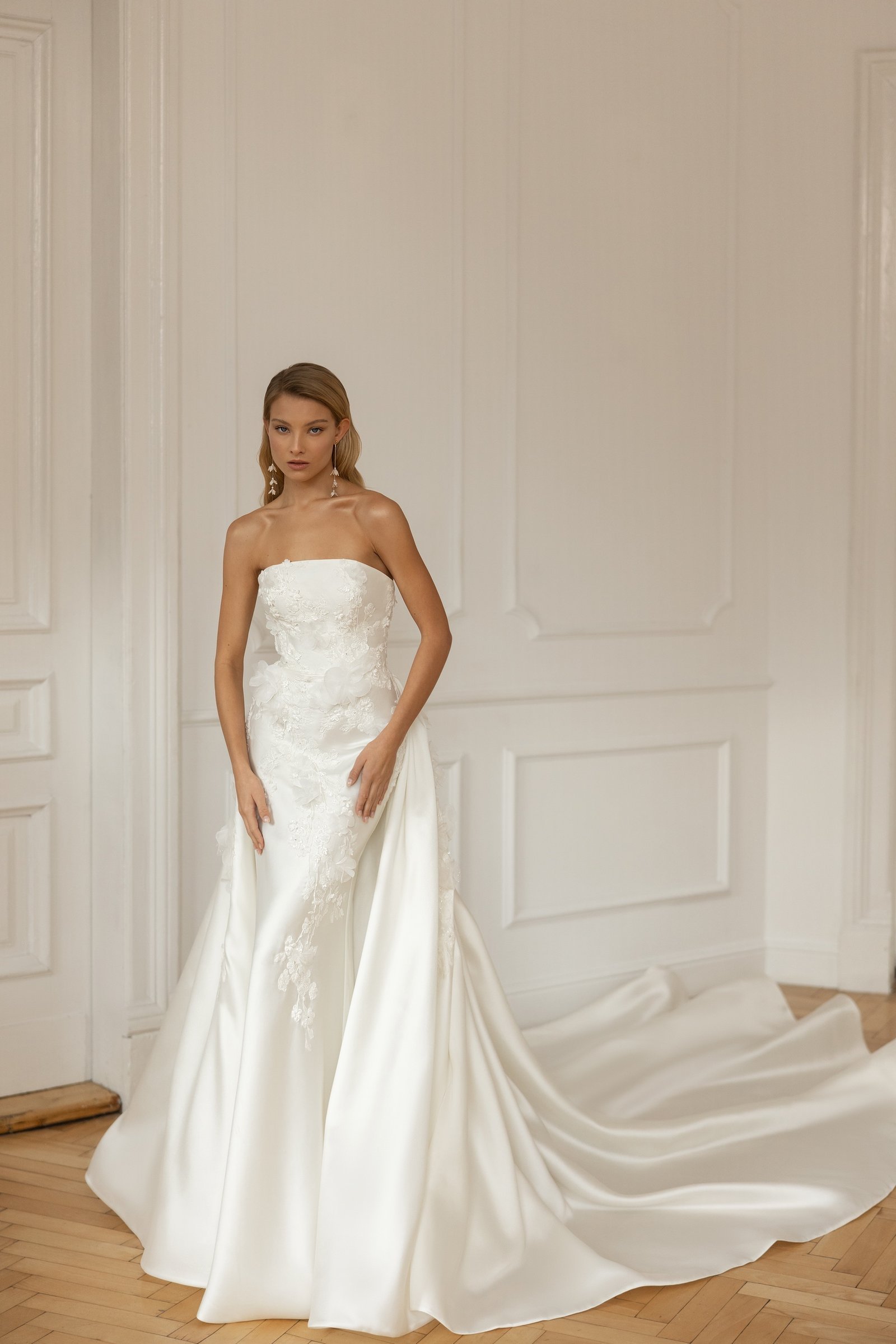
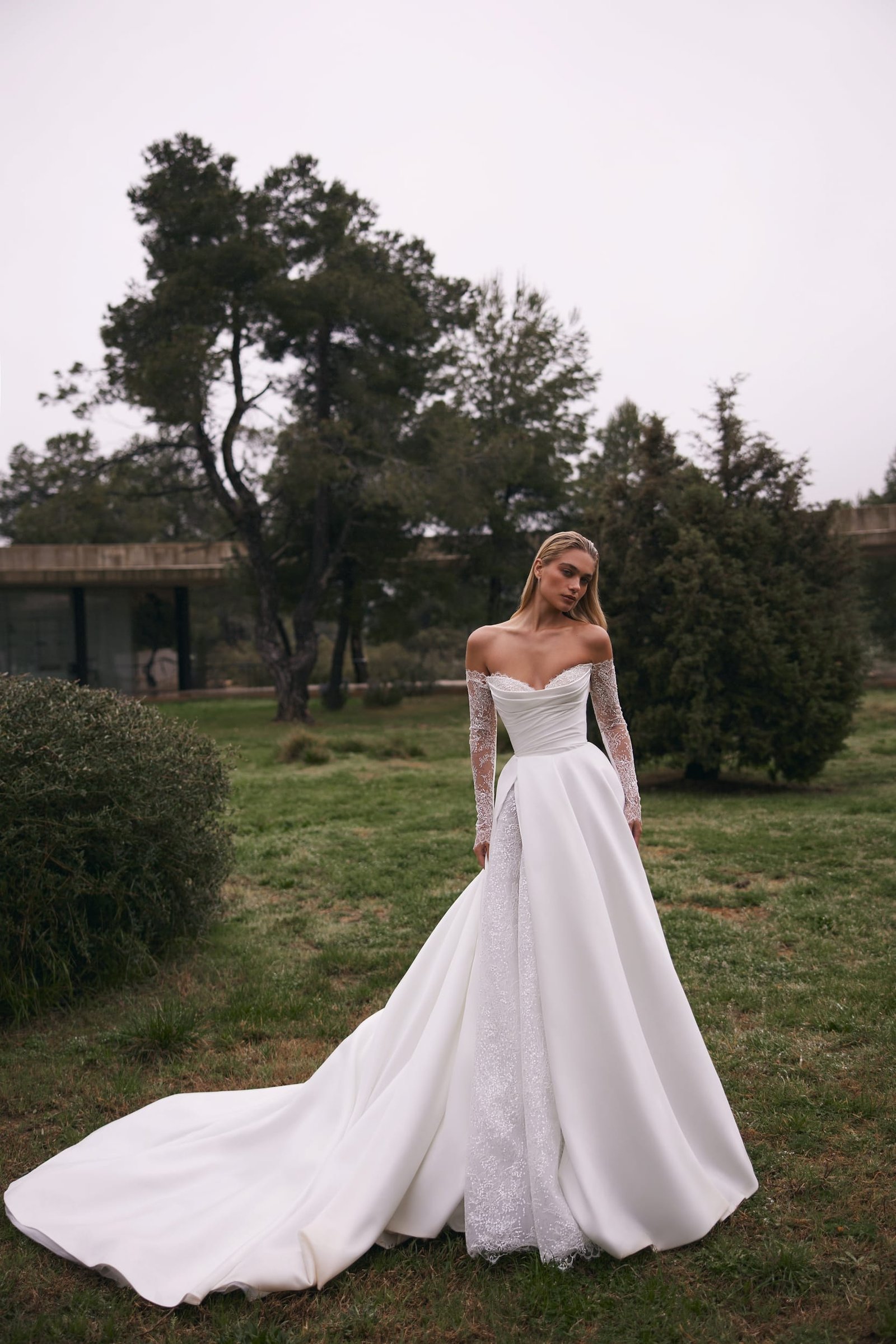
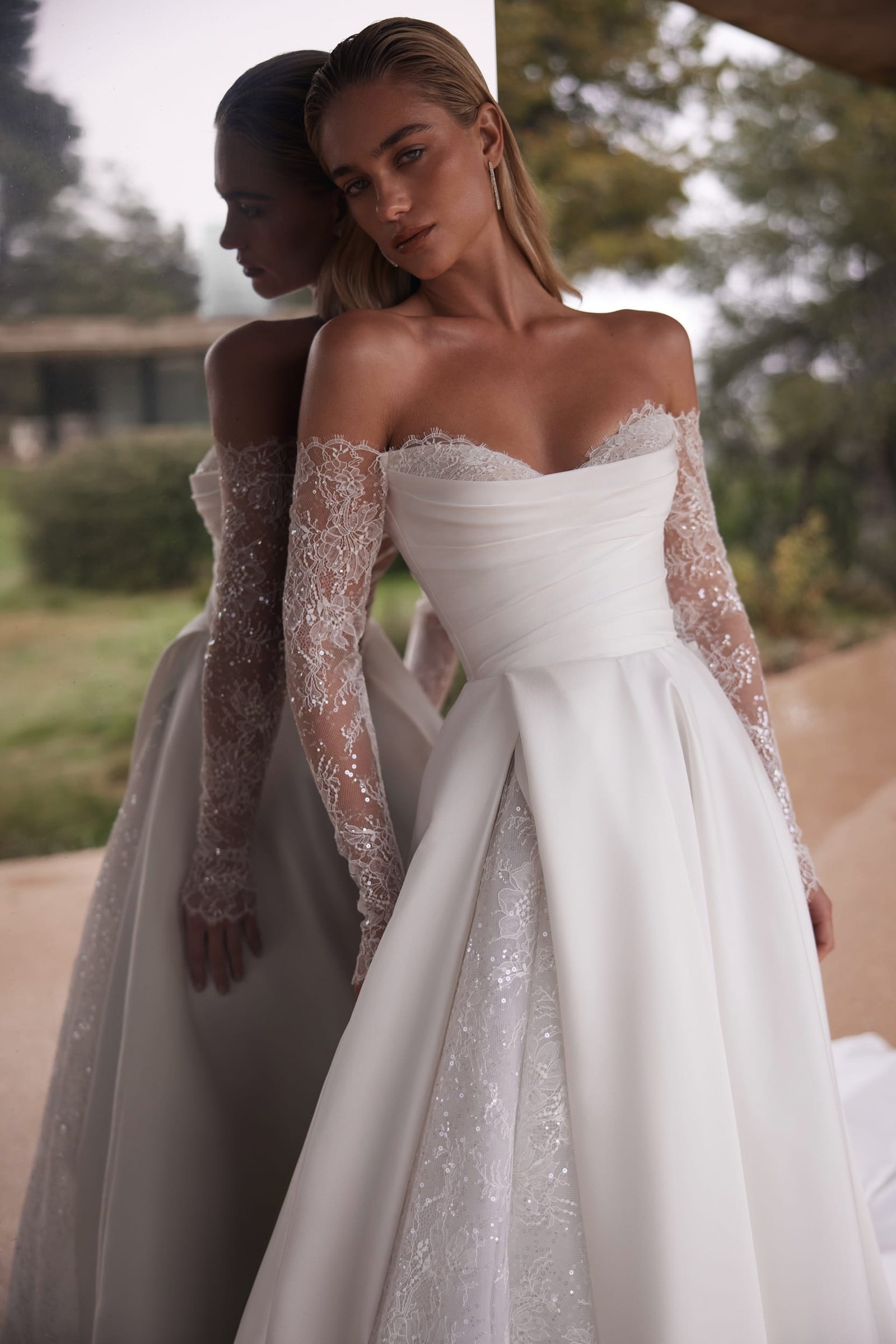
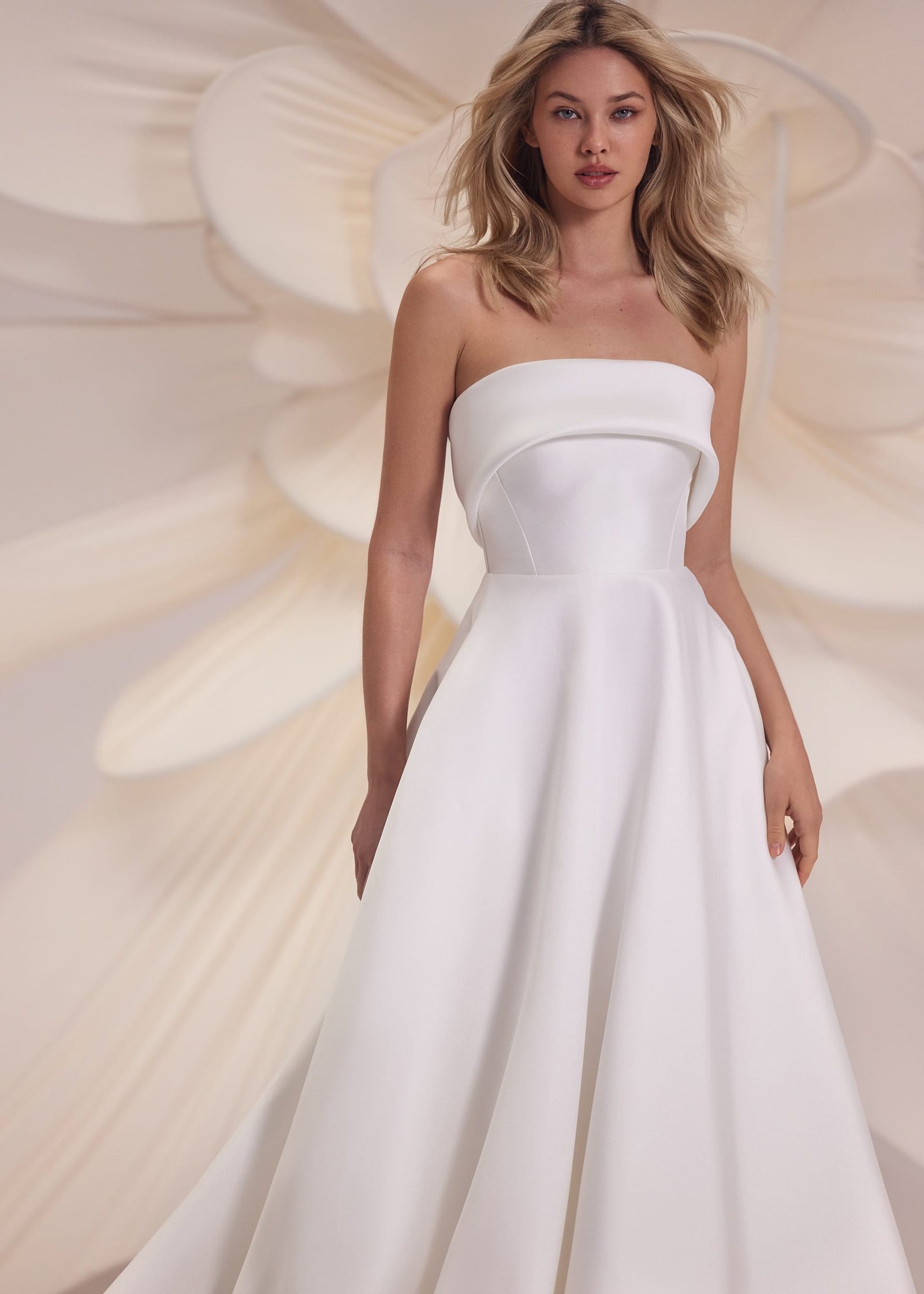
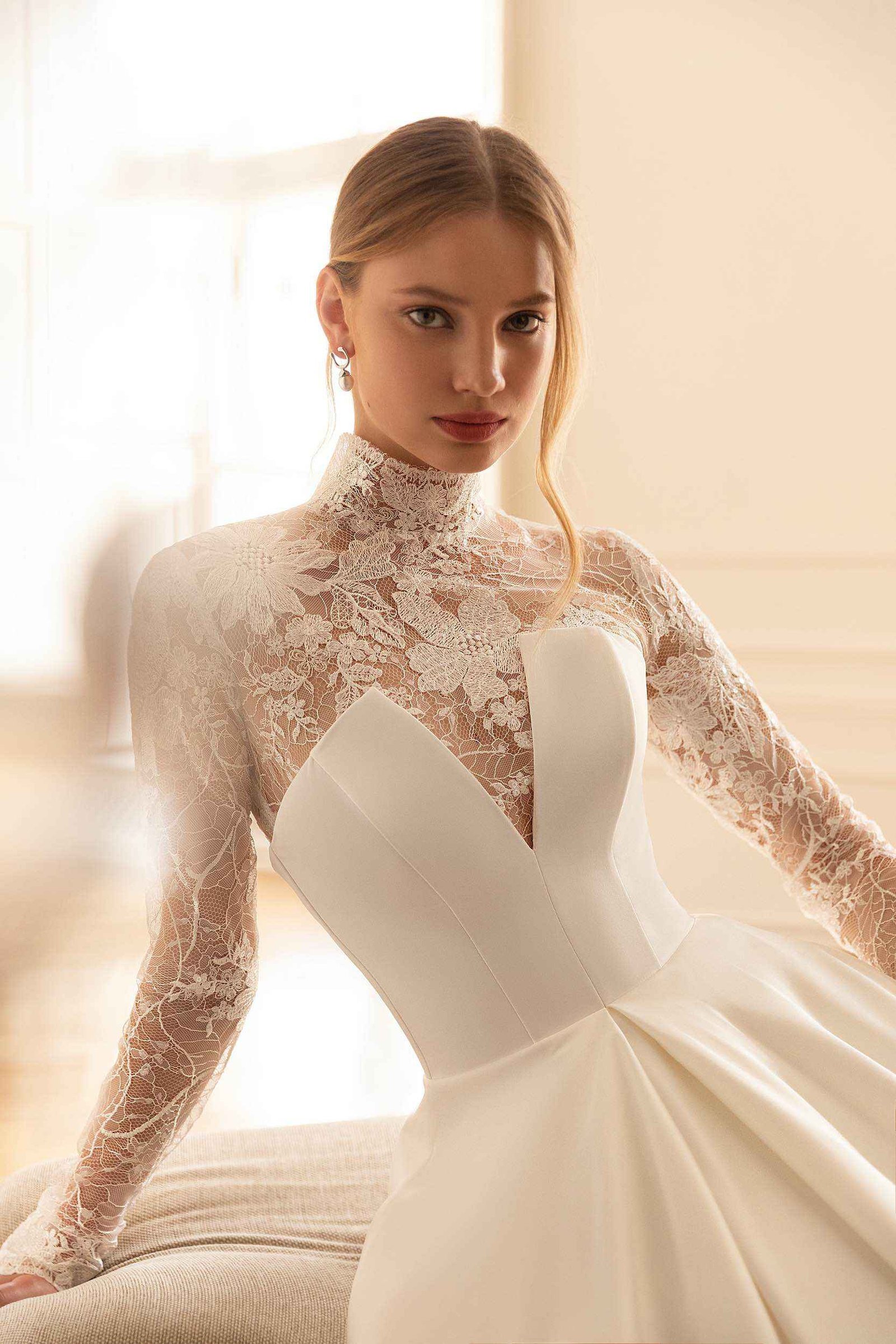
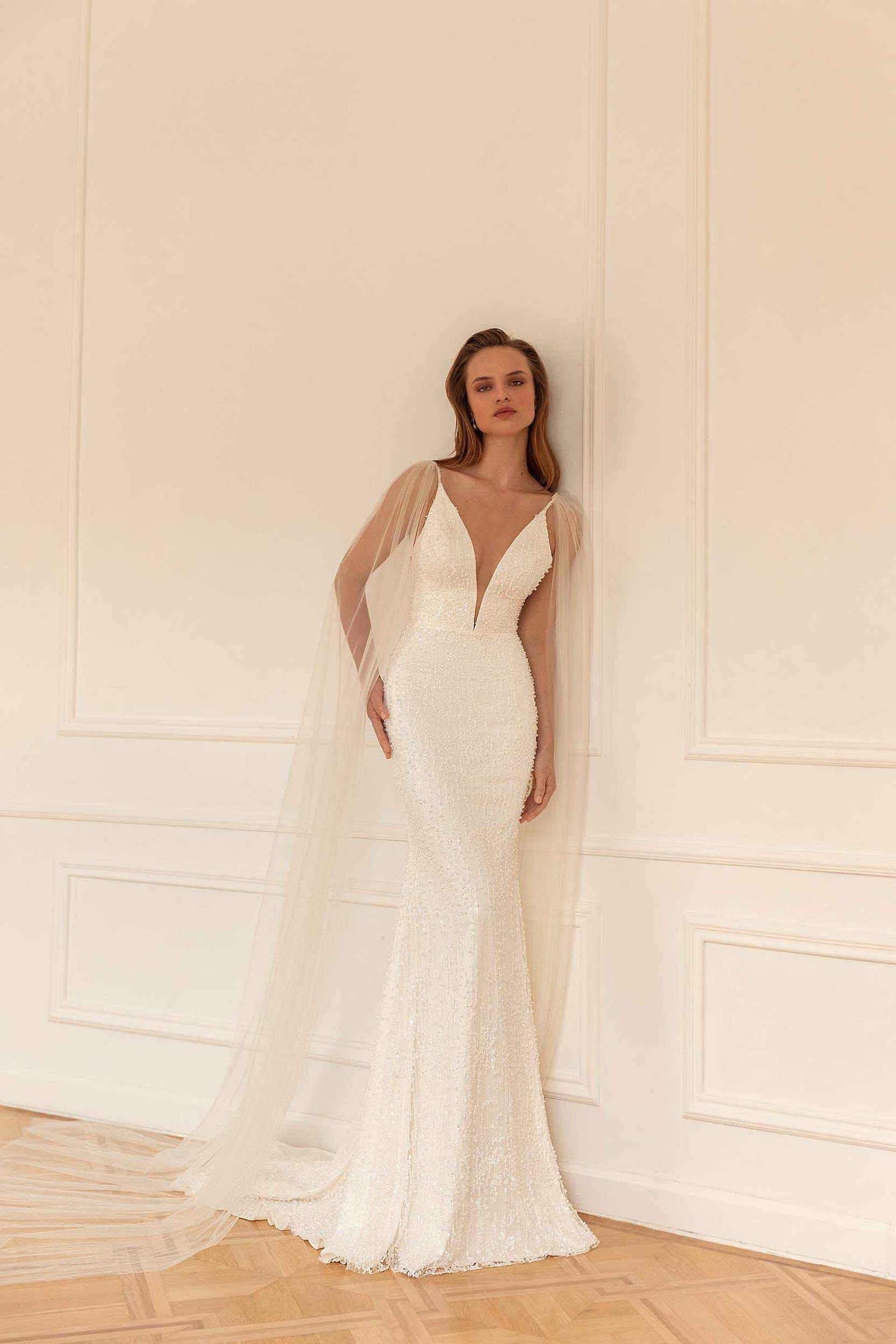
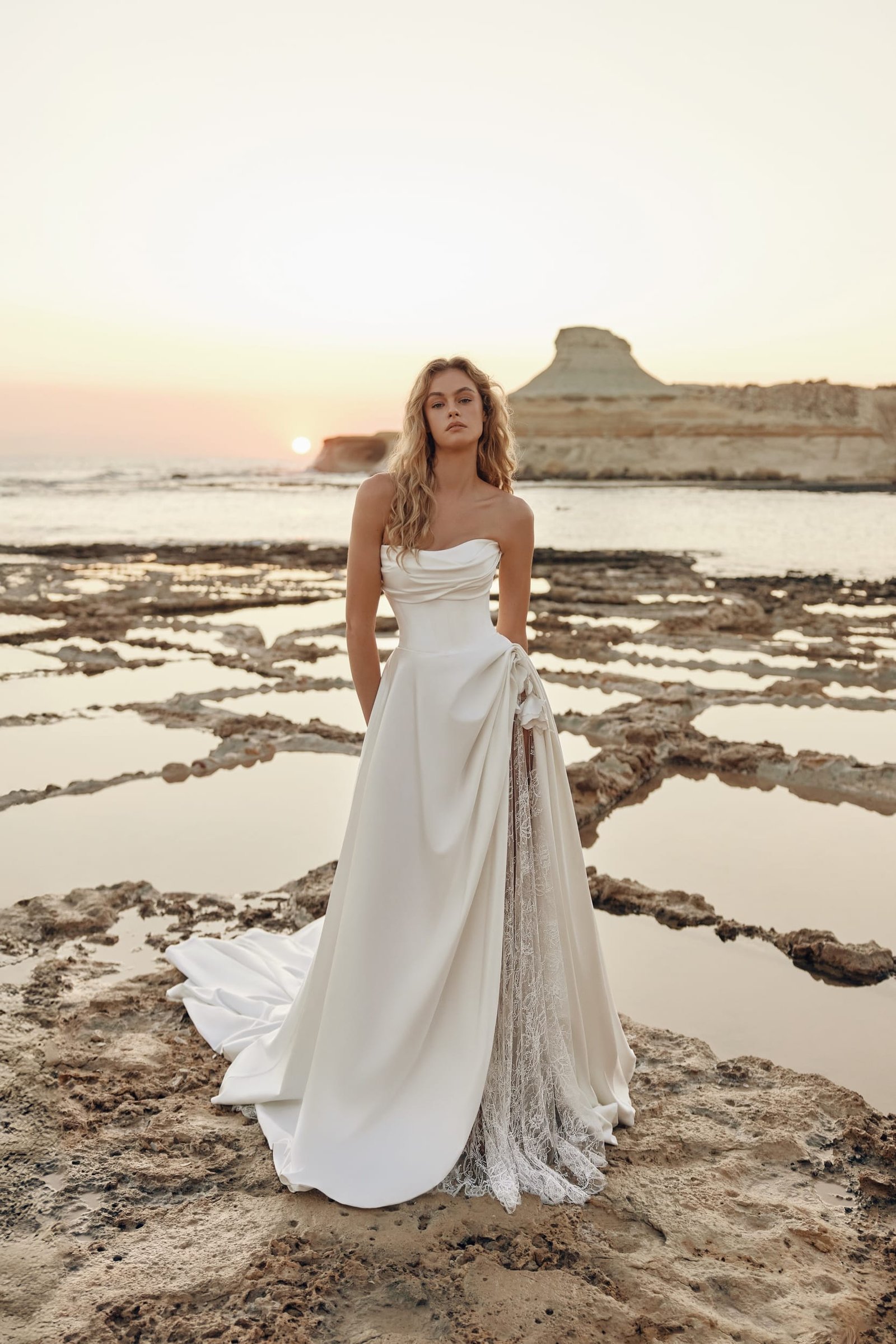
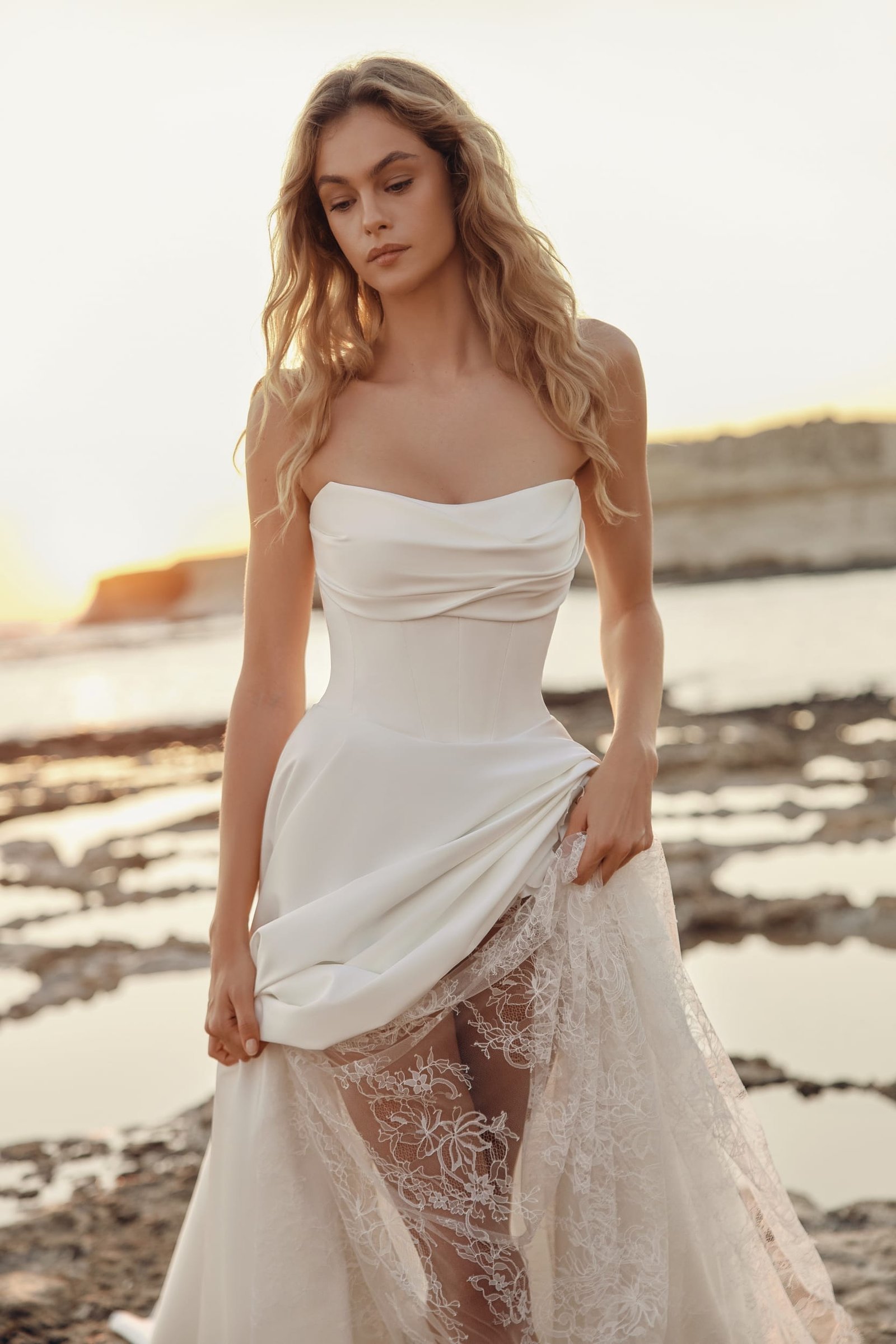
The Museum at FIT describes fabric as central to a garment’s silhouette. On an A-line, a crisp textile can keep the skirt’s edges more defined; a softer layer falls closer and moves differently. Eva Lendel’s Aston shows both effects in one gown: smooth Mikado panels open over a fitted Chantilly lace underlayer. The wider outer line and the narrow patterned base read together, so the skirt cannot be judged by its outer fabric alone. The museum’s Fabric in Fashion exhibition explores that broader relationship between material and shape.
Construction and movement
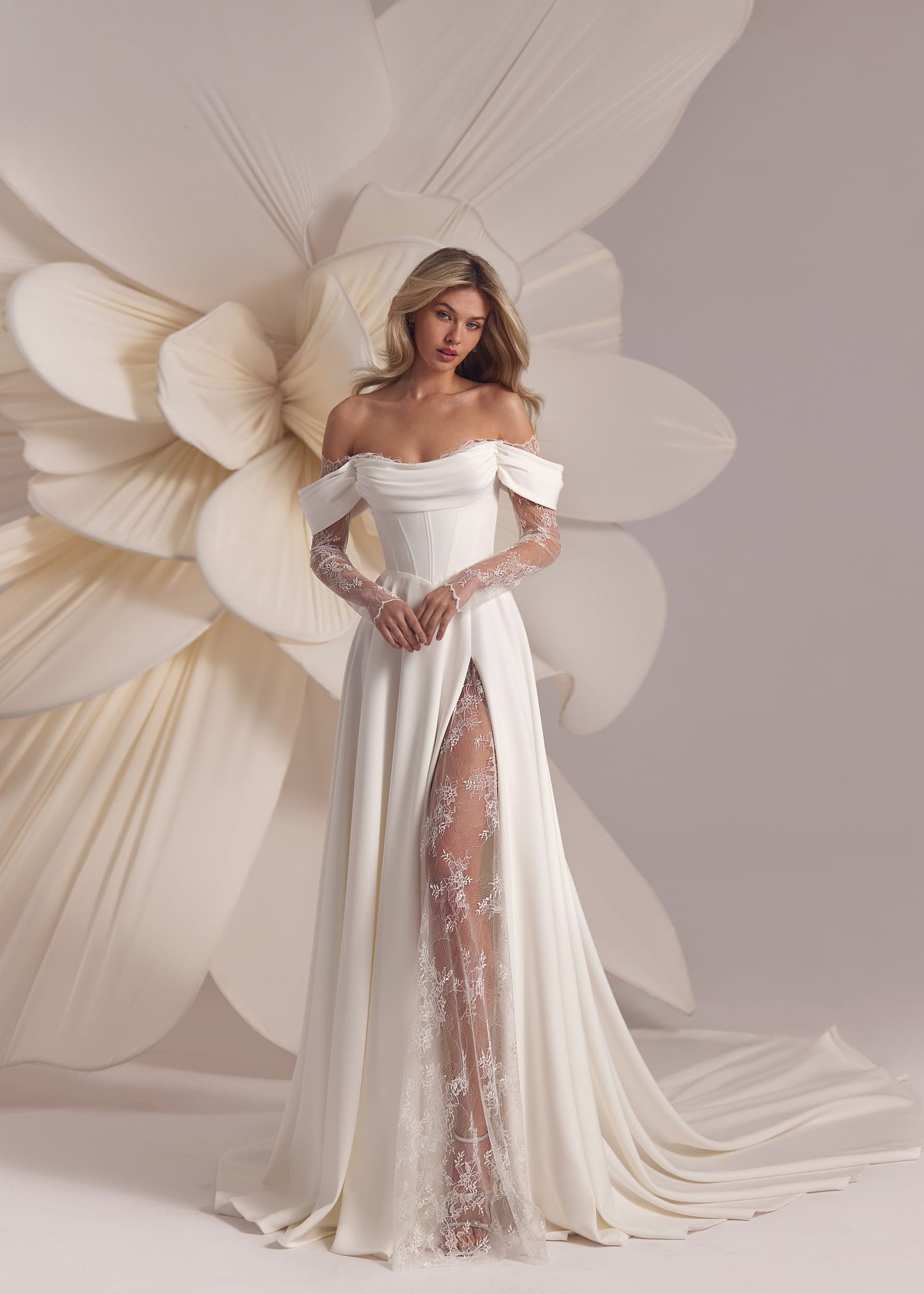
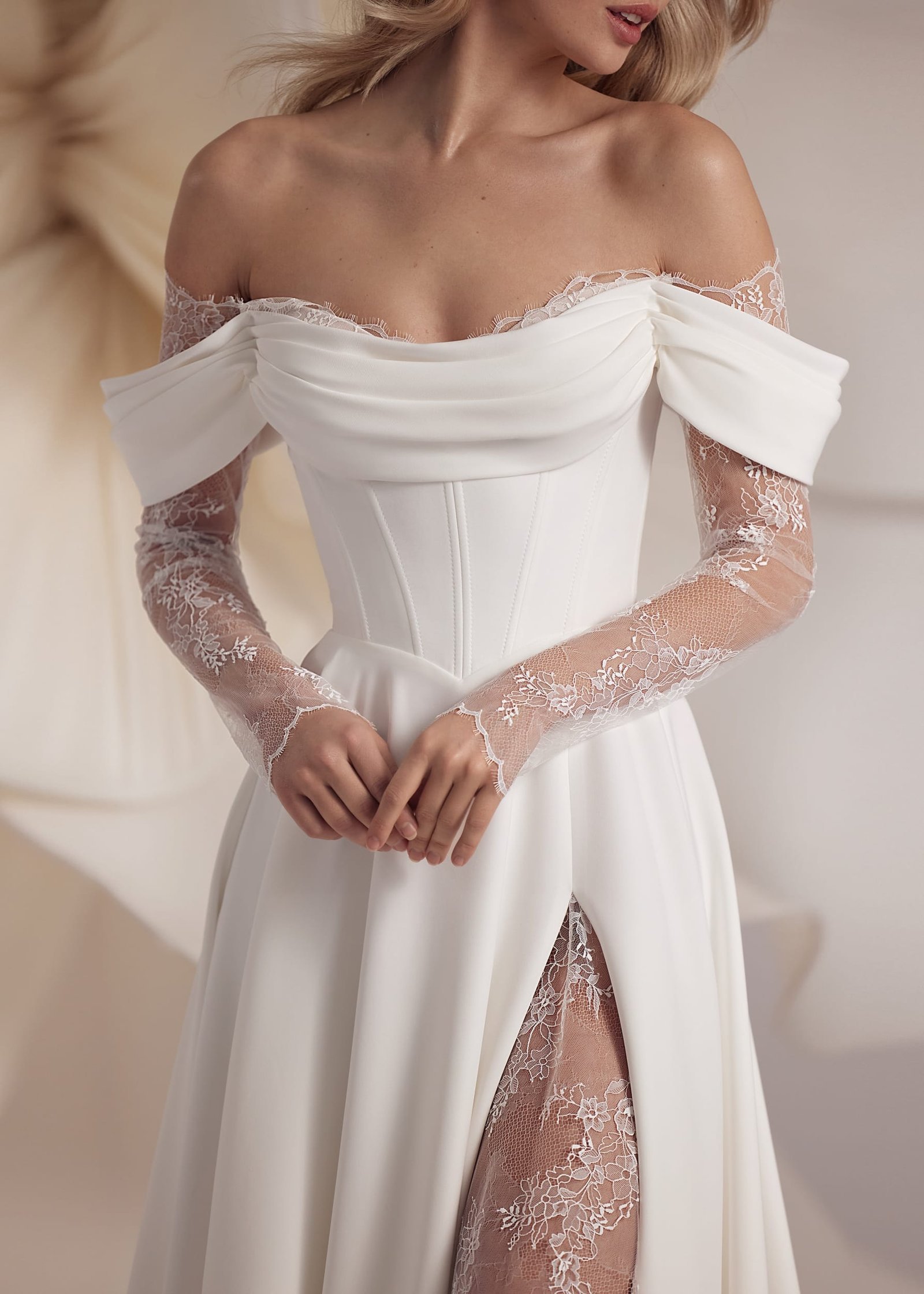
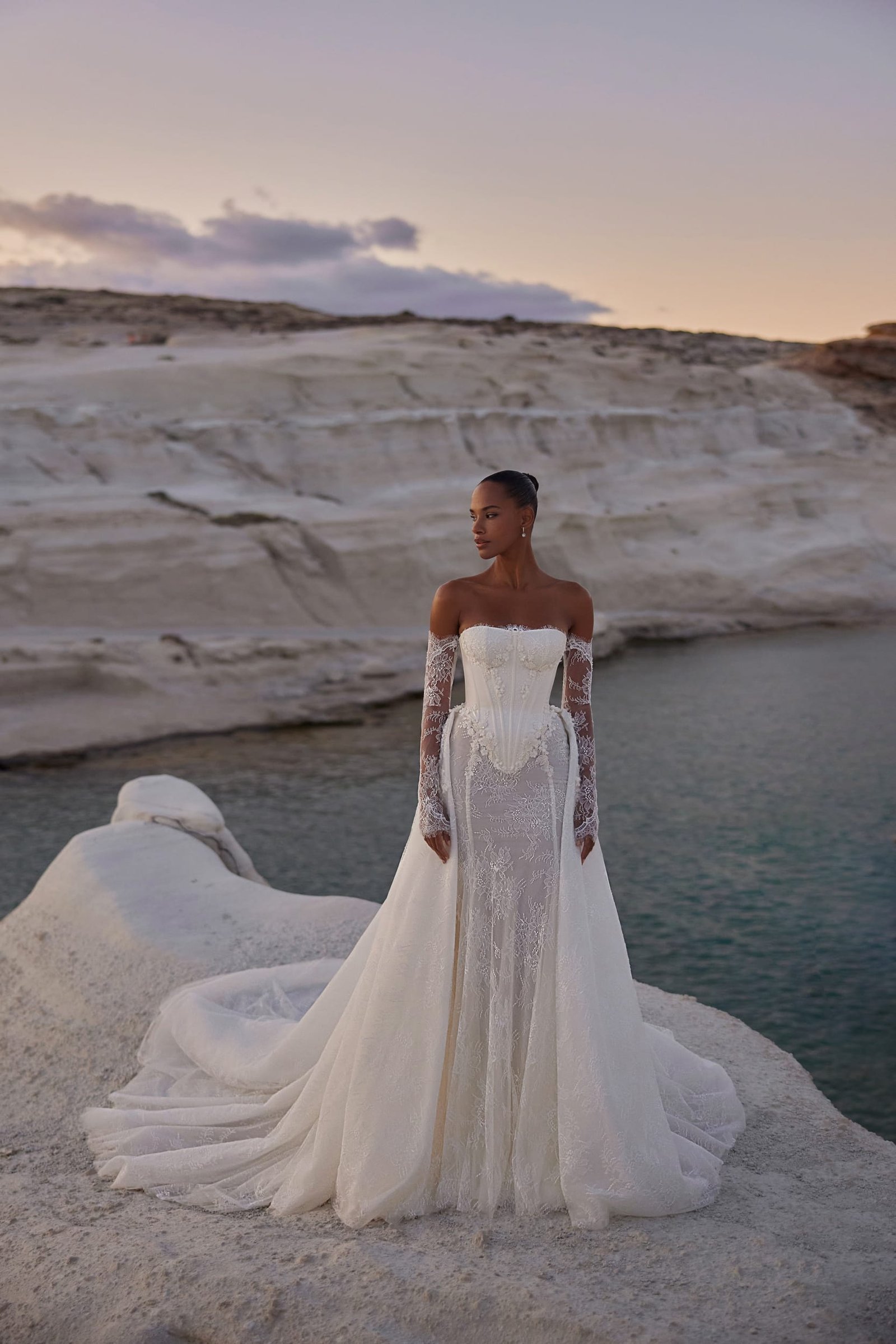
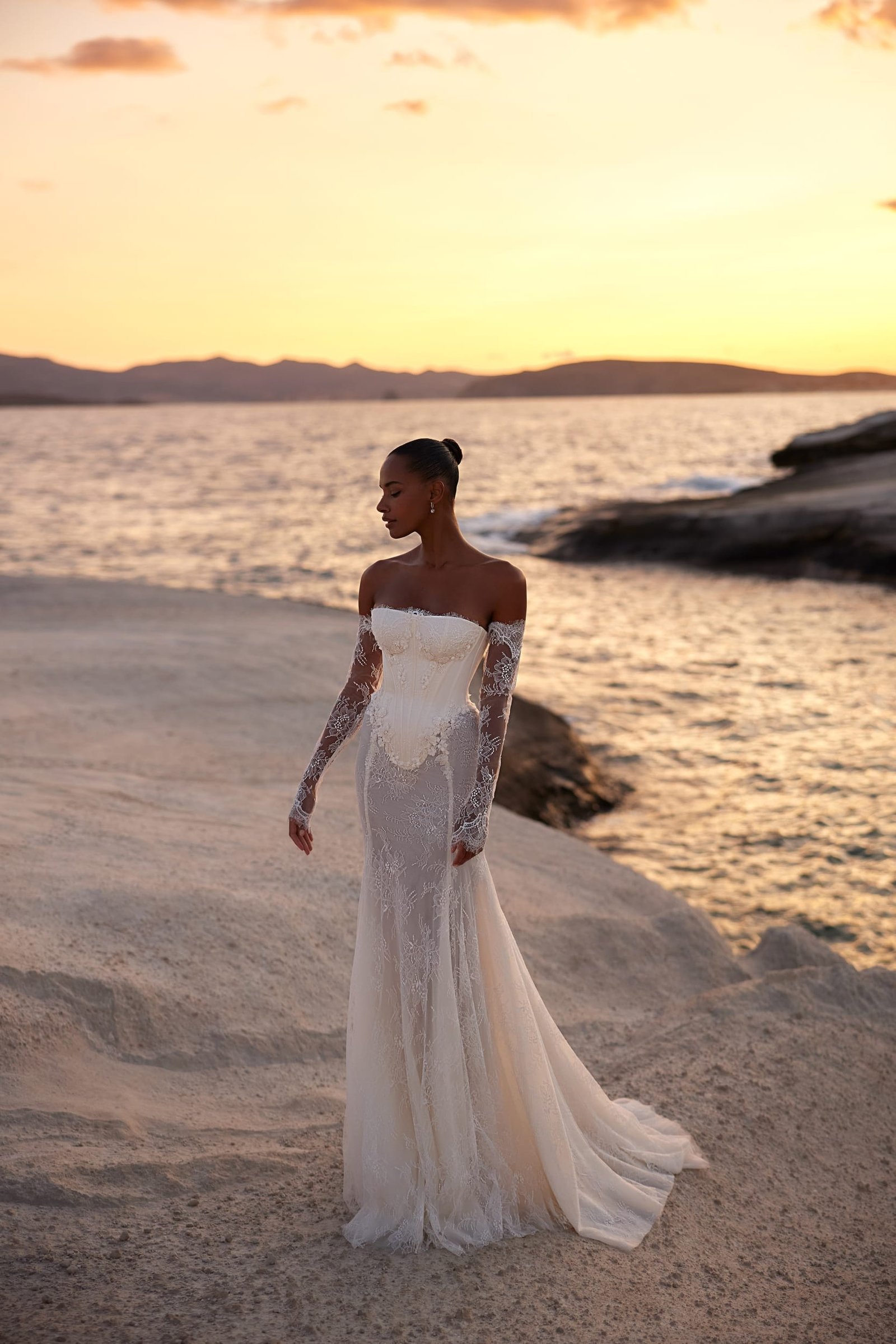
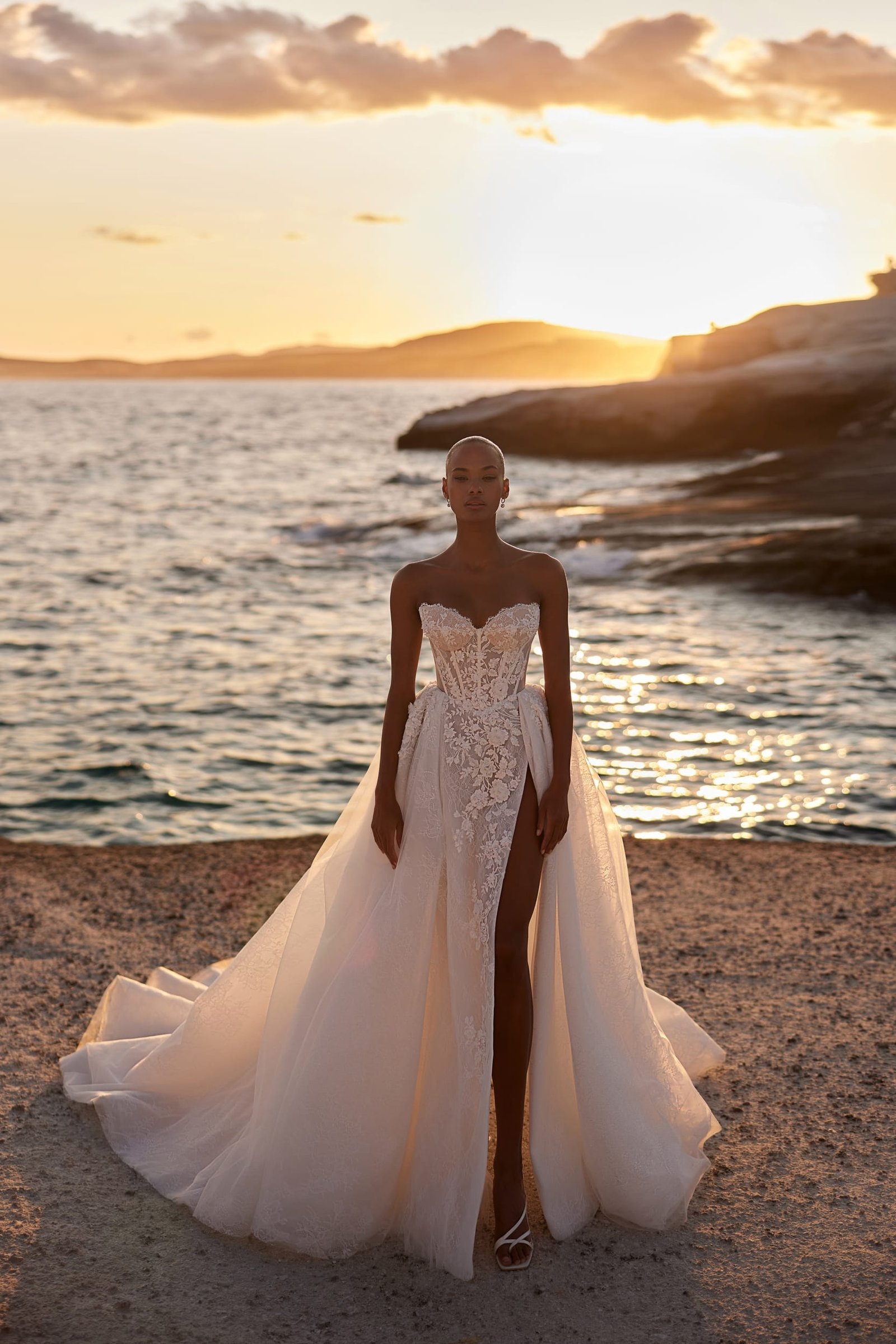
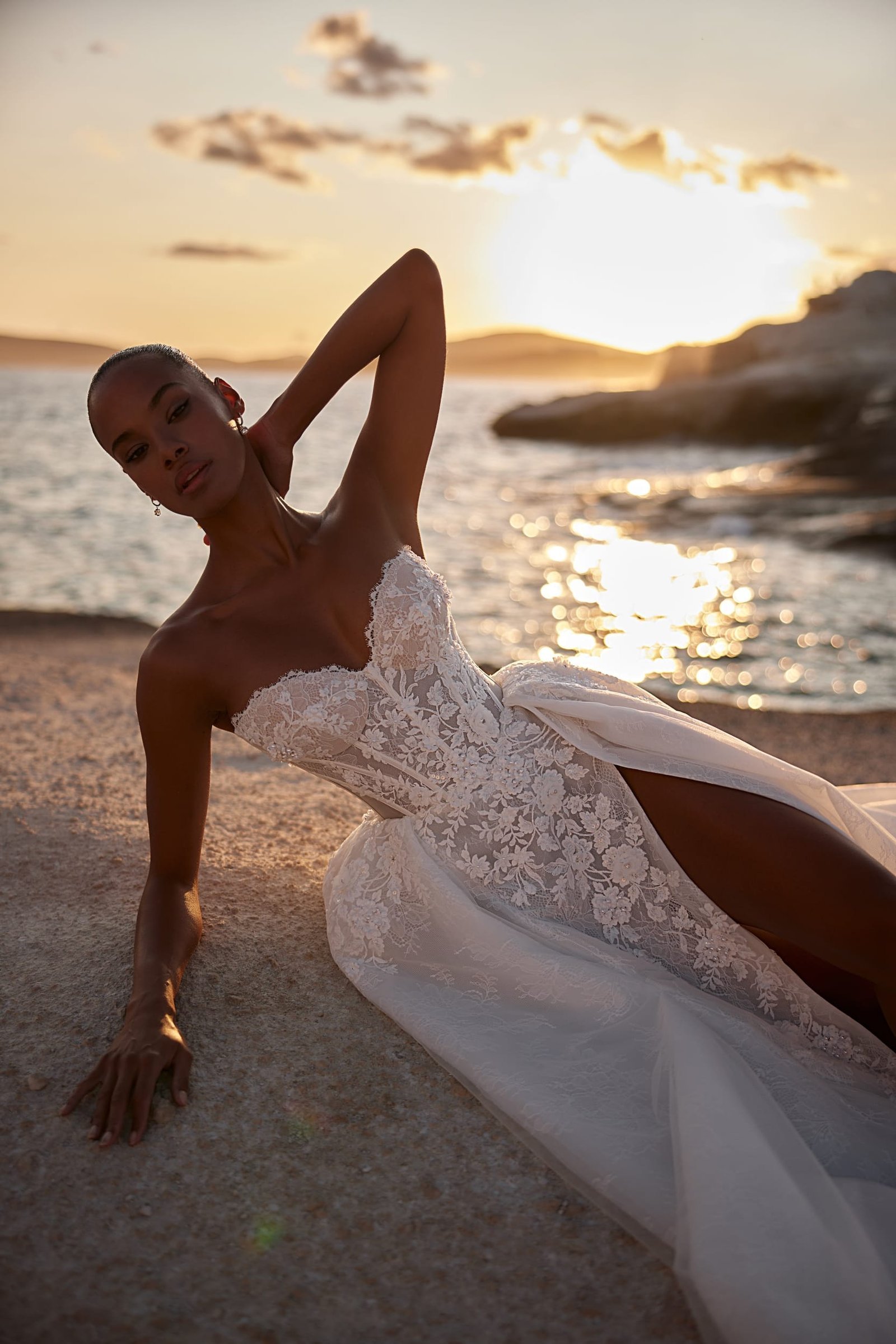
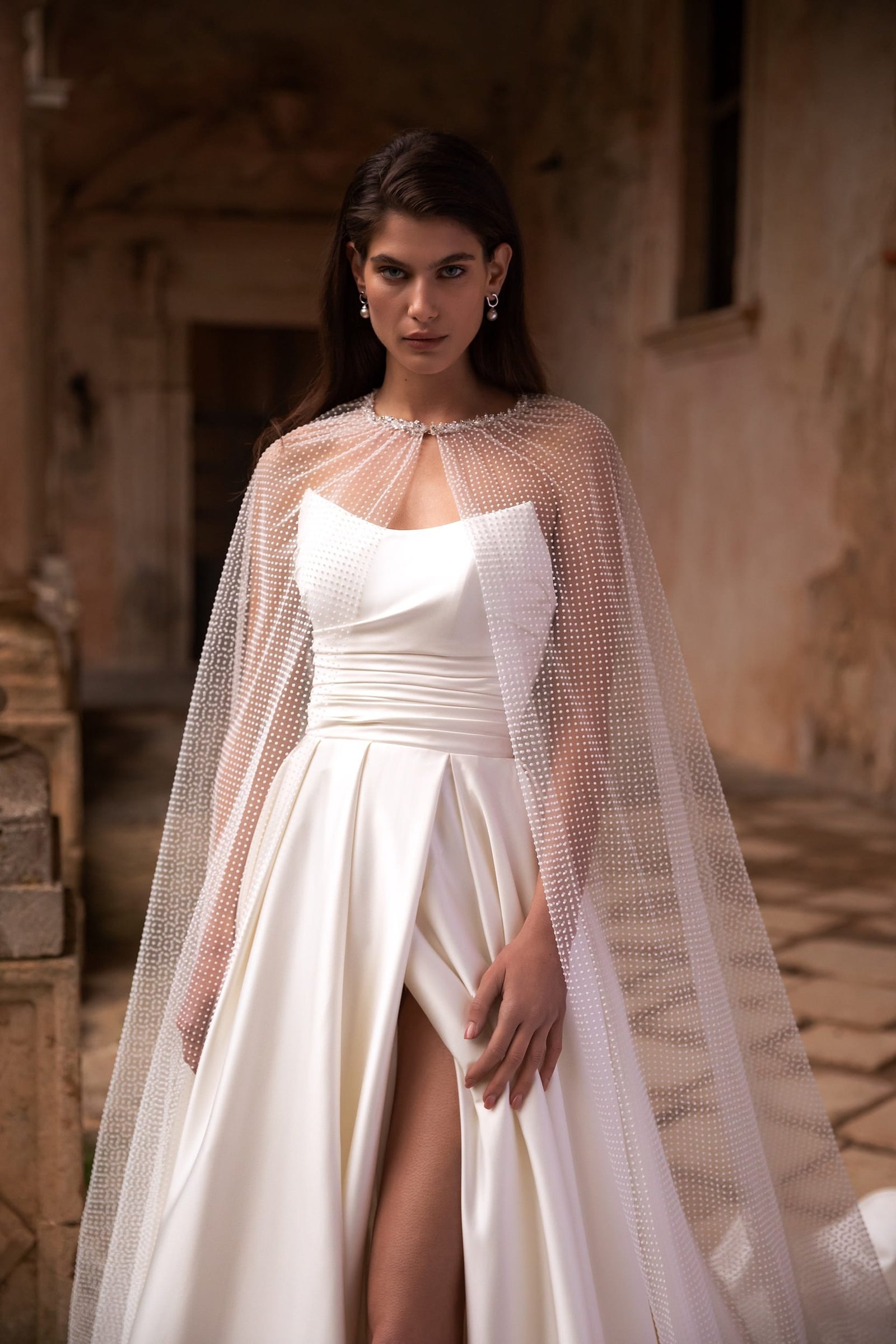
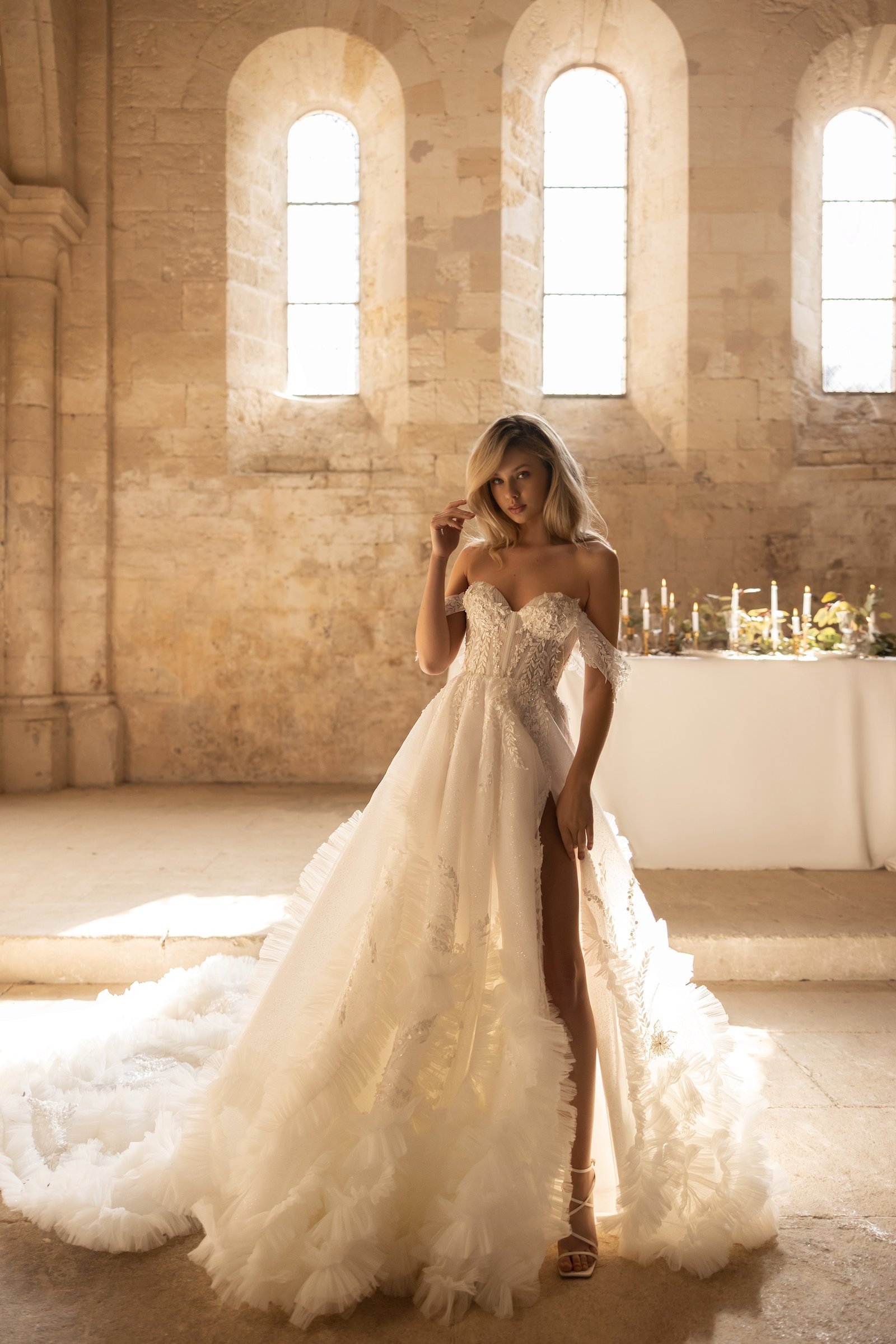
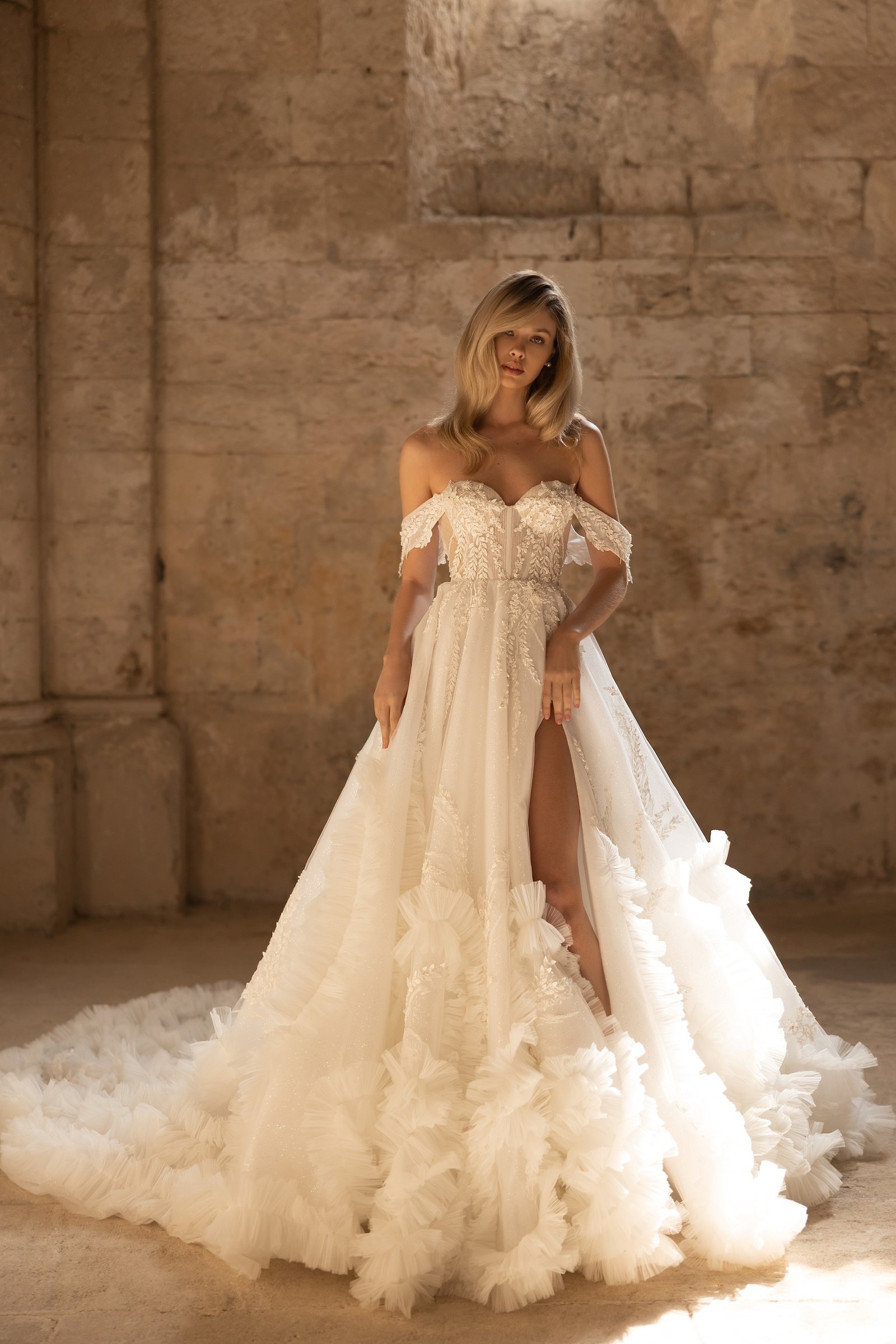
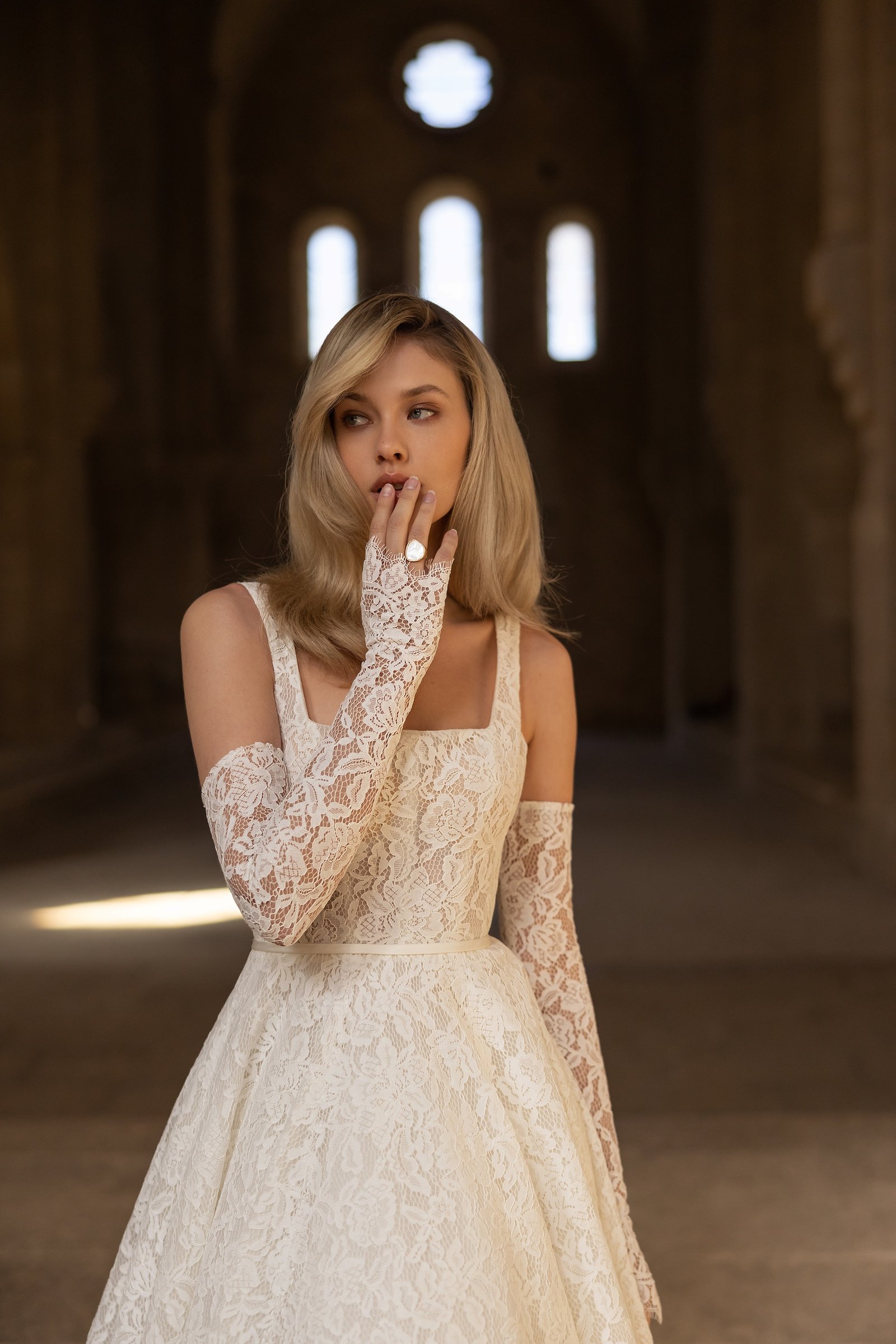
In Baccara, lace sleeves, a basque waist and a front slit over a lace underlayer give a different kind of depth. The opening reveals another surface rather than simply exposing the leg. At a fitting, walk, sit and turn in the complete look. A long train, lining or added layer may change the space around your legs even when the cut is A-line.