
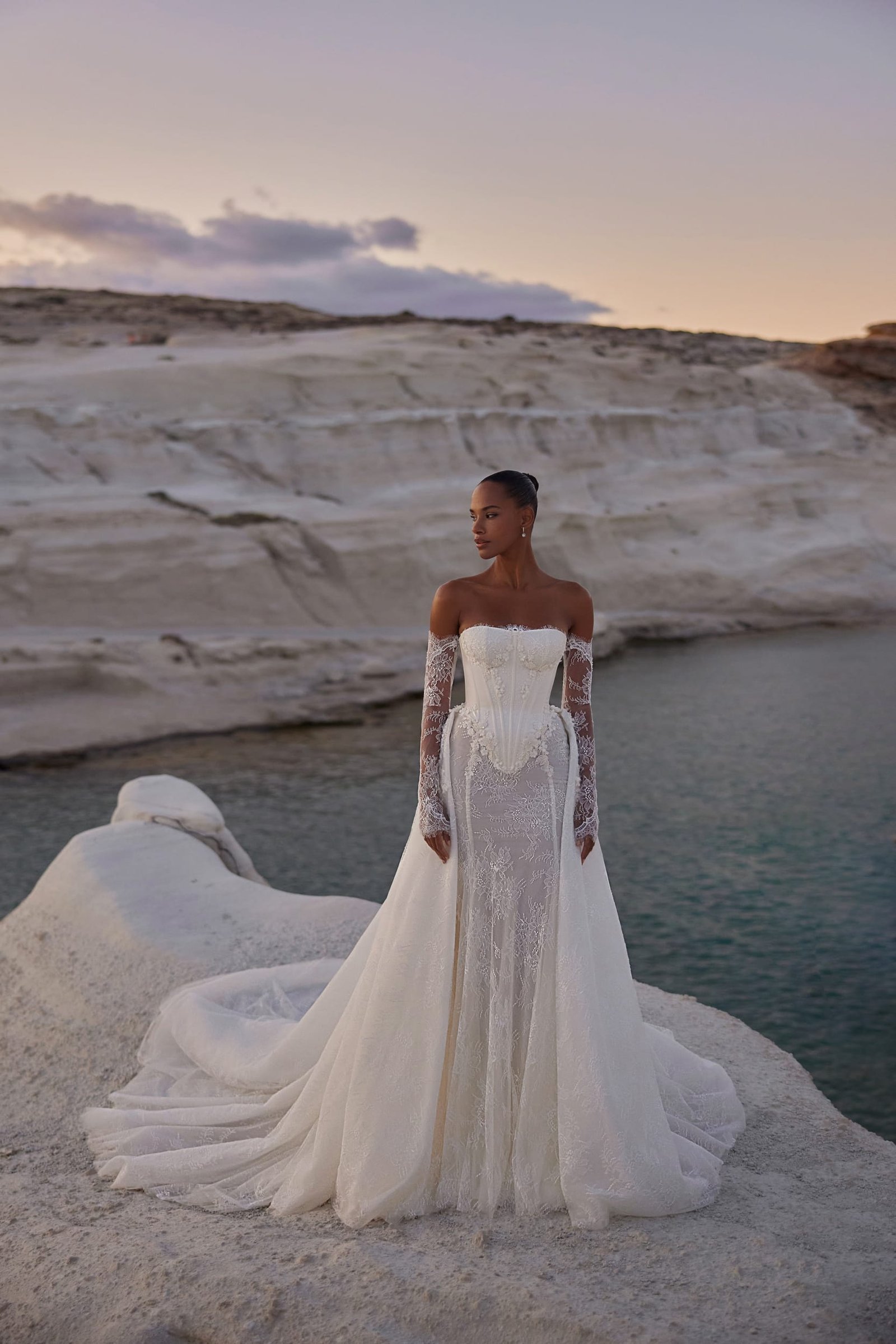
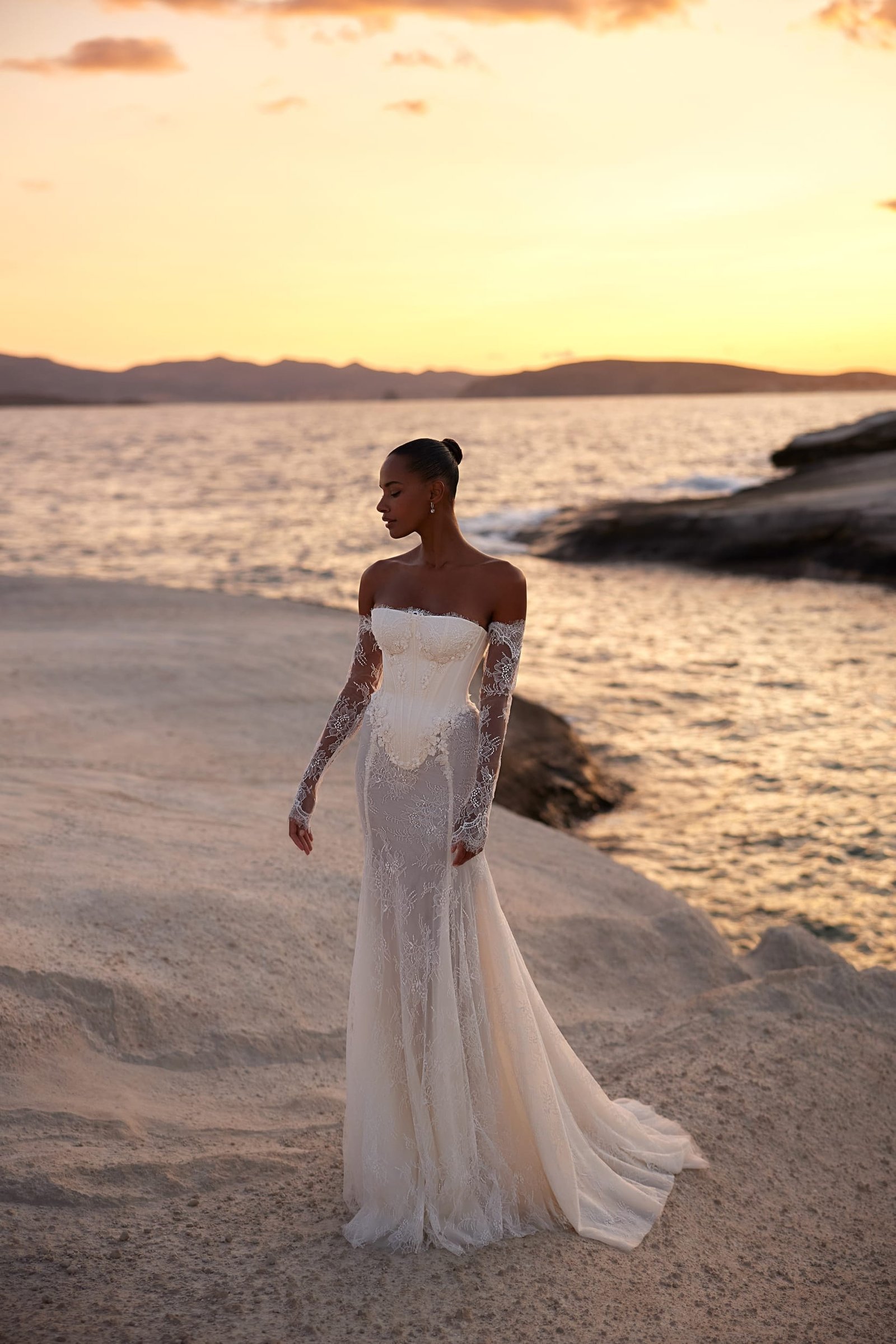
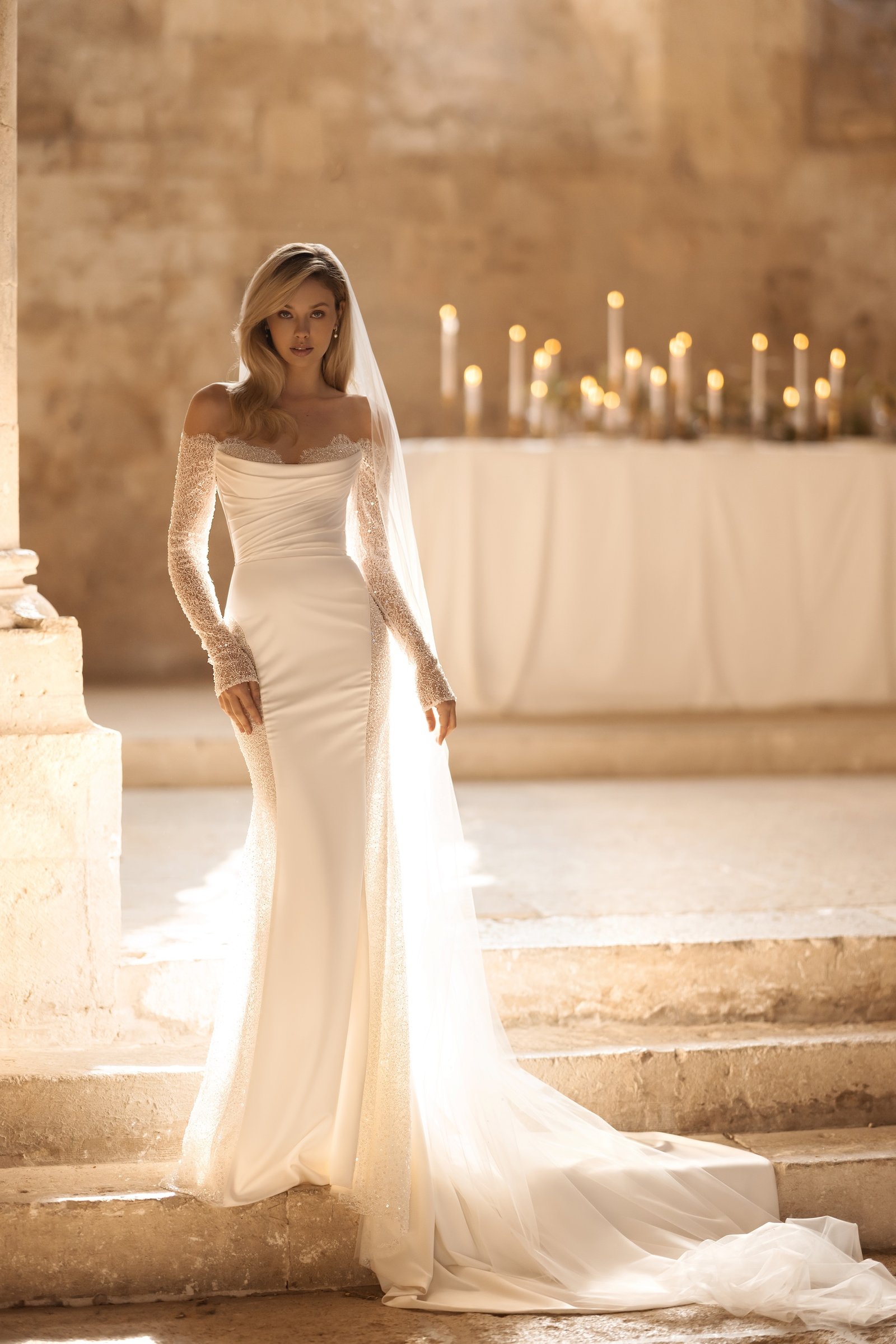
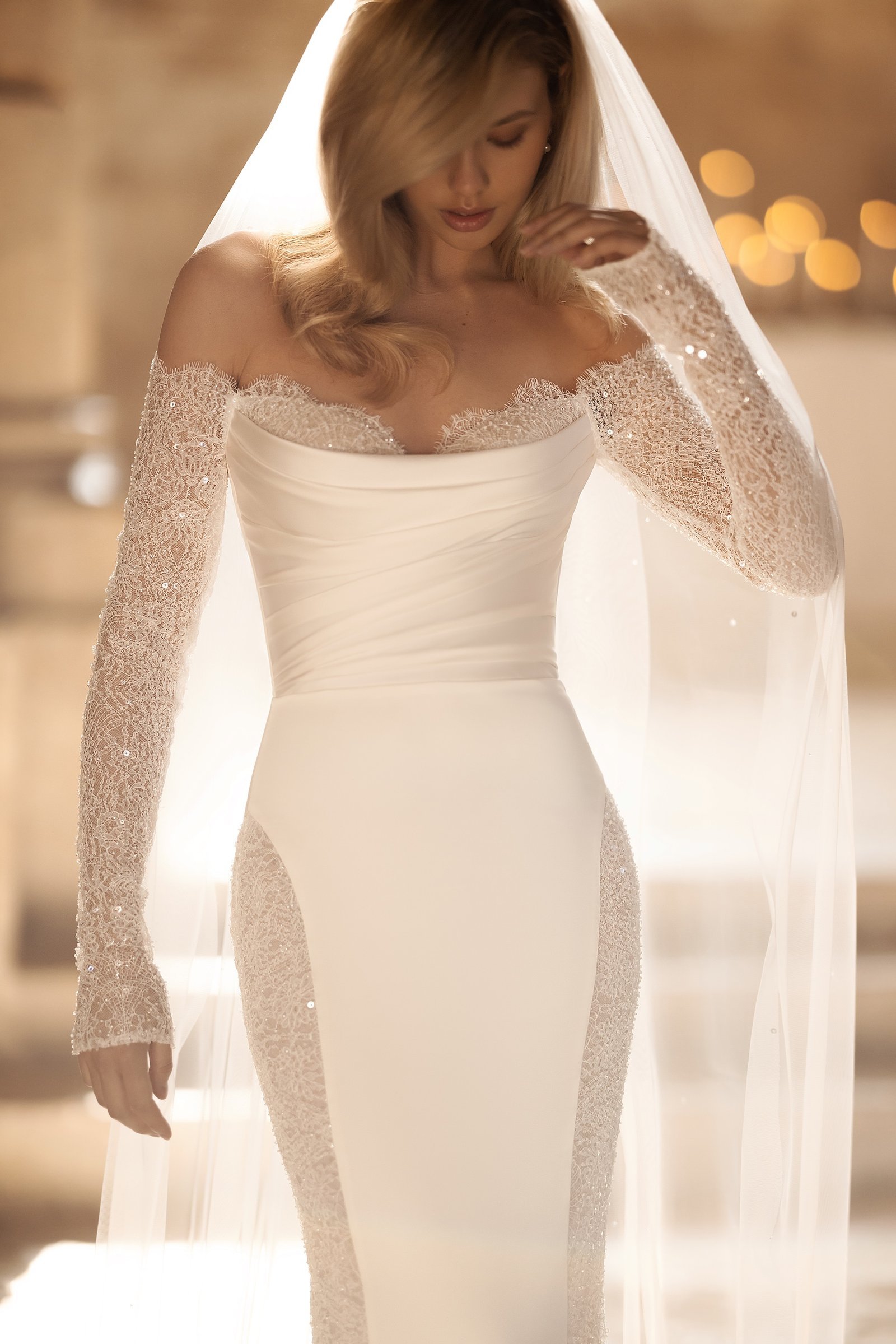

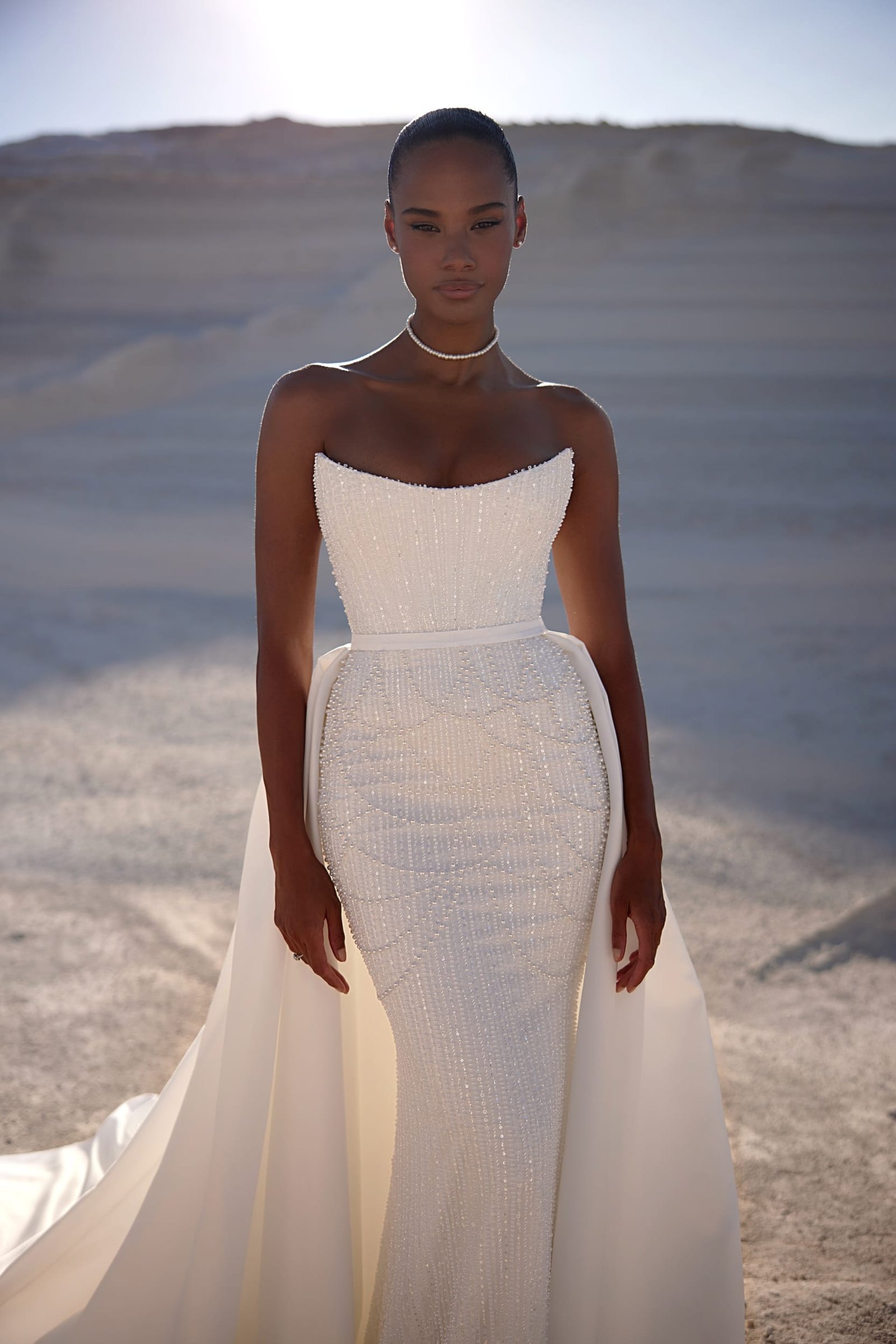
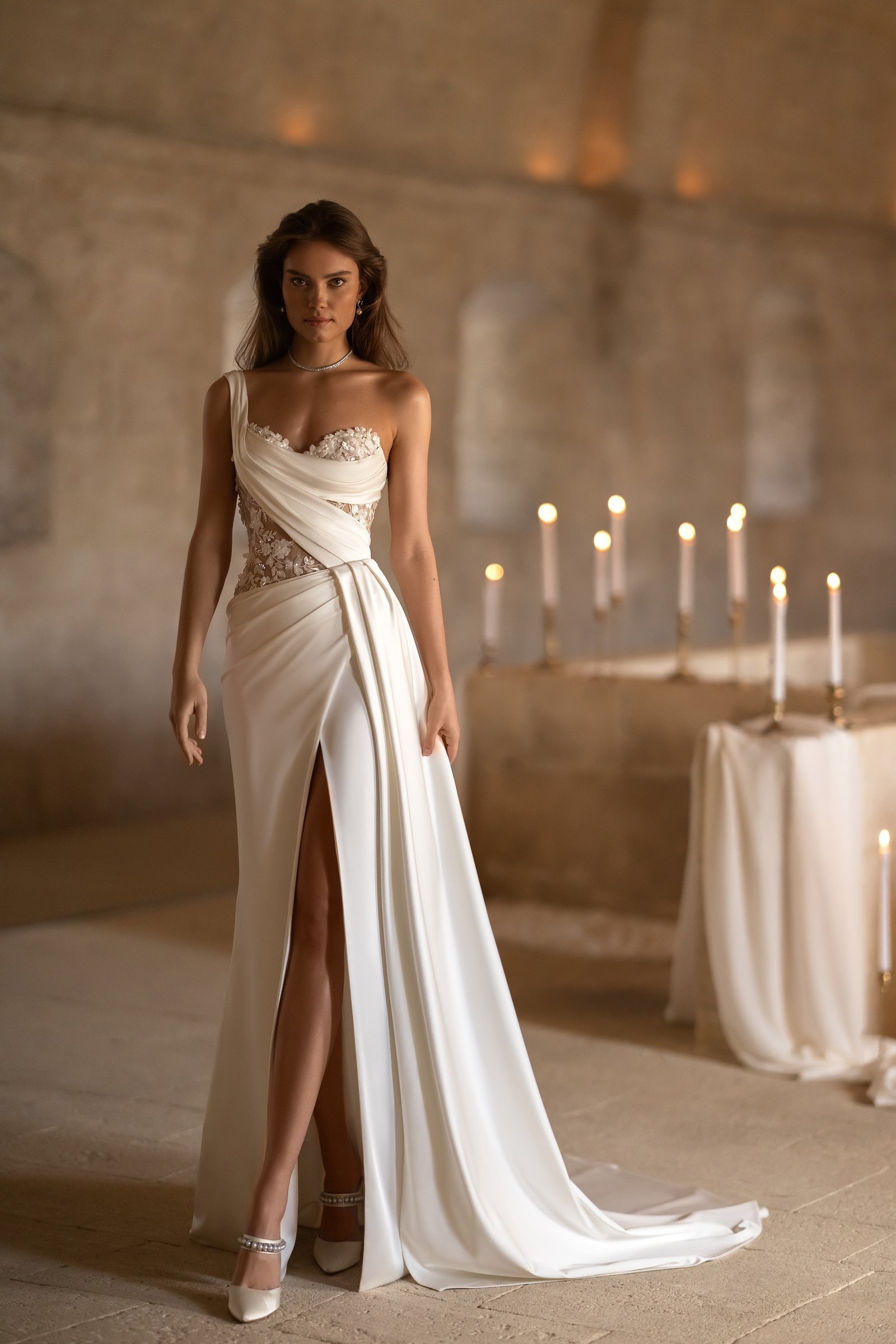
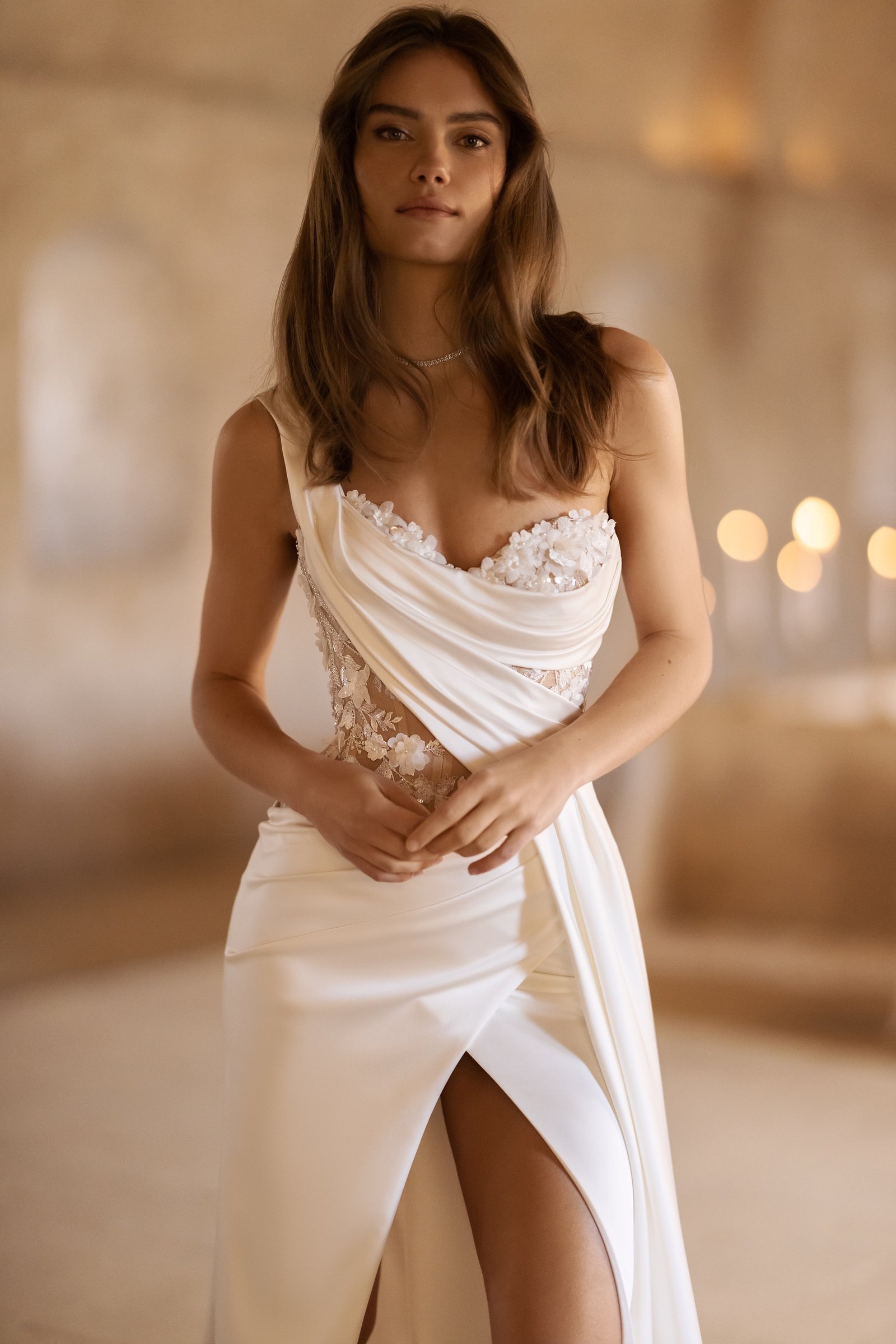
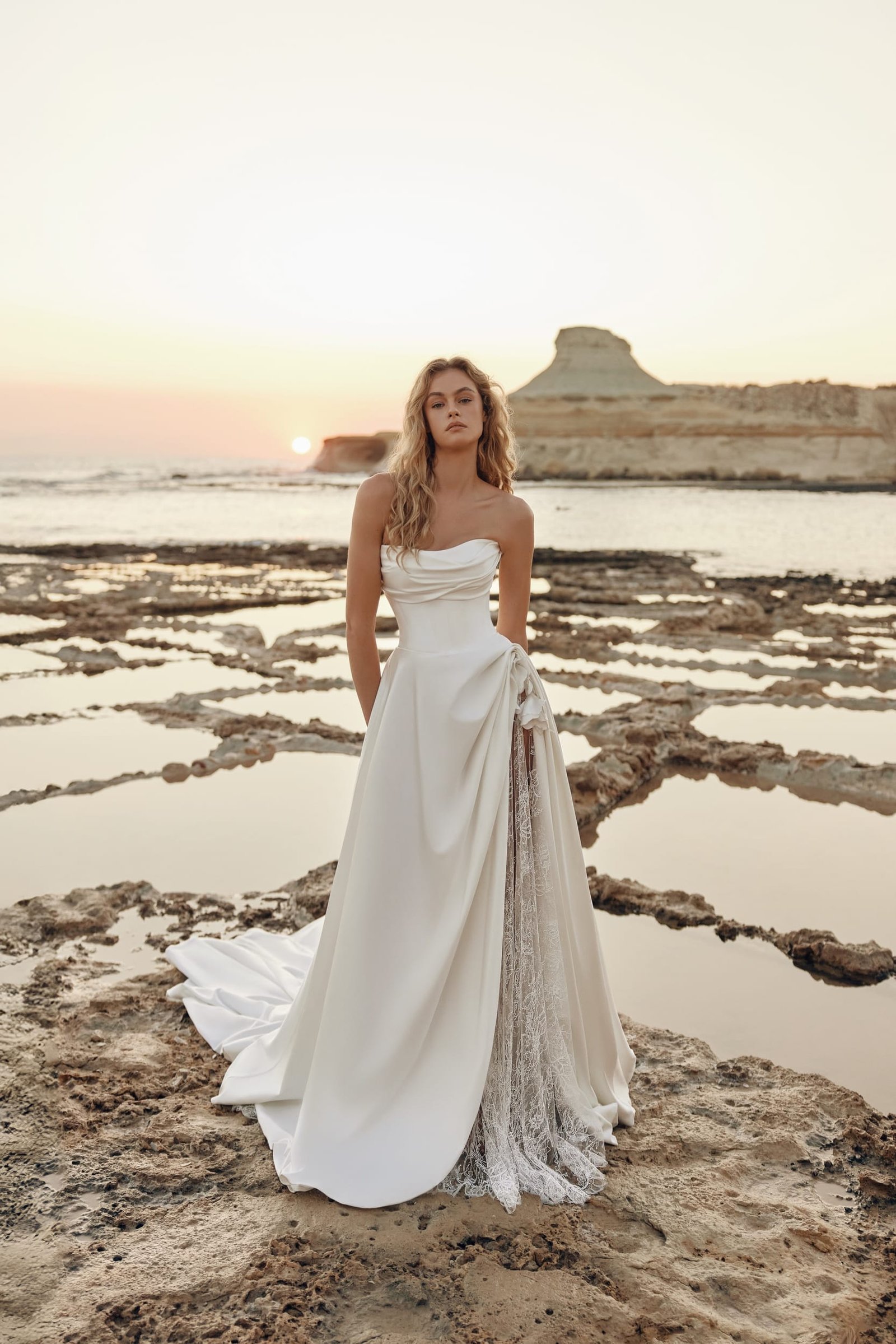
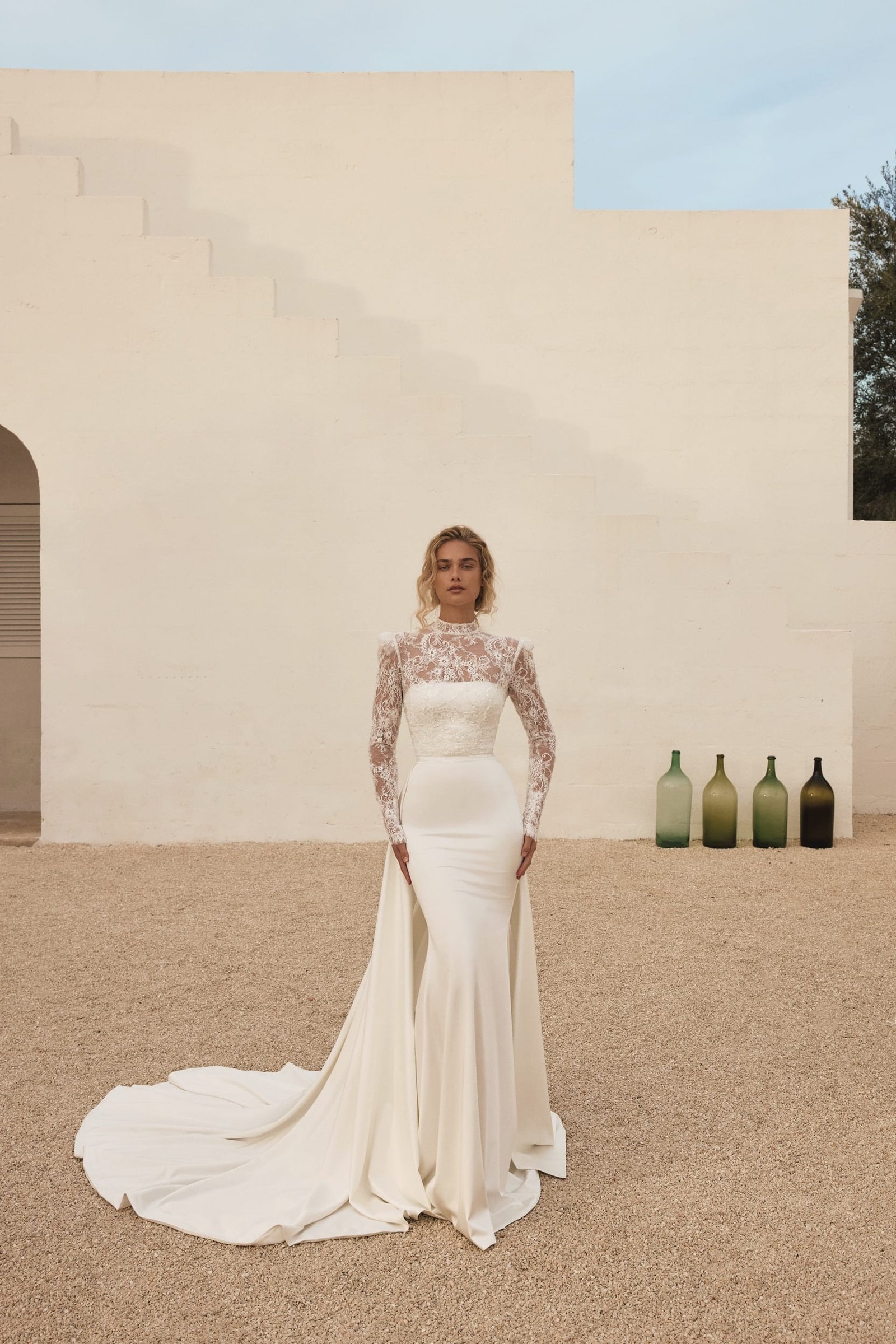

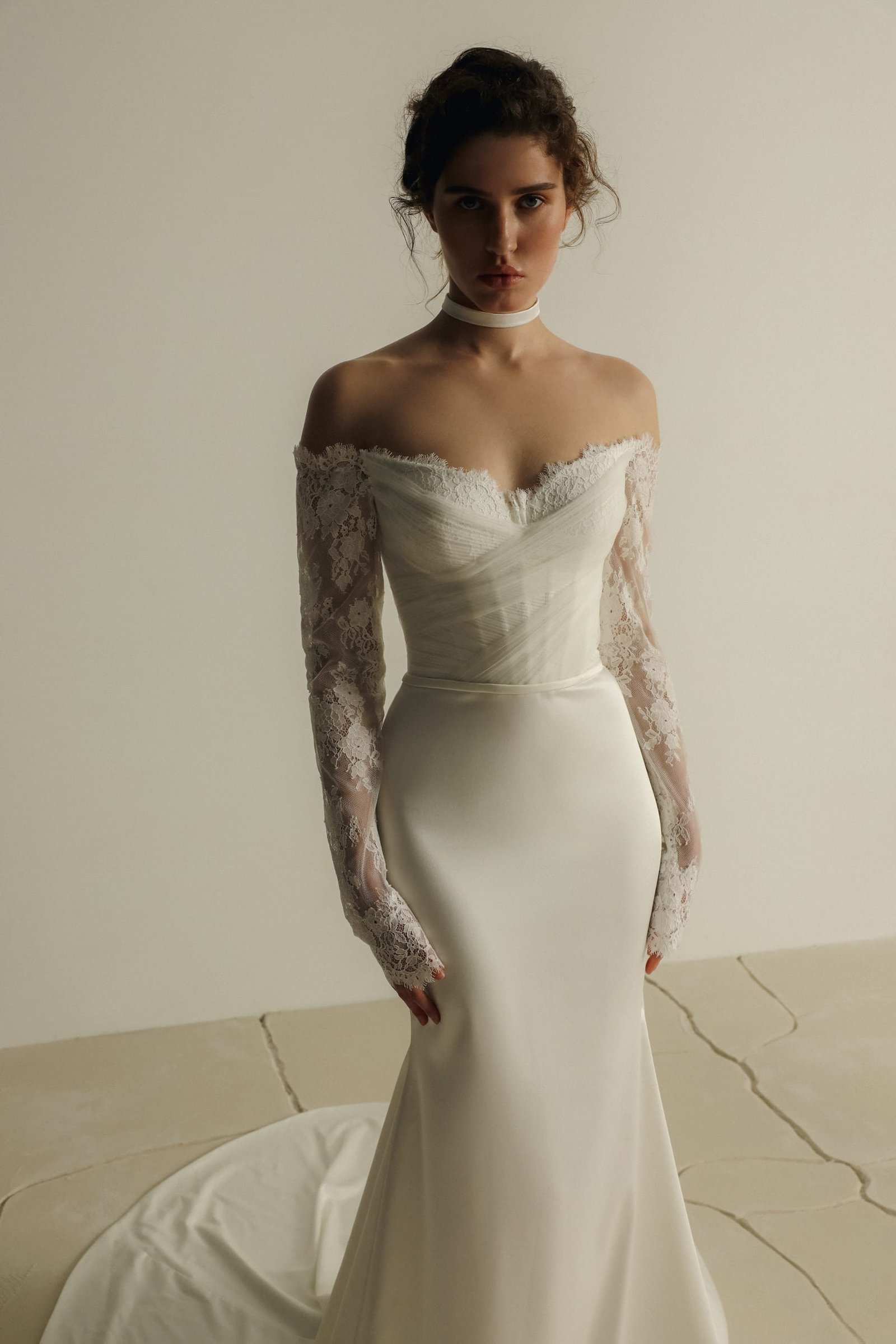
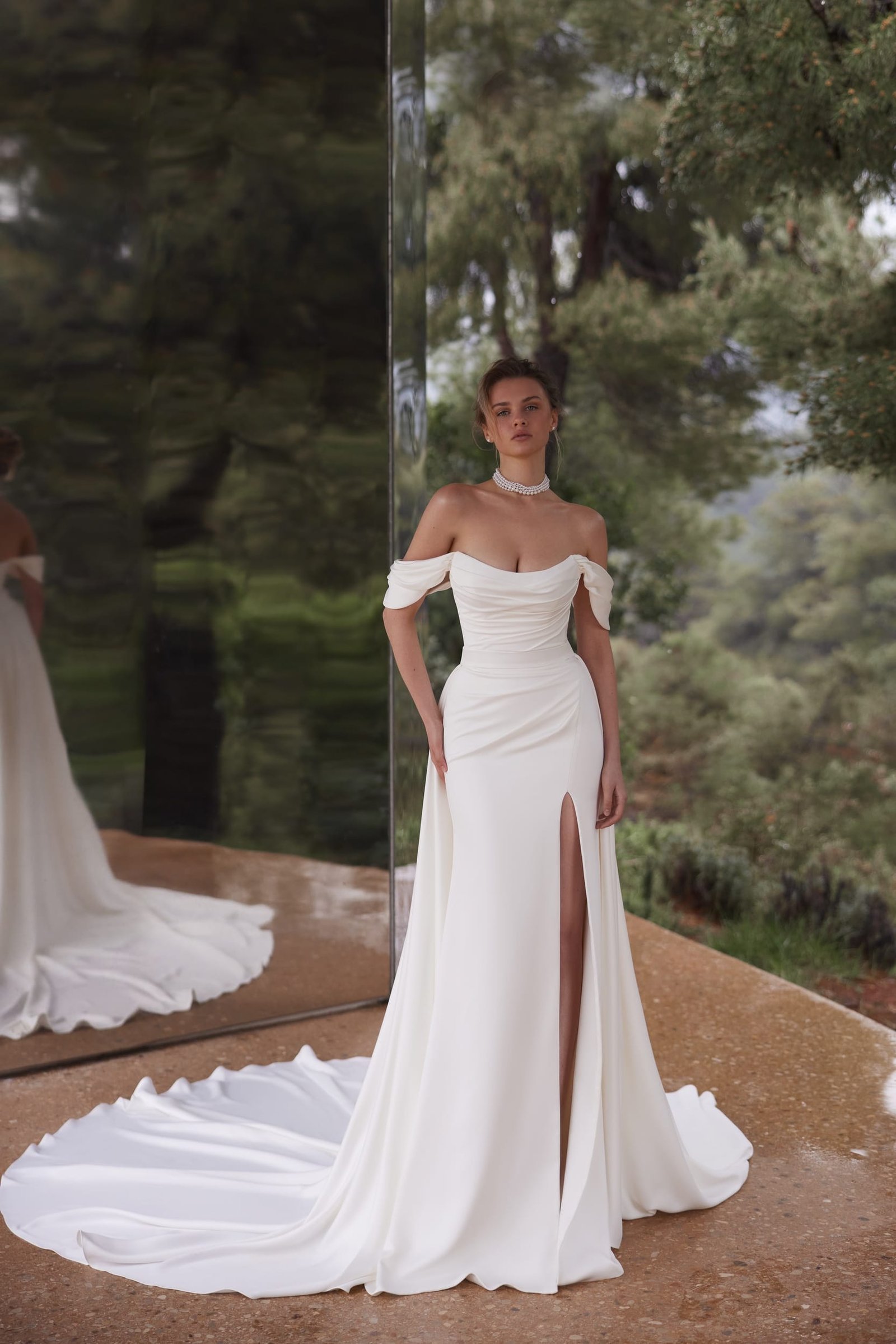
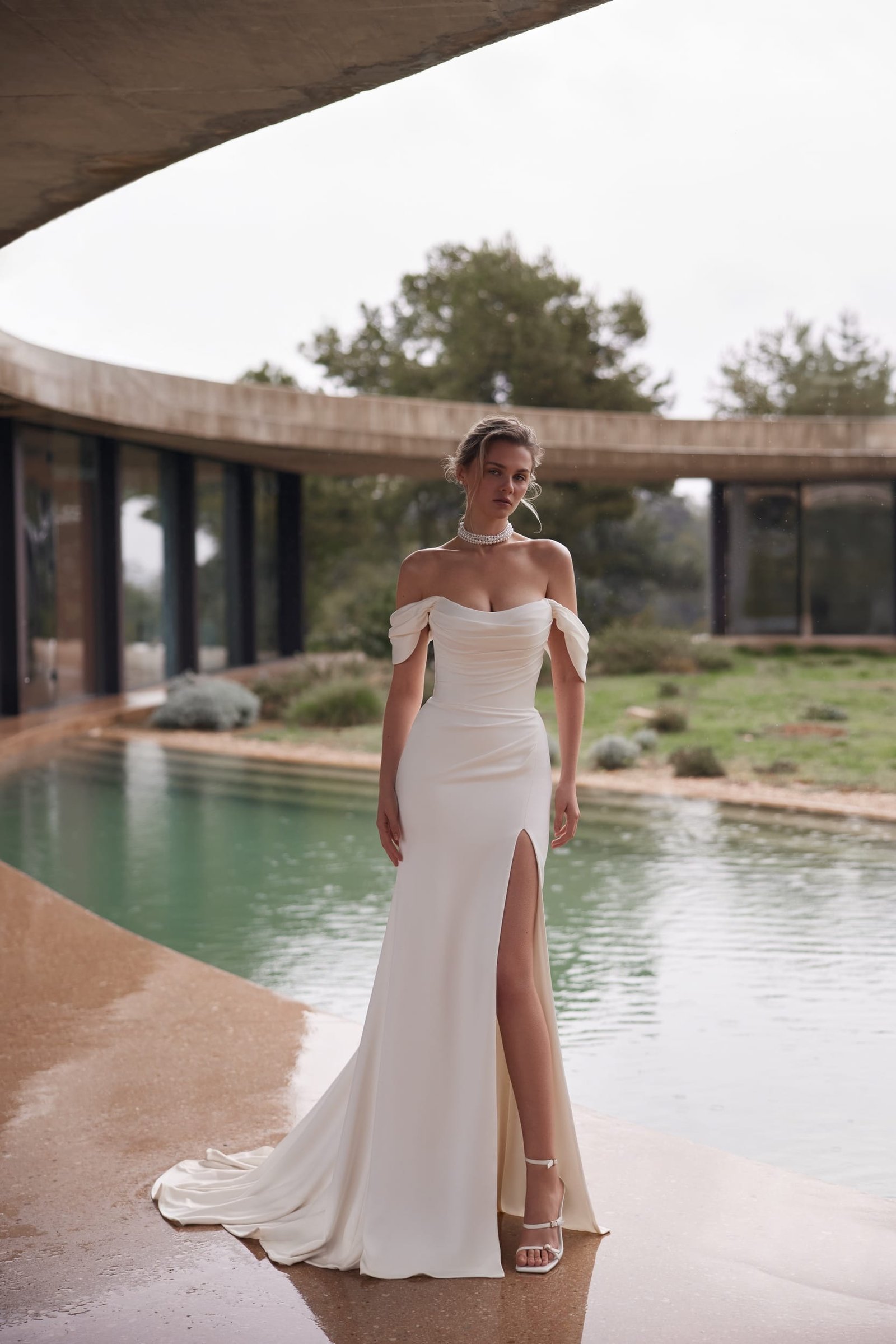
Satin makes light part of the design
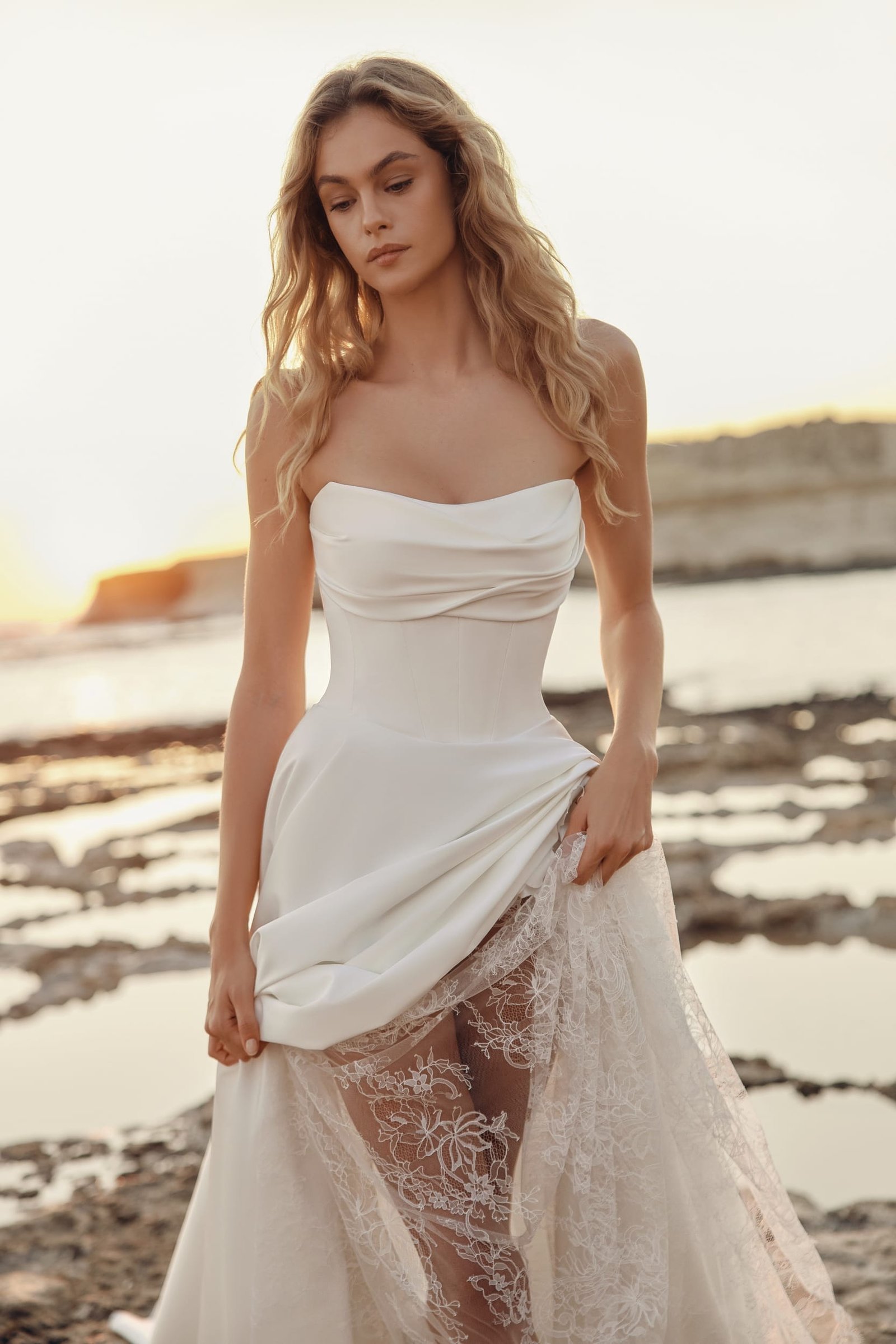
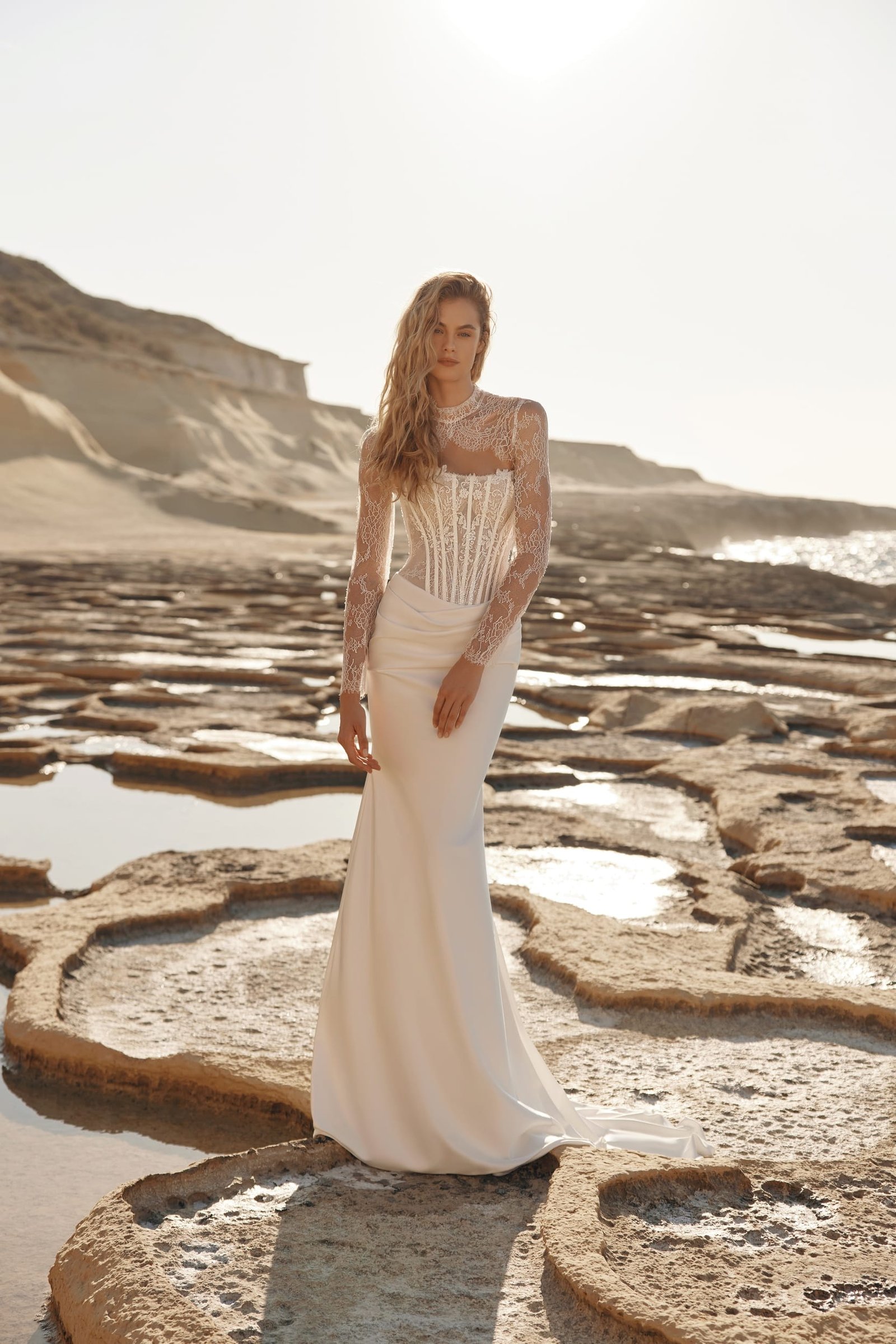
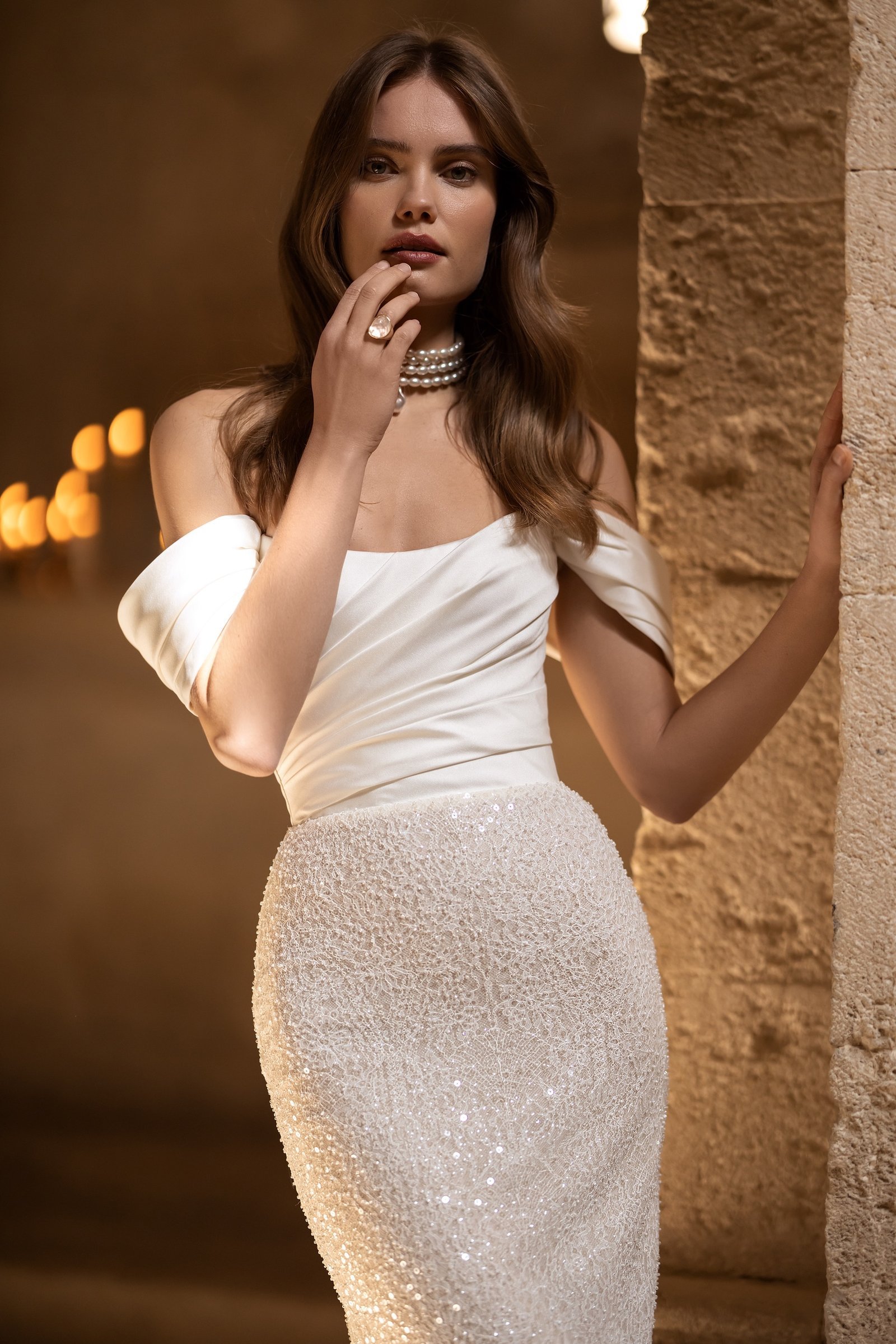
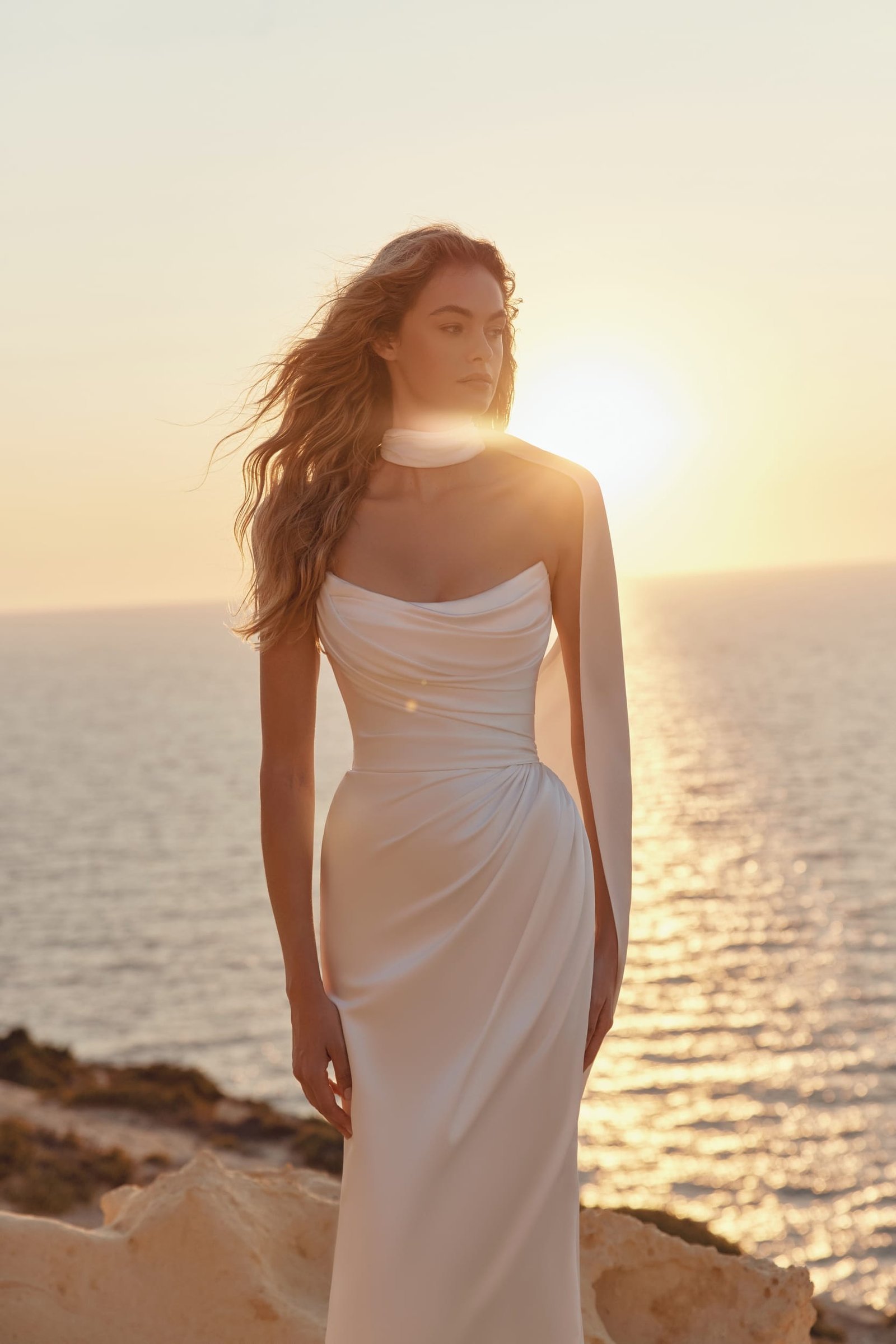
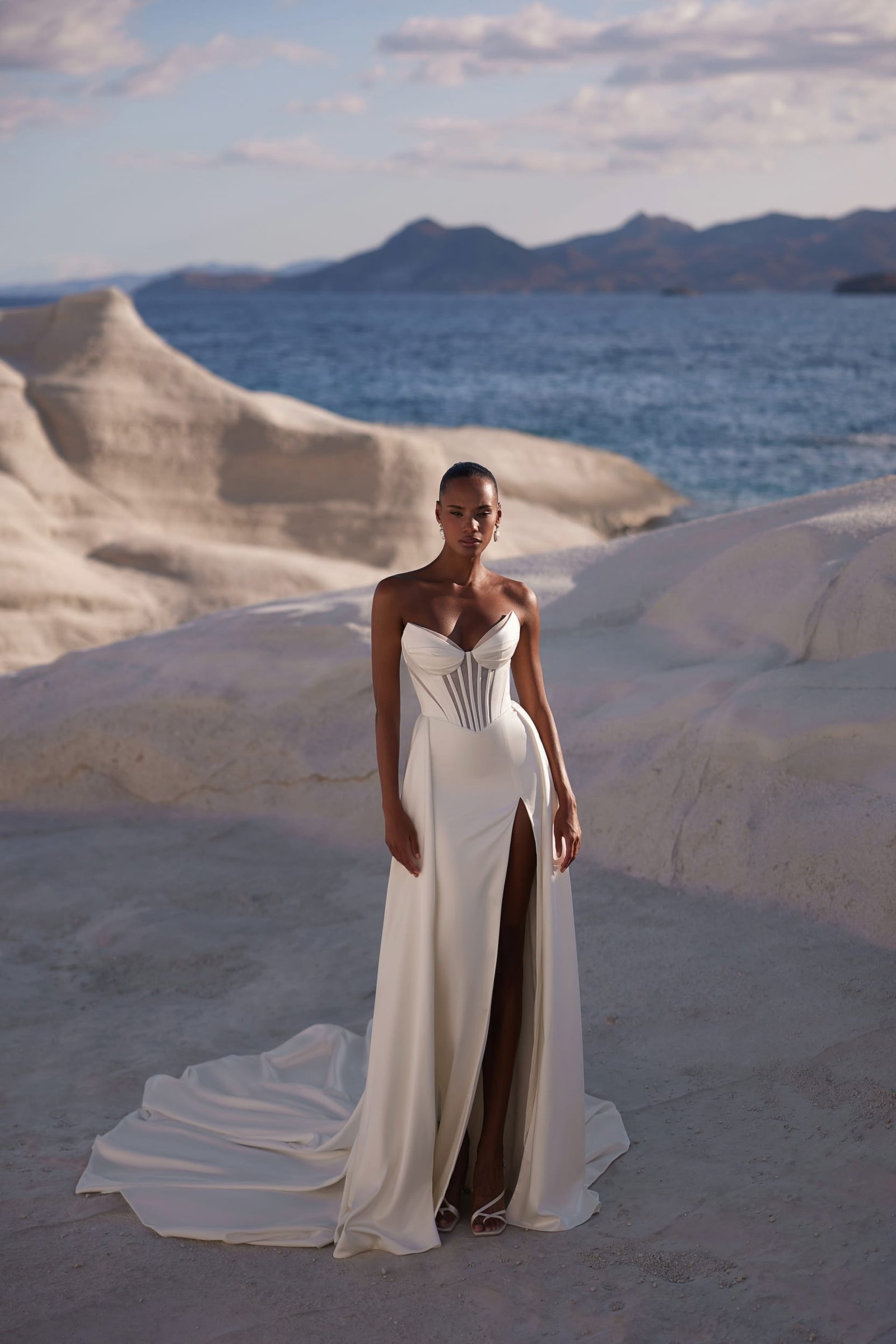
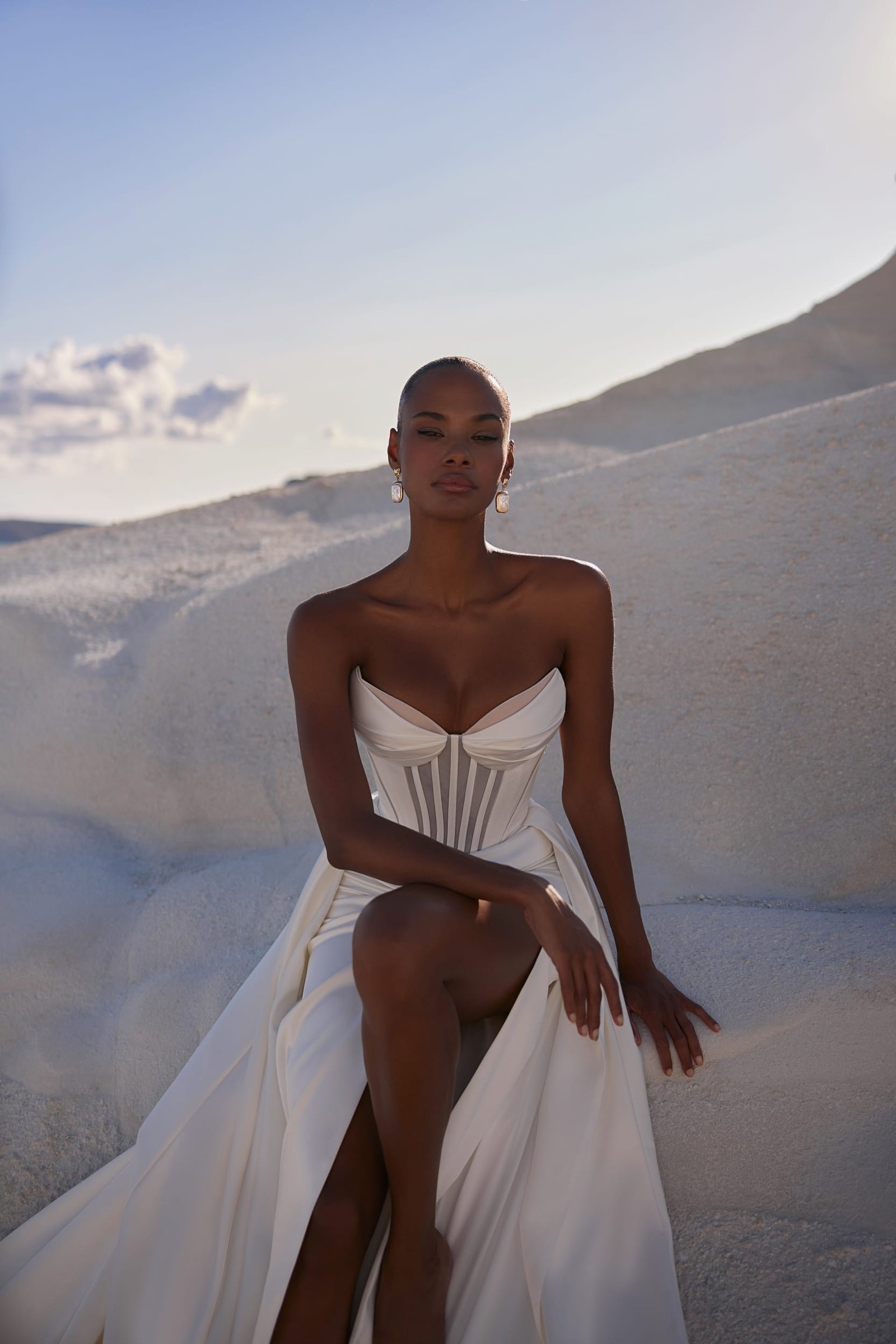
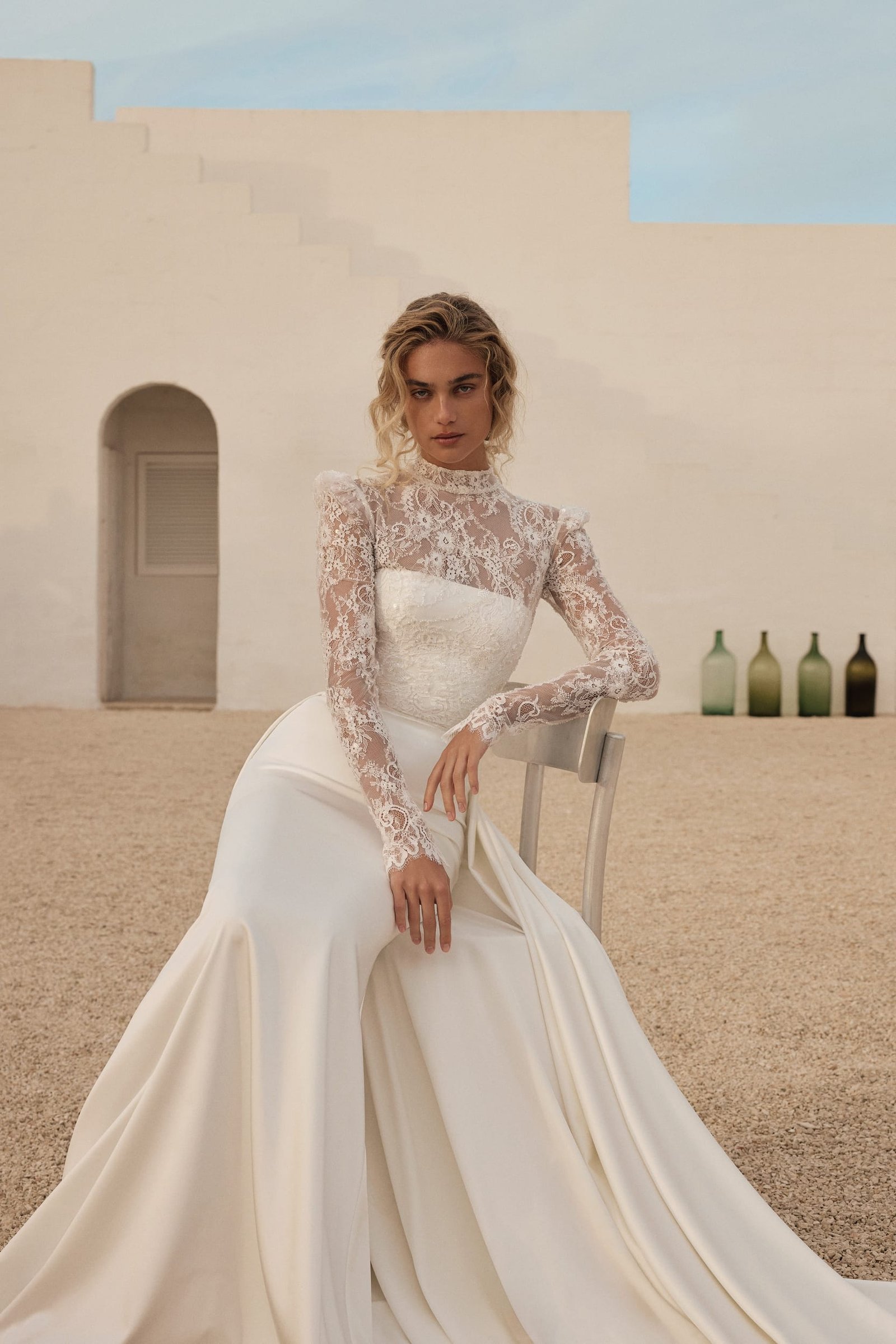
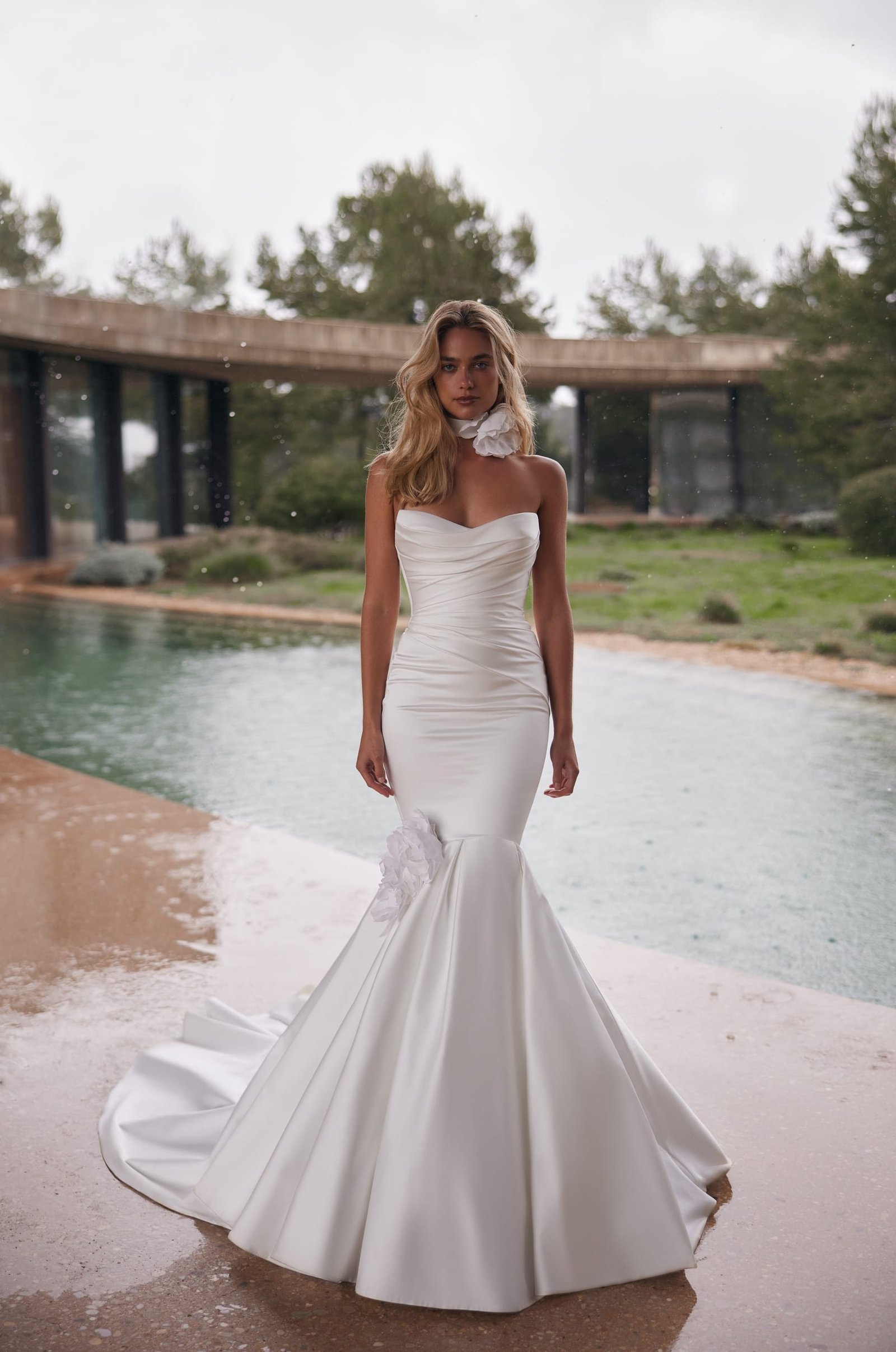
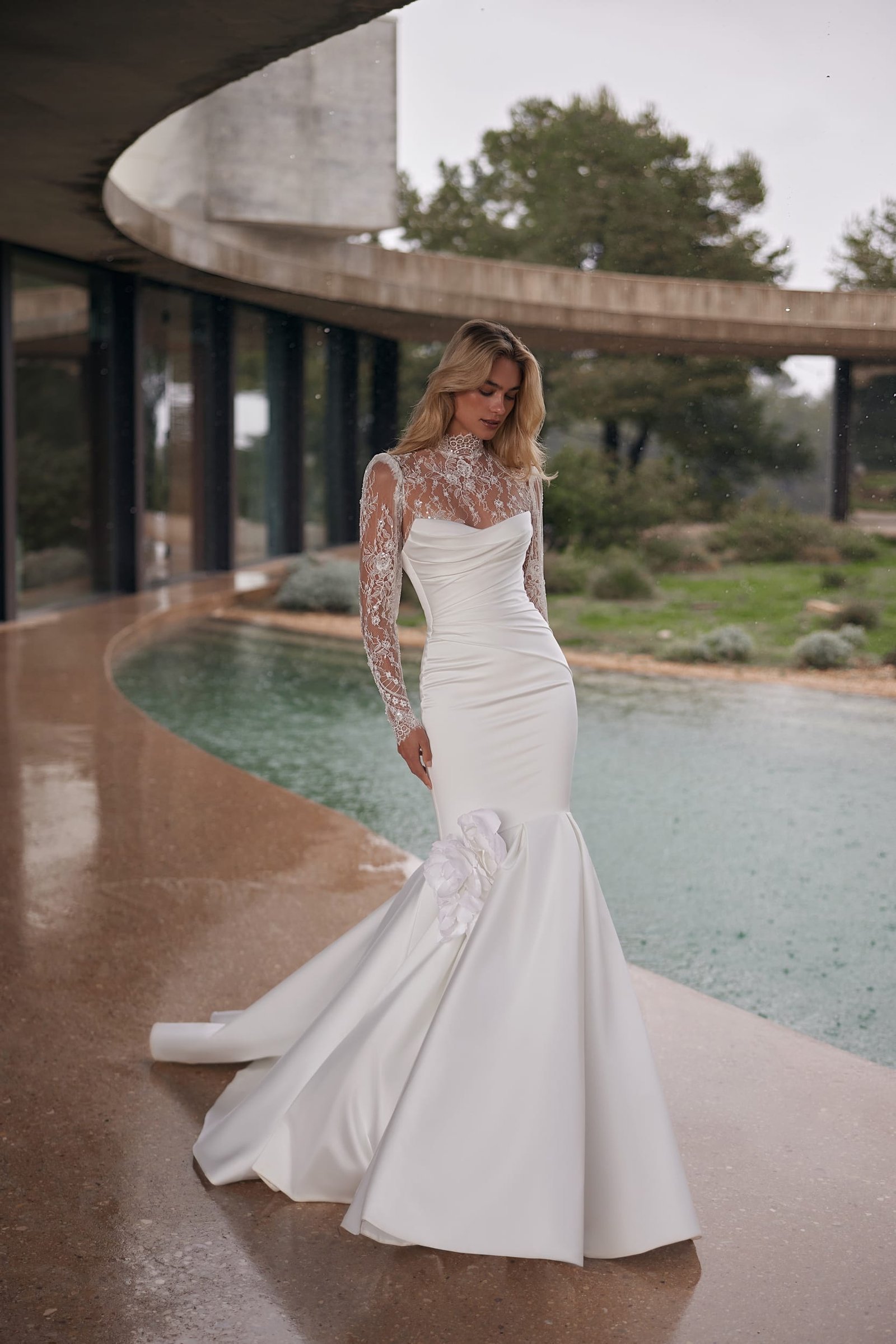
Satin is chosen for its smooth surface and characteristic sheen. It reflects light across a gown, making clean seams and sculpted shapes especially noticeable. The effect is polished, but the cut determines whether it reads as classic, modern, or dramatic.
Line and drape
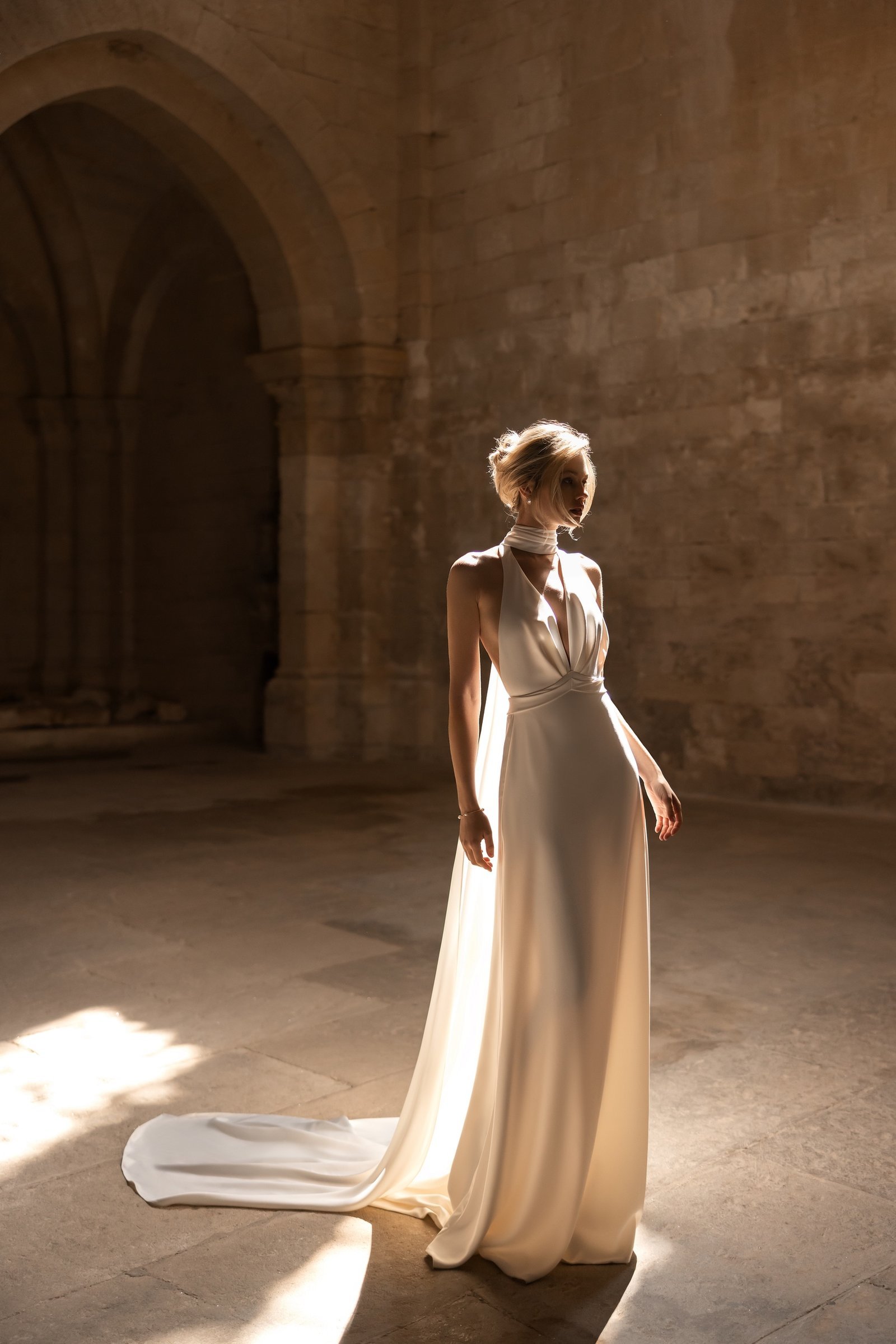
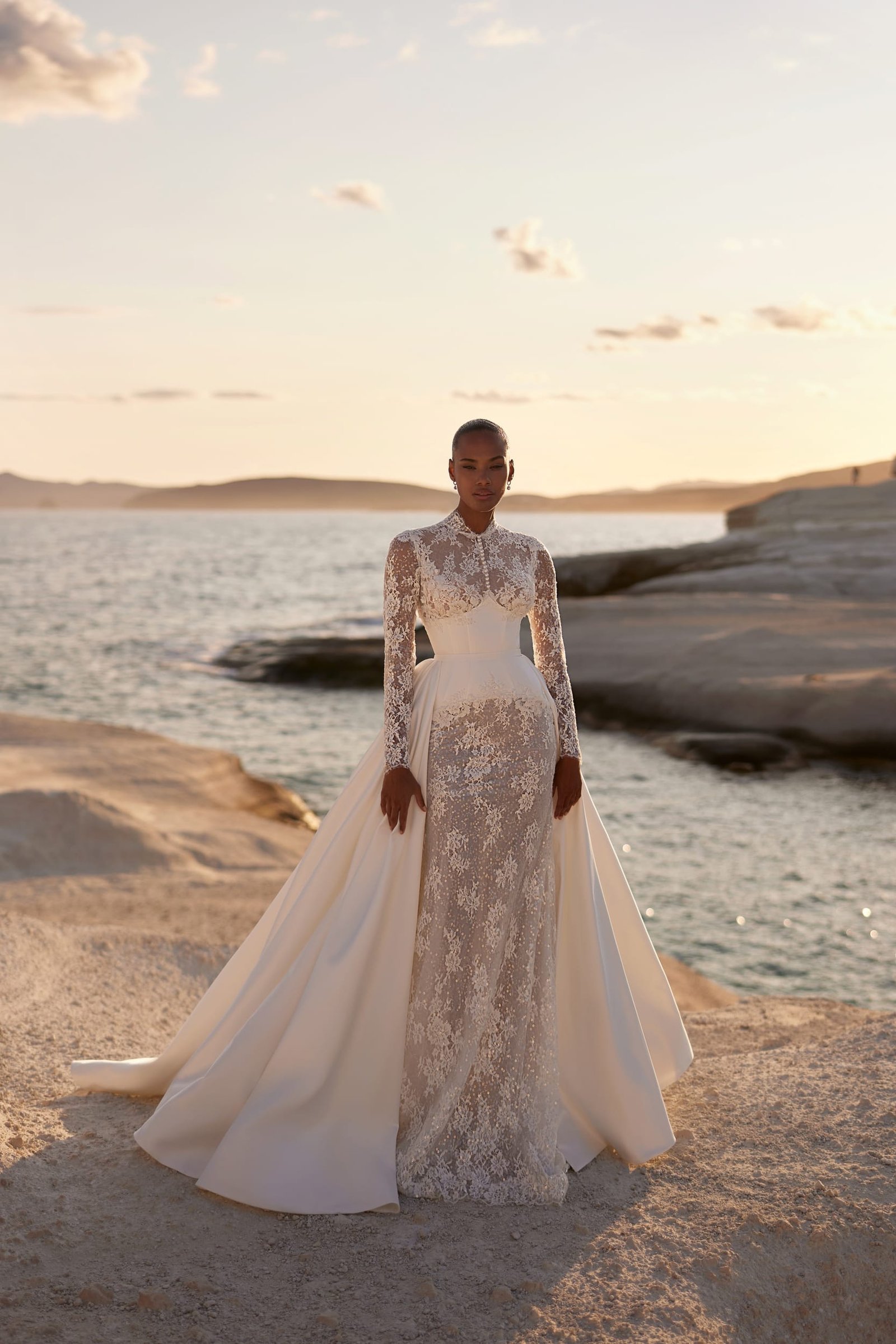
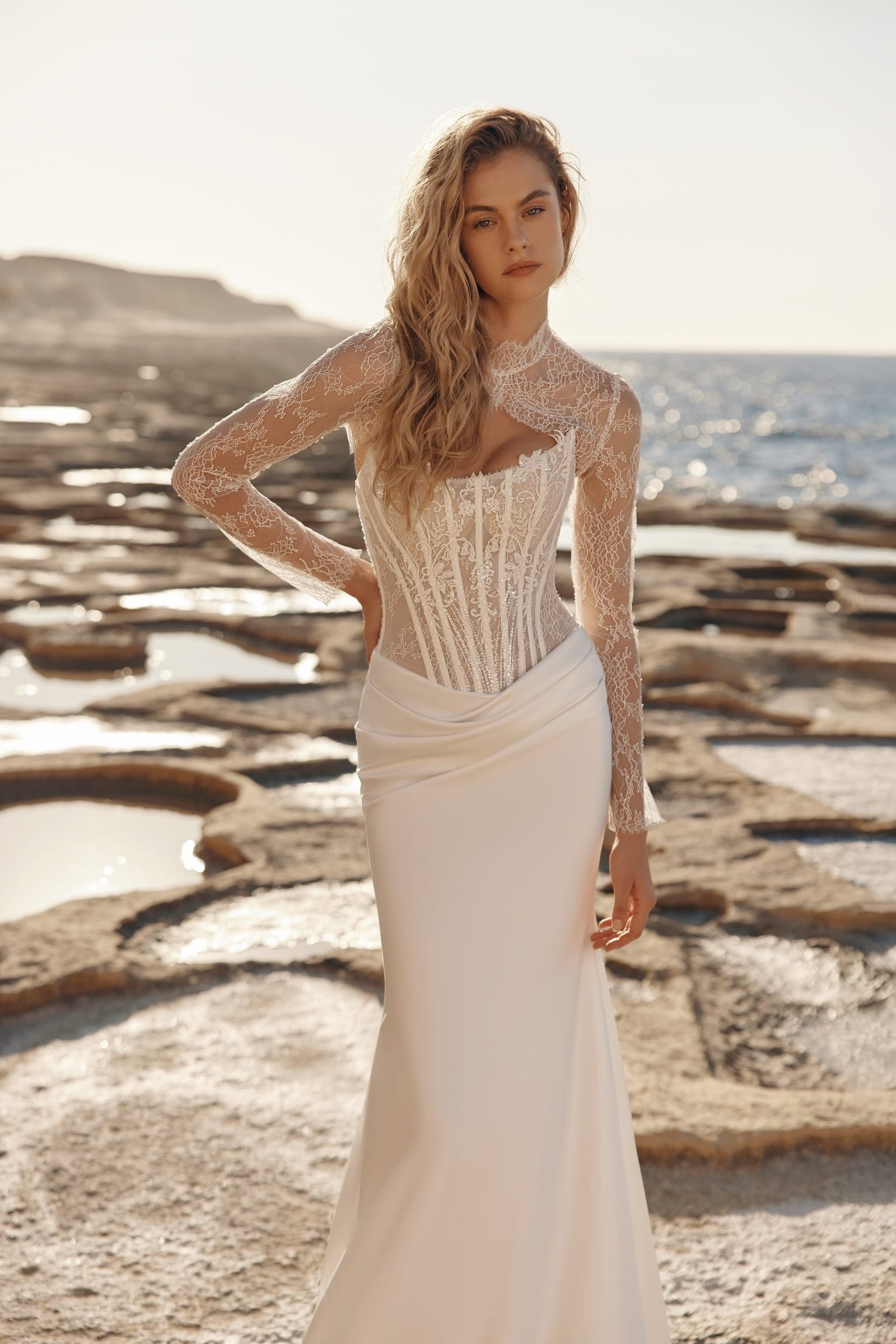
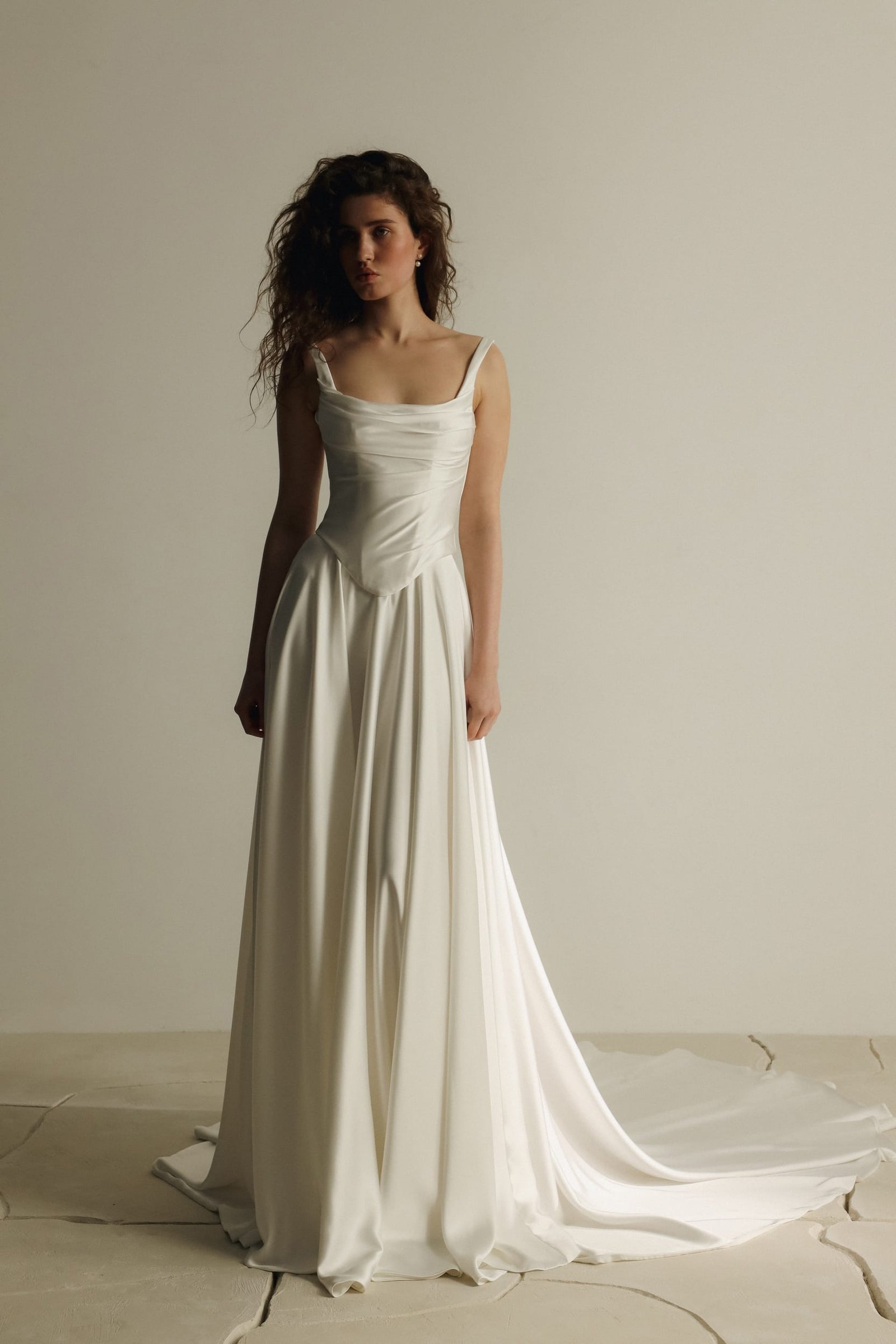
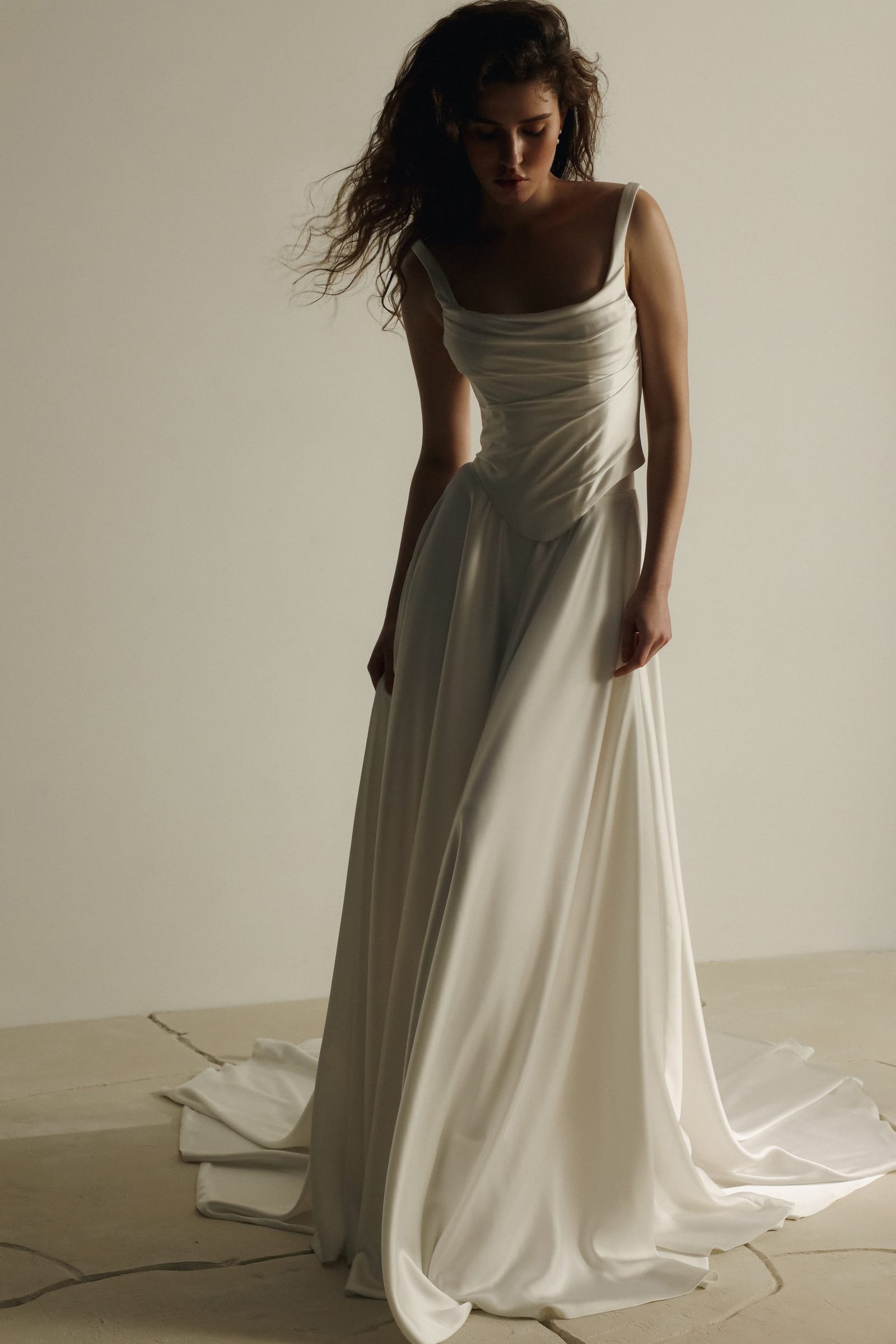
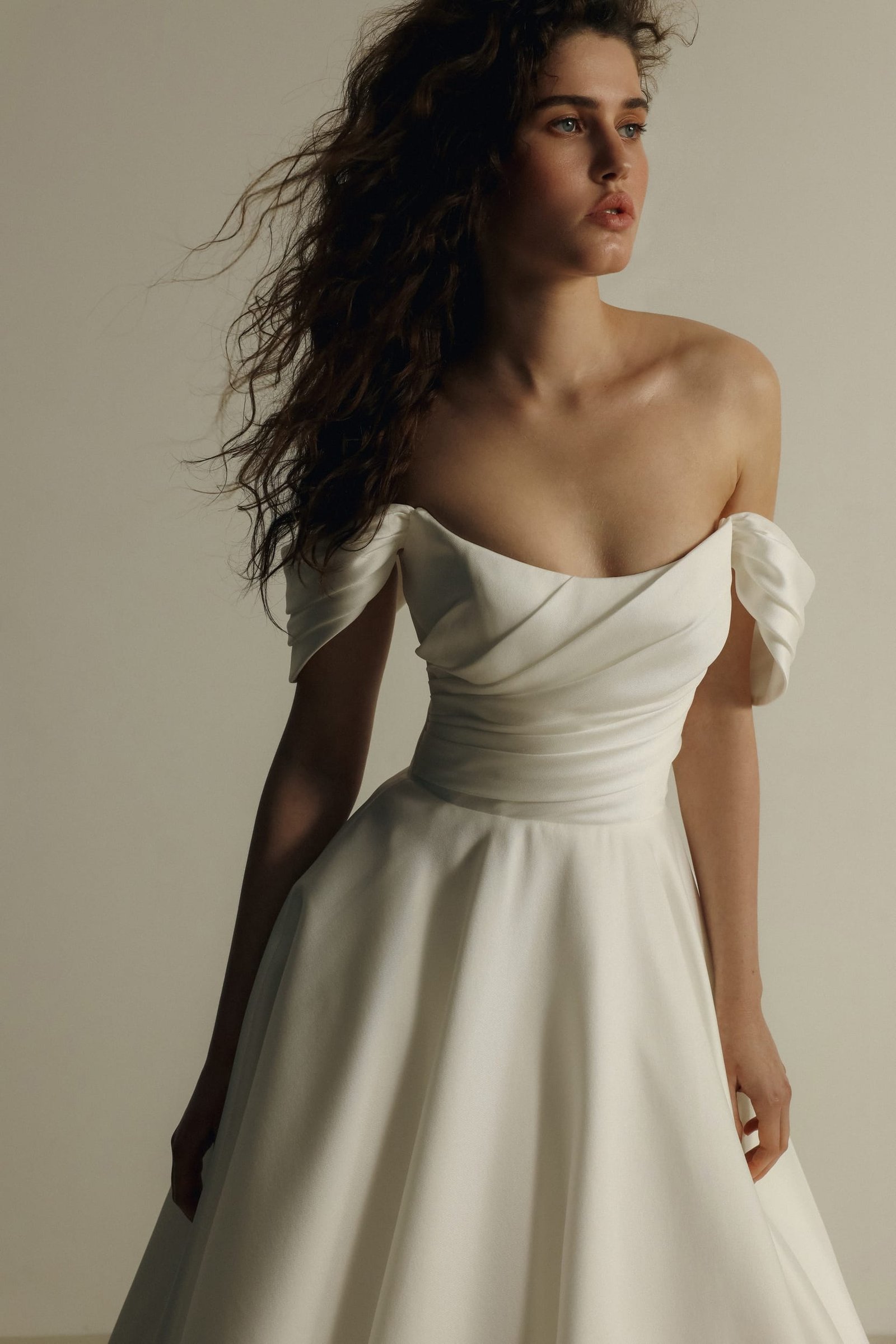
A satin dress may hold a defined shape or follow the body more fluidly, depending on its construction. Folds and gathers break up the reflection, while a flatter panel makes the sheen more continuous. Eva Lendel satin dresses give the surface a clear role. For a fabric that usually holds a crisper outline, compare Mikado wedding dresses.
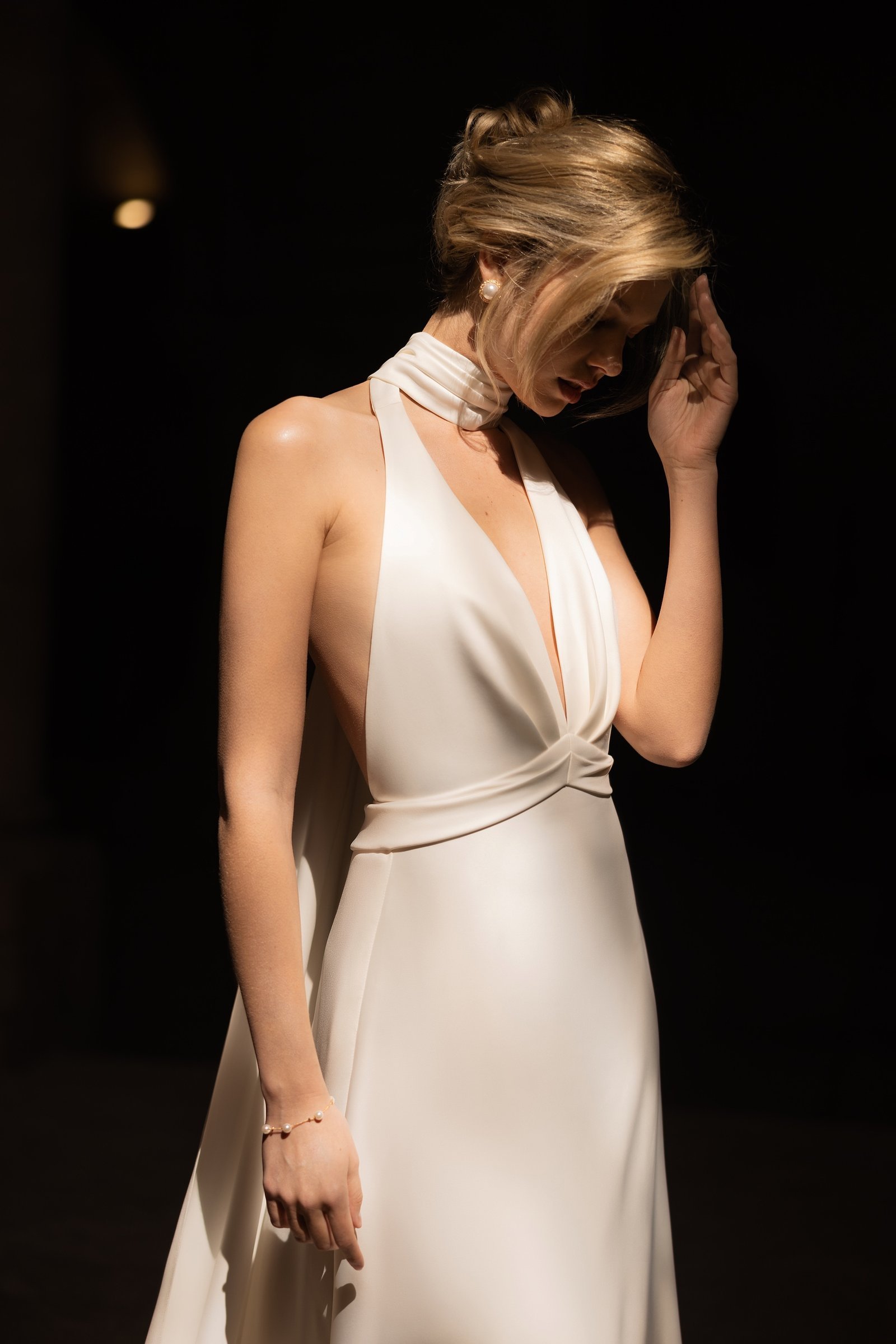
A smooth finish makes a precise cut more visible; folds change how light travels over the gown.
From a narrow line to a full skirt
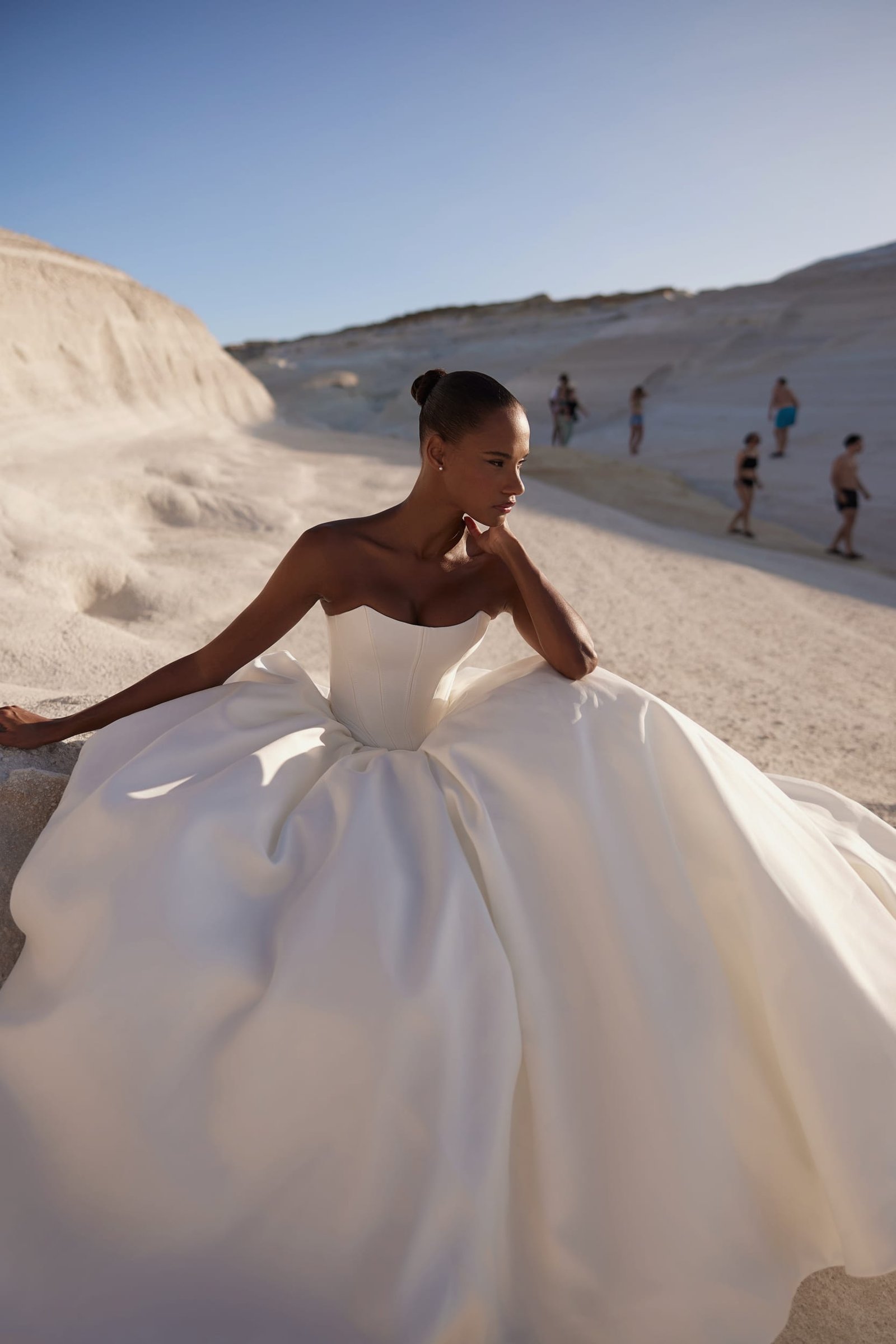
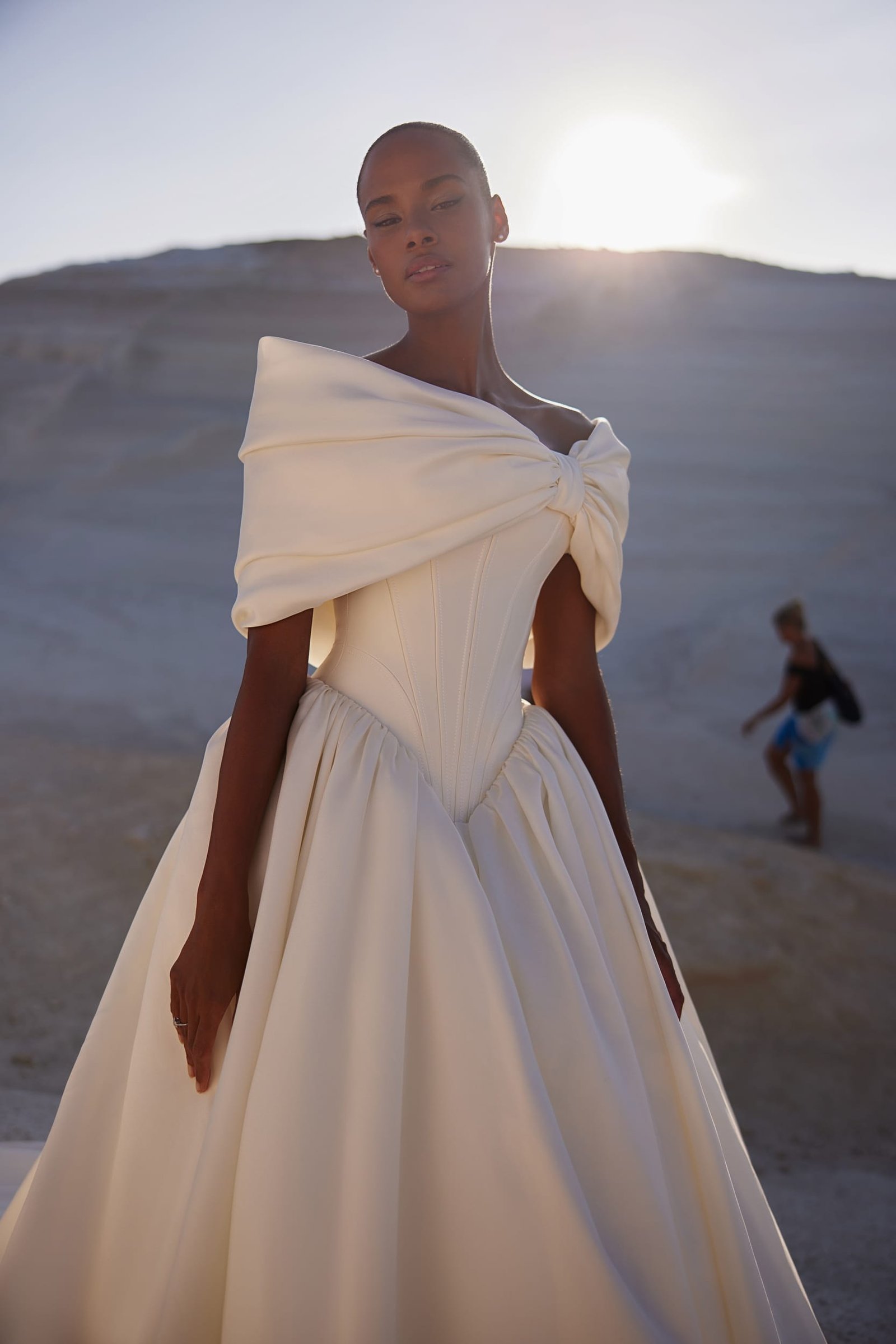
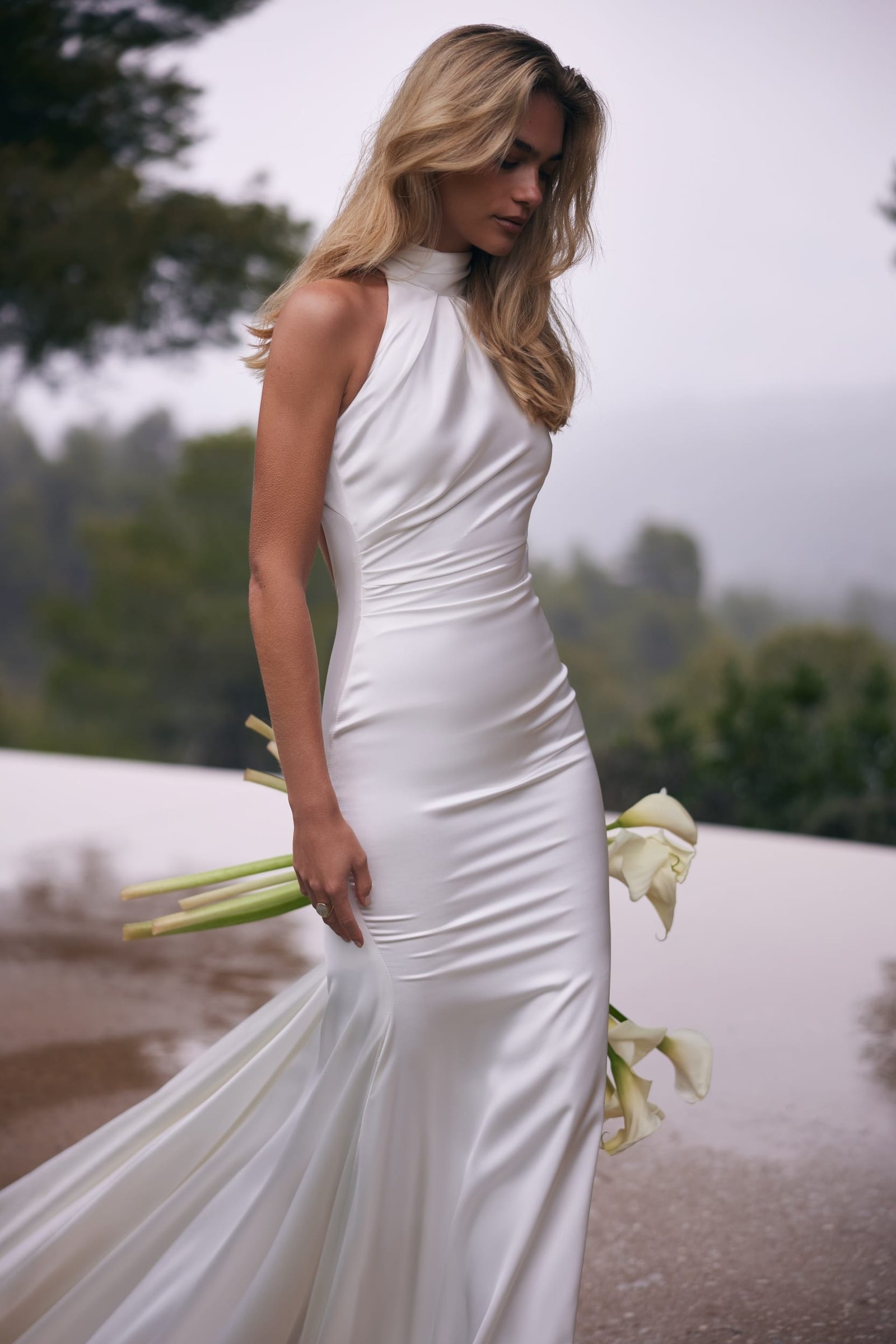
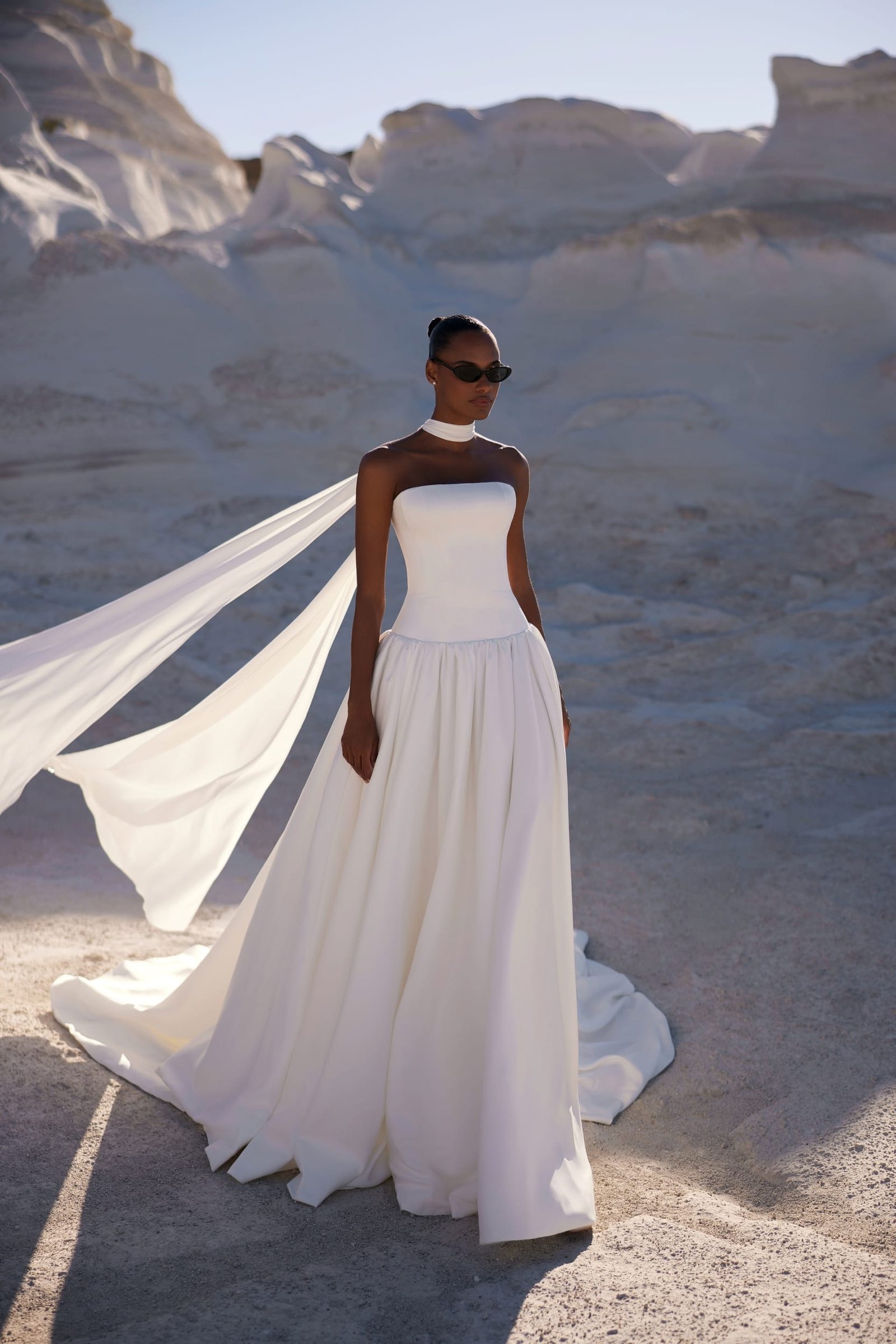
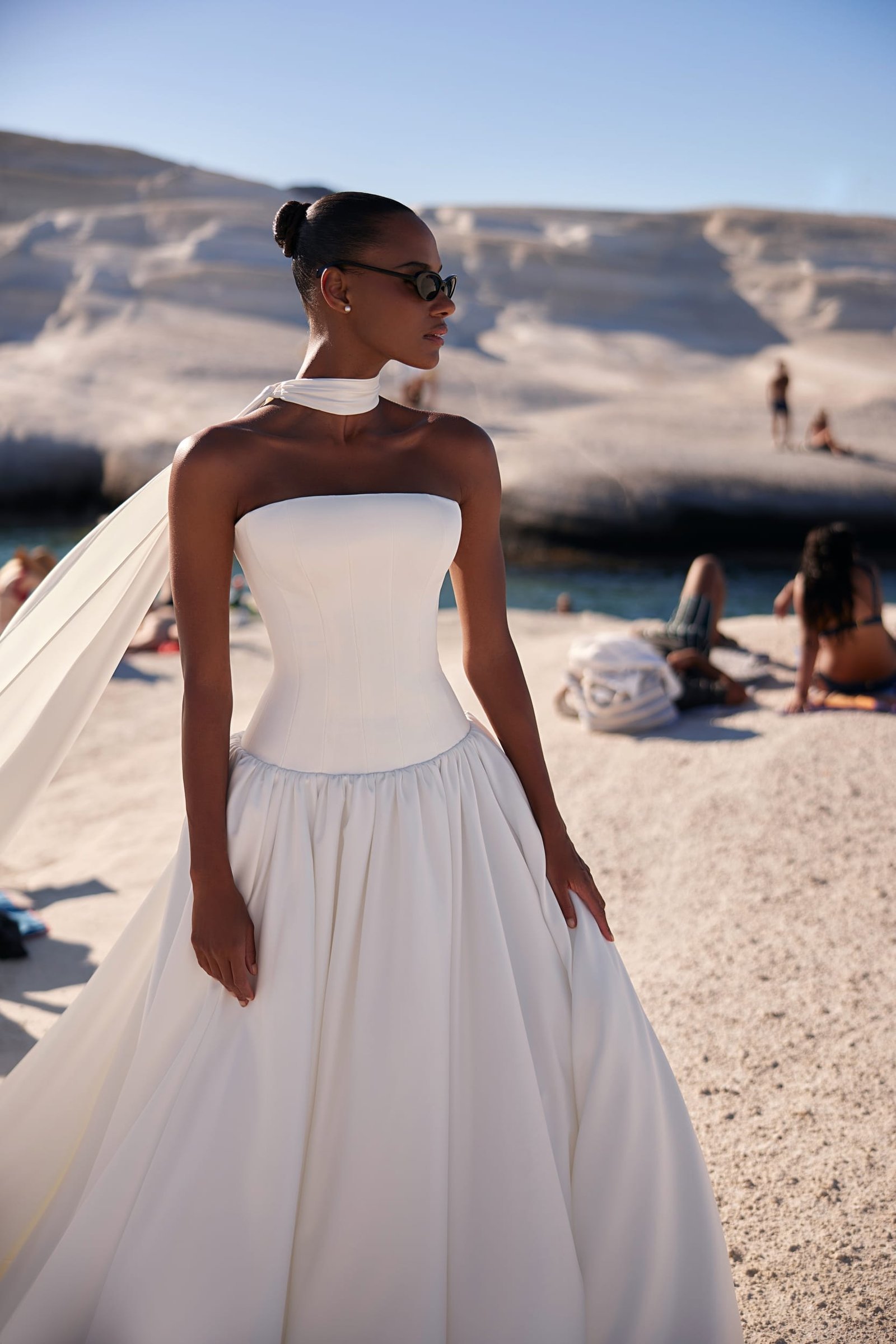
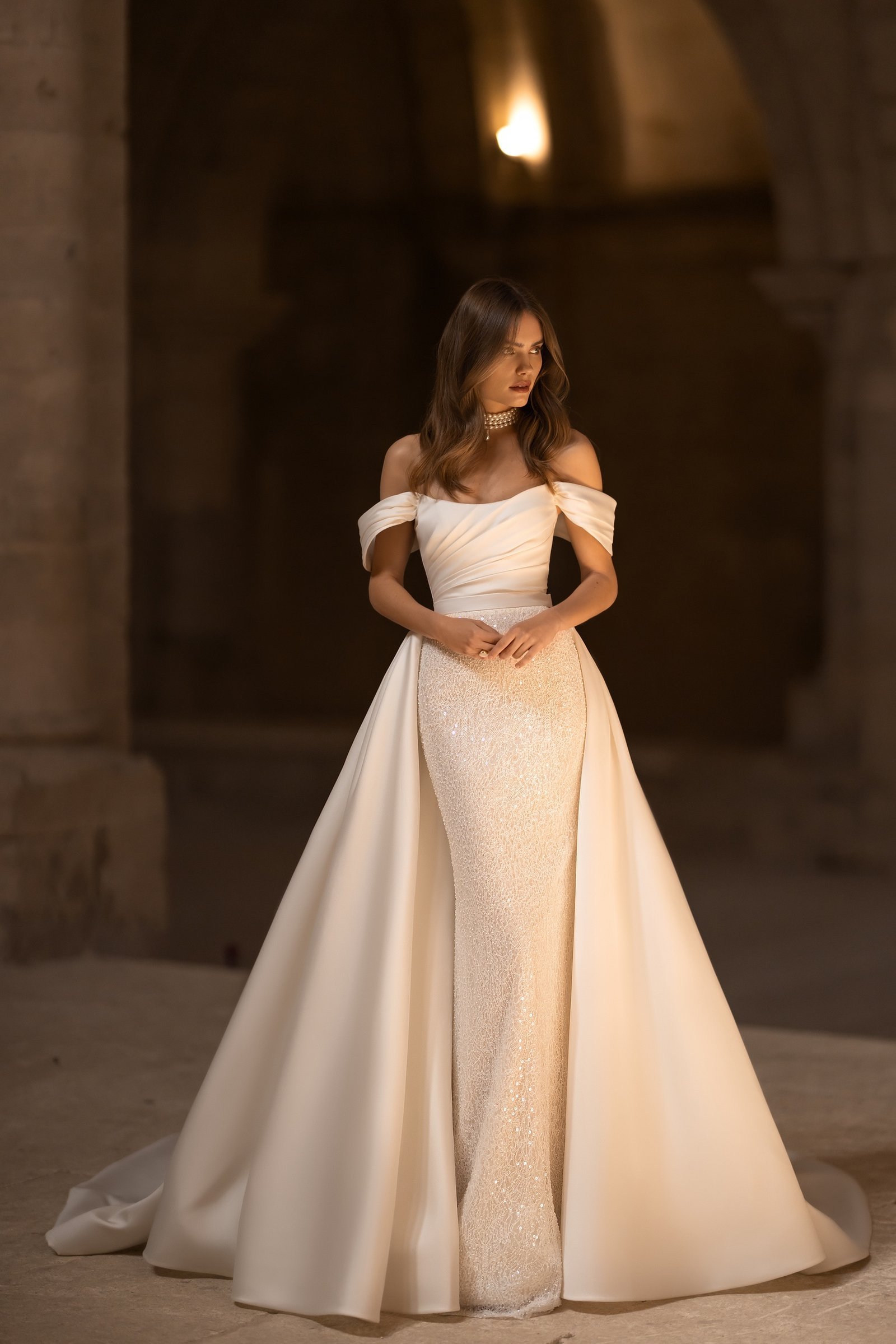
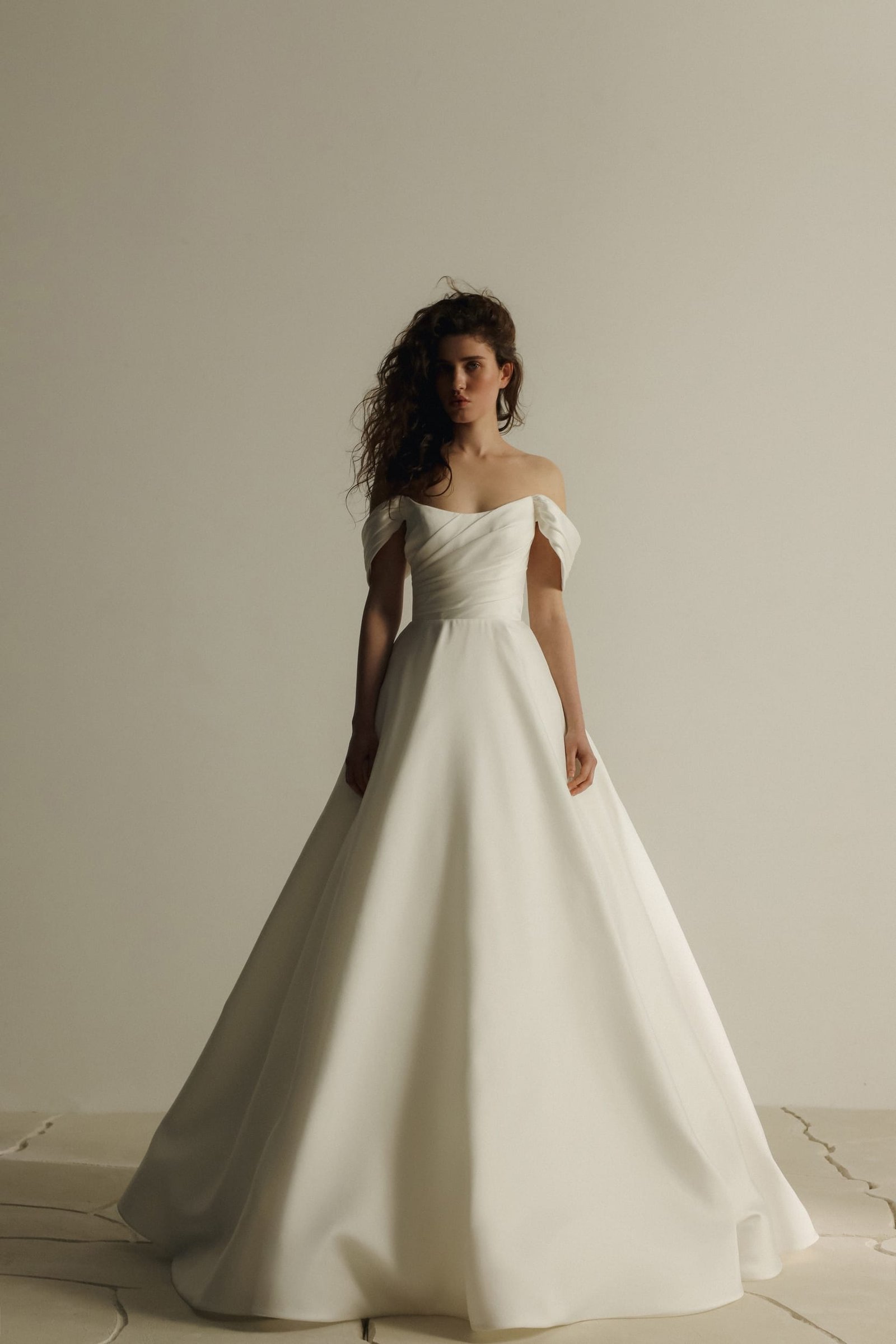
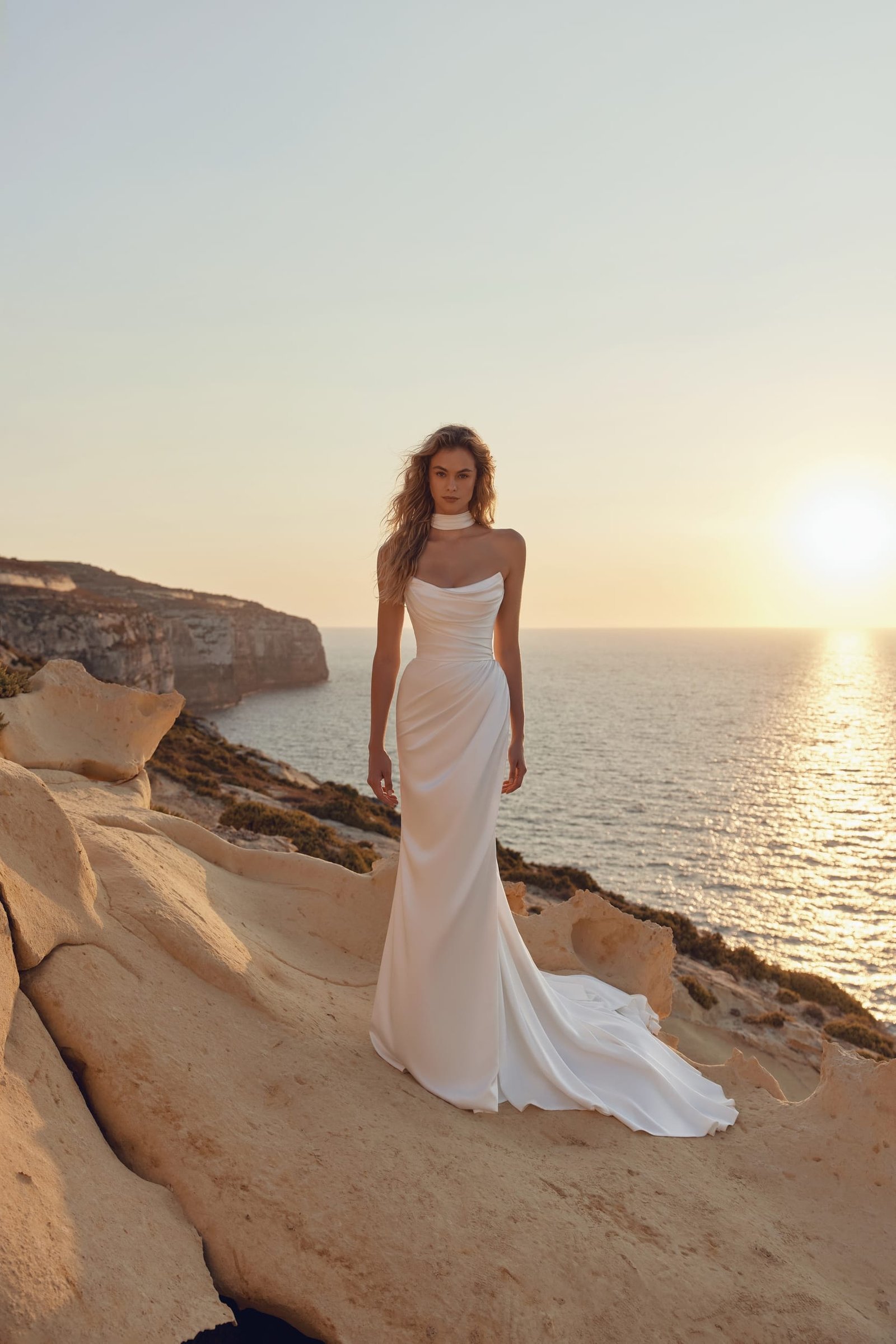
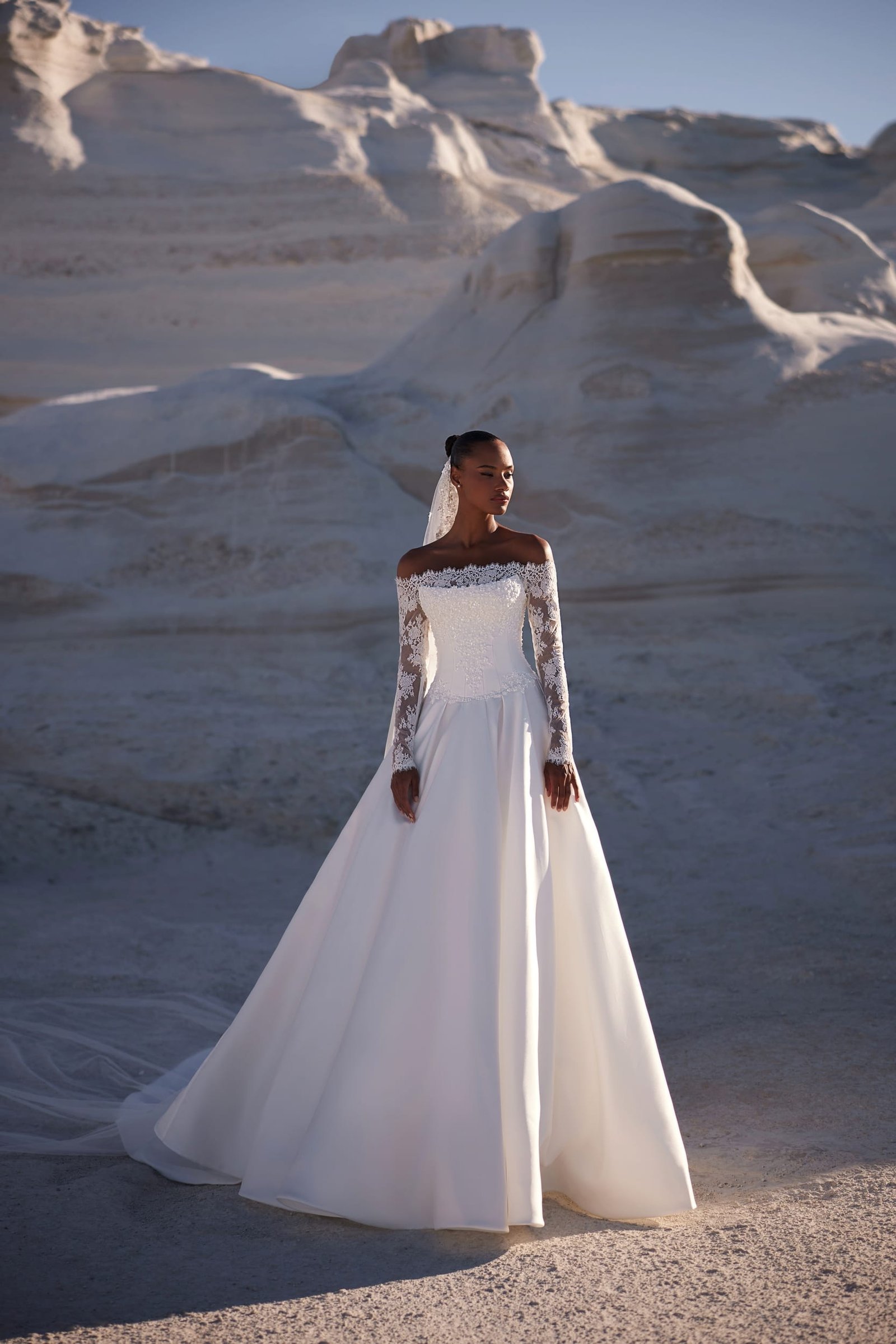
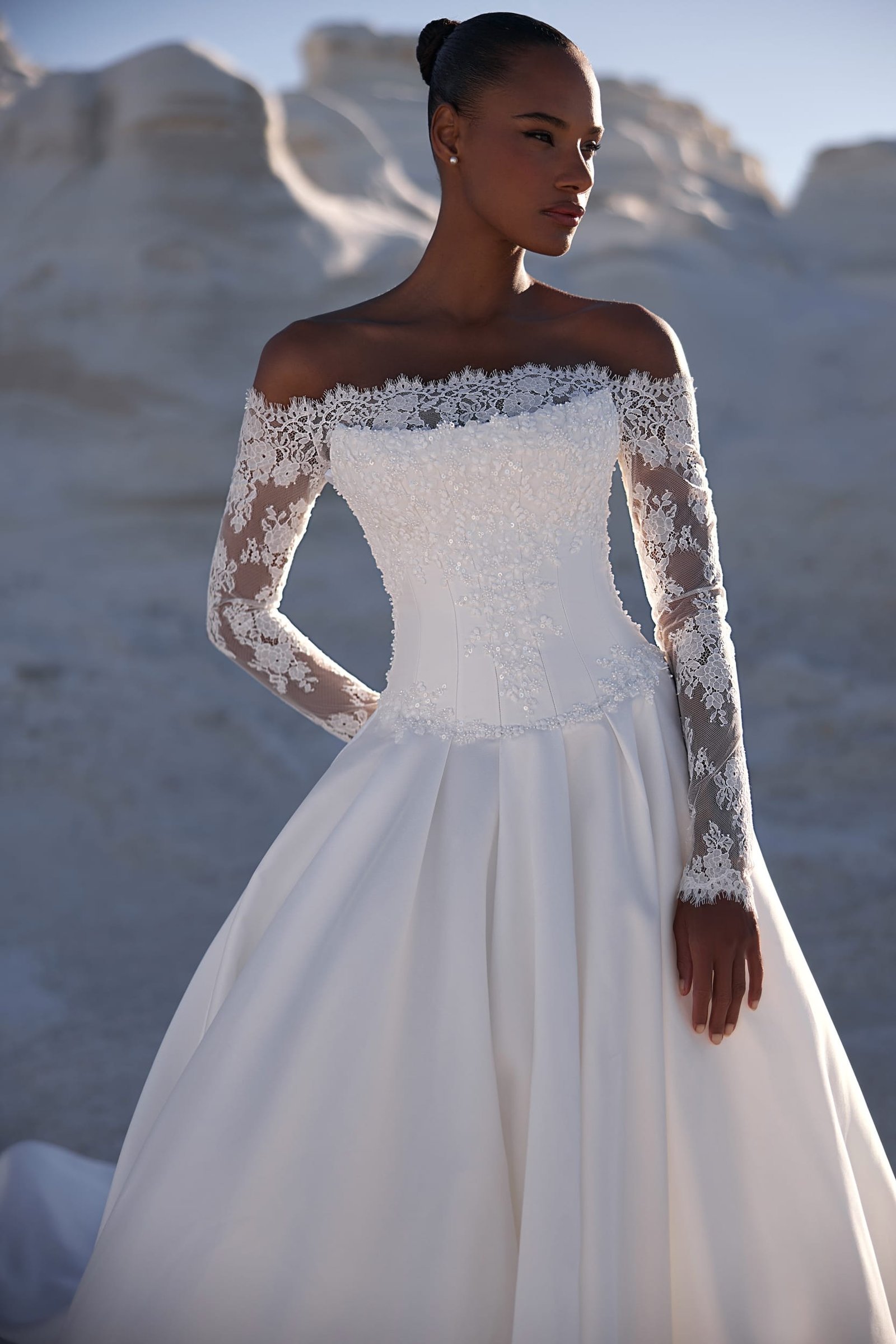
Rouge combines satin with a halter neckline and sheath or slip-style line. Este pairs satin with mikado, a pointed basque waist and a full ball-gown skirt. The same smooth finish can therefore sit within very different proportions. Rouge lets satin fall close to the body; Este makes broad folds part of the silhouette.
Does satin always drape the same way?
No. The fabric’s weight, lining and the dress’s construction affect whether it follows the body or holds a more defined shape.