
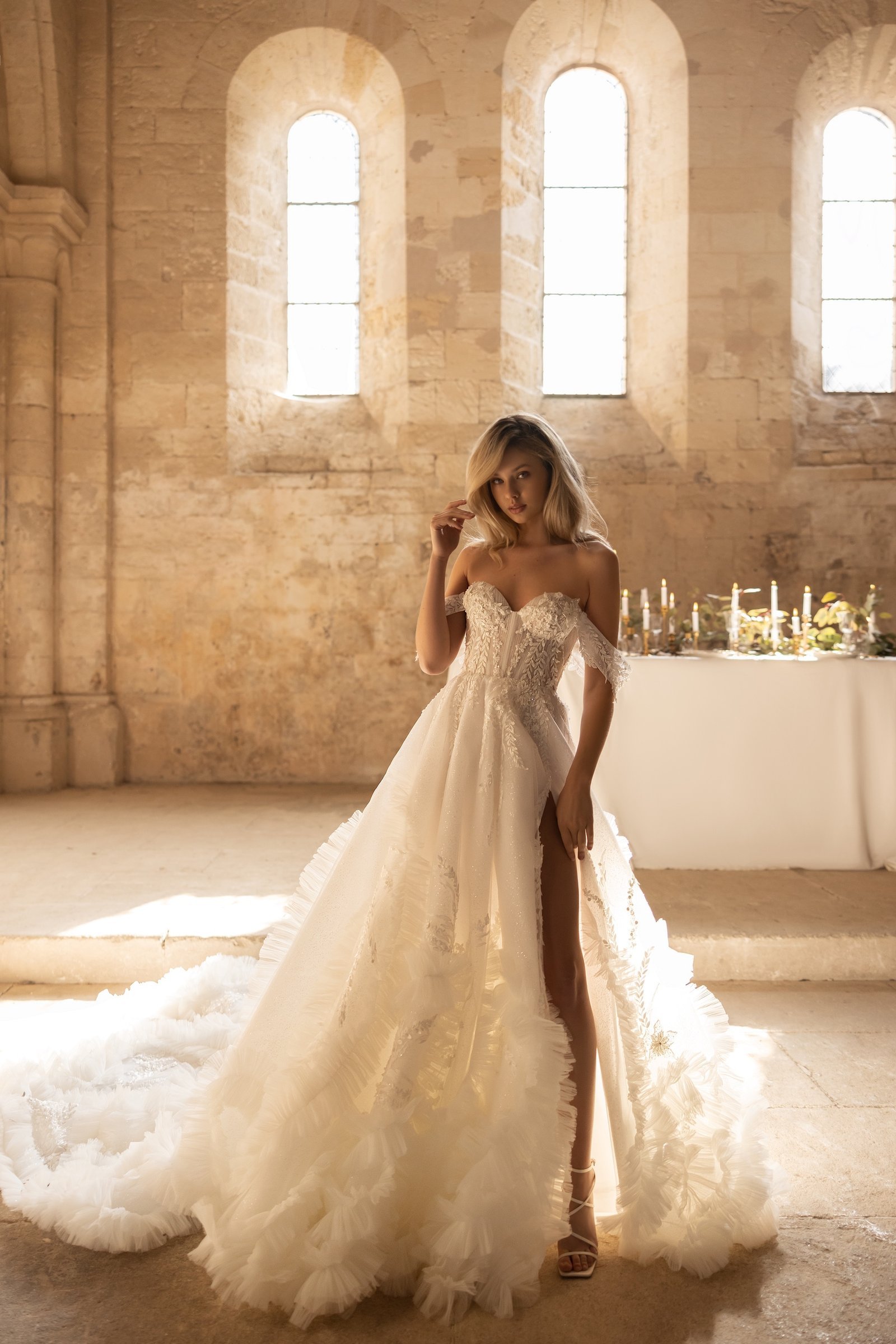
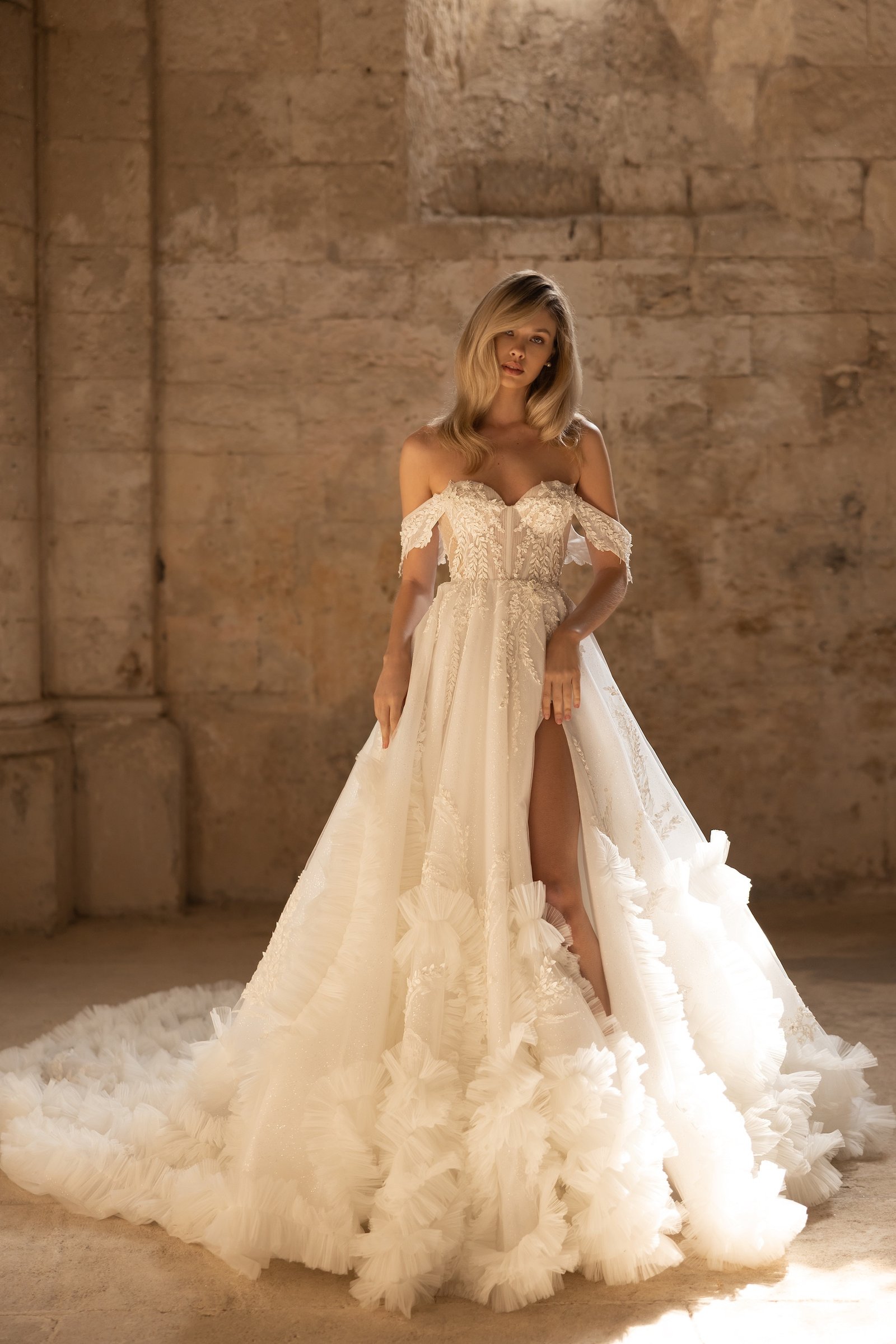
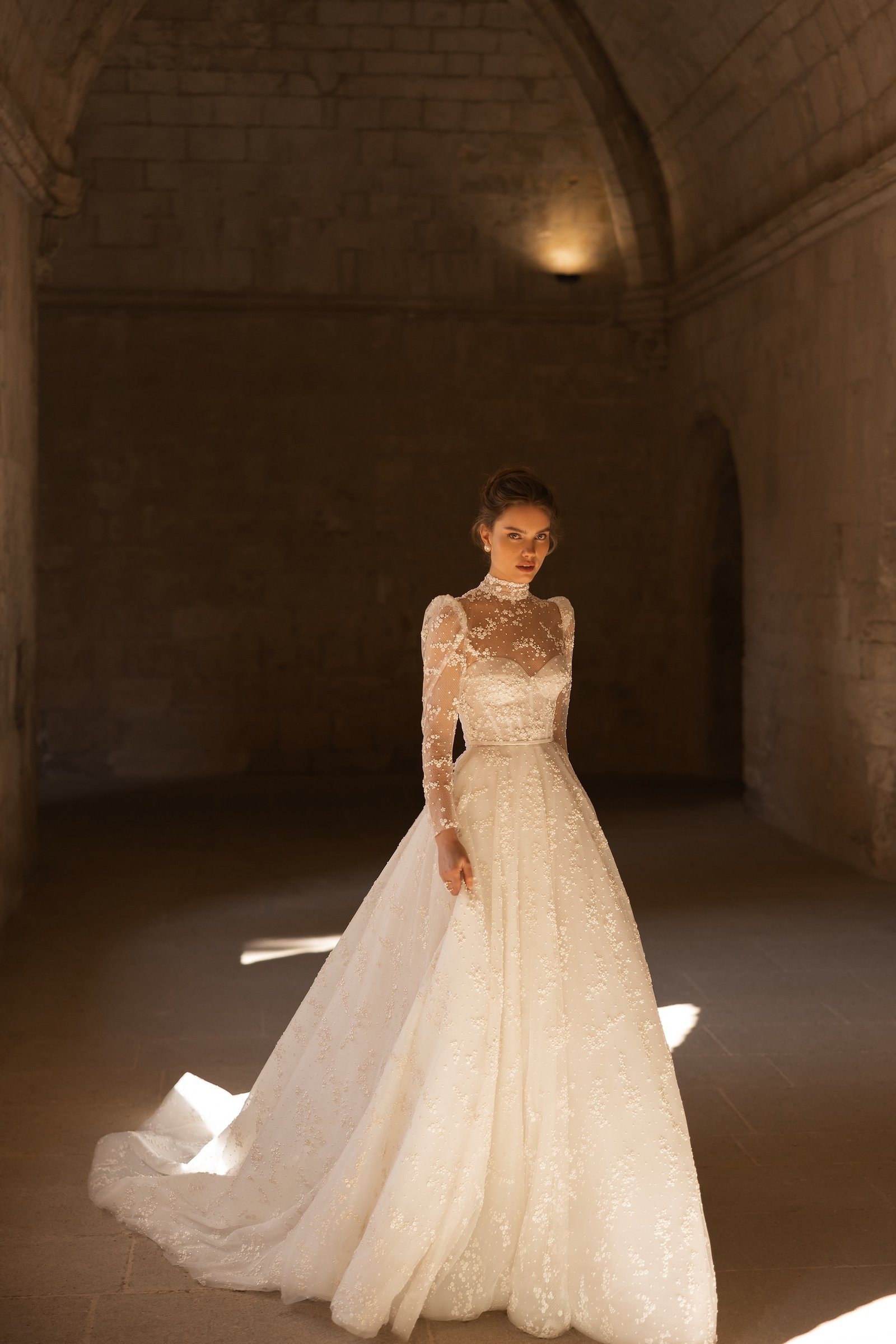
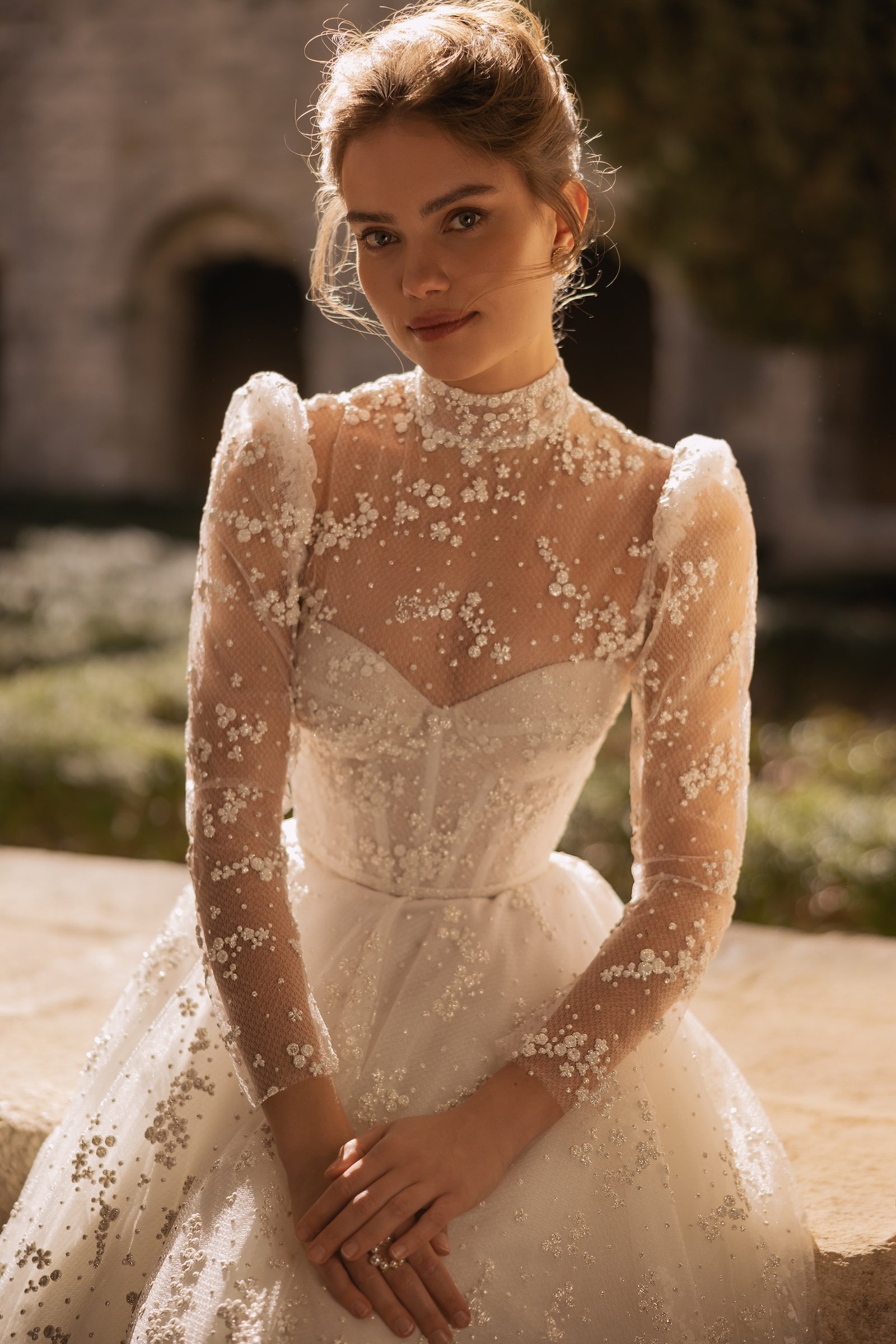
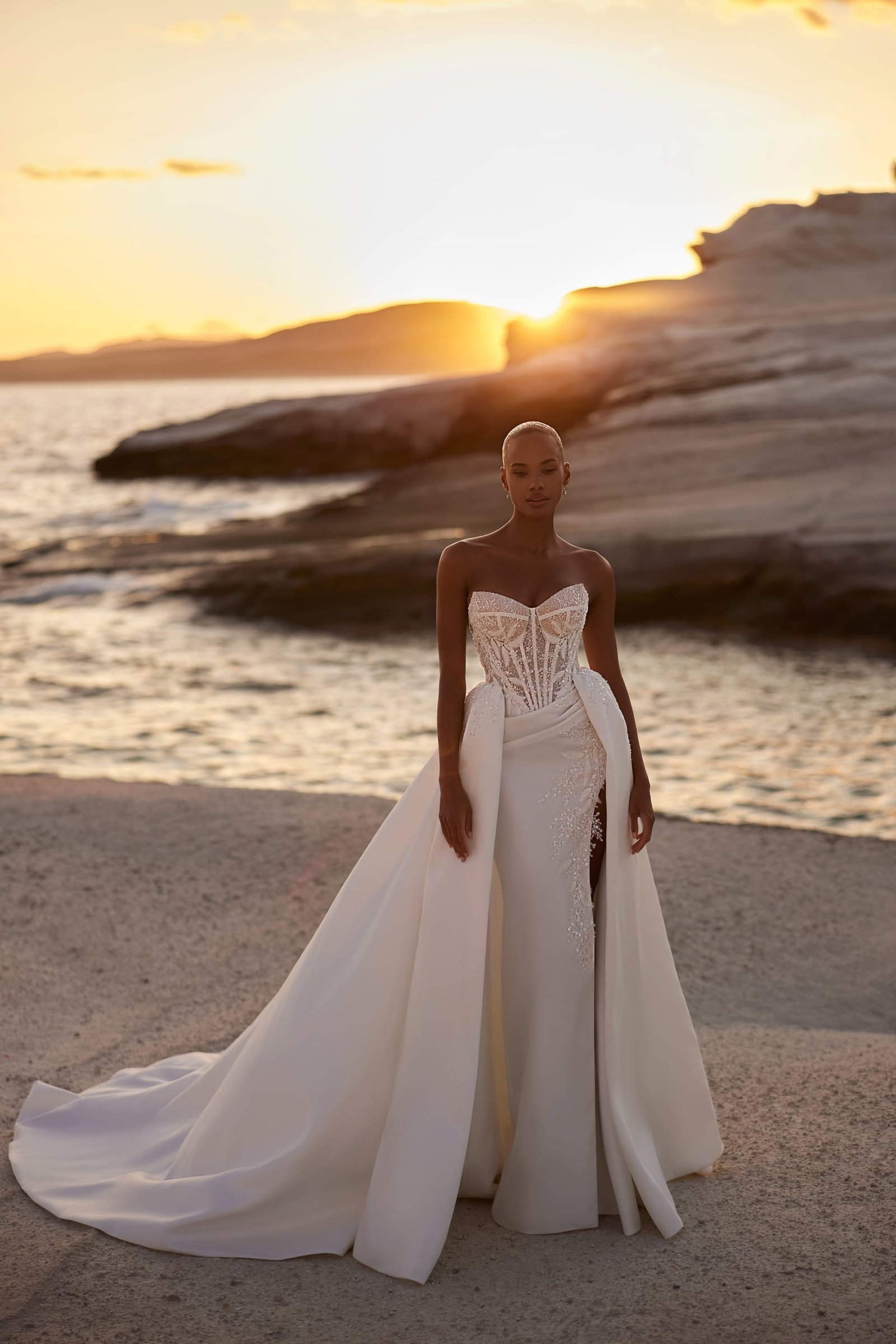
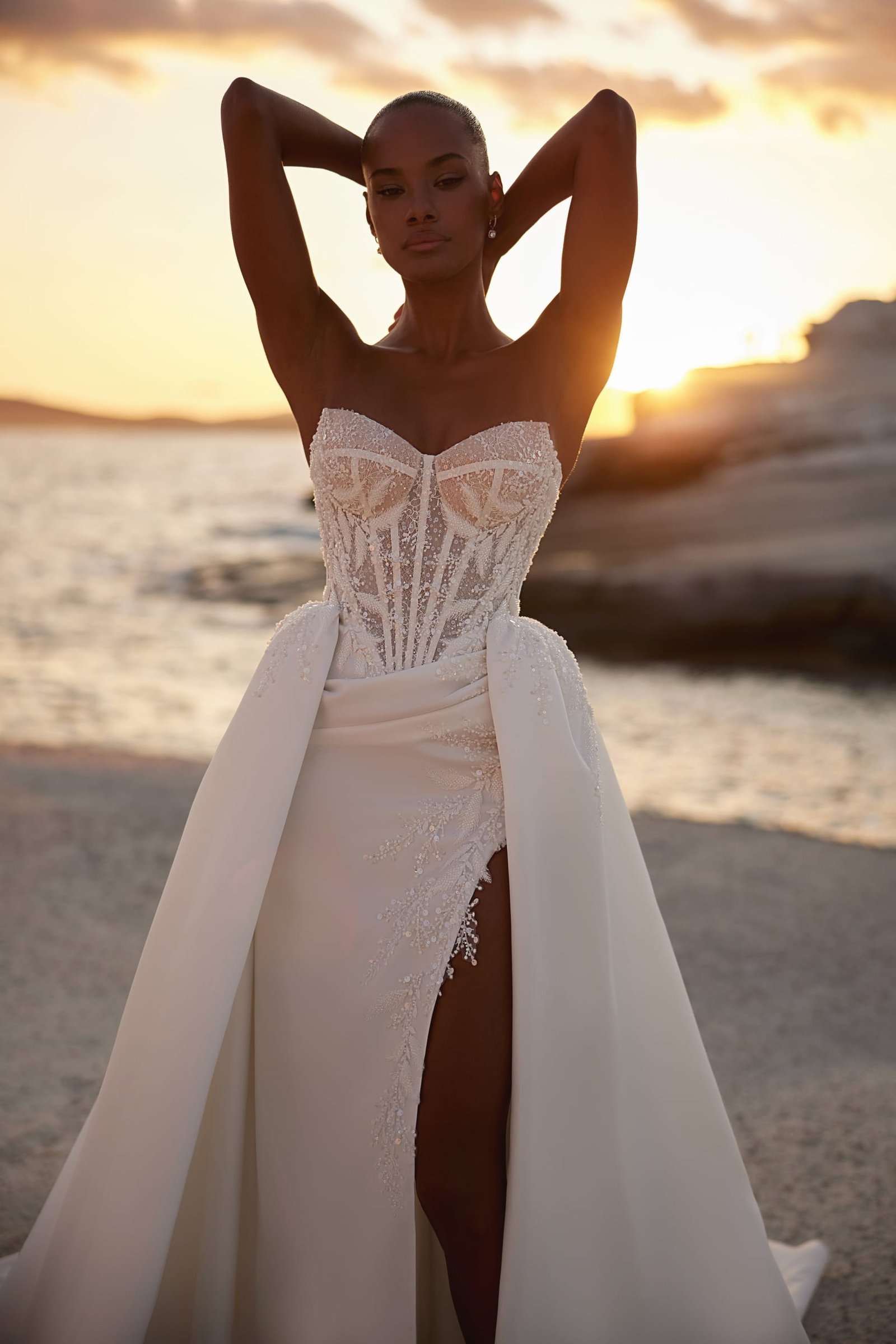
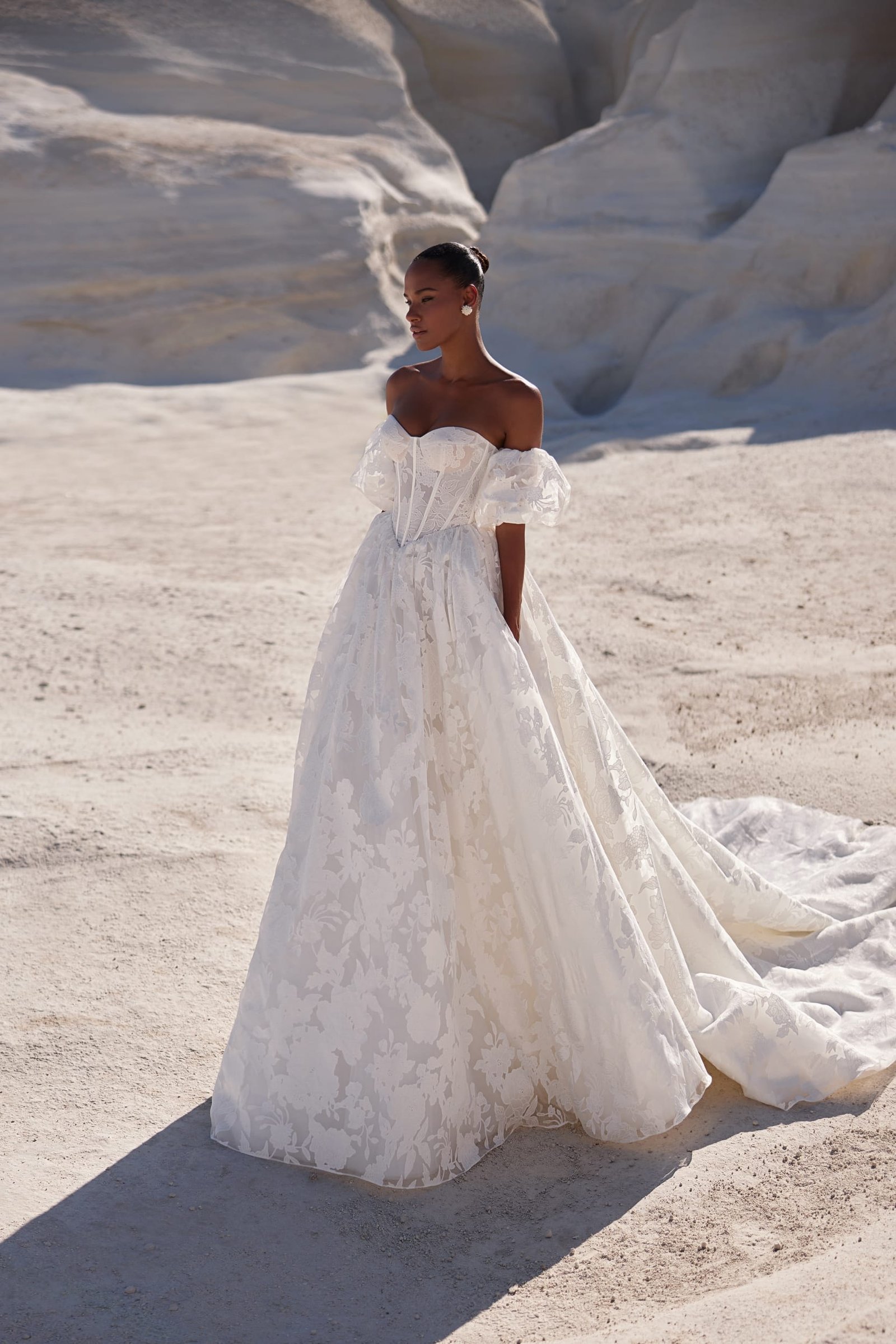
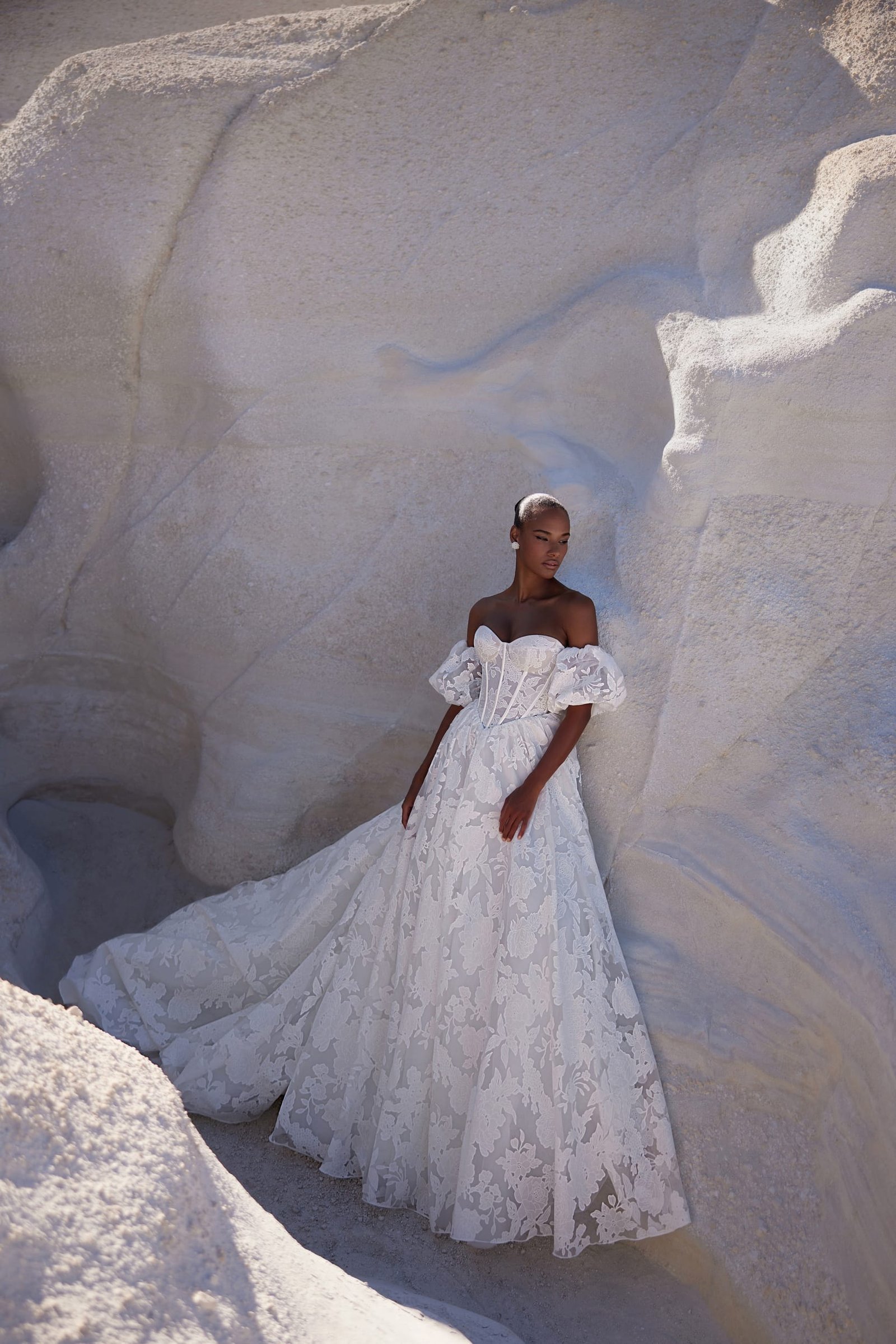
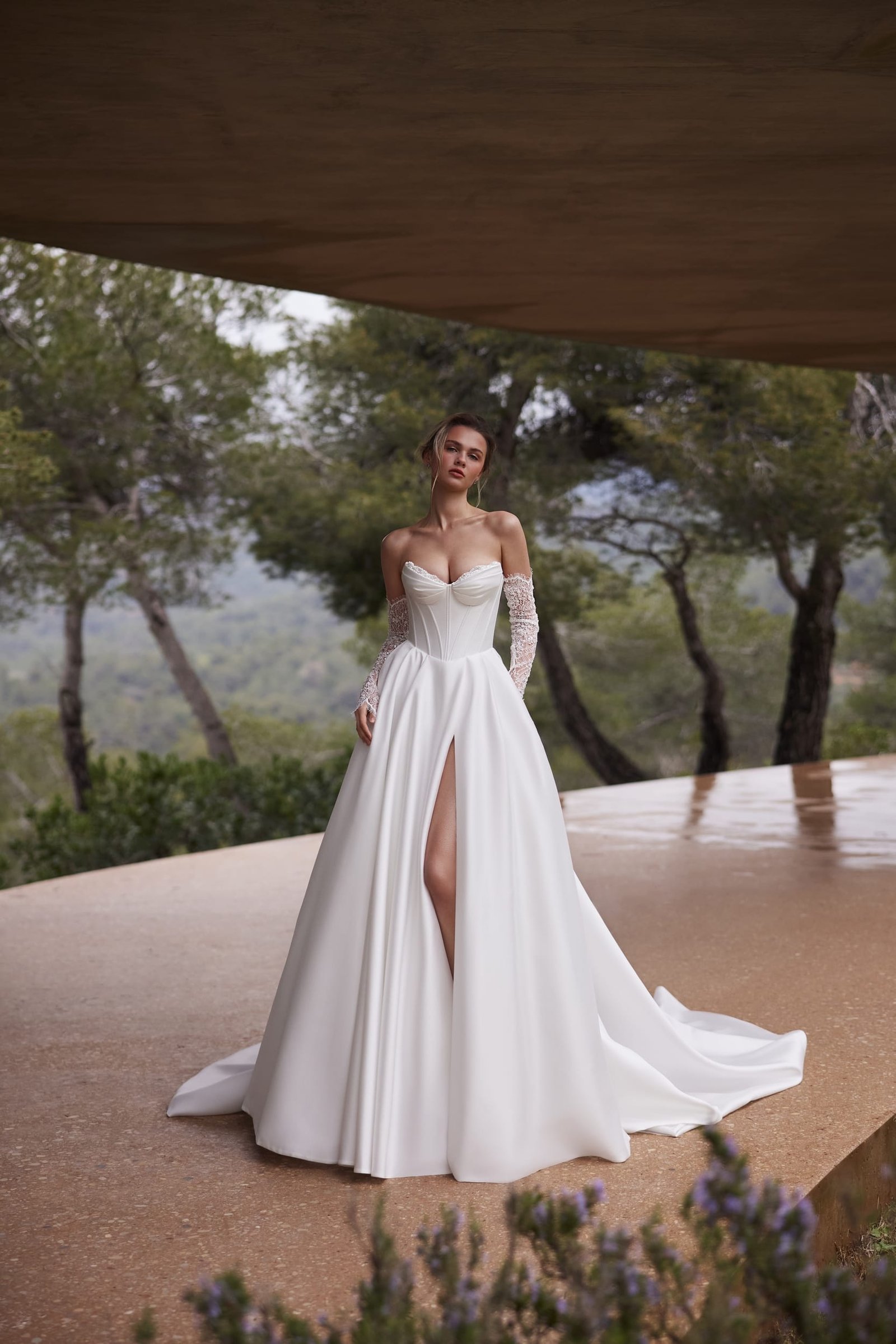
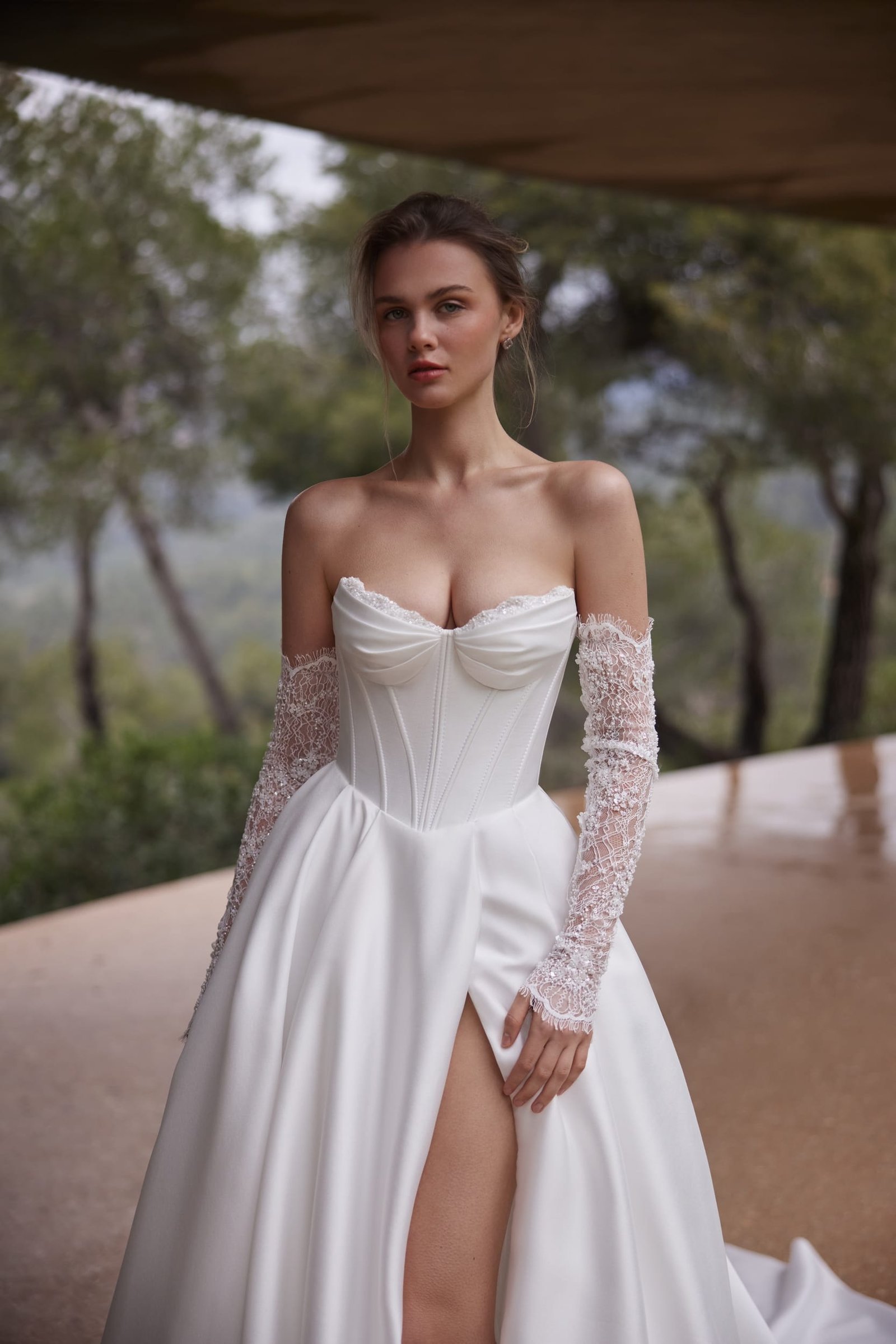
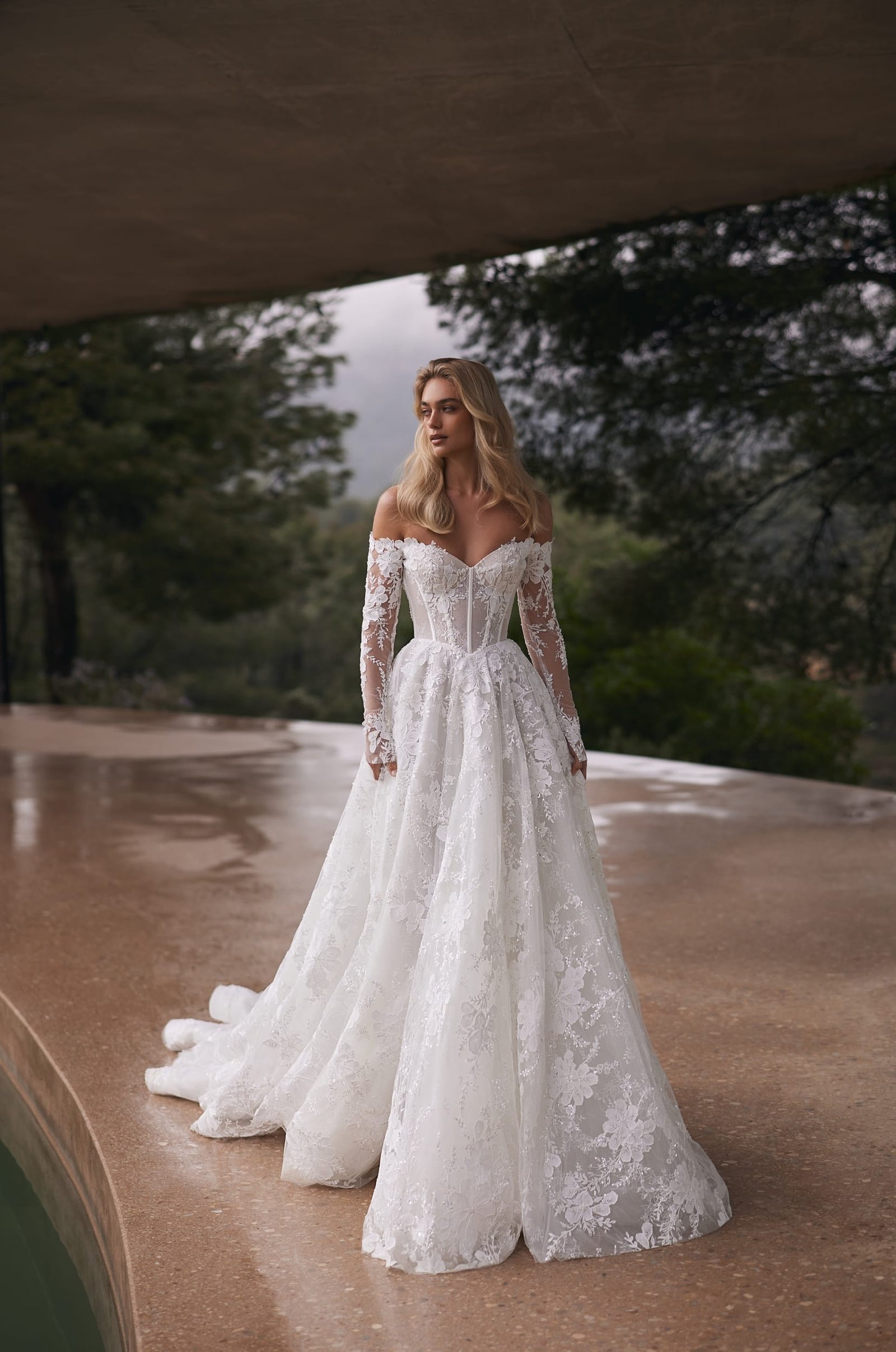
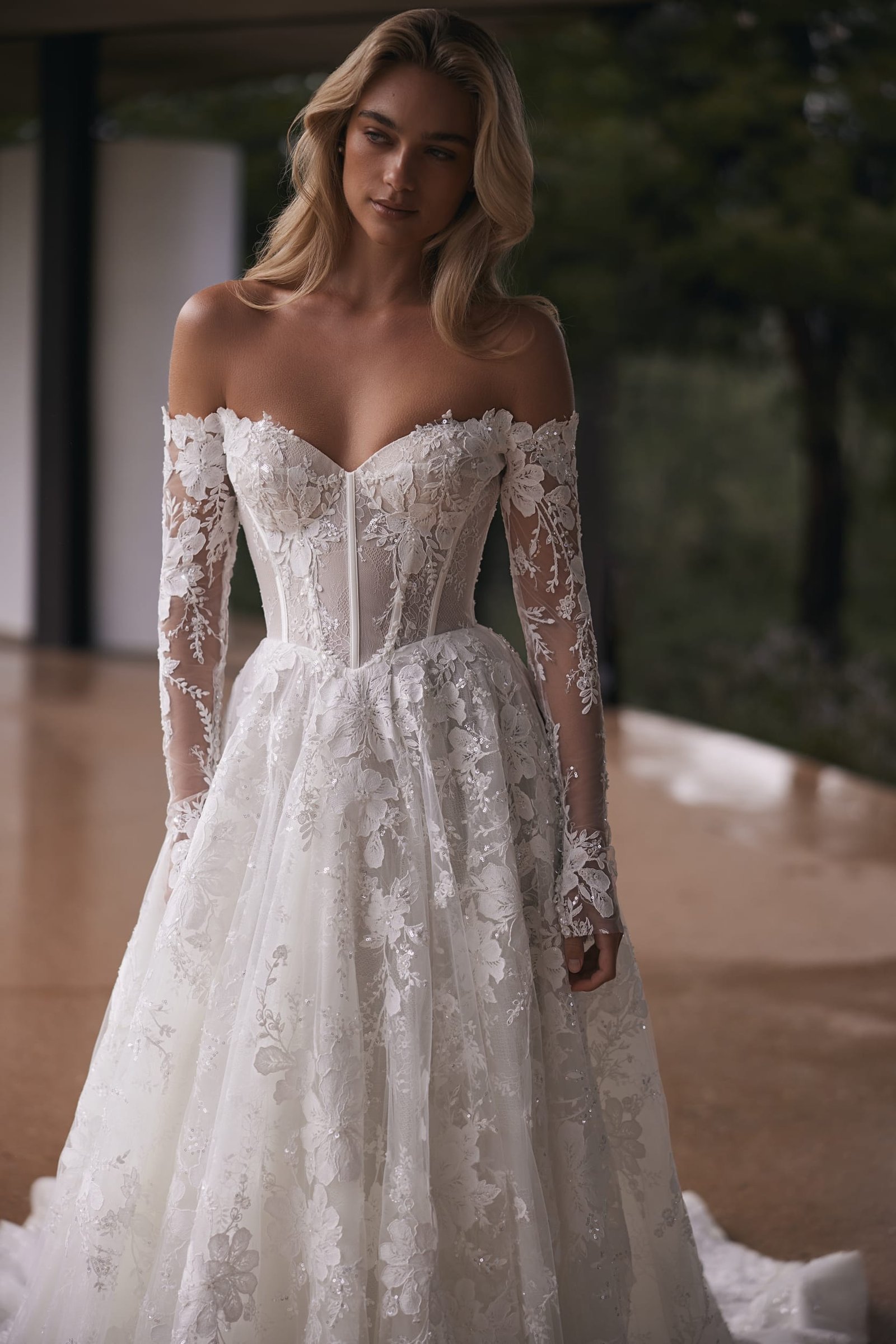
Pattern made with thread
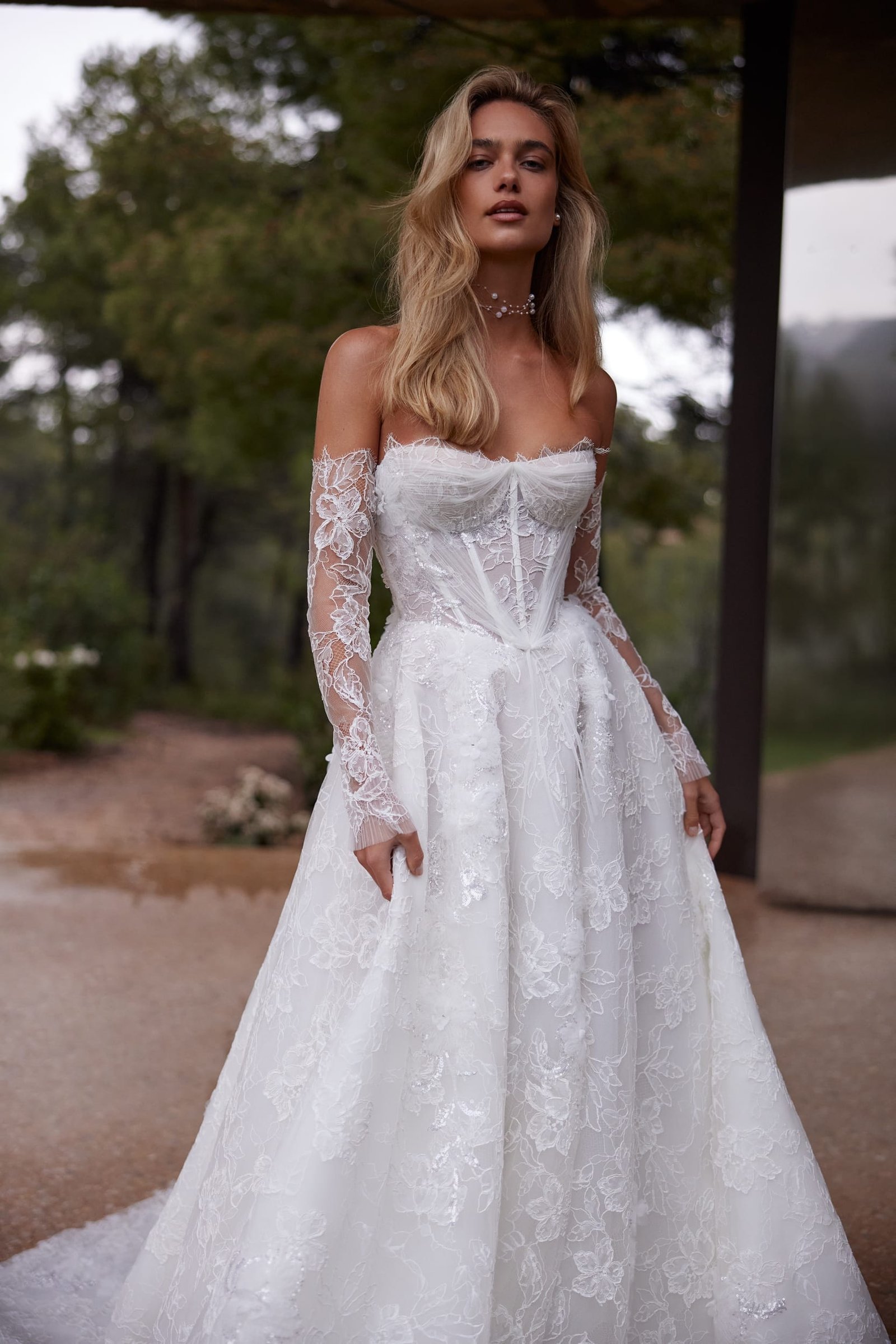
Embroidery may trace a neckline or sleeve, form a repeating pattern, or spread across a larger area. Unlike a flat print, stitching can give a motif texture and dimension, though the scale and density vary from one design to another.
Follow the stitched pattern
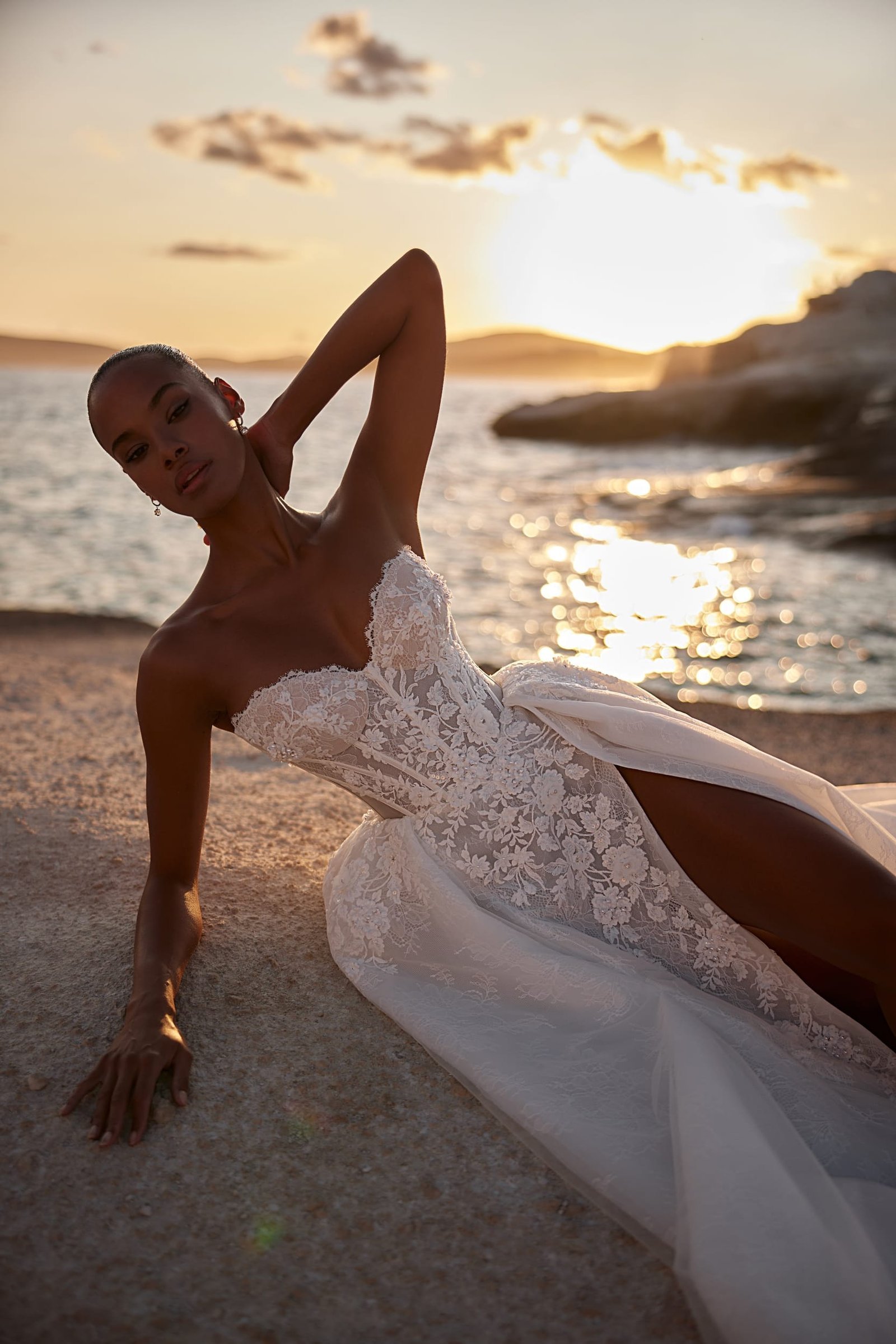
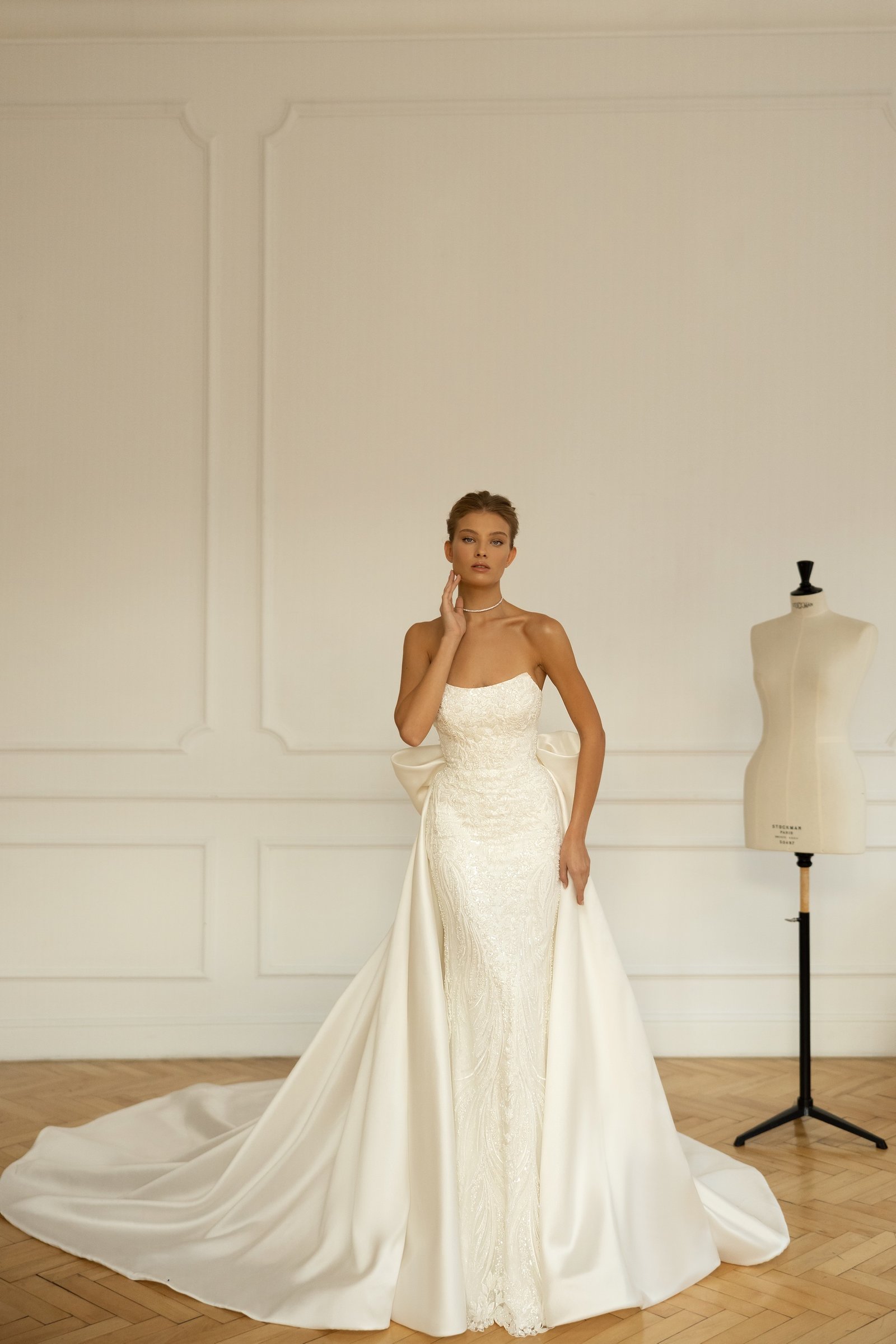
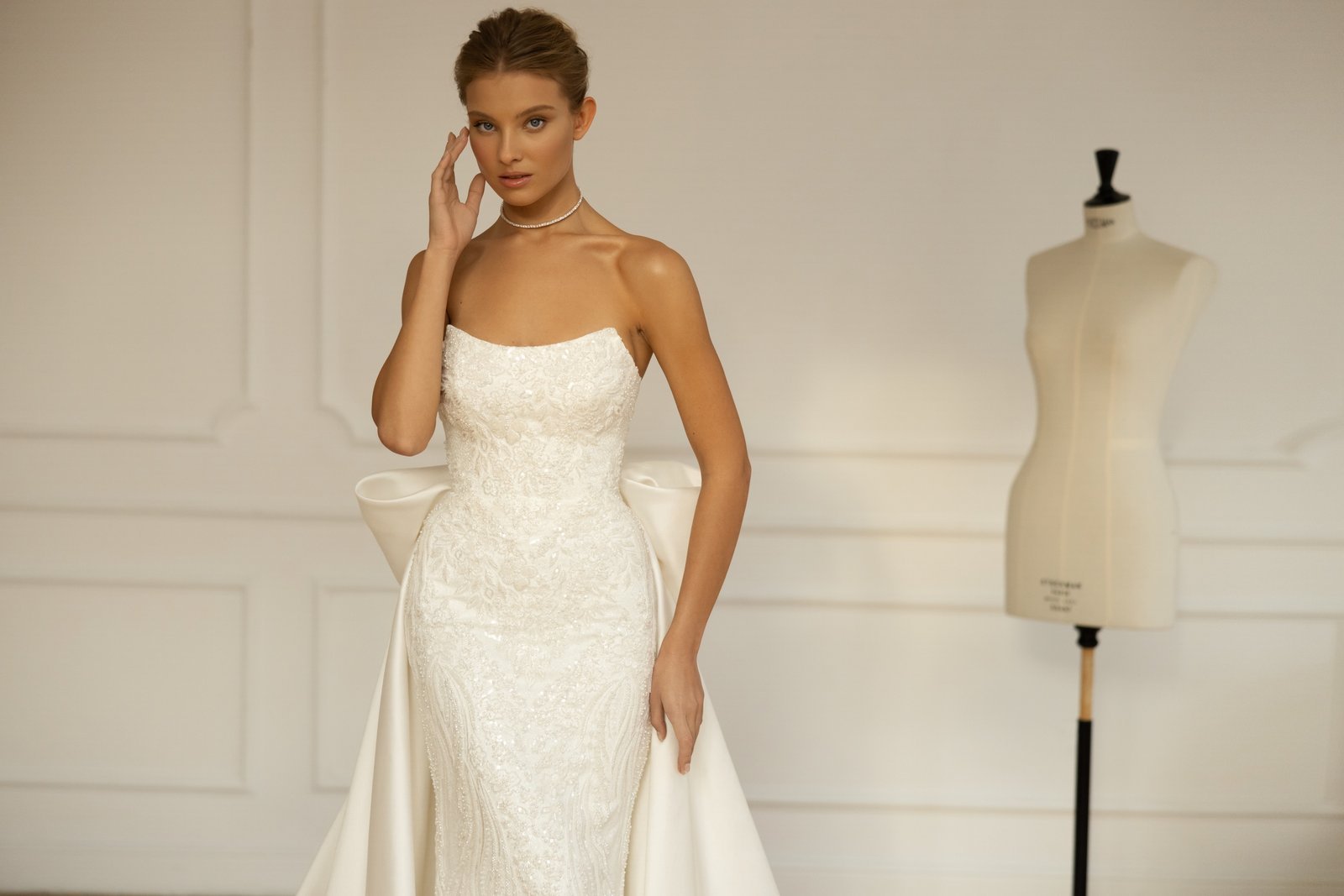
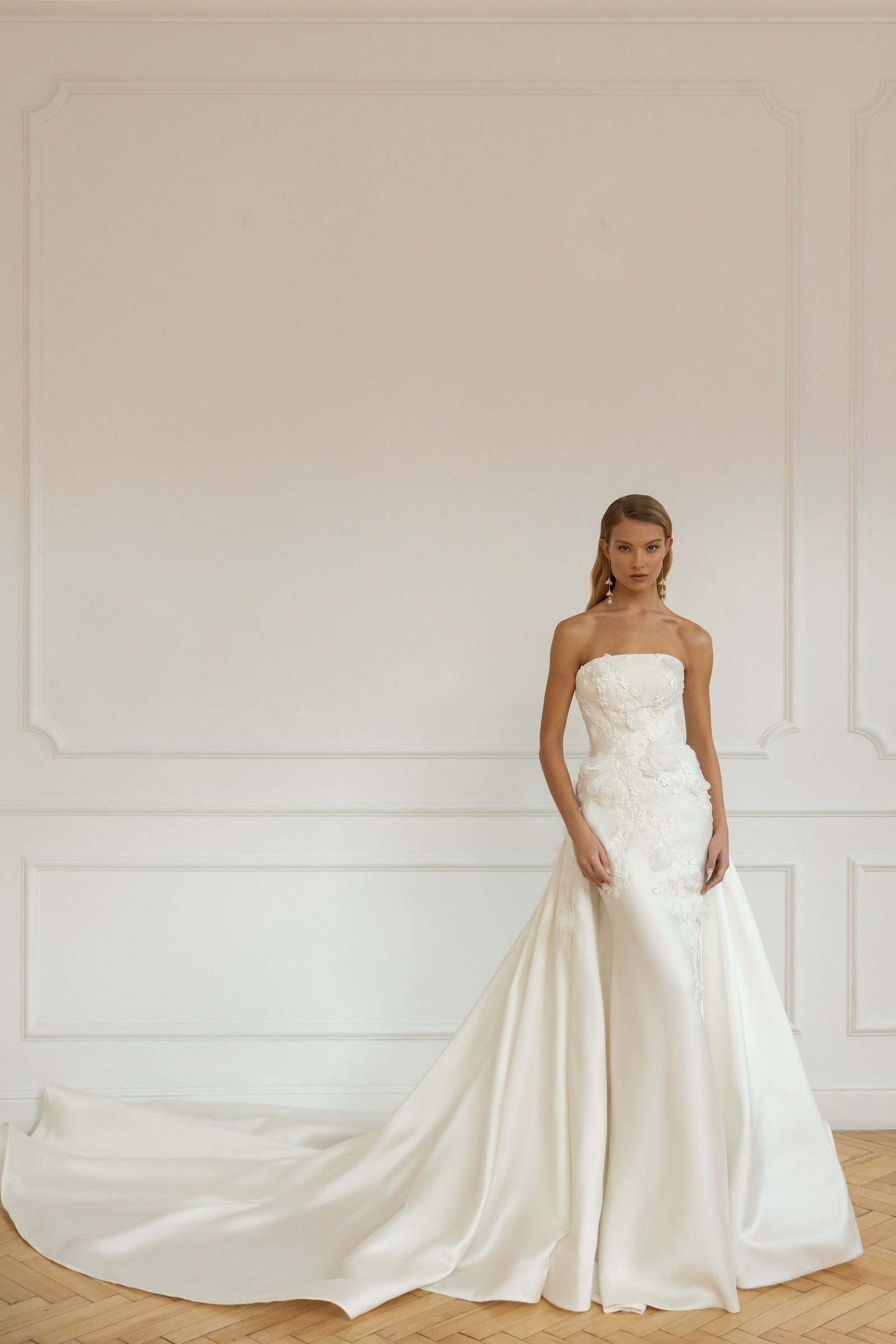
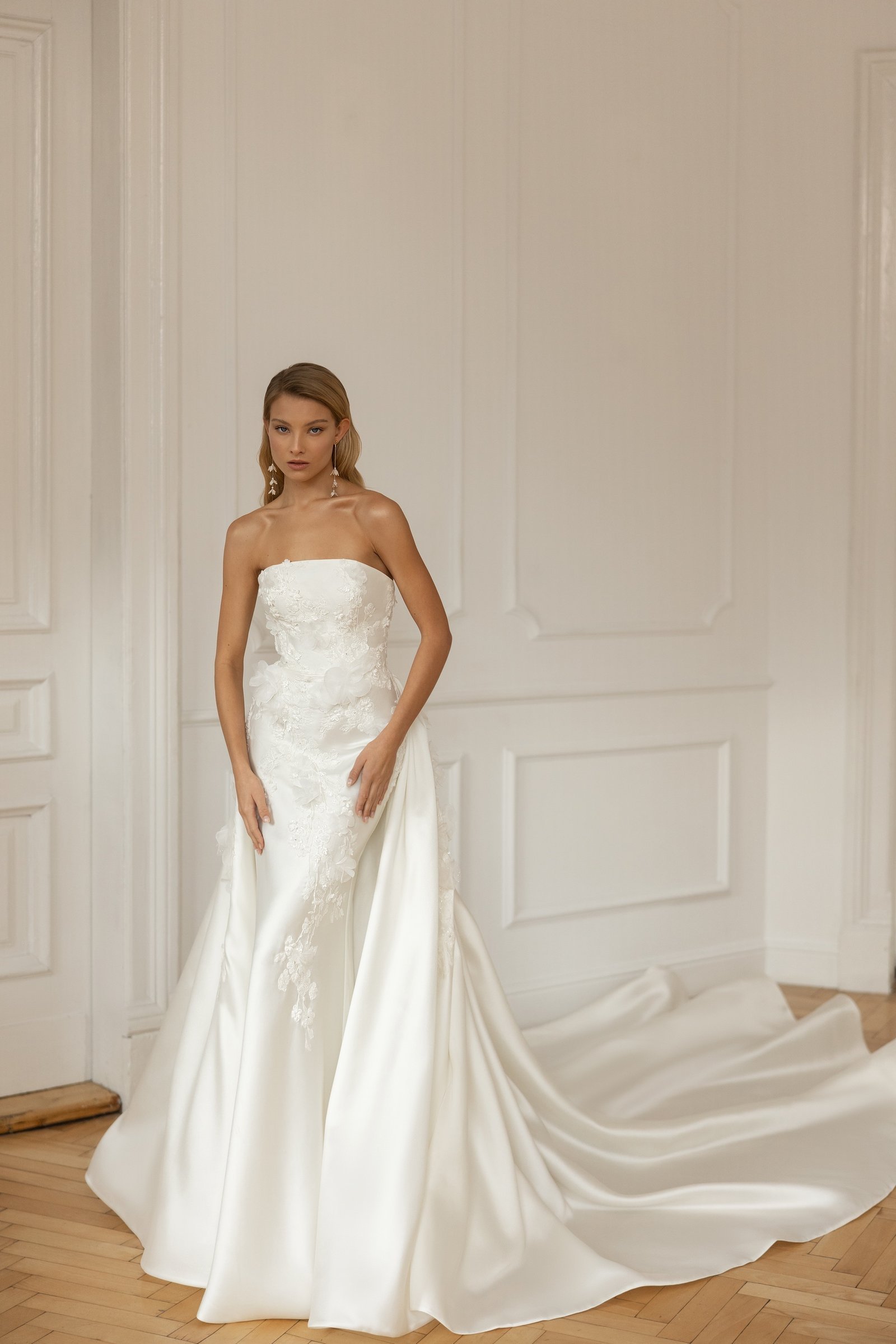
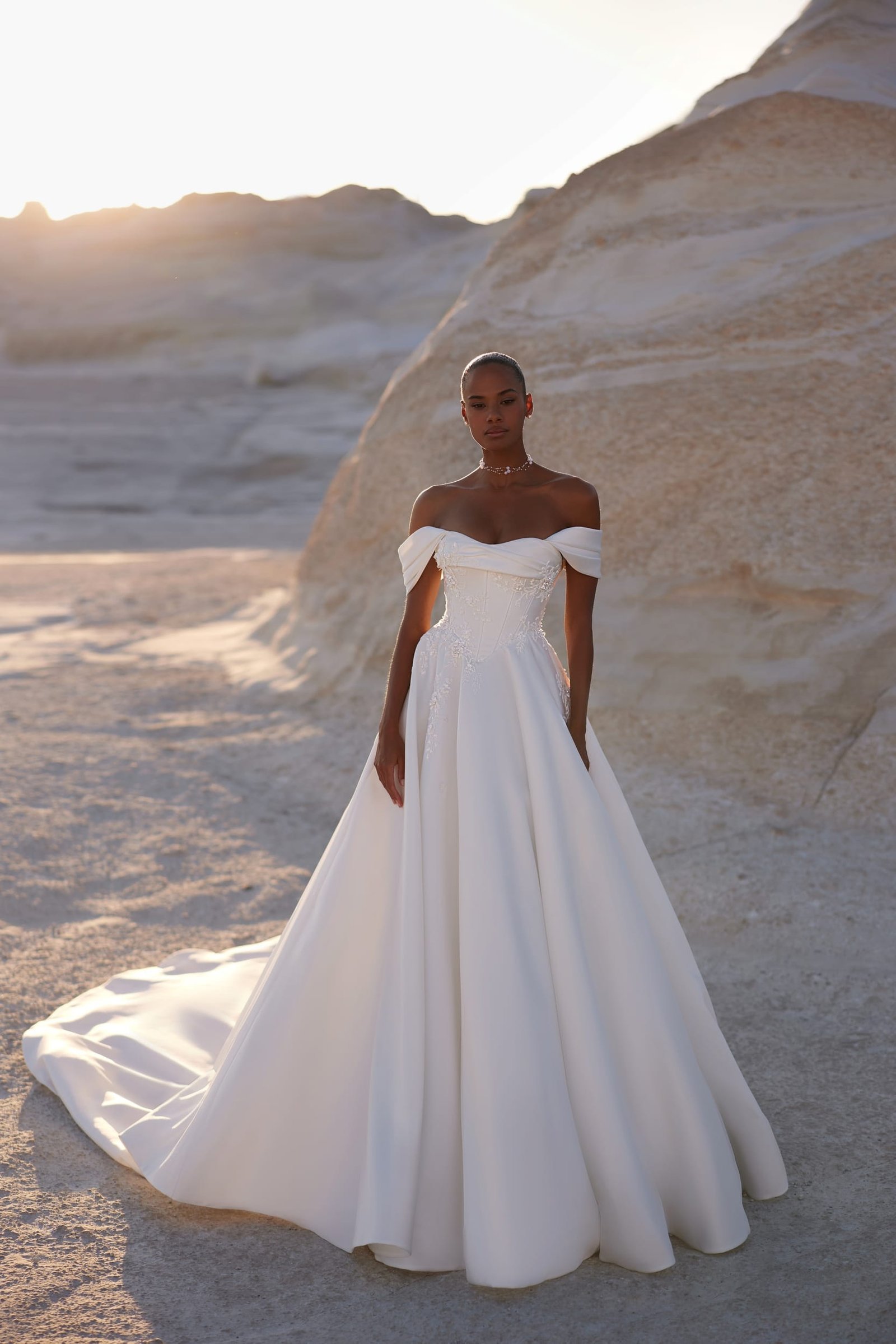
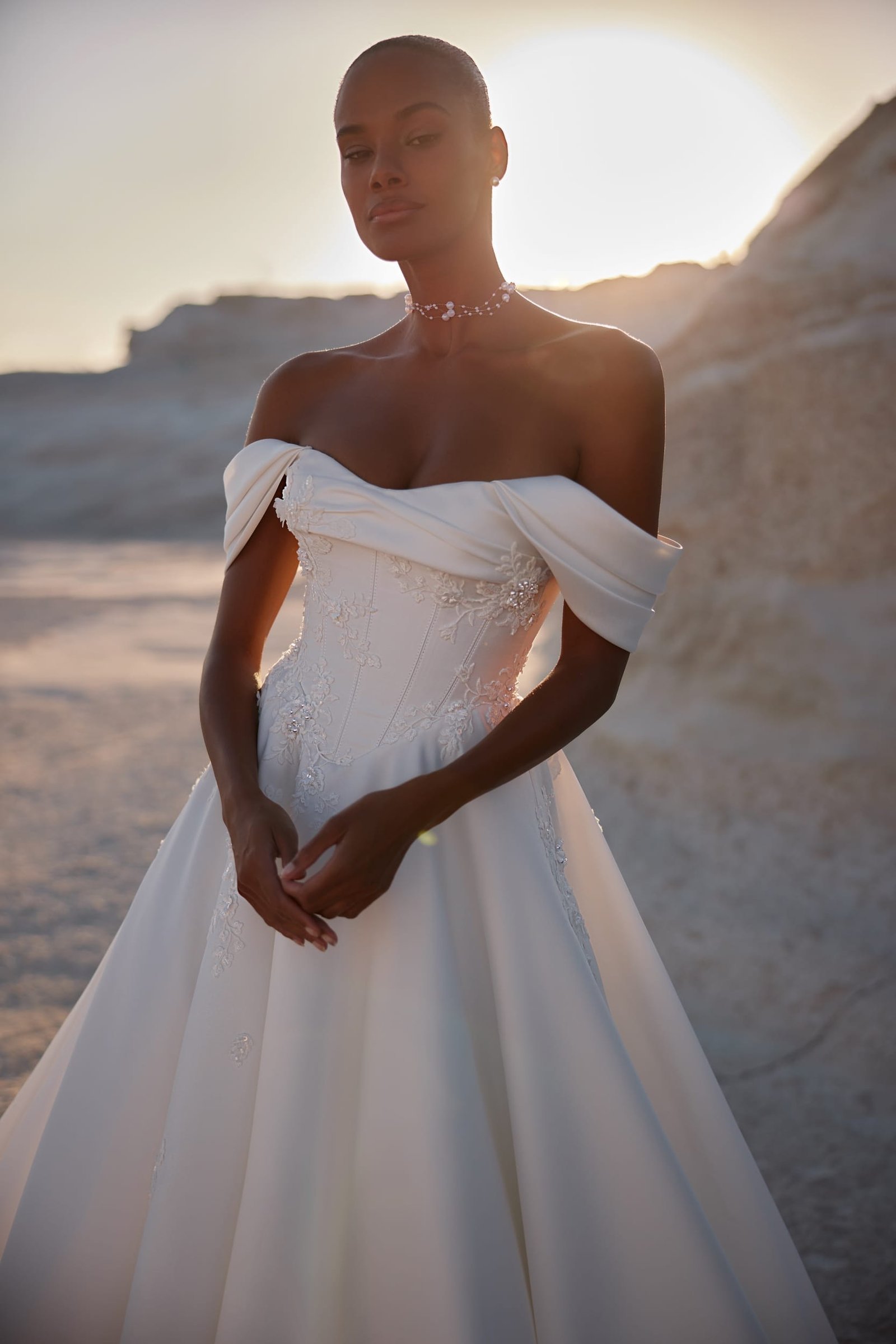
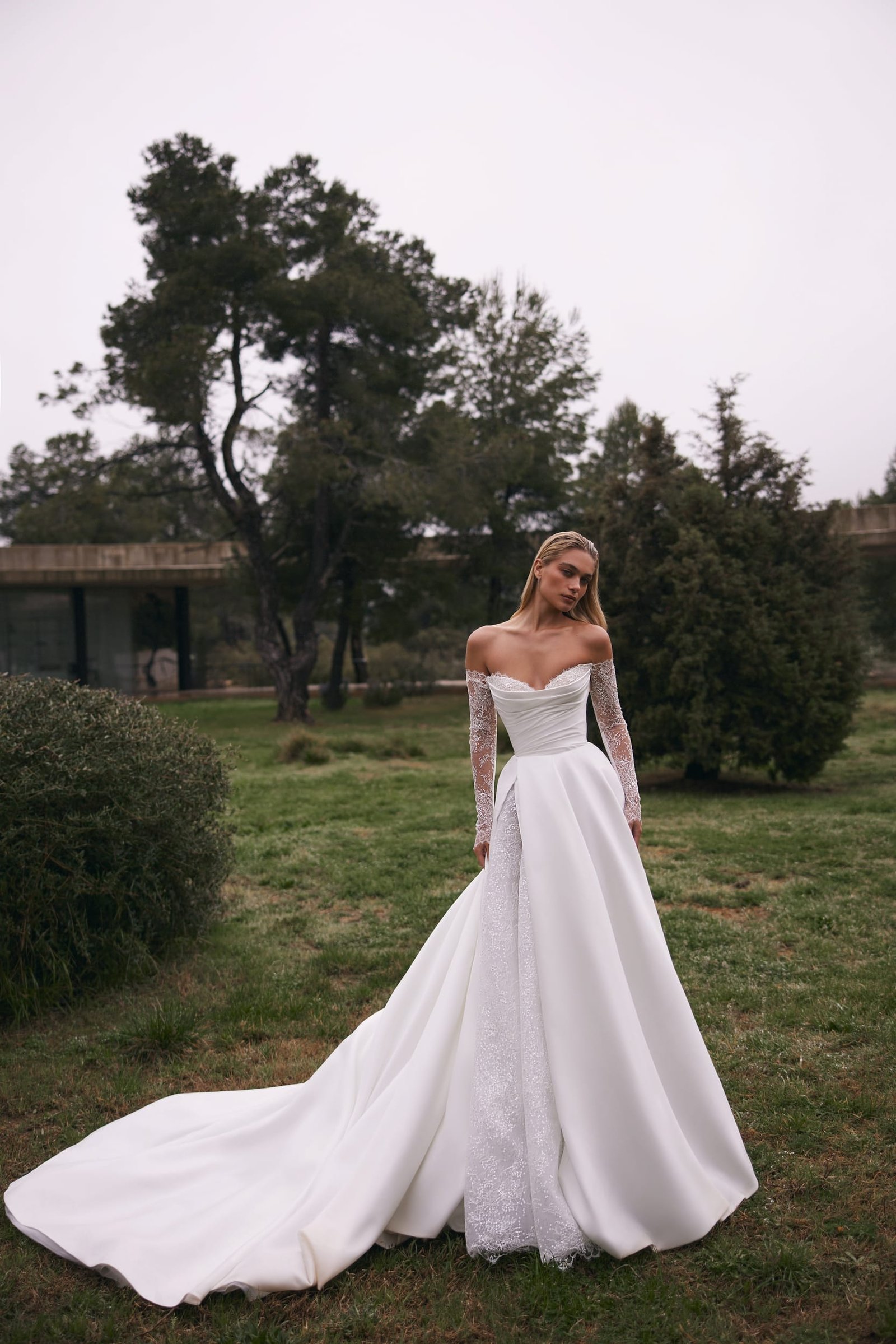
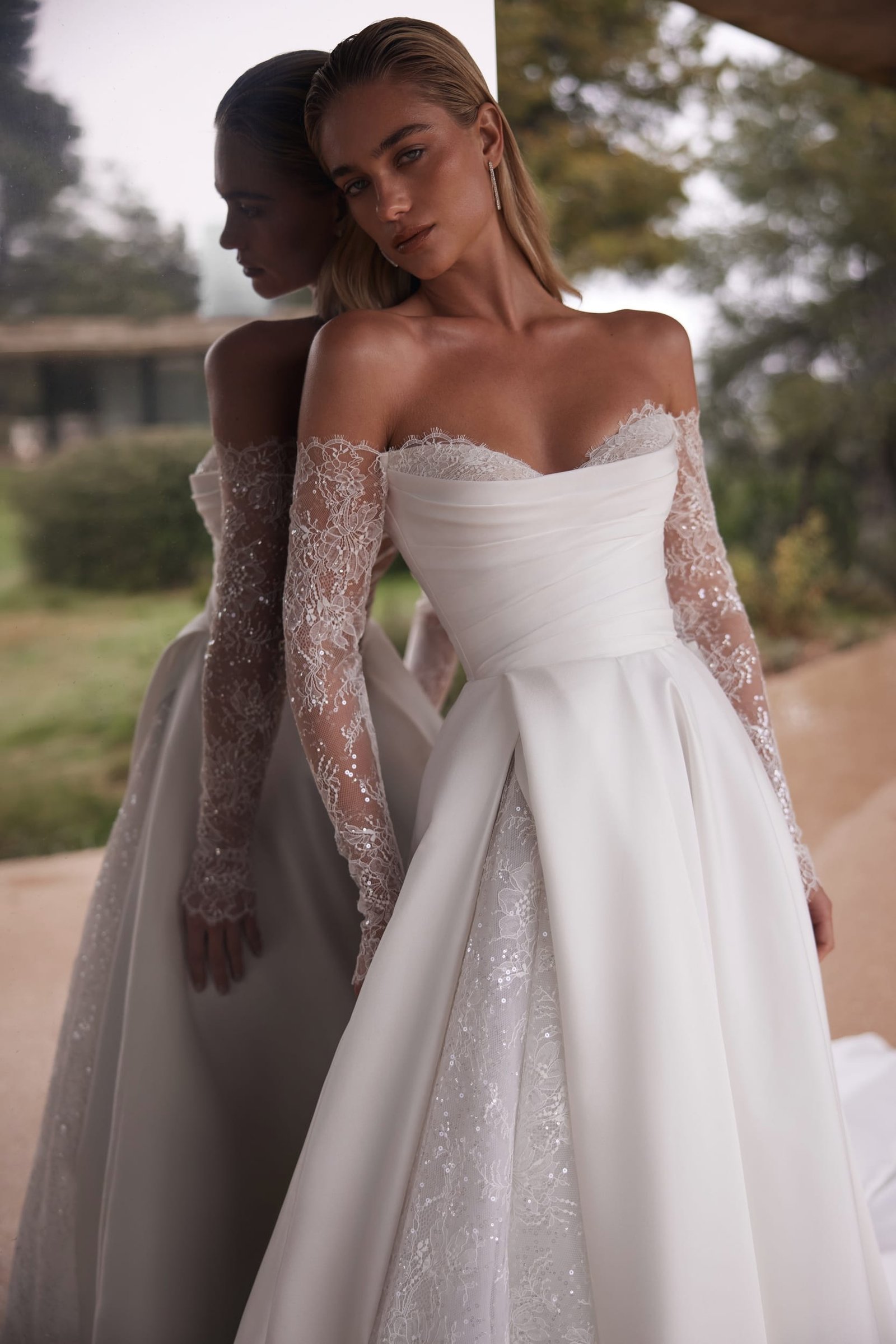
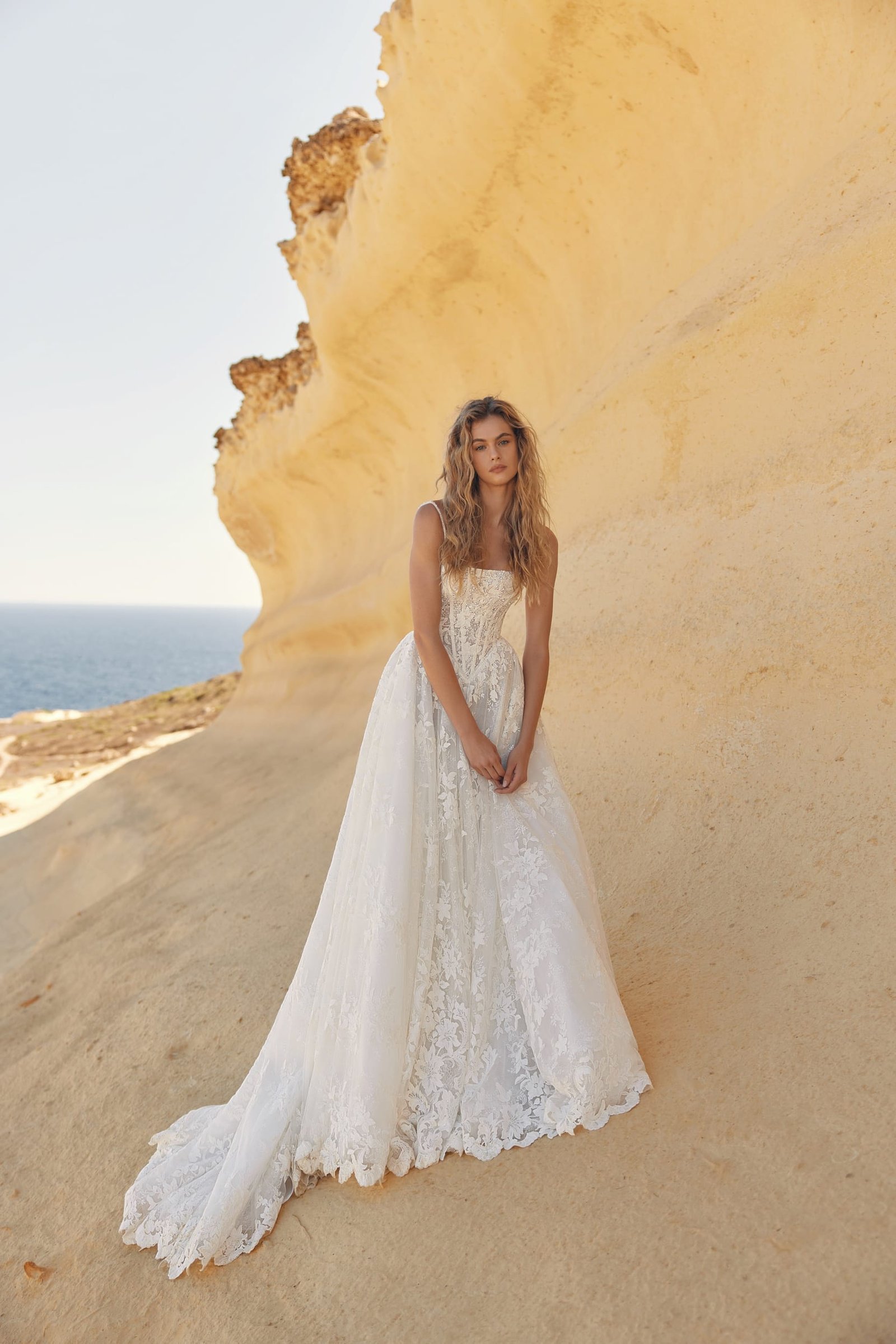
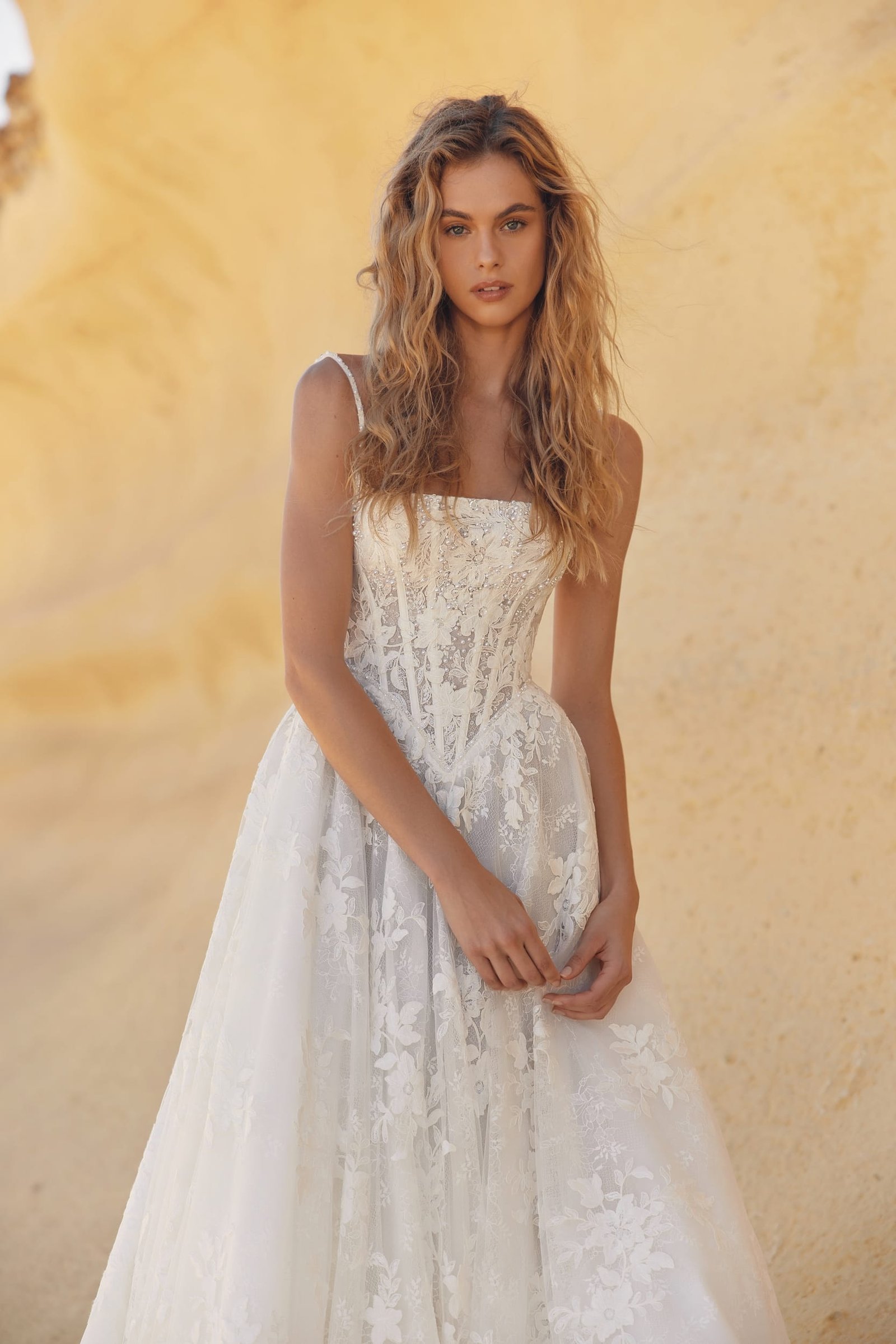
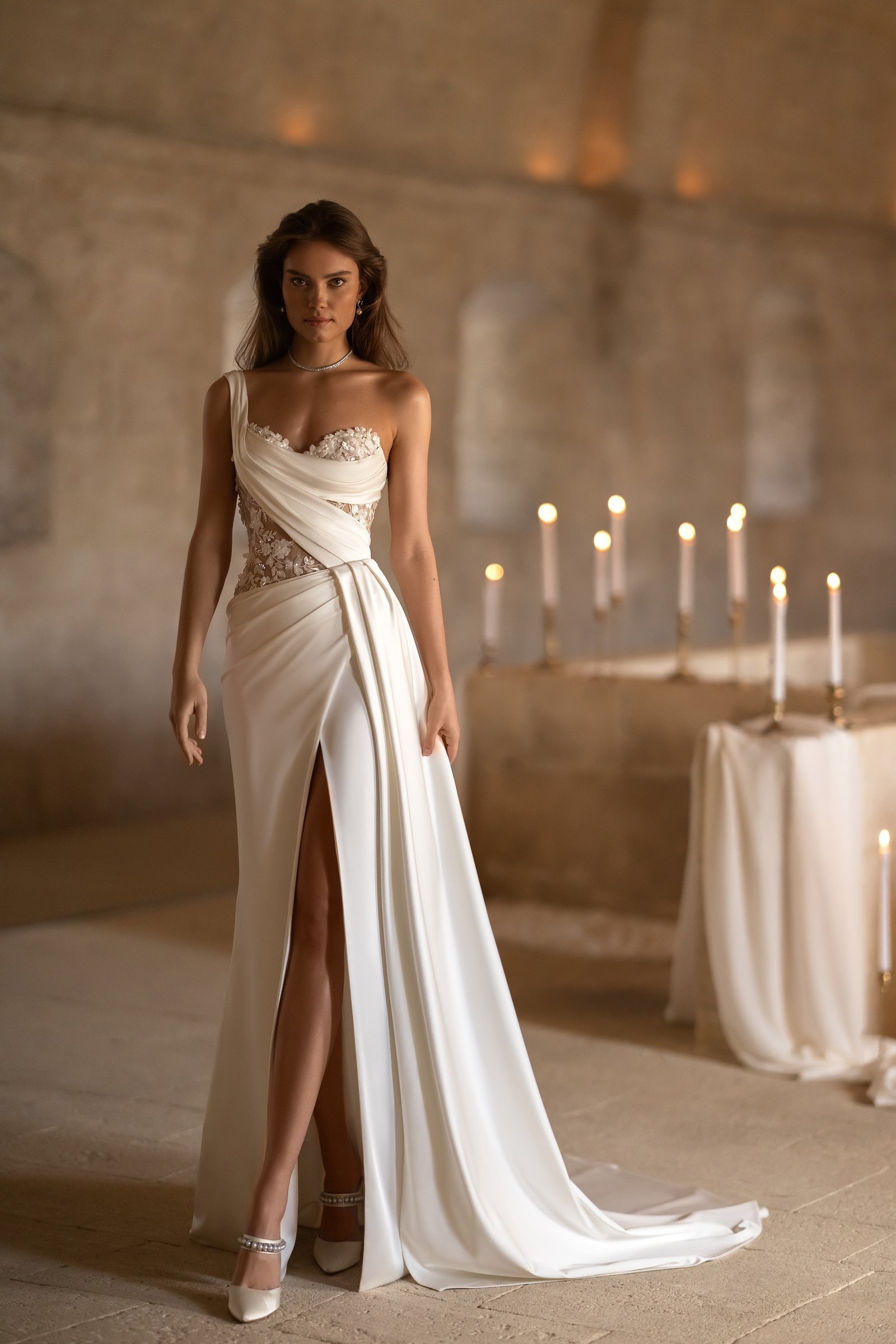
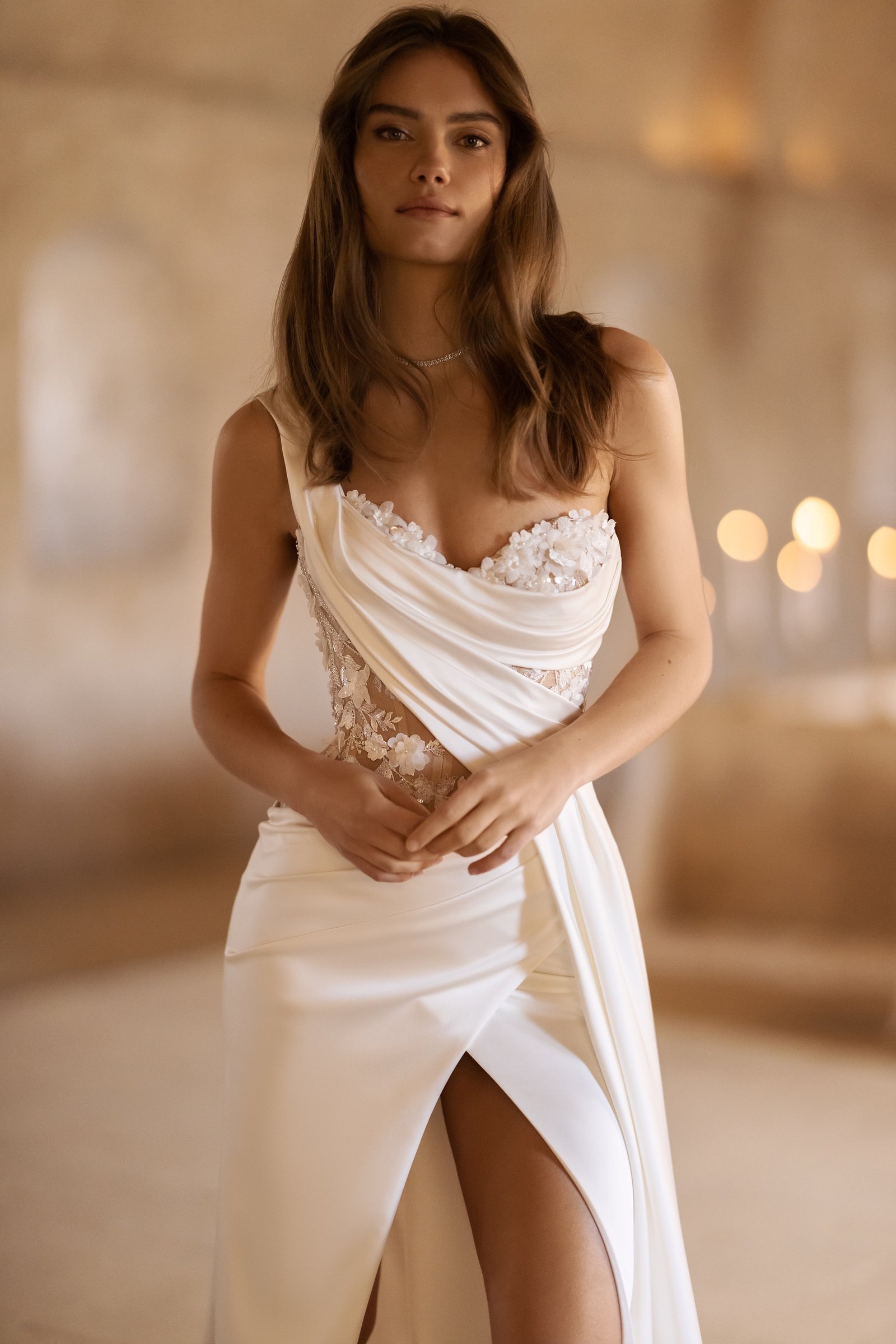
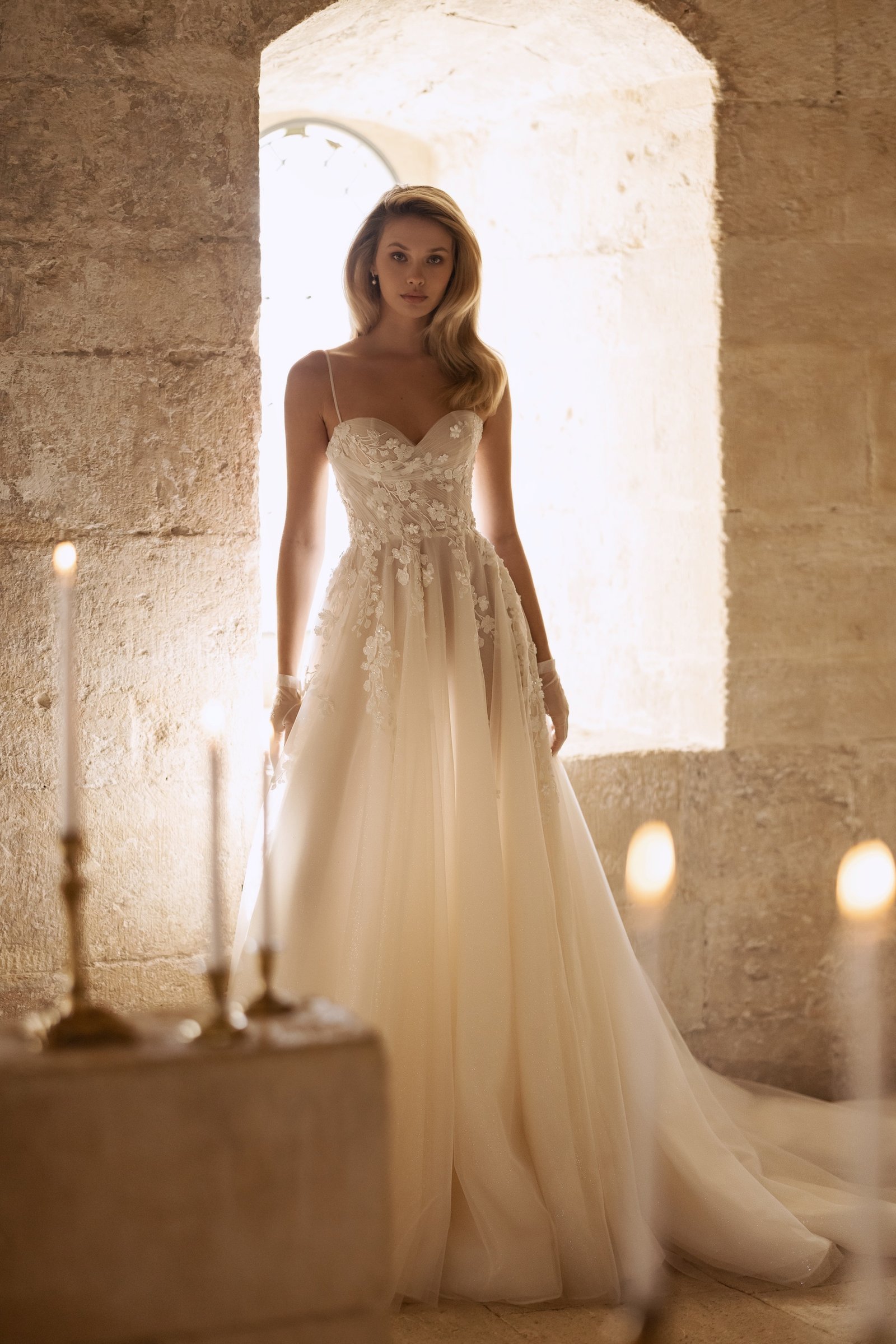
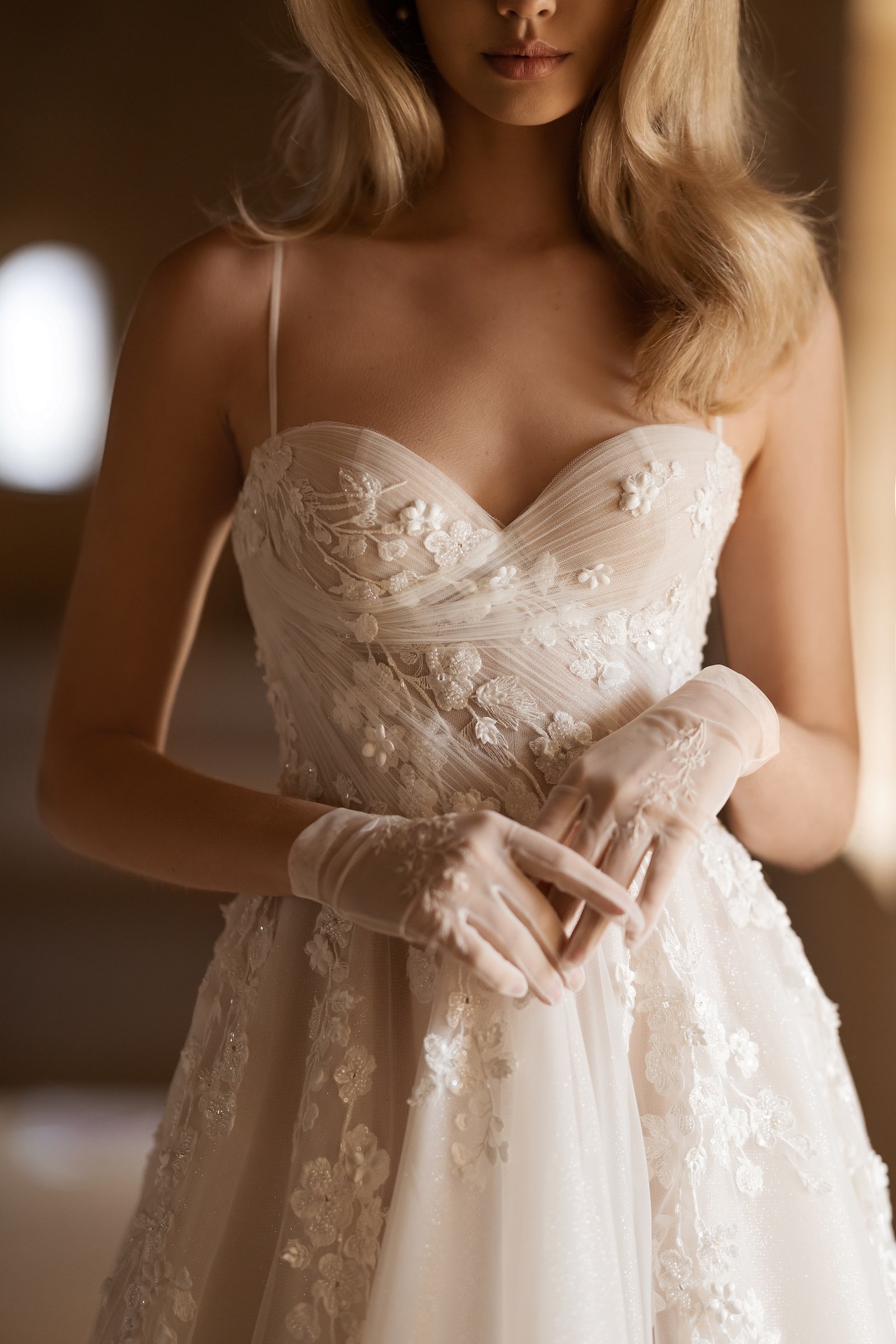
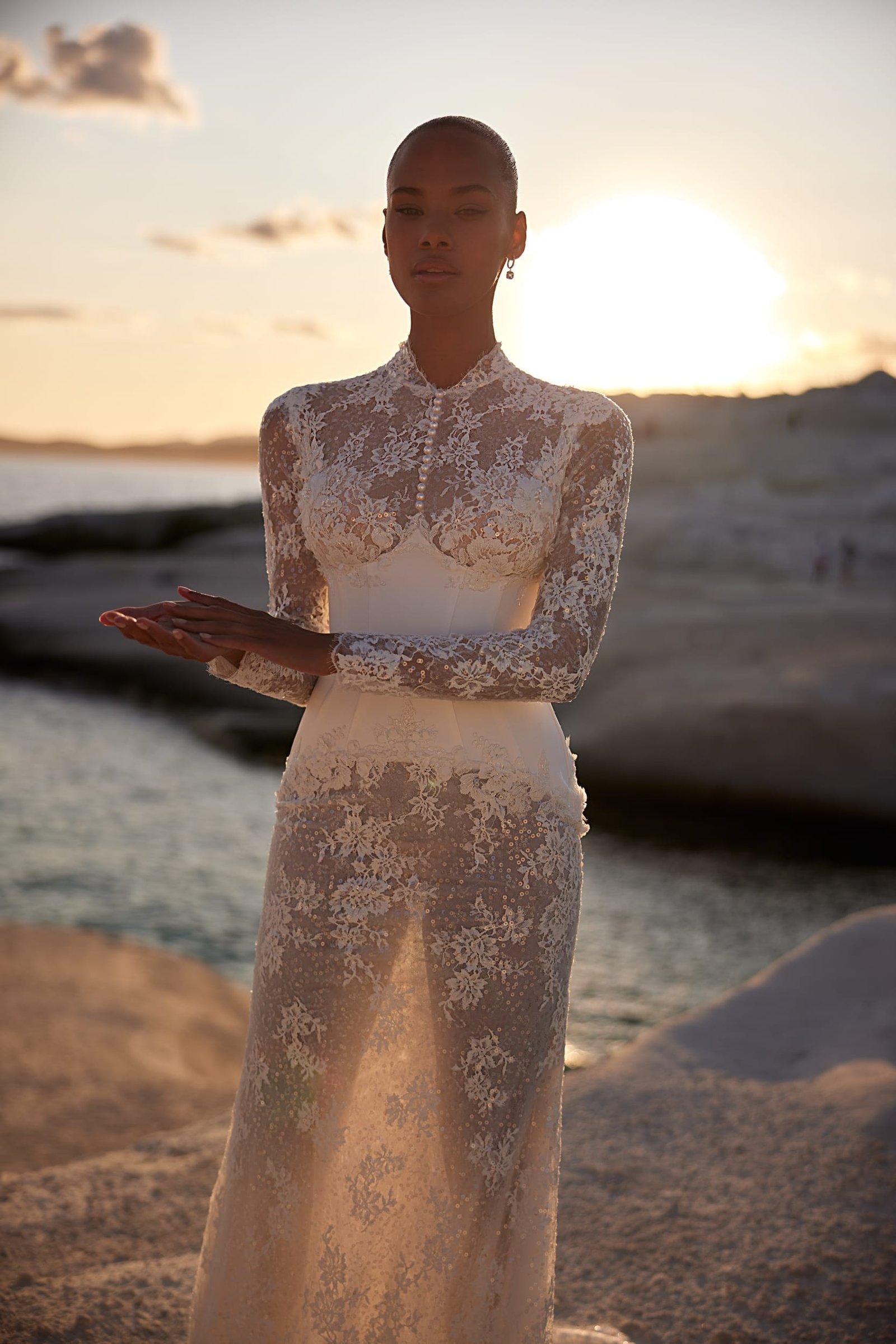
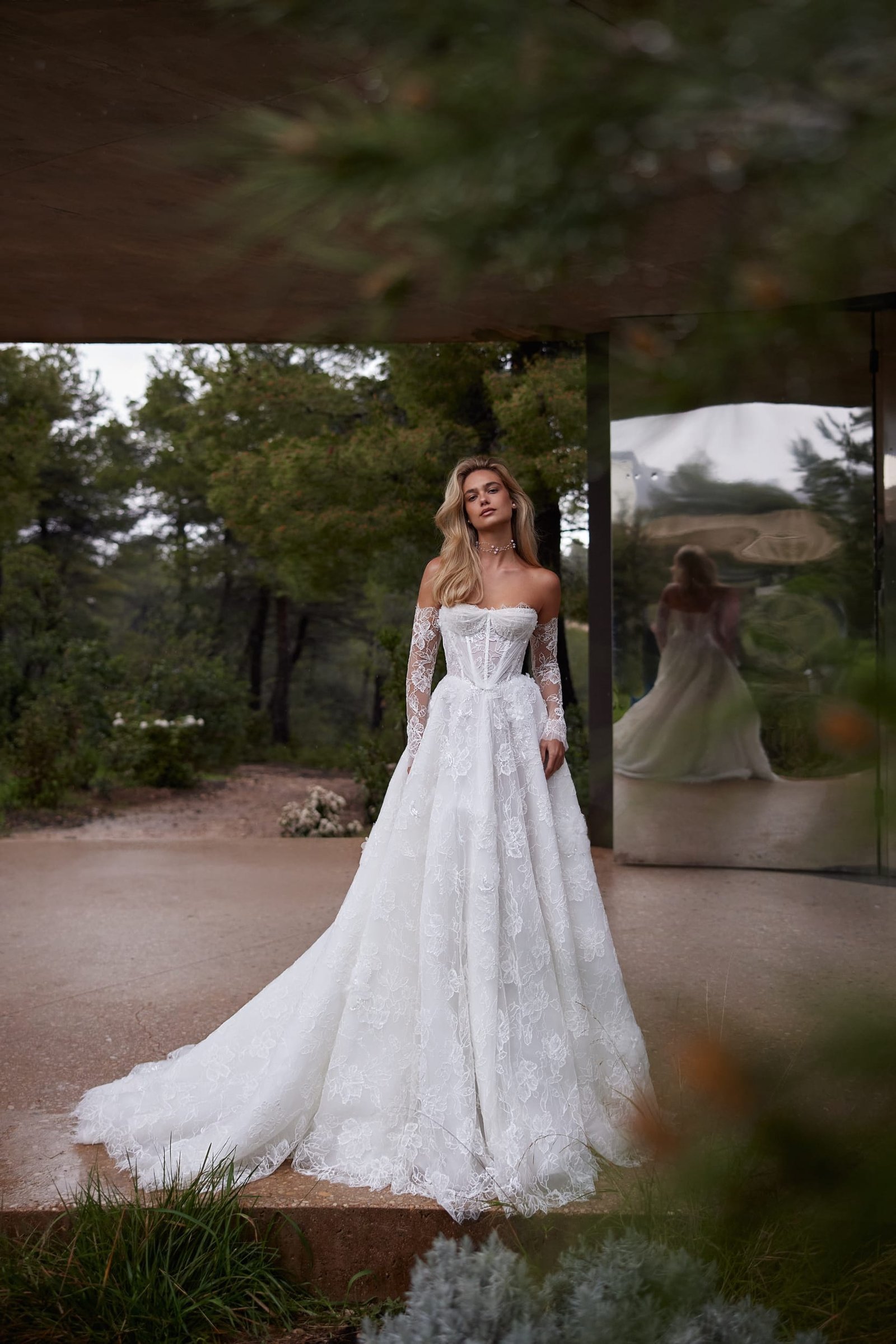
Look at how the pattern sits on the fabric and follows the silhouette. A border can frame an edge; dispersed motifs create more space between points of interest; dense embroidery makes the surface a stronger feature. Thread color, relief and the underlying material affect how clearly the design reads.
When choosing an embroidered wedding dress, compare the motif’s placement from the full-length view as well as close up. Product details can clarify whether embroidery is combined with lace, beadwork or appliqué. Stitched botanical motifs are one version of floral-detail wedding dresses.
Where the stitching changes the shape
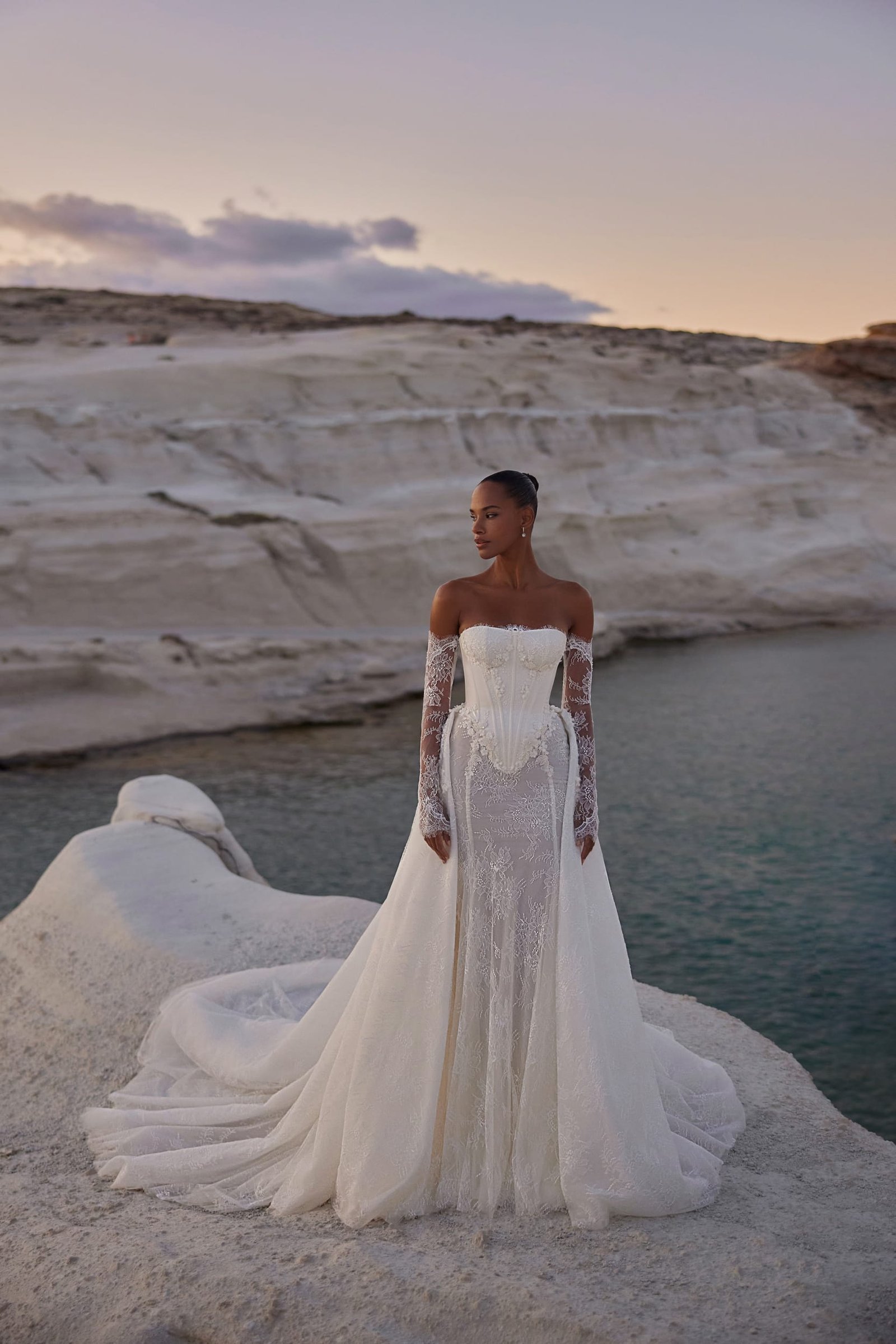
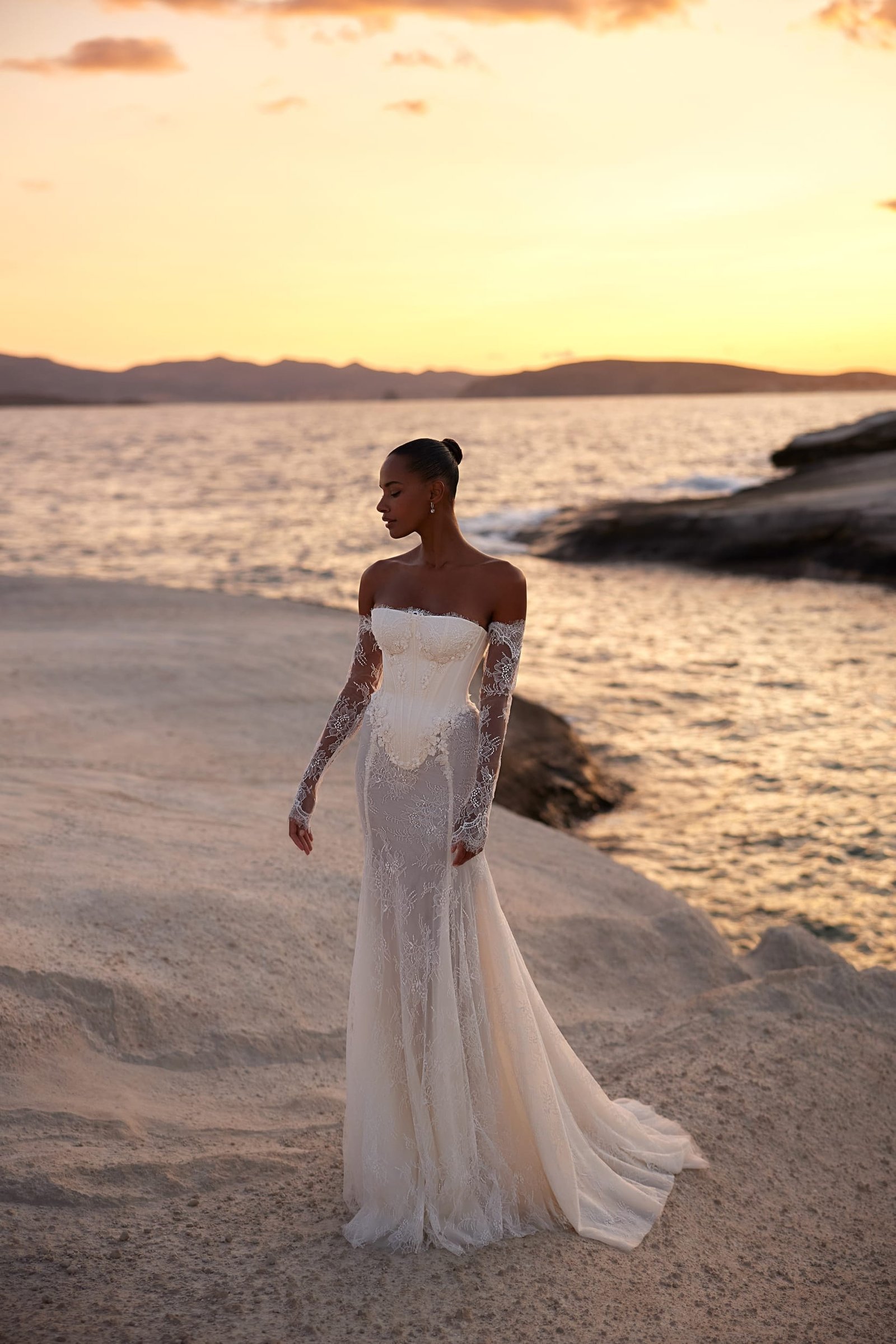
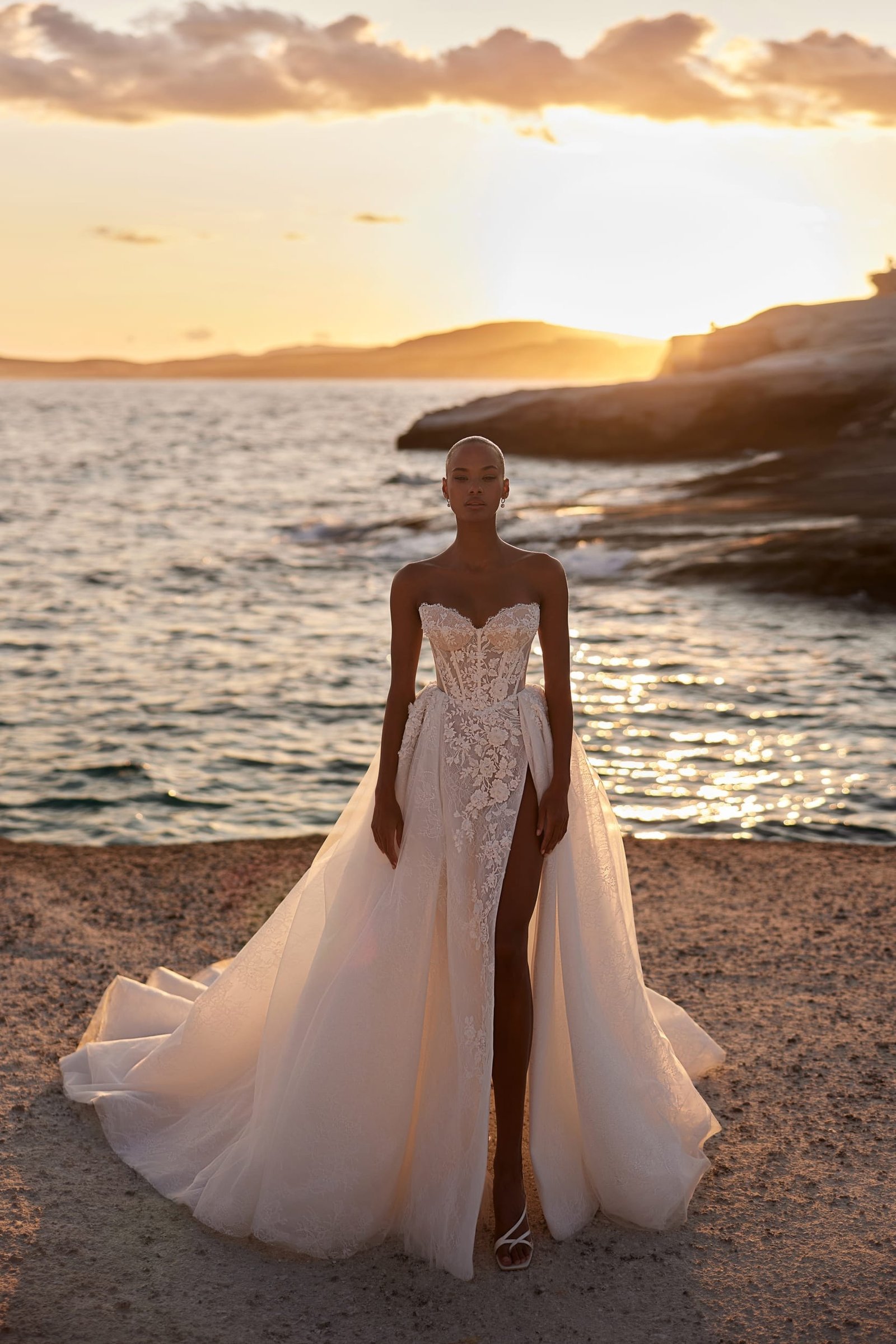
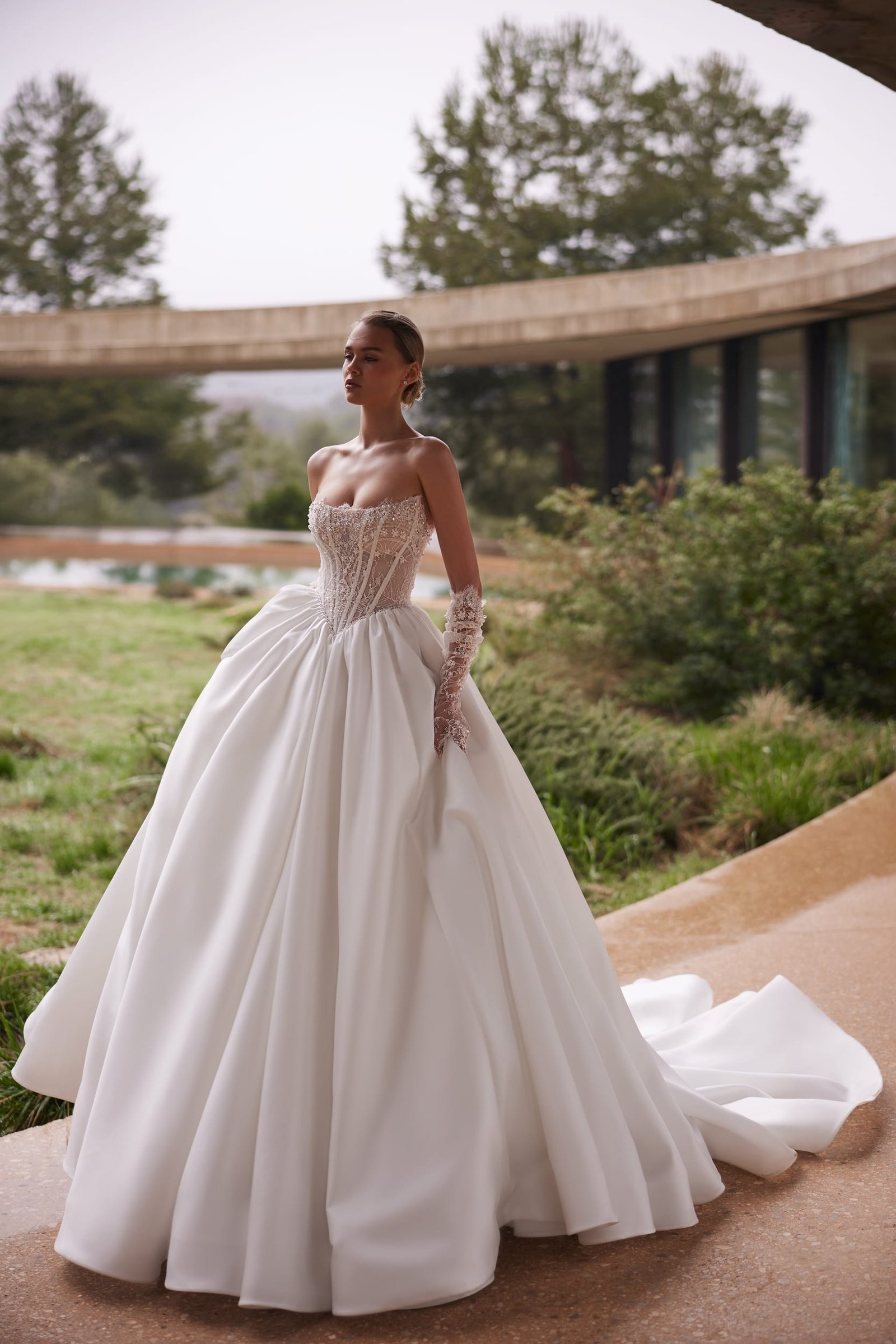
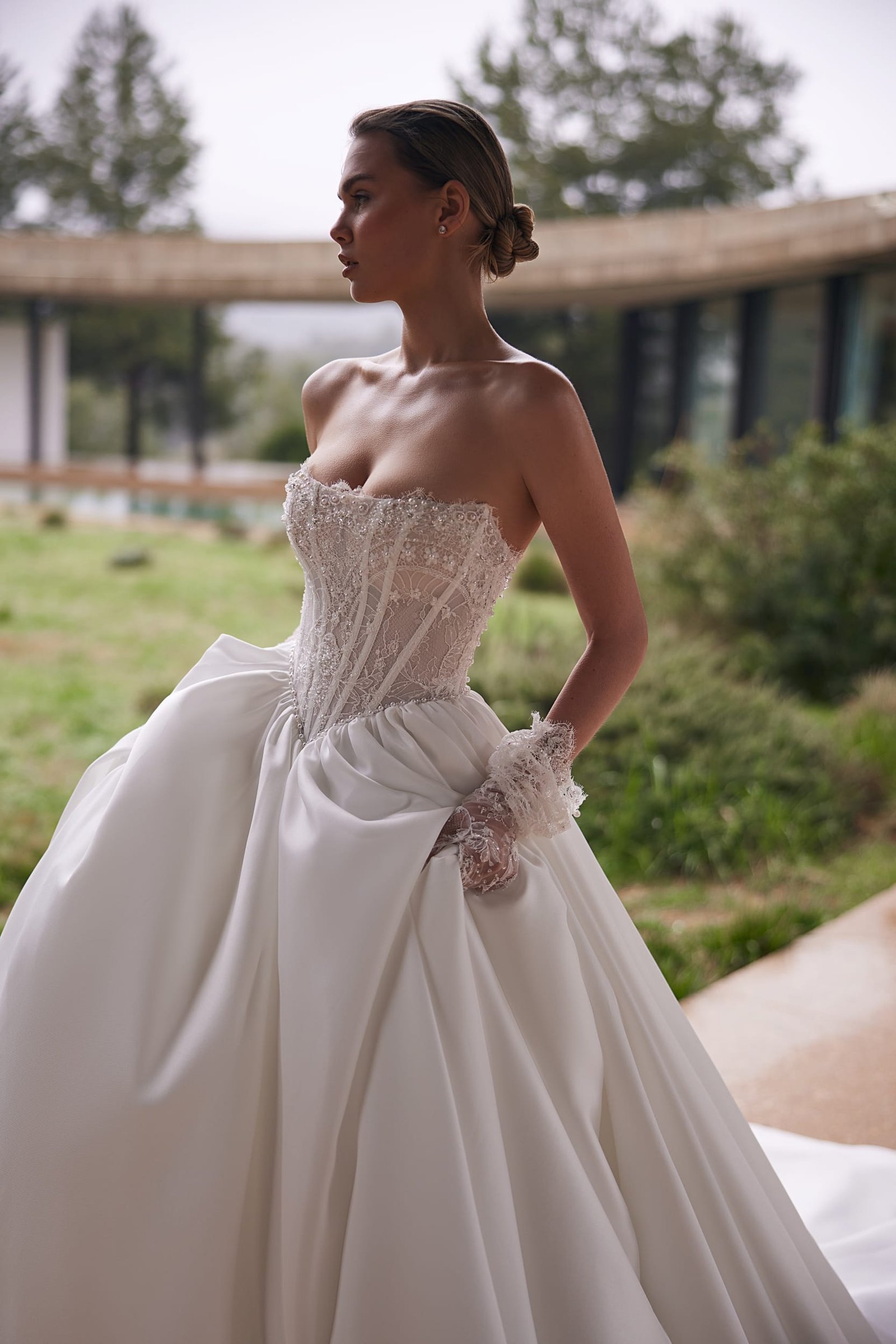
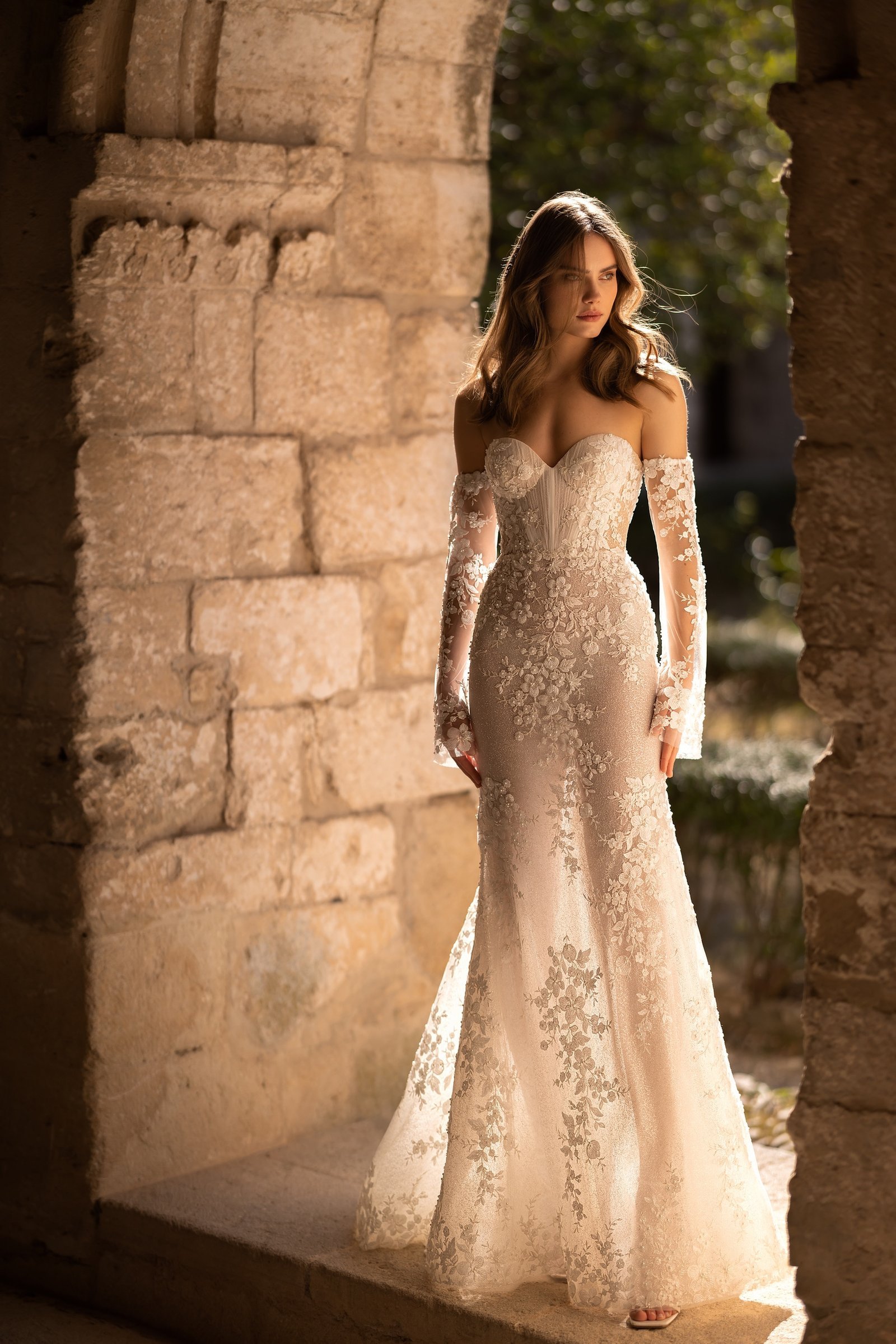
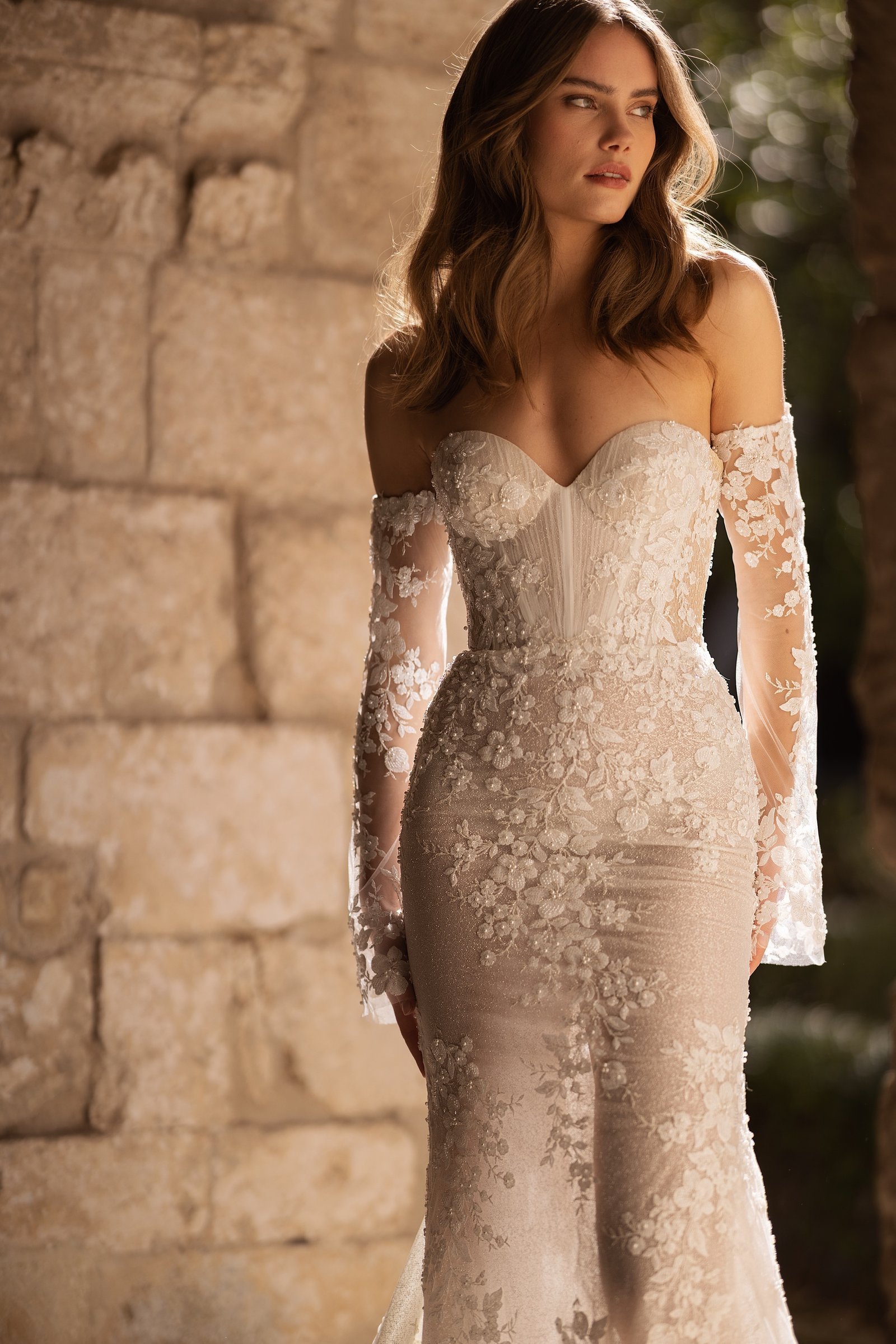
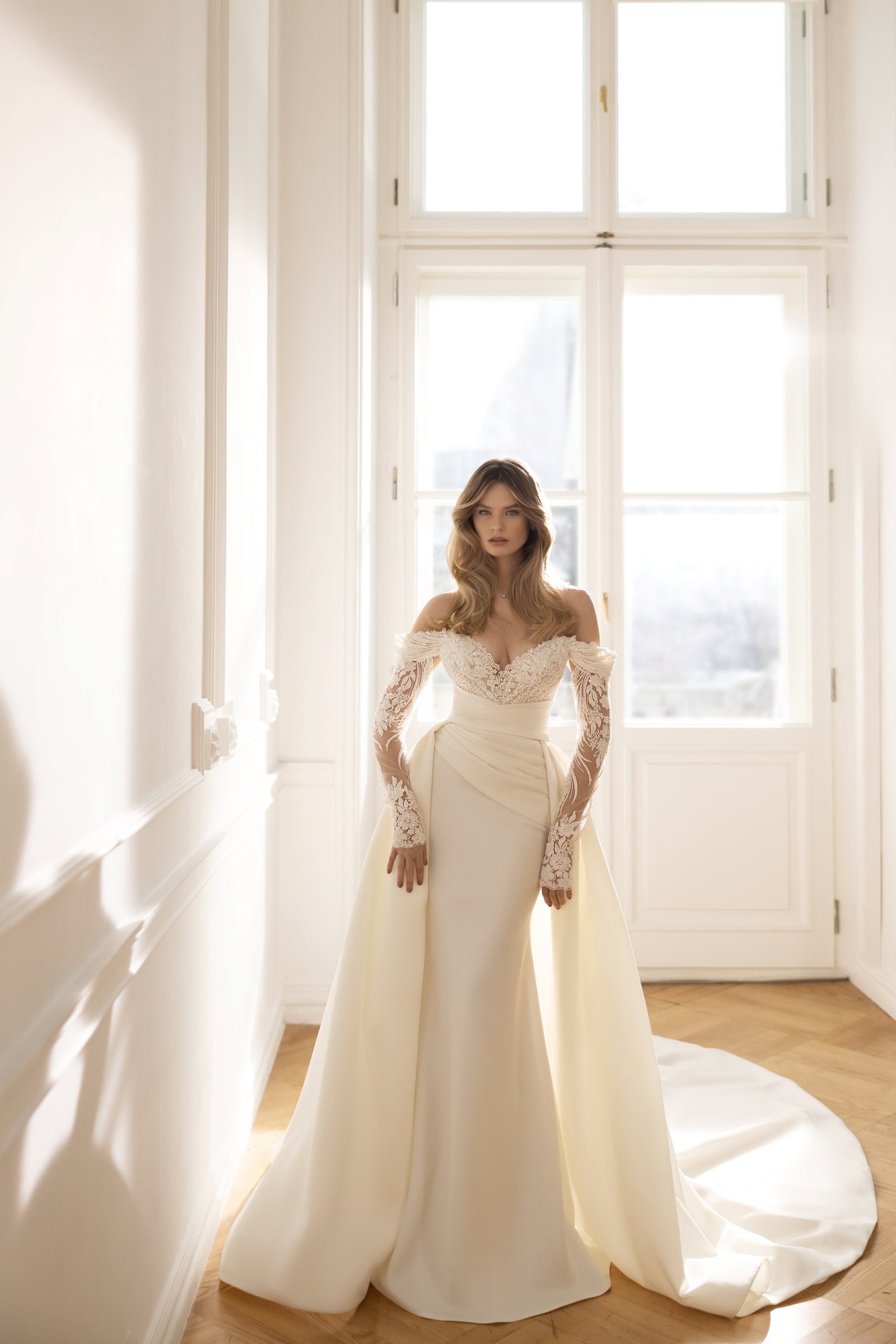
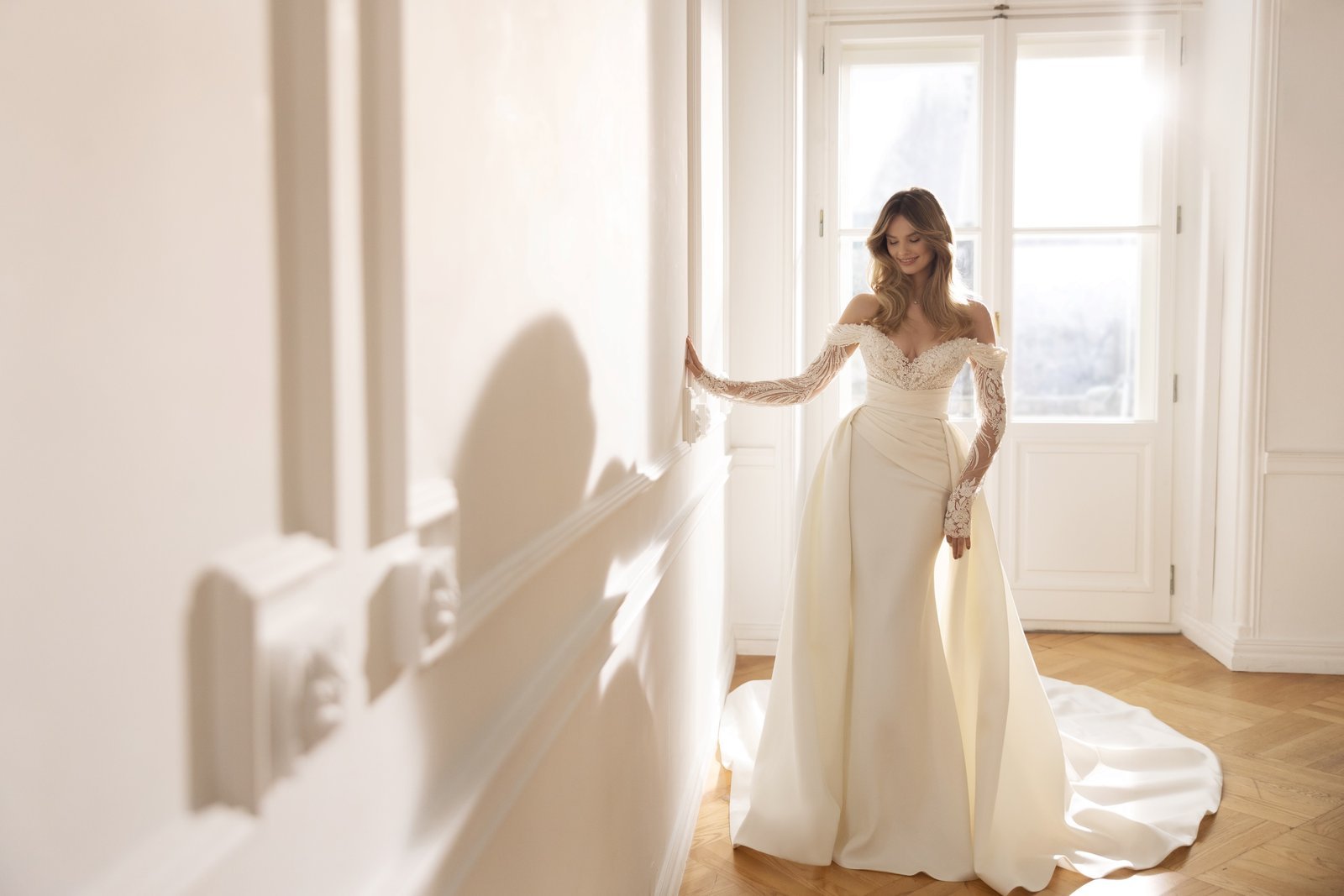
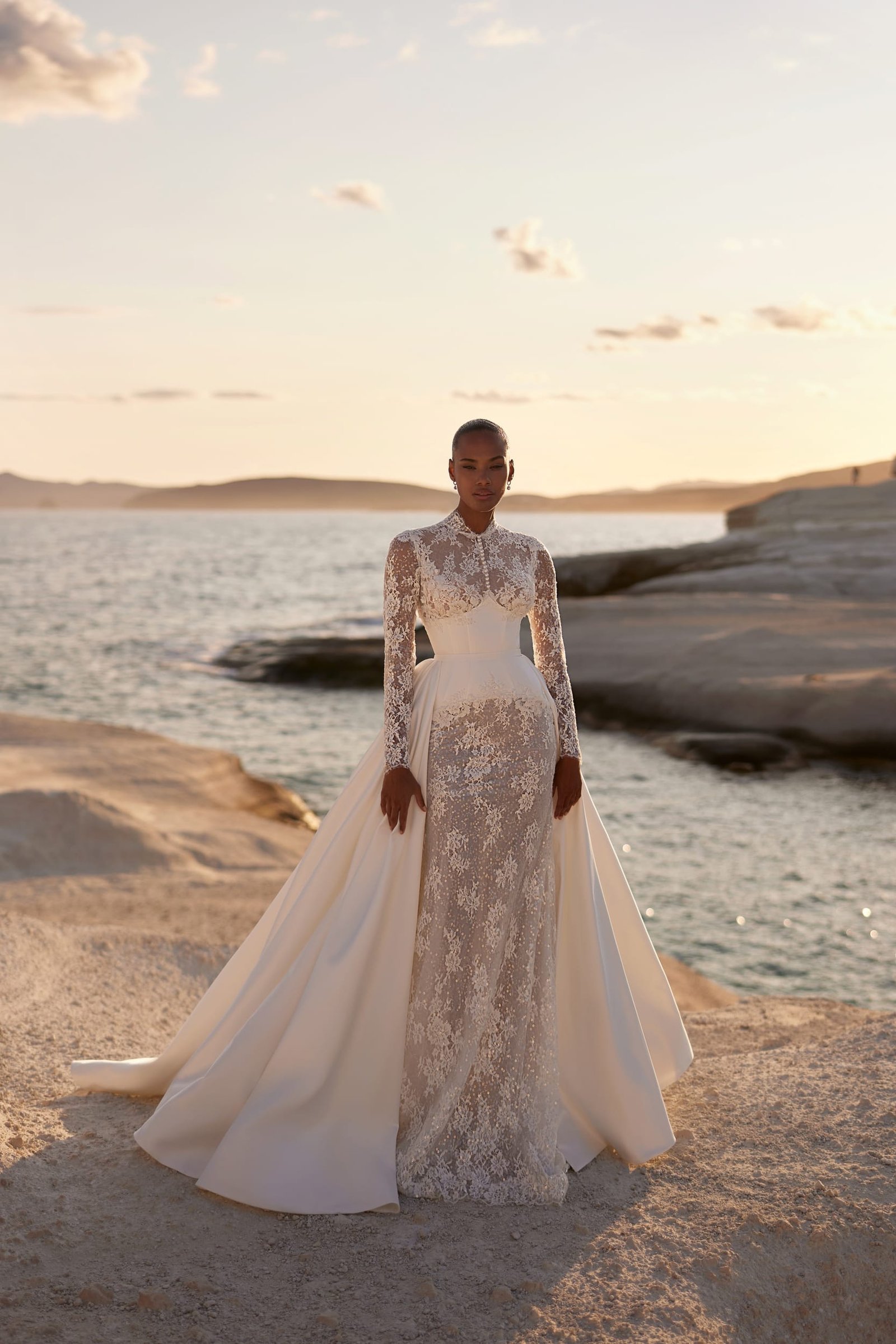
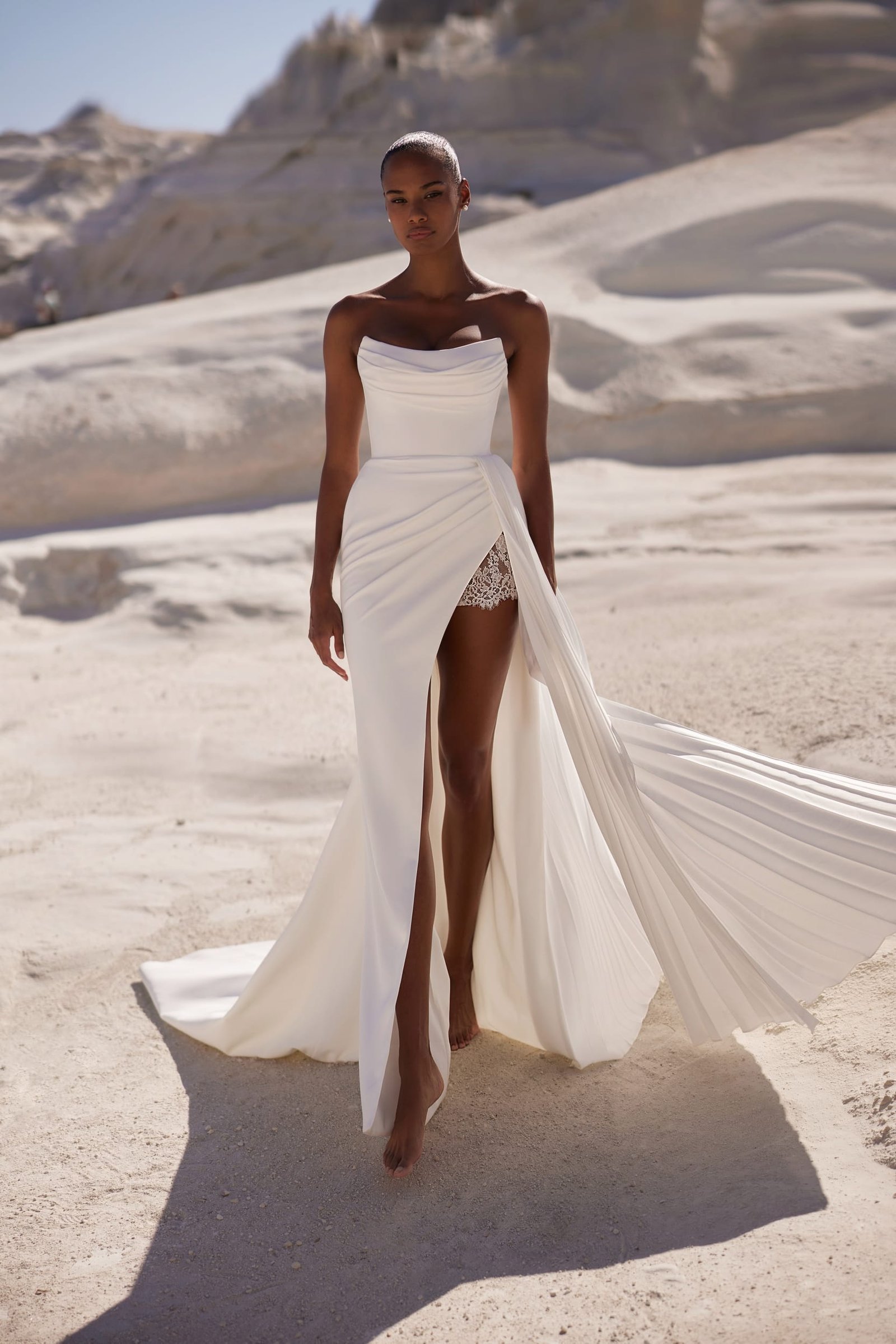
Milos layers floral embroidery over ivory Chantilly lace on a fitted strapless base. The separate lace sleeves repeat that texture around the arms, while a cape changes the rear volume. This is a useful reminder to view embroidery with and without optional layers. For a botanical design expressed through other methods, browse floral motifs; for raised ornament, compare dimensional flowers.