
For us, a conscious gown begins long before the fabric is cut. It begins in the design itself — in the belief that a wedding dress should live as long, and as lightly, as the woman who wears it.
Designed to transform
The most conscious gown is the one that keeps becoming something new. Eva Lendel gowns are built around transformation: detachable overskirts, removable sleeves, capes and trains that lift away to reveal a second silhouette beneath. One gown carries her from ceremony to dance floor — many looks, a single considered purchase.
This is sustainability at the level of design. A transformable wedding dress replaces what might otherwise be two or three separate purchases, and every element is made to be worn, kept, and worn again.
Made to be worn again
A slip dress in fluid crepe. A bridal midi. Separates that recombine. Many of our silhouettes are designed to continue past the wedding day — as an anniversary dress, an evening look, a piece she reaches for because it simply feels like her. The gown’s second life is part of its first design.
Made for one woman
Every Eva Lendel gown begins with a bride. Each dress is made to order and fitted to her body and her movement exactly. It is a quiet, precise way of working that keeps our footprint as light as our fabrics — and it is also why the gown stays in her wardrobe rather than at the back of it.
Natural fabrics, chosen with care
We work in soft, natural materials — silks, crepes, light satins — chosen for the way they move, breathe, and last. Natural fabrics age gracefully, respond well to care, and carry a gentler footprint through their whole life cycle. The fabric is doing the talking; we simply choose it well.
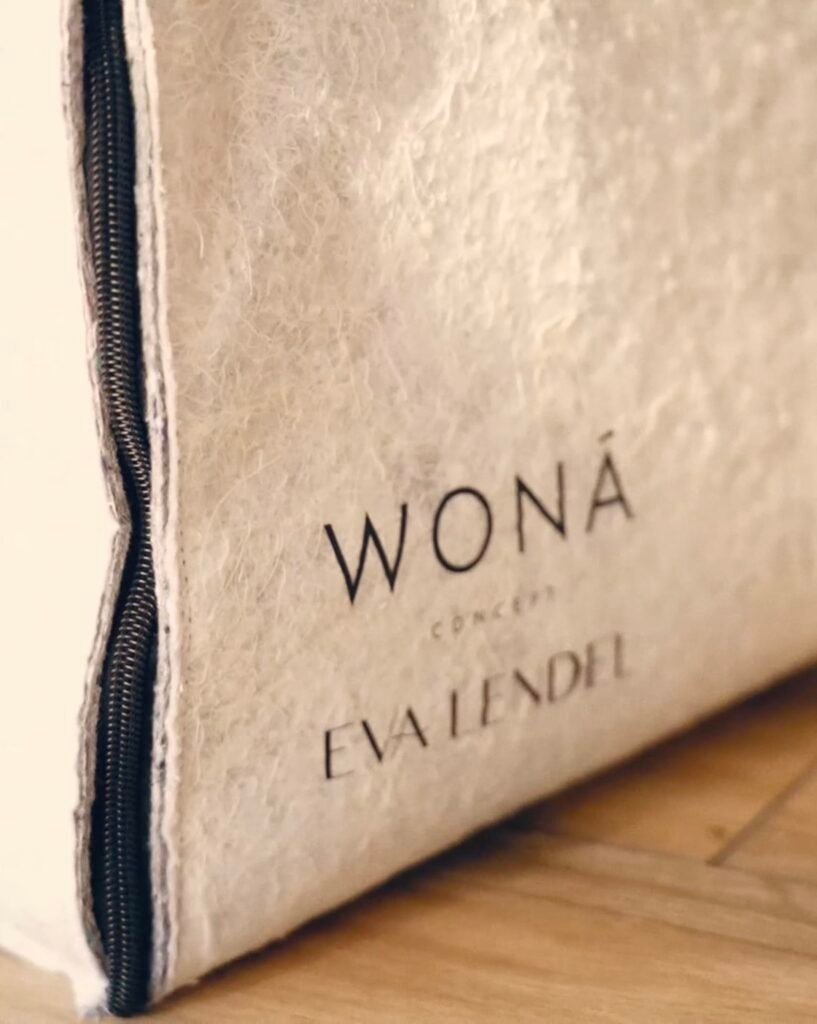
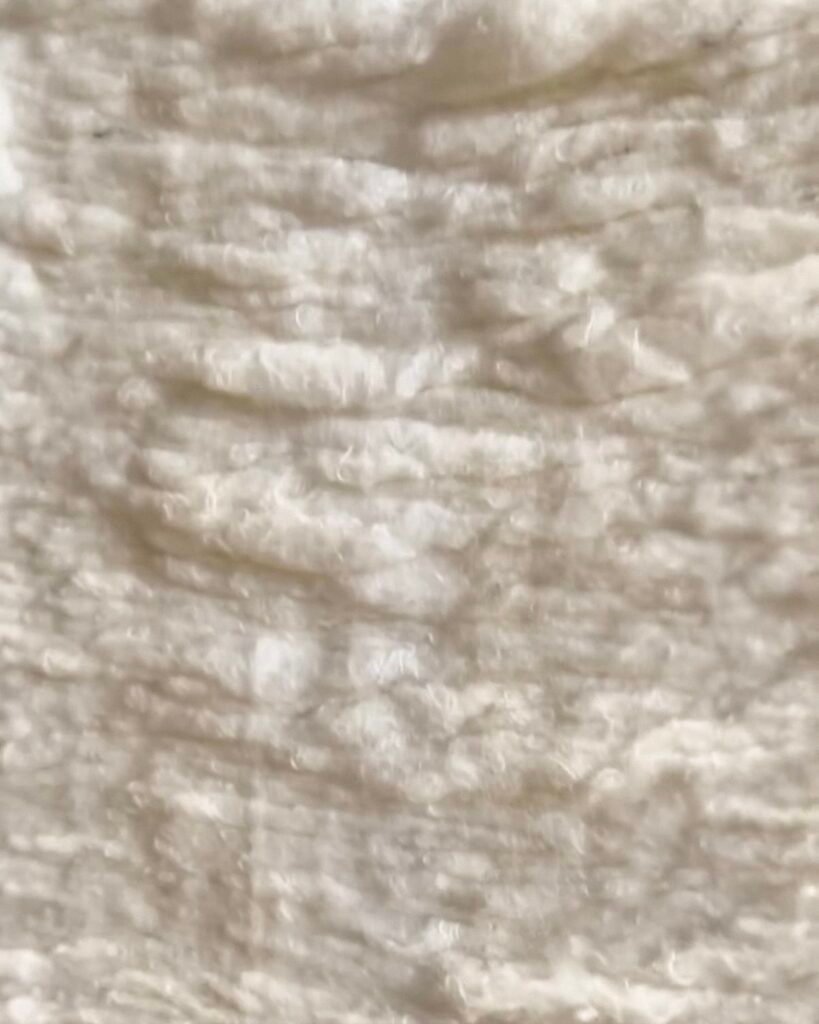
A circular approach to making
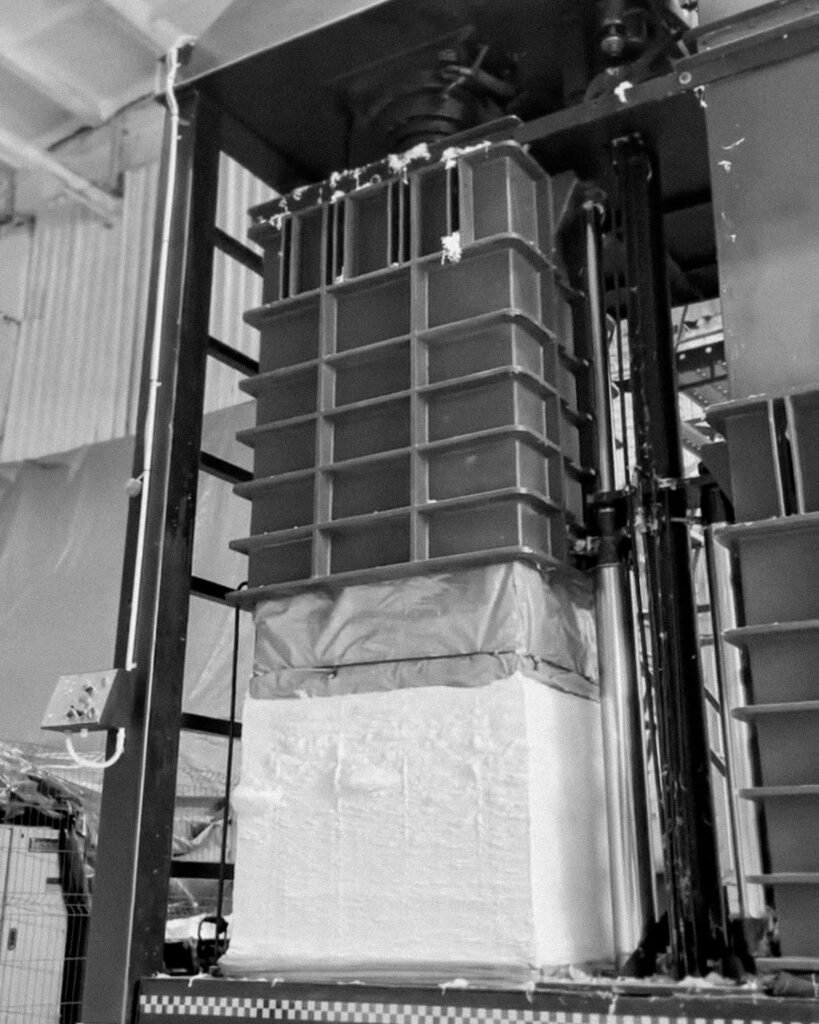
The fabric that remains after cutting continues its life. Since 2026, our atelier has worked with Re:inventex, a specialist in mechanical textile recovery: every month, around 500 kg of pre-consumer offcuts travel from our cutting tables back into circulation. The process is mechanical — no water, no chemicals — and it turns what would have been waste into fibre ready for a new purpose.
The numbers grow quietly, the way we like things to:
- 1,726 kg of textile offcuts kept out of landfill
- 103,600 litres of freshwater preserved
- 12.1 tonnes of CO₂ emissions avoided
- 200+ circular products created and donated
Softness, passed on
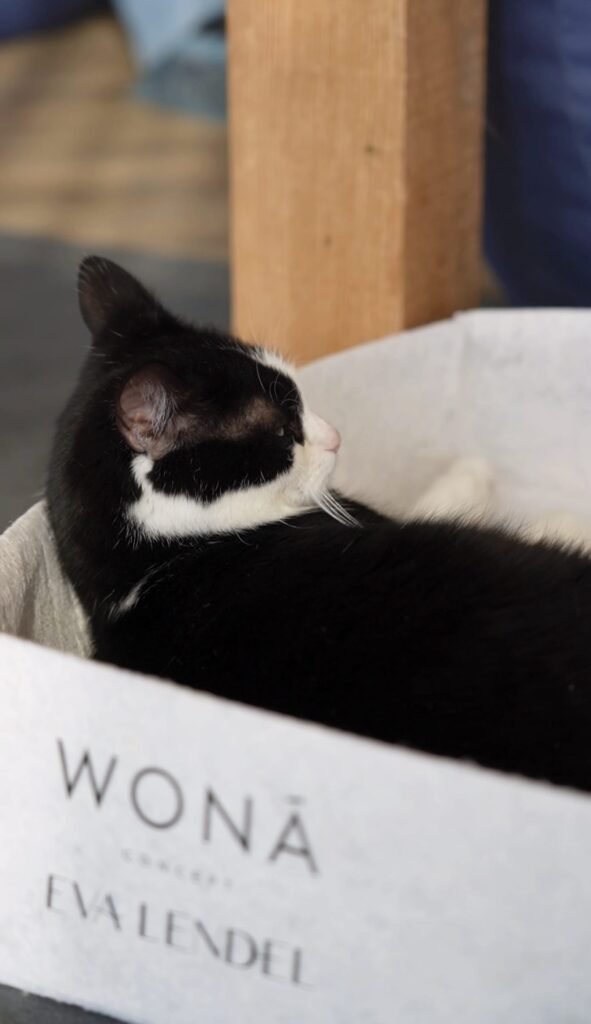
Some of that regenerated fibre finds a second life close to our hearts. In collaboration with Patron Pet Center in Kyiv, materials recovered from our production become beds, pillows, and recovery items for rescued animals in treatment and rehabilitation. Fabric that began as a gown ends as a soft place for an animal starting over. It is a small thing, and it matters to us.
Care that extends a gown’s life
Conscious ownership continues at home. Each gown comes with guidance on cleaning, storing, and preserving it — so the dress she loved on her wedding day is the dress her daughter might one day lift out of its box. Longevity is the most honest form of sustainability we know.
What conscious means to us
A gown made for one woman, never for a warehouse. Around 500 kg of fabric a month returned to circulation instead of landfill — some of it as beds for rescued animals at Patron Pet Center in Kyiv. A design that transforms, so one dress becomes many. Everything we leave out, the planet feels too.
FAQ
What is a transformable wedding dress?
A transformable wedding dress changes its silhouette through detachable, modular elements — an overskirt, sleeves, a cape or train that can be removed during the day. One gown, many looks, one considered purchase.
How is an Eva Lendel gown made?
Each gown is made individually for one bride and fitted to her measurements. Every month, around 500 kg of textile offcuts from production are mechanically recycled through our partnership with Re:inventex — a water-free, chemical-free process.
What happens to leftover fabric?
It continues its life in two ways. Offcuts are mechanically recycled into reusable fibre through Re:inventex — to date, 1,726 kg of textile waste has been kept out of landfill. Part of the recovered material becomes beds, pillows, and recovery items for rescued animals at Patron Pet Center in Kyiv.
What makes a wedding dress conscious?
For us — the design itself. A gown that transforms, so one dress becomes many looks. Natural fabrics chosen to last.
What fabrics does Eva Lendel use?
Soft, natural materials — silks, crepes, and light satins — chosen for movement, breathability, and longevity.
How does made-to-order production help?
Every gown is created for a specific bride, so the atelier makes exactly what is chosen. It is a lighter, more precise way of working — and it means each dress fits her perfectly.