
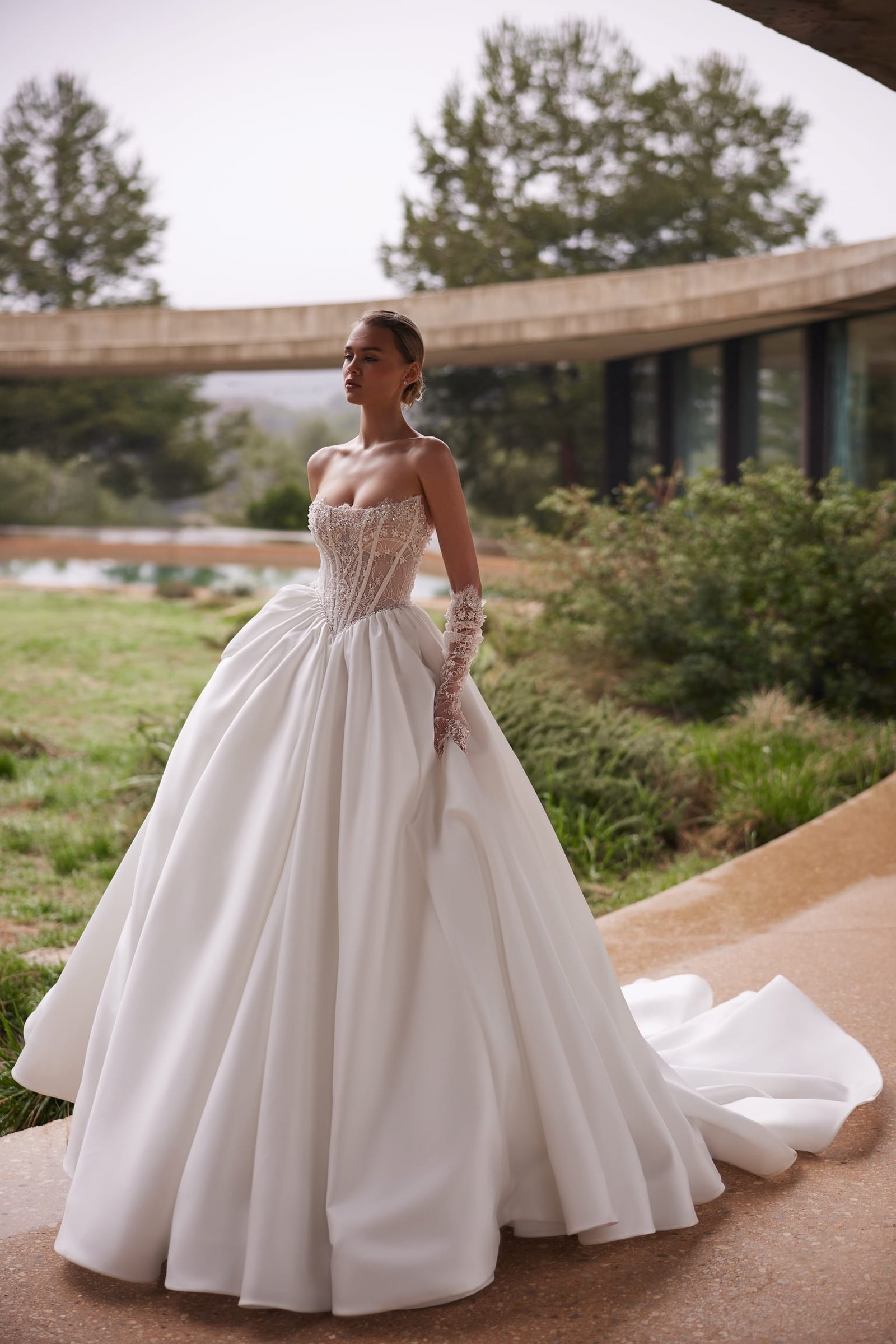
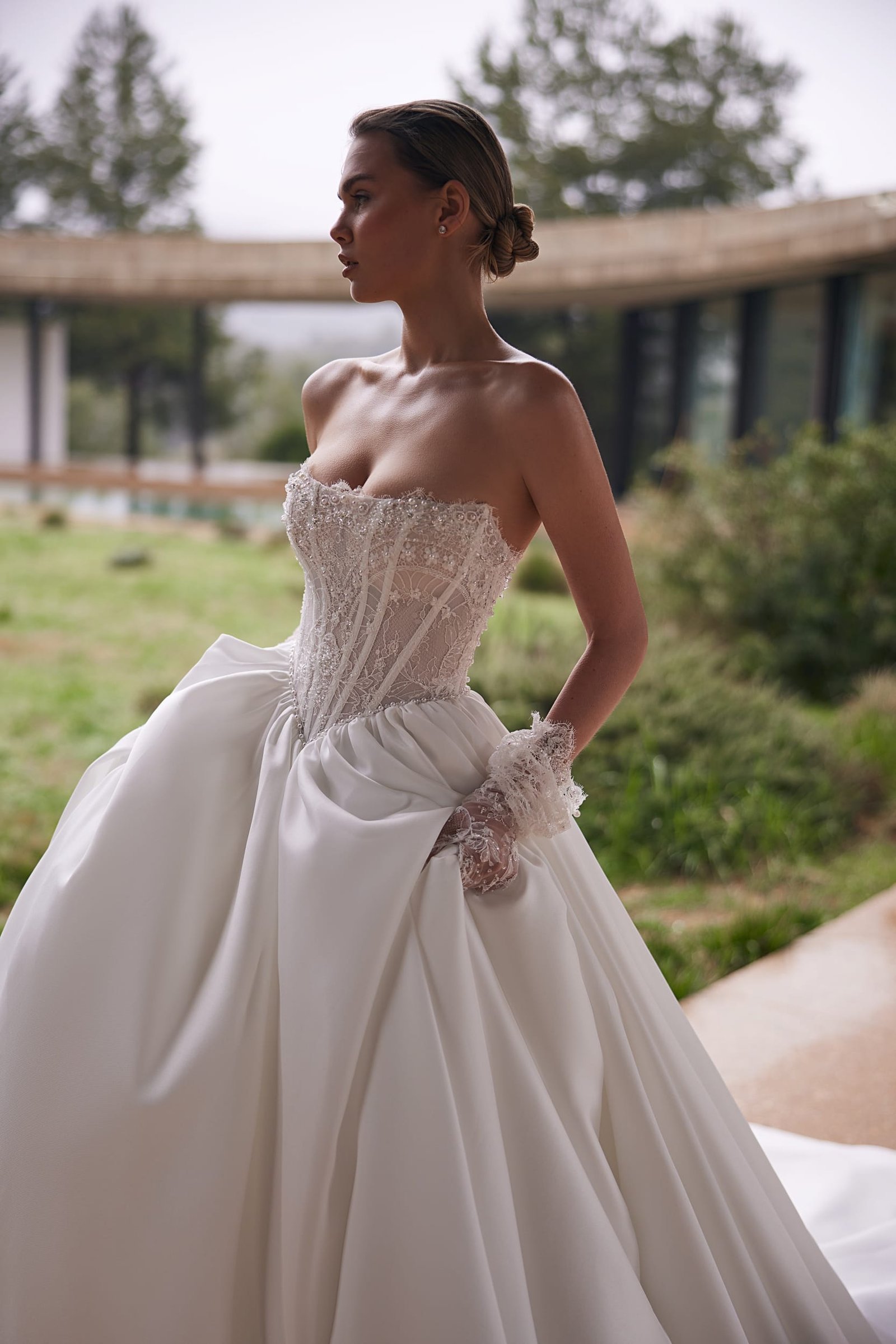
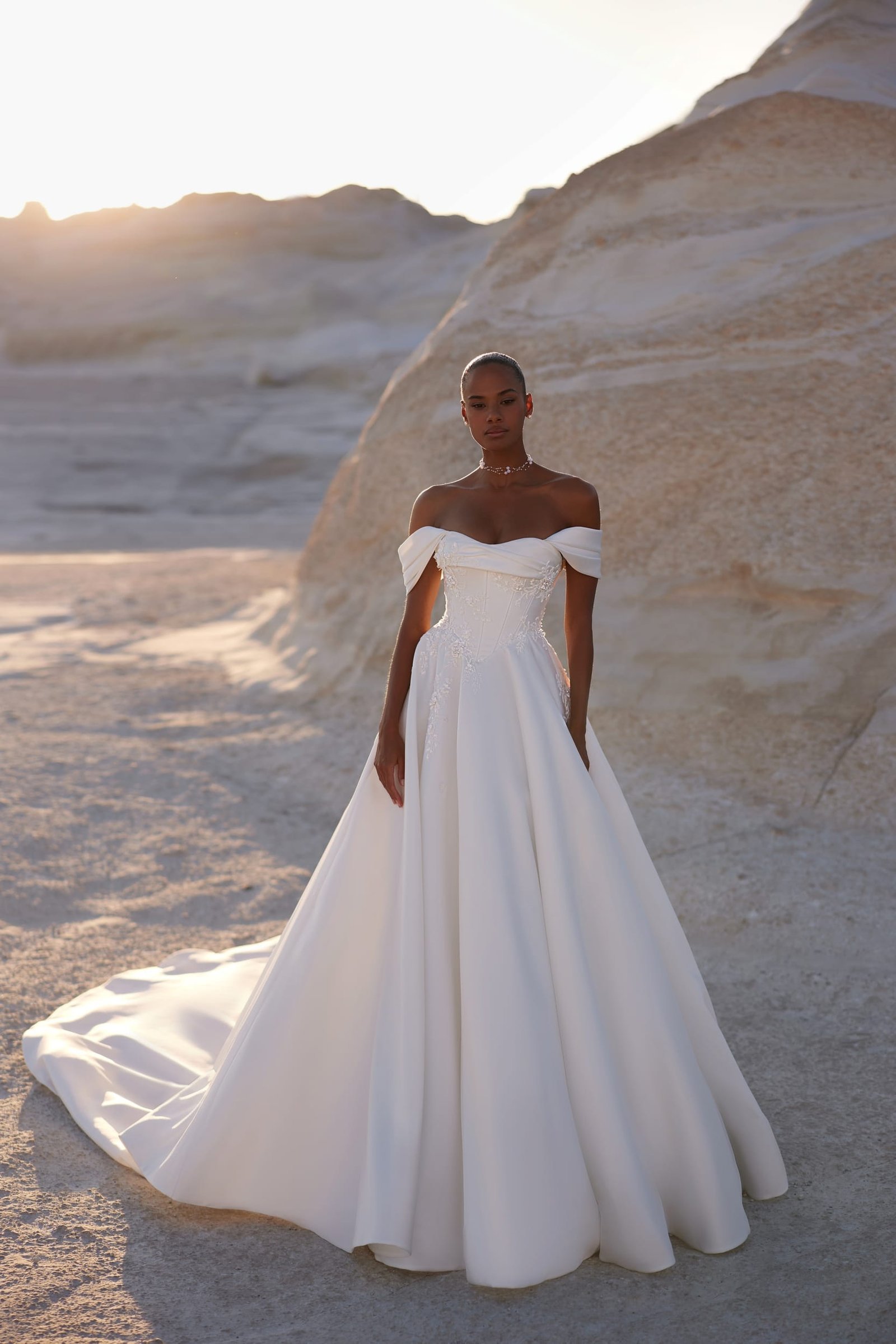
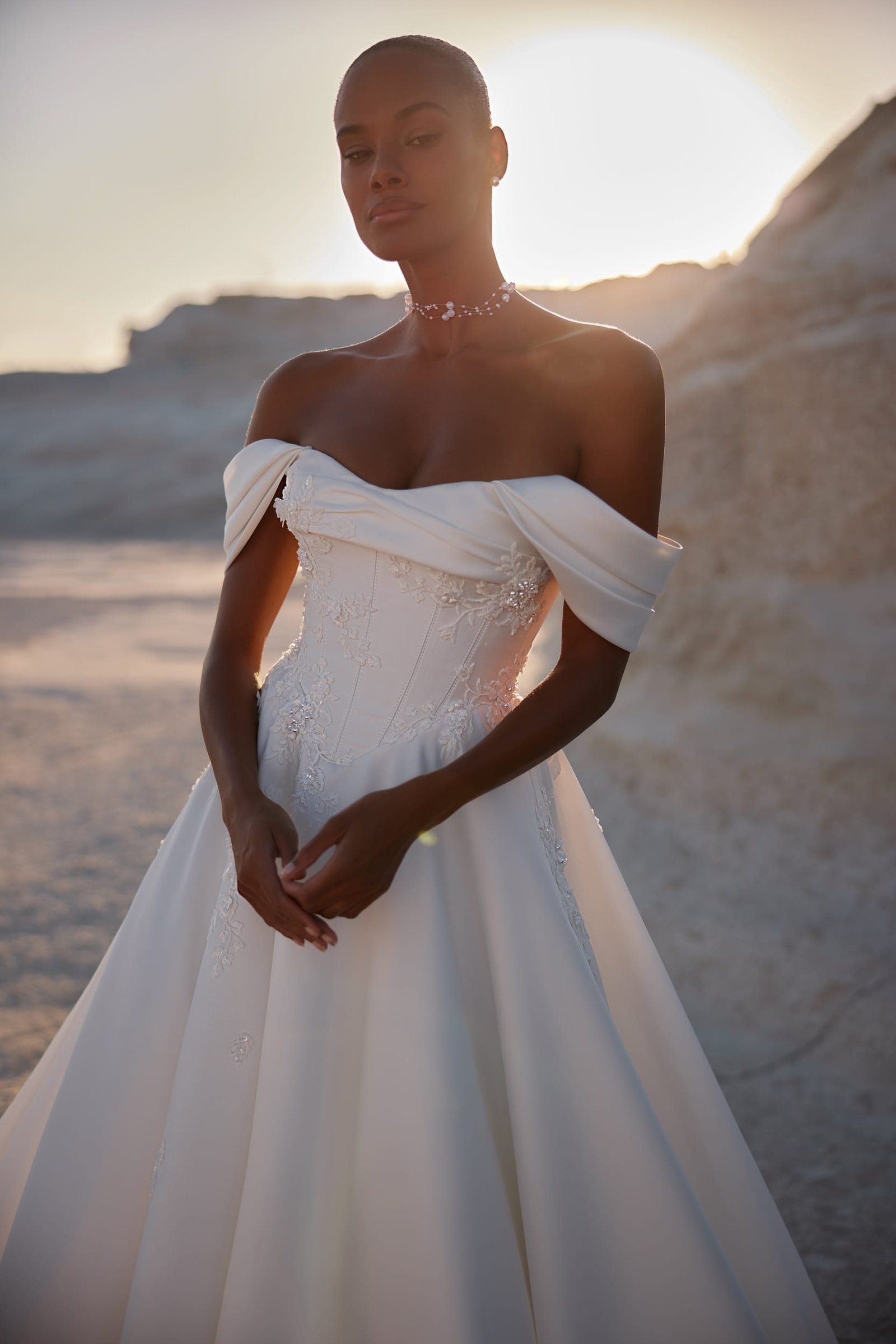
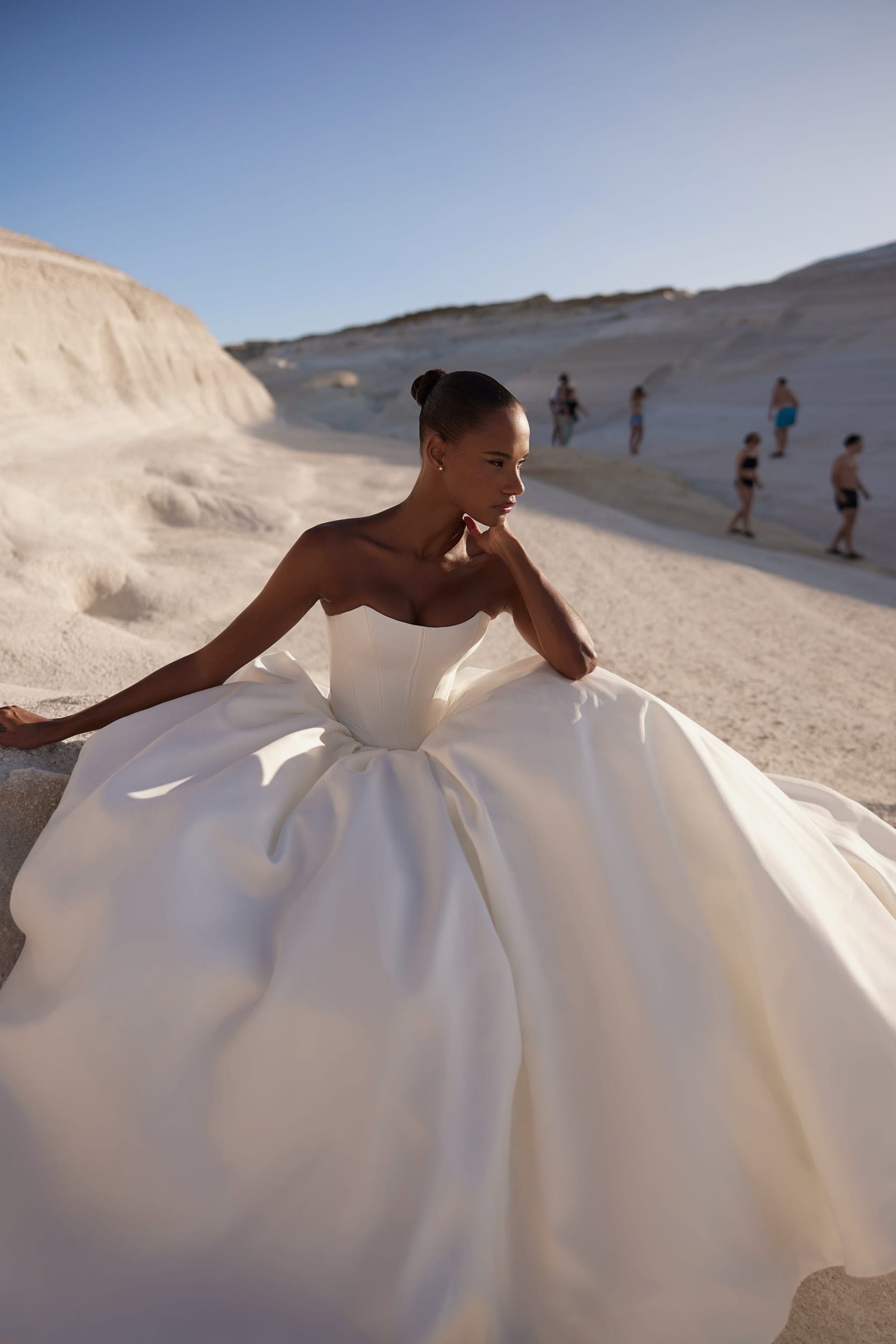
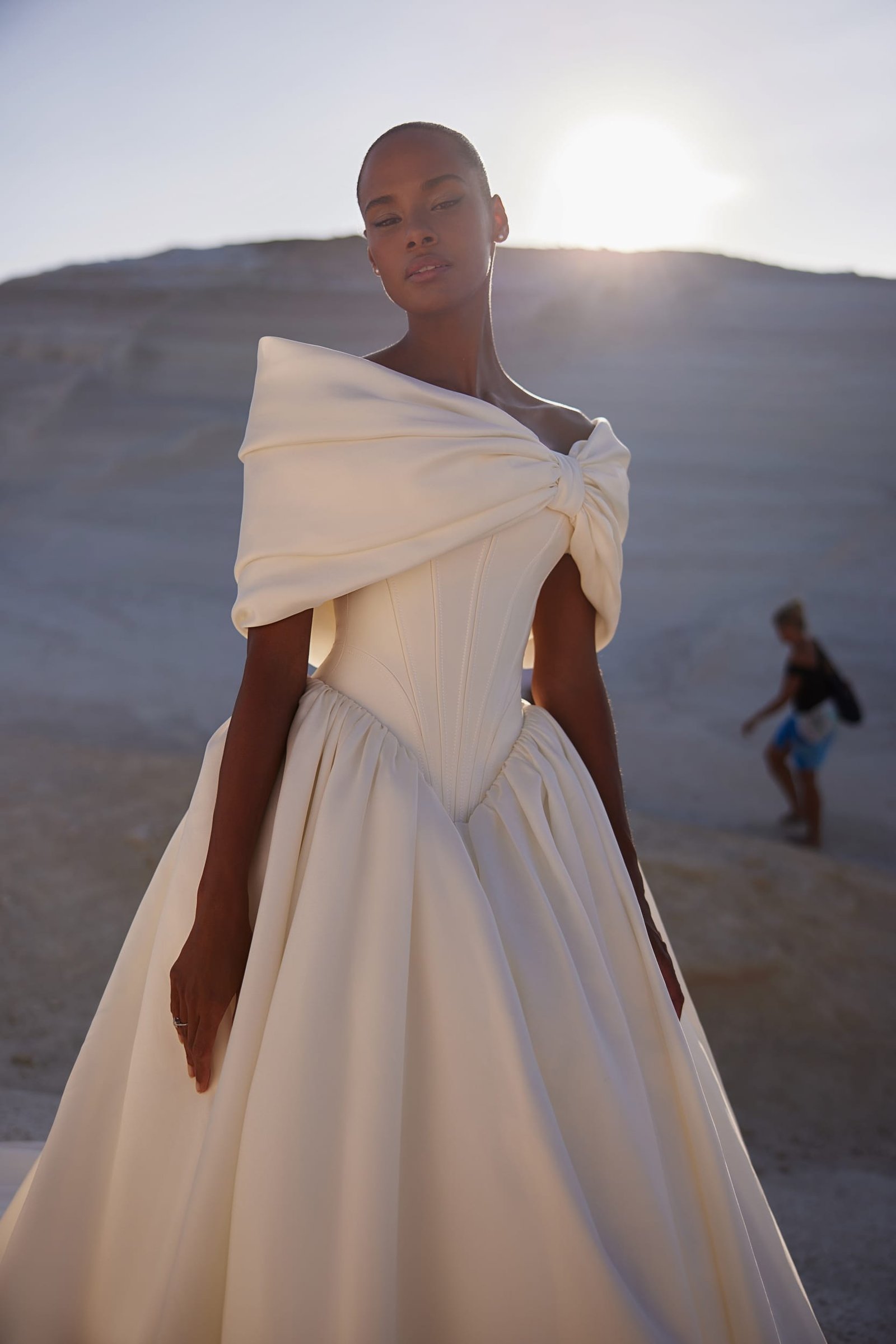
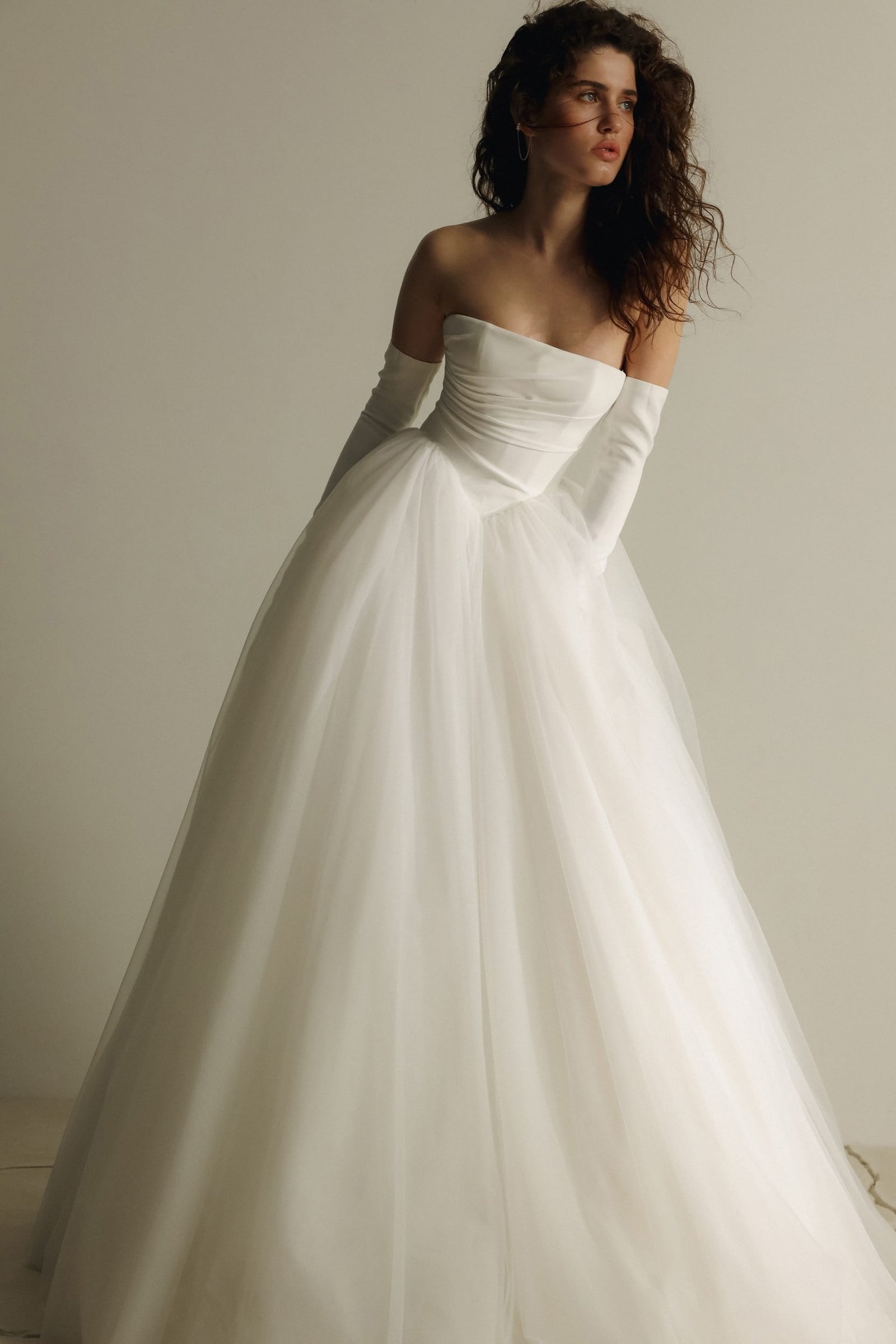
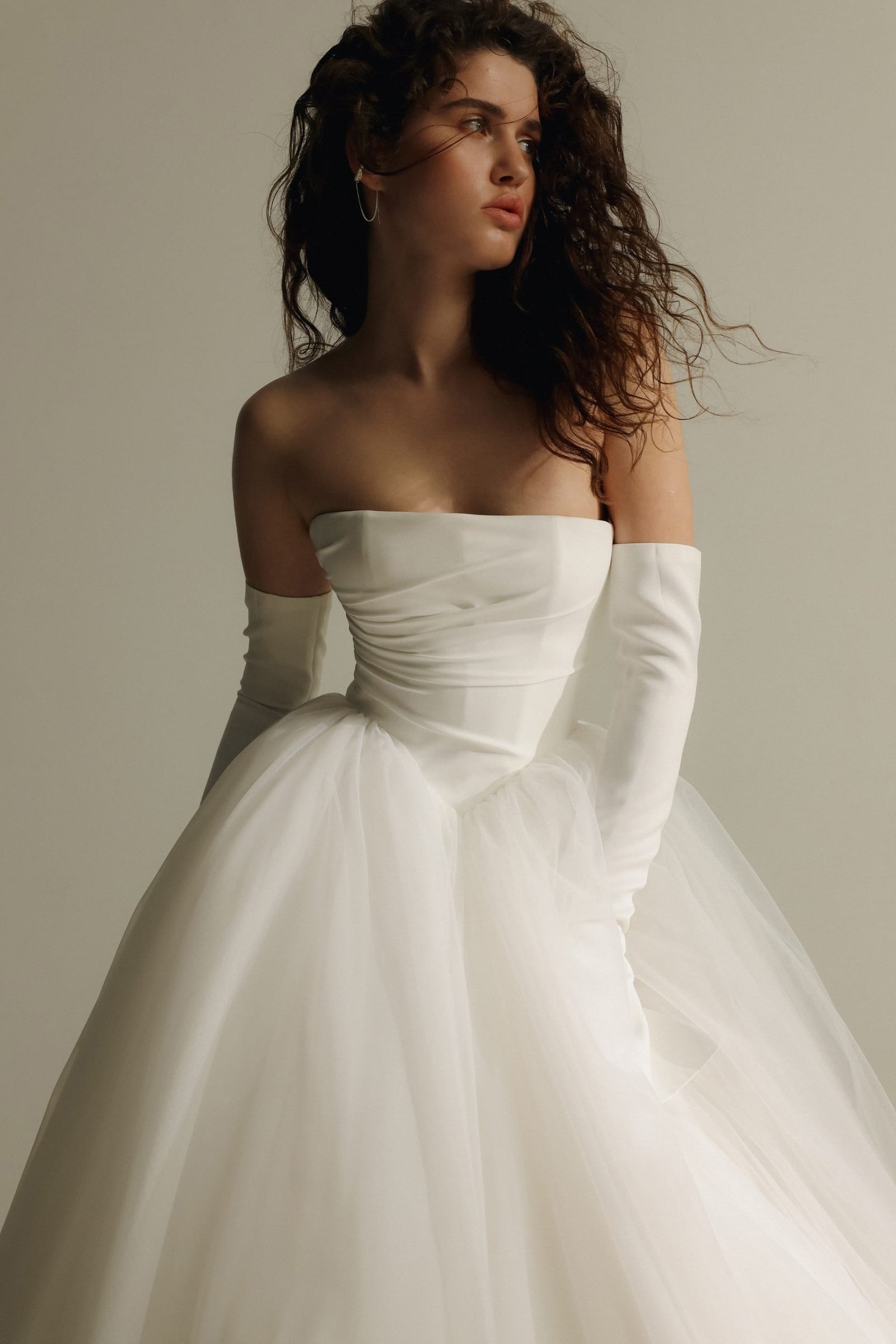
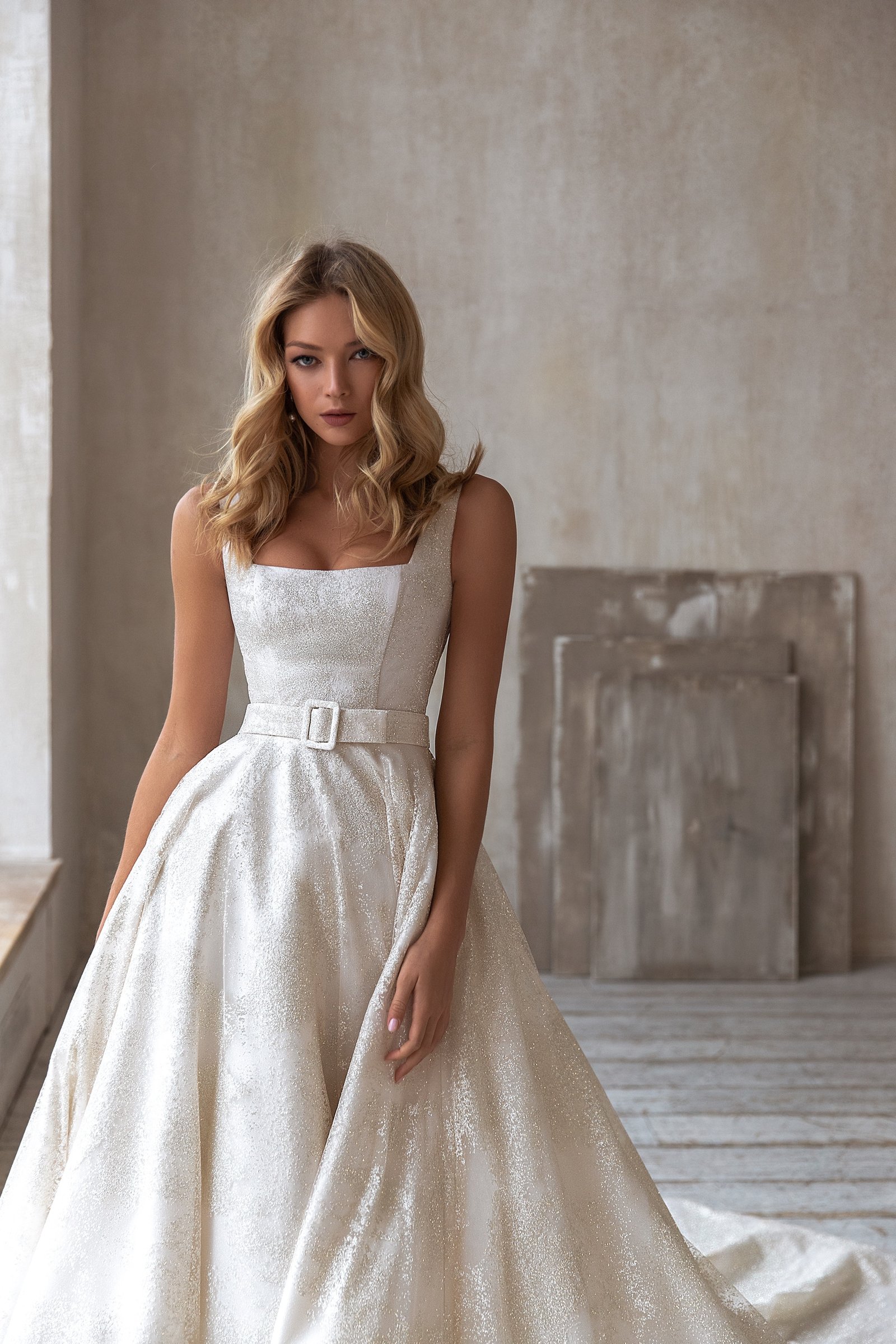
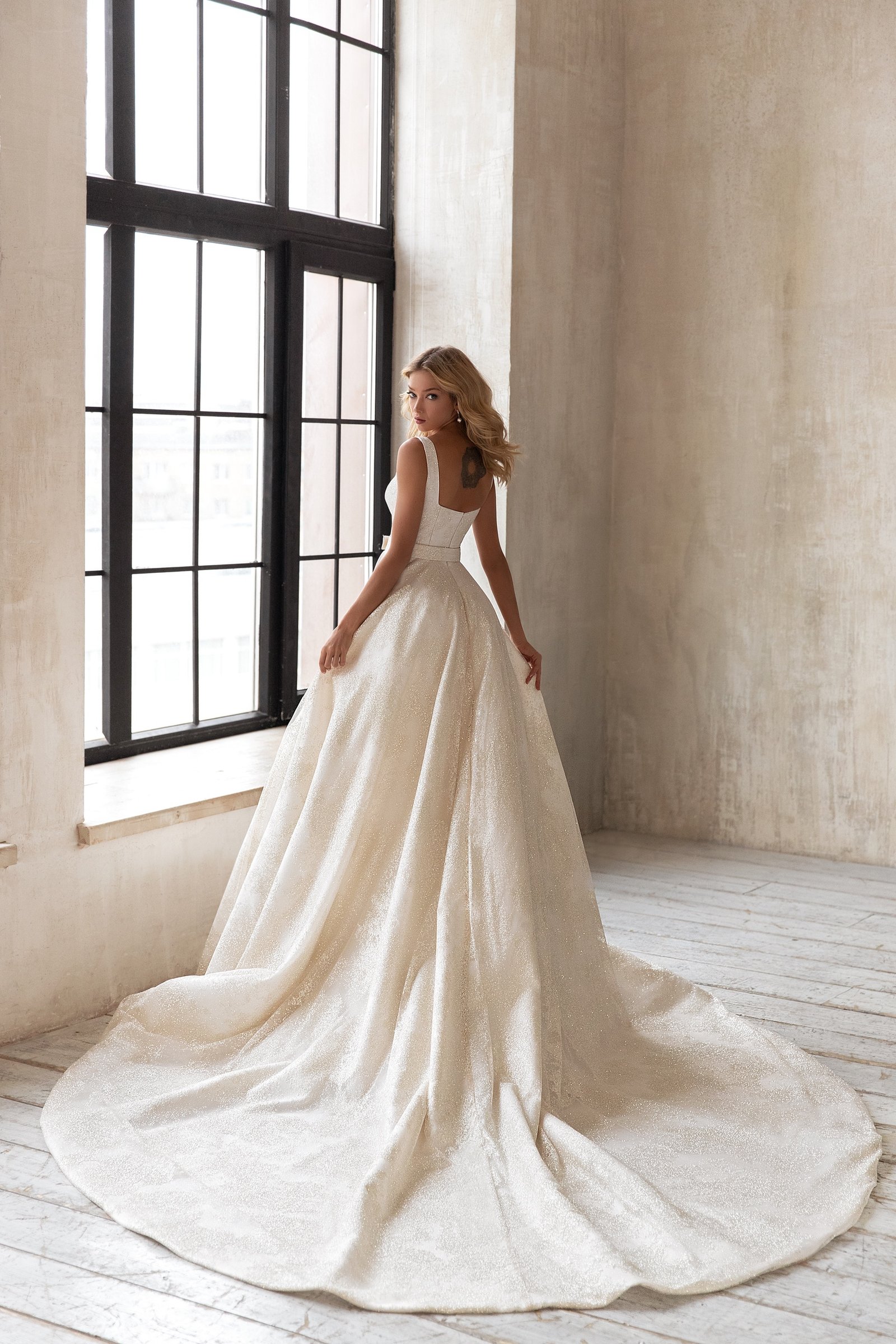
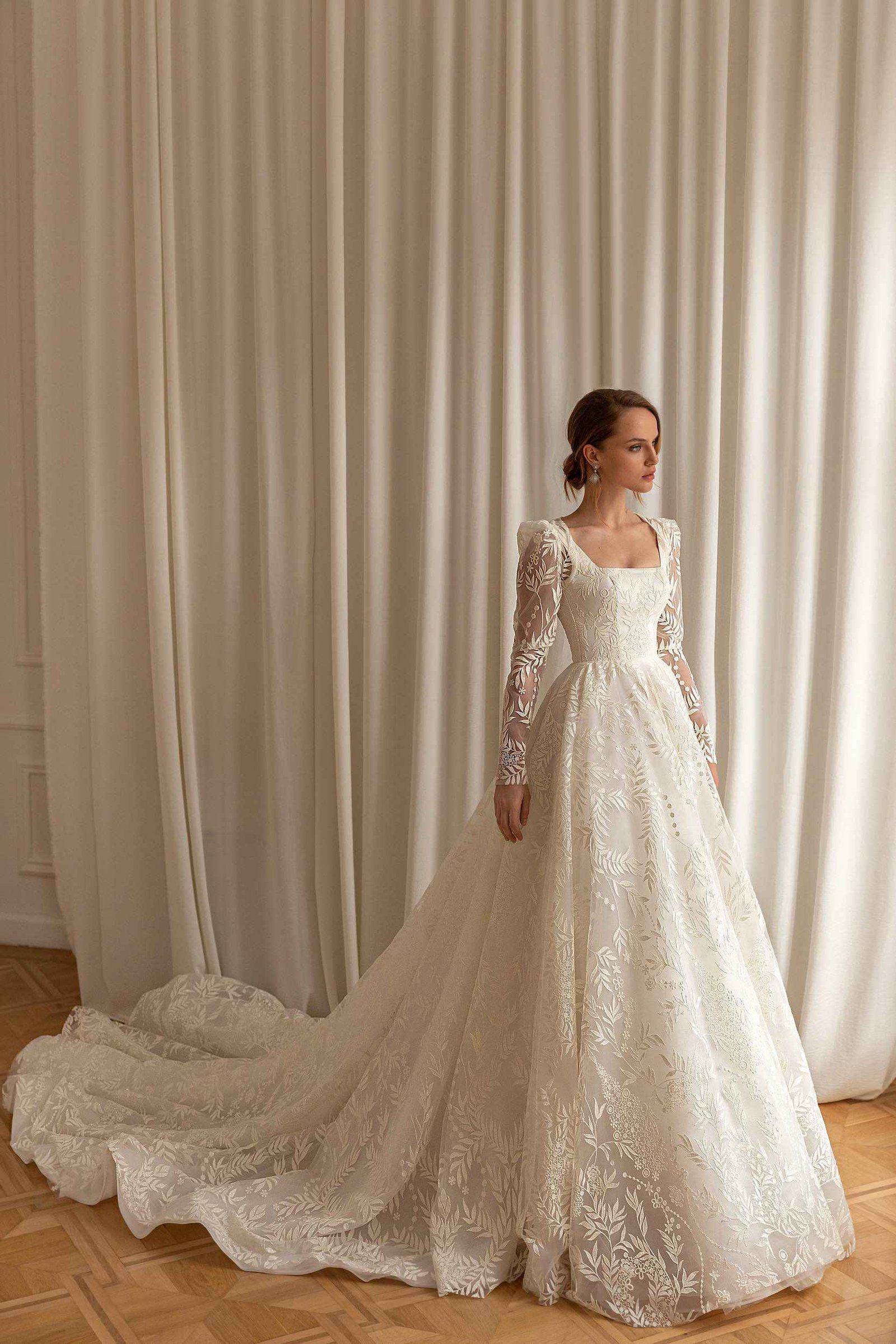
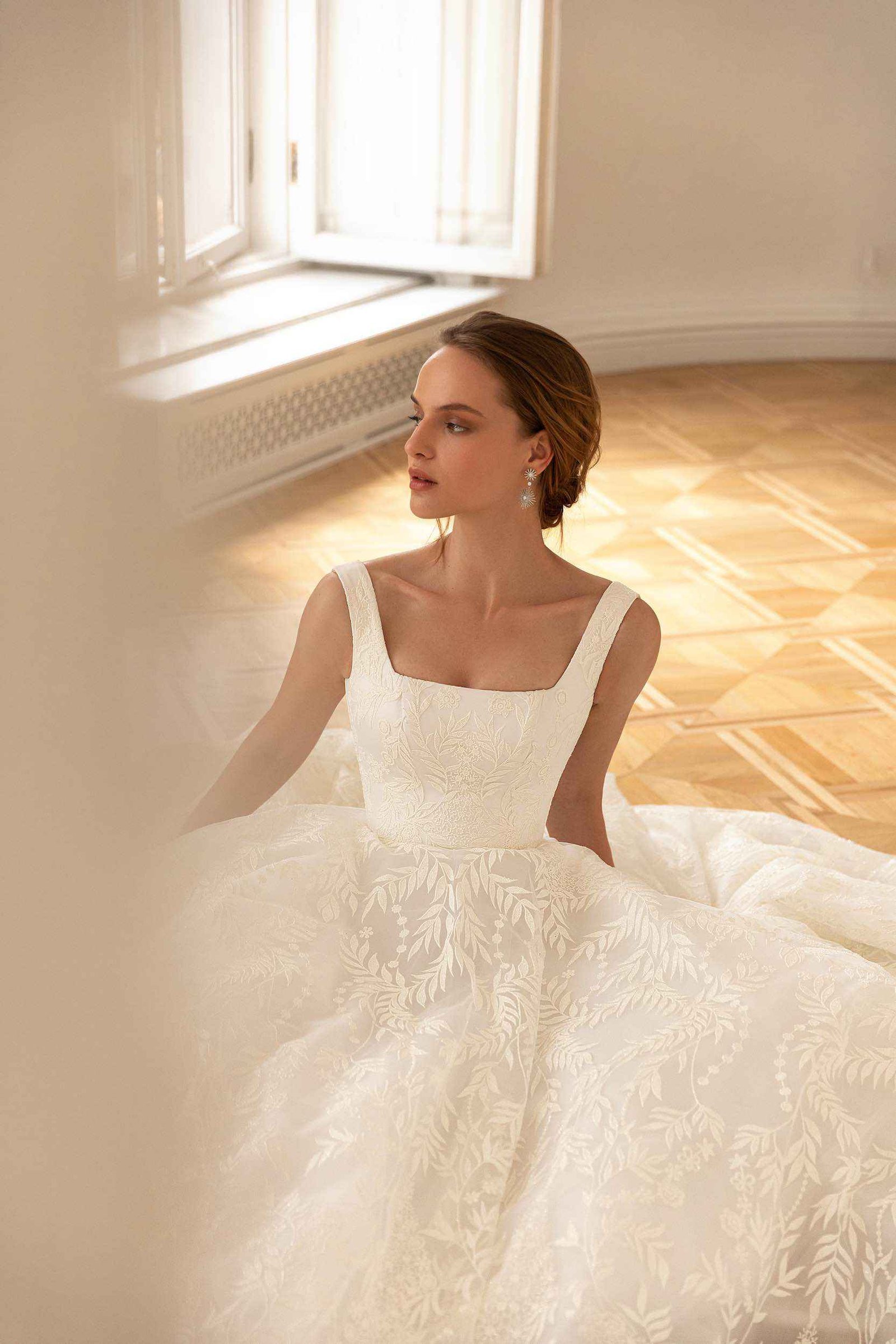
What creates ball gown volume?
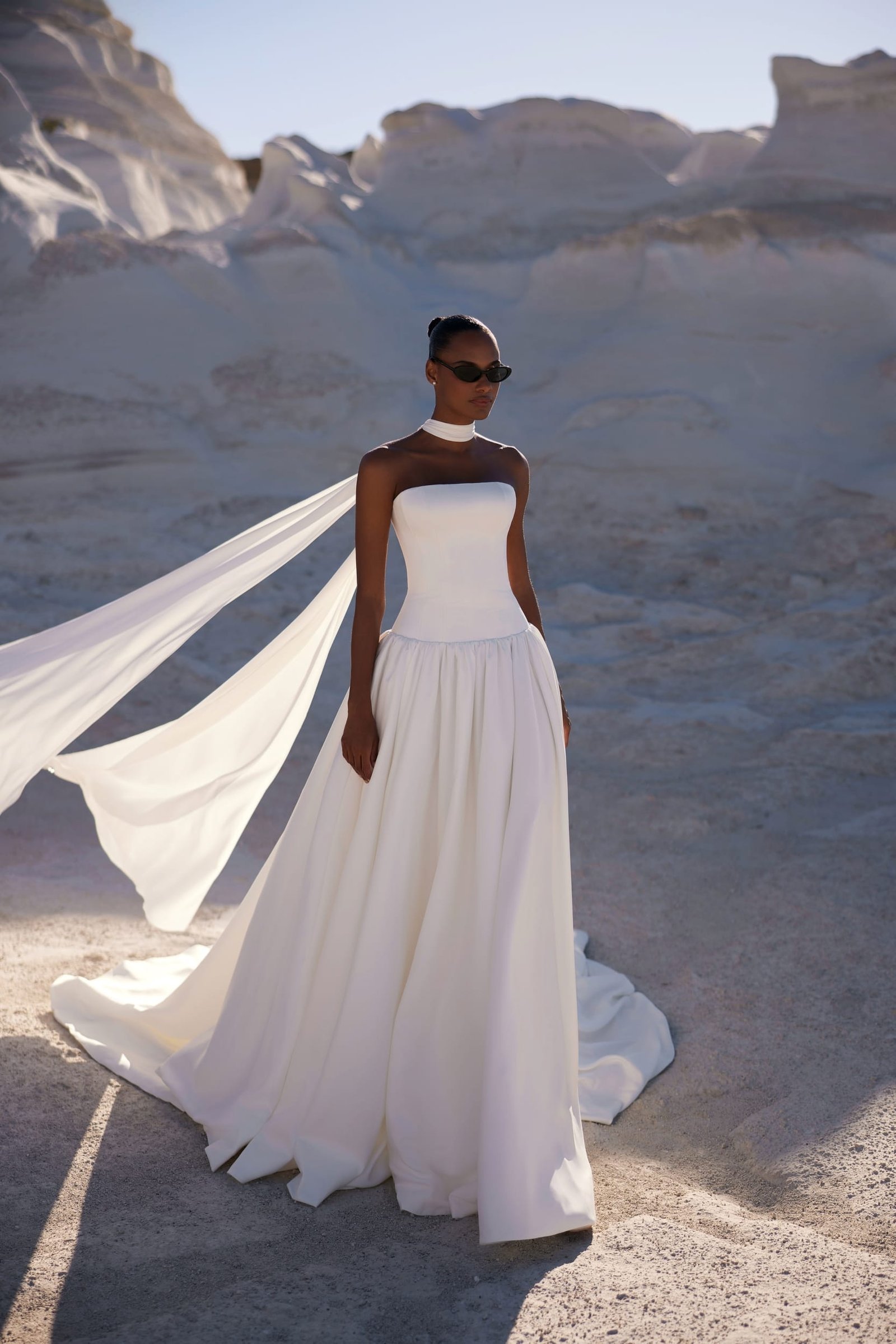
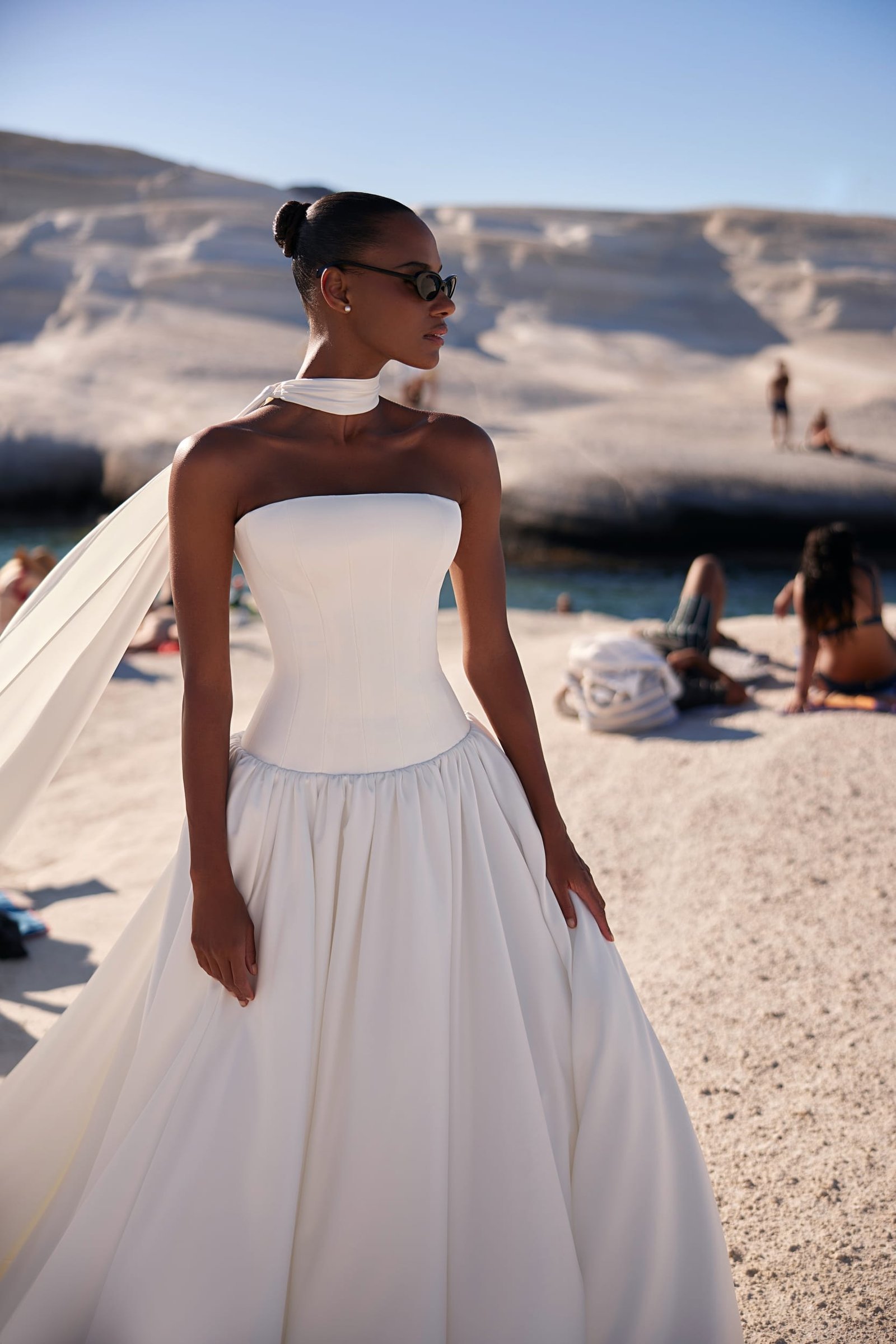
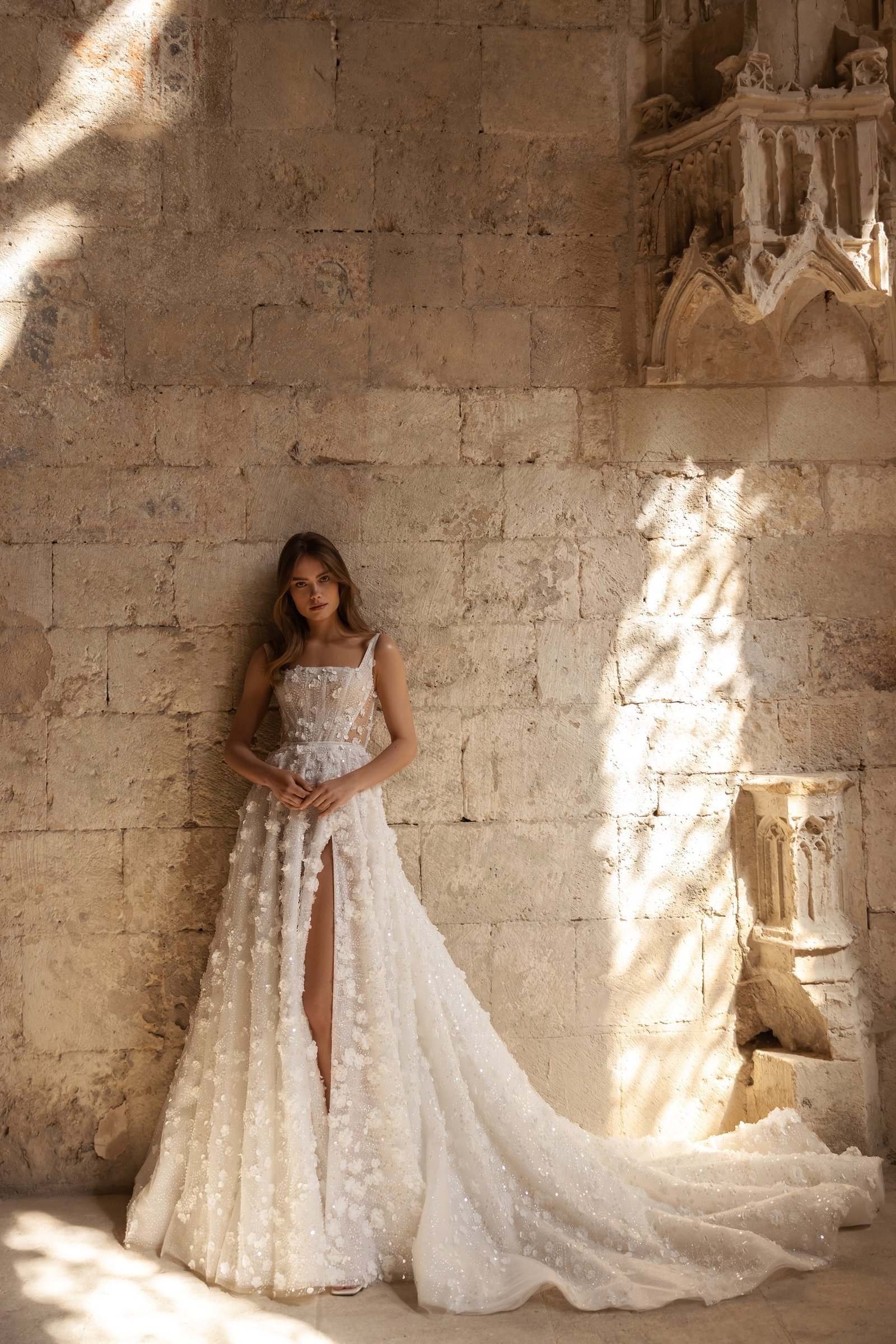
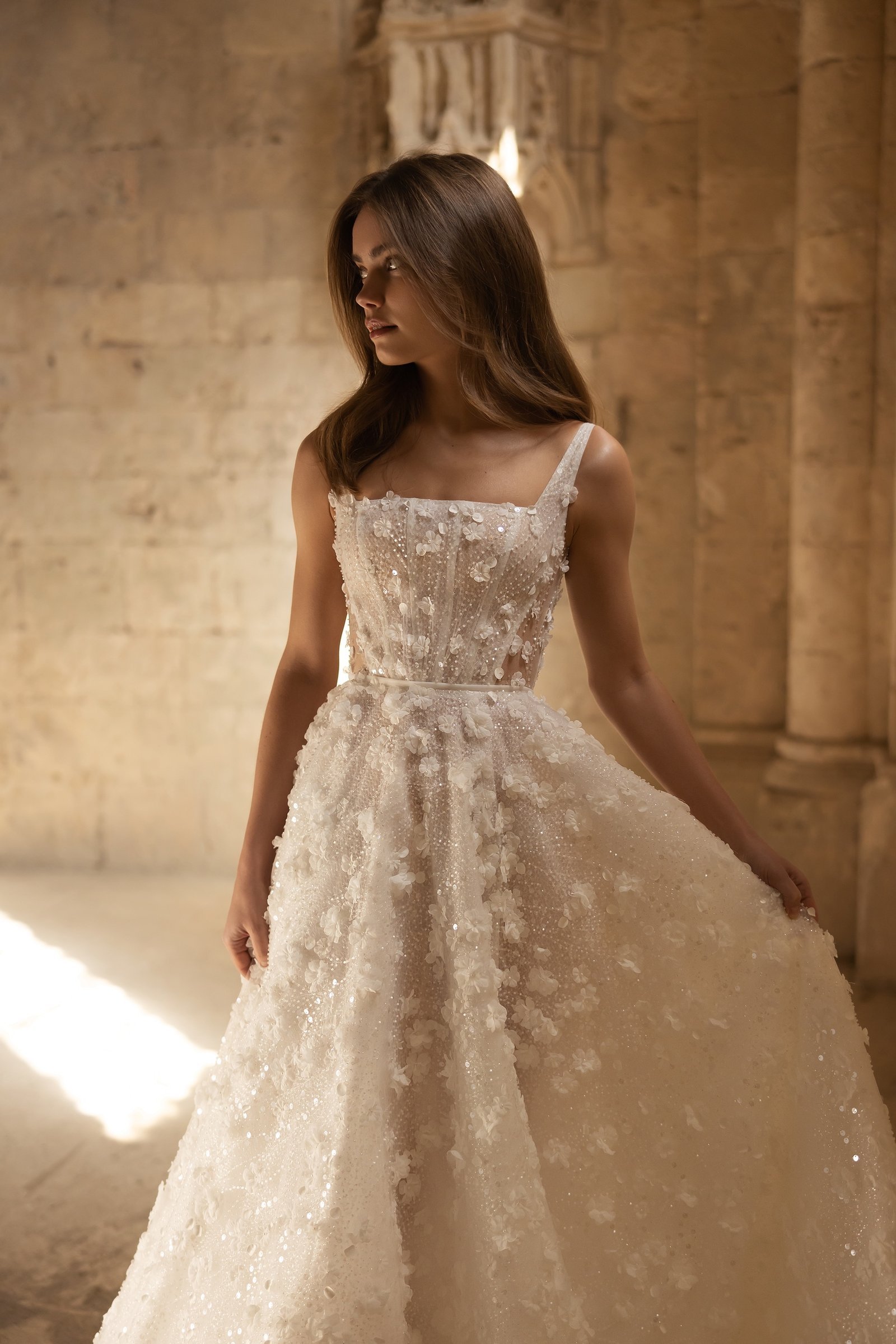
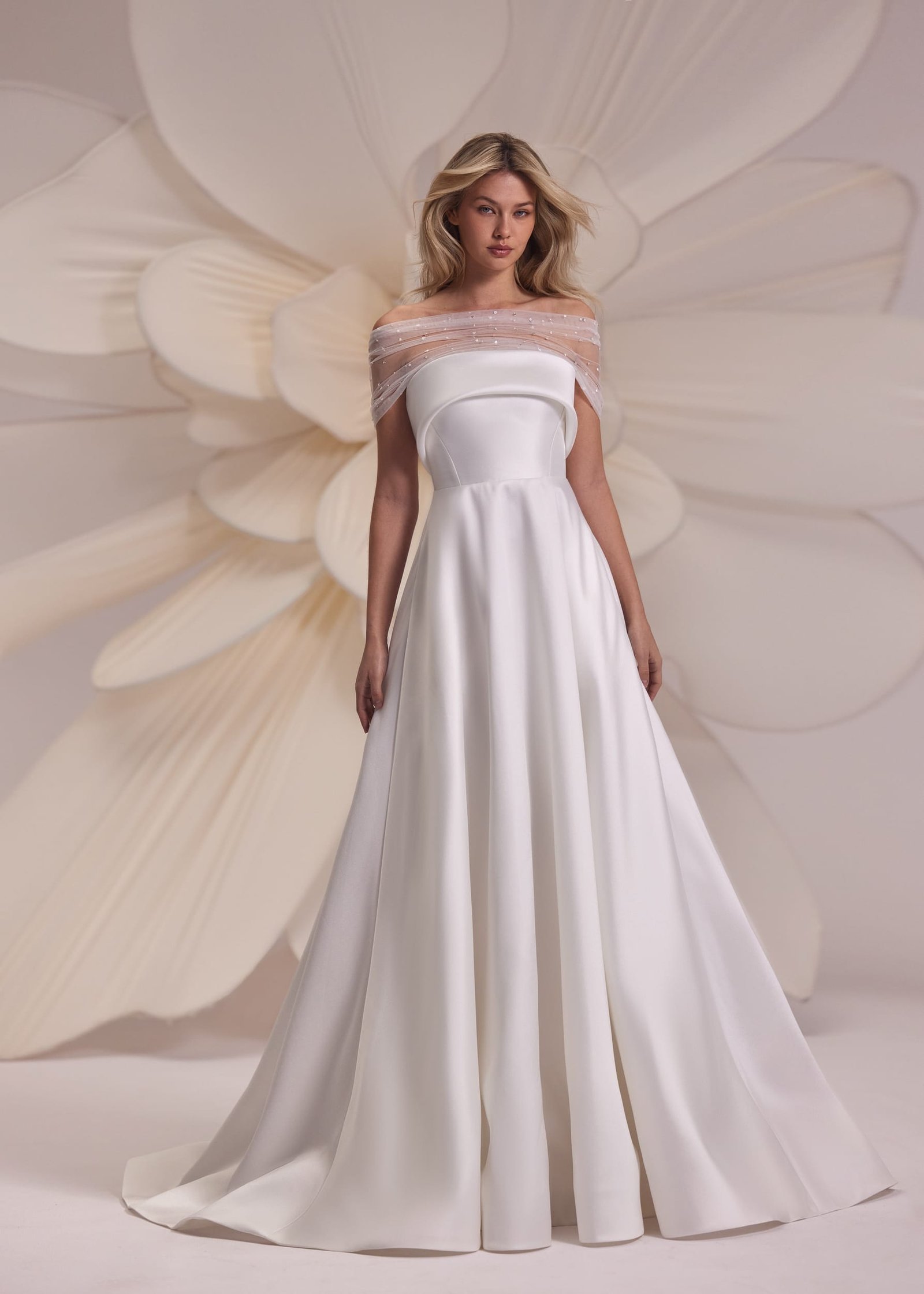
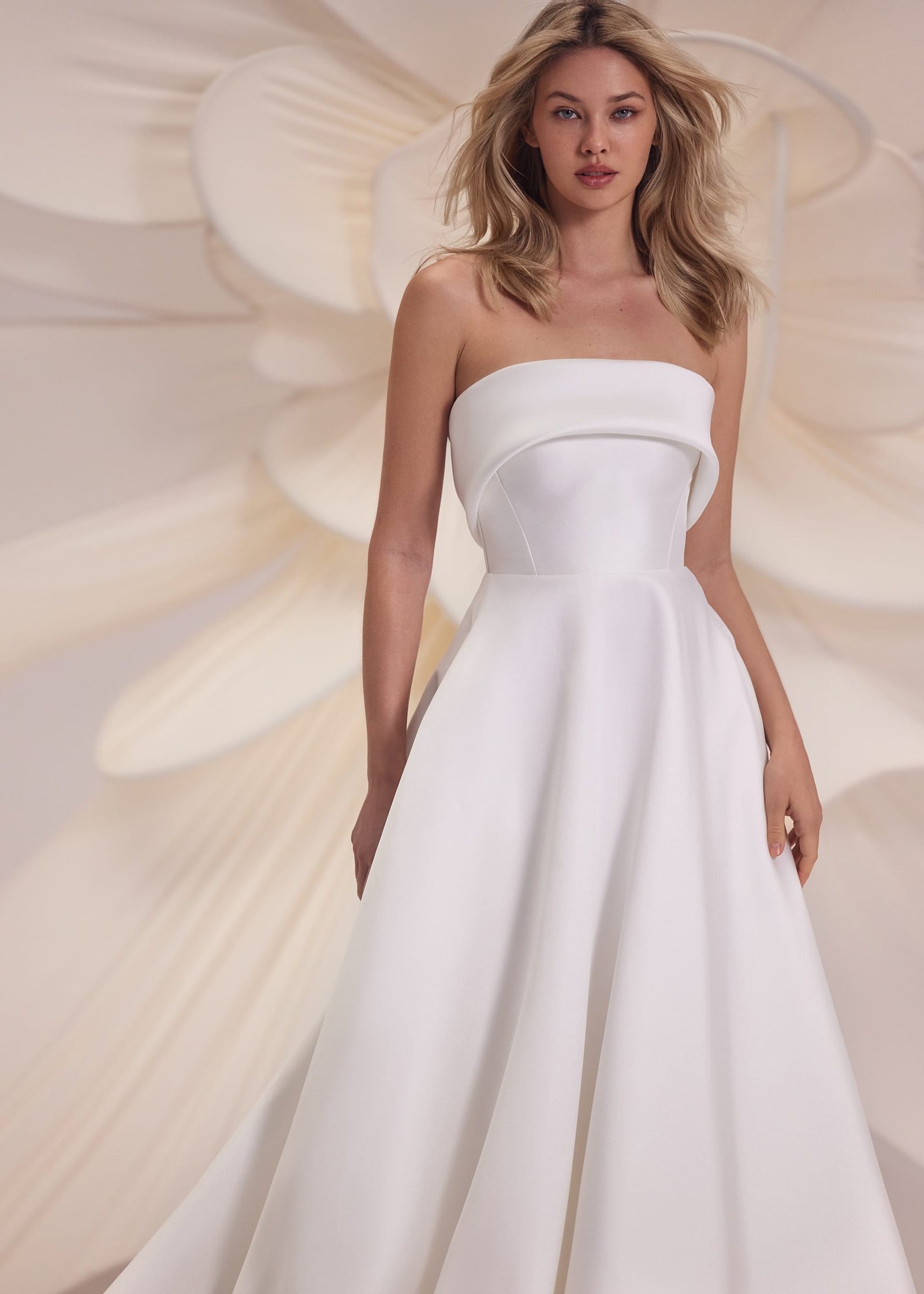
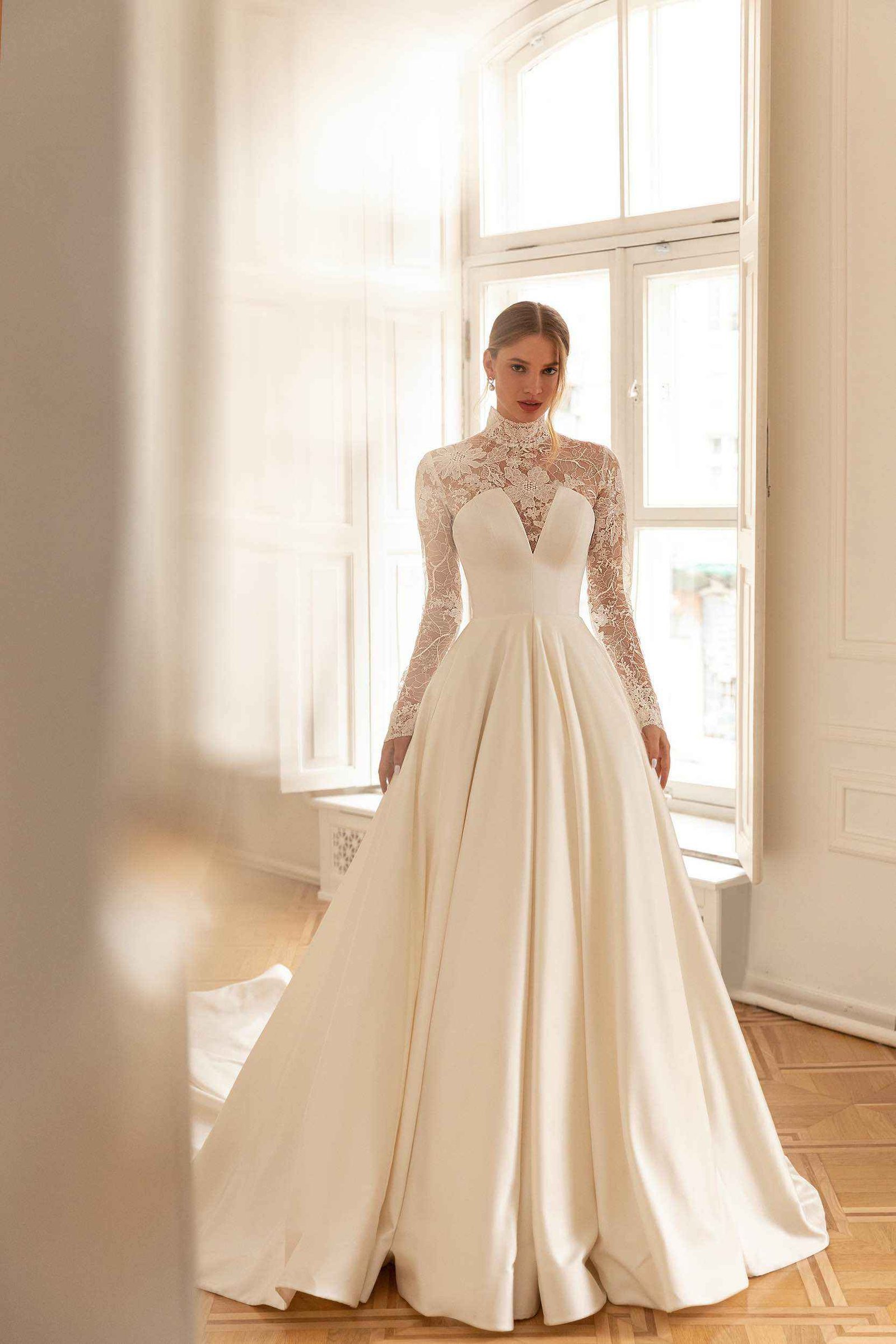
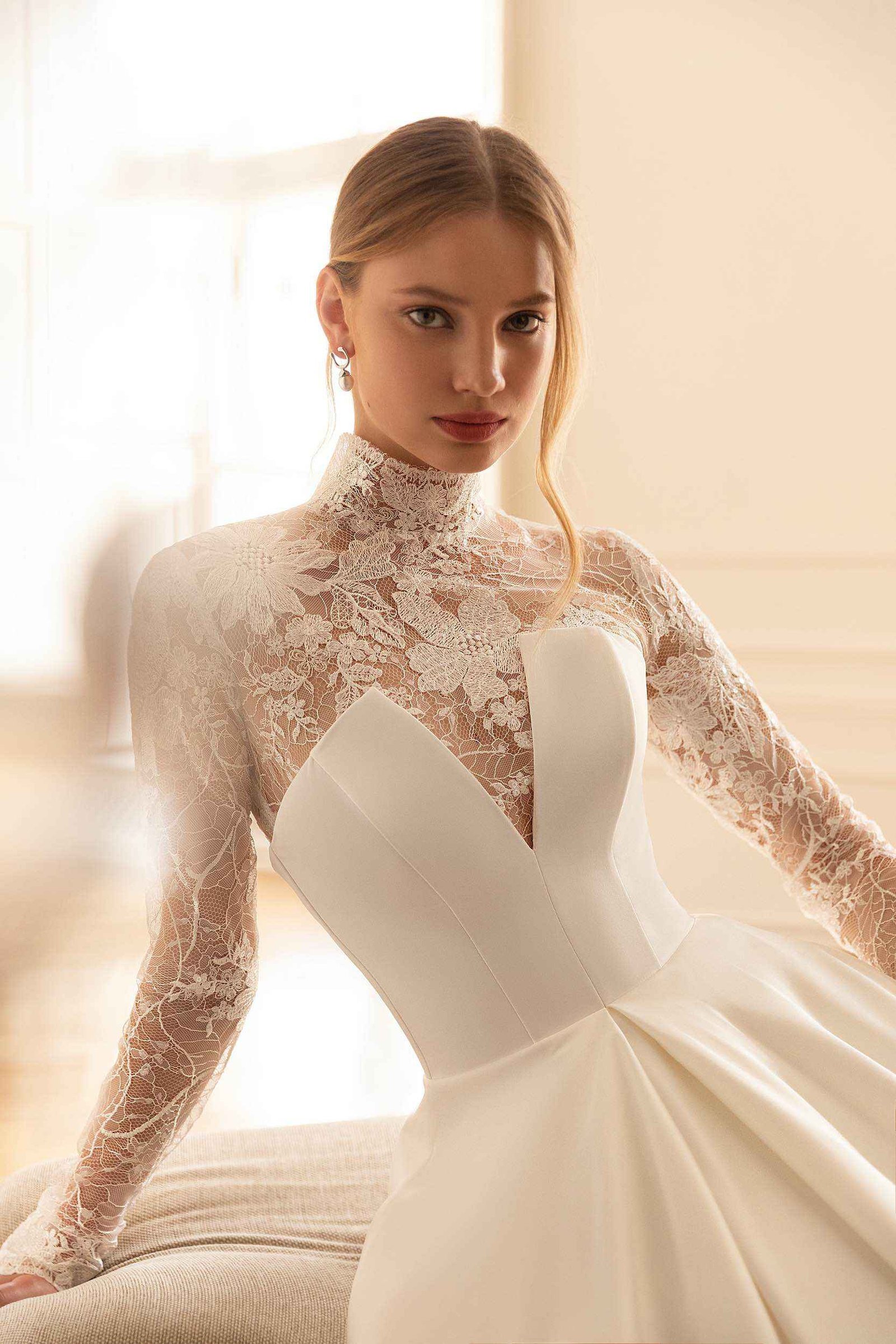
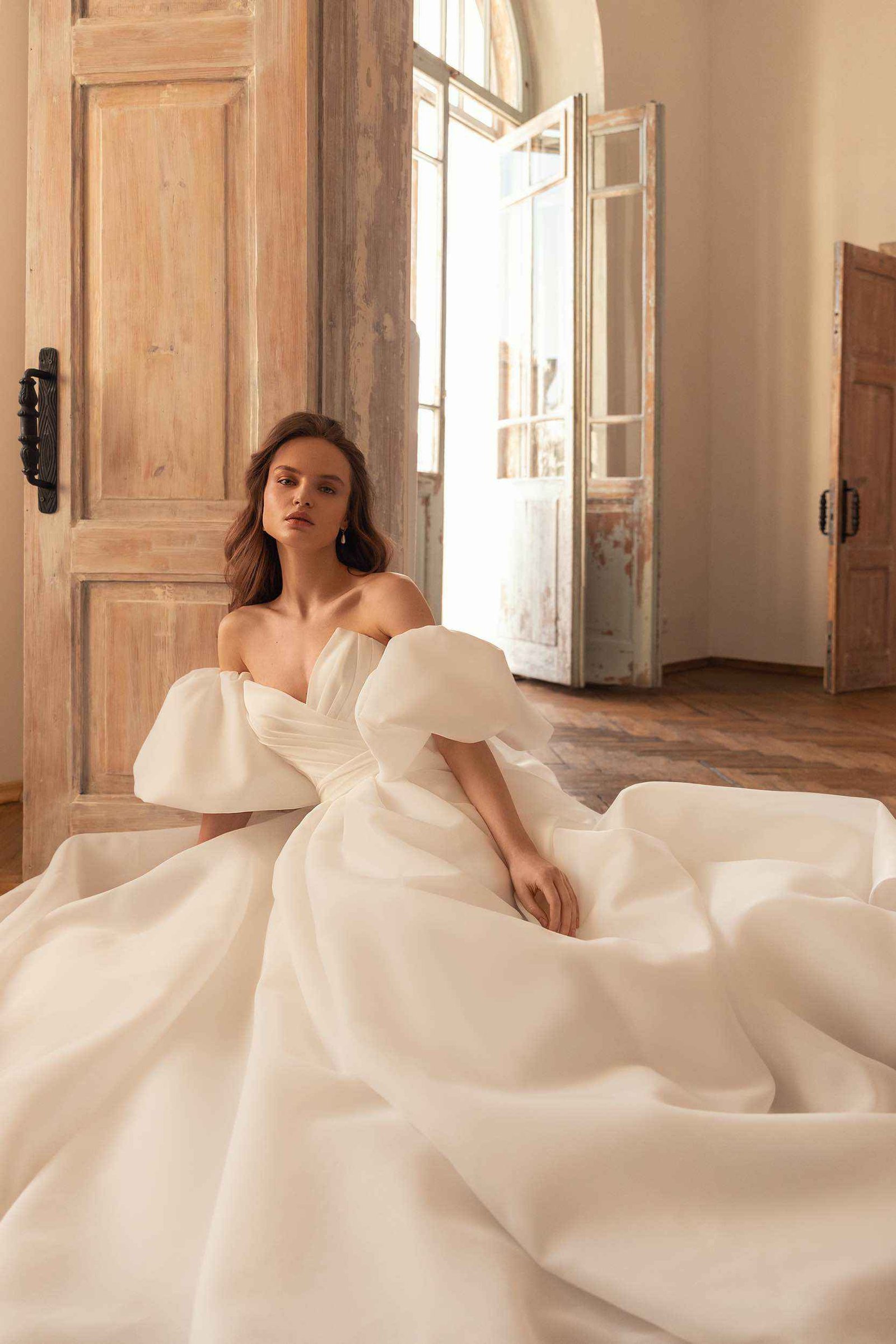
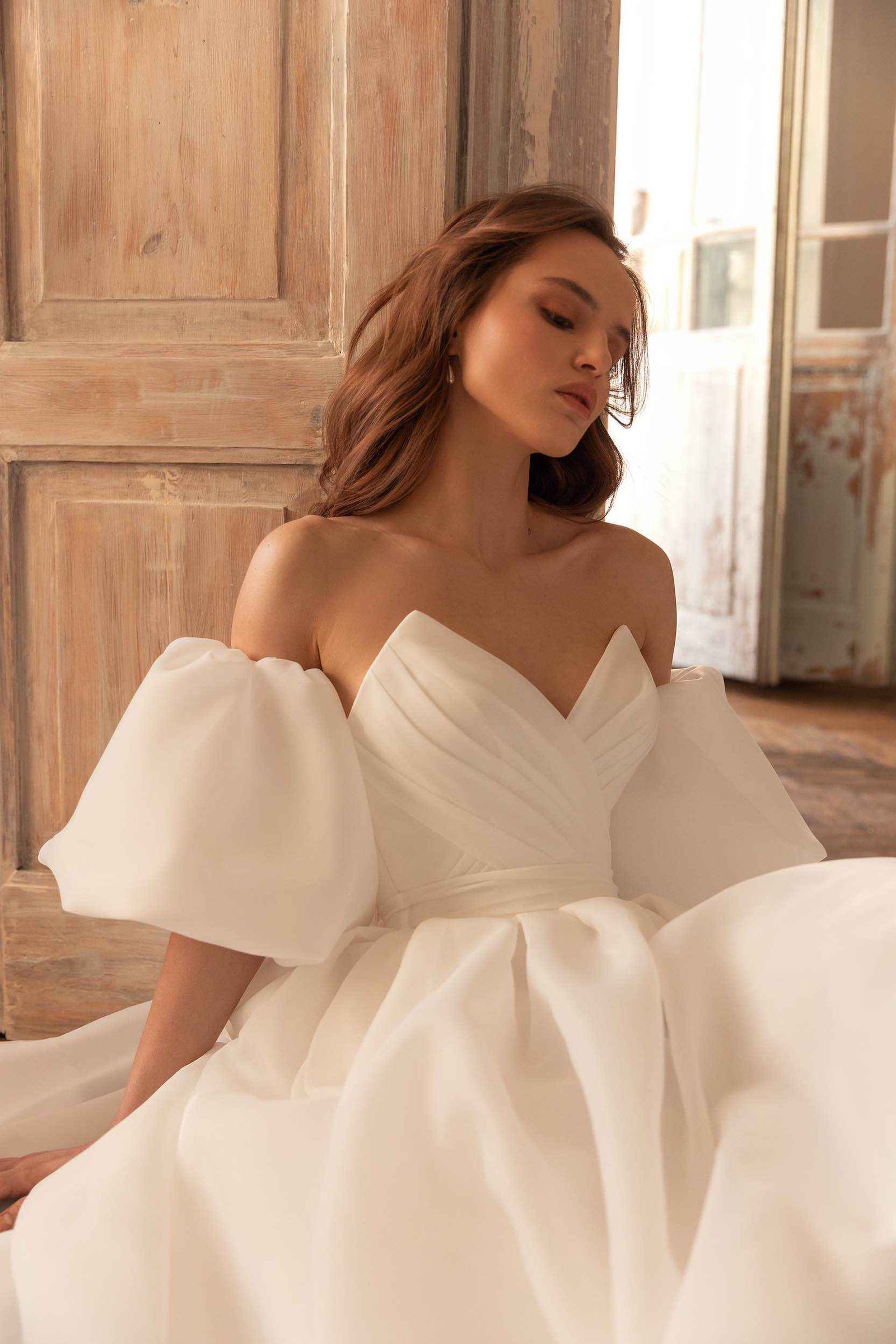
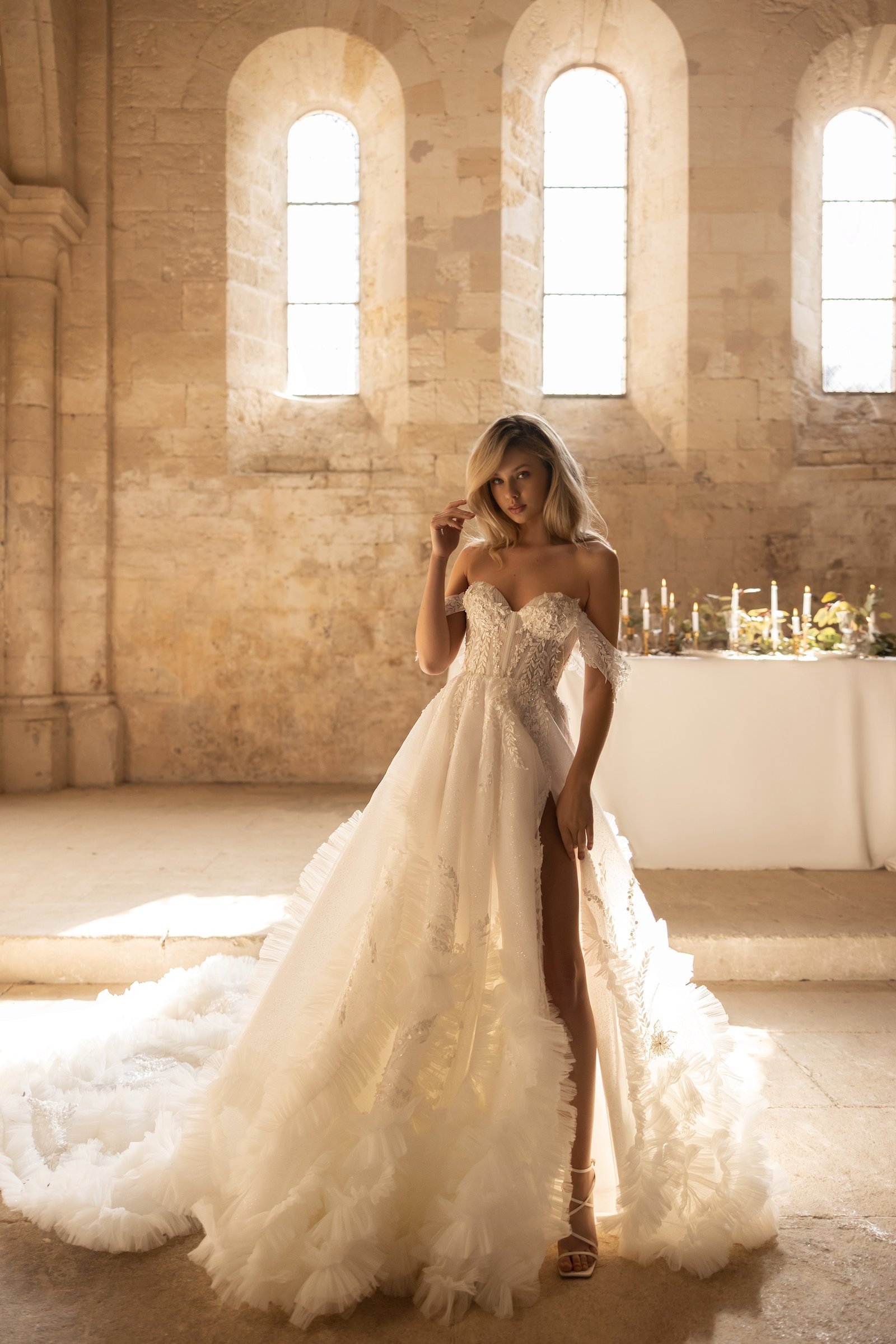
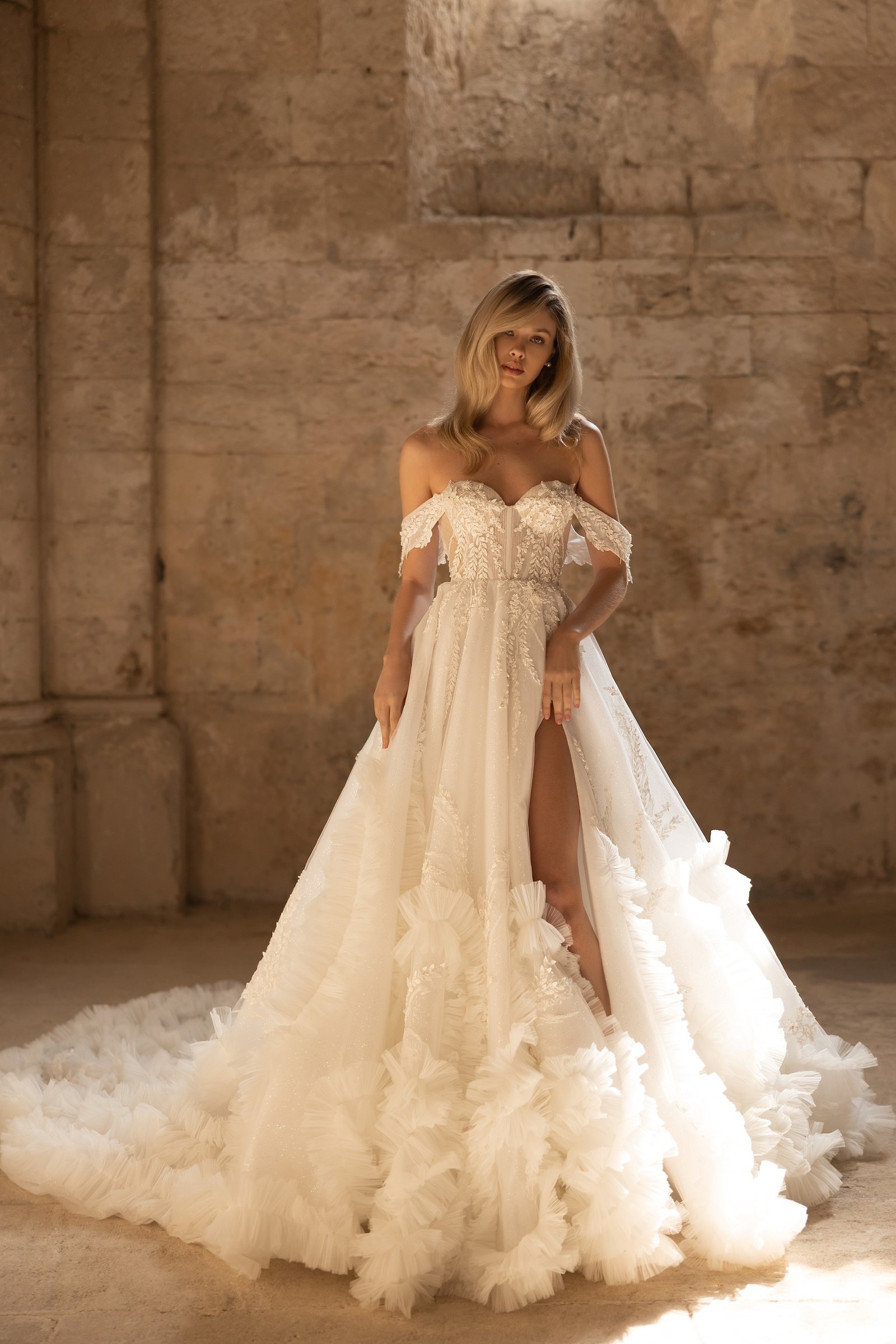
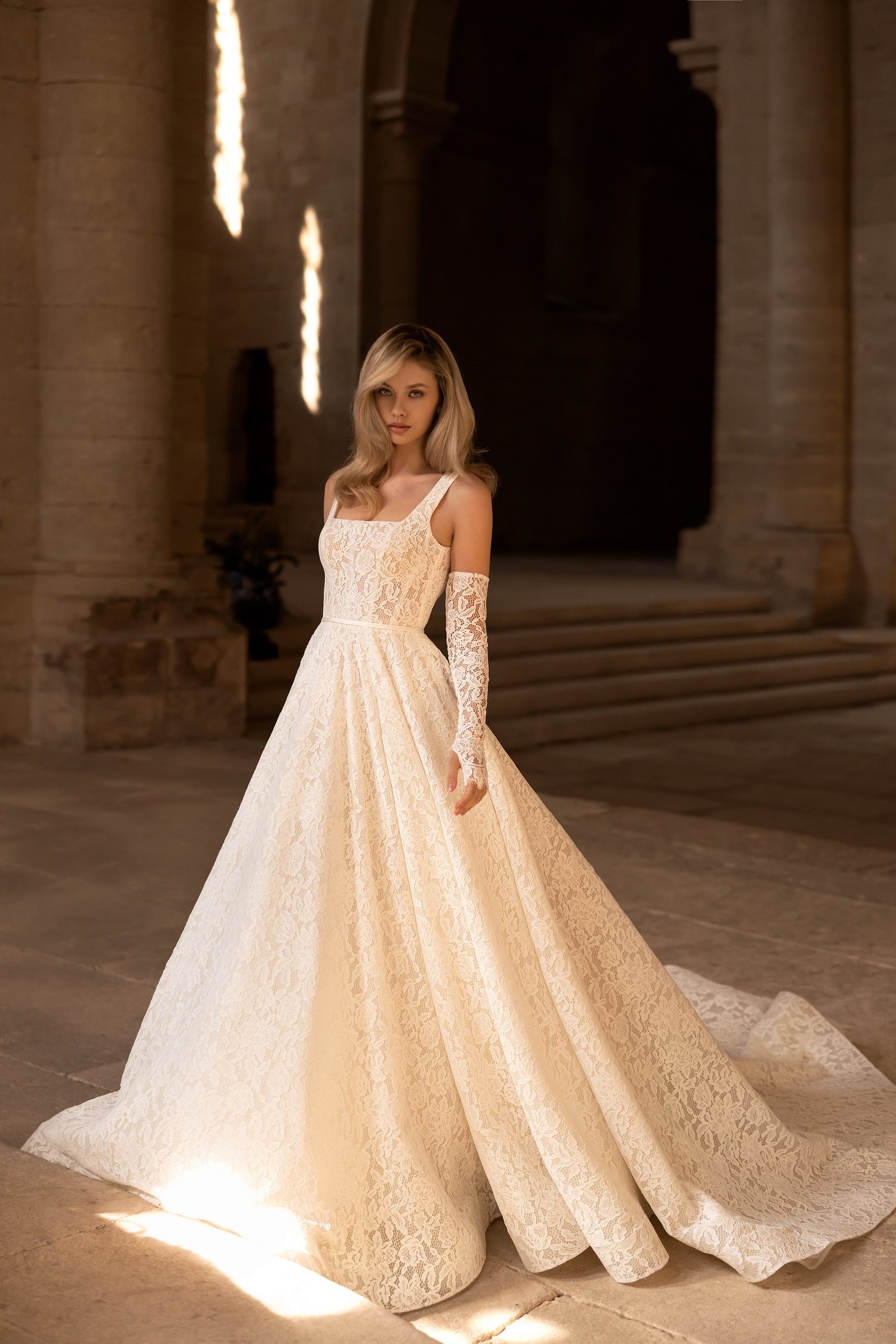
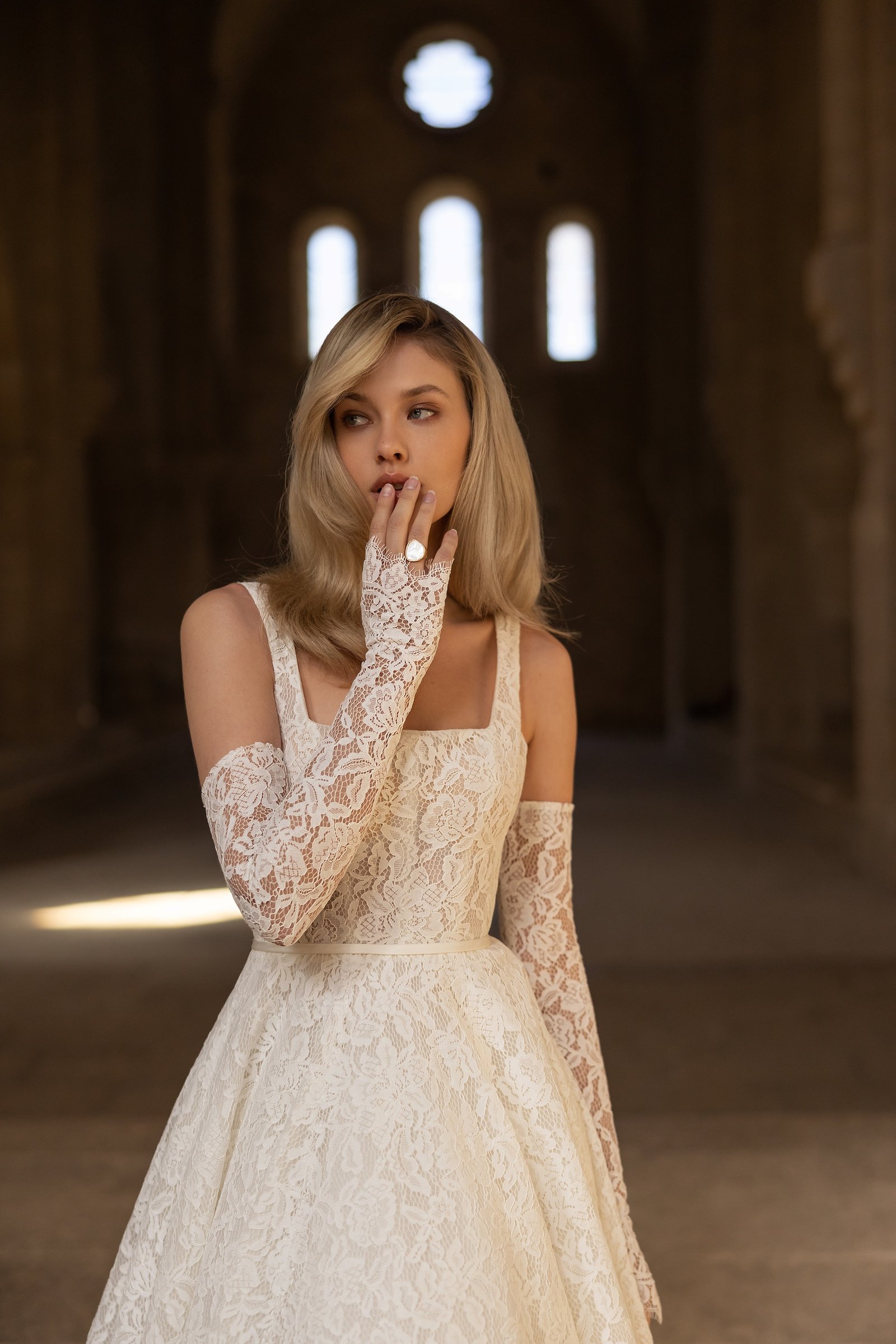
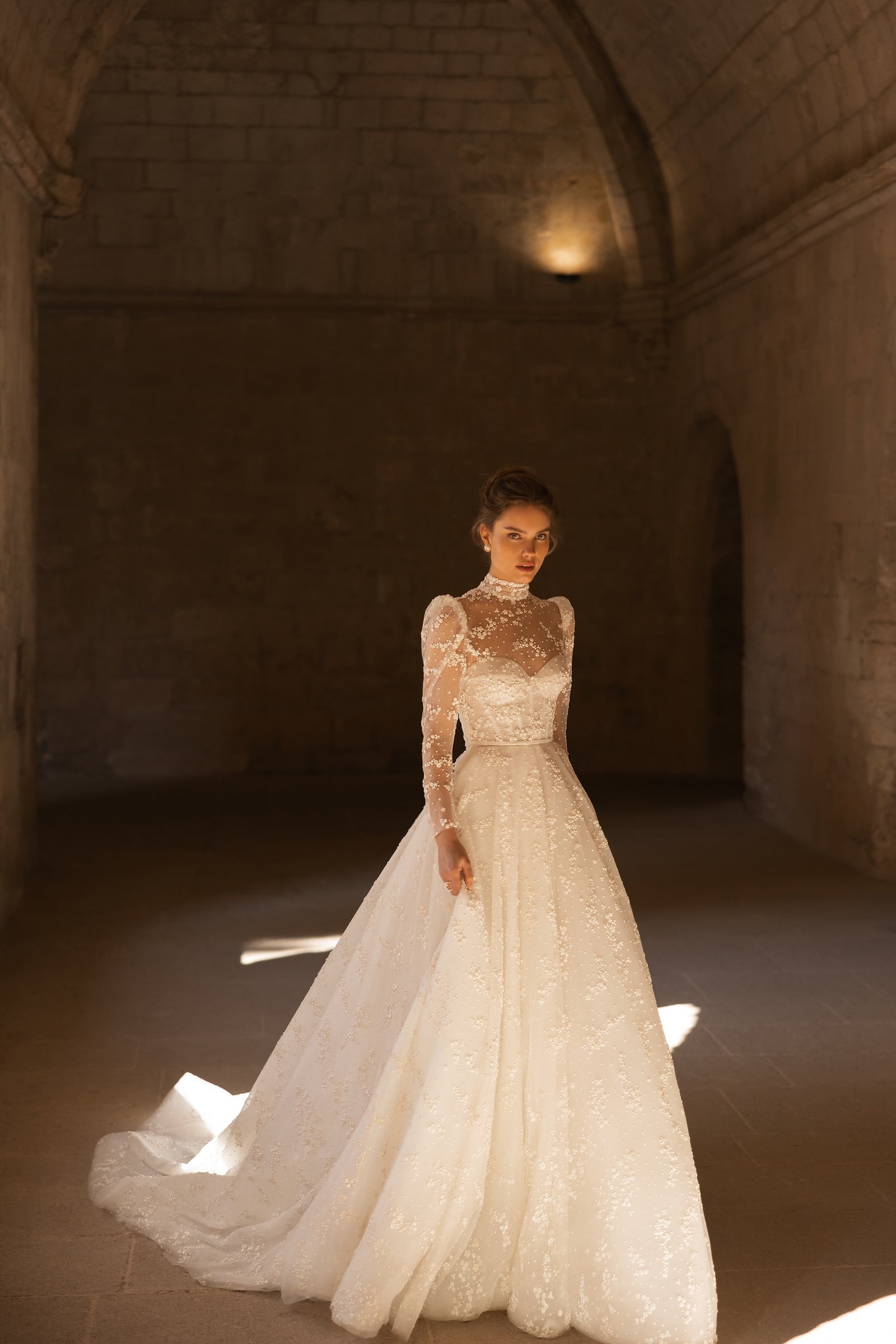
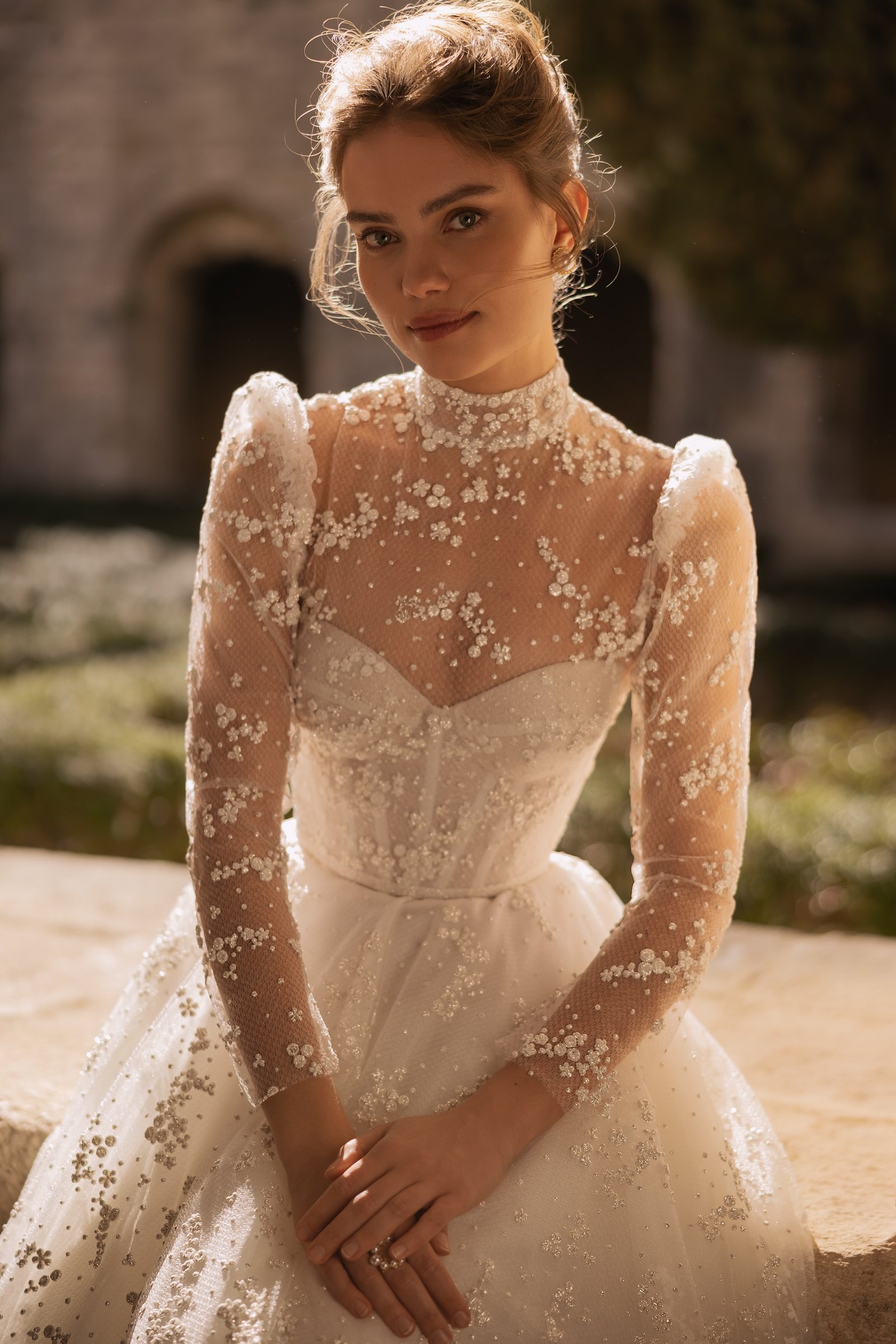
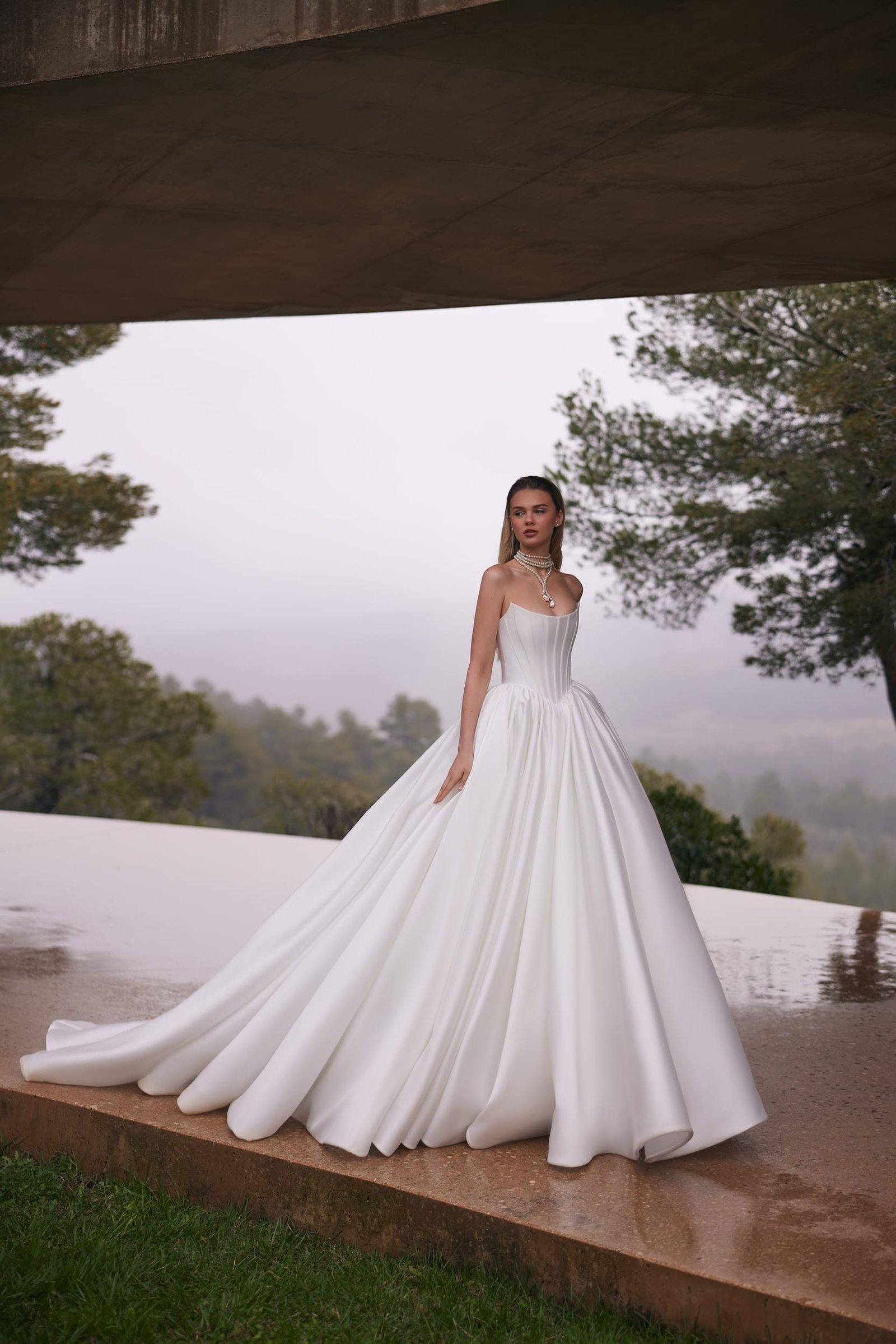
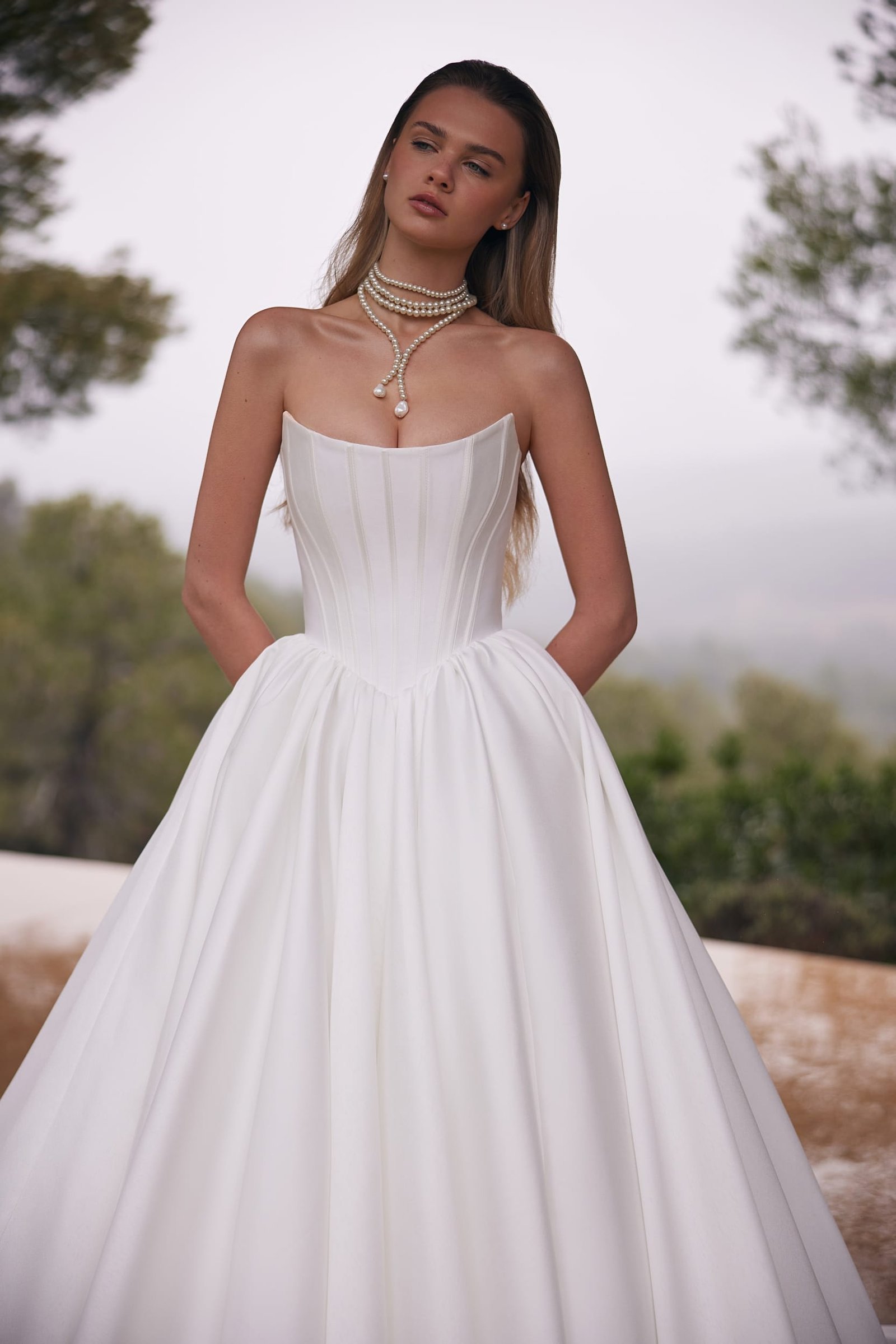
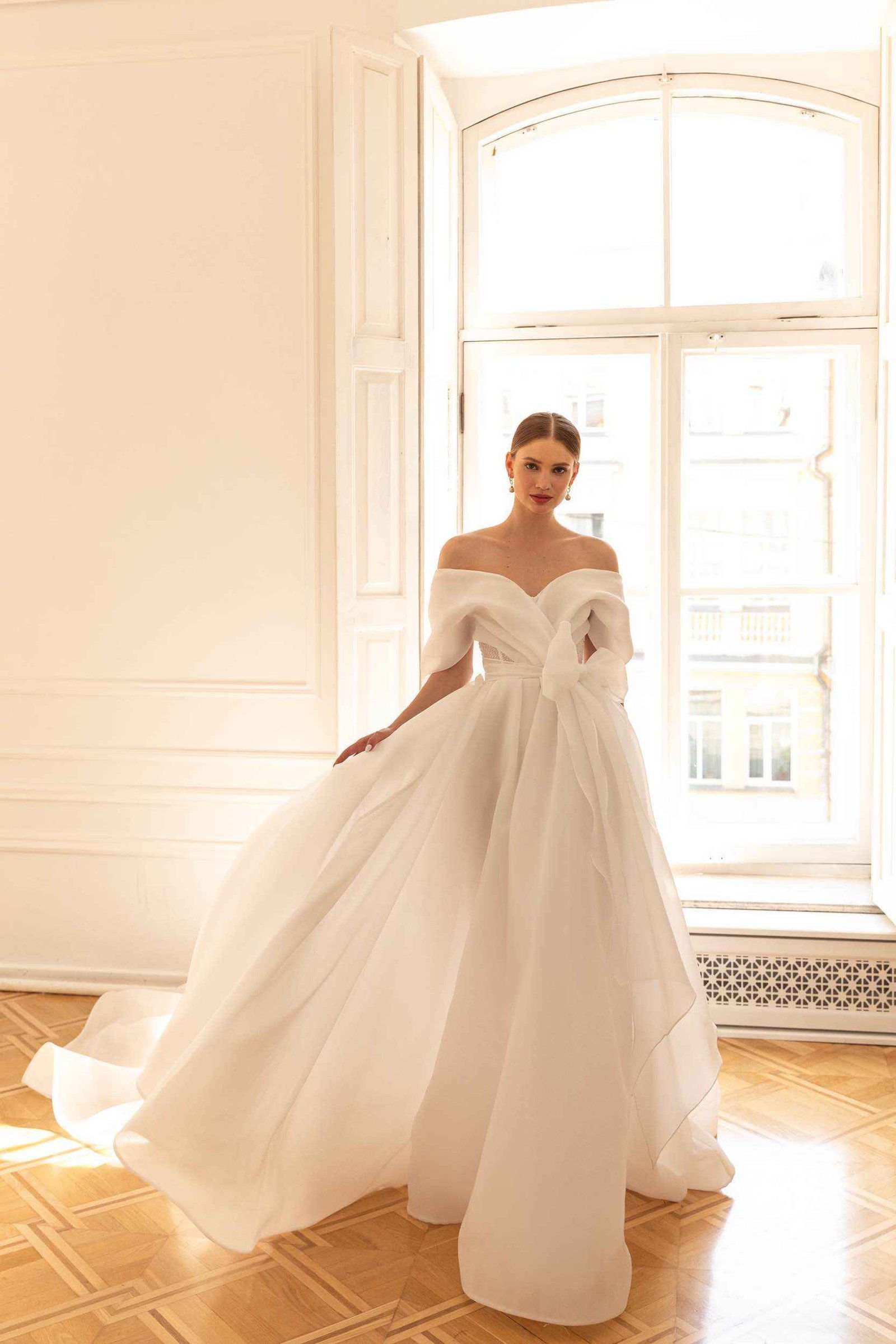
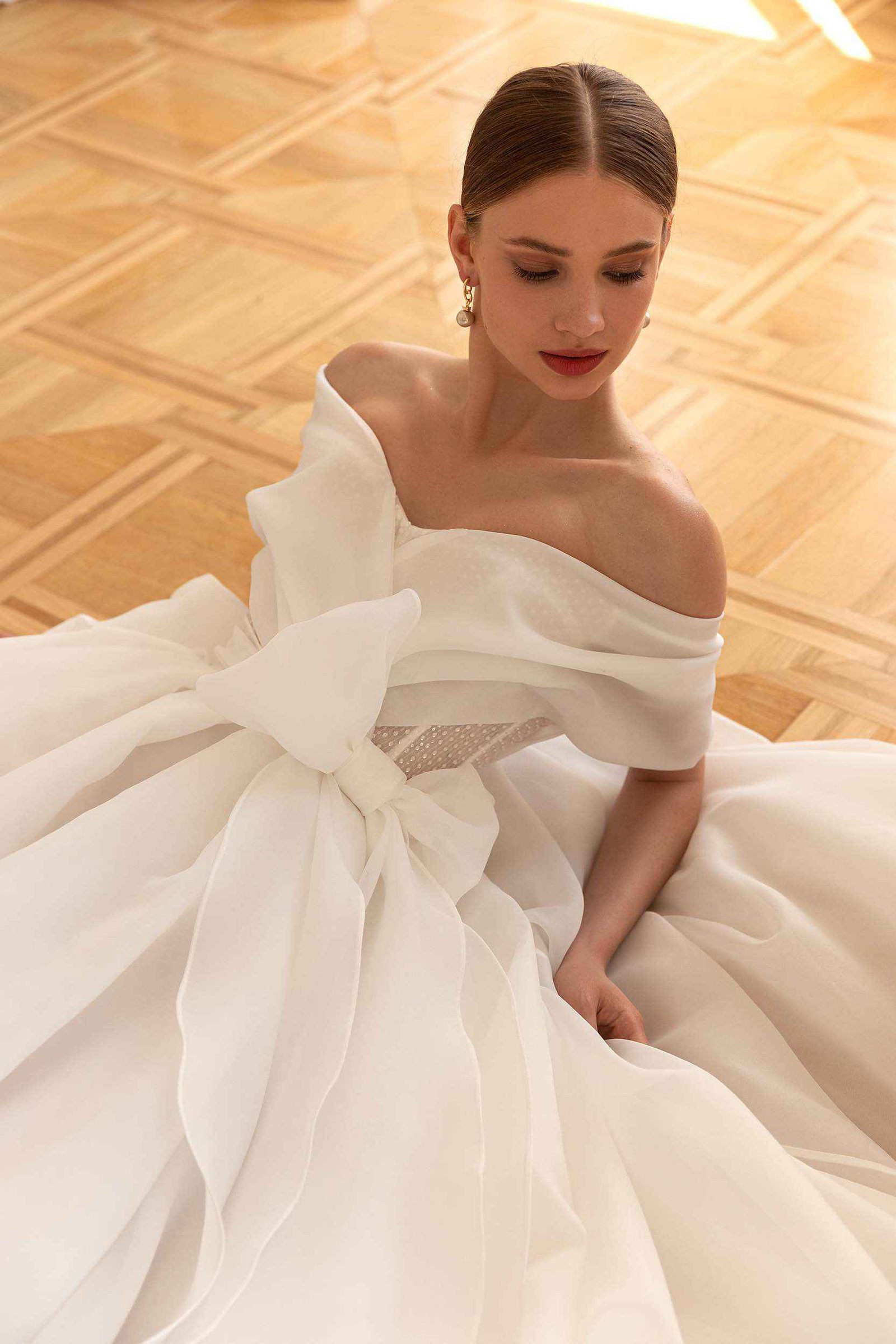
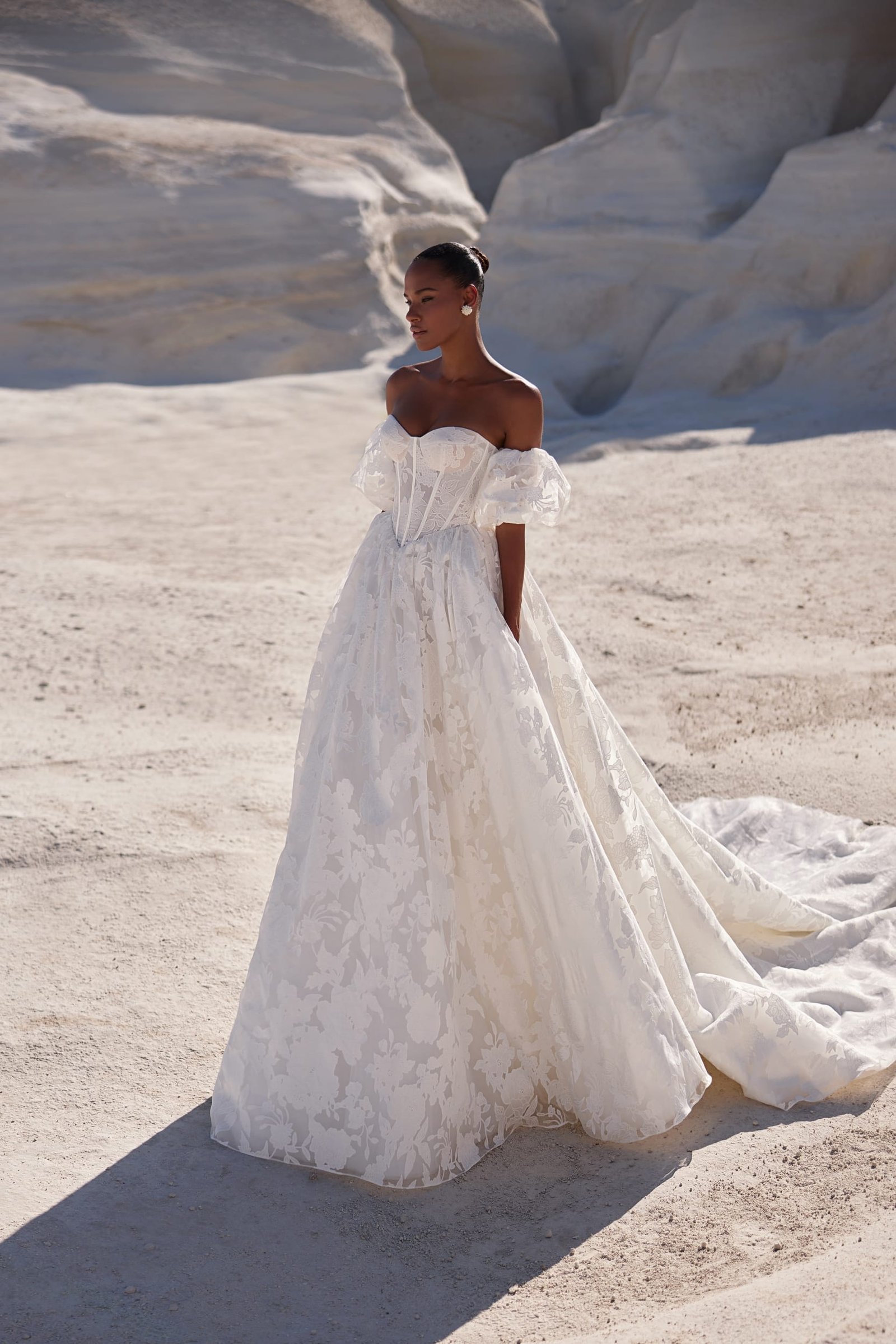
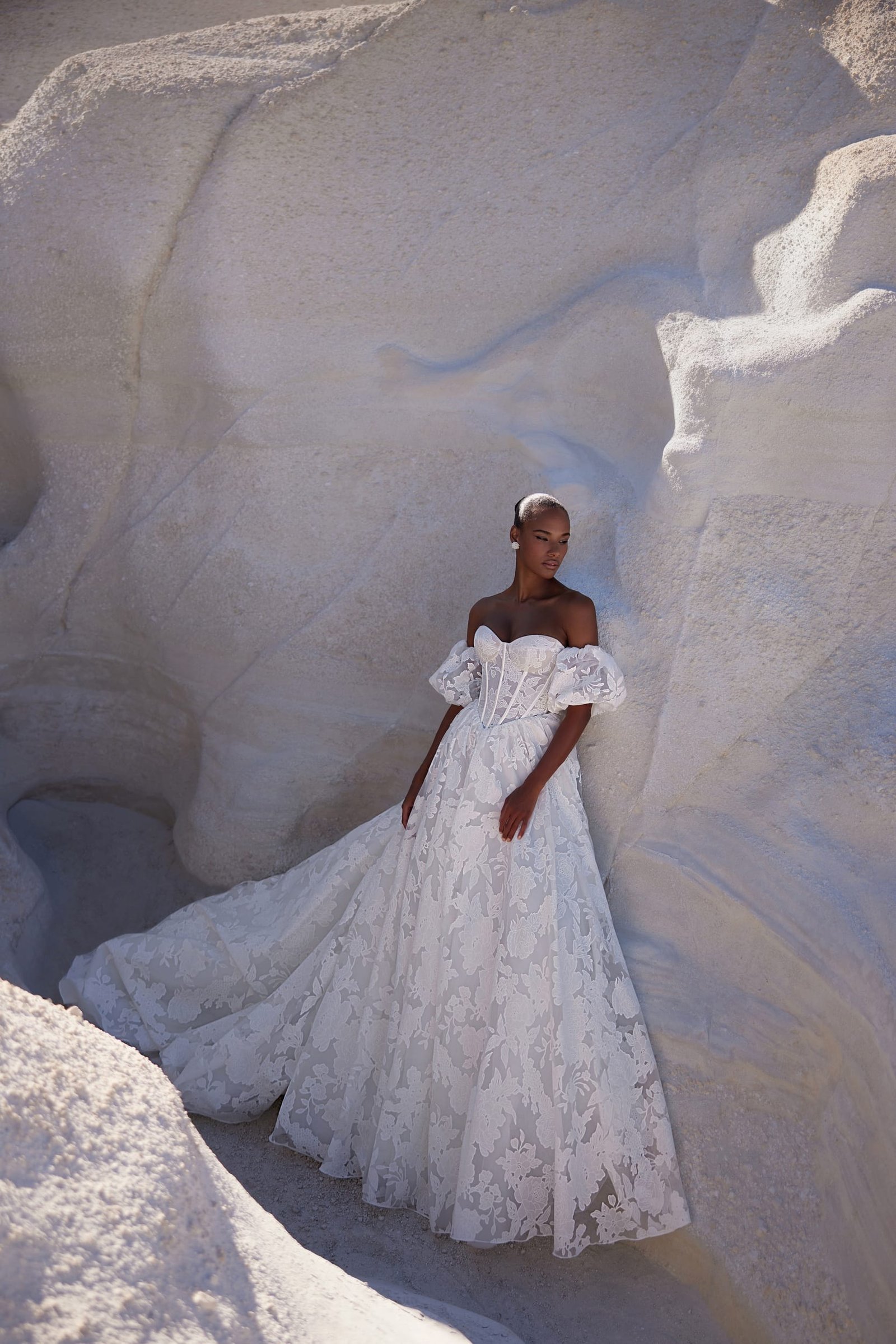
A ball gown needs a shaped bodice and a skirt that expands from the waist. The fabric and internal construction decide whether the fullness reads as crisp folds or softer layers. In Aimee, Mikado holds deep folds below a pointed basque waist. Lace, beadwork and detachable sleeves concentrate detail above the skirt, while side pockets sit within its volume.
One dress or two silhouettes
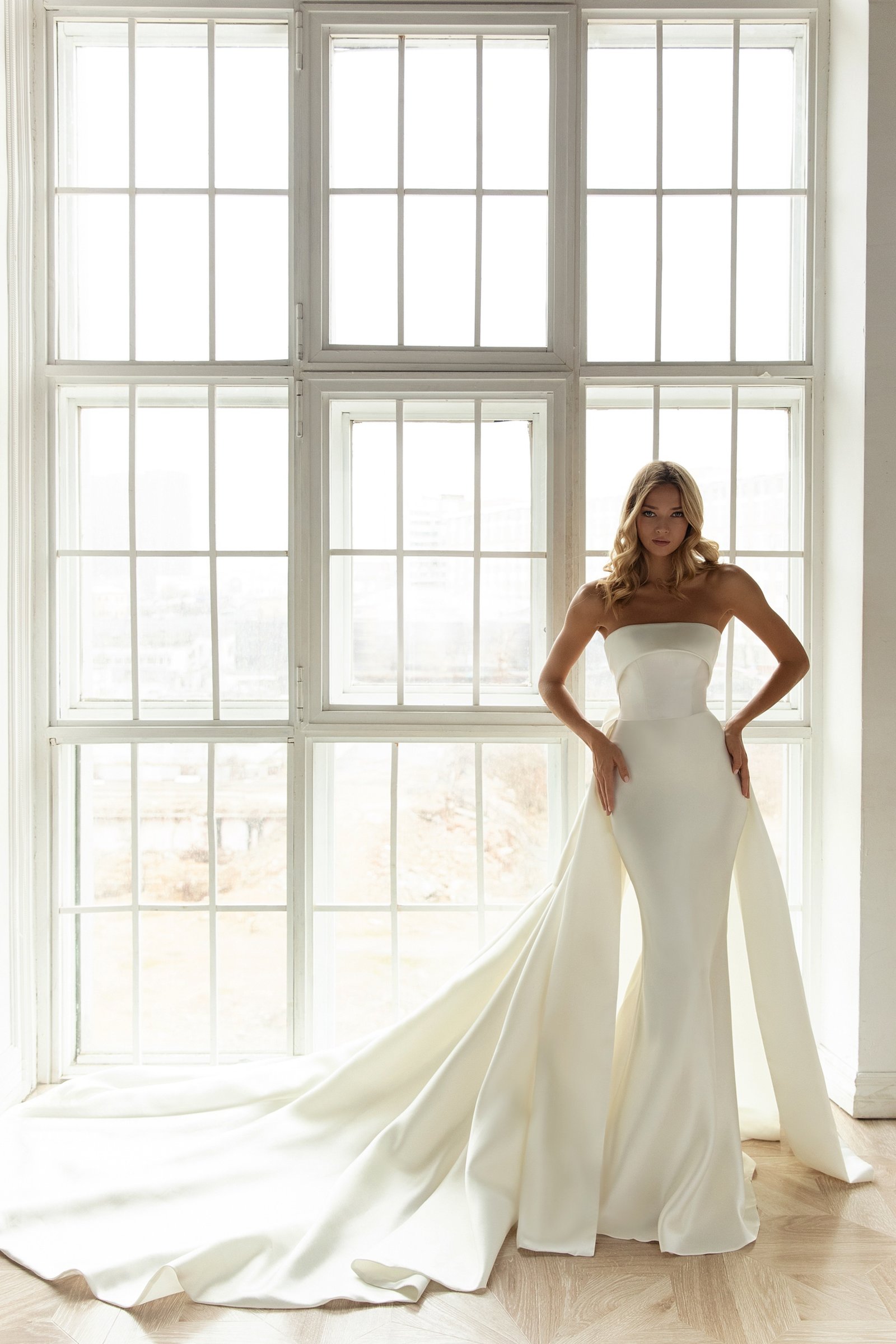
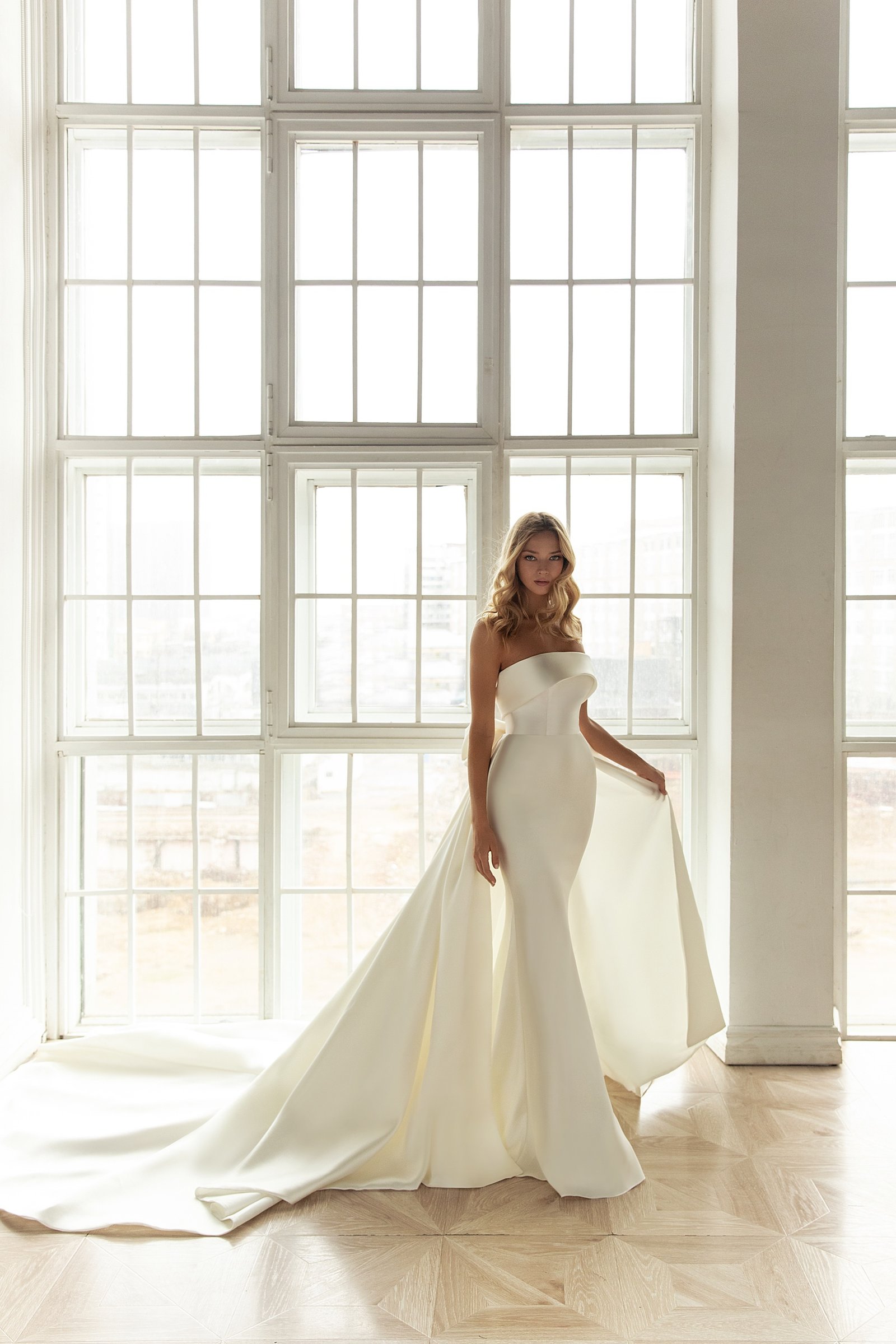
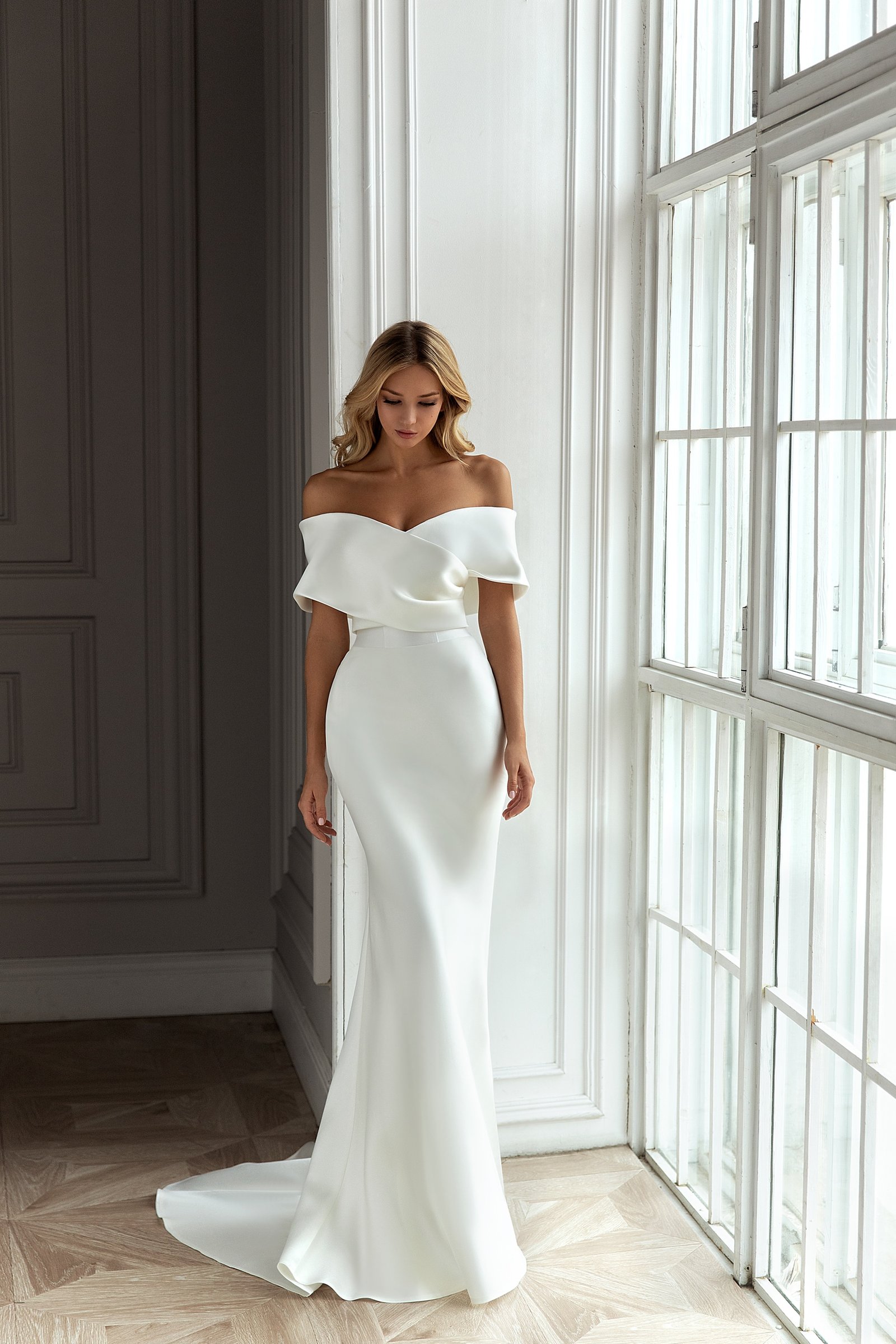
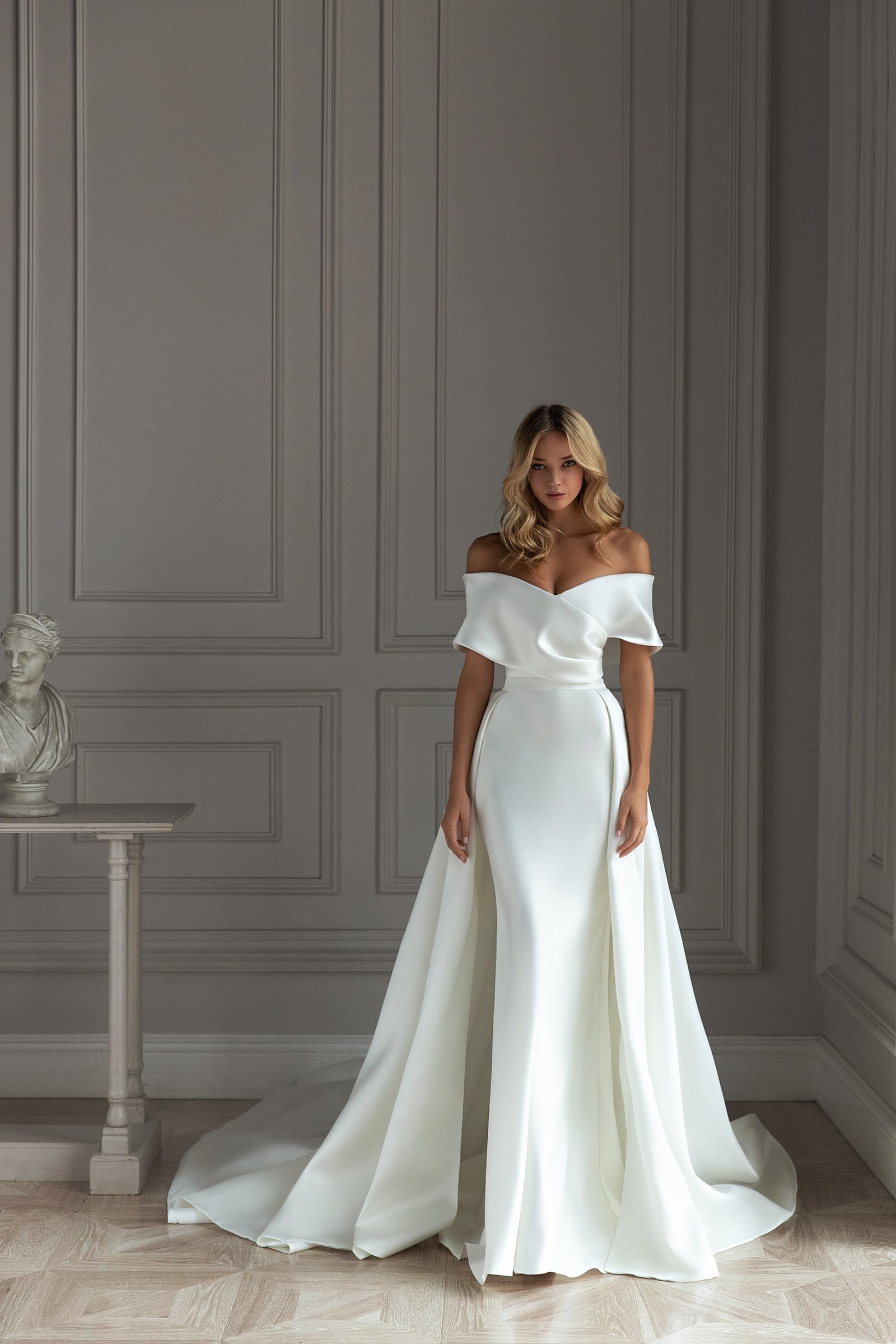
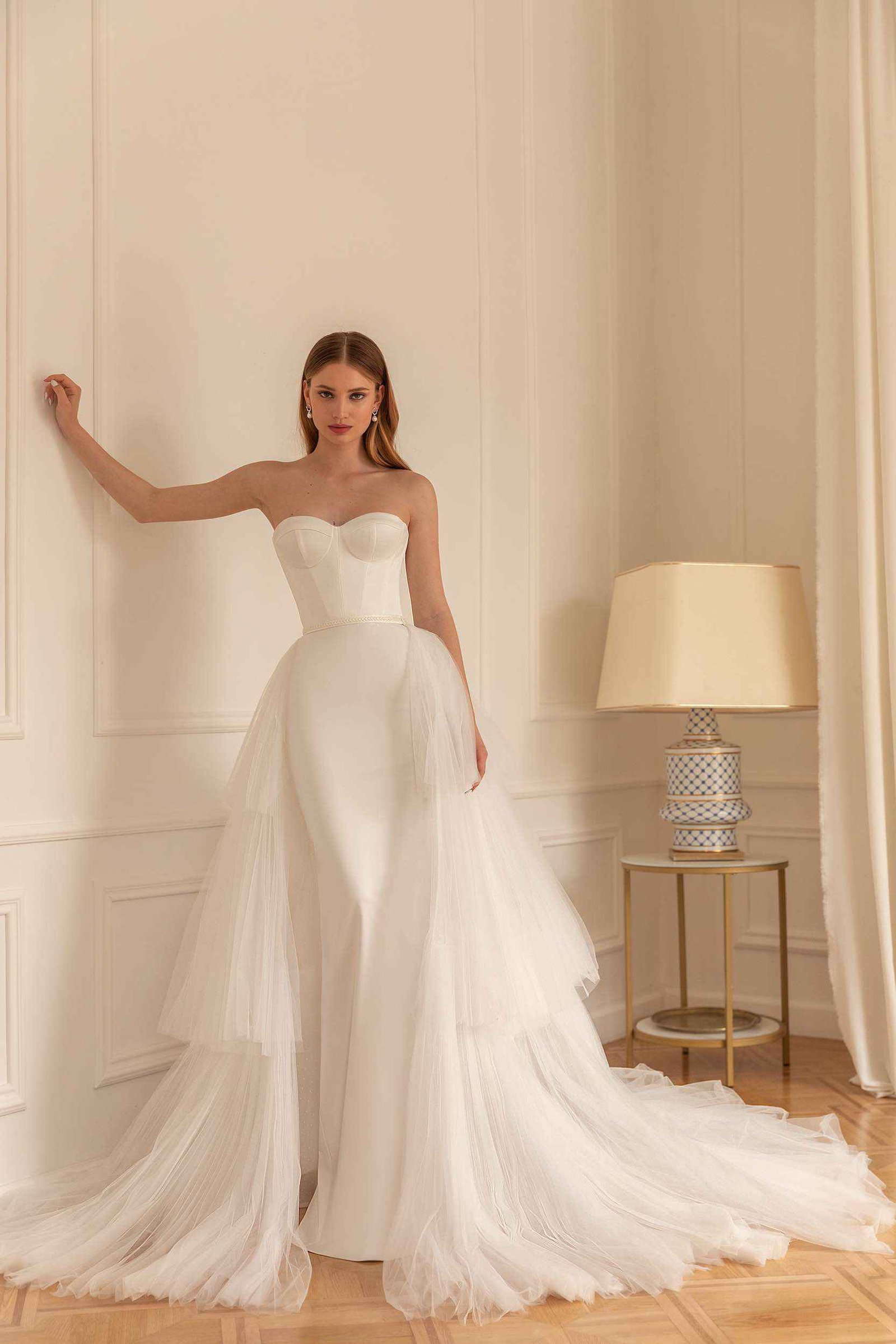
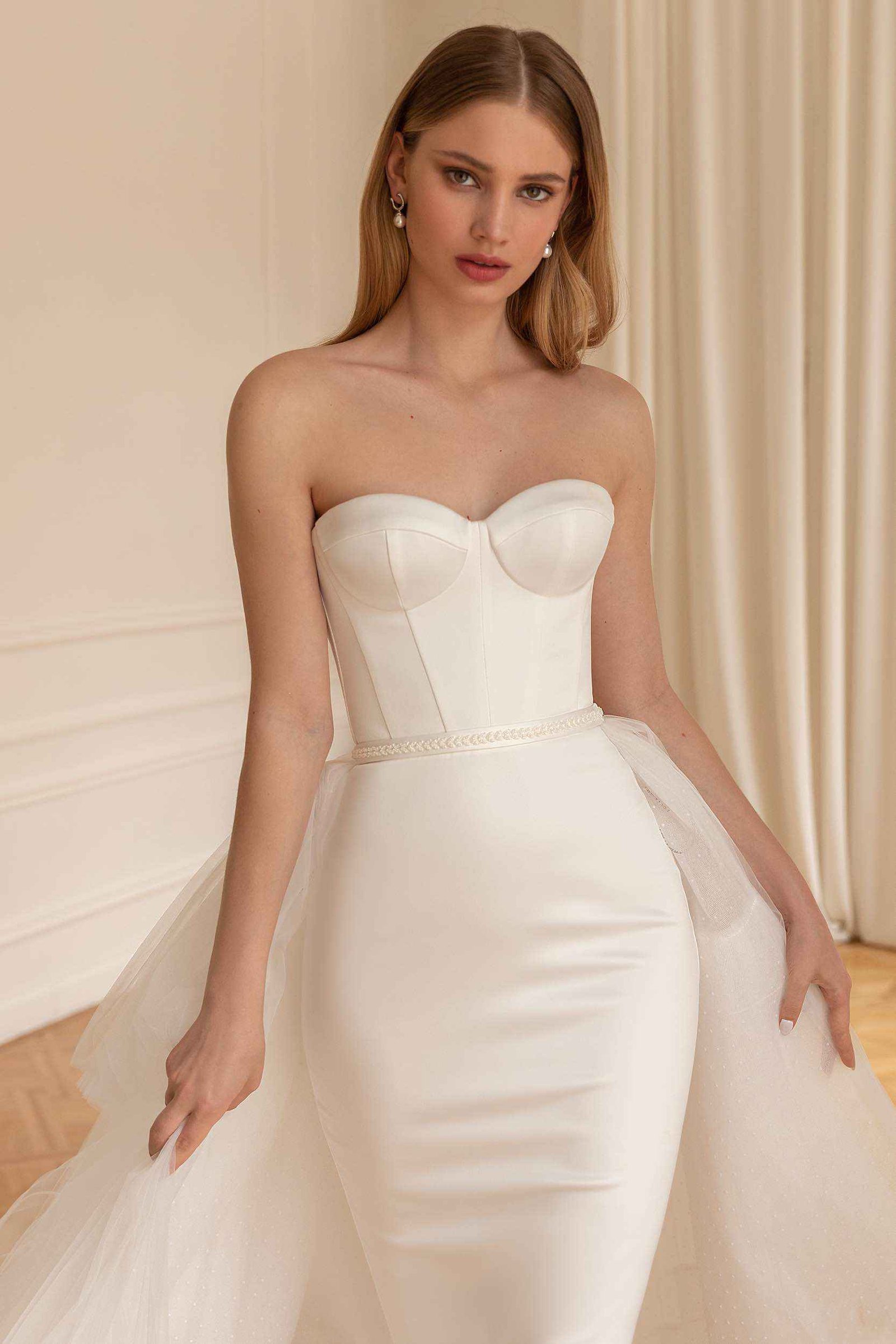
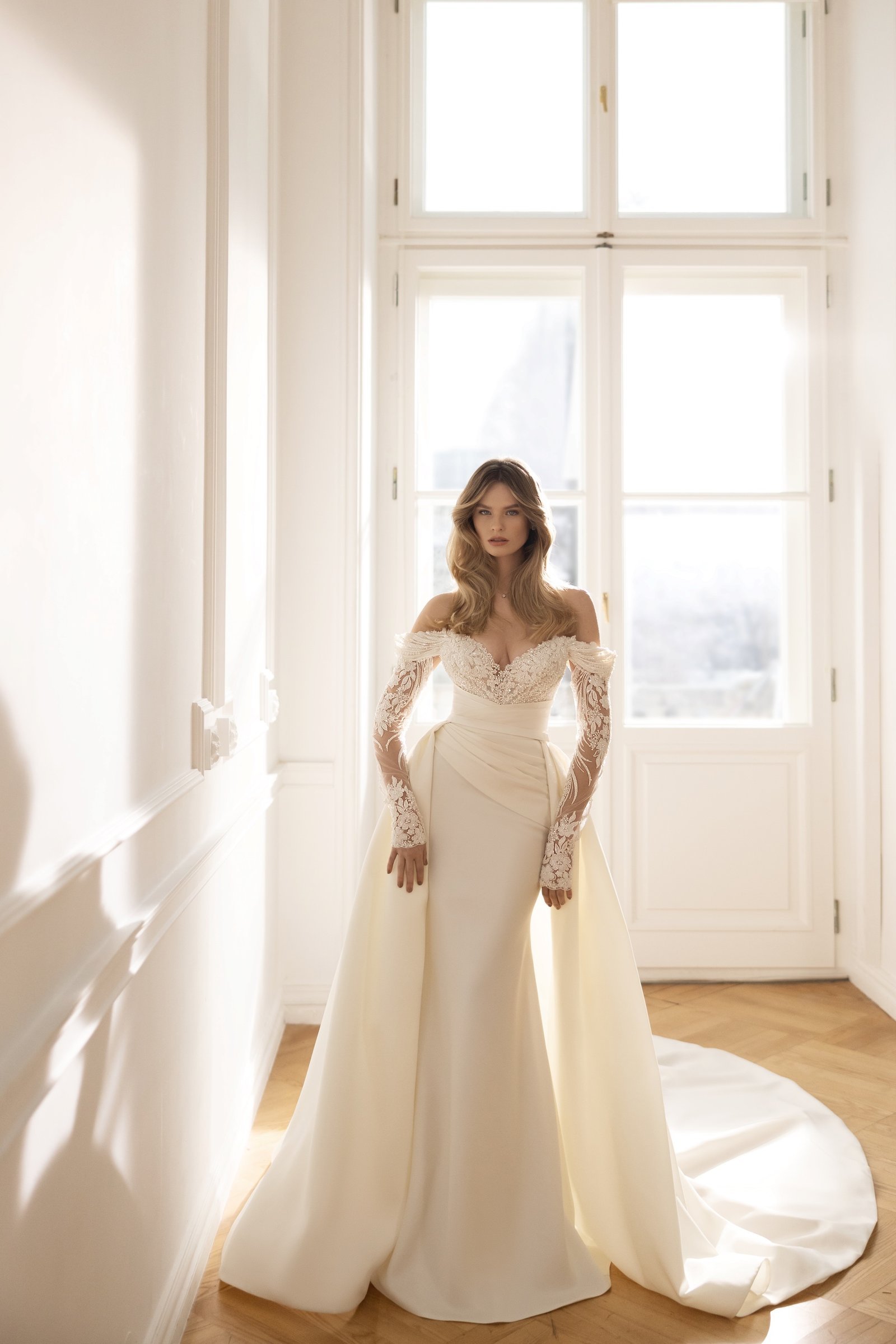
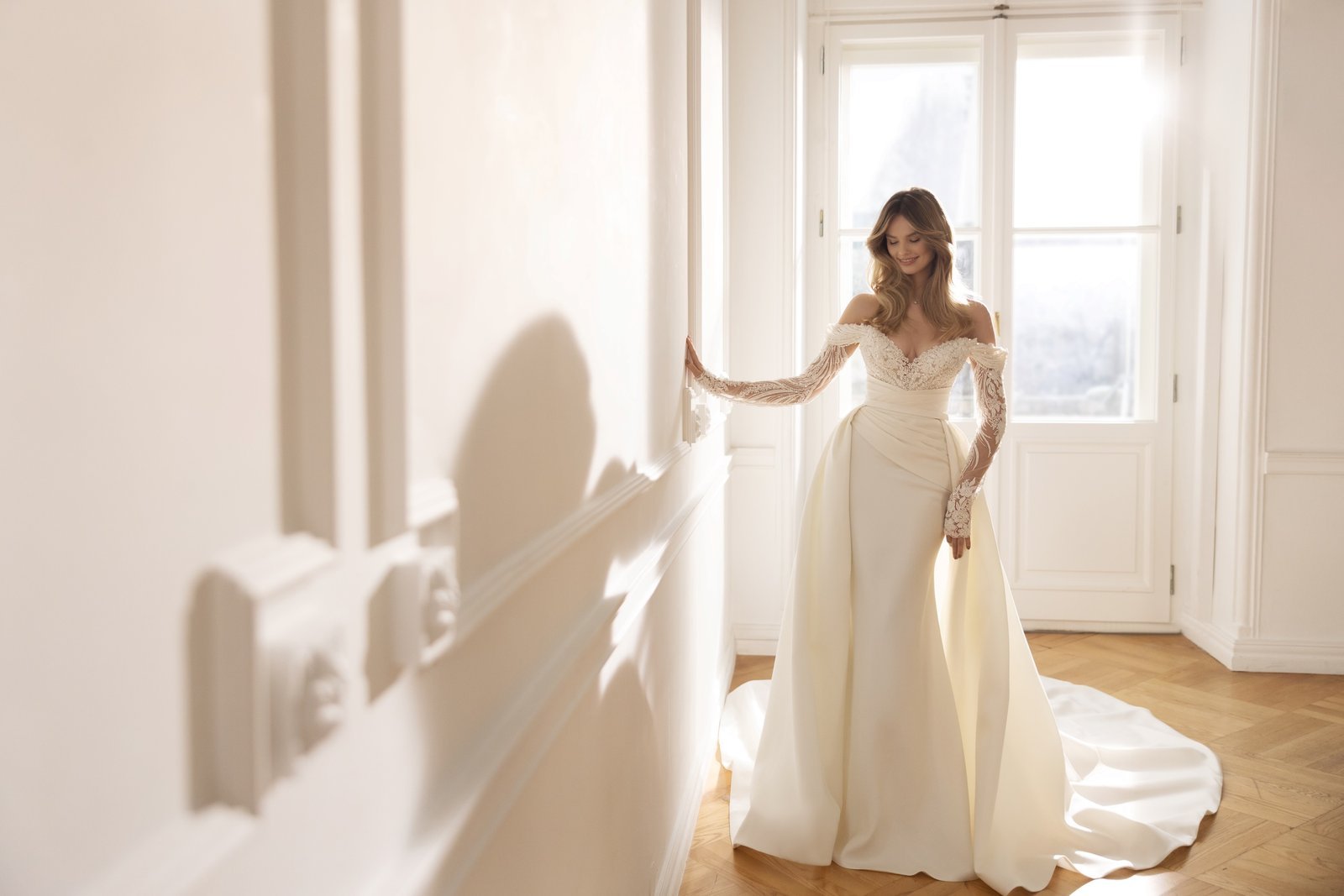
Jess is built around a narrow column base. Its detachable overskirt changes the outline into a full bridal look and extends into a chapel-length train. That construction is useful when you want to assess a ceremony look and a narrower version separately. The complete dress and the base version reveal different waist joins, back lines and train lengths; a still image may hide that shift.
A full skirt from the waist is also distinct from an A-line’s steadier widening. If you prefer less immediate volume, compare Eva Lendel’s A-line wedding dresses. A narrower skirt can still look formal through lace, a defined bodice or a train.
Volume in the room and during the day
Walk through a doorway, sit and take several steps in your intended shoes. The skirt’s layers and train affect how it gathers around a chair and how it follows you on stairs. Whether the train can be secured for the reception also affects which amount of volume feels manageable.
Does a removable overskirt leave a ball gown underneath?
Not always. Jess becomes a narrower column silhouette when its overskirt is removed. The base gown therefore matters as much as the layered version when choosing a transformable design.