






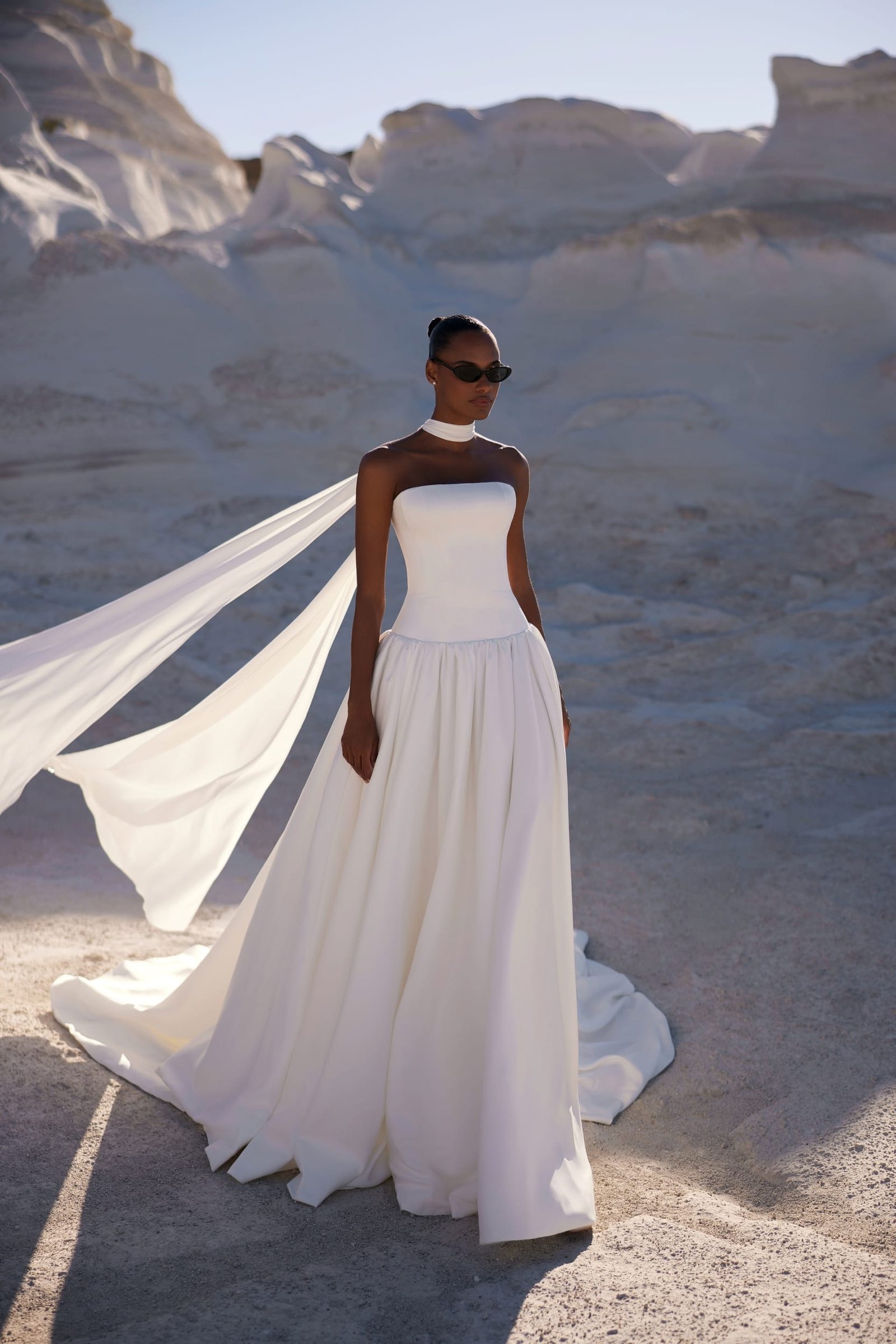

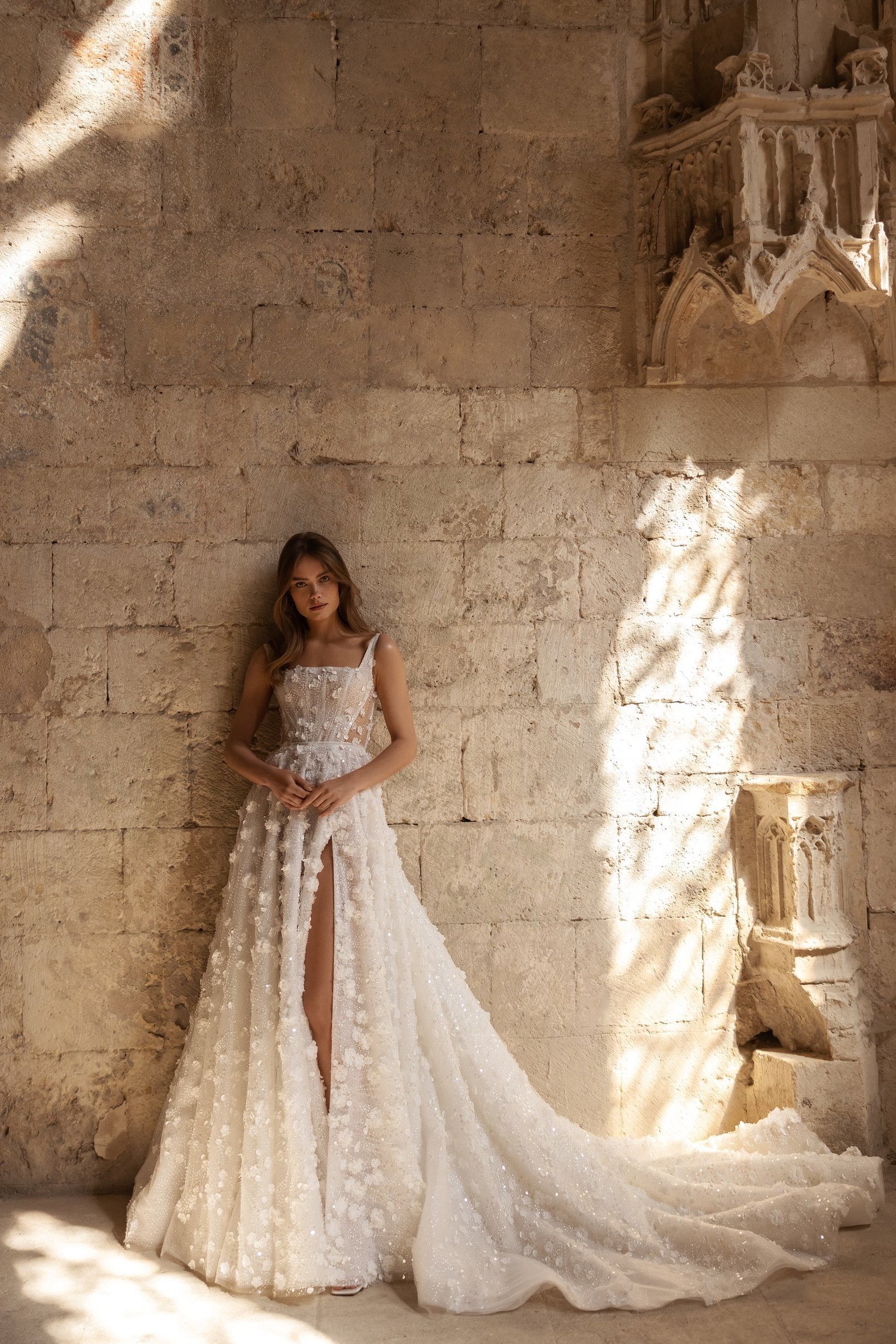
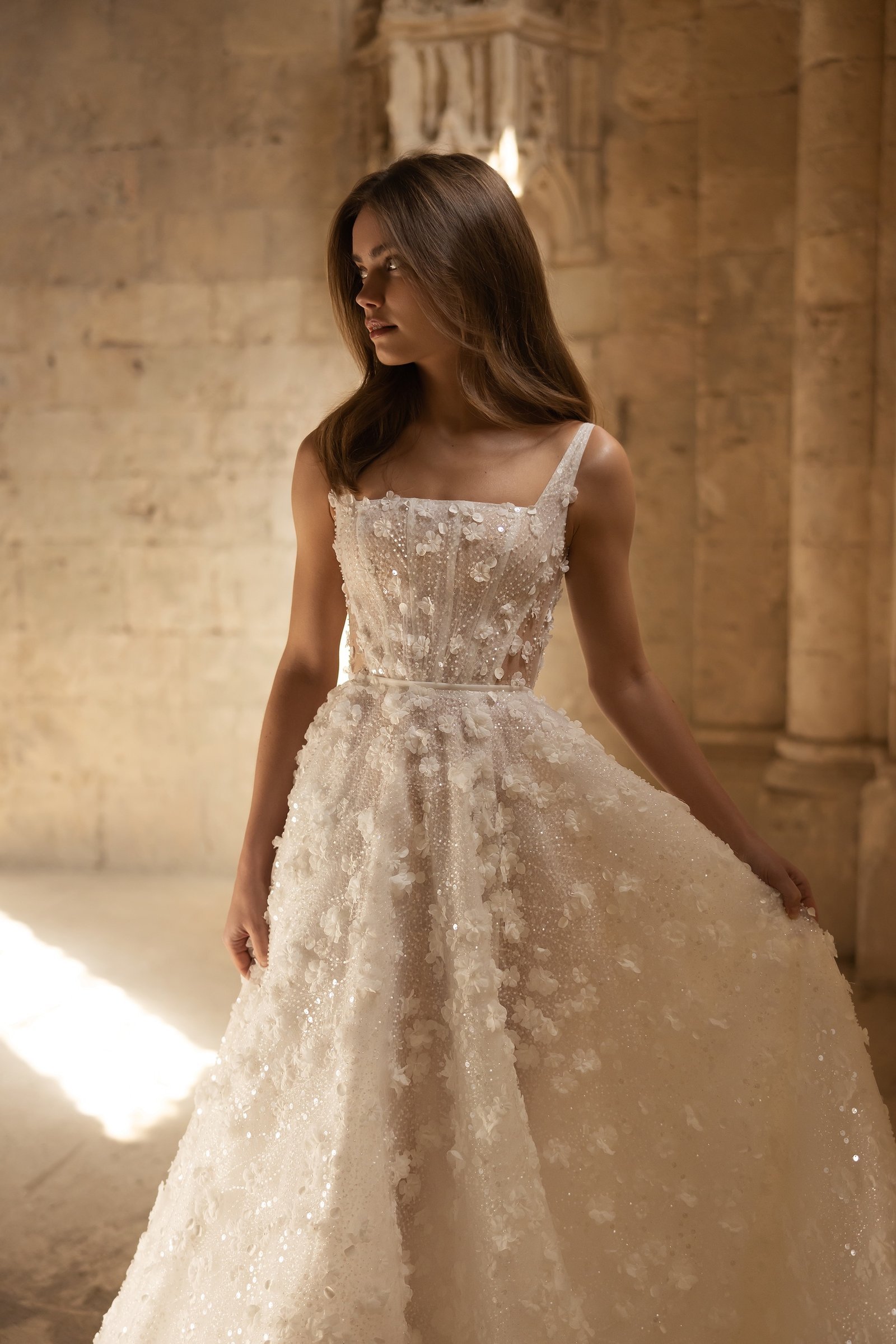


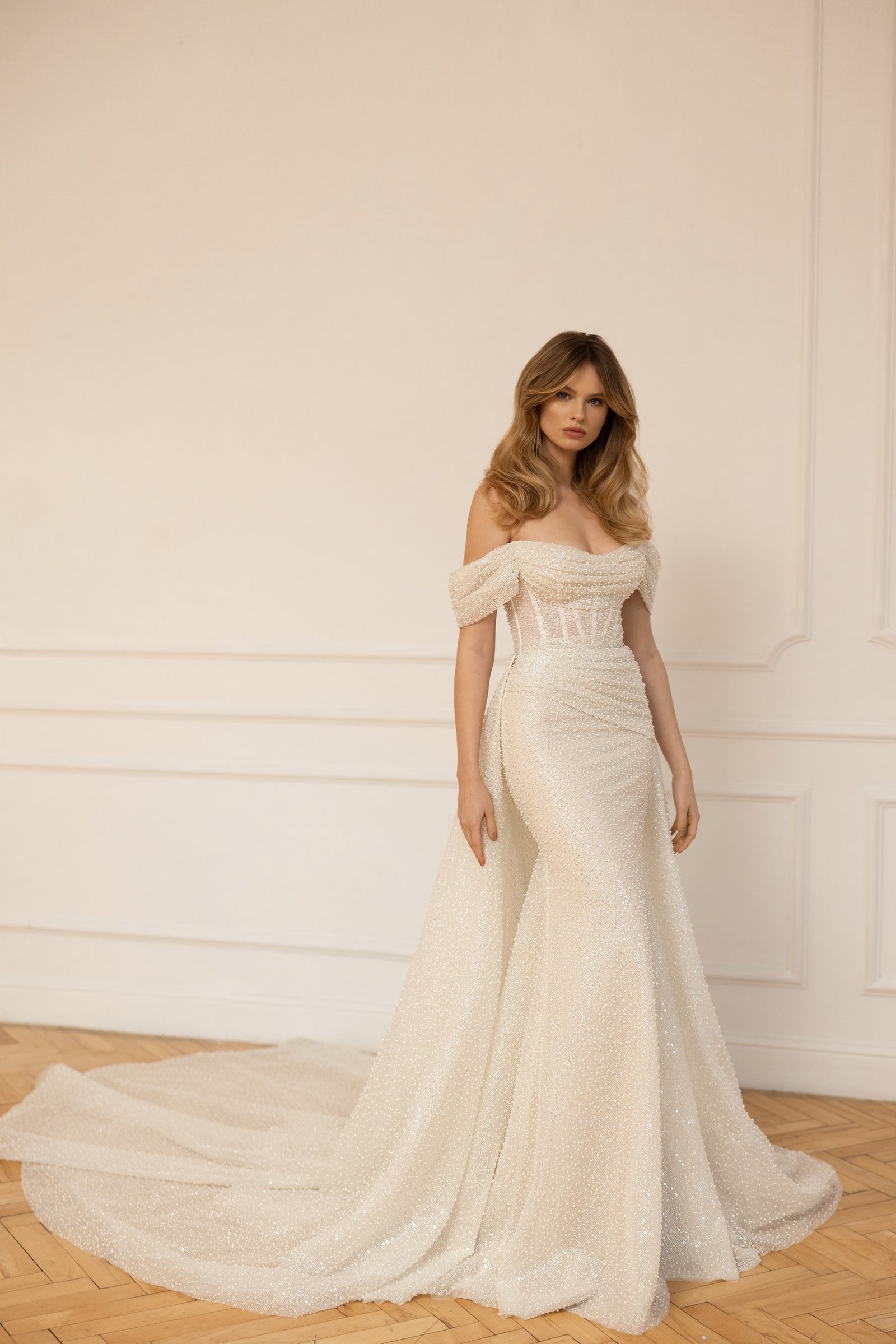





How boning shapes the bodice
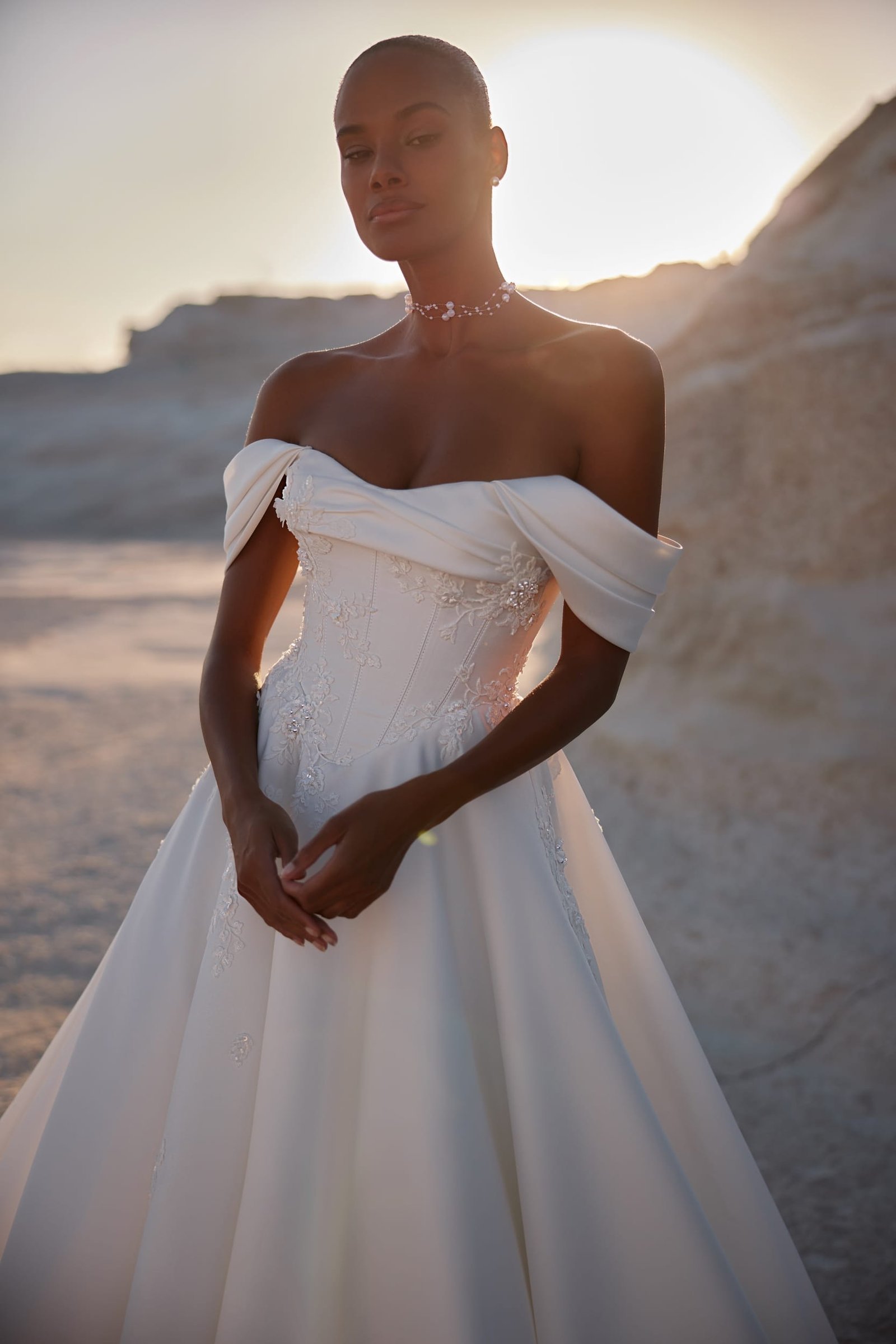
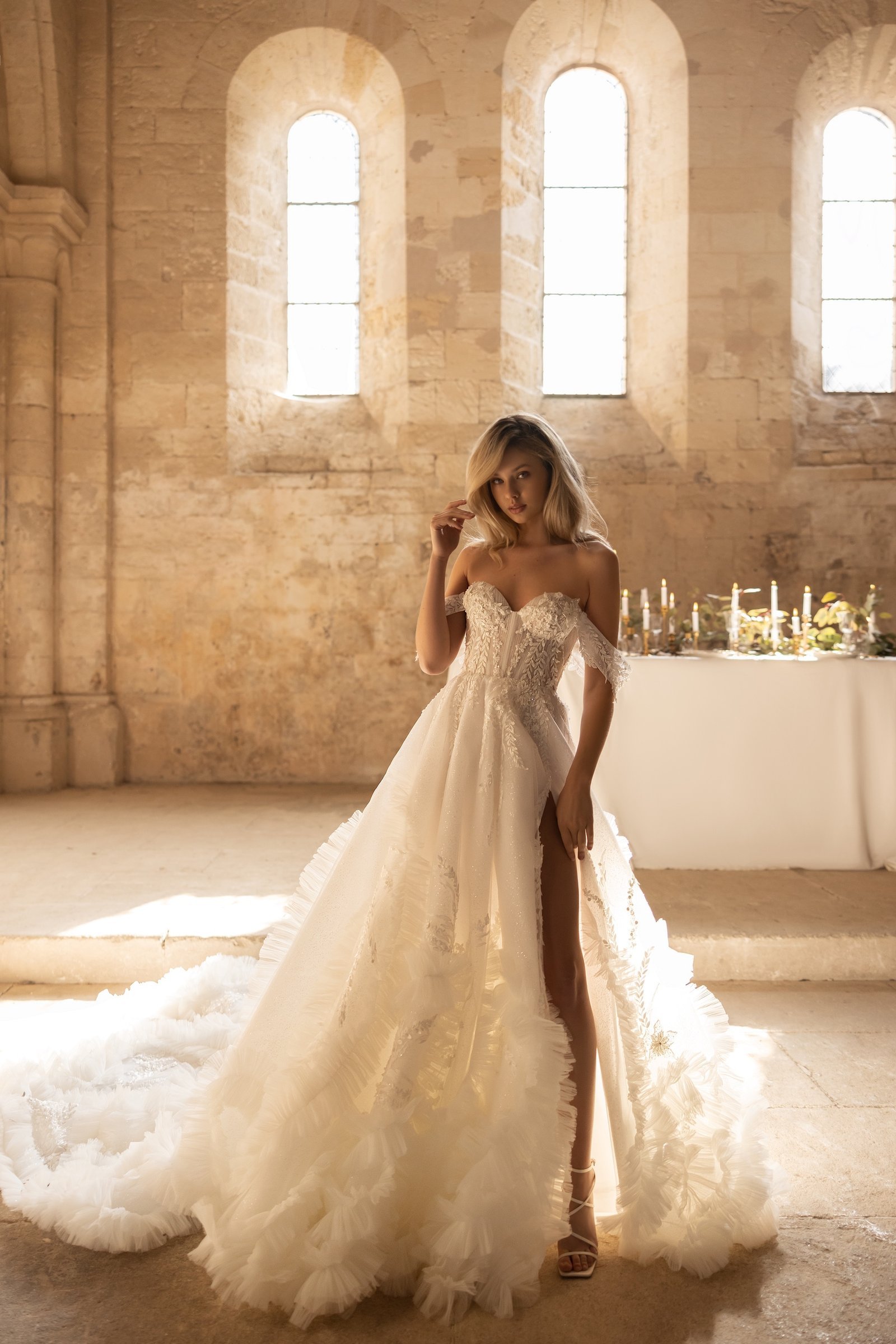
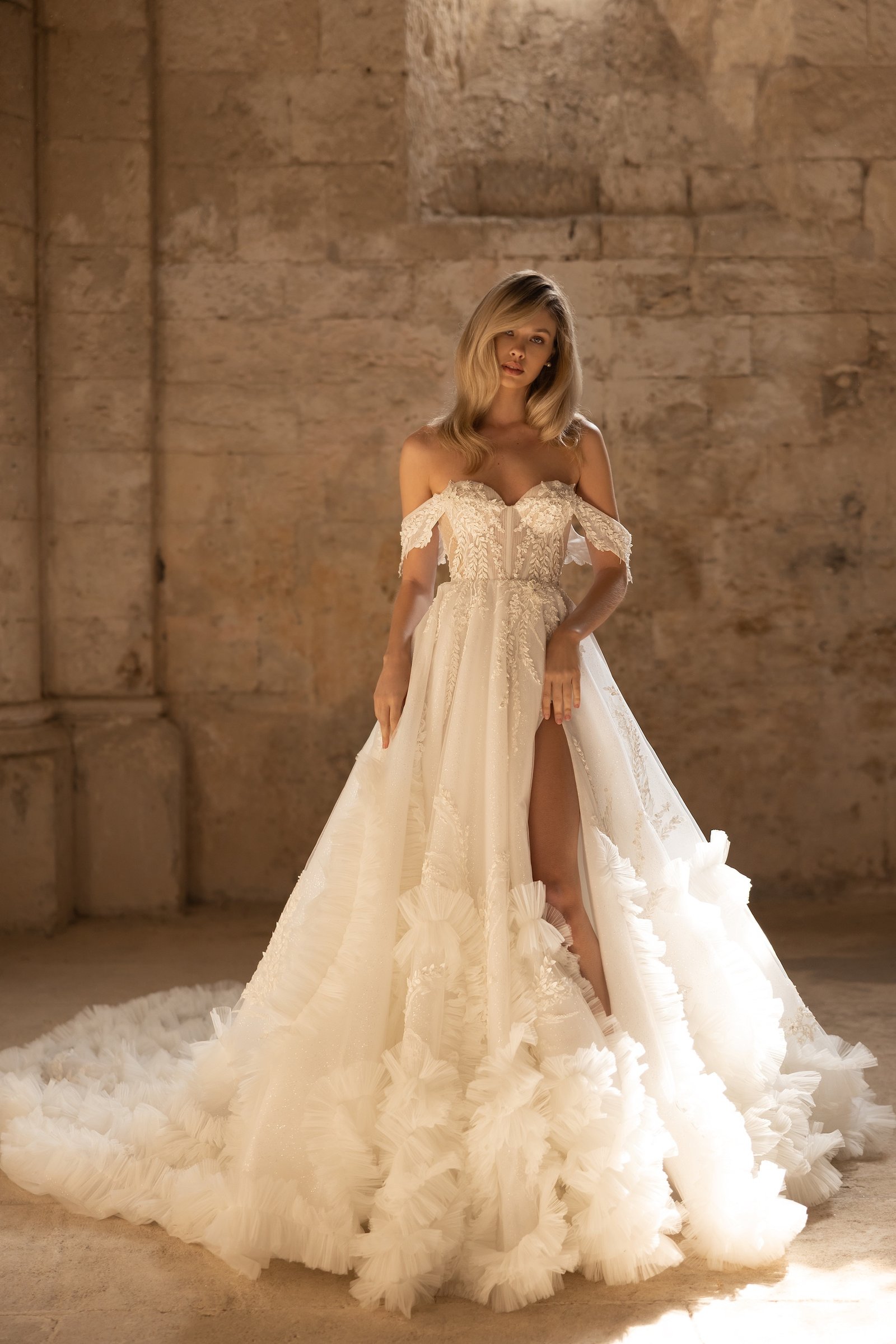
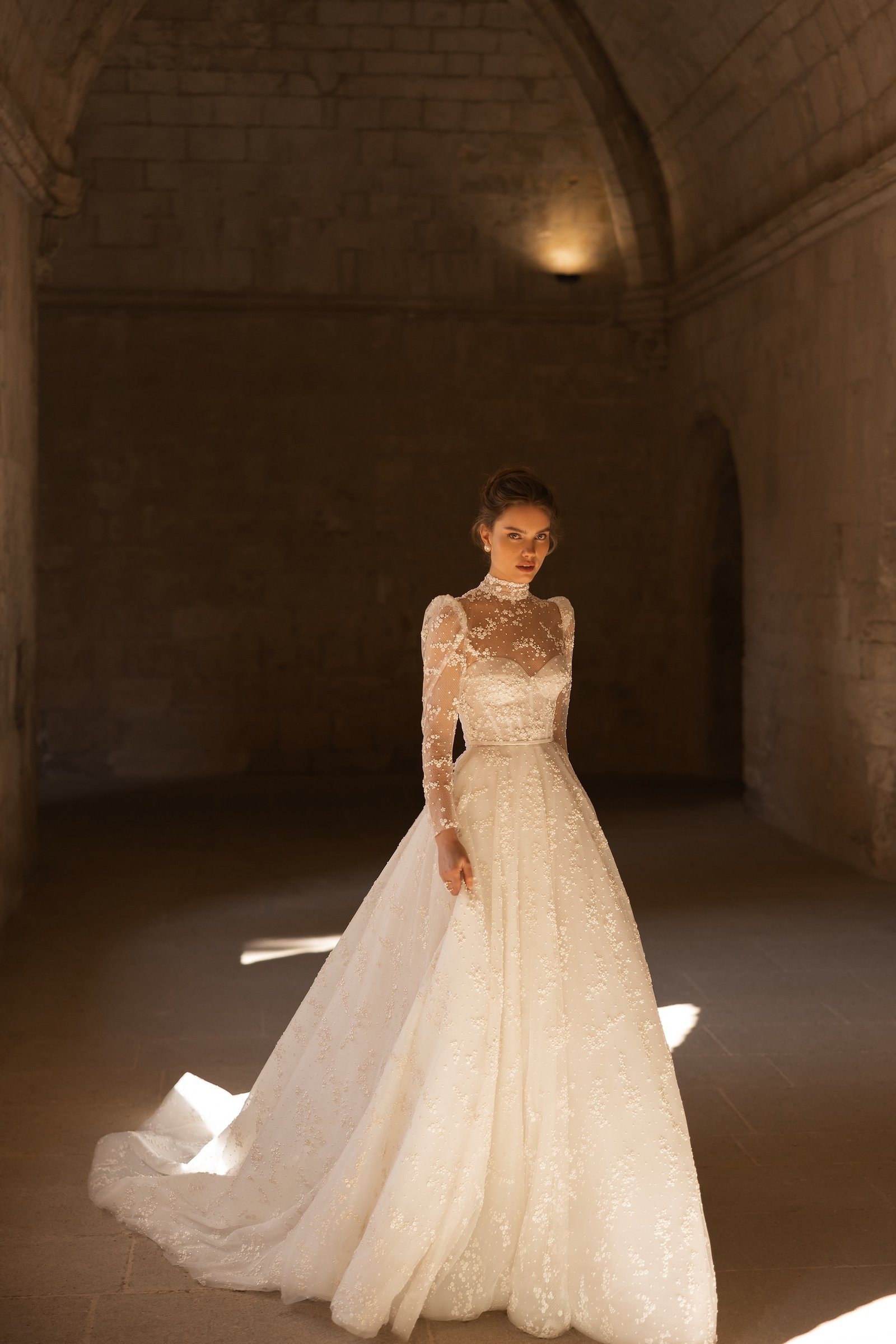
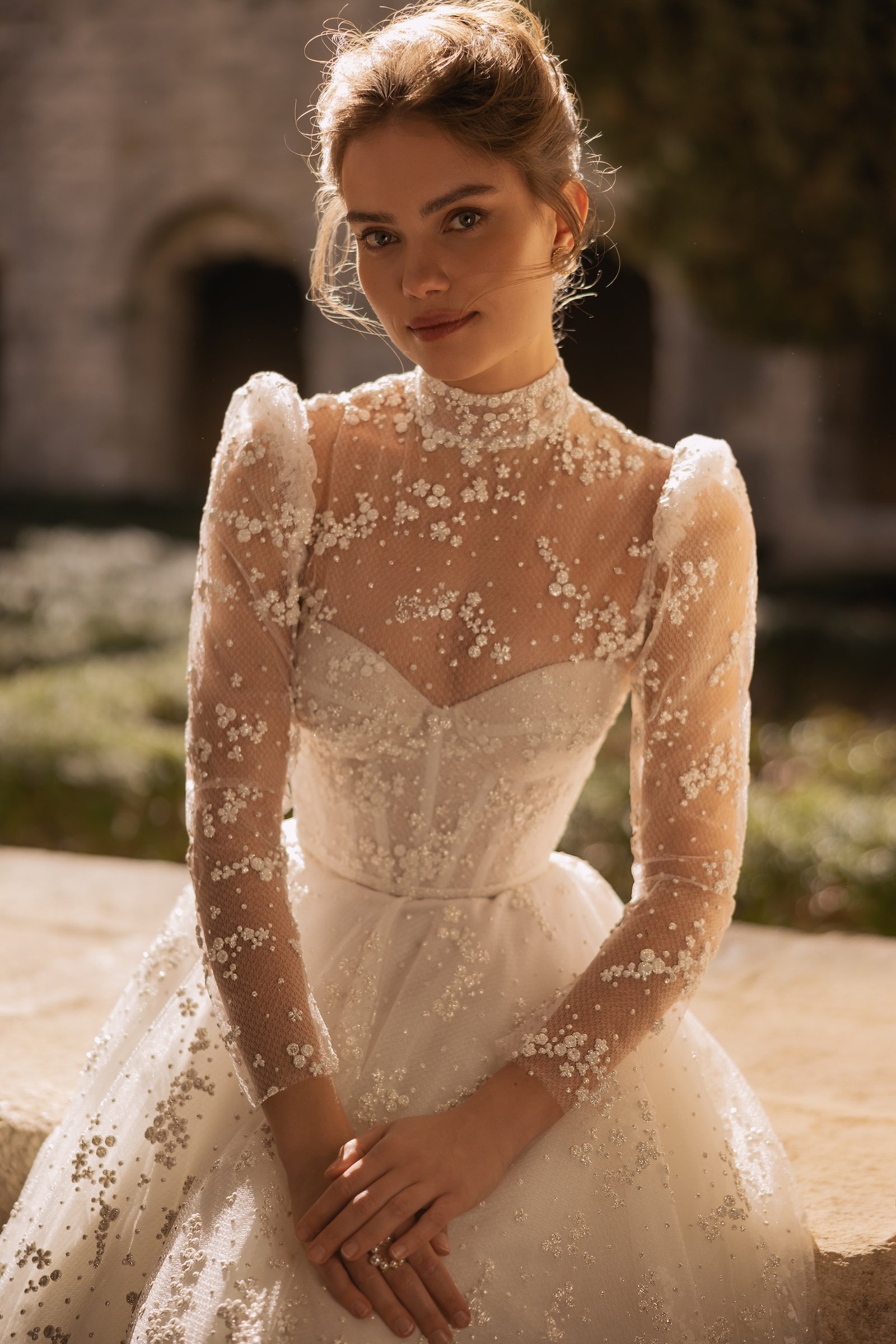
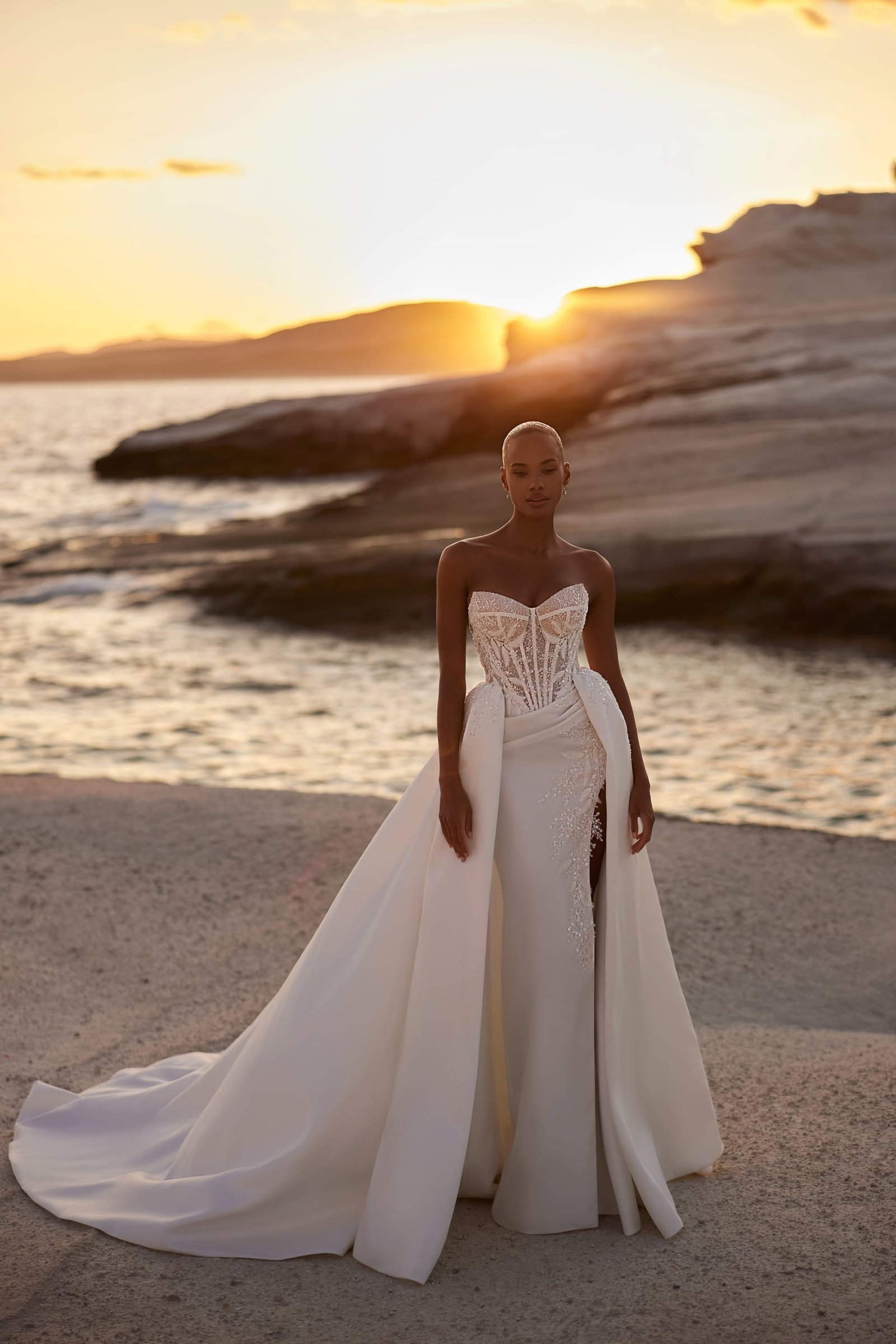
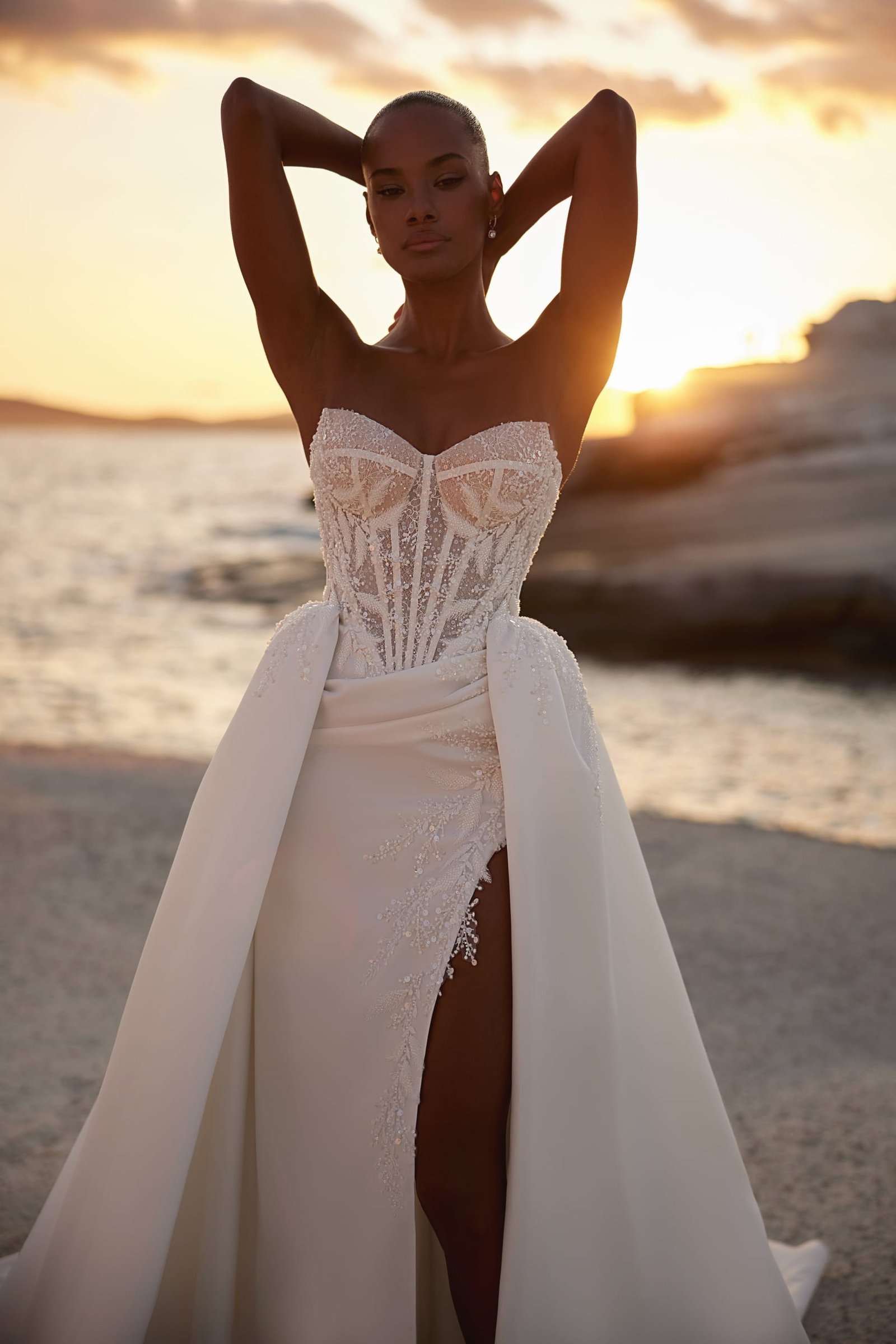
Boning refers to stays placed within a bodice to help it retain its designed shape. The channels may be visible as part of a corset-inspired look or concealed beneath a smooth outer layer. The fabric, pattern and seams around them determine how the finished gown looks.
What to check when comparing gowns
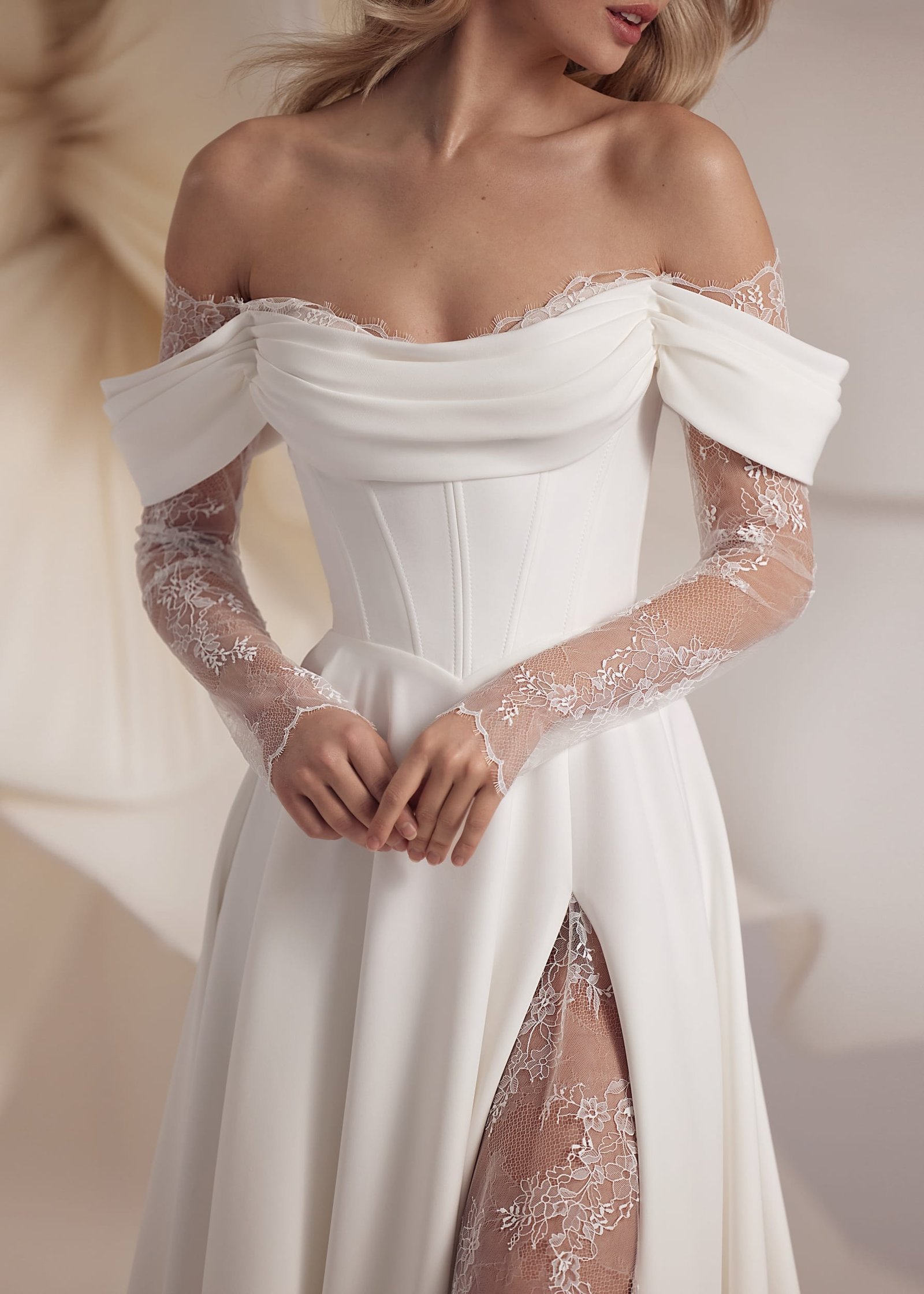
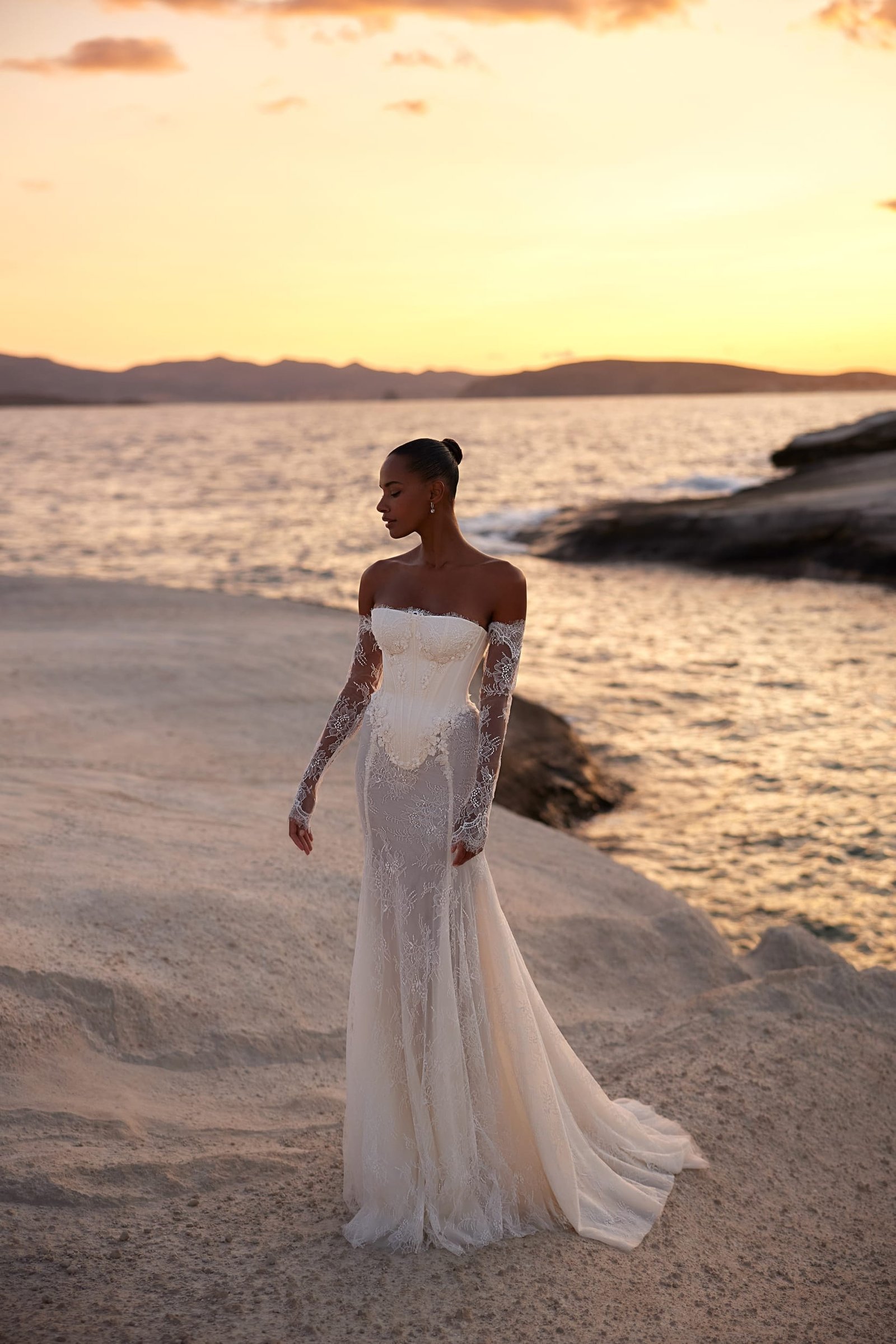
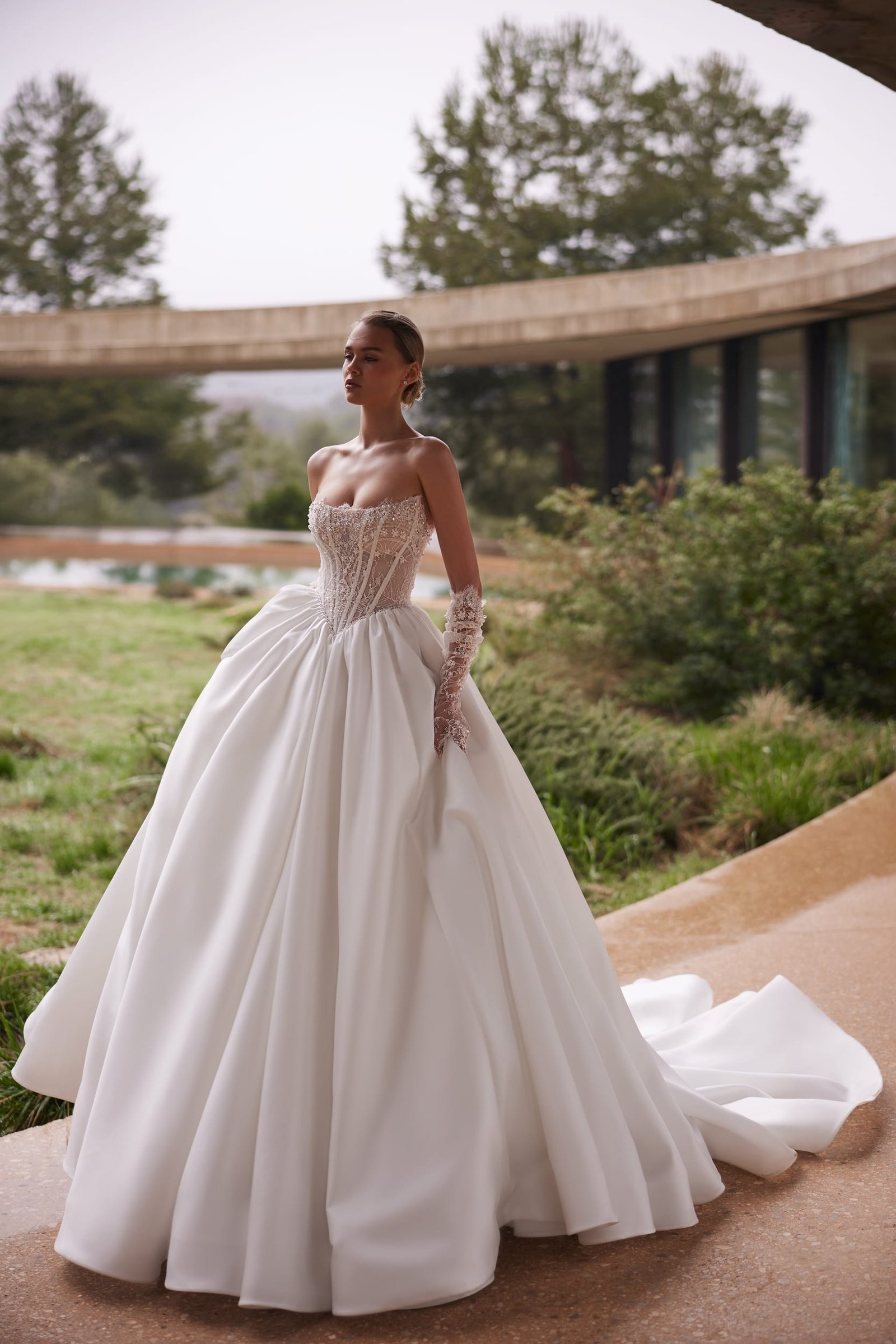
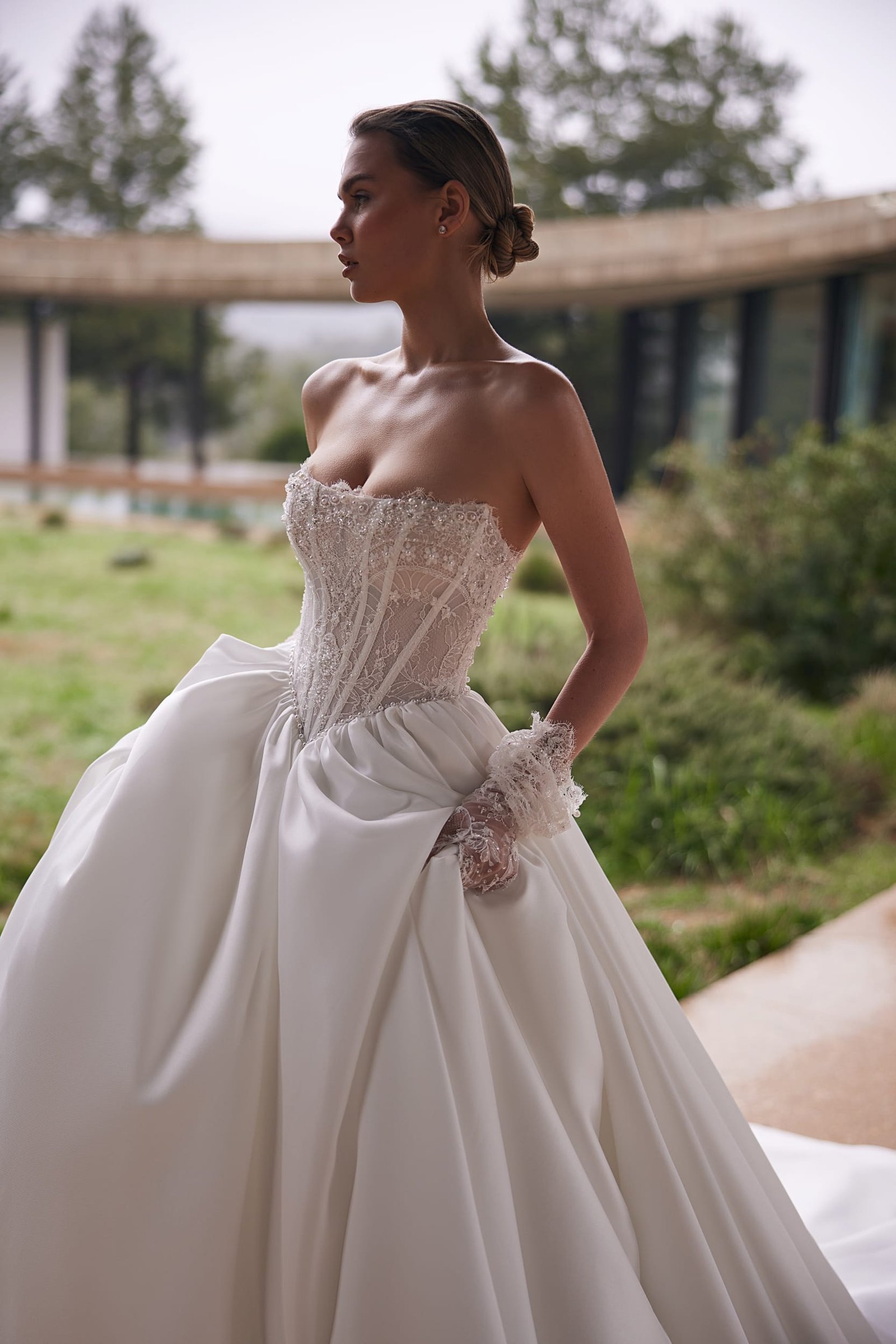
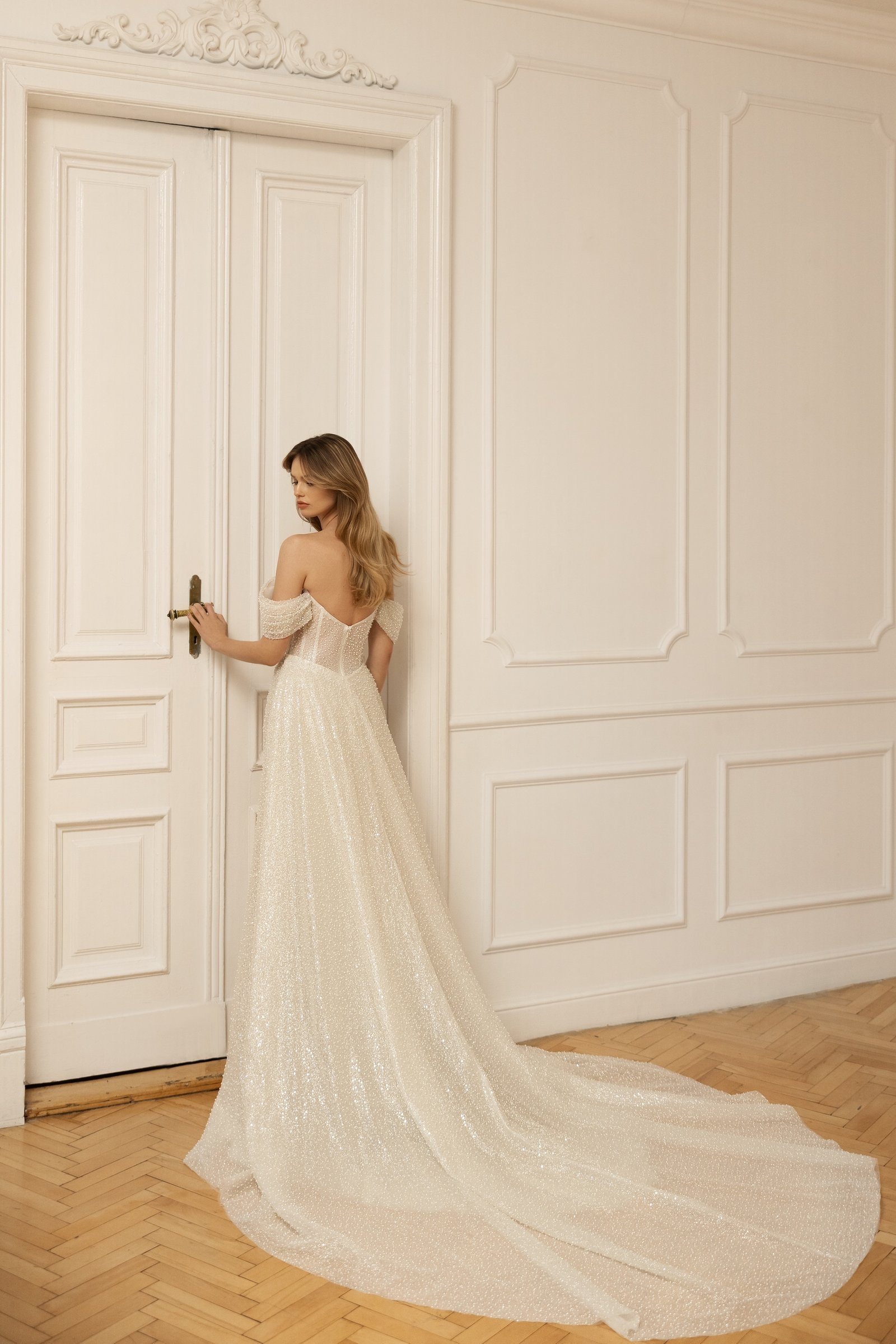
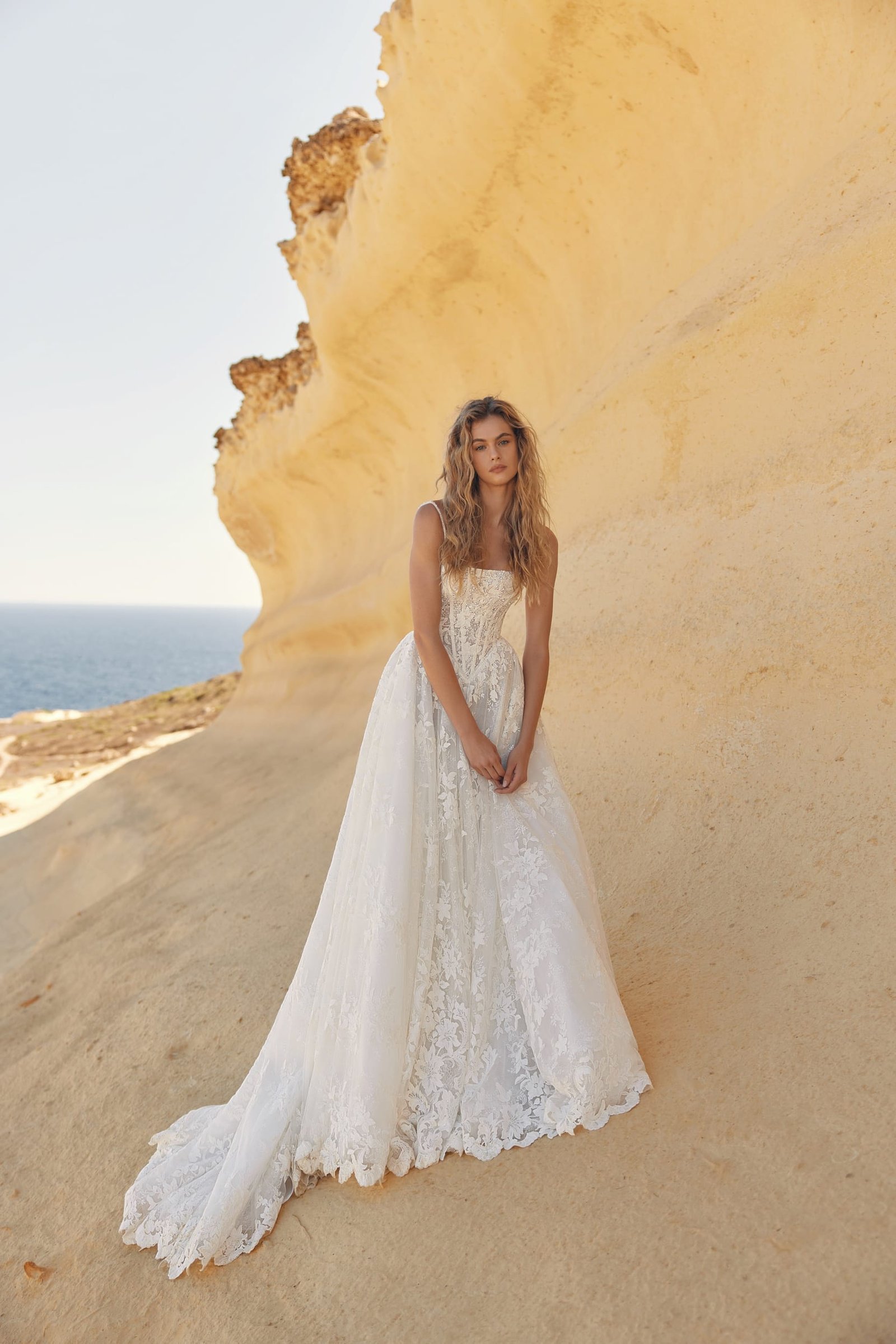
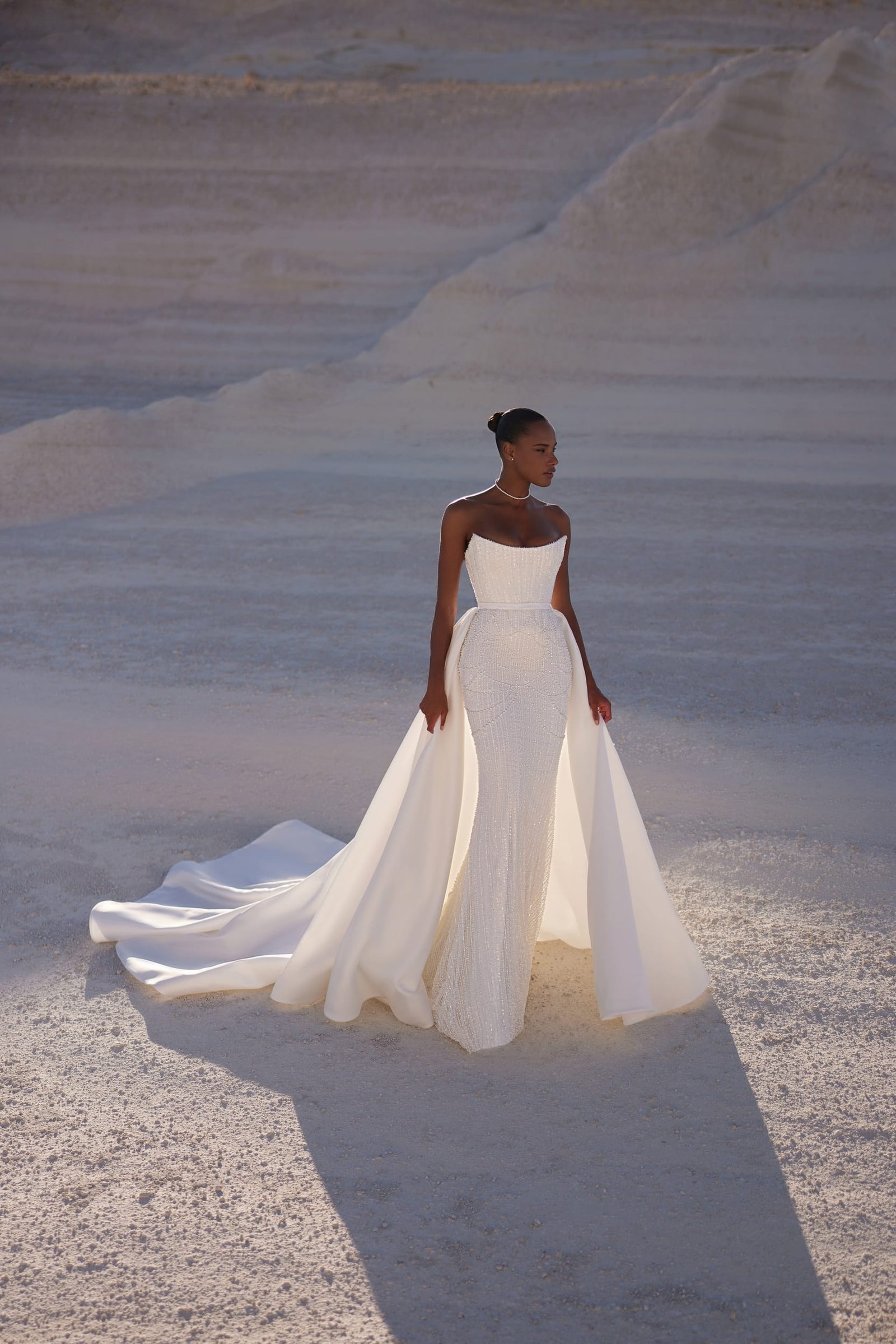
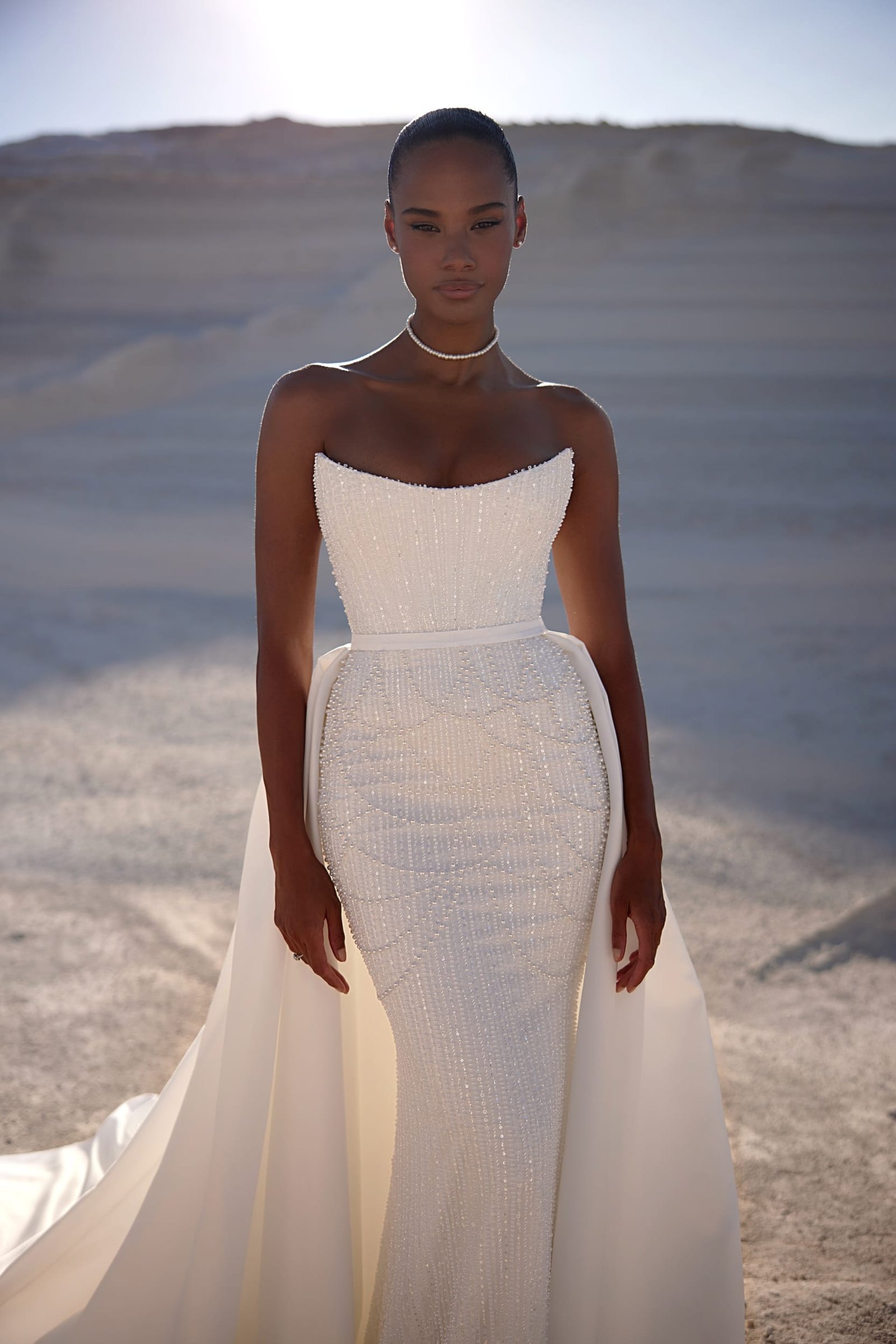
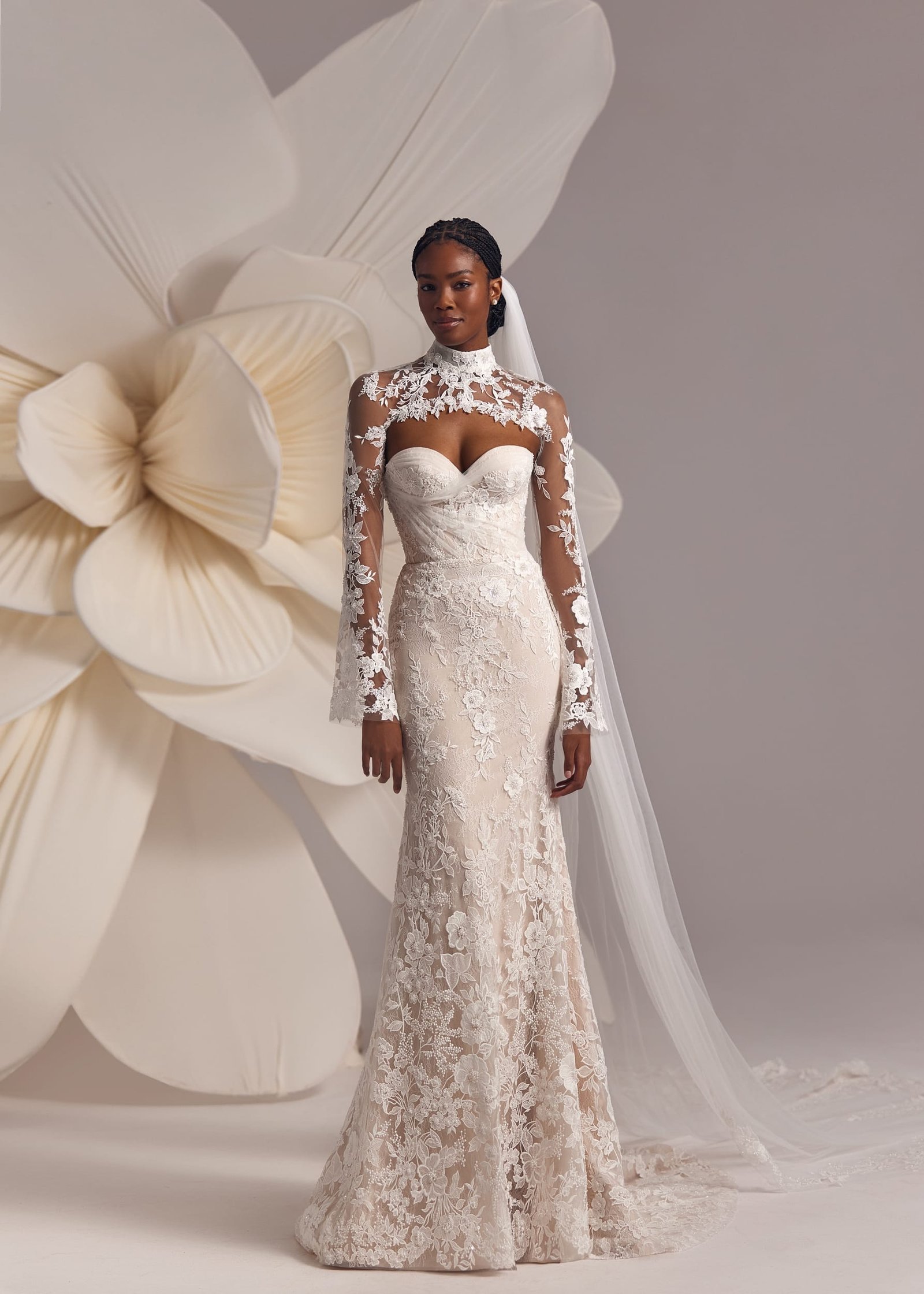
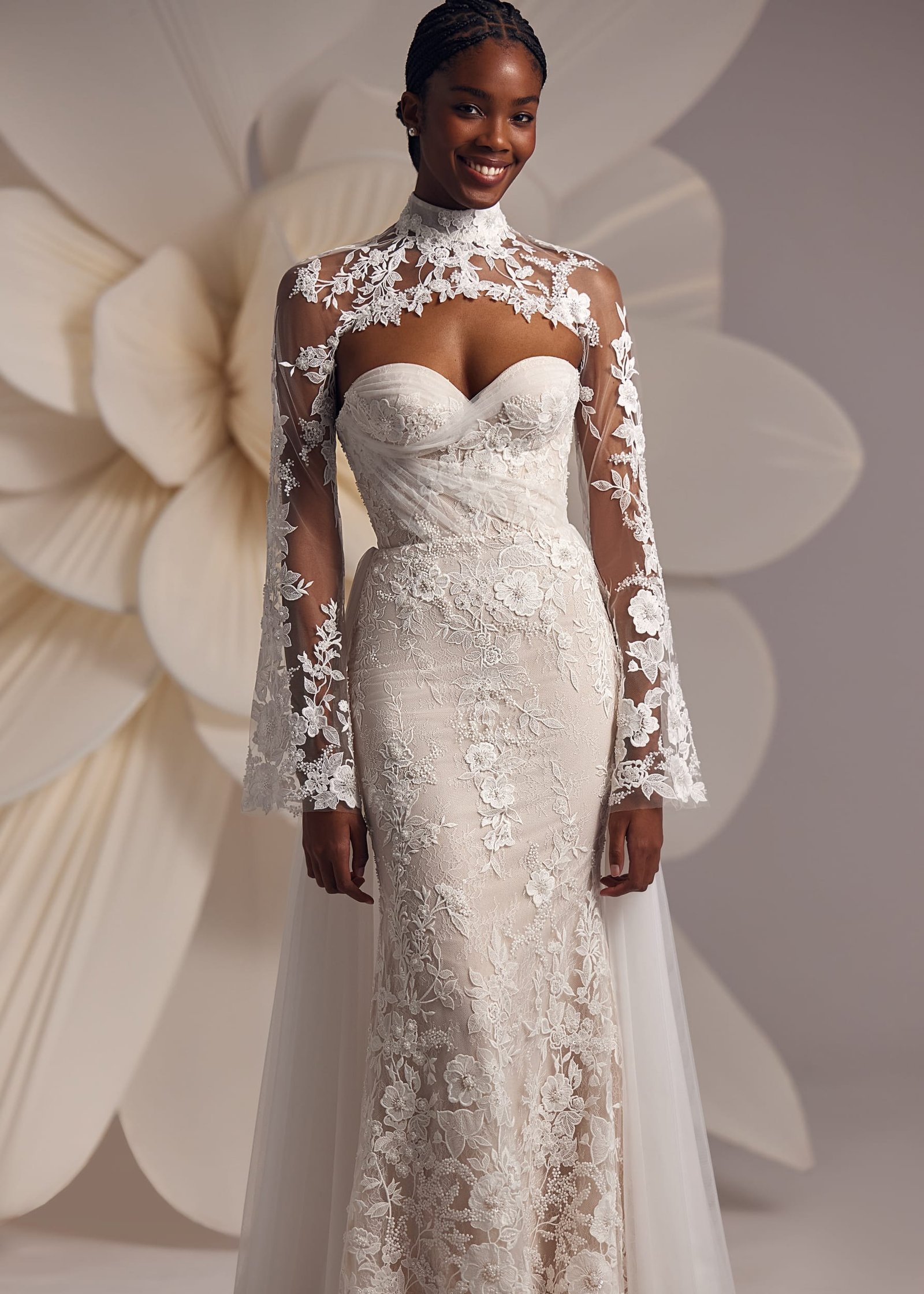
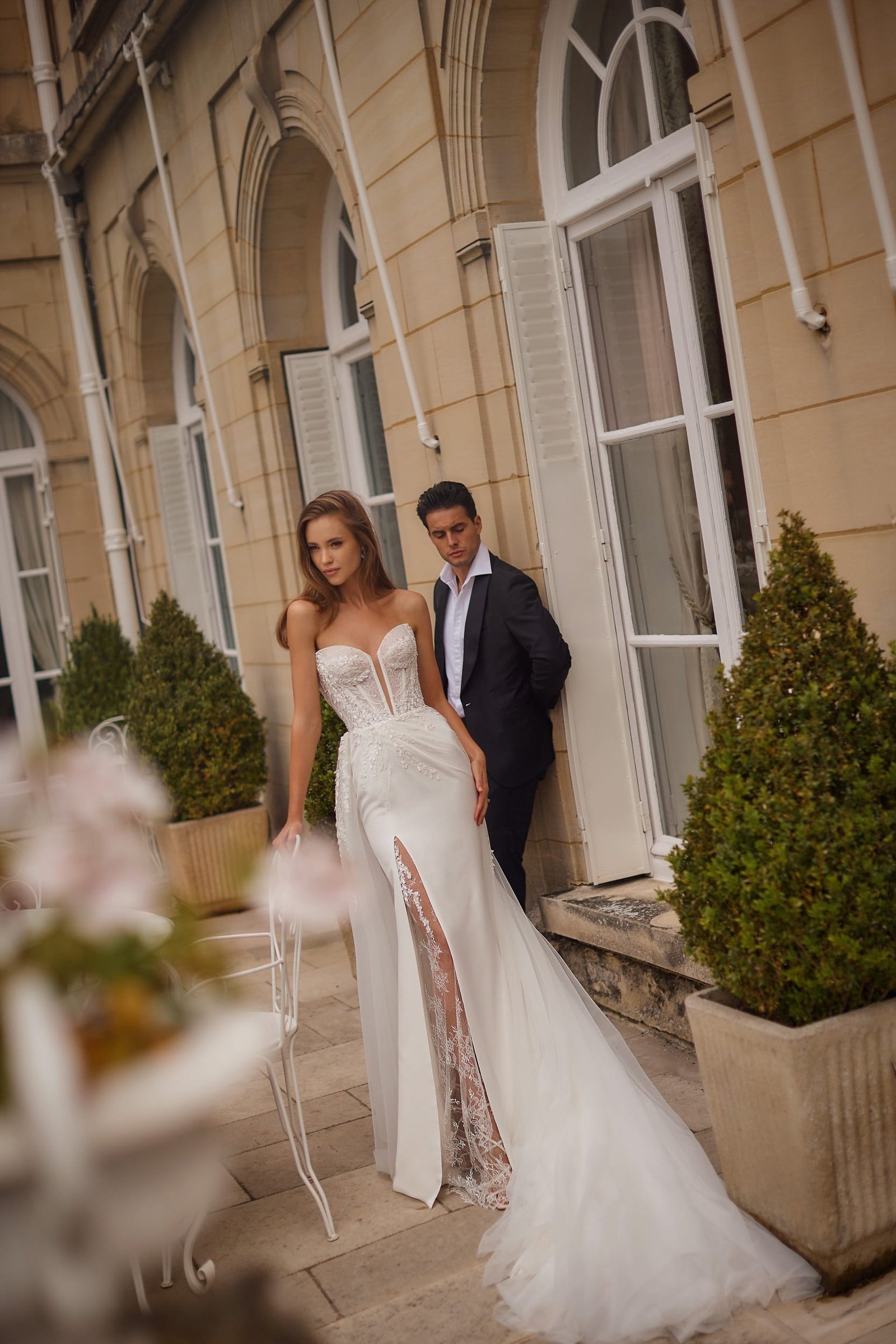
Look at the neckline and waistline from the front and side. Visible boning draws attention to the bodice framework; concealed boning keeps the surface quieter. A boned bodice and a corset bodice can overlap, but they do not describe the same thing: boning is one construction element within a broader design. Fit, comfort and support depend on the particular gown and should be assessed during a fitting. To see boning within a broader bodice structure, browse corset bodice wedding dresses.
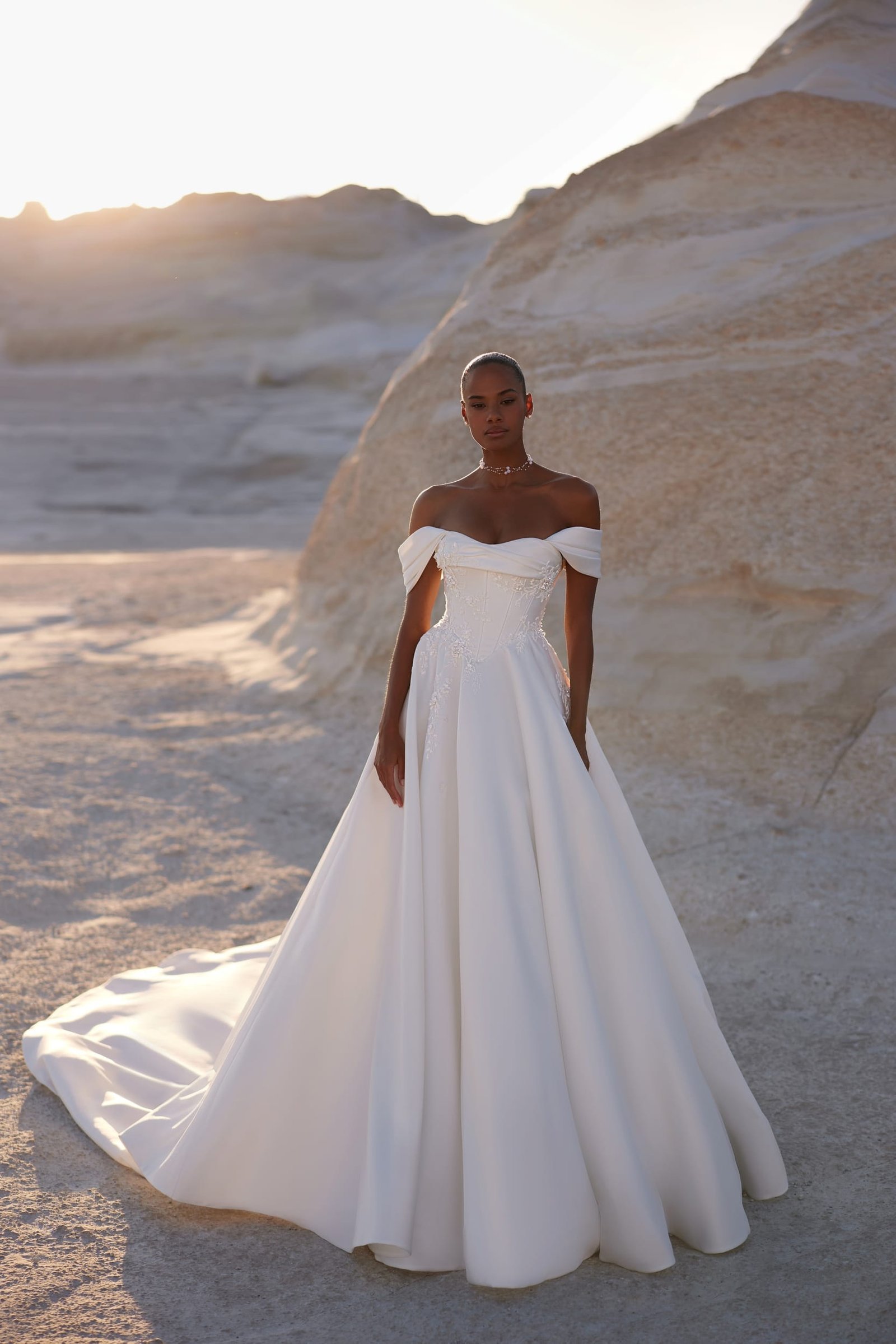
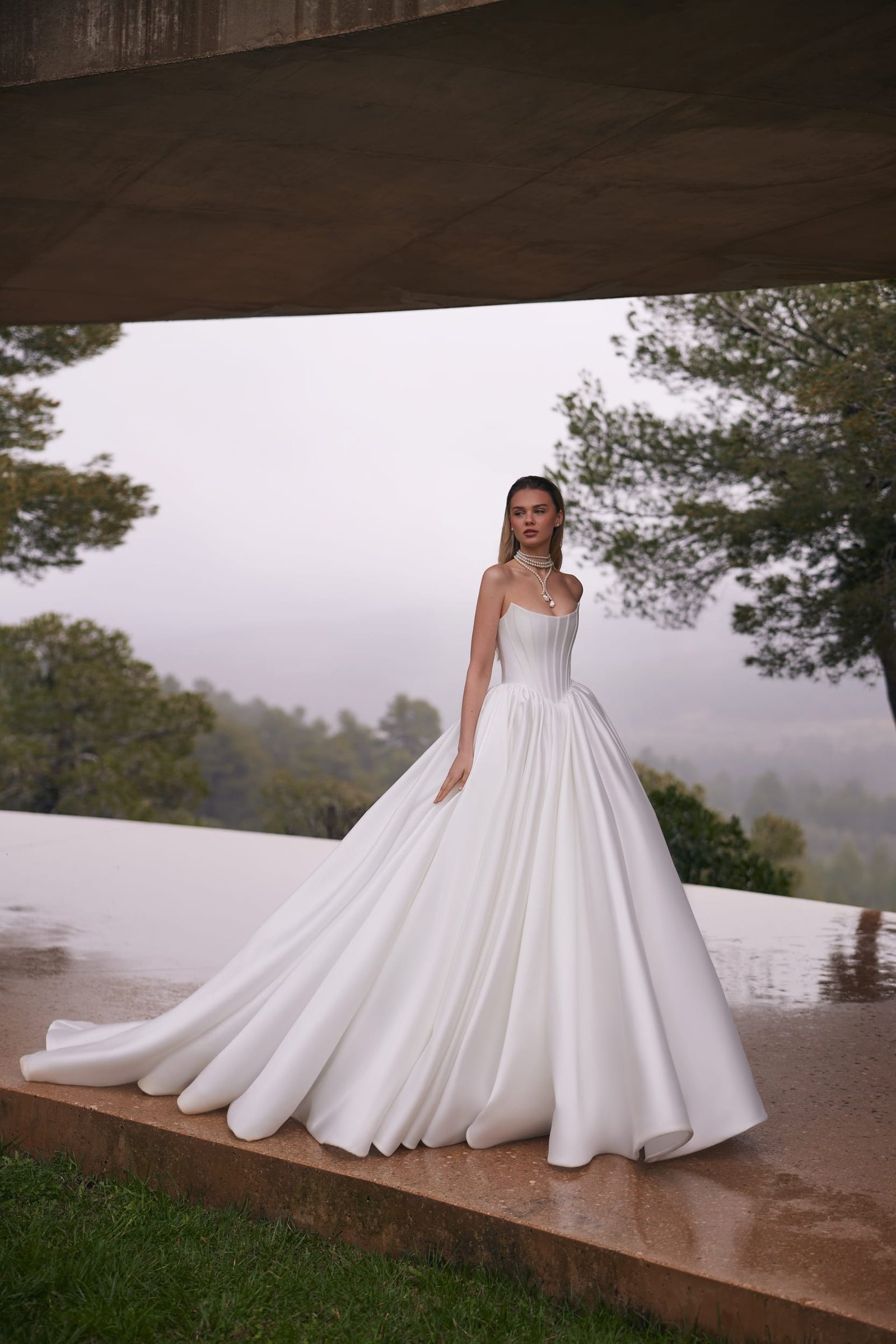
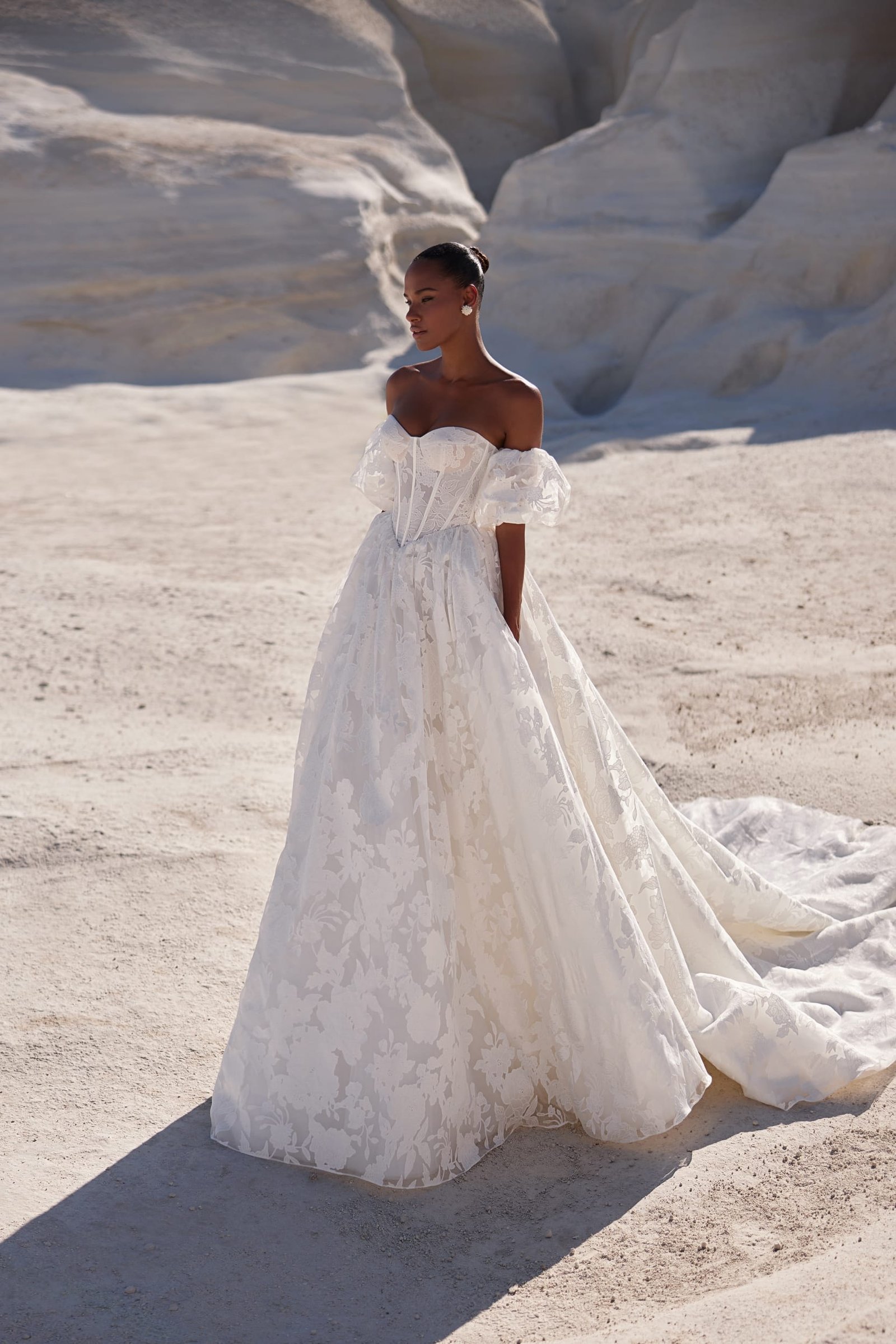
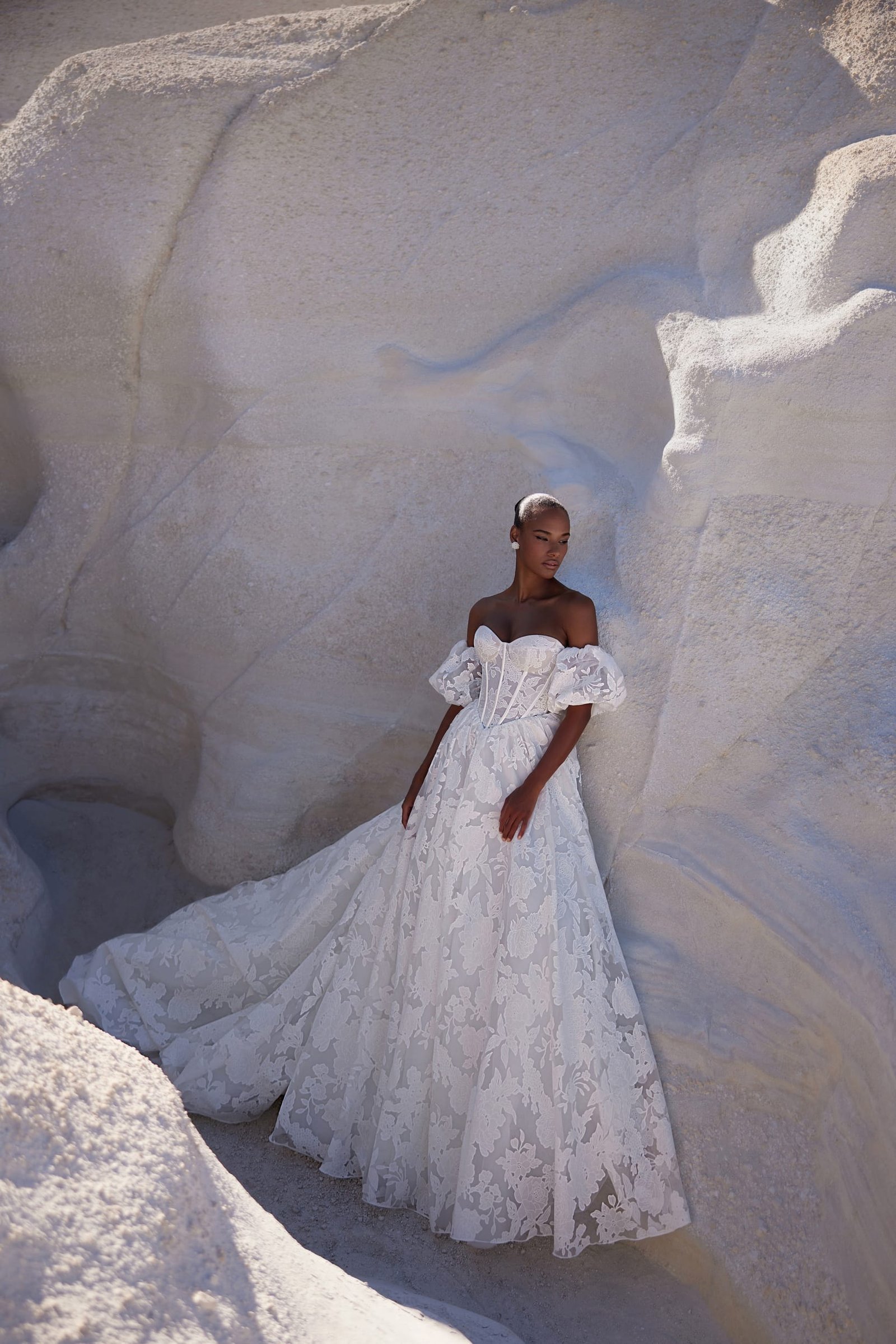
Chabli makes boning visible in a corset bodice that tapers to a pointed basque waist. Its off-shoulder drape and Mikado skirt make the upper structure read against a much fuller lower half. By contrast, a sheath gown may place that structure above a narrow line. Boning shapes the upper line while closure and cup shape vary; compare those details in cup-equipped bodices and the individual gown.